Form of Star jewel cichlid
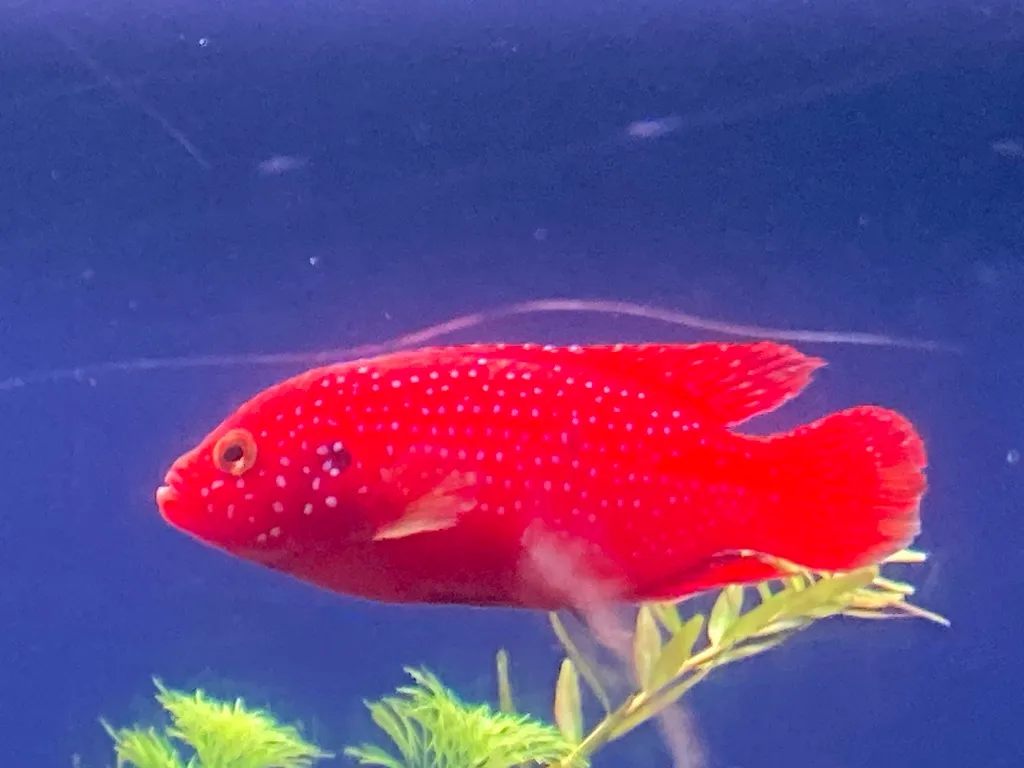
Blood-red jewel cichlid
Rubricatochromis stellifer
The named form of Rubricatochromis stellifer · See the species →
Also known as Hemichromis lifalili, Rubricatochromis lifalili
FreshwaterFish

Care at a glance
- Temperature
- 73–81°F
- 23–27°C
- pH
- 6.0–7.5
- Adult size
- 4.7 in
- 12 cm
- Minimum tank
- 18 gal
- 70 L
- Temperament
- Aggressive
- Social behavior
- Solitary
- Tankmates
- With caution
- Swim level
- Bottom
- Difficulty
- Medium
- Breeding
- Substrate spawner · Medium
- Rarity
- Rare
- Family
- Cichlidae
- Origin
- Congo Basin
Overview
The blood-red jewel cichlid is an aggressive red cichlid from the Congo basin, kept as a pair near the bottom of the tank. It is a step up from the easiest fish.
Caring for the blood-red jewel cichlid
Keep blood-red jewel cichlids as a pair in at least 18 gal (70 L), and more space eases their temper. Give them caves, flat stones and broken sightlines, with clear boundaries between hiding places. They spend their time near the bottom around cover.
Hold the water at 73 to 81°F (23 to 27°C), with a pH from slightly acidic to neutral, 6.0 to 7.5. Feed quality pellets, frozen foods and some plant matter.
The blood-red jewel cichlid is genuinely aggressive, especially when breeding, so plan the tank around that. Many keepers go species-only, while others pick robust tank mates with care. A pair will hold a tank against much larger fish.
Pairs are monogamous substrate spawners, and both parents share the brood care. Breeding them is of medium difficulty.
Good to know
The blood-red jewel cichlid was described as Hemichromis lifalili in 1979. It is now treated as the same species as the star jewel cichlid, Rubricatochromis stellifer. Its deep red body is flecked with iridescent blue-green spots. It looks much like the other red jewel cichlids and is told apart by color intensity and spot pattern. Its conservation status is Least Concern.
In the wild
Blood-red jewel cichlids come from shallow, slow waters of rivers, lakes and swamps in the Congo basin of Central Africa. They stick to spots with plants and rockwork, which give them cover and the edges of a territory.
Common questions
Is a blood-red jewel cichlid a different species from the star jewel cichlid?
No. A blood-red jewel cichlid is a form of the star jewel cichlid, Rubricatochromis stellifer, and it wants the same tank, water and food as the species.
What size tank does a blood-red jewel cichlid need?
A blood-red jewel cichlid needs at least 18 gal (70 L). It spends most of its time in the bottom.
What does a blood-red jewel cichlid eat?
A blood-red jewel cichlid eats quality pellets and frozen foods, along with some plant matter.
How big does a blood-red jewel cichlid get?
An adult blood-red jewel cichlid reaches about 4.7 in (12 cm).
How does a blood-red jewel cichlid breed?
Blood-red jewel cichlids form monogamous pairs and spawn on a substrate, with both parents sharing the brood care. Breeding them is of medium difficulty.
Related species
 5.5 in (14 cm)66 gal (250 L)73–81°F (23–27°C)
Common jewel cichlid
Rubricatochromis guttatus
5.5 in (14 cm) · 66 gal (250 L)
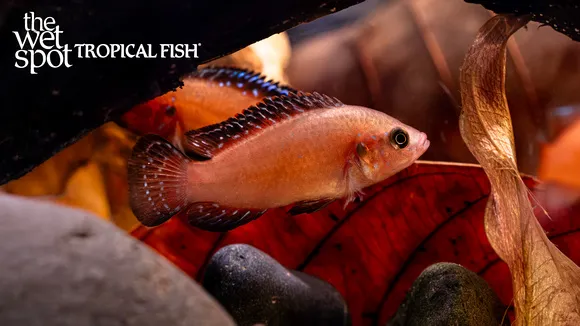 5.5 in (14 cm)66 gal (250 L)73–81°F (23–27°C)
Turkana jewel cichlid
Rubricatochromis guttatus
5.5 in (14 cm) · 66 gal (250 L)
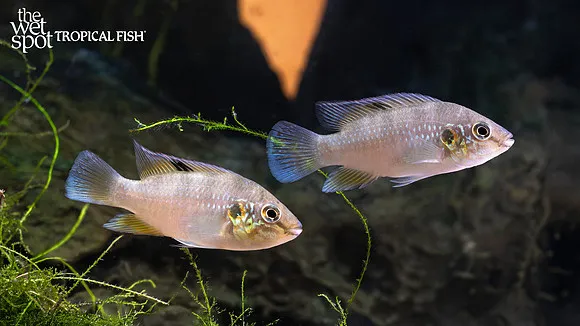 3.5 in (9 cm)53 gal (200 L)73–81°F (23–27°C)
Cherry-belly jewel cichlid
Rubricatochromis cerasogaster
3.5 in (9 cm) · 53 gal (200 L)
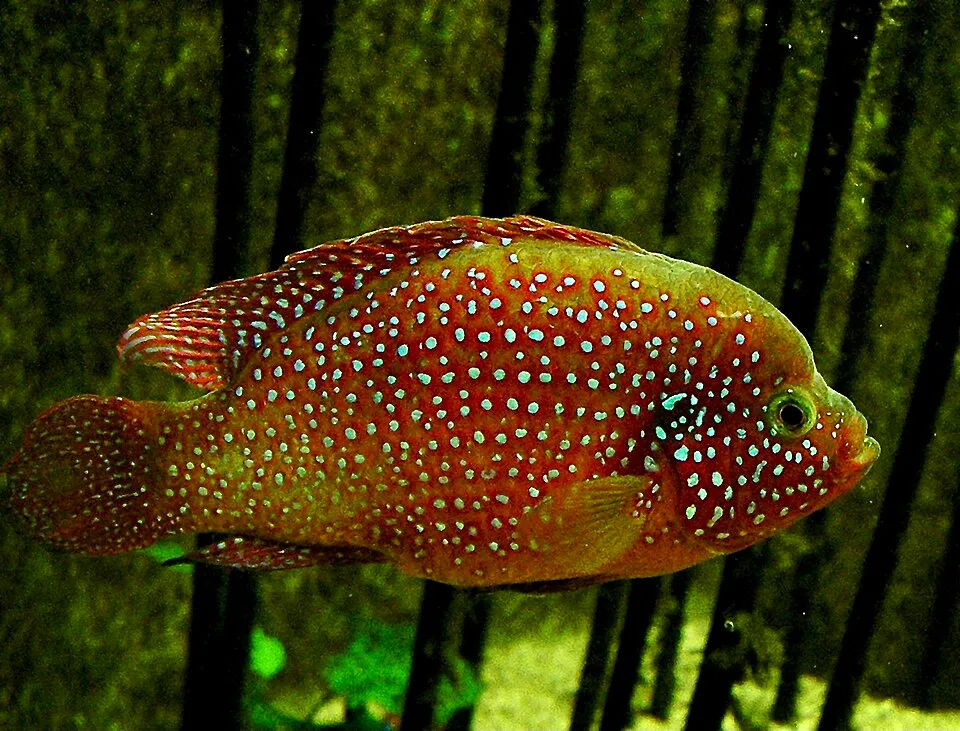 5.9 in (15 cm)30 gal (115 L)72–82°F (22–28°C)
Jewel cichlid
Rubricatochromis bimaculatus
5.9 in (15 cm) · 30 gal (115 L)
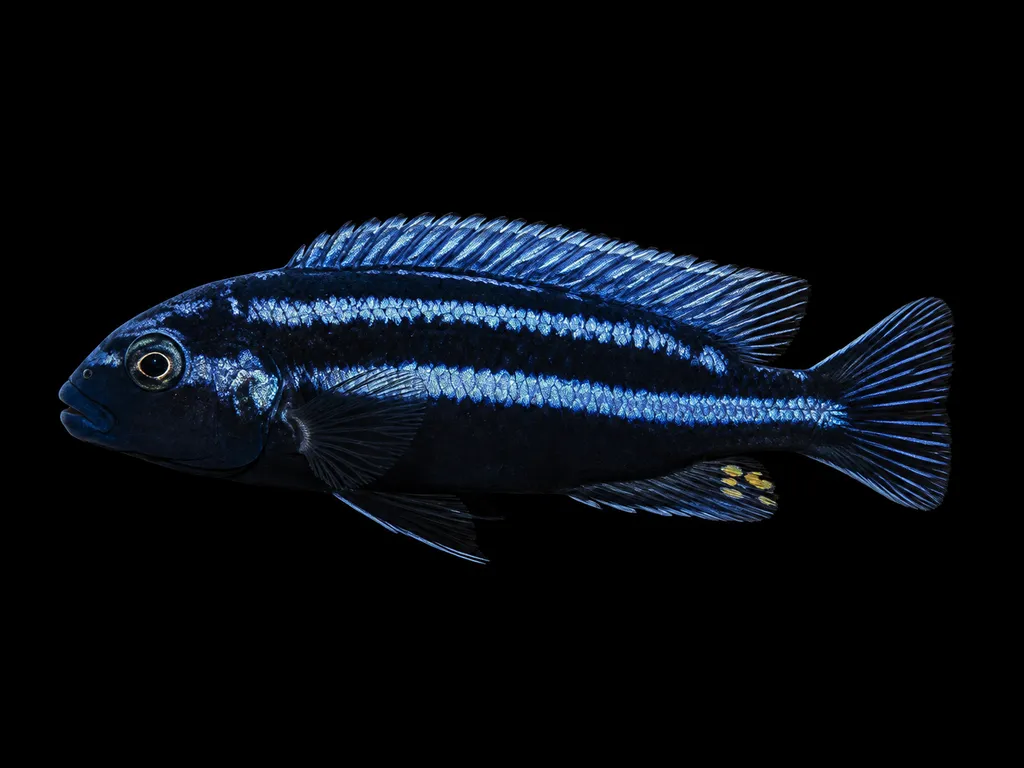 4.7 in (12 cm)66 gal (250 L)75–82°F (24–28°C)
Deepwater melanochromis
Melanochromis heterochromis
4.7 in (12 cm) · 66 gal (250 L)
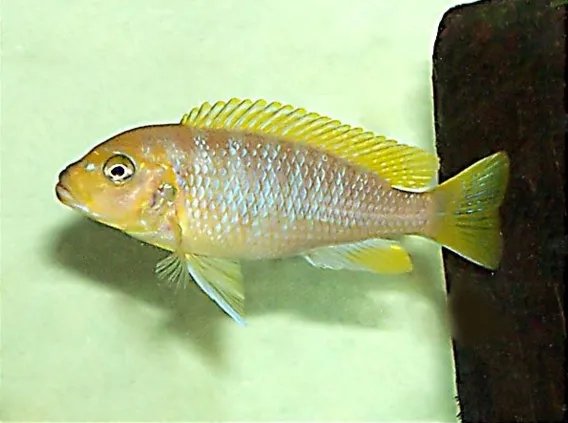 4.7 in (12 cm)66 gal (250 L)75–82°F (24–28°C)
Mayland's zebra
Maylandia hajomaylandi
4.7 in (12 cm) · 66 gal (250 L)