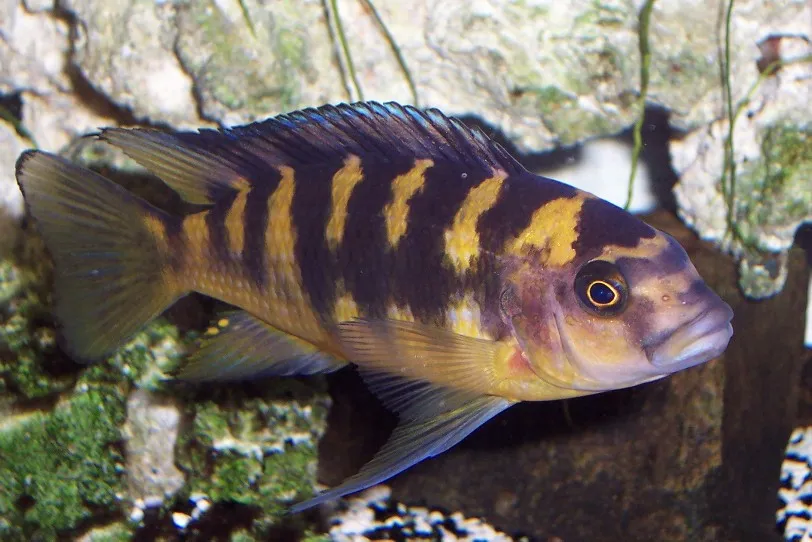
Bumblebee cichlid
Pseudotropheus crabro
Also known as hornet cichlid
FreshwaterFish
Care at a glance
- Temperature
- 75–82°F
- 24–28°C
- pH
- 7.5–8.5
- Adult size
- 5.9 in
- 15 cm
- Minimum tank
- 53 gal
- 200 L
- Temperament
- Aggressive
- Social behavior
- Social
- Own kind
- One male per tank
- Tankmates
- With caution
- Swim level
- Middle
- Difficulty
- Medium
- Breeding
- No record
- Rarity
- Rare
- Family
- Cichlidae
- Origin
- Lake Malawi
Overview
Give them a tank of at least 200 liters with heavy rockwork and keep them with other robust Malawi cichlids that can hold their own. They are aggressive, especially around spawning, so plenty of caves and broken sightlines help spread out the fighting. They sit in the middle and lower water near their rocks and eat cichlid pellets, vegetable matter, and the occasional meaty treat. Do not mix them with small or timid fish.
In the wild
Bumblebee cichlids live in the rocky zones of Lake Malawi, around caves and broken rock in fairly shallow water. Set the tank up the same way, with lots of rock to create caves and territory boundaries. The lake is hard and alkaline, so keep pH in the high 7s to mid 8s and temps in the mid to high 20s C.
Good to know
This is a Malawi mbuna in the family Cichlidae, reaching about 15 cm. Despite the mbuna label, it is not a strict algae grazer; it is an opportunistic omnivore. In the wild it has an unusual habit of feeding on the eggs of the large catfish Bagrus meridionalis, and it will also pick parasites off the catfish.
Did you know
Bumblebee cichlids change color hard depending on mood. The usual yellow-and-black bars can flip to a near-solid dark coloration when a fish is dominant, breeding, or sneaking up on a catfish nest, which is exactly when they raid those nests for eggs and fry.
Common questions
What size tank does a Bumblebee cichlid need?
A Bumblebee cichlid needs at least 53 gal (200 L). It spends most of its time in the middle.
What temperature and pH does a Bumblebee cichlid need?
A Bumblebee cichlid is comfortable at 75–82°F (24–28°C) with a pH of 7.5–8.5.
How big does a Bumblebee cichlid get?
An adult Bumblebee cichlid reaches about 5.9 in (15 cm).
Related species
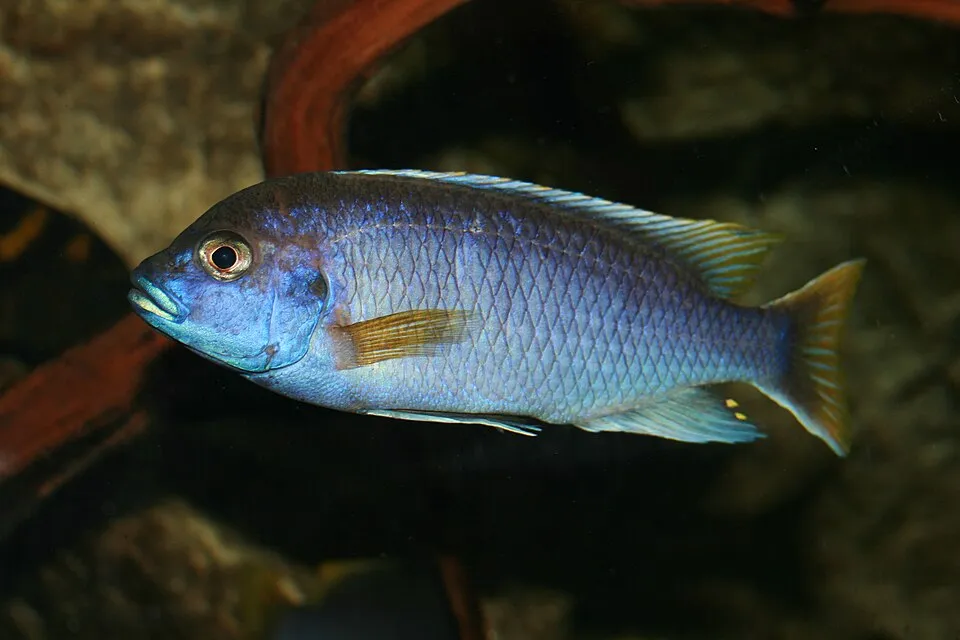 4.7 in (12 cm)42 gal (160 L)75–82°F (24–28°C)
Yellow-tail acei
Pseudotropheus acei
4.7 in (12 cm) · 42 gal (160 L)
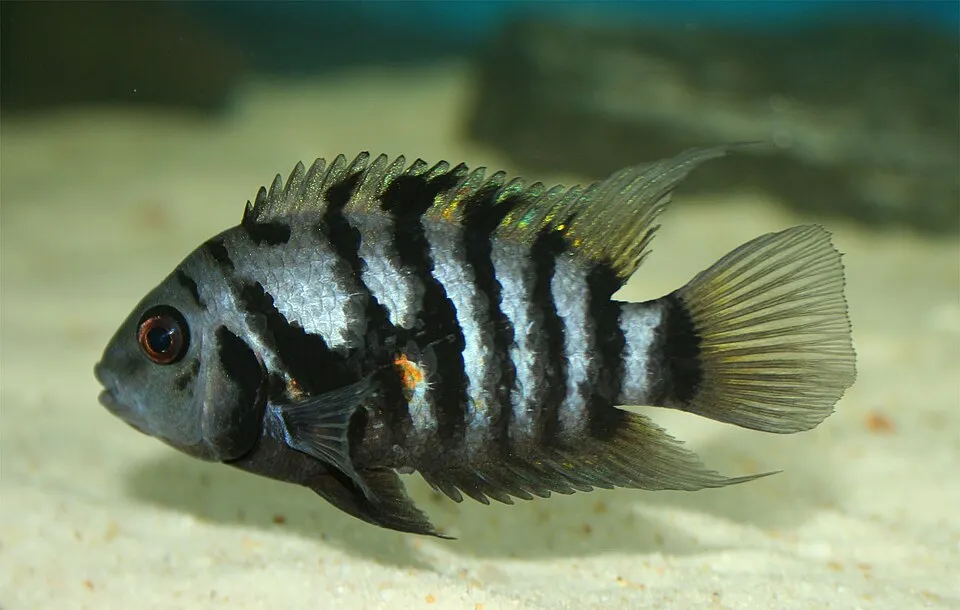 5.9 in (15 cm)25 gal (95 L)75–82°F (24–28°C)
Convict cichlid
Amatitlania nigrofasciata
5.9 in (15 cm) · 25 gal (95 L)
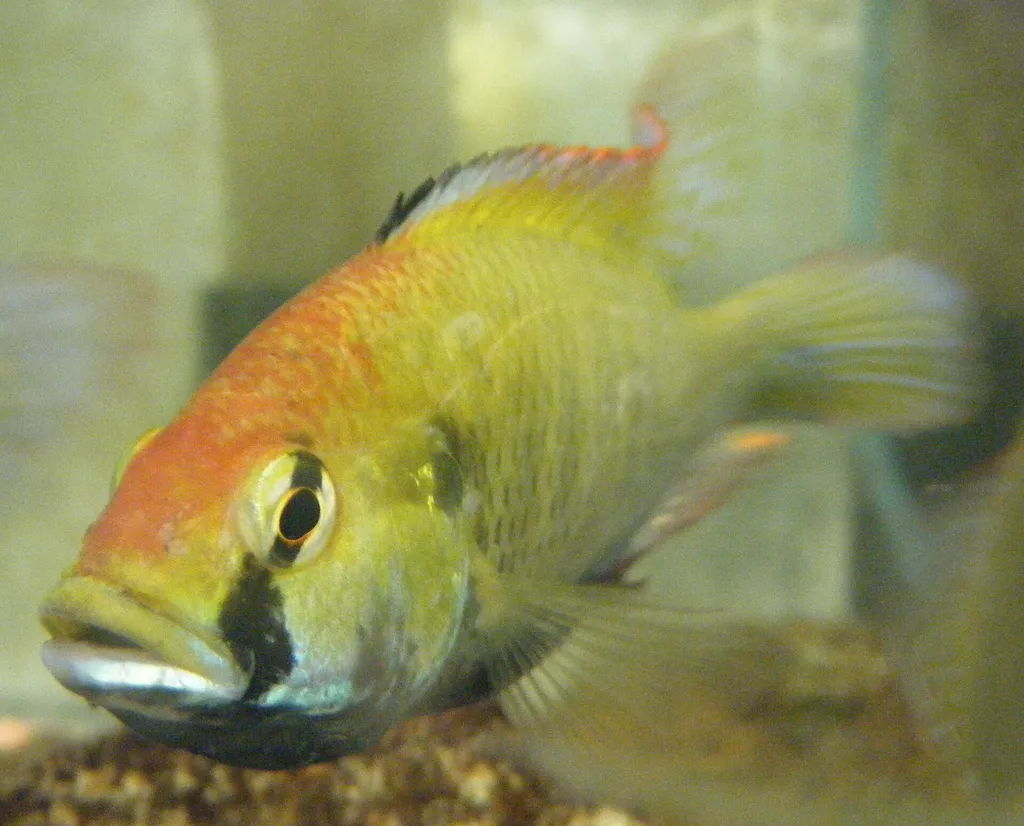 5.9 in (15 cm)66 gal (250 L)73–82°F (23–28°C)
Eastern happy
Astatotilapia calliptera
5.9 in (15 cm) · 66 gal (250 L)
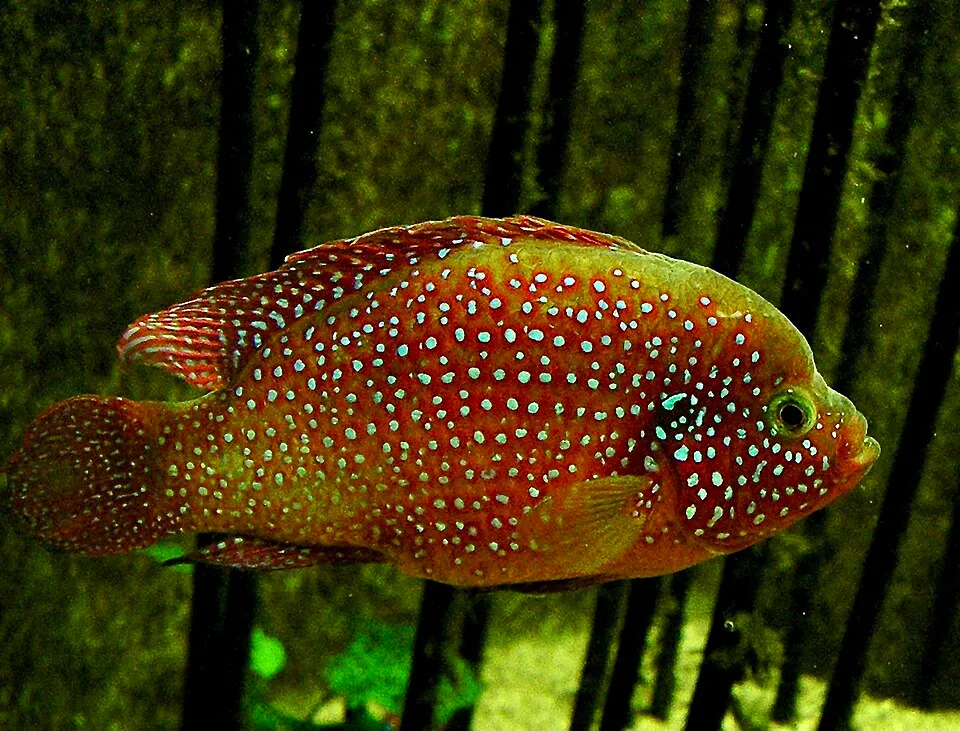 5.9 in (15 cm)30 gal (115 L)72–82°F (22–28°C)
Jewel cichlid
Hemichromis bimaculatus
5.9 in (15 cm) · 30 gal (115 L)
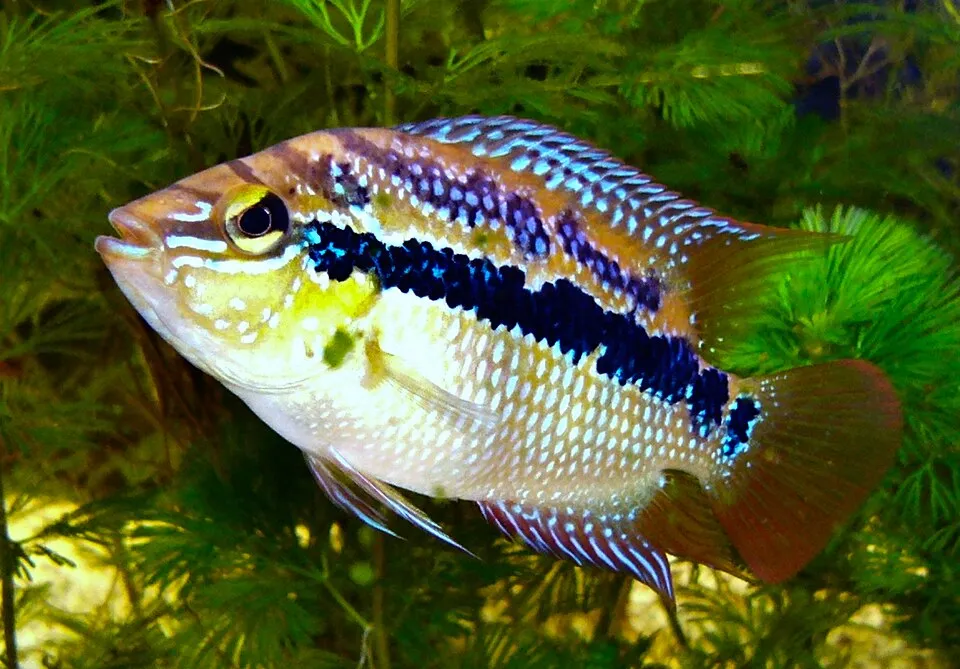 5.9 in (15 cm)26 gal (100 L)72–79°F (22–26°C)
Salvin's cichlid
Trichromis salvini
5.9 in (15 cm) · 26 gal (100 L)
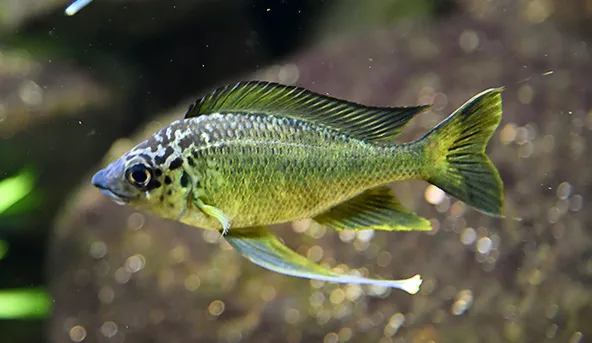 5.9 in (15 cm)61 gal (230 L)73–81°F (23–27°C)
Ventralis featherfin cichlid
Ophthalmotilapia ventralis
5.9 in (15 cm) · 61 gal (230 L)