Red zebra cichlid
Maylandia estherae
Also known as Metriaclima estherae
FreshwaterFish
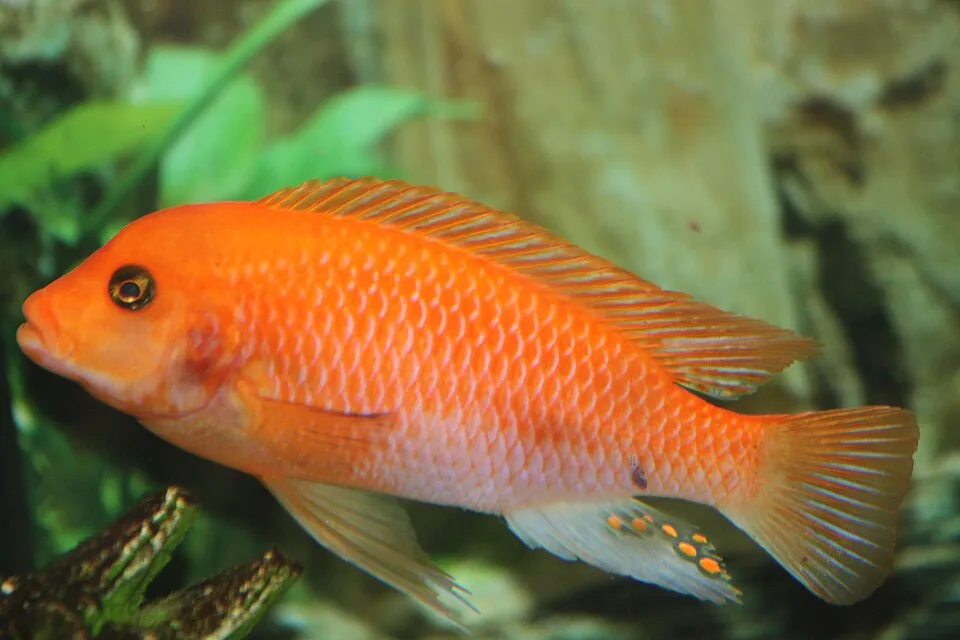
Care at a glance
- Temperature
- 75–82°F
- 24–28°C
- pH
- 7.5–8.5
- Adult size
- 3.9 in
- 10 cm
- Minimum tank
- 45 gal
- 170 L
- Temperament
- Aggressive
- Social behavior
- Social
- Own kind
- One male per tank
- Tankmates
- With caution
- Swim level
- Middle
- Diet
- Omnivore
- Difficulty
- Medium
- Breeding
- Mouthbrooder · Medium
- Rarity
- Rare
- Family
- Cichlidae
- Origin
- Lake Malawi
Overview
The red zebra cichlid is an aggressive rock-dwelling cichlid from Lake Malawi. It is a fish for keepers with a little experience.
Did you know
A dominant red zebra male's color tracks his mood. Knock him off the top spot, and his bright tone can fade within hours as a rival takes over.
Caring for the red zebra cichlid
Red zebra cichlids need at least 45 gal (170 L), with sand on the bottom and lots of stacked rock. Build caves and broken sightlines, since they hold the middle and lower water around their rock territories.
Keep the water at 75 to 82°F (24 to 28°C) with a pH of 7.5 to 8.5. Feed a quality cichlid pellet built on vegetable matter, plus the occasional protein treat. Avoid too much rich food, which can cause bloat in this group of cichlids.
Red zebras are aggressive and territorial, especially when breeding. Keep only one male per tank, and let the females outnumber him. Crowd them a bit to spread out the harassment.
Males are usually brighter than females, and males and females from the same brood can look nothing alike. It is a maternal mouthbrooder, and the female carries the eggs and fry in her mouth for protection. Breeding it takes moderate effort.
Good to know
The red zebra cichlid is an mbuna in the family Cichlidae, and mbuna means rockfish in the local Malawi language. It comes in red, orange and blue forms, which vary so widely that they were once mistaken for separate species. The species is not endangered, though the lake faces pressure from pollution and overfishing.
In the wild
Red zebra cichlids come from the rocky shorelines of Lake Malawi in East Africa. They live in shallow, clear water full of rock caves and crevices, where they graze algae. The lake is warm, with a high pH from the mineral-rich rock.
From published sources
Tank mates
Each fish here is named as a tank mate for the red zebra cichlid by at least two published care guides. Fishkeeping World recommends keeping it on its own instead. Crowd the mbuna tank, and keep one male to two or more females of each species.
Sources: Practical Fishkeeping, Fishkeeping World, Seriously Fish, Imperial Tropicals, Aquarium Source.
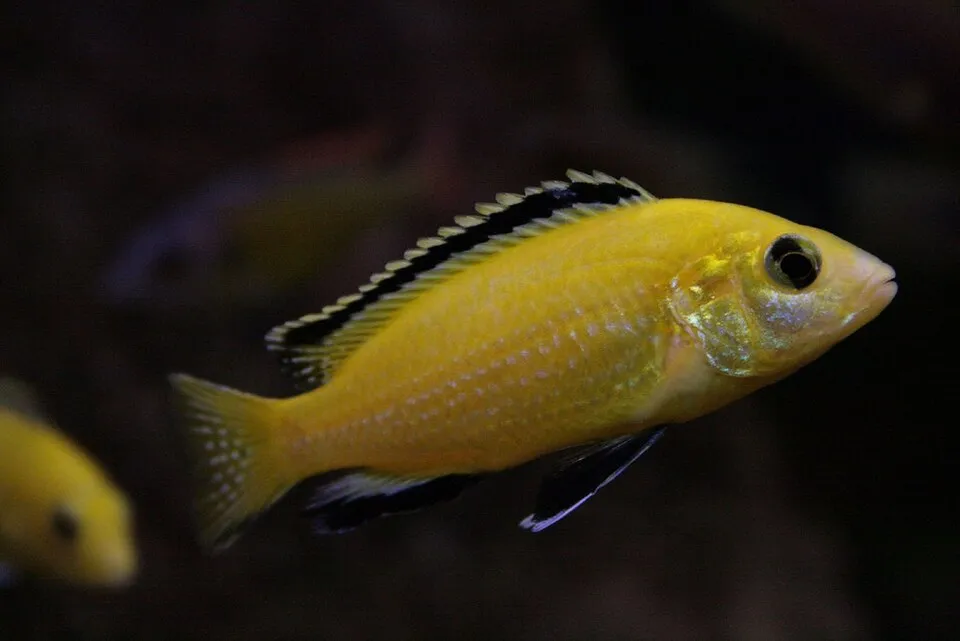
Electric yellow cichlid
Labidochromis caeruleus
Freshwater4.7 in (12 cm) · 35 gal (134 L)75–82°F (24–28°C)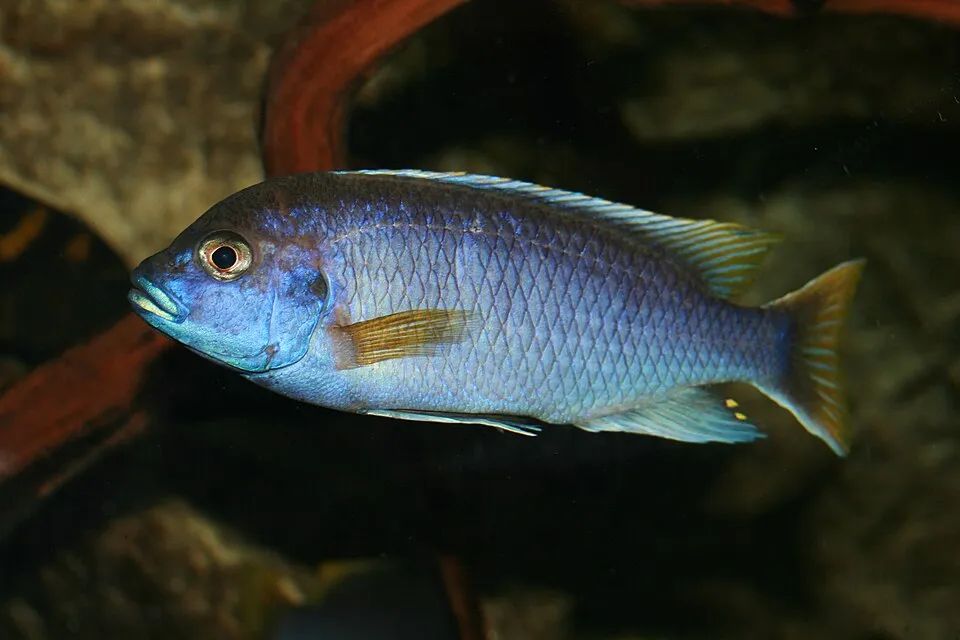
Yellow-tail acei
Pseudotropheus acei
Freshwater4.7 in (12 cm) · 42 gal (160 L)75–82°F (24–28°C)
Blue johanni cichlid
Melanochromis cyaneorhabdos
Freshwater3.9 in (10 cm) · 45 gal (170 L)75–82°F (24–28°C)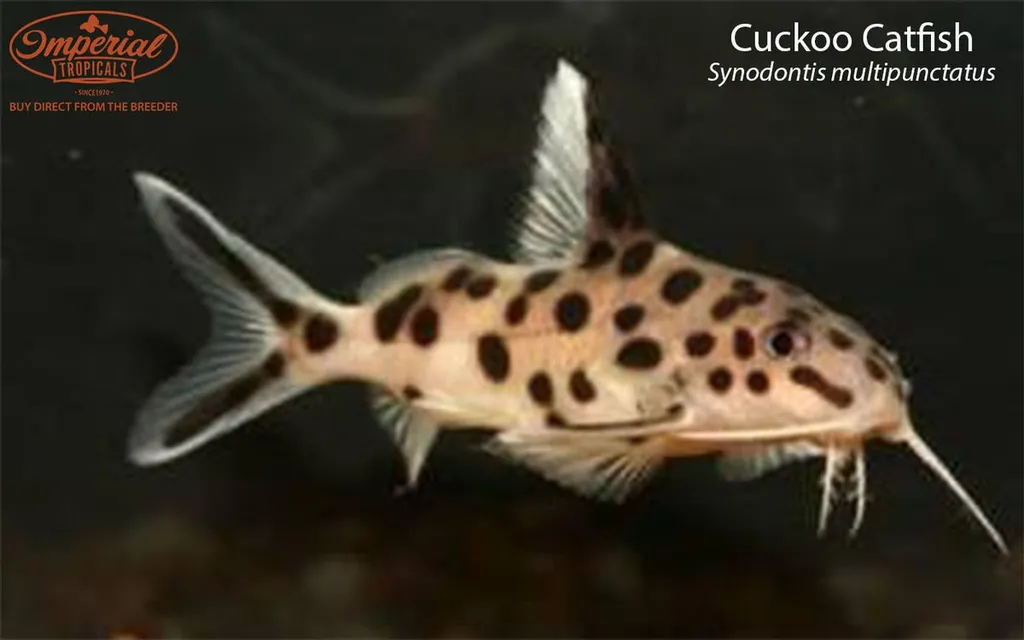
Cuckoo squeaker
Synodontis multipunctatus
Freshwater7.1 in (18 cm) · 29 gal (110 L)75–82°F (24–28°C)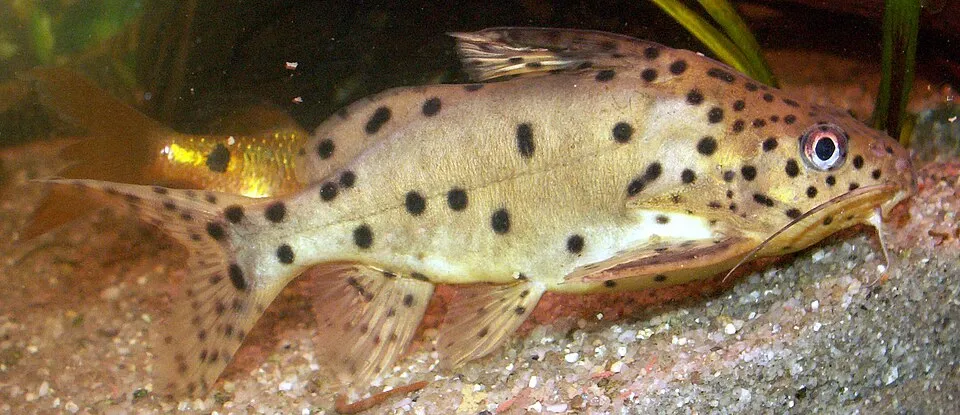
Lake Malawi syno
Synodontis njassae
Freshwater7.5 in (19 cm) · 40 gal (150 L)73–82°F (23–28°C)
Common questions
What size tank does a red zebra cichlid need?
A red zebra cichlid needs at least 45 gal (170 L). It spends most of its time in the middle.
What temperature and pH does a red zebra cichlid need?
A red zebra cichlid is comfortable at 75–82°F (24–28°C) with a pH of 7.5–8.5.
What does a red zebra cichlid eat?
A red zebra cichlid eats a quality cichlid pellet built on vegetable matter, plus the occasional protein treat. Avoid too much rich food, which can cause bloat.
How big does a red zebra cichlid get?
An adult red zebra cichlid reaches about 3.9 in (10 cm).
How can you tell a male red zebra cichlid from a female?
Males are usually brighter than females. Males and females from the same brood can look nothing alike.
How does a red zebra cichlid breed?
The red zebra cichlid is a maternal mouthbrooder, and the female carries the eggs and fry in her mouth for protection. Breeding it takes moderate effort.
What fish can live with the red zebra cichlid?
Published care guides name electric yellow cichlid, yellow-tail acei, blue johanni cichlid and cuckoo squeaker, among others. Crowd the mbuna tank, and keep one male to two or more females of each species.
Related species
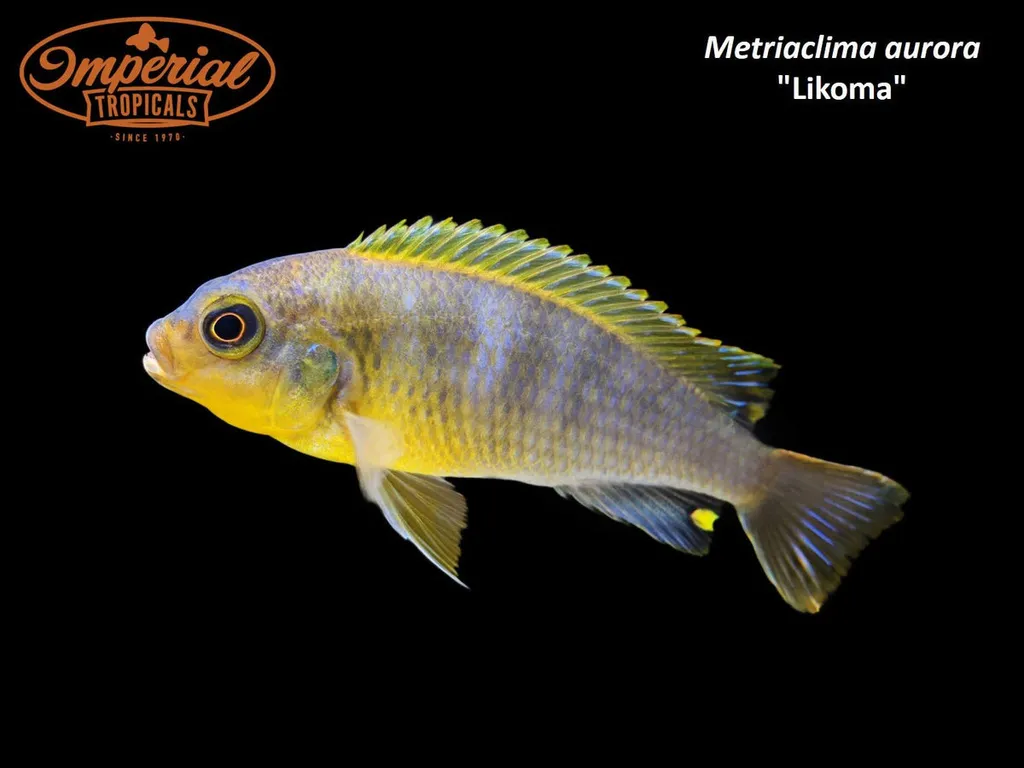 4.7 in (12 cm)30 gal (115 L)75–81°F (24–27°C)
Aurora cichlid
Maylandia aurora
4.7 in (12 cm) · 30 gal (115 L)
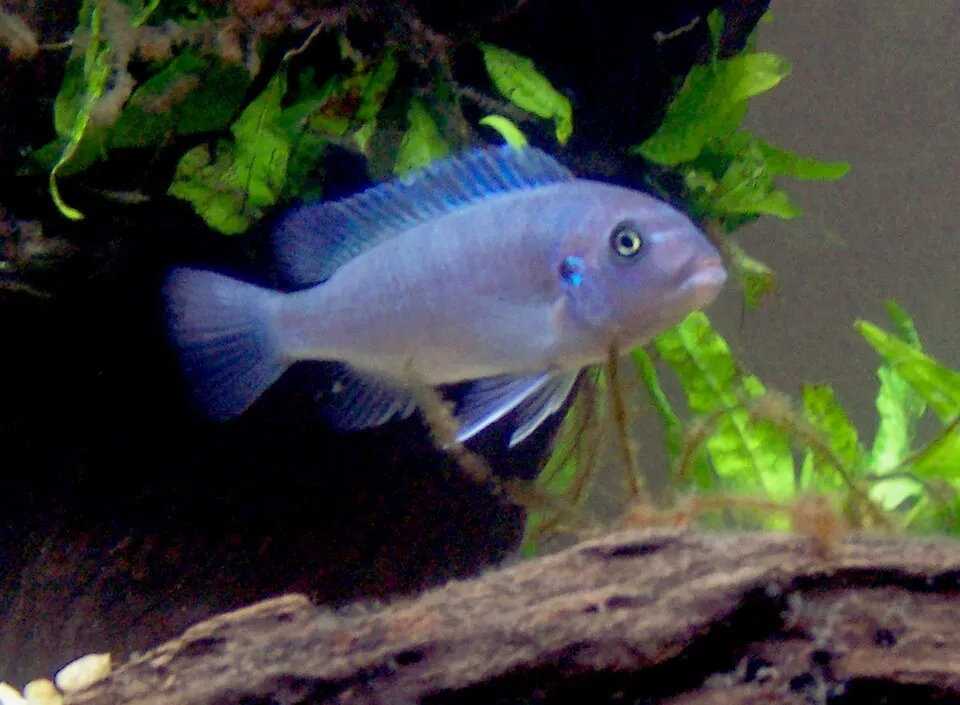 5.1 in (13 cm)29 gal (110 L)75–82°F (24–28°C)
Cobalt blue cichlid
Maylandia callainos
5.1 in (13 cm) · 29 gal (110 L)
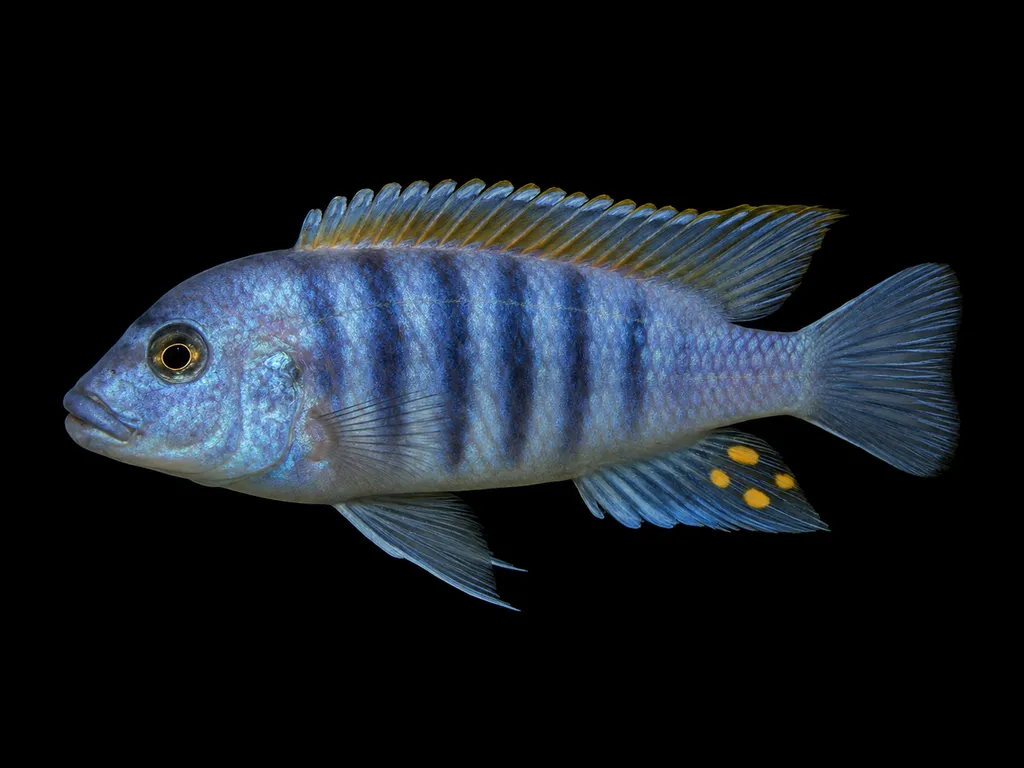 5.5 in (14 cm)55 gal (210 L)75–82°F (24–28°C)
Ice blue zebra
Maylandia greshakei
5.5 in (14 cm) · 55 gal (210 L)
 5.5 in (14 cm)53 gal (200 L)75–82°F (24–28°C)
Kenyi cichlid
Maylandia lombardoi
5.5 in (14 cm) · 53 gal (200 L)
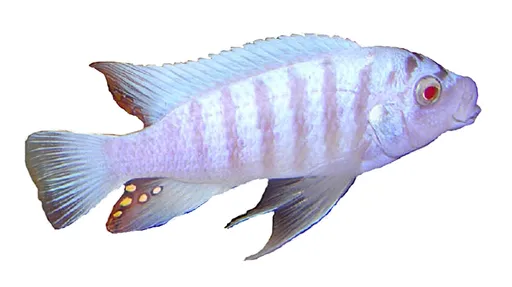 5.9 in (15 cm)55 gal (210 L)75–82°F (24–28°C)
Zebra mbuna
Maylandia zebra
5.9 in (15 cm) · 55 gal (210 L)
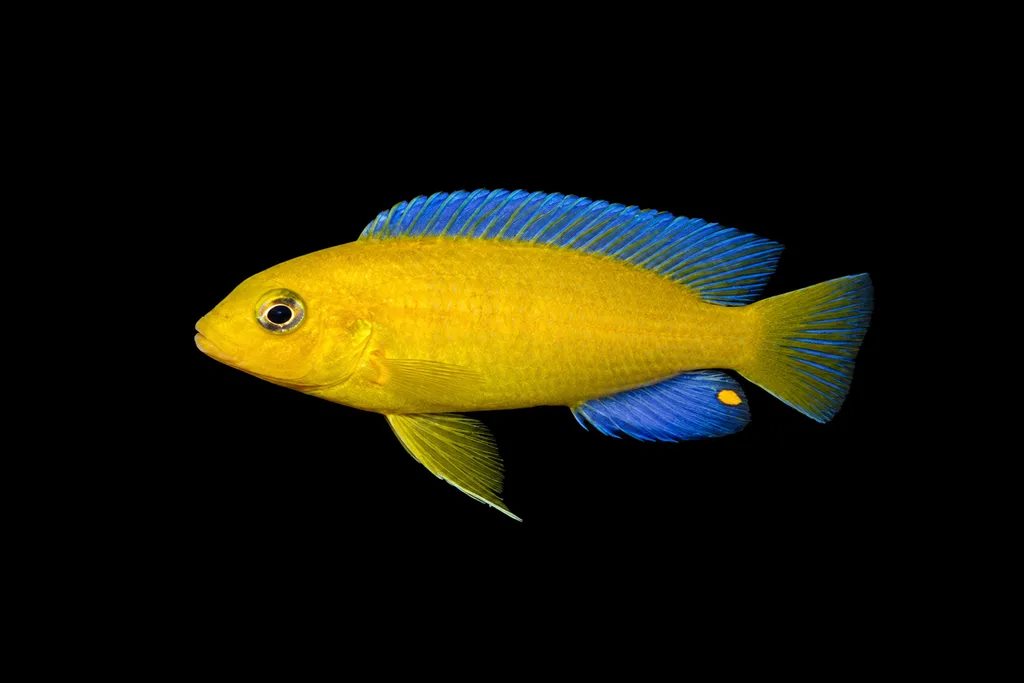 3.9 in (10 cm)53 gal (200 L)75–82°F (24–28°C)
Barlow's mbuna
Maylandia barlowi
3.9 in (10 cm) · 53 gal (200 L)