Barlow's mbuna
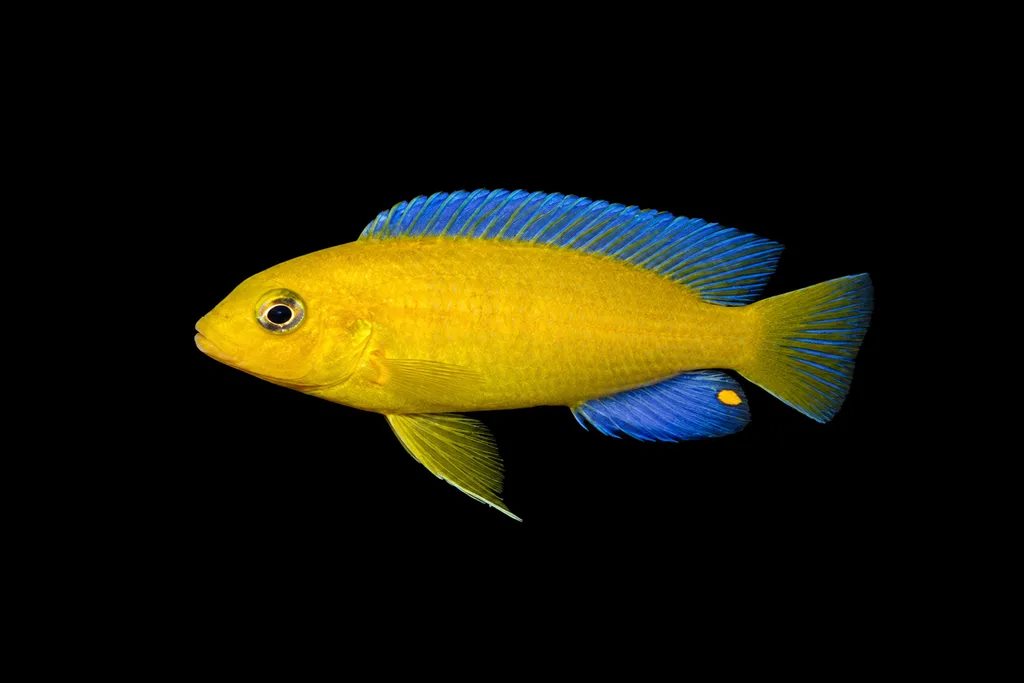
Maylandia barlowi
Also known as Mbenji, Metriaclima barlowi, Pseudotropheus barlowi
FreshwaterFish
Care at a glance
- Temperature
- 75–82°F
- 24–28°C
- pH
- 7.5–8.5
- Adult size
- 3.9 in
- 10 cm
- Minimum tank
- 53 gal
- 200 L
- Temperament
- Aggressive
- Social behavior
- Social
- Tankmates
- With caution
- Swim level
- Bottom
- Difficulty
- Medium
- Breeding
- Mouthbrooder · Medium
- Rarity
- Rare
- Family
- Cichlidae
- Origin
- Lake Malawi
Overview
Barlow's mbuna is a classic mbuna for a rocky Malawi tank, and it suits a keeper past the beginner stage.
Did you know
Barlow's mbuna honors George Barlow, an American biologist who studied why some cichlids evolved gold coloring. With its butter-colored chest, barlowi is a fitting namesake for that work.
Caring for the Barlow's mbuna
Keep one male Barlow's mbuna with a group of several females. A tank of 53 gal (200 L) or more with heavy rockwork gives the females places to retreat. Pile the rock to form caves and boundaries, and leave some open sand. The fish hold the lower water around the rockwork.
Recreate the lake's hard, alkaline water, at 75 to 82°F (24 to 28°C) with a pH of 7.5 to 8.5. Good water quality and stable chemistry matter for these rift lake fish. Feed a diet built around vegetable matter and algae, such as spirulina flake and pellet. Give richer foods only occasionally, since a mainly plant-based diet keeps mbuna healthy.
Expect constant, low-level squabbling, and give the group enough space to absorb it. The male defends a territory hard. Keep it with other robust mbuna of similar size and temperament rather than small or gentle fish.
Males wear a golden yellow chest under the dark mbuna barring, while females are a plainer gold brown. It is a maternal mouthbrooder, and the female carries the eggs and fry. Breeding is of moderate difficulty.
Good to know
Barlow's mbuna, Maylandia barlowi, is still often sold under its old name, Pseudotropheus barlowi. It is a member of the family Cichlidae.
In the wild
Barlow's mbuna comes from the Maleri Islands area of Lake Malawi. It lives around rock over sandier, softer bottoms rather than sheer boulder faces.
Common questions
What size tank does a Barlow's mbuna need?
A Barlow's mbuna needs at least 53 gal (200 L). It spends most of its time in the bottom.
What temperature and pH does a Barlow's mbuna need?
A Barlow's mbuna is comfortable at 75–82°F (24–28°C) with a pH of 7.5–8.5.
What does a Barlow's mbuna eat?
A Barlow's mbuna eats a diet built mostly on vegetable matter and algae, such as spirulina flake and pellet. Offer richer foods only now and then.
How big does a Barlow's mbuna get?
An adult Barlow's mbuna reaches about 3.9 in (10 cm).
How can you tell a male Barlow's mbuna from a female?
Males have a golden yellow chest beneath the dark barring. Females are a plainer gold brown.
How does a Barlow's mbuna breed?
Barlow's mbuna is a maternal mouthbrooder, so the female carries the eggs and fry. Breeding it is of moderate difficulty.
Related species
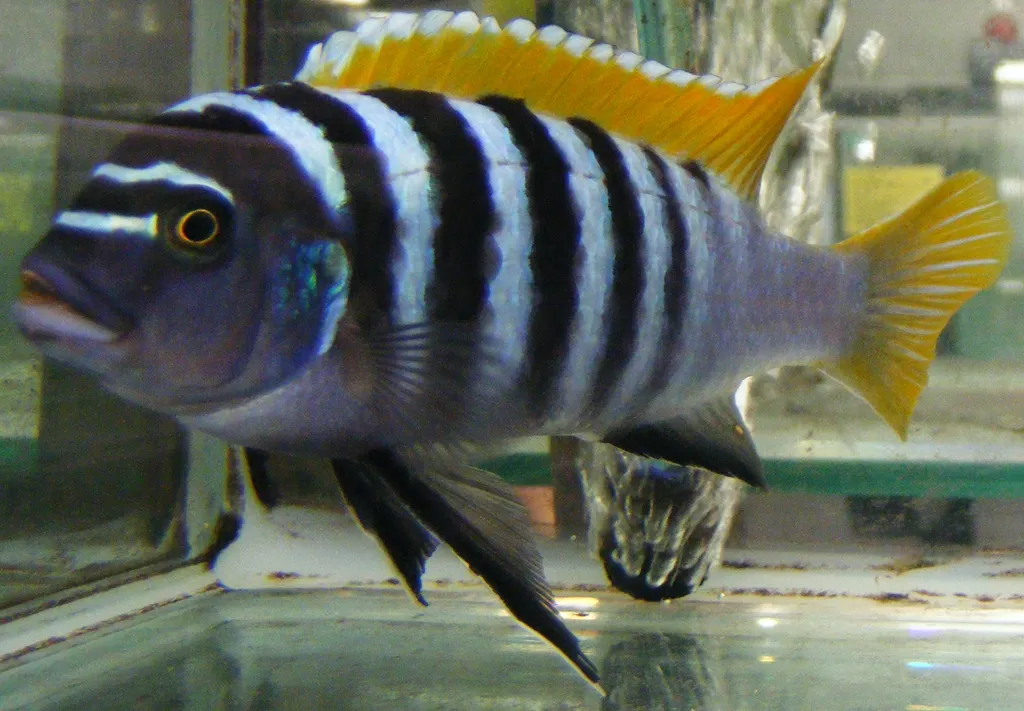 4.1 in (10.5 cm)53 gal (200 L)75–82°F (24–28°C)
Mpanga red-top zebra
Maylandia emmiltos
4.1 in (10.5 cm) · 53 gal (200 L)
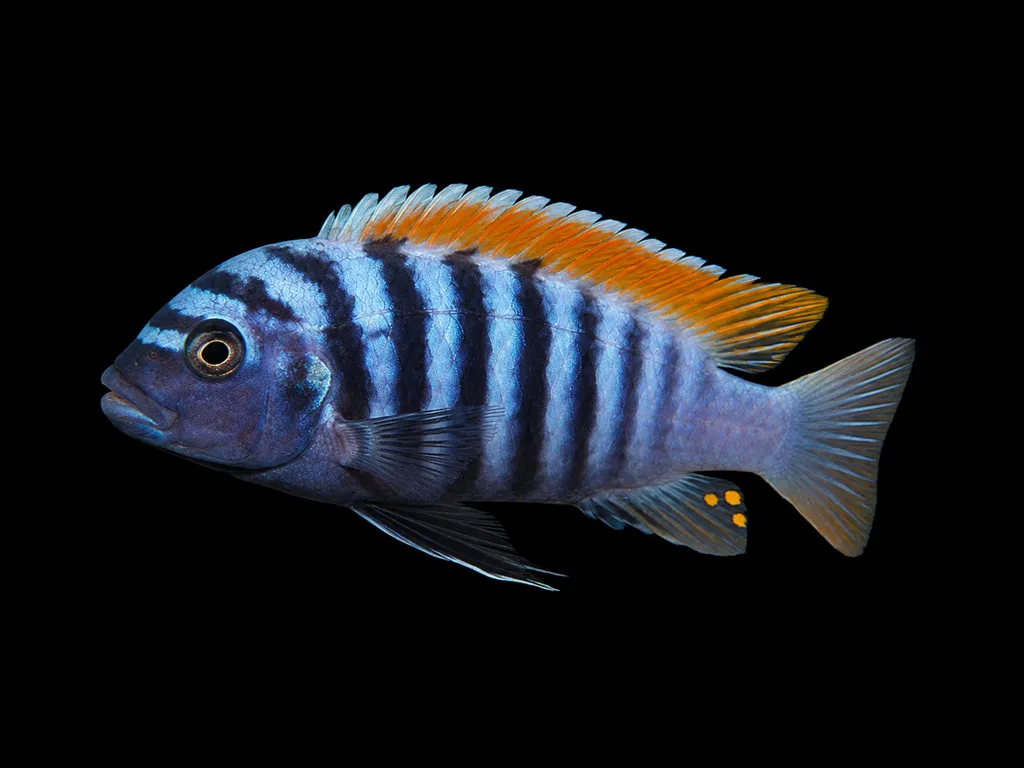 4.3 in (11 cm)53 gal (200 L)75–82°F (24–28°C)
Fireback zebra
Maylandia pyrsonotos
4.3 in (11 cm) · 53 gal (200 L)
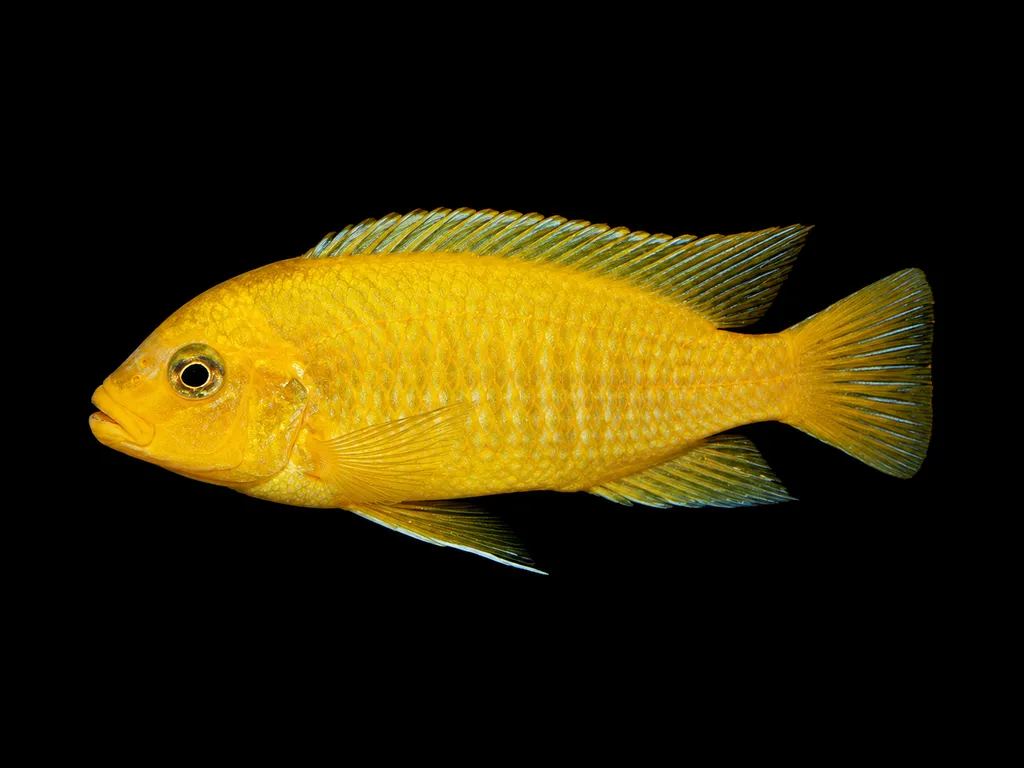 4.3 in (11 cm)53 gal (200 L)75–82°F (24–28°C)
Golden fleece zebra
Maylandia chrysomallos
4.3 in (11 cm) · 53 gal (200 L)
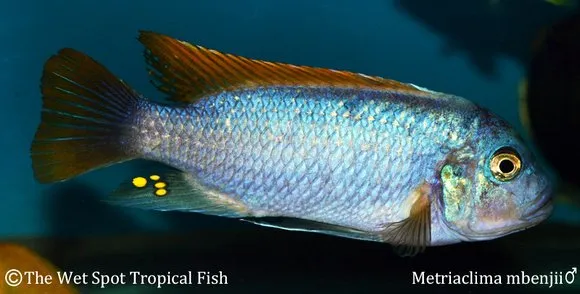 4.3 in (11 cm)53 gal (200 L)75–82°F (24–28°C)
Mbenji zebra
Maylandia mbenjii
4.3 in (11 cm) · 53 gal (200 L)
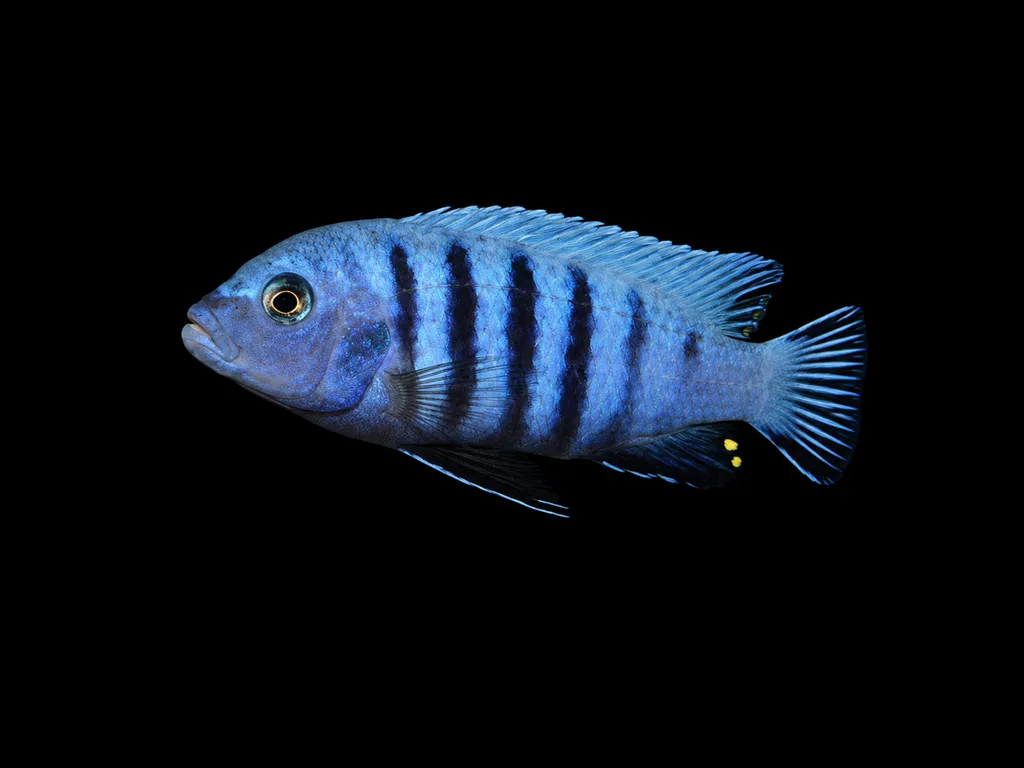 3.5 in (9 cm)42 gal (160 L)75–82°F (24–28°C)
Kingsizei zebra
Maylandia pulpican
3.5 in (9 cm) · 42 gal (160 L)
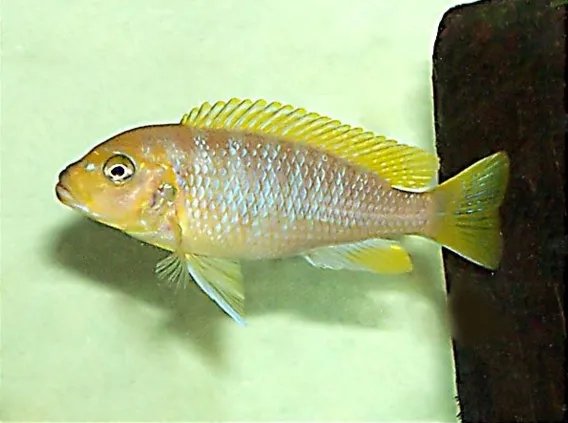 4.7 in (12 cm)66 gal (250 L)75–82°F (24–28°C)
Mayland's zebra
Maylandia hajomaylandi
4.7 in (12 cm) · 66 gal (250 L)