Kingsizei zebra
Maylandia pulpican
Also known as Metriaclima pulpican, Pseudotropheus kingsizei, Kingsizei
FreshwaterFish
Care at a glance
- Temperature
- 75–82°F
- 24–28°C
- pH
- 7.5–8.5
- Adult size
- 3.5 in
- 9 cm
- Minimum tank
- 42 gal
- 160 L
- Temperament
- Aggressive
- Social behavior
- Social
- Tankmates
- With caution
- Swim level
- Bottom
- Diet
- Herbivore
- Difficulty
- Medium
- Breeding
- Mouthbrooder · Medium
- Rarity
- Rare
- Family
- Cichlidae
- Origin
- Lake Malawi, Likoma Island
Overview
The Kingsizei zebra is a small, aggressive mbuna that keeps near the bottom of a rocky Malawi tank. It is a moderate challenge to keep.
Did you know
This small fish carries the trade nickname kingsizei, but its scientific name points the other way. Pulpican comes from the poulpican, a goblin-like dwarf of Breton folklore. The name nods to the way this little cichlid harries much larger fish while guarding its patch.
Caring for the Kingsizei zebra
Give Kingsizei zebras a rockwork tank of at least 42 gal (160 L). That gives a male room to claim a cave and the females space to retreat. Lay a sand base with a stack of rounded stones for caves and sightline breaks, and leave open swimming lanes between them.
Keep the water hard and alkaline, at 75 to 82°F (24 to 28°C) and a pH of 7.5 to 8.5. Use strong filtration and steady maintenance. Feed a vegetable-based diet of spirulina flake and algae wafers, since its gut is built for grazing and suffers on too much protein.
Keep a harem of one male with three or more females, so his attention spreads across the group instead of one fish. Like most zebras, the Kingsizei zebra is scrappy, and it holds a small territory around the rockwork. Pick equally sturdy mbuna as neighbors, and choose tank mates with care.
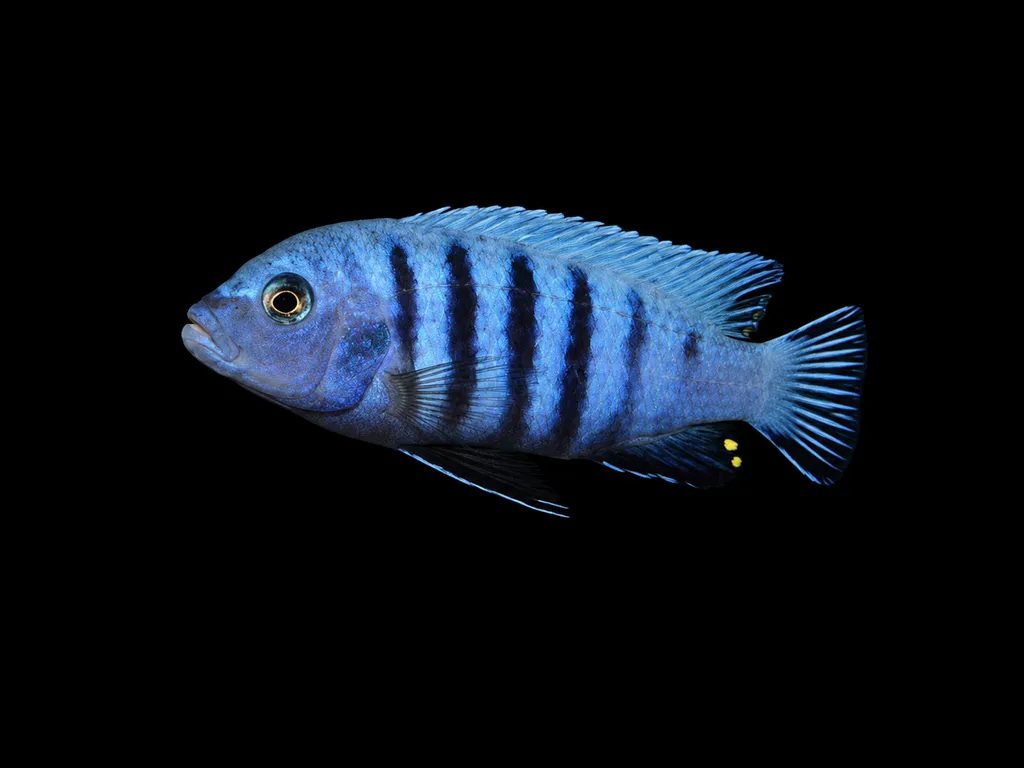
Males turn light blue crossed by dark bars, while females stay a plainer brassy tone. It is a maternal mouthbrooder, and the female holds the fertilized eggs and then the fry in her mouth for around three weeks. Breeding it in a tank is of medium difficulty.
Good to know
The Kingsizei zebra is a member of the Cichlidae, in the mbuna group of Lake Malawi rock cichlids. The hobby knew it as Pseudotropheus sp. kingsizei for years before its formal description as Maylandia pulpican.
In the wild
The Kingsizei zebra lives in the intermediate zone of Lake Malawi around Likoma Island. There, broken rock meets open sand at roughly 10 to 20 meters down. The lake is hard, alkaline and very stable.
Common questions
What size tank does a Kingsizei zebra need?
A Kingsizei zebra needs at least 42 gal (160 L). It spends most of its time in the bottom.
What temperature and pH does a Kingsizei zebra need?
A Kingsizei zebra is comfortable at 75–82°F (24–28°C) with a pH of 7.5–8.5.
What does a Kingsizei zebra eat?
A Kingsizei zebra eats a vegetable-based diet of spirulina flake and algae wafers. Its gut is built for grazing, so keep the protein low.
How big does a Kingsizei zebra get?
An adult Kingsizei zebra reaches about 3.5 in (9 cm).
How can you tell a male Kingsizei zebra from a female?
Males turn light blue crossed by dark bars. Females stay a plainer brassy tone.
How does a Kingsizei zebra breed?
The Kingsizei zebra is a maternal mouthbrooder. The female holds the fertilized eggs, then the fry, in her mouth for around three weeks, and breeding is of medium difficulty.
Related species
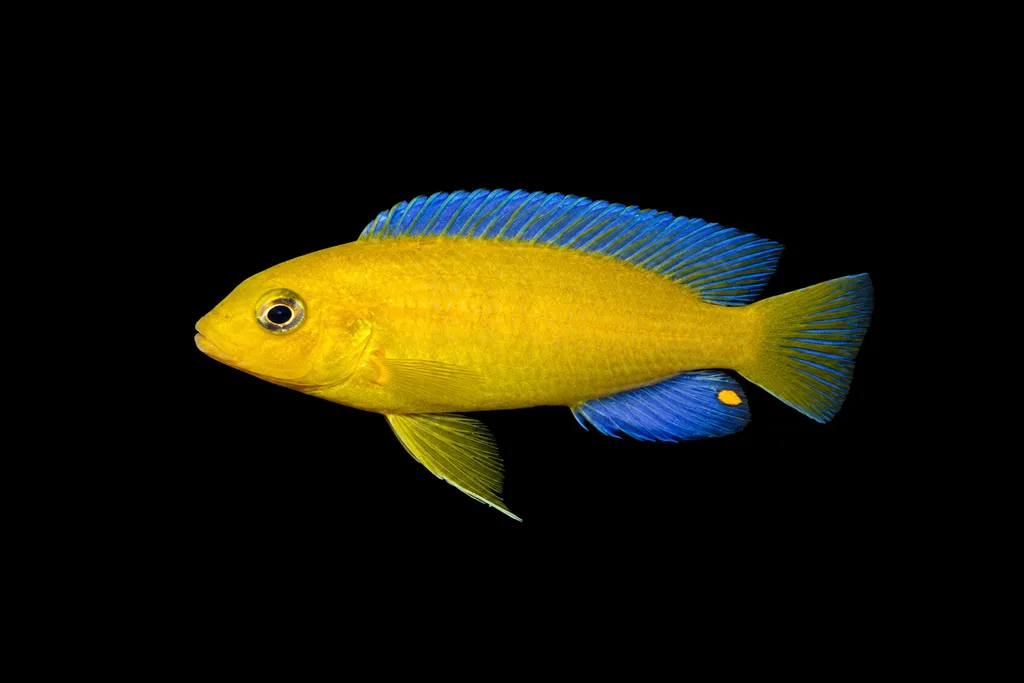 3.9 in (10 cm)53 gal (200 L)75–82°F (24–28°C)
Barlow's mbuna
Maylandia barlowi
3.9 in (10 cm) · 53 gal (200 L)
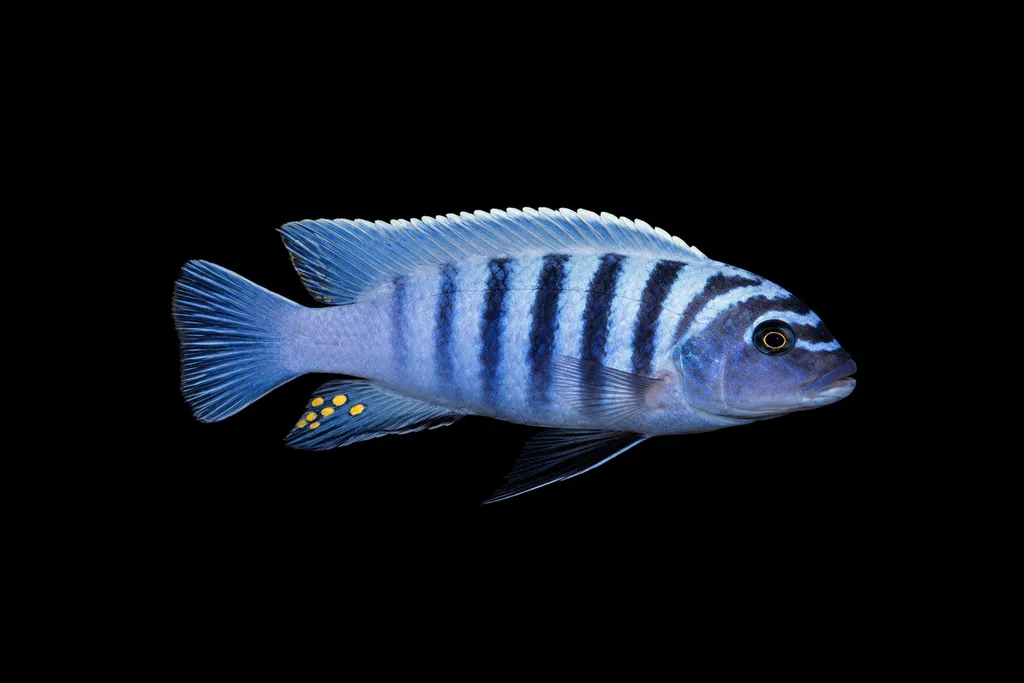 3.1 in (8 cm)42 gal (160 L)75–82°F (24–28°C)
Konings' zebra
Maylandia koningsi
3.1 in (8 cm) · 42 gal (160 L)
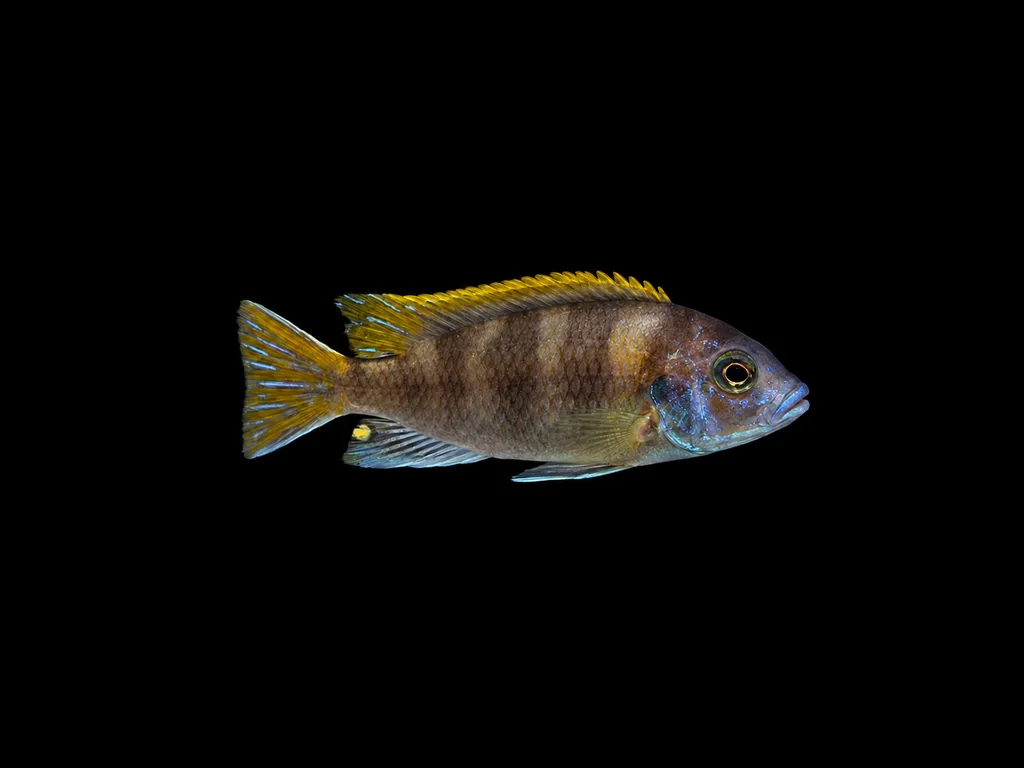 3.1 in (8 cm)29 gal (110 L)75–82°F (24–28°C)
Shell mbuna
Maylandia lanisticola
3.1 in (8 cm) · 29 gal (110 L)
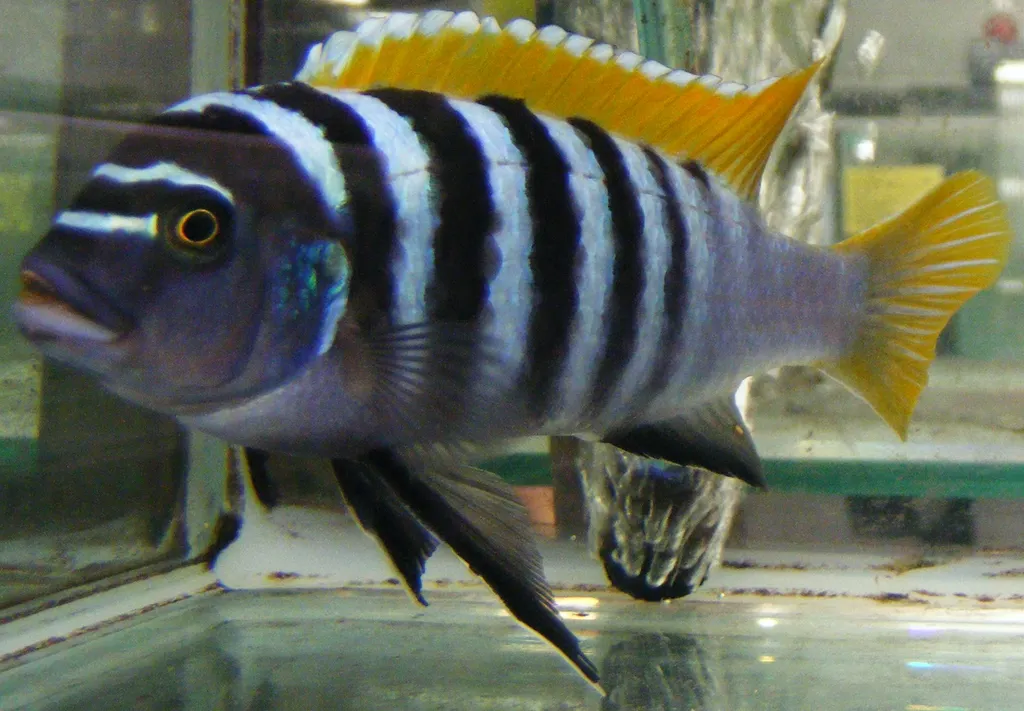 4.1 in (10.5 cm)53 gal (200 L)75–82°F (24–28°C)
Mpanga red-top zebra
Maylandia emmiltos
4.1 in (10.5 cm) · 53 gal (200 L)
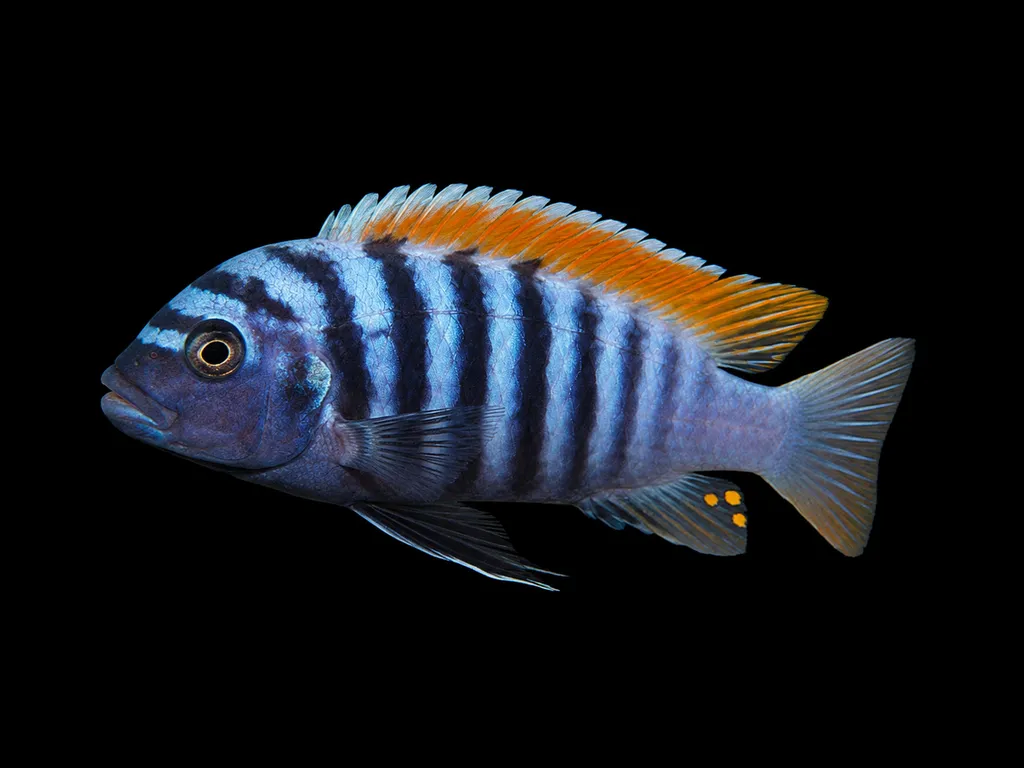 4.3 in (11 cm)53 gal (200 L)75–82°F (24–28°C)
Fireback zebra
Maylandia pyrsonotos
4.3 in (11 cm) · 53 gal (200 L)
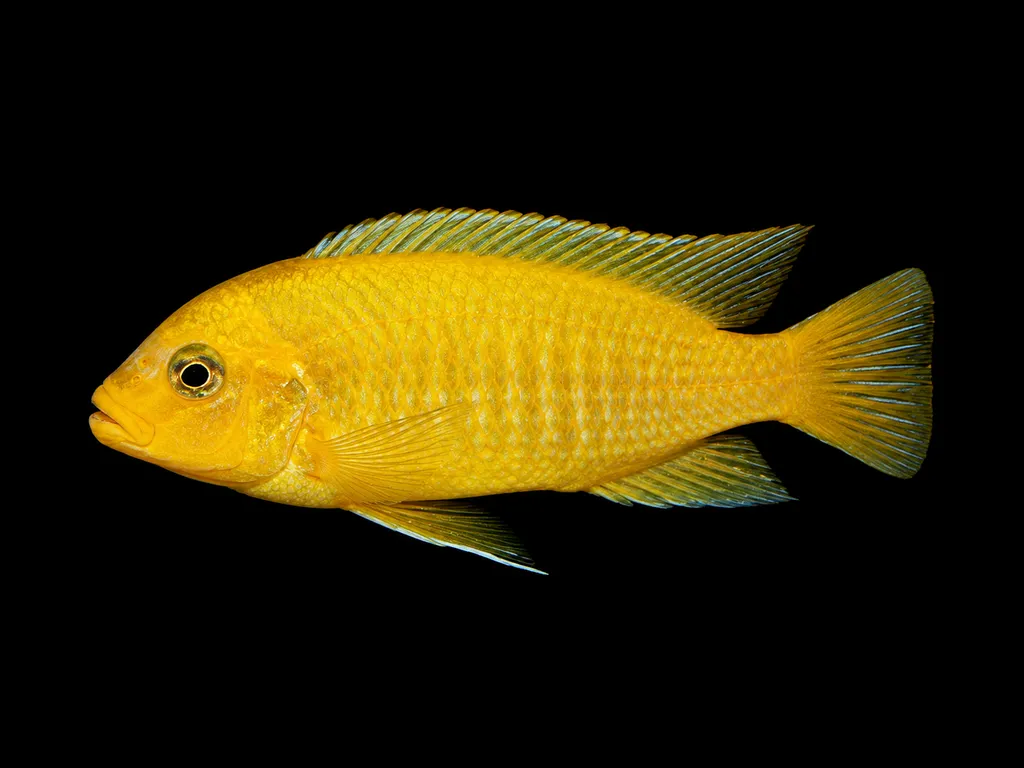 4.3 in (11 cm)53 gal (200 L)75–82°F (24–28°C)
Golden fleece zebra
Maylandia chrysomallos
4.3 in (11 cm) · 53 gal (200 L)