Salvin's cichlid
Trichromis salvini
Also known as Cichlasoma salvini, Tricolor cichlid, Yellow belly cichlid
FreshwaterFish
Care at a glance
- Temperature
- 72–79°F
- 22–26°C
- pH
- 6.5–8.0
- Adult size
- 5.9 in
- 15 cm
- Minimum tank
- 26 gal
- 100 L
- Temperament
- Aggressive
- Social behavior
- Solitary
- Tankmates
- With caution
- Swim level
- Middle
- Difficulty
- Medium
- Breeding
- Hard
- Rarity
- Rare
- Family
- Cichlidae
- Origin
- Mexico, Guatemala, Belize
Overview
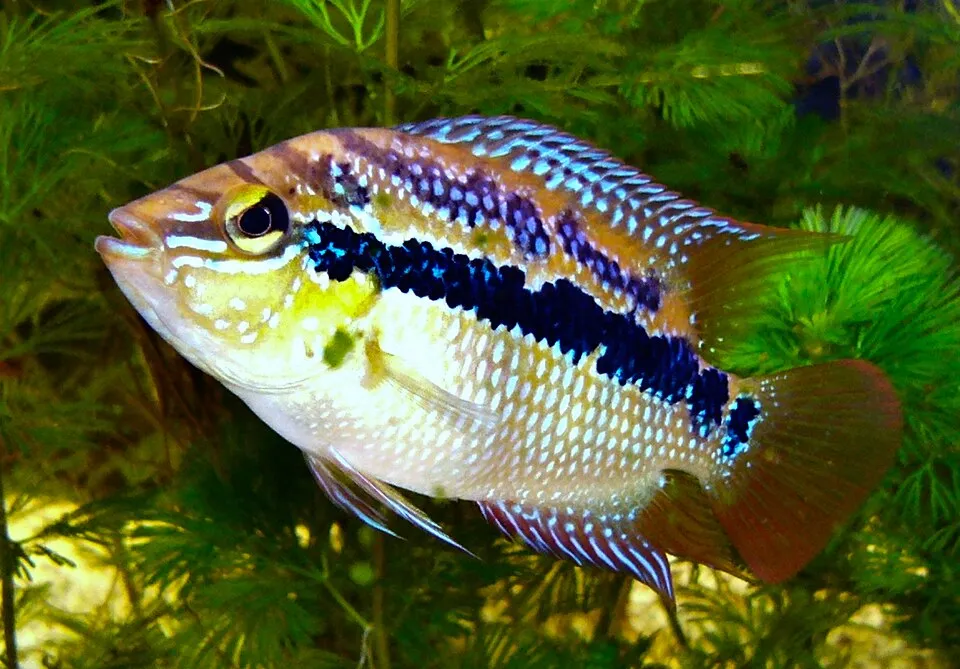
Salvin's cichlid is a colorful medium-sized cichlid with an aggressive streak well out of proportion to its size, so it is usually kept as a single fish or a bonded pair. A pair becomes intensely territorial when spawning and will drive off much larger fish, so any tankmates need to be robust and the tank needs enough room and cover for weaker fish to escape. It is a predator that will eat small fish, so choose companions of similar size such as other tough cichlids. Provide rockwork, driftwood and a sandy floor with plenty of visual barriers to break up territories. Feed a quality cichlid pellet along with frozen and live foods such as bloodworm, prawn and small pieces of fish. A tank of at least 100 liters suits one fish, with more for a pair.
In the wild
Salvin's cichlid lives on the Atlantic slope of southern Mexico, Guatemala and Belize, in warm rivers, lagoons and slow, vegetated backwaters. The water is neutral to hard, so aim for a pH of 6.5 to 8.0 and a temperature of 22 to 26 C. A tank with a sandy floor, rocks, driftwood and some sturdy or floating plants suits it, with caves and structure to serve as spawning sites and territory markers. Leave open swimming space in front, and provide enough cover and line-of-sight breaks to reduce squabbling if it is kept with tankmates.
Good to know
Cichlasoma salvini is a member of the cichlid family, Cichlidae, reaching around 15 cm. It is among the more brightly colored Central American cichlids, with a yellow body crossed by dark stripes and a red flush along the belly that intensifies in breeding fish. It is a substrate spawner that cleans a flat rock or firm surface and guards its eggs and fry as a devoted, and very aggressive, pair. Breeding is demanding mainly because of the ferocity of the parents, which can turn on tankmates and even on each other while protecting a nest.
Did you know
Salvin's cichlid is named after the British naturalist Osbert Salvin, who studied the wildlife of Central America. It is sometimes called the yellow belly cichlid for the golden body and red-flushed underside that mature fish display.
Common questions
What size tank does a Salvin's cichlid need?
A Salvin's cichlid needs at least 26 gal (100 L). It spends most of its time in the middle.
What temperature and pH does a Salvin's cichlid need?
A Salvin's cichlid is comfortable at 72–79°F (22–26°C) with a pH of 6.5–8.0.
How big does a Salvin's cichlid get?
An adult Salvin's cichlid reaches about 5.9 in (15 cm).
Related species
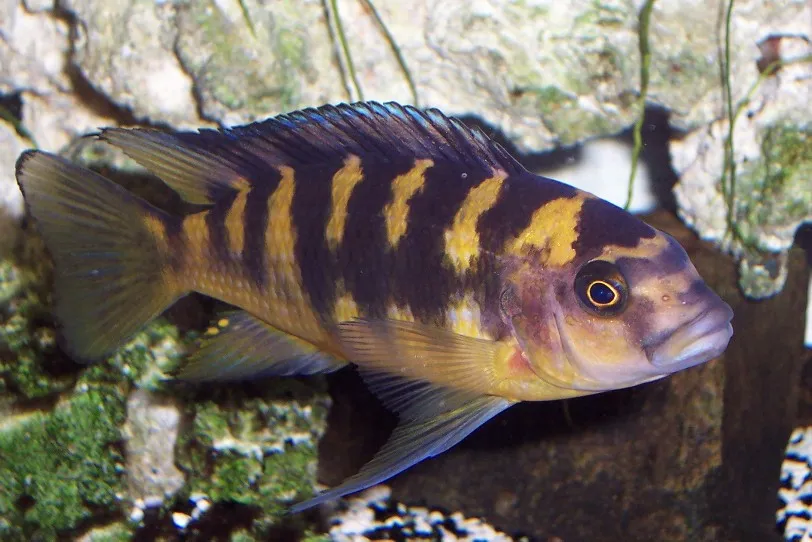 5.9 in (15 cm)53 gal (200 L)75–82°F (24–28°C)
Bumblebee cichlid
Pseudotropheus crabro
5.9 in (15 cm) · 53 gal (200 L)
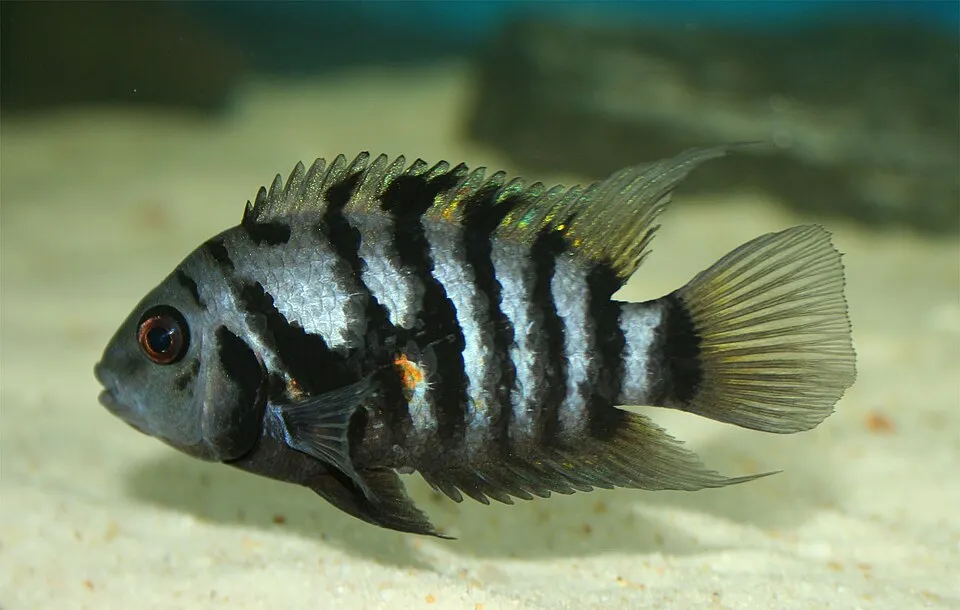 5.9 in (15 cm)25 gal (95 L)75–82°F (24–28°C)
Convict cichlid
Amatitlania nigrofasciata
5.9 in (15 cm) · 25 gal (95 L)
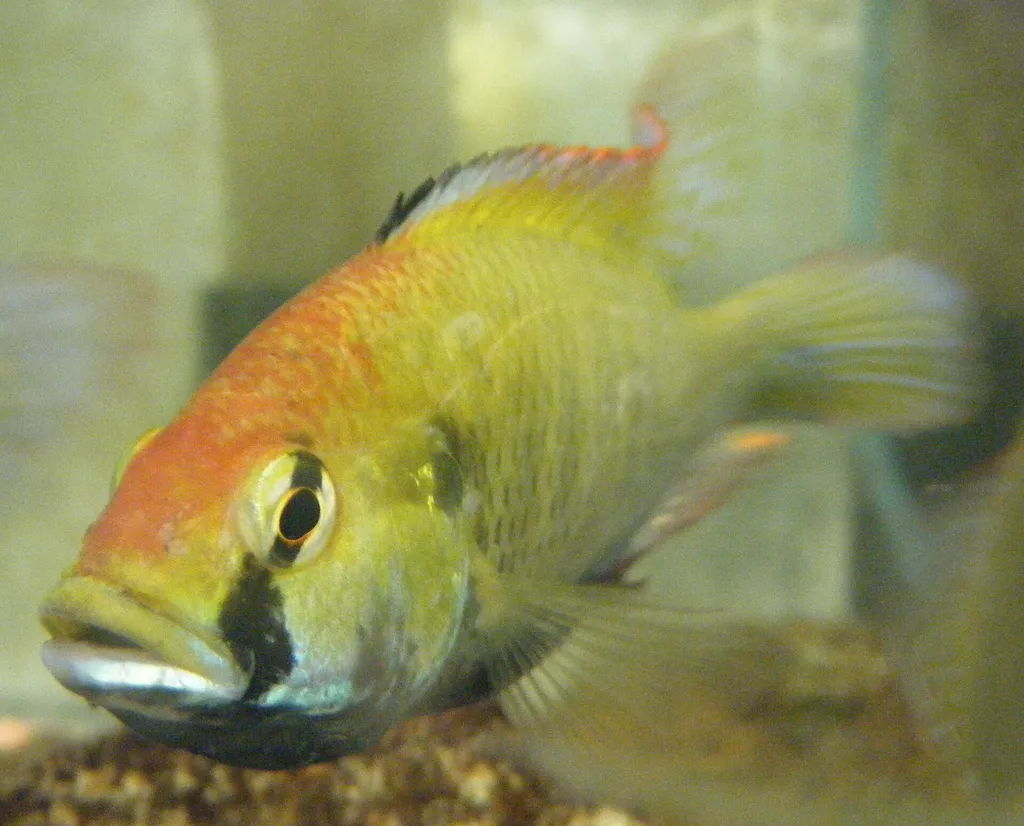 5.9 in (15 cm)66 gal (250 L)73–82°F (23–28°C)
Eastern happy
Astatotilapia calliptera
5.9 in (15 cm) · 66 gal (250 L)
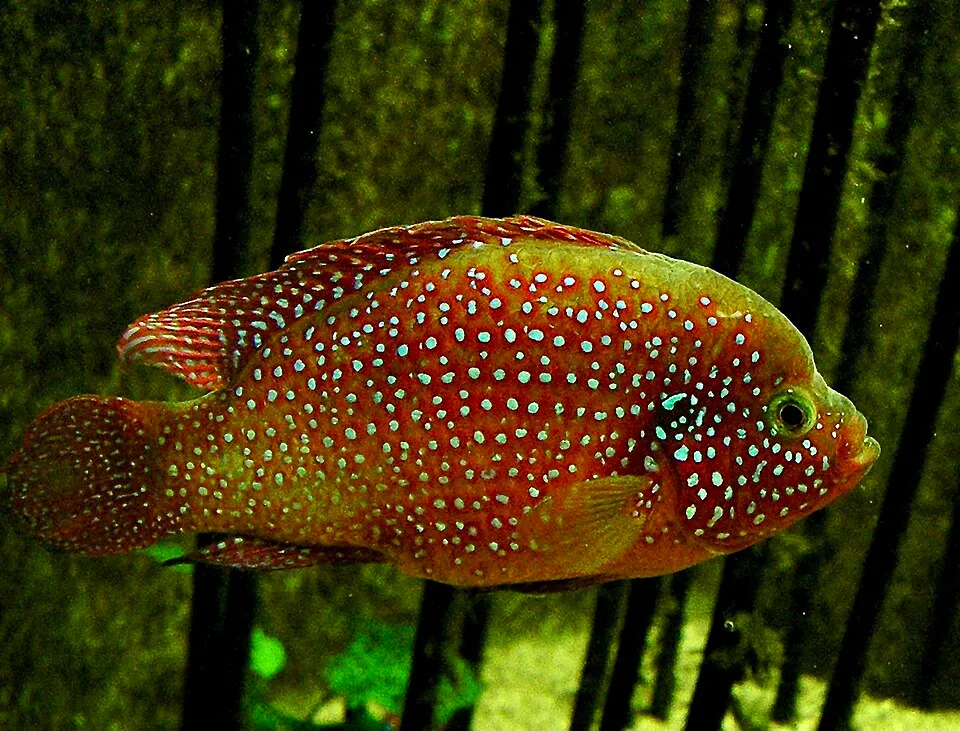 5.9 in (15 cm)30 gal (115 L)72–82°F (22–28°C)
Jewel cichlid
Hemichromis bimaculatus
5.9 in (15 cm) · 30 gal (115 L)
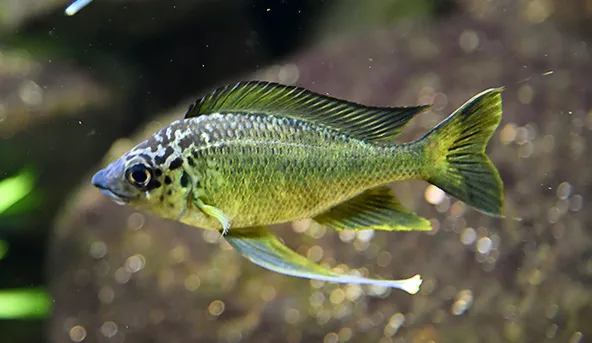 5.9 in (15 cm)61 gal (230 L)73–81°F (23–27°C)
Ventralis featherfin cichlid
Ophthalmotilapia ventralis
5.9 in (15 cm) · 61 gal (230 L)
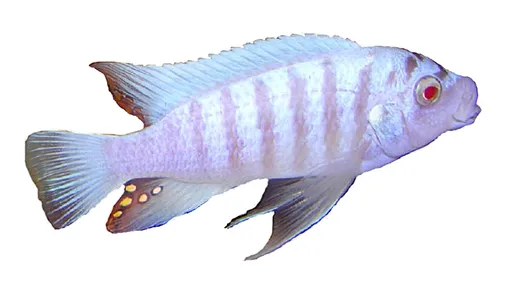 5.9 in (15 cm)55 gal (210 L)75–82°F (24–28°C)
Zebra mbuna
Maylandia zebra
5.9 in (15 cm) · 55 gal (210 L)