Blue Victoria mouthbrooder
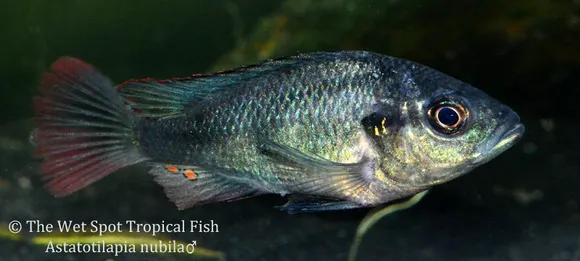
Astatotilapia nubila
Also known as Haplochromis nubilus, Astatotilapia nubilus
FreshwaterFish
Care at a glance
- Temperature
- 73–81°F
- 23–27°C
- pH
- 7.0–8.5
- Adult size
- 4.3 in
- 11 cm
- Minimum tank
- 53 gal
- 200 L
- Temperament
- Aggressive
- Social behavior
- Solitary
- Tankmates
- With caution
- Swim level
- Middle
- Diet
- Omnivore
- Difficulty
- Easy
- Breeding
- Mouthbrooder · Easy
- Rarity
- Rare
- Family
- Cichlidae
- Origin
- Lake Victoria basin
Overview
The blue Victoria mouthbrooder is a hardy, scrappy haplochromine from the Lake Victoria basin. It is easy to keep and suits a roomy tank with rock and plants.
Did you know
The blue Victoria mouthbrooder is one of the most widespread and adaptable cichlids of the Victoria basin. That flexibility helped it hang on where many specialized Victoria cichlids were lost after the Nile perch was introduced.
Caring for the blue Victoria mouthbrooder
Give a blue Victoria mouthbrooder at least 53 gal (200 L), set up with rockwork, dense planting and some open sand. Rock, plants and hiding places give weaker and lower-ranking fish room to escape. It uses the middle and lower water near cover.
Hold the temperature at 73 to 81°F (23 to 27°C) and the pH at 7.0 to 8.5. It is an unfussy eater. Quality flake and pellets, frozen bloodworm, mysis and some vegetable food all work.
The blue Victoria mouthbrooder does not shoal. Keep a single male, or a male with a female or two for breeding, and expect two males to fight. A displaying male turns aggressive, so pick tank mates that can hold their own.
A displaying male darkens to near black over blue, with red trim on the fins. It is a maternal mouthbrooder, and the female incubates the brood in her mouth. It is one of the easier haplochromines to breed, and it breeds well in neutral water too.
Good to know
Astatotilapia nubila, also known as Haplochromis nubilus, belongs to the cichlid family. Its species name comes from a word for dark-clouded.
In the wild
Astatotilapia nubila ranges widely through the Victoria basin, in rivers and small satellite lakes as well as the main lake. It favors weedy, swampy margins and papyrus edges rather than open rock. The water there is warm and hard to neutral.
Common questions
What size tank does a blue Victoria mouthbrooder need?
A blue Victoria mouthbrooder needs at least 53 gal (200 L). It spends most of its time in the middle.
What temperature and pH does a blue Victoria mouthbrooder need?
A blue Victoria mouthbrooder is comfortable at 73–81°F (23–27°C) with a pH of 7.0–8.5.
What does a blue Victoria mouthbrooder eat?
A blue Victoria mouthbrooder is an unfussy eater. Quality flake and pellets, frozen bloodworm, mysis and some vegetable food all suit it.
How big does a blue Victoria mouthbrooder get?
An adult blue Victoria mouthbrooder reaches about 4.3 in (11 cm).
How can you tell a male blue Victoria mouthbrooder from a female?
Males darken to near black over blue when they display, with red trim on the fins.
How does a blue Victoria mouthbrooder breed?
A blue Victoria mouthbrooder is a maternal mouthbrooder, and the female incubates the brood in her mouth. It is one of the easier haplochromines to breed, and it breeds well in neutral water too.
Related species
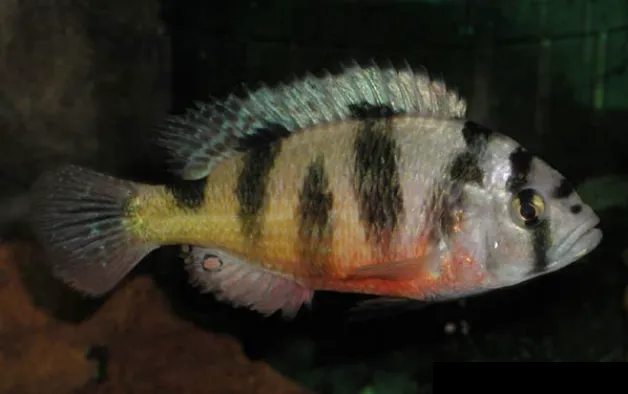 4.9 in (12.5 cm)30 gal (115 L)73–82°F (23–28°C)
Zebra obliquidens
Astatotilapia latifasciata
4.9 in (12.5 cm) · 30 gal (115 L)
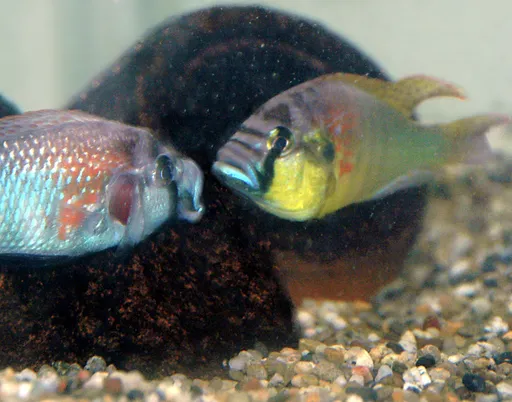 5.1 in (13 cm)53 gal (200 L)75–82°F (24–28°C)
Burton's mouthbrooder
Astatotilapia burtoni
5.1 in (13 cm) · 53 gal (200 L)
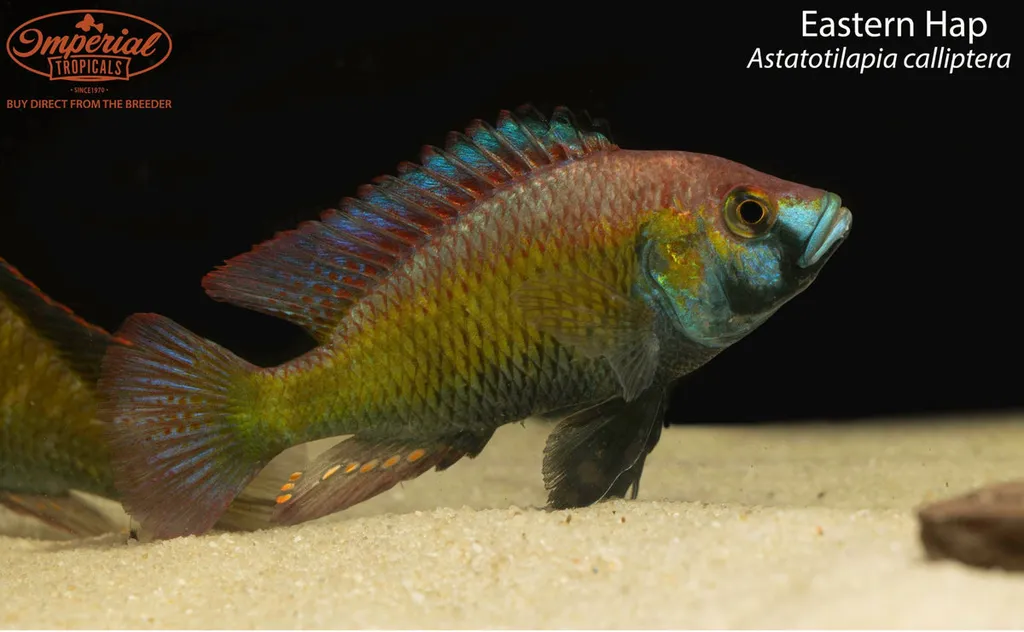 5.9 in (15 cm)66 gal (250 L)73–82°F (23–28°C)
Eastern happy
Astatotilapia calliptera
5.9 in (15 cm) · 66 gal (250 L)
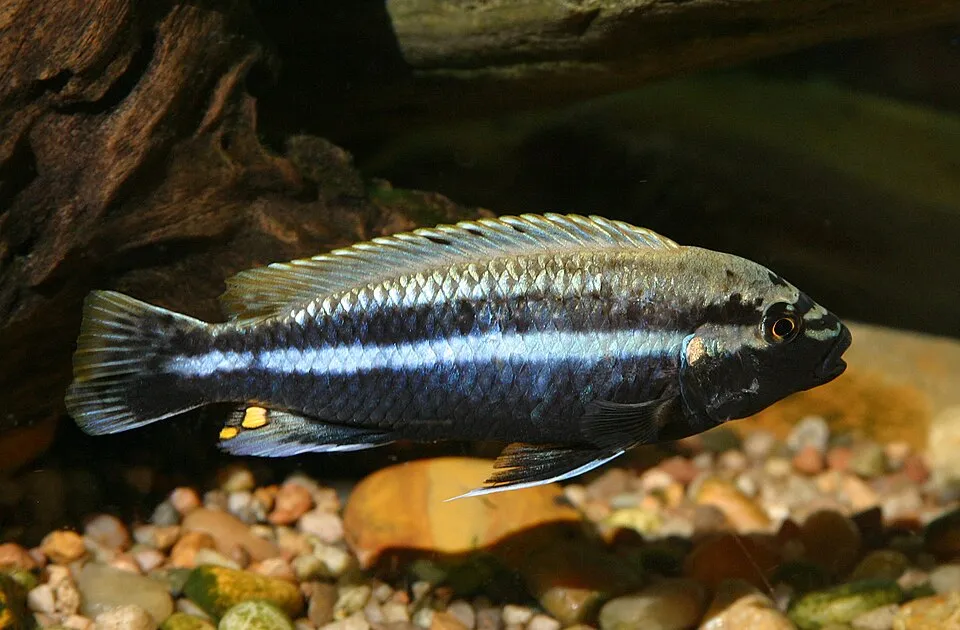 4.3 in (11 cm)53 gal (200 L)75–82°F (24–28°C)
Auratus cichlid
Melanochromis auratus
4.3 in (11 cm) · 53 gal (200 L)
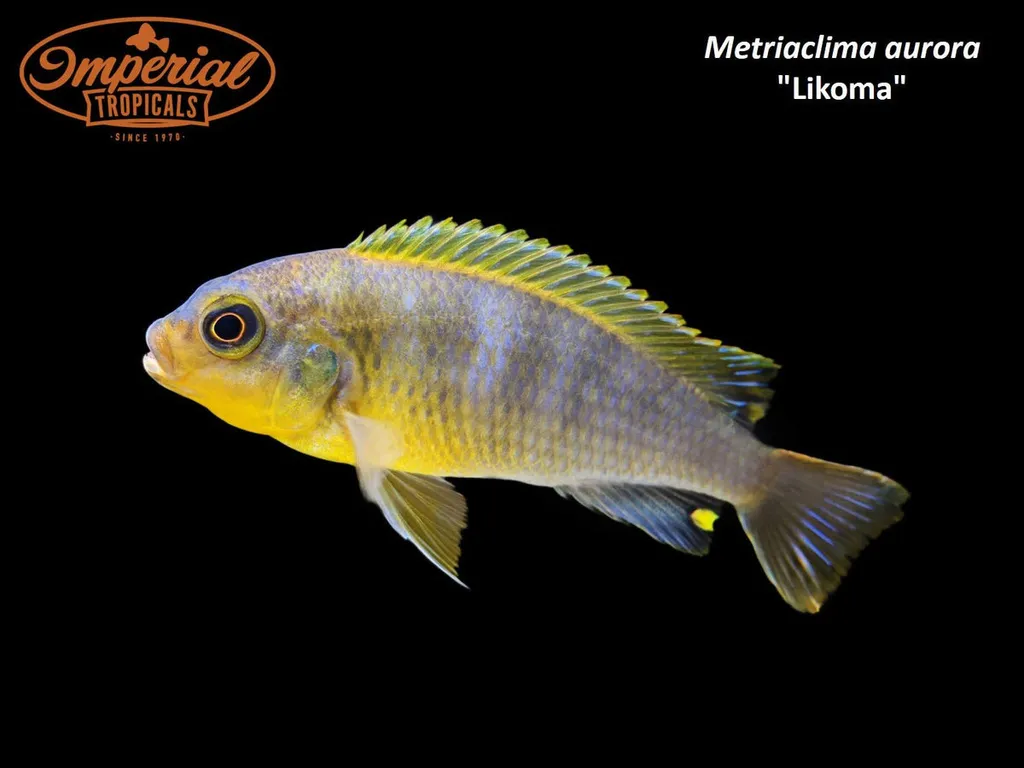 4.7 in (12 cm)30 gal (115 L)75–81°F (24–27°C)
Aurora cichlid
Maylandia aurora
4.7 in (12 cm) · 30 gal (115 L)
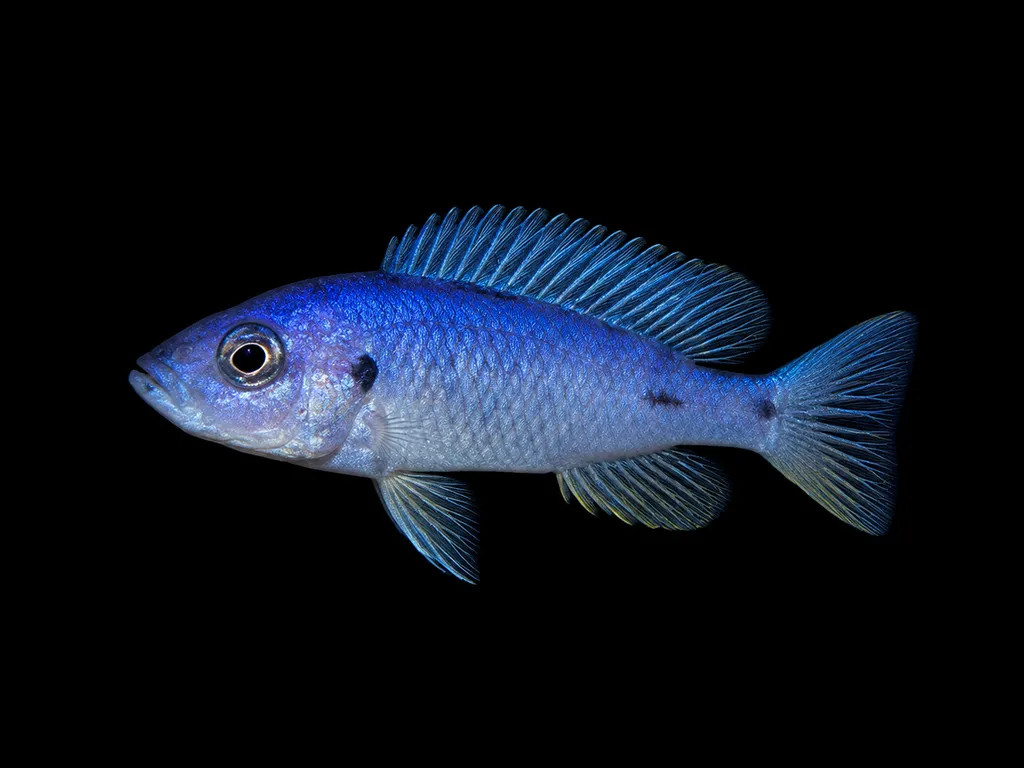 4.7 in (12 cm)53 gal (200 L)73–81°F (23–27°C)
Blue nyererei
Pundamilia azurea
4.7 in (12 cm) · 53 gal (200 L)