White-spotted cichlid
Tropheus duboisi
FreshwaterFish
Care at a glance
- Temperature
- 73–82°F
- 23–28°C
- pH
- 7.5–9.0
- Adult size
- 4.7 in
- 12 cm
- Minimum tank
- 29 gal
- 110 L
- Temperament
- Mostly peaceful
- Social behavior
- Social
- Swim level
- Middle
- Difficulty
- Difficult
- Breeding
- Hard
- Rarity
- Rare
- Family
- Cichlidae
- Origin
- Lake Tanganyika
Overview
Keep it in a larger group, six or more, which helps spread aggression rather than letting it focus on one or two fish. They hold in the middle and lower water and graze constantly on rock surfaces. The big rule is diet: feed vegetable and algae-based foods like spirulina, and avoid protein-heavy feeding, which causes serious digestive problems. Give them about 110 liters or more with plenty of rock.
In the wild
This Tropheus lives along the rocky shores of Lake Tanganyika, grazing algae off the rocks in clean, oxygen-rich water. To keep it well you need a rocky tank and hard, alkaline water on the high side, with a pH from about 7.5 up toward 9. Hold the temperature in the mid 20s C and keep oxygen levels high with good flow.
Good to know
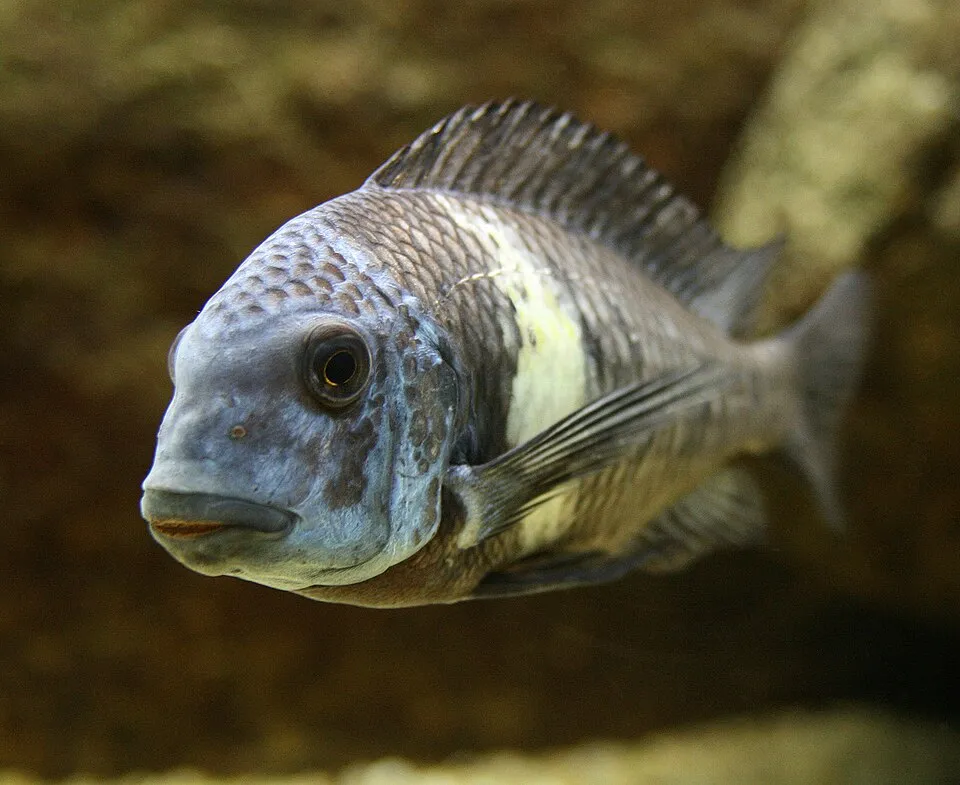
It is a Tanganyikan cichlid in the family Cichlidae and reaches about 12 cm. Juveniles are black with bright white spots, while adults shift to a dark blue-black body with a yellow band behind the head. It is a maternal mouthbrooder, with the female carrying eggs and fry in her mouth, and breeding it is difficult. Its gut is built for a high-fiber, algae-based diet.
Did you know
Young fish look nothing like the adults. The striking black body covered in white dots is a juvenile color stage that fades as the fish grows, replaced by the deep blue-black body and single yellow band of the adult. People sometimes buy the spotted juveniles not realizing the look is temporary.
Weekly picks
Tank mates
White-spotted cichlid is a mostly peaceful, social species that keeps to the middle. These picks share a community profile with it, are safe together in both directions, and overlap on water type, temperature and pH.
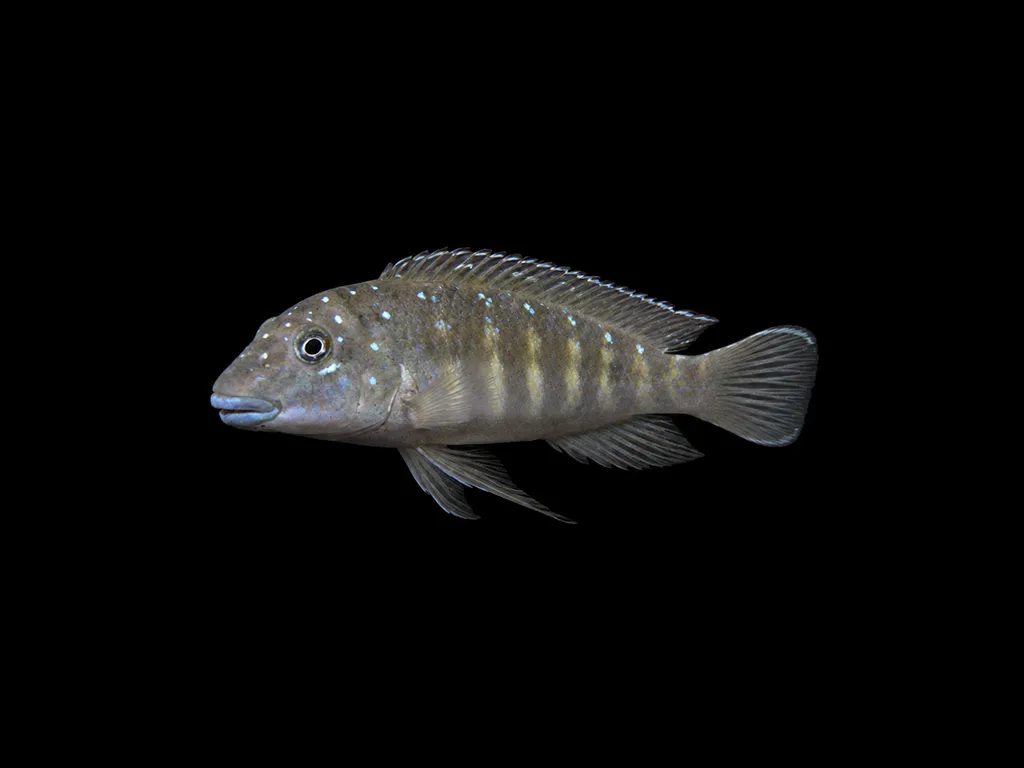
Spotfin goby cichlid
Tanganicodus irsacae
Freshwater2.8 in (7 cm) · 29 gal (110 L)75–81°F (24–27°C)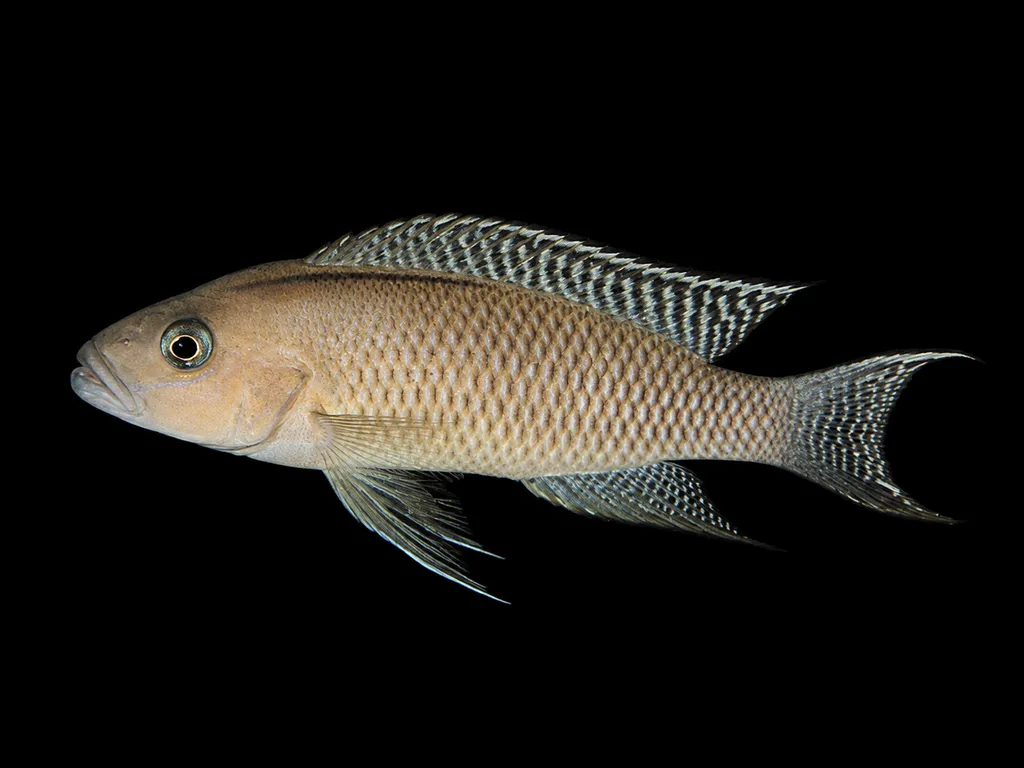
Falcicula cichlid
Neolamprologus falcicula
Freshwater3.1 in (8 cm) · 42 gal (160 L)75–81°F (24–27°C)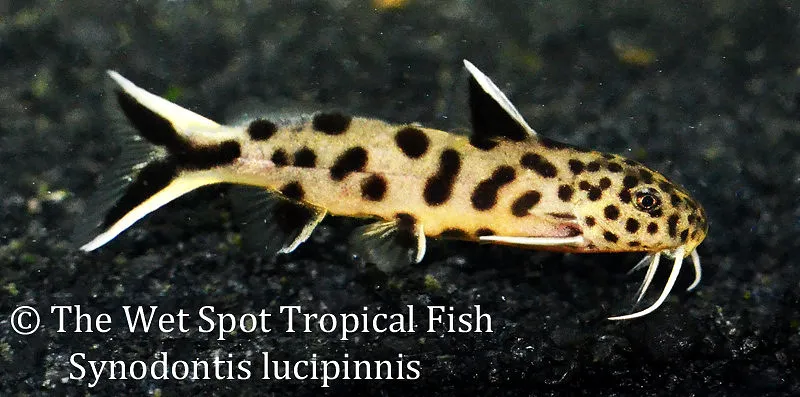
Dwarf petricola
Synodontis lucipinnis
Freshwater3.9 in (10 cm) · 30 gal (114 L)73–81°F (23–27°C)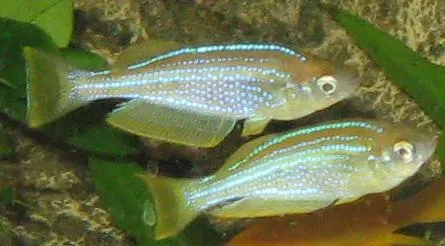
Tanganyika killifish
Lamprichthys tanganicanus
Freshwater5.5 in (14 cm) · 40 gal (150 L)73–77°F (23–25°C)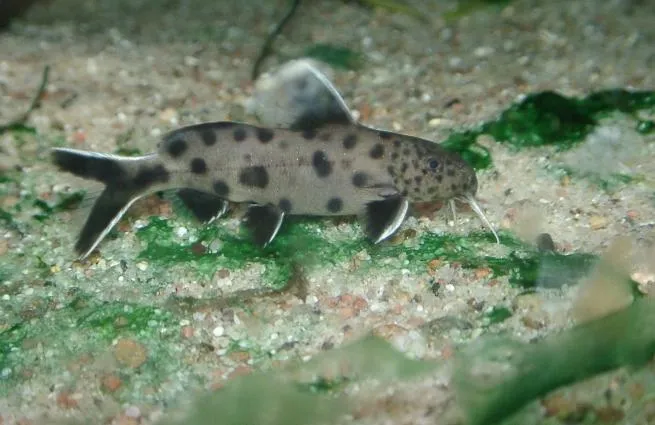
Even-Spotted squeaker
Synodontis petricola
Freshwater4.7 in (12 cm) · 45 gal (170 L)75–82°F (24–28°C)
Common questions
What size tank does a White-spotted cichlid need?
A White-spotted cichlid needs at least 29 gal (110 L). It spends most of its time in the middle.
What temperature and pH does a White-spotted cichlid need?
A White-spotted cichlid is comfortable at 73–82°F (23–28°C) with a pH of 7.5–9.0.
How big does a White-spotted cichlid get?
An adult White-spotted cichlid reaches about 4.7 in (12 cm).
Related species
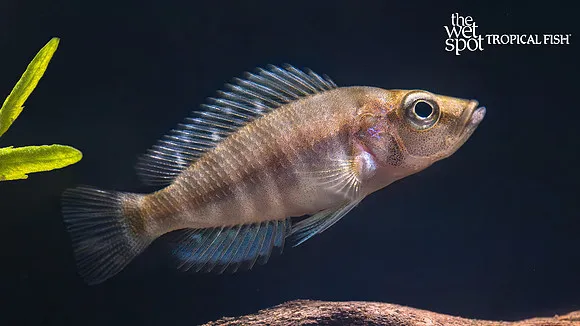 4.3 in (11 cm)37 gal (140 L)73–82°F (23–28°C)
Blue-eyed tropheus
Tropheus brichardi
4.3 in (11 cm) · 37 gal (140 L)
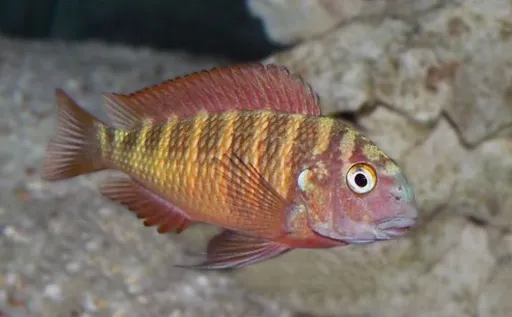 5.5 in (14 cm)92 gal (350 L)75–81°F (24–27°C)
Blunthead cichlid
Tropheus moorii
5.5 in (14 cm) · 92 gal (350 L)
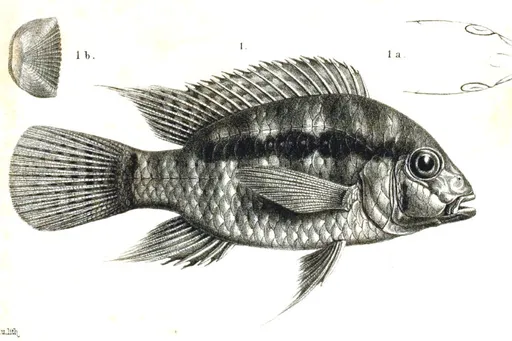 4.7 in (12 cm)34 gal (130 L)68–82°F (20–28°C)
Banded acara
Bujurquina vittata
4.7 in (12 cm) · 34 gal (130 L)
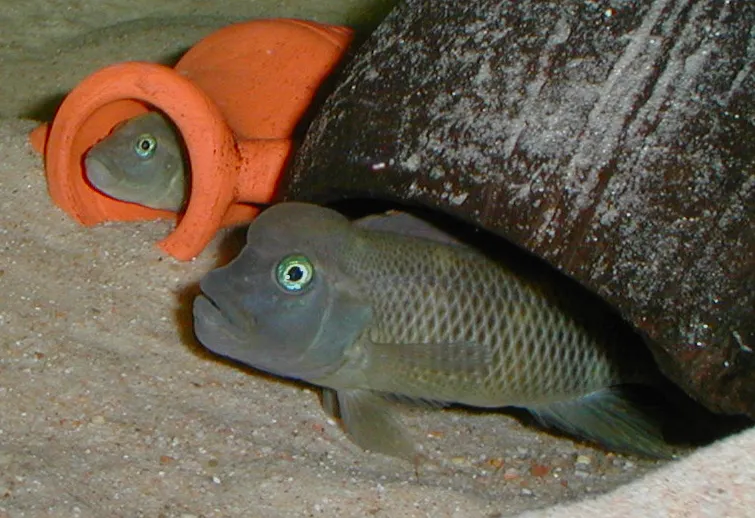 4.7 in (12 cm)25 gal (95 L)75–82°F (24–28°C)
Blockhead cichlid
Steatocranus casuarius
4.7 in (12 cm) · 25 gal (95 L)
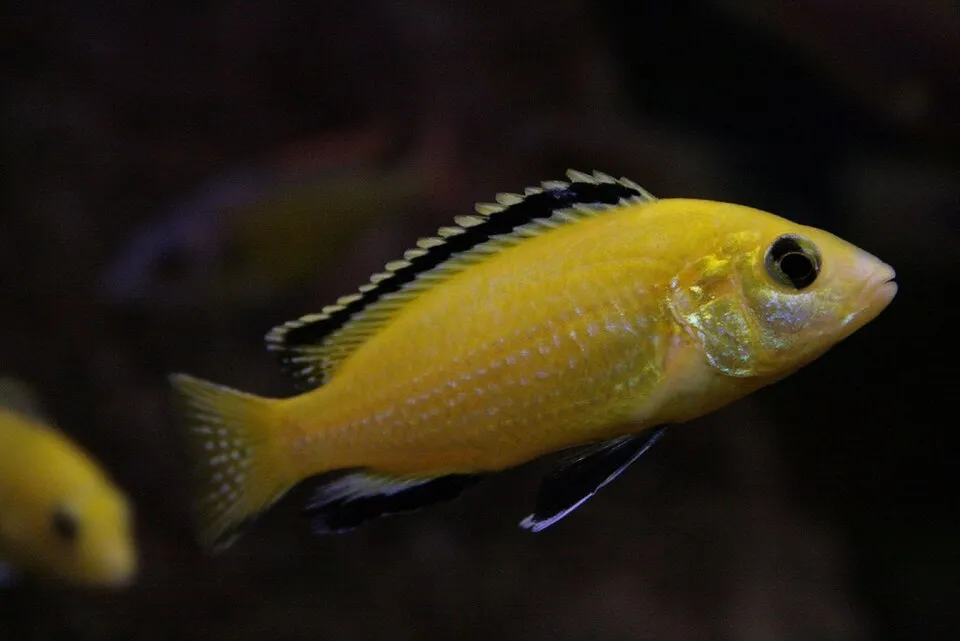 4.7 in (12 cm)42 gal (160 L)75–82°F (24–28°C)
Electric yellow cichlid
Labidochromis caeruleus
4.7 in (12 cm) · 42 gal (160 L)
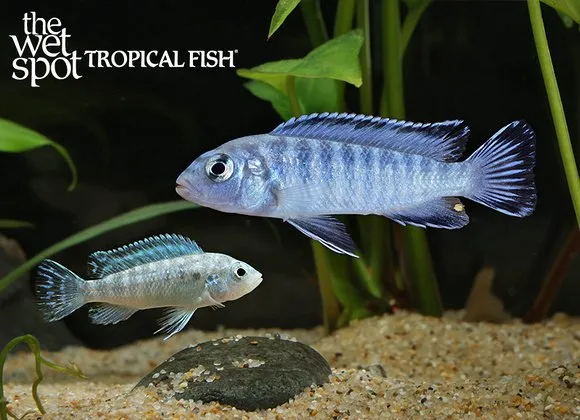 4.7 in (12 cm)53 gal (200 L)75–81°F (24–27°C)
Powder blue cichlid
Chindongo socolofi
4.7 in (12 cm) · 53 gal (200 L)