Blue-eyed tropheus
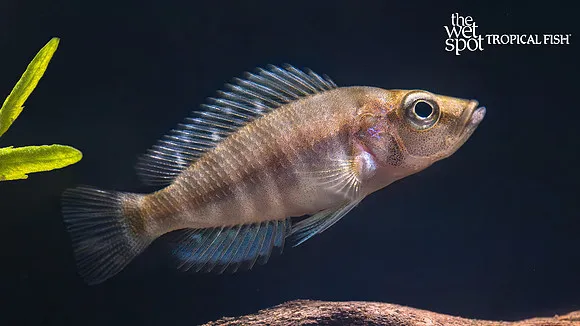
Tropheus brichardi
Also known as ulwile
FreshwaterFish
Care at a glance
- Temperature
- 73–82°F
- 23–28°C
- pH
- 7.8–9.0
- Adult size
- 4.3 in
- 11 cm
- Minimum tank
- 37 gal
- 140 L
- Temperament
- Mostly peaceful
- Social behavior
- Solitary
- Tankmates
- With caution
- Swim level
- Middle
- Difficulty
- Medium
- Breeding
- Medium
- Rarity
- Rare
- Family
- Cichlidae
- Origin
- Lake Tanganyika
Overview
Tropheus brichardi is a stocky algae grazer with a strong personality. Small groups tend to bully each other badly, so it is usually kept either as a single specimen among robust Tanganyikans or as a large colony of a dozen or more in a much bigger tank. As a single fish it is only moderately assertive and mixes with other rock dwellers of similar size. A tank of at least 140 liters with plenty of rock caves suits one specimen. Diet is the critical part of its care. It is a herbivore that grazes algae in the wild, so feed a low protein, vegetable based cichlid food and offer rich meaty foods only rarely, since too much protein triggers the digestive illness known as bloat.
In the wild
The blue-eyed tropheus comes from the rocky shoreline of Lake Tanganyika, where it grazes the film of algae and tiny life that coats the stones in the shallows. This is hard, alkaline, mineral rich water, so keep the tank between 23 and 28 degrees Celsius with a pH from about 7.8 up to 9 and high hardness. Fill the aquarium with stacked rock and caves over a sand bed to give the fish surfaces to graze and territories to hold, and keep the water clean and well oxygenated. Bright lighting encourages the algae growth these fish naturally feed on.
Good to know
Tropheus brichardi is a member of the cichlid family, Cichlidae, and reaches around 11 centimeters. Like all Tropheus it is a maternal mouthbrooder. The female lays only a small number of large eggs, picks them up almost at once, and broods them in her mouth for roughly four weeks, far longer than most cichlids, before releasing a handful of big, fully formed fry. Because the brood is small but the fry are well developed, a settled colony breeds steadily once the fish are mature and their diet is kept low in protein.
Did you know
Despite a fierce reputation, this fish is fairly peaceful toward other species and mostly squabbles with its own kind. Females brood their eggs and fry in the mouth for about four weeks, one of the longest mouthbrooding periods among cichlids.
Common questions
What size tank does a Blue-eyed tropheus need?
A Blue-eyed tropheus needs at least 37 gal (140 L). It spends most of its time in the middle.
What temperature and pH does a Blue-eyed tropheus need?
A Blue-eyed tropheus is comfortable at 73–82°F (23–28°C) with a pH of 7.8–9.0.
How big does a Blue-eyed tropheus get?
An adult Blue-eyed tropheus reaches about 4.3 in (11 cm).
Related species
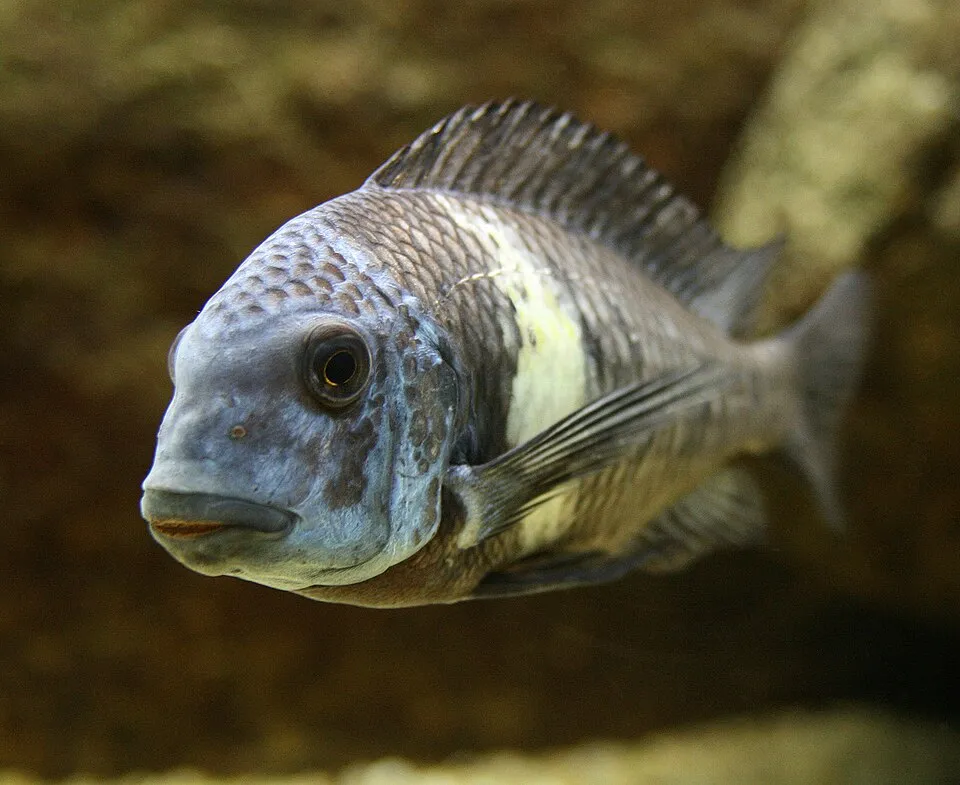 4.7 in (12 cm)29 gal (110 L)73–82°F (23–28°C)
White-spotted cichlid
Tropheus duboisi
4.7 in (12 cm) · 29 gal (110 L)
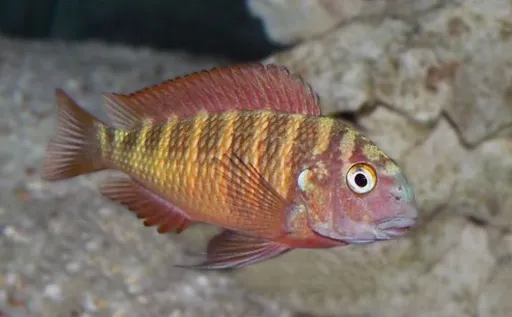 5.5 in (14 cm)92 gal (350 L)75–81°F (24–27°C)
Blunthead cichlid
Tropheus moorii
5.5 in (14 cm) · 92 gal (350 L)
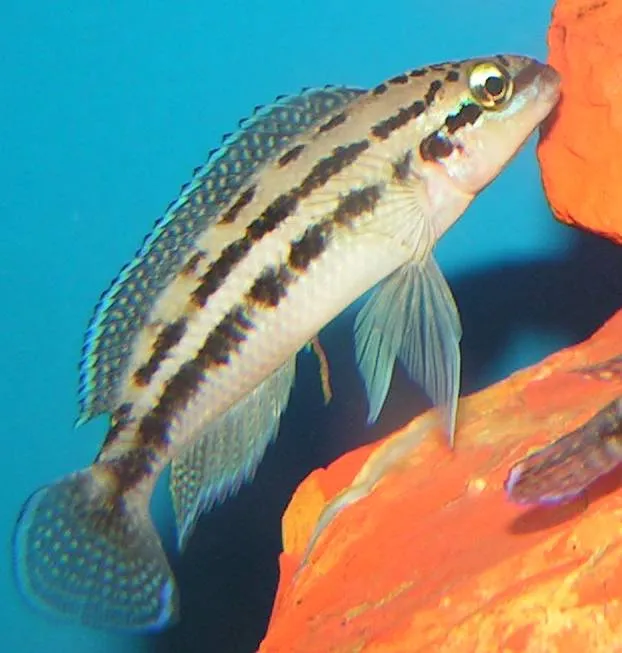 4.3 in (11 cm)20 gal (75 L)73–81°F (23–27°C)
Brown julie
Julidochromis dickfeldi
4.3 in (11 cm) · 20 gal (75 L)
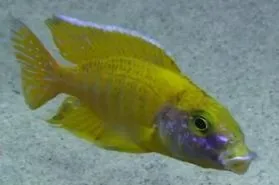 4.3 in (11 cm)63 gal (240 L)77–84°F (25–29°C)
Sunshine peacock cichlid
Aulonocara baenschi
4.3 in (11 cm) · 63 gal (240 L)
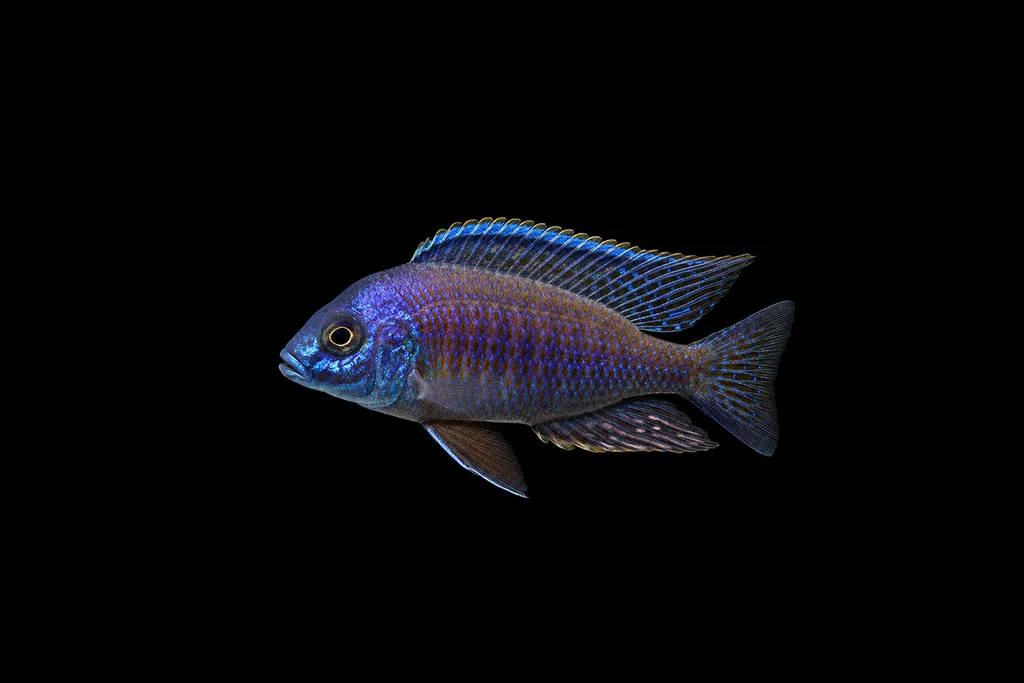 4.3 in (11 cm)79 gal (300 L)75–81°F (24–27°C)
Verduyn's utaka
Copadichromis verduyni
4.3 in (11 cm) · 79 gal (300 L)
- 4.3 in (11 cm)53 gal (200 L)73–81°F (23–27°C)
Lividus hap
Haplochromis lividus
4.3 in (11 cm) · 53 gal (200 L)