Brown julie
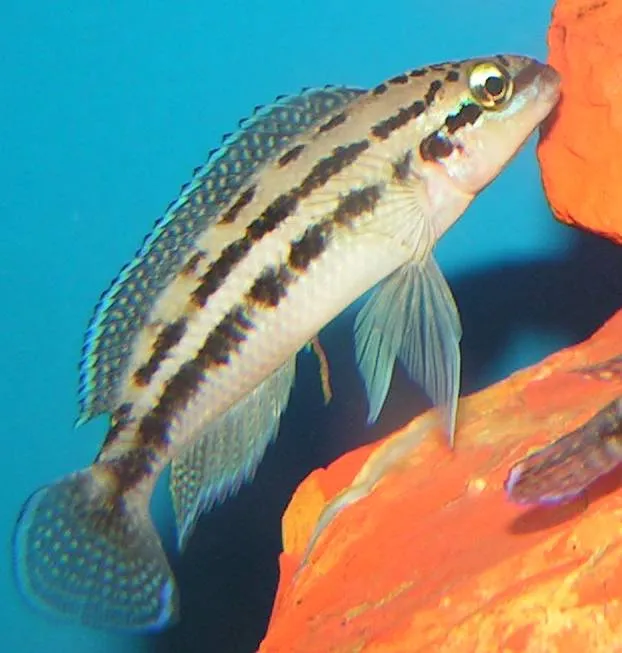
Julidochromis dickfeldi
Also known as Dickfeld's Julie
FreshwaterFish
Care at a glance
- Temperature
- 73–81°F
- 23–27°C
- pH
- 7.8–9.0
- Adult size
- 4.3 in
- 11 cm
- Minimum tank
- 20 gal
- 75 L
- Temperament
- Mostly peaceful
- Social behavior
- Social
- Swim level
- Middle
- Difficulty
- Medium
- Breeding
- Hard
- Rarity
- Common
- Family
- Cichlidae
- Origin
- Lake Tanganyika
Overview
A 75 liter tank suits a pair, and a bonded pair is really the way to keep them, since they are scrappy toward their own kind in tight quarters. They hold the middle and lower zones around their rockwork and pick at small invertebrates and biofilm in the wild. Feed quality cichlid pellets plus frozen brine shrimp or daphnia. They are reasonably peaceful with similar rock-dwelling Tanganyikans but will defend their cave hard.
In the wild
Brown julies live along the rocky shorelines of Lake Tanganyika, tucking into crevices and caves in the rock piles. To keep them well, build a tank with lots of stacked rock and clear sightlines broken up by cover, since they claim and defend a patch of rock. The lake water is hard and alkaline, so aim for a pH in the 8s and warm temps in the mid 20s C.
Good to know
This is a small Tanganyikan cichlid in the family Cichlidae, growing to about 11 cm. They form monogamous pairs and are substrate spawners that lay eggs inside caves and crevices. Both parents guard the eggs and fry, which is part of why breeding them in a community is tricky.
Did you know
When a pair spawns, they often raise several batches of fry at once, and older juveniles will tolerate their younger siblings nearby instead of being chased off. That kind of overlapping brood care is unusual and lets a pair build up a little colony on one rock pile over time.
Weekly picks
Tank mates
Brown julie is a mostly peaceful, social species that keeps to the middle. These picks share a community profile with it, are safe together in both directions, and overlap on water type, temperature and pH.
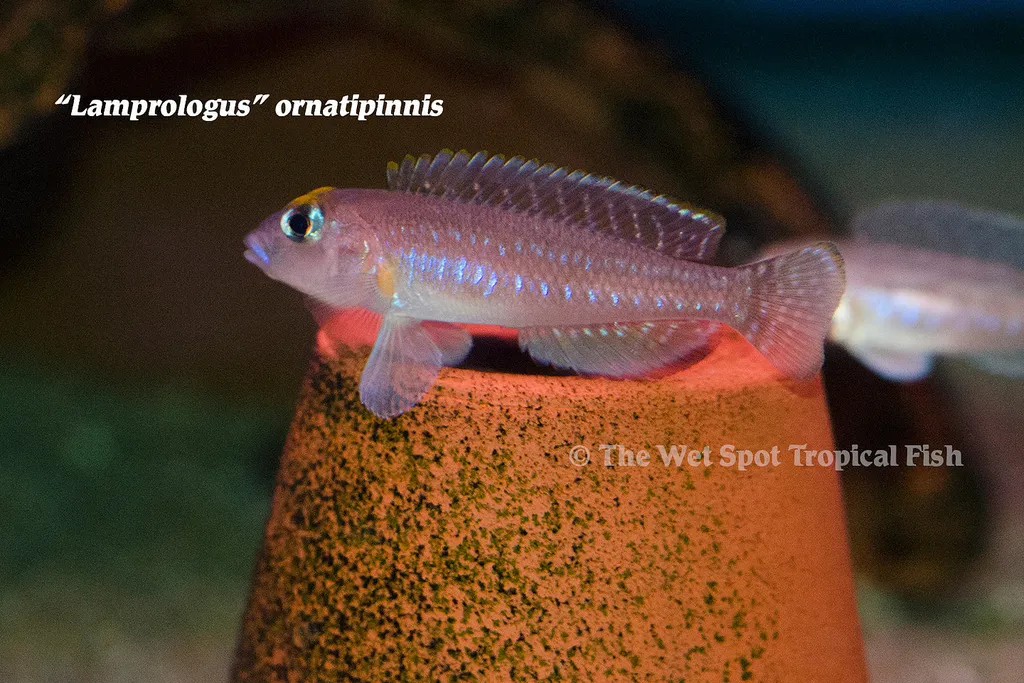
Ornate shell dweller
Lamprologus ornatipinnis
Freshwater2.4 in (6 cm) · 16 gal (60 L)75–81°F (24–27°C)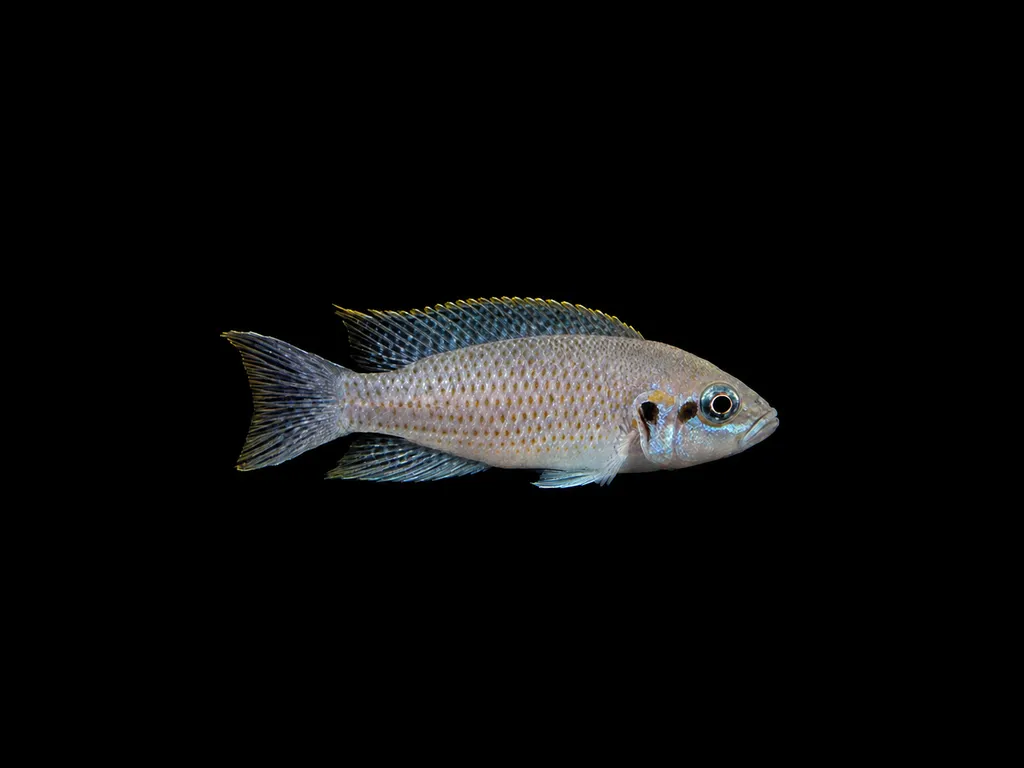
Splendid lamprologus
Neolamprologus splendens
Freshwater3.1 in (8 cm) · 42 gal (160 L)75–81°F (24–27°C)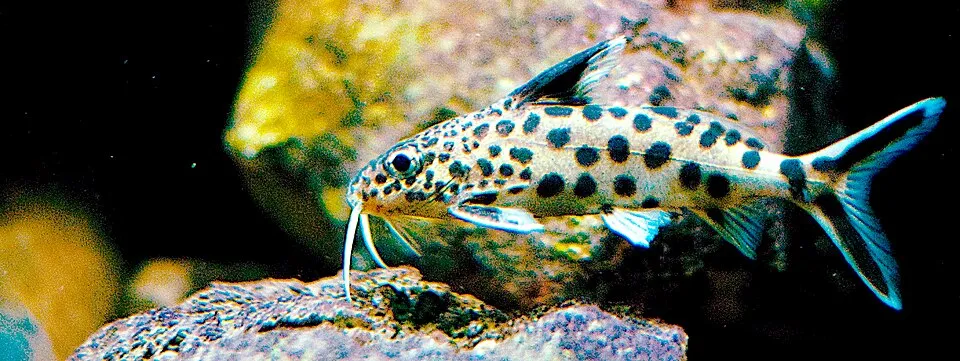
Cuckoo squeaker
Synodontis multipunctatus
Freshwater9.8 in (25 cm) · 50 gal (190 L)75–82°F (24–28°C)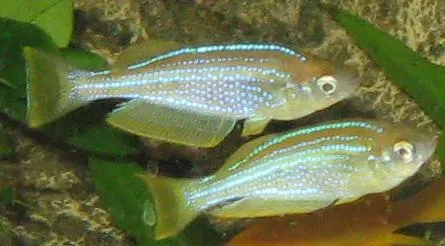
Tanganyika killifish
Lamprichthys tanganicanus
Freshwater5.5 in (14 cm) · 40 gal (150 L)73–77°F (23–25°C)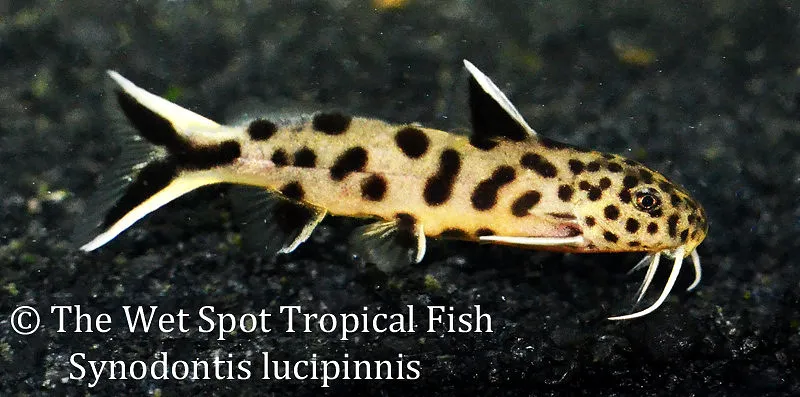
Dwarf petricola
Synodontis lucipinnis
Freshwater3.9 in (10 cm) · 30 gal (114 L)73–81°F (23–27°C)
Common questions
What size tank does a Brown julie need?
A Brown julie needs at least 20 gal (75 L). It spends most of its time in the middle.
What temperature and pH does a Brown julie need?
A Brown julie is comfortable at 73–81°F (23–27°C) with a pH of 7.8–9.0.
How big does a Brown julie get?
An adult Brown julie reaches about 4.3 in (11 cm).
Related species
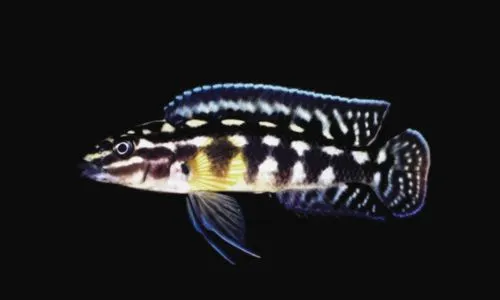 5.9 in (15 cm)29 gal (110 L)73–81°F (23–27°C)
Marlier's julie
Julidochromis marlieri
5.9 in (15 cm) · 29 gal (110 L)
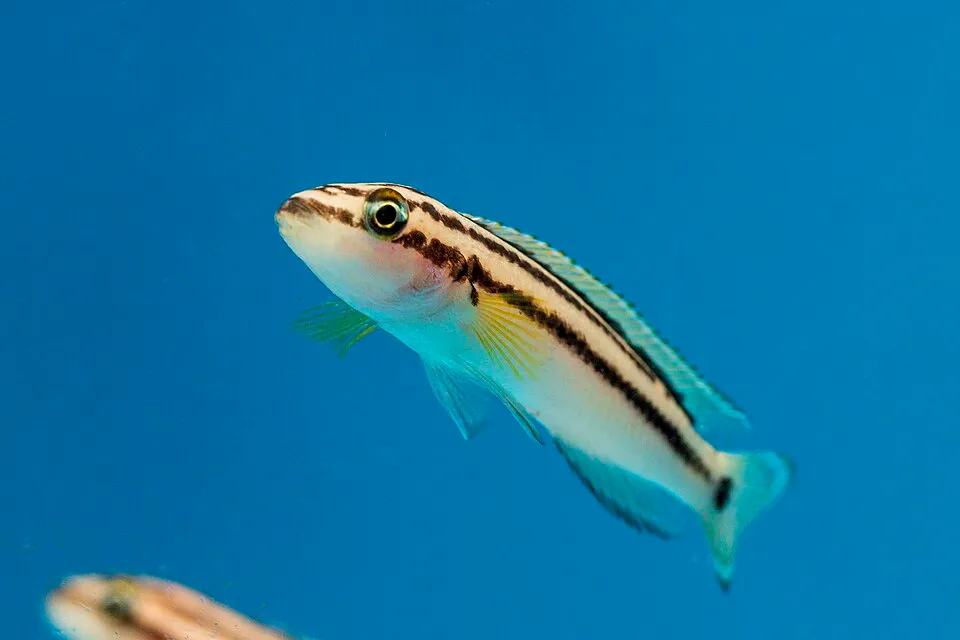 3.1 in (8 cm)18 gal (70 L)73–81°F (23–27°C)
Golden julie
Julidochromis ornatus
3.1 in (8 cm) · 18 gal (70 L)
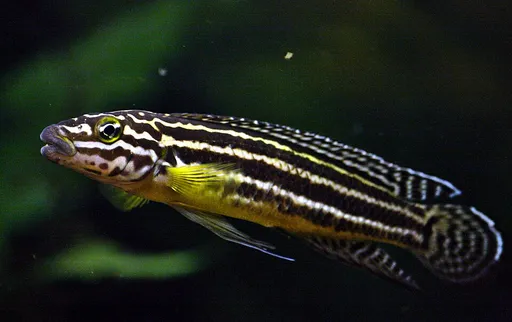 5.1 in (13 cm)29 gal (110 L)75–81°F (24–27°C)
Convict julie
Julidochromis regani
5.1 in (13 cm) · 29 gal (110 L)
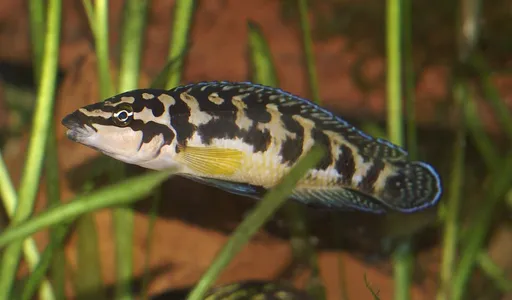 2.8 in (7 cm)20 gal (75 L)75–81°F (24–27°C)
Masked julie
Julidochromis transcriptus
2.8 in (7 cm) · 20 gal (75 L)
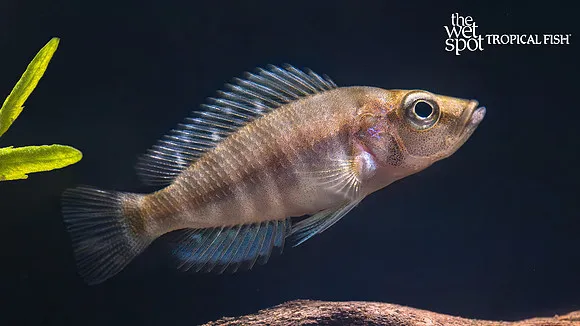 4.3 in (11 cm)37 gal (140 L)73–82°F (23–28°C)
Blue-eyed tropheus
Tropheus brichardi
4.3 in (11 cm) · 37 gal (140 L)
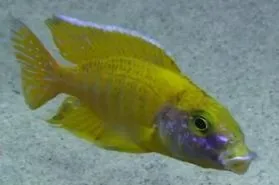 4.3 in (11 cm)63 gal (240 L)77–84°F (25–29°C)
Sunshine peacock cichlid
Aulonocara baenschi
4.3 in (11 cm) · 63 gal (240 L)