Blunthead cichlid
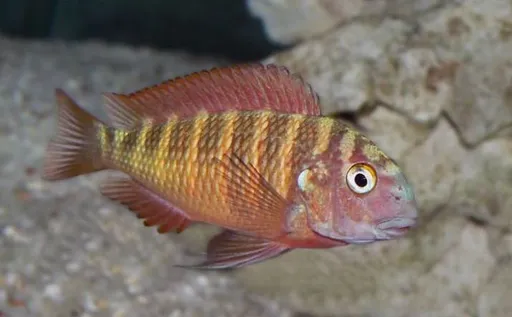
Tropheus moorii
Also known as Moorii, Tropheus, Kaiser cichlid, Blue Rainbow
FreshwaterFish
Care at a glance
- Temperature
- 75–81°F
- 24–27°C
- pH
- 7.8–9.0
- Adult size
- 5.5 in
- 14 cm
- Minimum tank
- 29 gal
- 110 L
- Temperament
- Aggressive
- Social behavior
- Social
- Tankmates
- With caution
- Swim level
- Middle
- Diet
- Herbivore
- Difficulty
- Difficult
- Breeding
- Mouthbrooder · Medium
- Rarity
- Common
- Family
- Cichlidae
- Origin
- Rocky surge zones along the shores of Lake Tanganyika in East Africa.
Overview
The blunthead cichlid is an active, aggressive grazer from Lake Tanganyika. It is a demanding fish for experienced keepers, not a beginner project.
Did you know
Keepers often say the safest way to hold blunthead cichlids is in a crowd. A big group spreads the bullying thin, instead of letting one fish get picked to death.
Caring for the blunthead cichlid
A single blunthead cichlid needs at least 29 gal (110 L), in a tank 4 ft (120 cm) long. Small groups bully each other badly, so keep either one fish among robust Tanganyikans or a colony of 15 or more. A colony needs 85 gal (320 L) or more, with plenty of rock to spread out its nonstop aggression.
Keep the water hard and alkaline, at 75 to 81°F (24 to 27°C) and a pH of 7.8 to 9.0. Feed only vegetable-based foods such as spirulina flake, and never rich protein foods, since bloat kills quickly.
Blunthead cichlids are aggressive, so choose any tank mates with caution. Do not mix color races if you want pure fry. It is a maternal mouthbrooder that produces a small number of very large eggs and well-developed fry. Breeding is of moderate difficulty.
Good to know
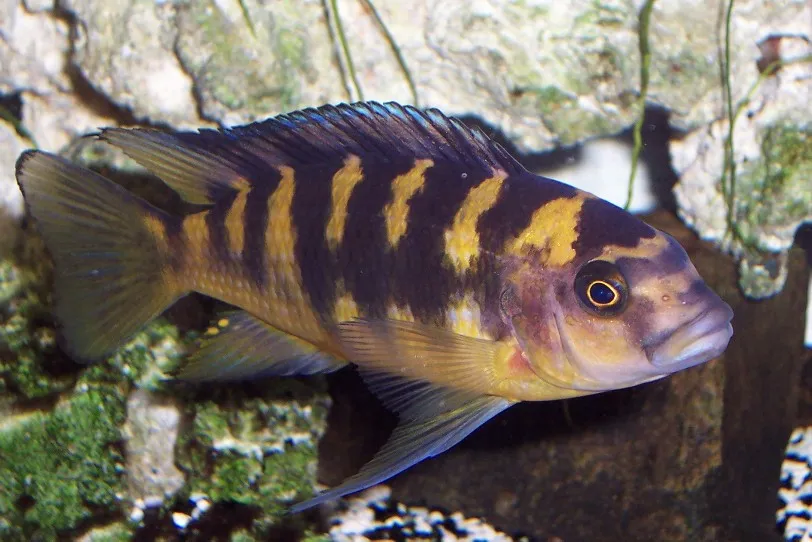
The blunthead cichlid, Tropheus moorii, comes in dozens of geographic races, each with its own colors, from red and orange to yellow banded. Races from different shorelines can look completely different despite being the same species. Its gut is specialized for an algae diet, which makes it prone to a deadly digestive illness called bloat when fed the wrong foods.
In the wild
The blunthead cichlid grazes algae from rocks in the wave-washed shallows of Lake Tanganyika. It lives in loose colonies, but every fish defends its own feeding spot with constant squabbling.
Common questions
What size tank does a blunthead cichlid need?
A blunthead cichlid needs at least 29 gal (110 L). It spends most of its time in the middle.
What temperature and pH does a blunthead cichlid need?
A blunthead cichlid is comfortable at 75–81°F (24–27°C) with a pH of 7.8–9.0.
What does a blunthead cichlid eat?
A blunthead cichlid eats only vegetable-based foods, such as spirulina flake. Never give it rich protein foods, since bloat kills quickly.
How big does a blunthead cichlid get?
An adult blunthead cichlid reaches about 5.5 in (14 cm).
How does a blunthead cichlid breed?
The blunthead cichlid is a maternal mouthbrooder that produces a small number of very large eggs. Its fry are well developed, and breeding is of moderate difficulty.
Related species
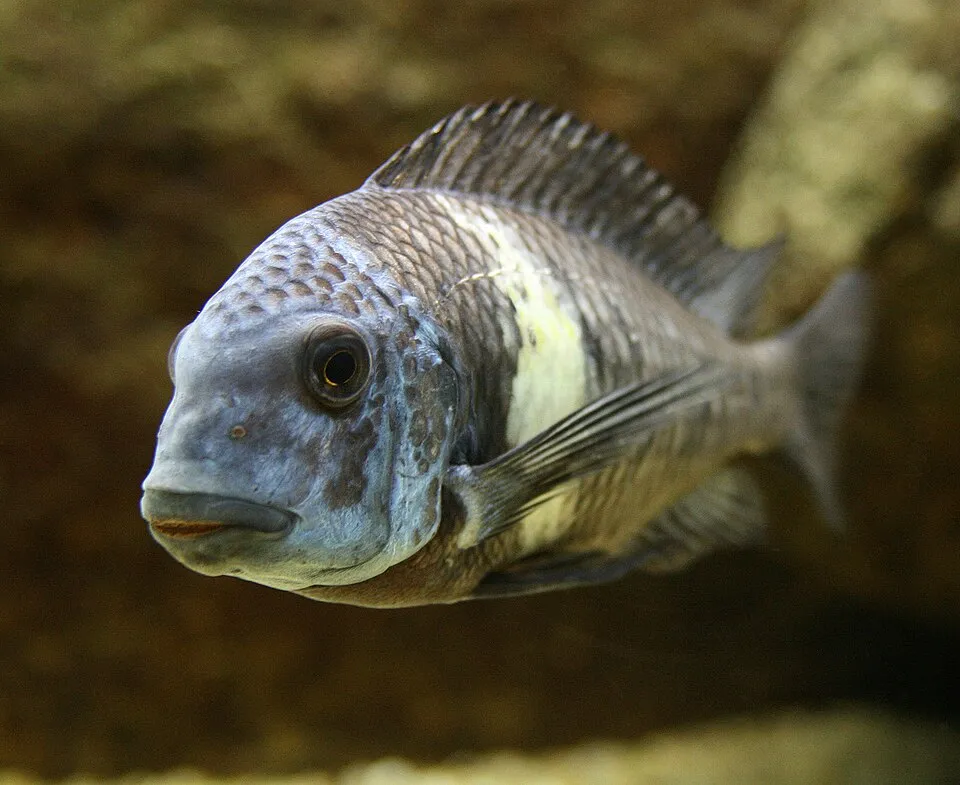 4.7 in (12 cm)29 gal (110 L)73–82°F (23–28°C)
White-spotted cichlid
Tropheus duboisi
4.7 in (12 cm) · 29 gal (110 L)
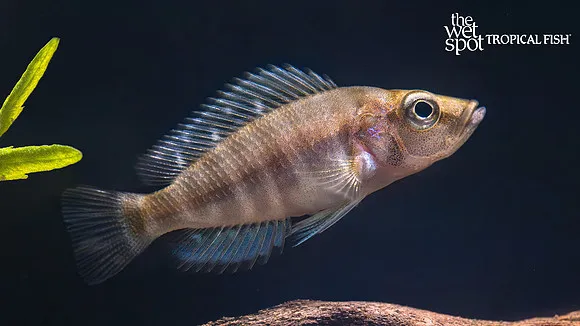 4.3 in (11 cm)37 gal (140 L)73–82°F (23–28°C)
Blue-eyed tropheus
Tropheus brichardi
4.3 in (11 cm) · 37 gal (140 L)
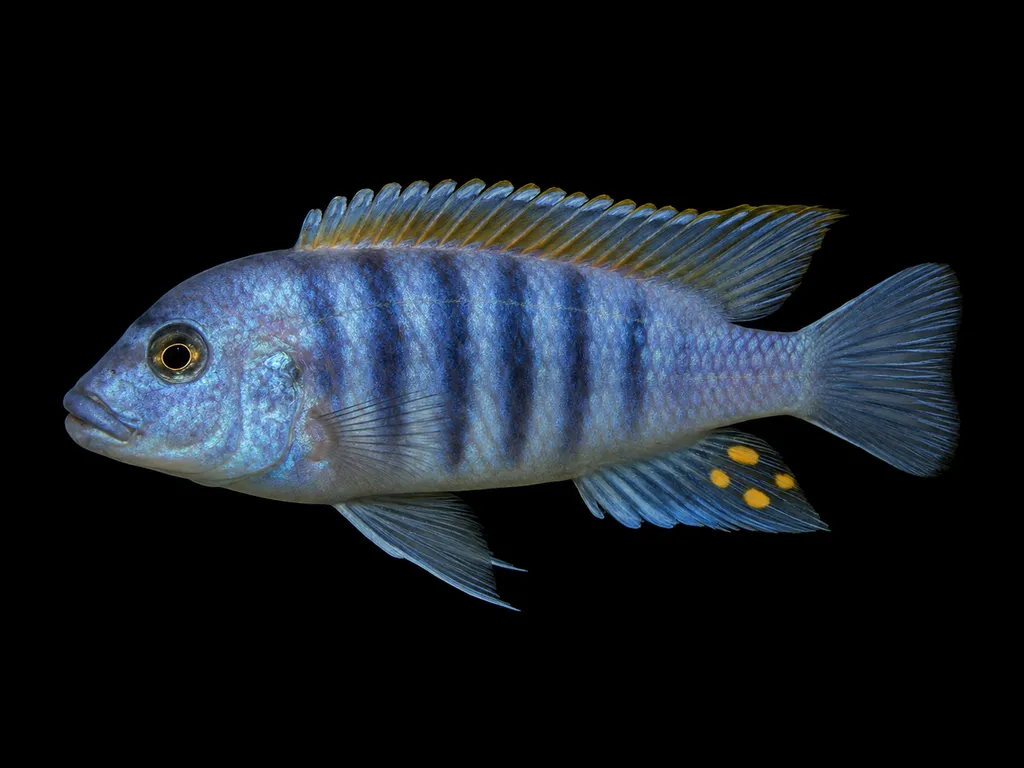 5.5 in (14 cm)55 gal (210 L)75–82°F (24–28°C)
Ice blue zebra
Maylandia greshakei
5.5 in (14 cm) · 55 gal (210 L)
 5.5 in (14 cm)53 gal (200 L)75–82°F (24–28°C)
Kenyi cichlid
Maylandia lombardoi
5.5 in (14 cm) · 53 gal (200 L)
 5.9 in (15 cm)53 gal (200 L)75–82°F (24–28°C)
Bumblebee cichlid
Pseudotropheus crabro
5.9 in (15 cm) · 53 gal (200 L)
 5.9 in (15 cm)25 gal (95 L)75–82°F (24–28°C)
Convict cichlid
Amatitlania nigrofasciata
5.9 in (15 cm) · 25 gal (95 L)