Silver flying fox
Crossocheilus reticulatus
Also known as Reticulated flying fox, Reticulated Siamese algae eater, Crossocheilus tchangi, Reticulated SAE
FreshwaterFish
Care at a glance
- Temperature
- 64–77°F
- 18–25°C
- pH
- 6.5–7.5
- Adult size
- 6.3 in
- 16 cm
- Minimum tank
- 53 gal
- 200 L
- Temperament
- Mostly peaceful
- Social behavior
- Social
- Swim level
- Bottom
- Difficulty
- Easy
- Breeding
- No record
- Rarity
- Common
- Family
- Cyprinidae
- Origin
- Widespread in rivers and streams across mainland Southeast Asia, including the Mekong and Chao Phraya basins.
Overview
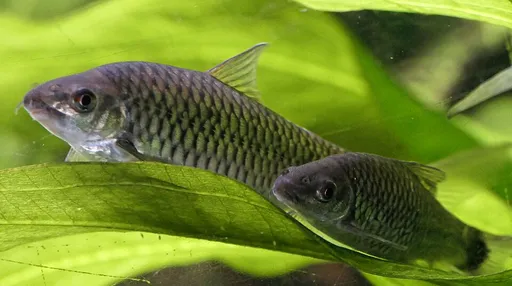
This is a bigger algae eater that reaches about 16 cm, so give it a tank of at least 200 litres with a length of 120 cm or more. Keep water clean and moving at 18 to 25 C with a pH of 6.5 to 7.5. It eats hair algae and biofilm well but needs extra food too, such as algae wafers, blanched vegetables, and sinking pellets. Keep either one alone or a group of five or more to spread out aggression, since pairs tend to bully each other.
In the wild
The silver flying fox lives in flowing rivers and streams over much of Southeast Asia, grazing algae and biofilm from rocks, wood, and plant leaves. It is one of the larger algae-eating cyprinids and works the bottom and lower midwater. Adults hold loose feeding territories and can be pushy toward their own kind. It prefers clean, well oxygenated water and shows its best silver color in cooler tanks.
Good to know
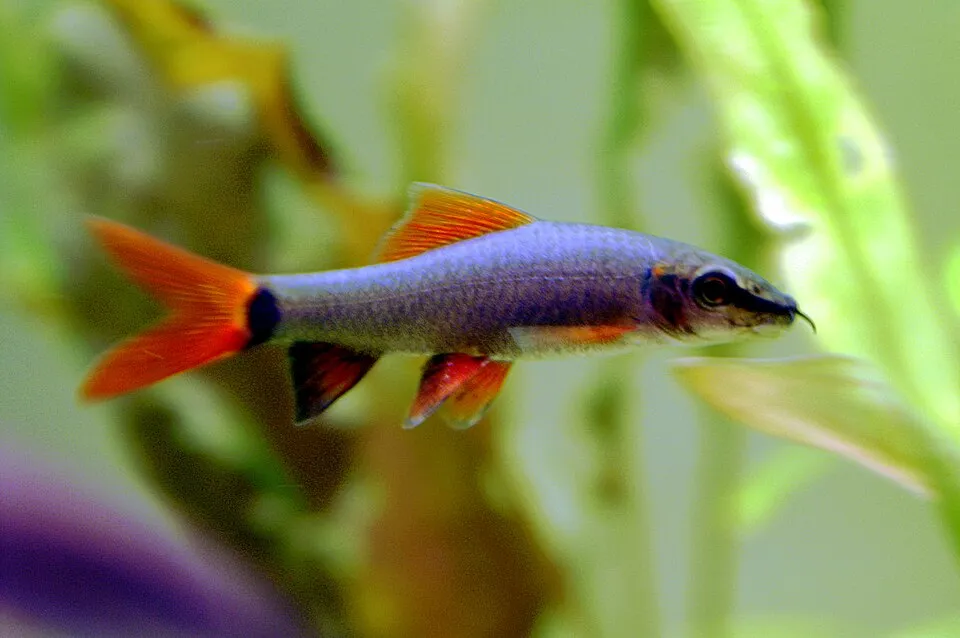
Crossocheilus reticulatus is often confused with the true Siamese algae eater, Crossocheilus oblongus, but it grows larger and lacks the same bold black stripe. It has also carried the names Crossocheilus tchangi and Tylognathus coatesi in older literature. Fine rows of dark-edged scales give the flanks a faint net or reticulated pattern that gives the fish its name.
Did you know
It is one of the few fish that keeps eating black brush algae into adulthood, though like most algae eaters it grazes less as it grows and fills out on prepared foods.
Weekly picks
Tank mates
Silver flying fox is a mostly peaceful, social species that keeps to the bottom. These picks share a community profile with it, are safe together in both directions, and overlap on water type, temperature and pH.
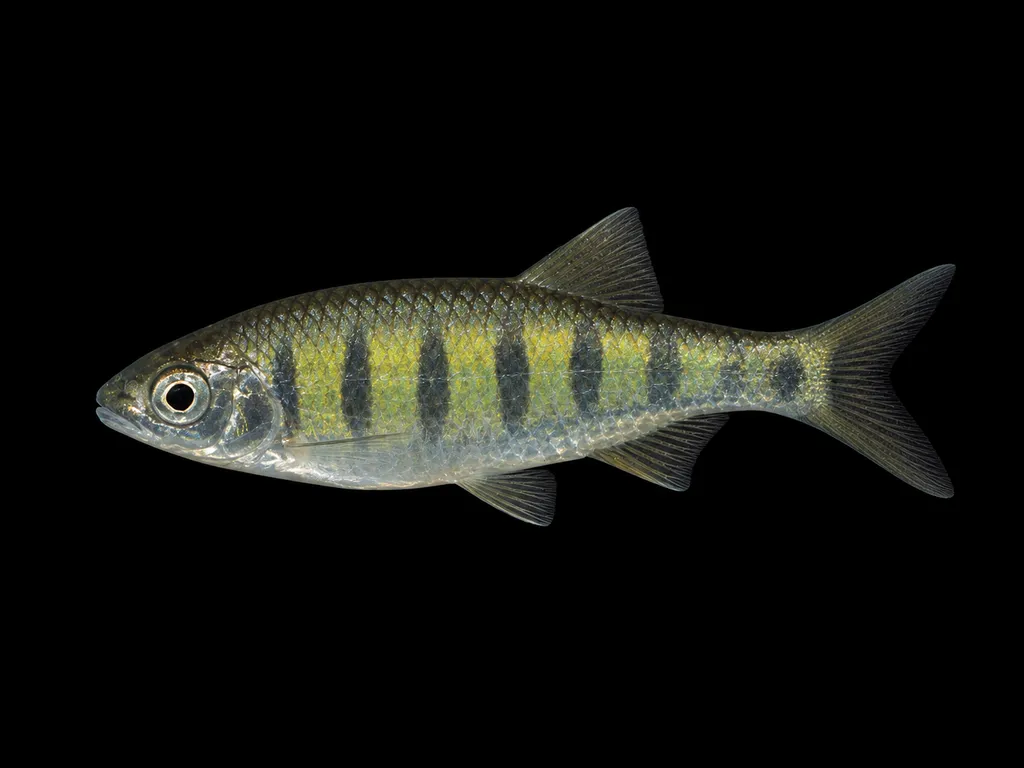
Barna baril
Opsarius barna
Freshwater5.9 in (15 cm) · 53 gal (200 L)64–79°F (18–26°C)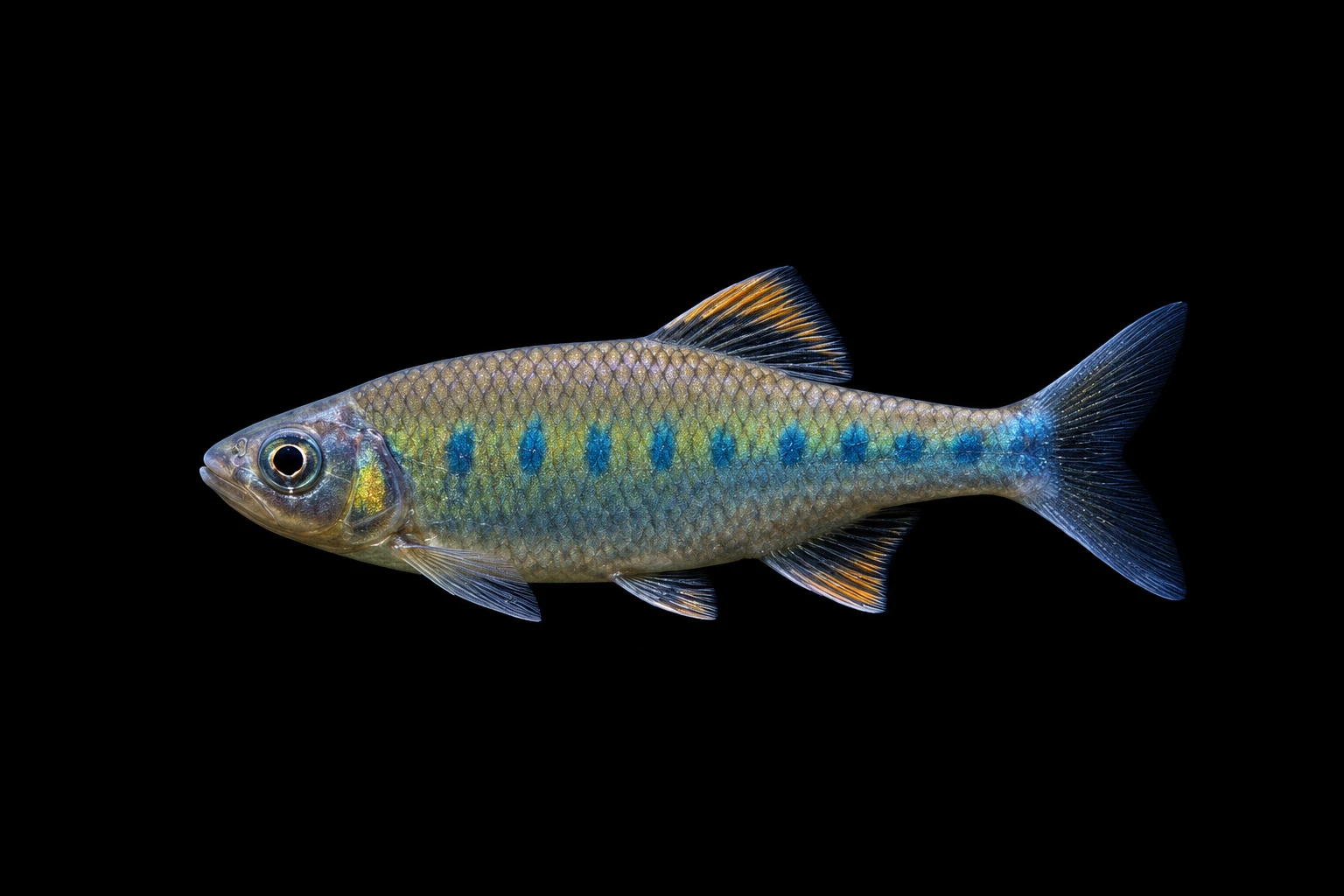
Blue spotted hill trout
Barilius bakeri
Freshwater5.1 in (13 cm) · 53 gal (200 L)64–79°F (18–26°C)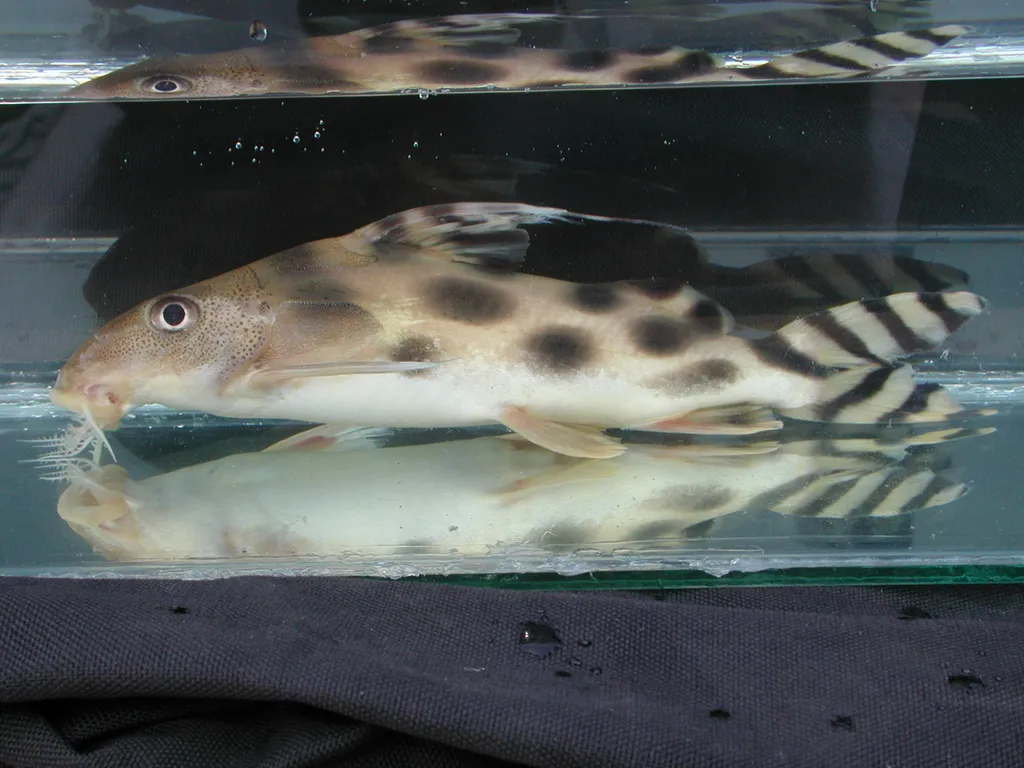
Decorated squeaker
Synodontis decorus
Freshwater11.8 in (30 cm) · 53 gal (200 L)72–81°F (22–27°C)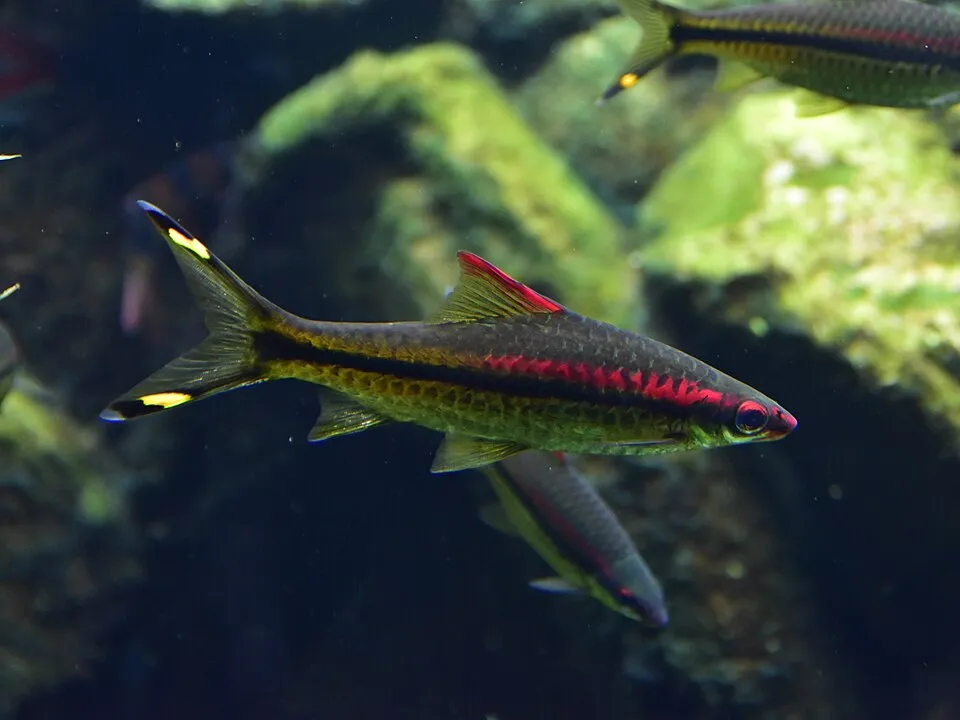
Redline torpedo barb
Sahyadria denisonii
Freshwater4.3 in (11 cm) · 53 gal (200 L)59–77°F (15–25°C)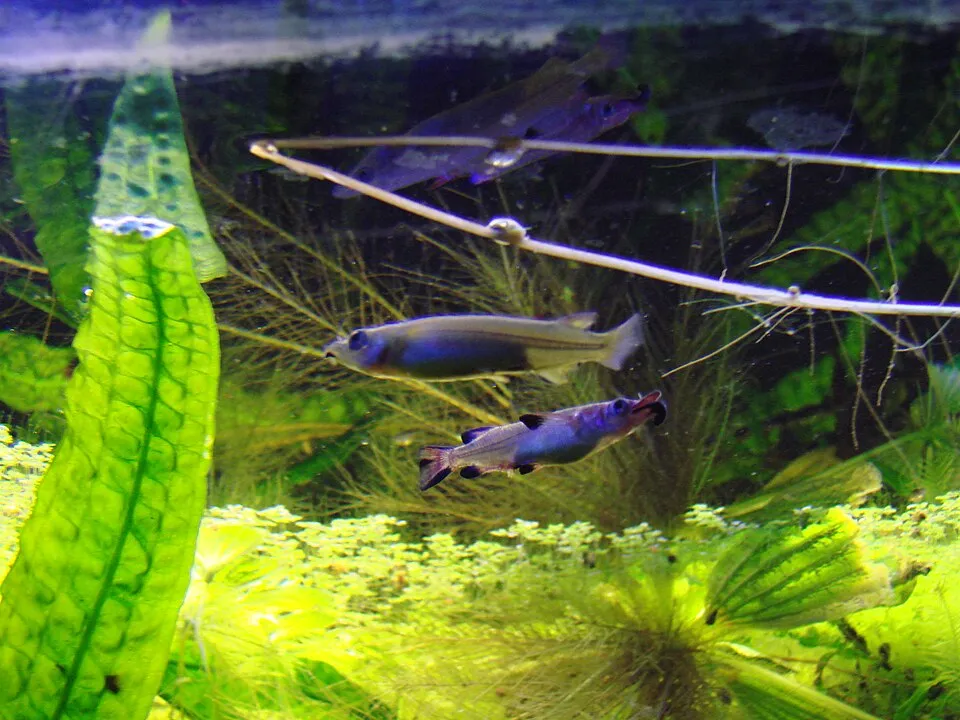
Celebes halfbeak
Nomorhamphus liemi
Freshwater3.5 in (9 cm) · 40 gal (150 L)68–77°F (20–25°C)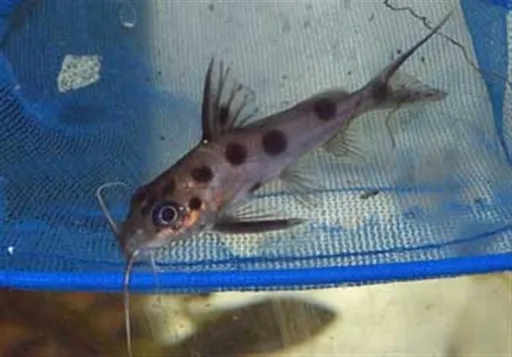
One-spot synodontis
Synodontis notatus
Freshwater9.8 in (25 cm) · 53 gal (200 L)72–81°F (22–27°C)
Common questions
What size tank does a Silver flying fox need?
A Silver flying fox needs at least 53 gal (200 L). It spends most of its time in the bottom.
What temperature and pH does a Silver flying fox need?
A Silver flying fox is comfortable at 64–77°F (18–25°C) with a pH of 6.5–7.5.
How big does a Silver flying fox get?
An adult Silver flying fox reaches about 6.3 in (16 cm).
Related species
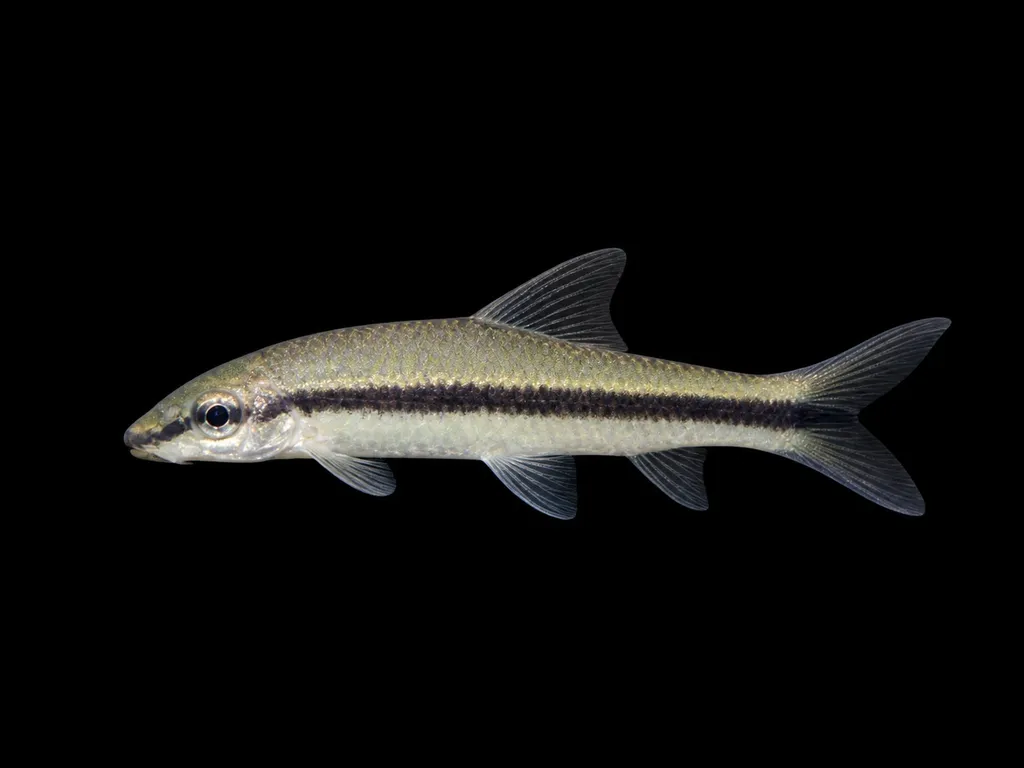 4.7 in (12 cm)42 gal (160 L)72–79°F (22–26°C)
Borneo black-lobe algae eater
Crossocheilus nigriloba
4.7 in (12 cm) · 42 gal (160 L)
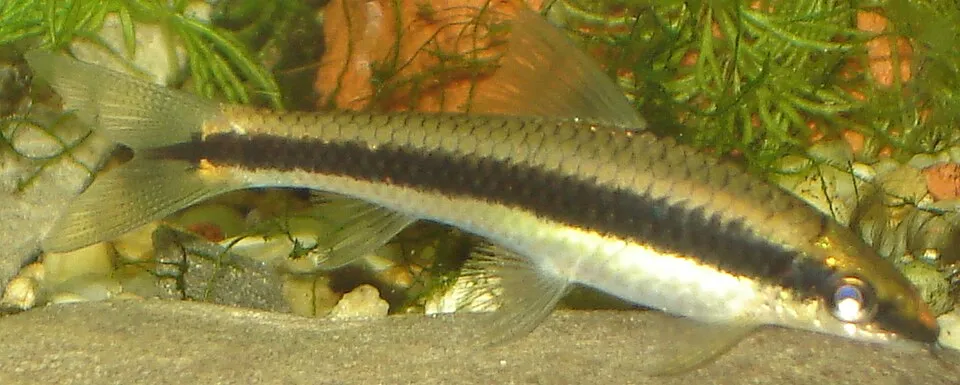 6.3 in (16 cm)37 gal (140 L)68–79°F (20–26°C)
Siamese algae eater
Crossocheilus oblongus
6.3 in (16 cm) · 37 gal (140 L)
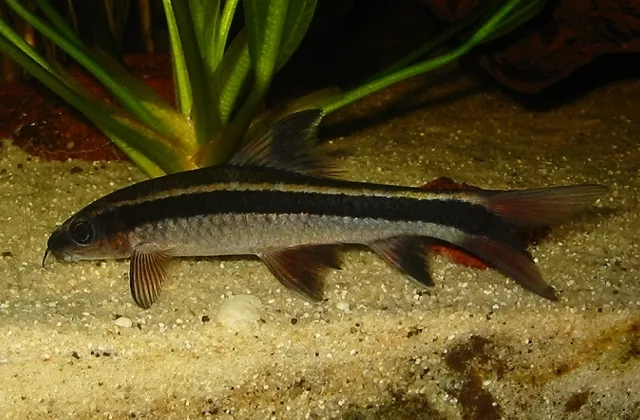 6.3 in (16 cm)37 gal (140 L)68–79°F (20–26°C)
Flying fox
Epalzeorhynchos kalopterum
6.3 in (16 cm) · 37 gal (140 L)
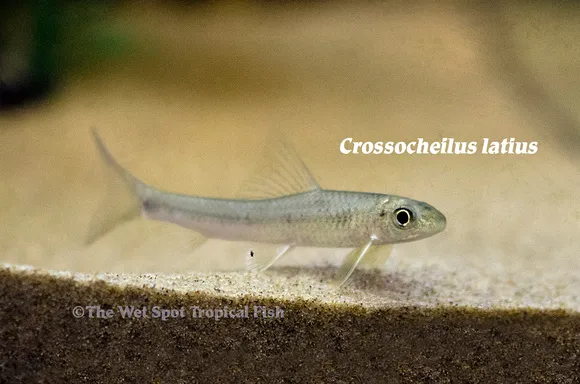 5.9 in (15 cm)42 gal (160 L)64–77°F (18–25°C)
Gangetic latia
Tariqilabeo latius
5.9 in (15 cm) · 42 gal (160 L)
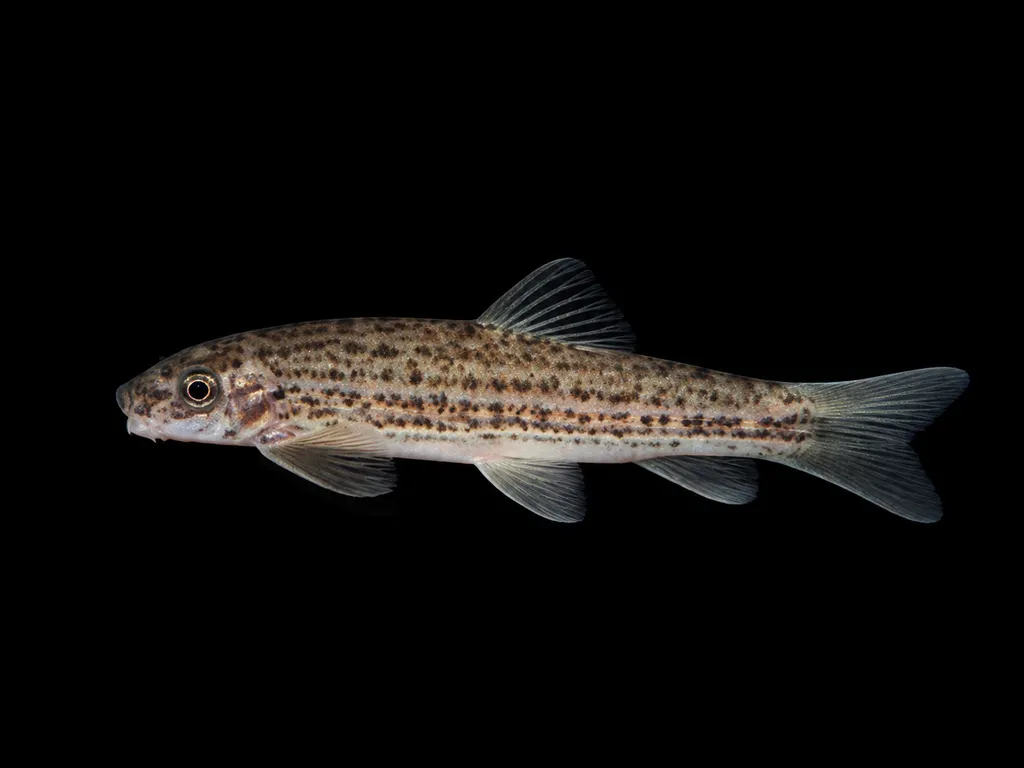 5.9 in (15 cm)42 gal (160 L)68–79°F (20–26°C)
Kerala garra
Garra surendranathanii
5.9 in (15 cm) · 42 gal (160 L)
 5.9 in (15 cm)32 gal (120 L)68–79°F (20–26°C)
Rainbow shark
Epalzeorhynchos frenatum
5.9 in (15 cm) · 32 gal (120 L)