Borneo black-lobe algae eater
Crossocheilus nigriloba
Also known as Black-finned Siamese algae eater, Penguin flying fox
FreshwaterFish
Care at a glance
- Temperature
- 72–79°F
- 22–26°C
- pH
- 6.0–7.5
- Adult size
- 4.7 in
- 12 cm
- Minimum tank
- 42 gal
- 160 L
- Temperament
- Mostly peaceful
- Social behavior
- Social
- Swim level
- Bottom
- Difficulty
- Medium
- Breeding
- No record
- Rarity
- Rare
- Family
- Cyprinidae
- Origin
- Borneo
Overview
The Borneo black-lobe algae eater is a mostly peaceful grazer for a flowing, well-oxygenated community tank. It suits a keeper with a little experience.
Did you know
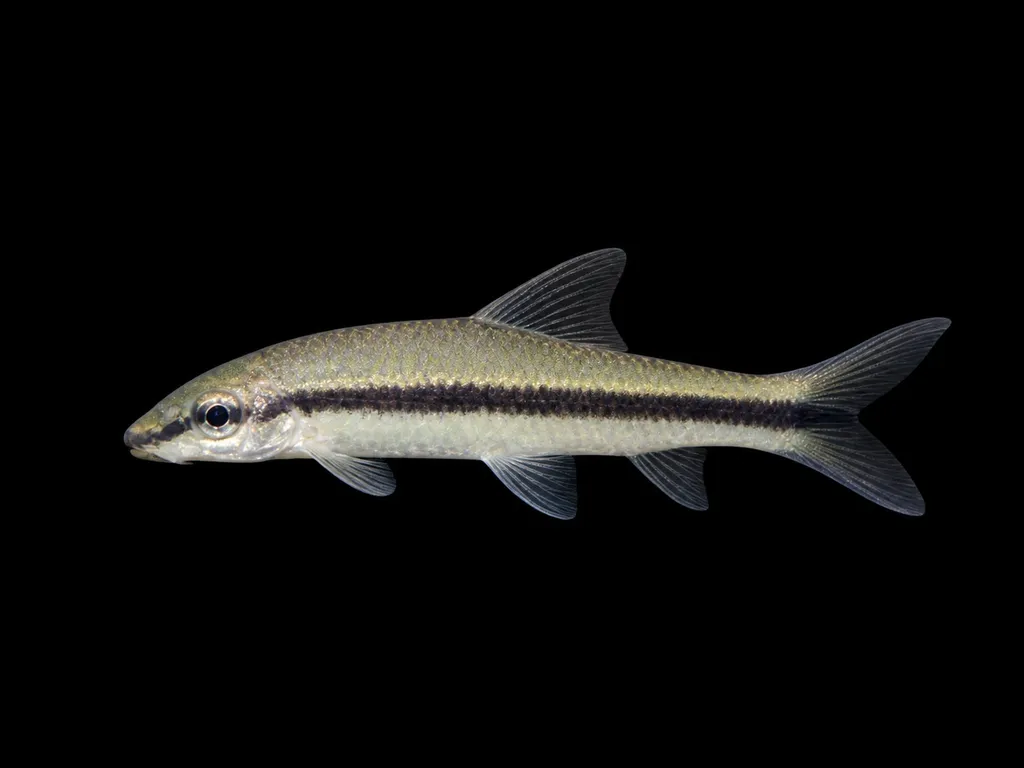
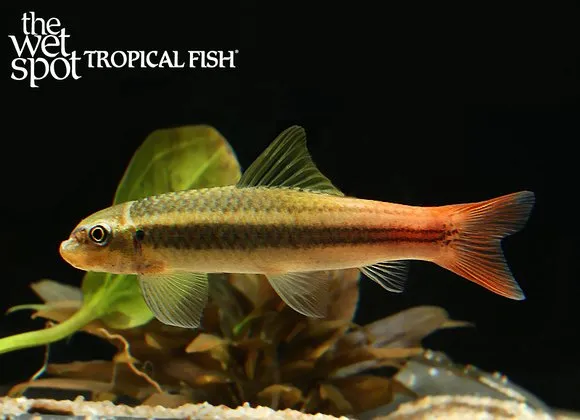
The Borneo black-lobe algae eater's dark side stripe is not fixed. It fragments into a dotted line of blotches when the fish spars, sleeps or feels stressed. The stripe reassembles into a solid band once the fish settles again.
Caring for the Borneo black-lobe algae eater
Keep the Borneo black-lobe algae eater in a tank of at least 42 gal (160 L). Give it flow, oxygen and plenty of hard surfaces to graze. Water-worn stones and driftwood coated in algae and biofilm suit it, with some shade from plants.
Keep the water brisk and well oxygenated, at 72 to 79°F (22 to 26°C) and a pH of 6.0 to 7.5. It works the bottom and midwater, constantly grazing aufwuchs and algae. Algae alone will not sustain it, so add algae wafers, spirulina, blanched vegetables and some frozen foods.
Keep it in a small group of its own kind. It is social and mostly peaceful, though individuals can squabble, so give the group space and grazing surfaces to go around. It pairs well with active, sturdy community fish. It is not known to have spawned in captivity.
Good to know
Crossocheilus nigriloba is a slender algae-eating cyprinid, one of several look-alikes sold under the name Siamese algae eater. Its name marks the dark lower lobe of the tail fin, often flushed with red, which helps separate it from its relatives.
In the wild
The Borneo black-lobe algae eater lives in clear, flowing forest streams of Borneo, over rock, wood and gravel.
Weekly picks
Tank mates
The Borneo black-lobe algae eater is a mostly peaceful, social species that keeps to the bottom. These picks share a community profile with it, are safe together in both directions, and overlap on water type, temperature and pH.
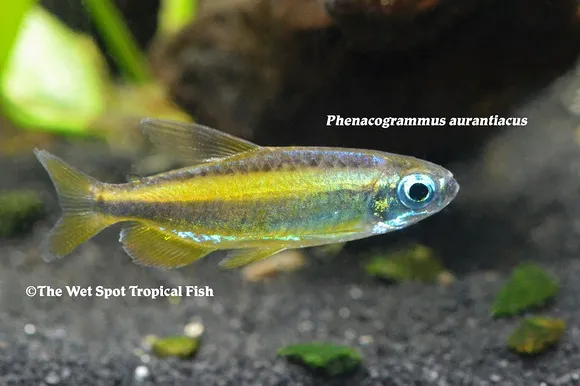
Orange Congo tetra
Phenacogrammus aurantiacus
Freshwater3.9 in (10 cm) · 42 gal (160 L)73–81°F (23–27°C)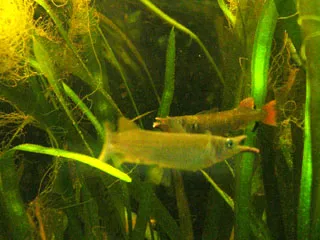
Redfin halfbeak
Nomorhamphus ebrardtii
Freshwater3.5 in (9 cm) · 29 gal (110 L)75–81°F (24–27°C)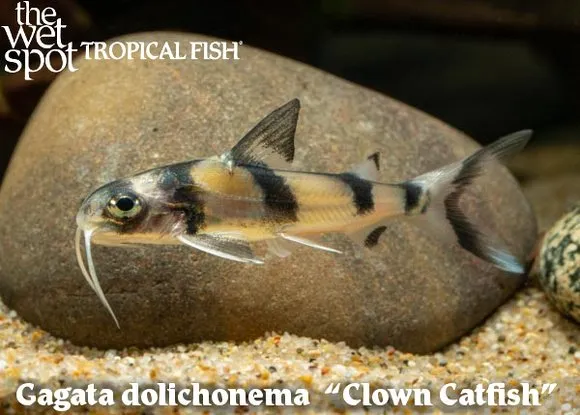
Clown gagata catfish
Gagata dolichonema
Freshwater5.1 in (13 cm) · 42 gal (160 L)68–79°F (20–26°C)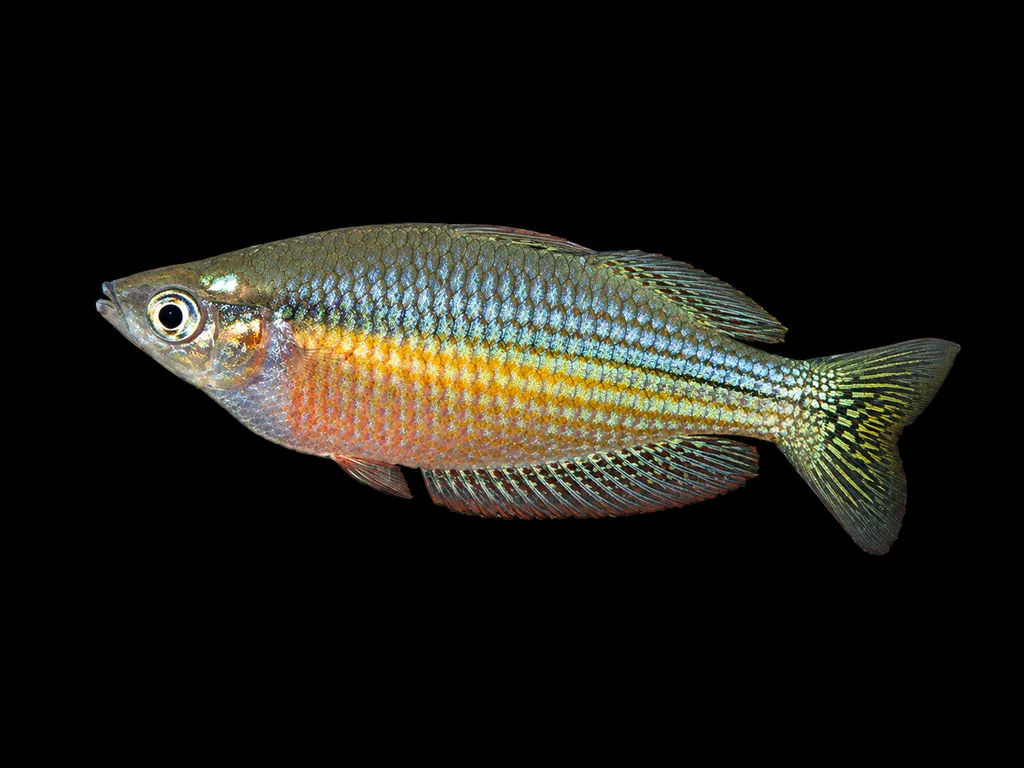
Desert rainbowfish
Melanotaenia splendida tatei
Freshwater3.9 in (10 cm) · 42 gal (160 L)64–86°F (18–30°C)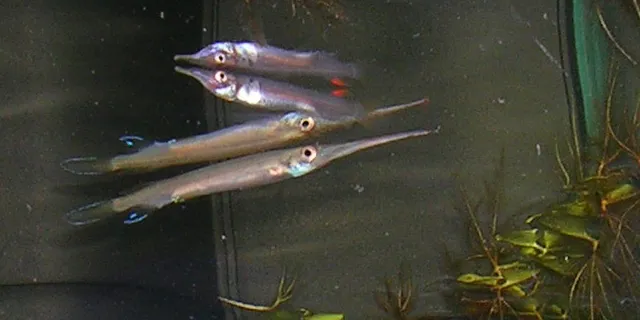
Forest halfbeak
Hemirhamphodon pogonognathus
Freshwater3.5 in (9 cm) · 34 gal (130 L)75–82°F (24–28°C)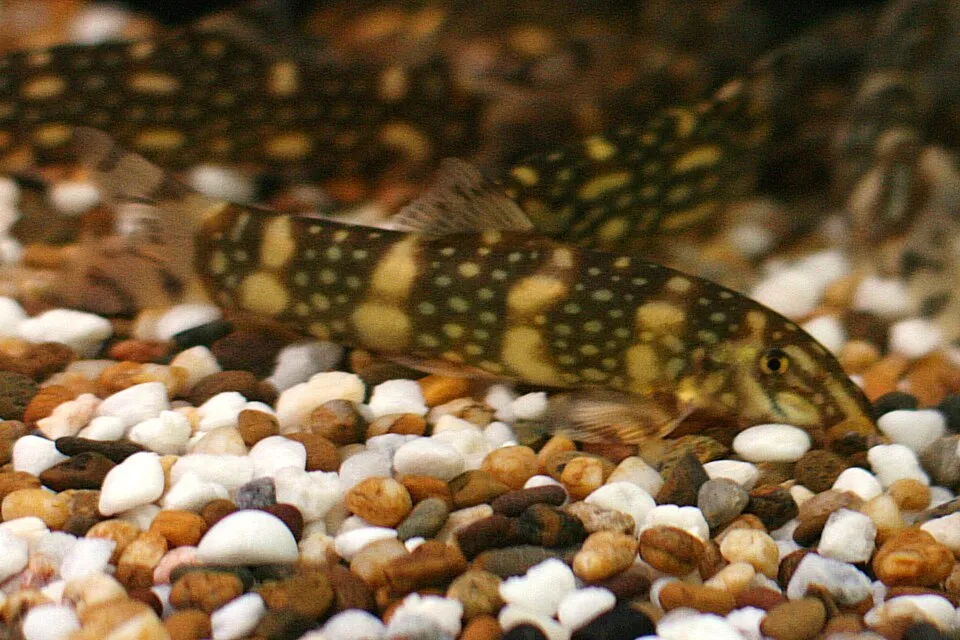
Polka-dot loach
Botia kubotai
Freshwater5.9 in (15 cm) · 42 gal (160 L)72–82°F (22–28°C)
Common questions
What size tank does a Borneo black-lobe algae eater need?
A Borneo black-lobe algae eater needs at least 42 gal (160 L). It spends most of its time in the bottom.
What temperature and pH does a Borneo black-lobe algae eater need?
A Borneo black-lobe algae eater is comfortable at 72–79°F (22–26°C) with a pH of 6.0–7.5.
What does a Borneo black-lobe algae eater eat?
A Borneo black-lobe algae eater grazes aufwuchs and algae, but algae alone will not sustain it. Add algae wafers, spirulina, blanched vegetables and some frozen foods.
How big does a Borneo black-lobe algae eater get?
An adult Borneo black-lobe algae eater reaches about 4.7 in (12 cm).
Related species
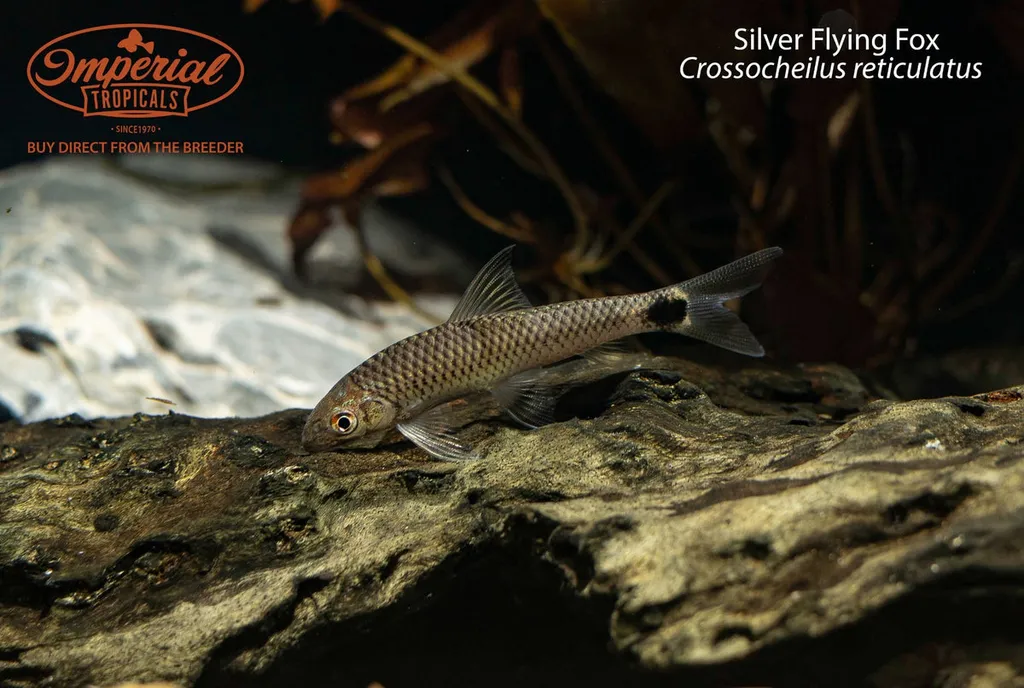 6.3 in (16 cm)53 gal (200 L)64–77°F (18–25°C)
Silver flying fox
Crossocheilus reticulatus
6.3 in (16 cm) · 53 gal (200 L)
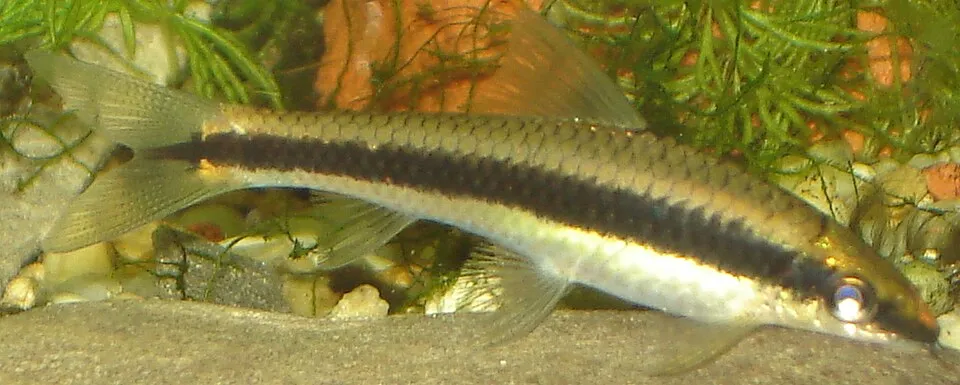 6.3 in (16 cm)37 gal (140 L)68–79°F (20–26°C)
Siamese algae eater
Crossocheilus oblongus
6.3 in (16 cm) · 37 gal (140 L)
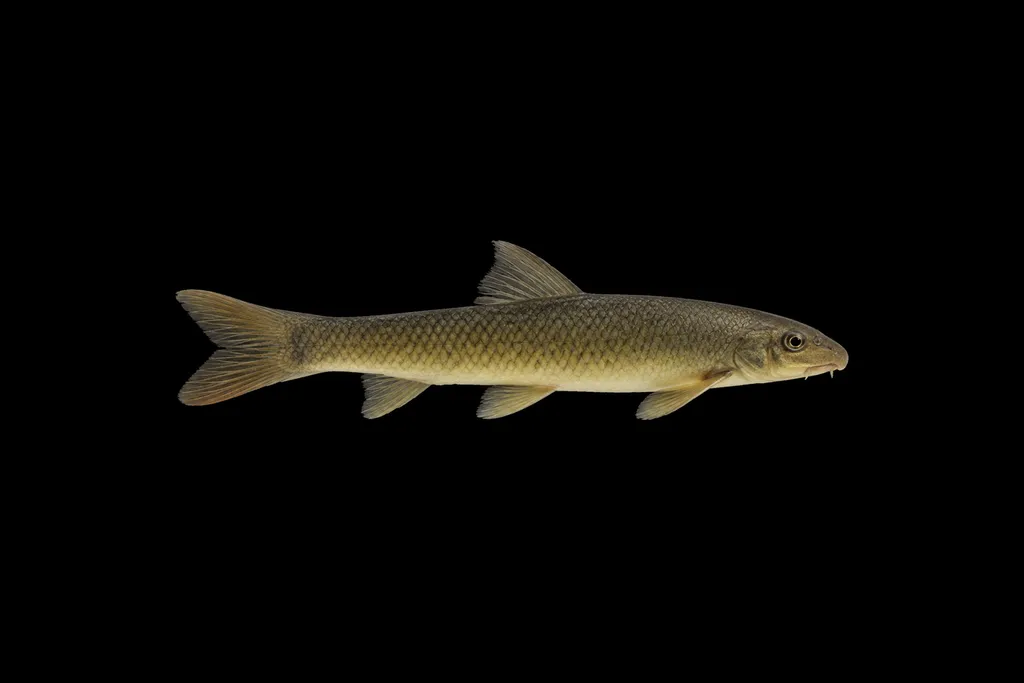 4.7 in (12 cm)29 gal (110 L)64–77°F (18–25°C)
Lamta garra
Garra lamta
4.7 in (12 cm) · 29 gal (110 L)
 4.7 in (12 cm)63 gal (240 L)68–79°F (20–26°C)
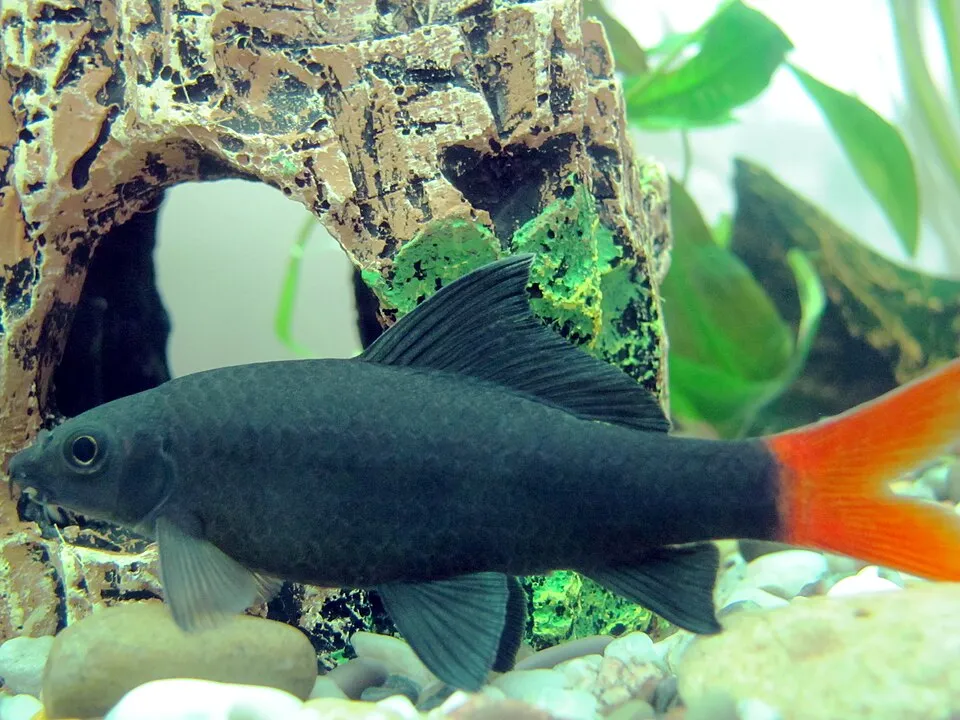
Red-tailed black shark
Epalzeorhynchos bicolor
4.7 in (12 cm) · 63 gal (240 L)
 4.7 in (12 cm)63 gal (240 L)68–79°F (20–26°C)
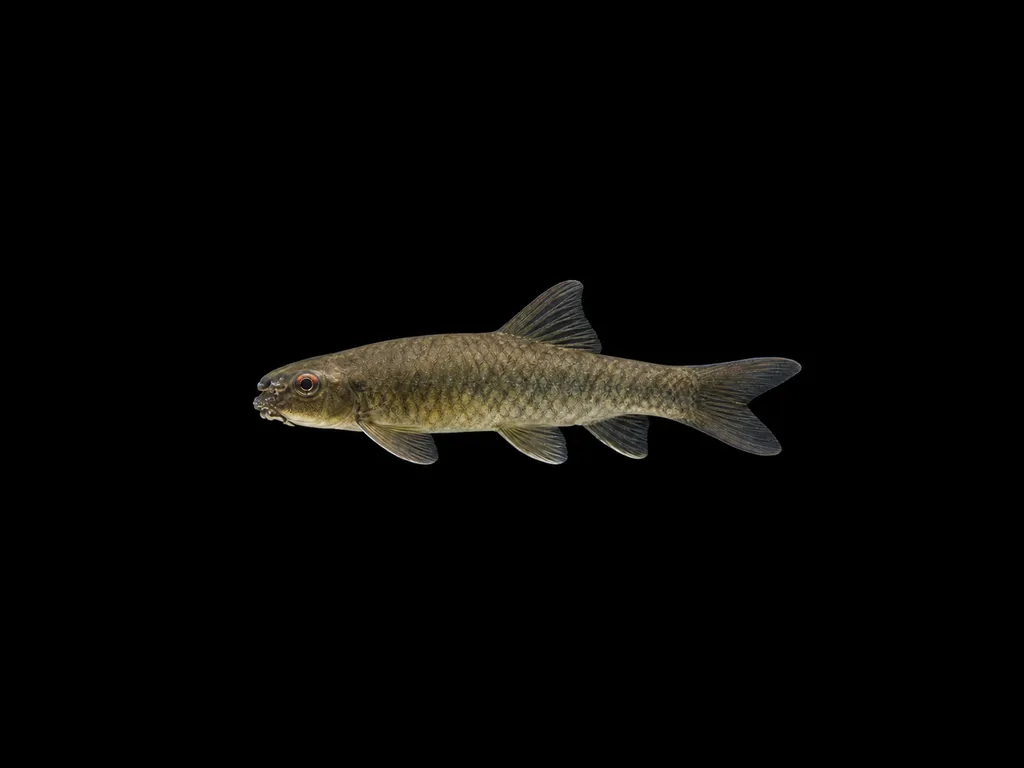
Tunga garra
Garra bicornuta
4.7 in (12 cm) · 63 gal (240 L)
 5.1 in (13 cm)42 gal (160 L)72–81°F (22–27°C)
Redtail garra
Garra panitvongi
5.1 in (13 cm) · 42 gal (160 L)