Darter characin
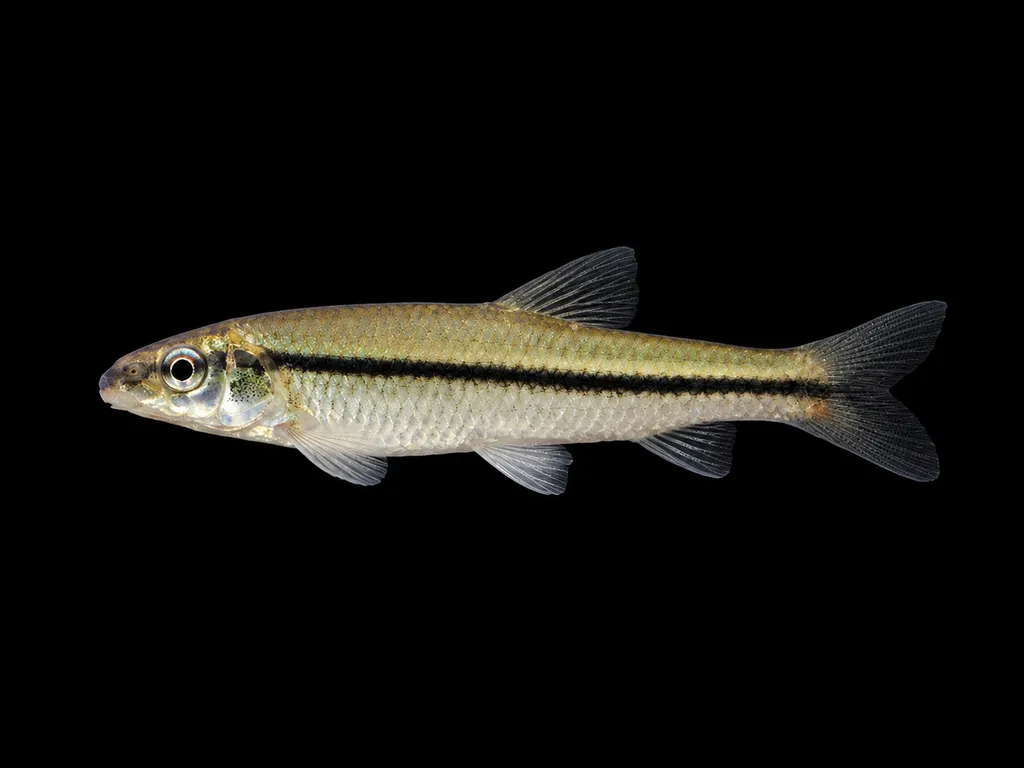
Apareiodon affinis
FreshwaterFish
Care at a glance
- Temperature
- 64–77°F
- 18–25°C
- pH
- 6.0–7.5
- Adult size
- 7.1 in
- 18 cm
- Minimum tank
- 53 gal
- 200 L
- Temperament
- Mostly peaceful
- Social behavior
- Shoaling
- Swim level
- Bottom
- Diet
- Omnivore
- Difficulty
- Medium
- Breeding
- No record
- Rarity
- Rare
- Family
- Parodontidae
- Origin
- Paraná and La Plata basins, South America
Overview
The darter characin is a subtropical, bottom-hugging shoaling fish that props itself on its pectoral fins and darts from stone to stone. It is a step up from the easiest community fish.
Did you know
Some populations of the darter characin, a plain gray fish, carry an unusual multiple sex chromosome system. In them, the females rather than the males hold the odd chromosomes. That makes it a favorite subject for scientists who study how sex chromosomes evolve.
Caring for the darter characin
Give a group of darter characins a roomy tank of at least 53 gal (200 L). A river-style layout with open, stony ground, smooth rocks, gravel and a strong current suits them.
They like cooler water than most community tetras will accept. Keep them at 64 to 77°F (18 to 25°C) with a pH of 6.0 to 7.5, in clean, moving water. Do not keep them constantly warm, which shortens their life.
They graze aufwuchs and biofilm but also take prepared foods. Offer algae wafers, vegetable flake and small frozen items.
A group of five or more keeps them calm and brings out natural behavior. They are generally peaceful but active, and they can be pushy at feeding time. Choose tank mates similar in size that are happy in cooler water. There is no aquarium breeding record for this species.
Good to know
Apareiodon affinis belongs to the Parodontidae, a small family of South American scrape-toothed characins built for life on the bottom of flowing rivers. It uses a downturned, chisel-like mouth to rasp algae from rock. It arrives in the trade as wild-caught stock.
In the wild
The darter characin comes from the Paraná and La Plata river systems of southern South America, where flowing subtropical water cools noticeably in winter. It lives over stone and gravel in well-oxygenated current, scraping algae and small creatures from hard surfaces.
Weekly picks
Tank mates
The darter characin is a mostly peaceful, shoaling species that keeps to the bottom. These picks share a community profile with it, are safe together in both directions, and overlap on water type, temperature and pH.
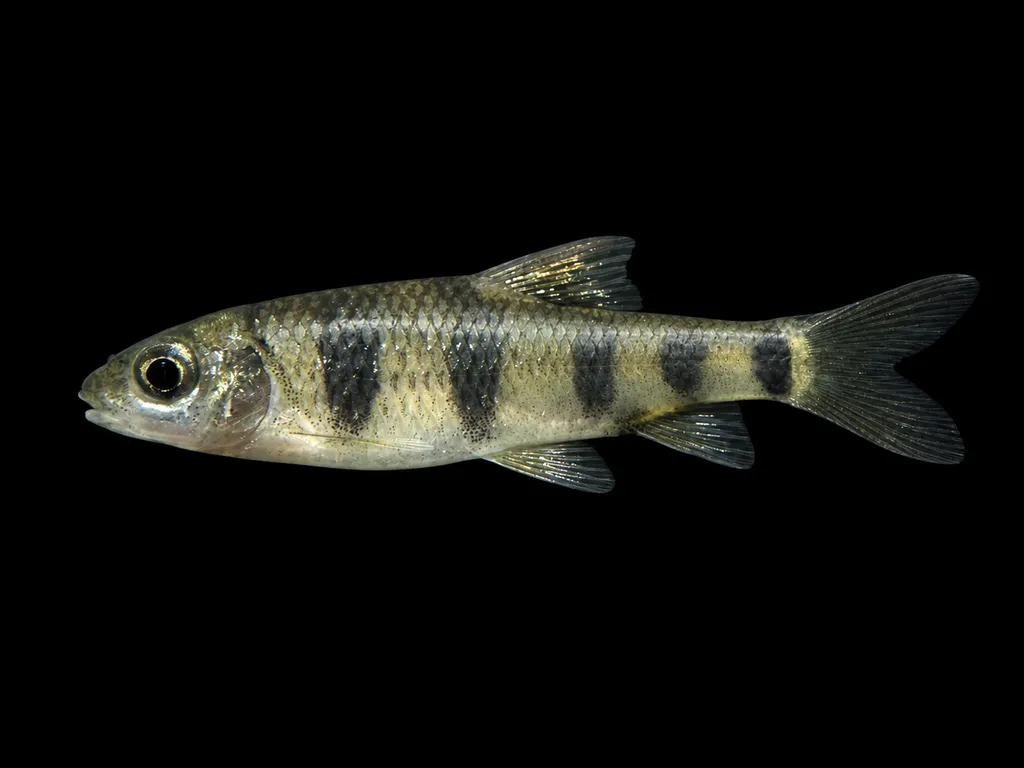
Beijiang barb
Acrossocheilus beijiangensis
Freshwater5.1 in (13 cm) · 53 gal (200 L)64–79°F (18–26°C)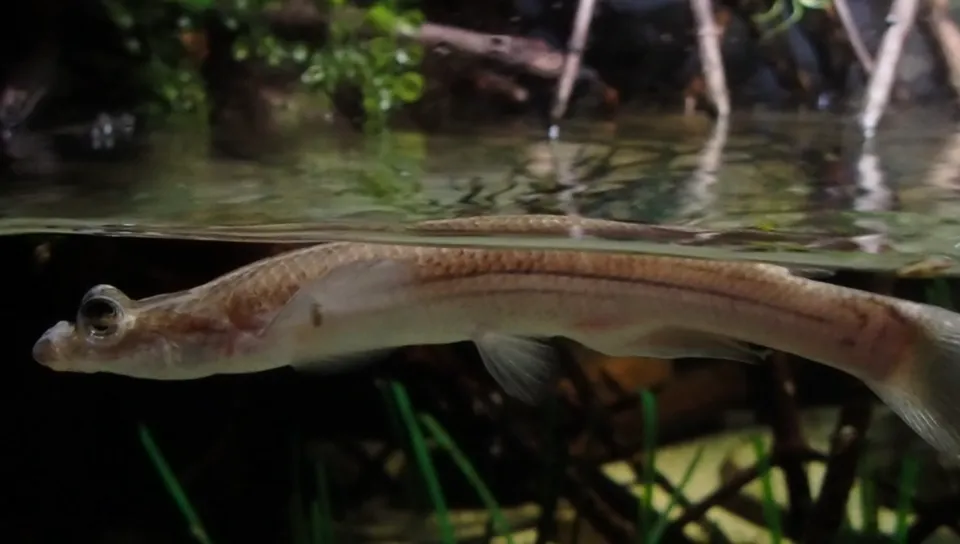
Largescale four-eyed fish
Anableps anableps
FreshwaterBrackish11.8 in (30 cm) · 70 gal (265 L)77–88°F (25–31°C)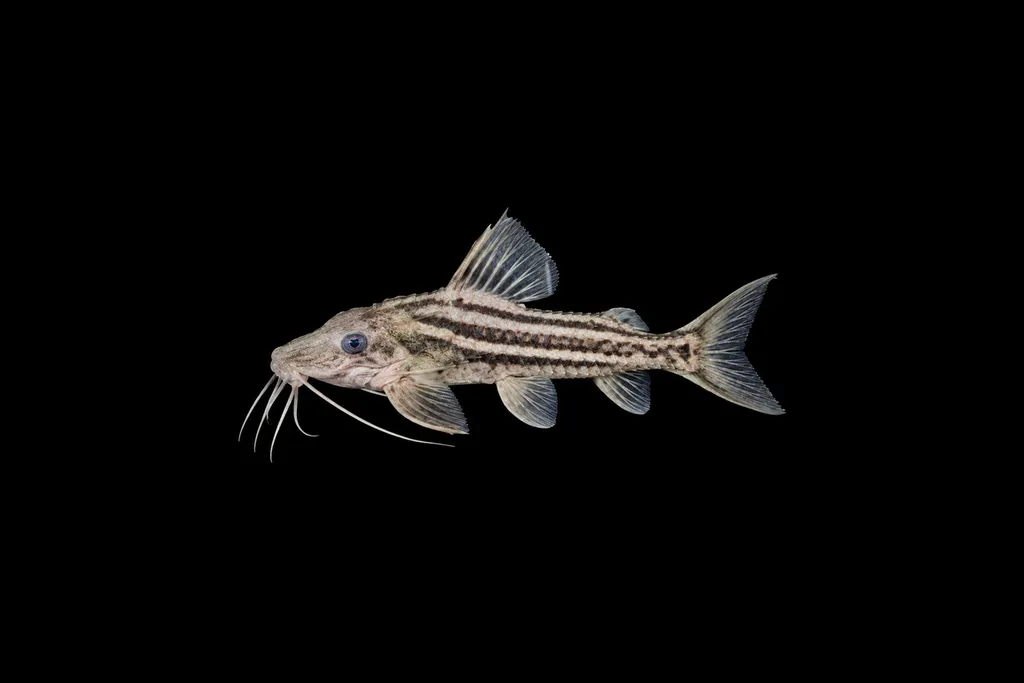
Hancock's talking catfish
Platydoras hancockii
Freshwater5.9 in (15 cm) · 53 gal (200 L)73–82°F (23–28°C)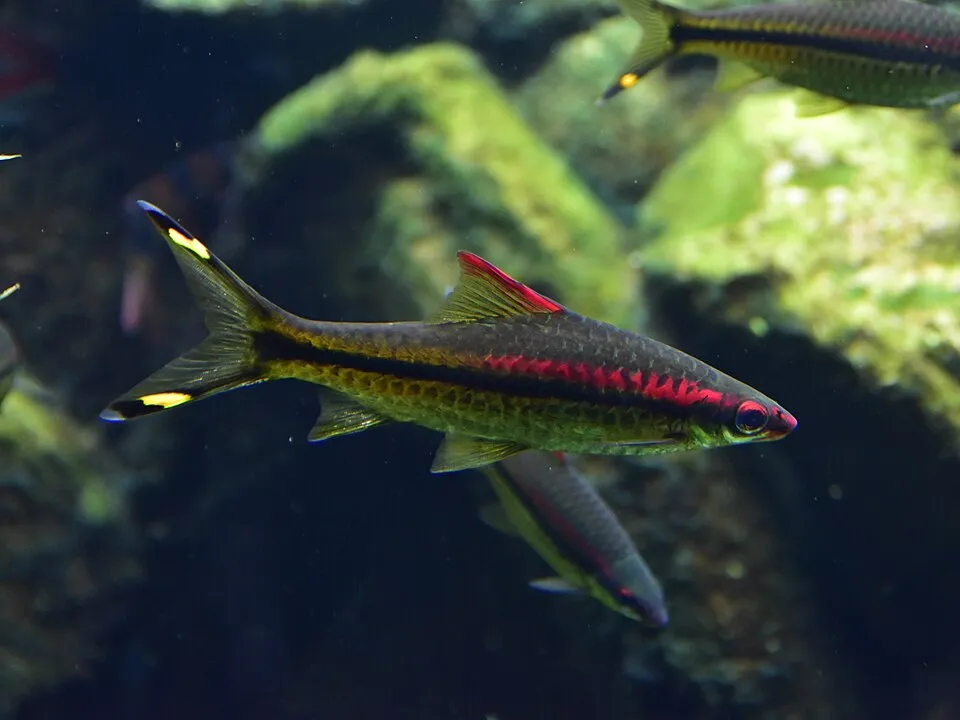
Redline torpedo barb
Sahyadria denisonii
Freshwater4.3 in (11 cm) · 53 gal (200 L)59–77°F (15–25°C)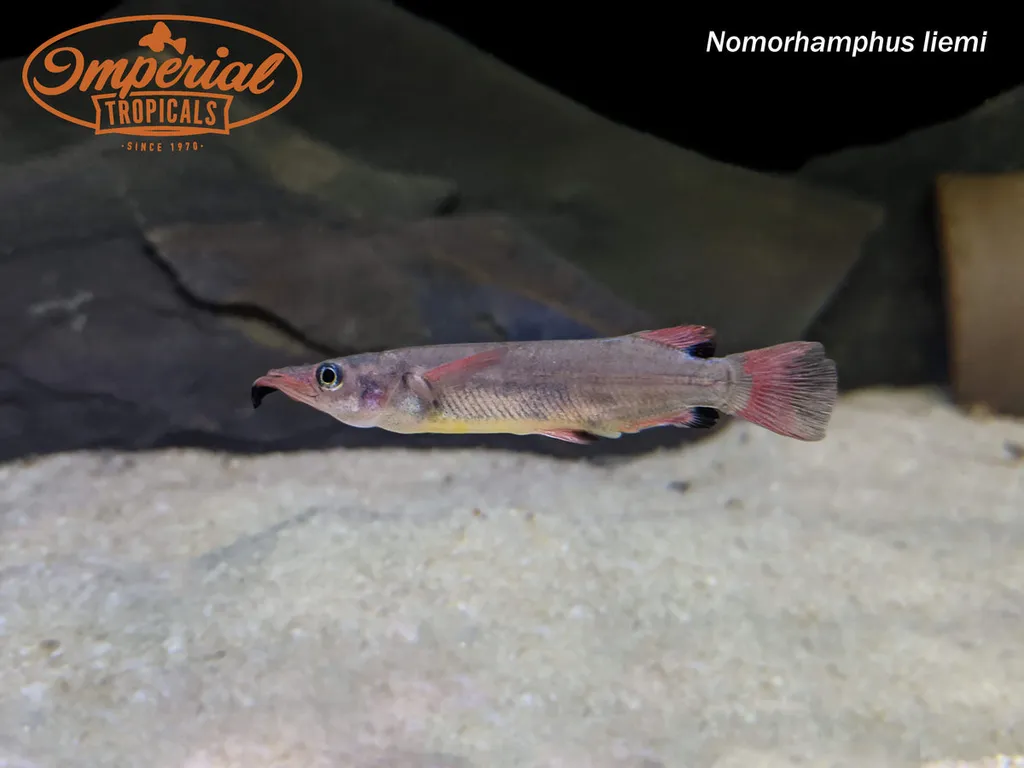
Celebes halfbeak
Nomorhamphus liemi
Freshwater3.5 in (9 cm) · 40 gal (150 L)68–77°F (20–25°C)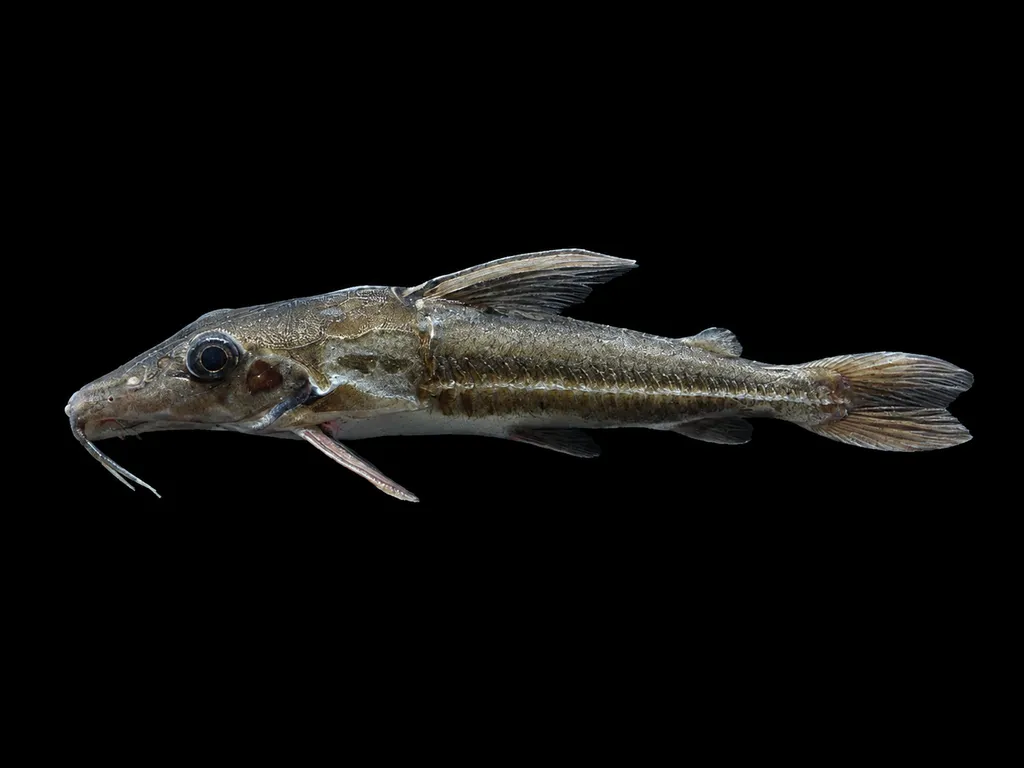
Green turushuki catfish
Hemidoras morrisi
Freshwater6.3 in (16 cm) · 53 gal (200 L)73–82°F (23–28°C)
Common questions
What size tank does a darter characin need?
A darter characin needs at least 53 gal (200 L). It spends most of its time in the bottom.
What temperature and pH does a darter characin need?
A darter characin is comfortable at 64–77°F (18–25°C) with a pH of 6.0–7.5.
What does a darter characin eat?
A darter characin grazes aufwuchs and biofilm, and it also takes prepared foods. Offer it algae wafers, vegetable flake and small frozen items.
How big does a darter characin get?
An adult darter characin reaches about 7.1 in (18 cm).
Does a darter characin need a group?
Yes. A darter characin is a shoaling species and should be kept in a group, not singly.
Related species
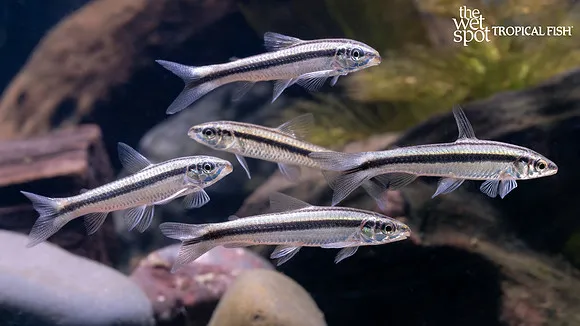 3.9 in (10 cm)30 gal (112 L)72–79°F (22–26°C)
Pongo characin
Parodon cf. pongoensis
3.9 in (10 cm) · 30 gal (112 L)
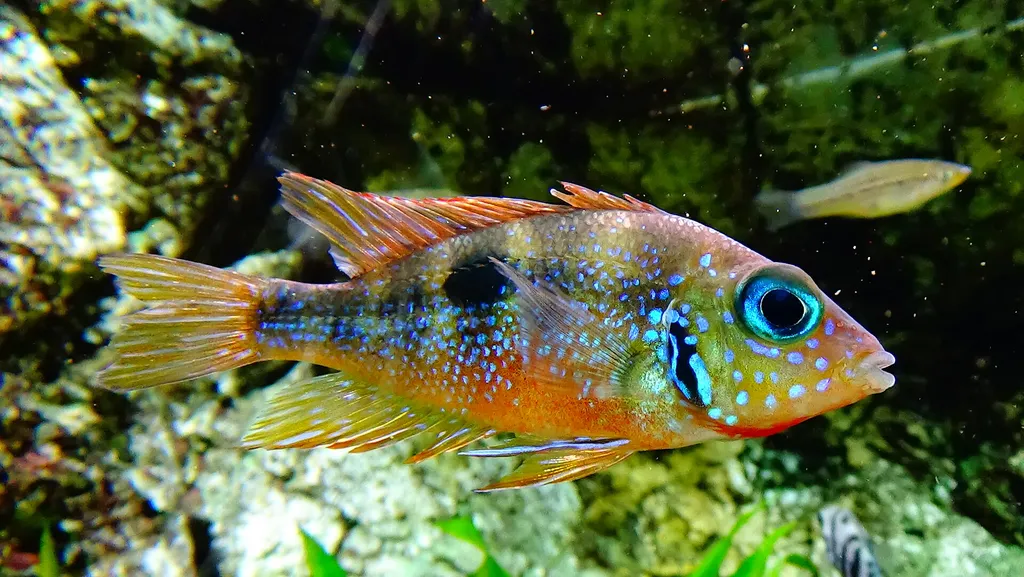 7.1 in (18 cm)66 gal (250 L)75–84°F (24–29°C)
Blue flash firemouth
Thorichthys aureus
7.1 in (18 cm) · 66 gal (250 L)
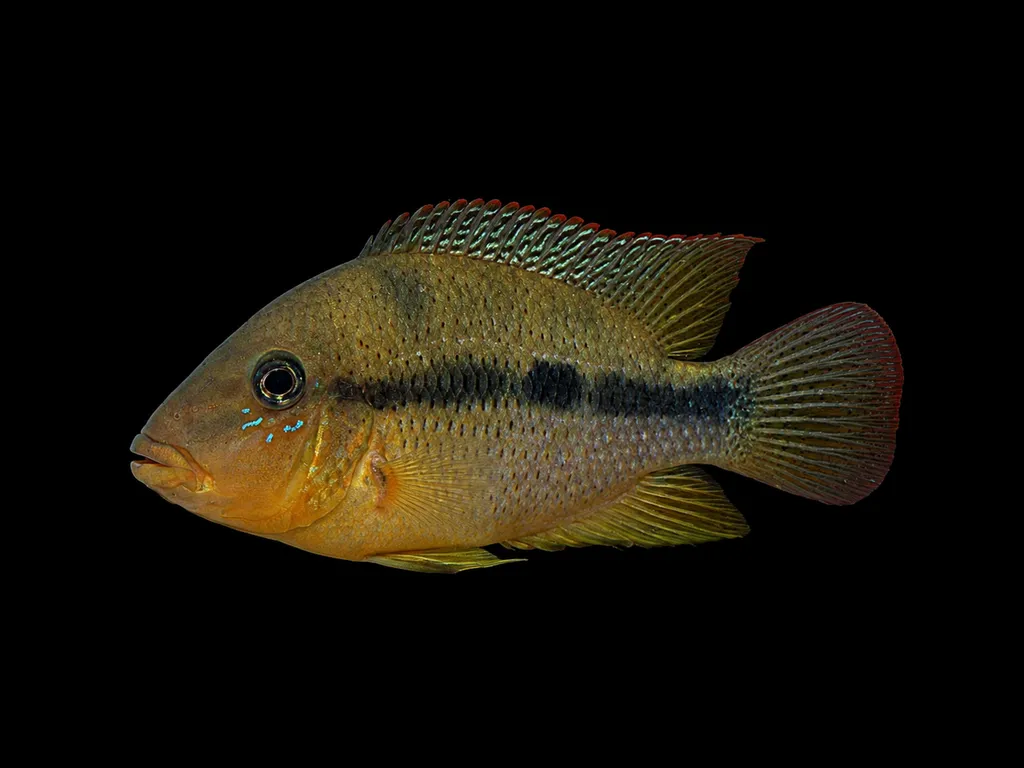 7.1 in (18 cm)79 gal (300 L)75–84°F (24–29°C)
Bussing's cichlid
Cribroheros bussingi
7.1 in (18 cm) · 79 gal (300 L)
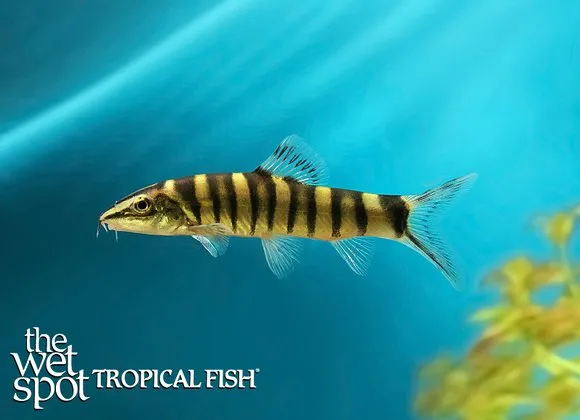 7.1 in (18 cm)53 gal (200 L)64–79°F (18–26°C)
Chinese tiger loach
Sinibotia robusta
7.1 in (18 cm) · 53 gal (200 L)
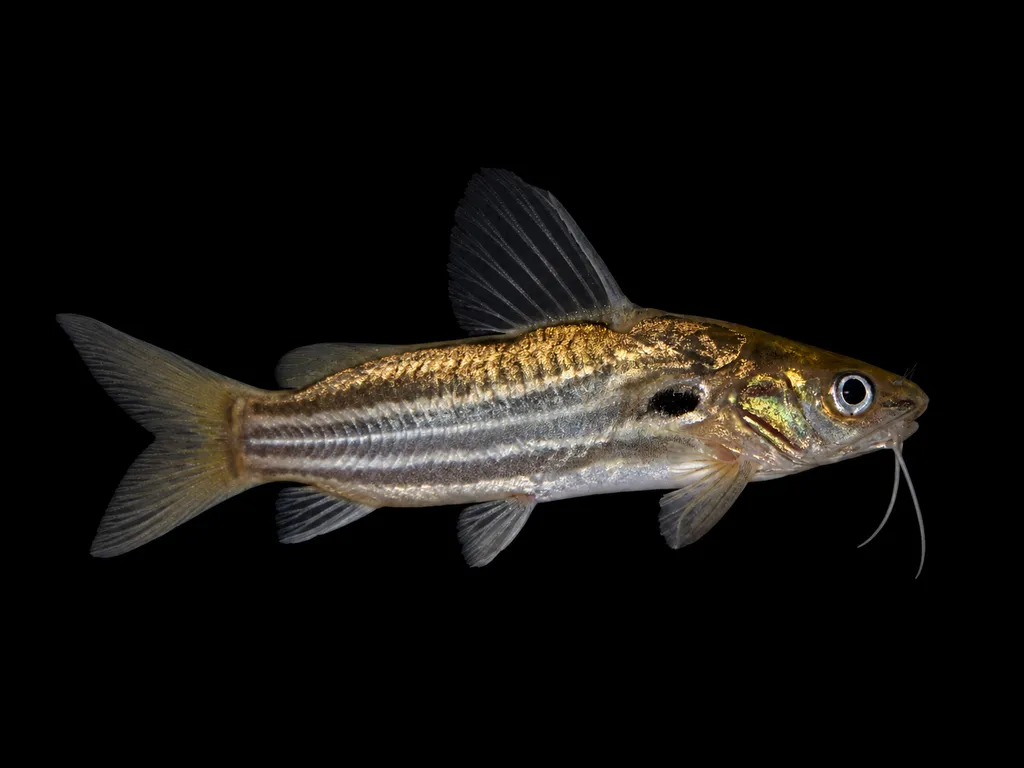 7.1 in (18 cm)42 gal (160 L)73–81°F (23–27°C)
Golden soldier catfish
Mystus tengara
7.1 in (18 cm) · 42 gal (160 L)
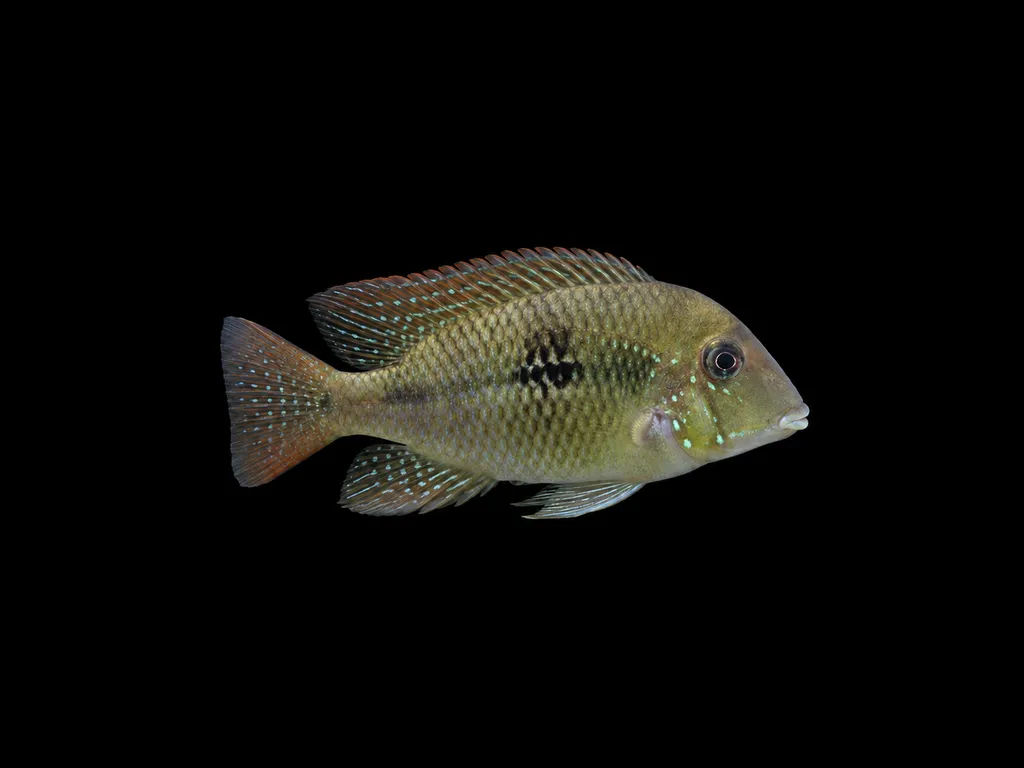 7.1 in (18 cm)79 gal (300 L)61–79°F (16–26°C)
Smoothcheek eartheater
Gymnogeophagus gymnogenys
7.1 in (18 cm) · 79 gal (300 L)