Redline torpedo barb
Sahyadria denisonii
Also known as Denison barb, Roseline Shark, Denison's barb
FreshwaterFish
Care at a glance
- Temperature
- 59–77°F
- 15–25°C
- pH
- 6.8–7.8
- Adult size
- 4.3 in
- 11 cm
- Minimum tank
- 53 gal
- 200 L
- Temperament
- Peaceful
- Social behavior
- Schooling
- Swim level
- Middle
- Difficulty
- Easy
- Breeding
- Medium
- Rarity
- Common
- Family
- Cyprinidae
- Origin
- India
Overview
These are peaceful but very active schooling fish that need a group of at least six and a long tank, around 200 liters or more, for the swimming room. They hold the middle water and stay calmer and more colorful in a proper group. Pair them with other active, cool-tolerant species rather than slow or delicate fish. Feed a varied diet of quality flake or pellets with frozen and occasional vegetable foods.
In the wild
Redline torpedo barbs come from fast, cool hill streams in the Western Ghats of India, flowing over rock and gravel with high oxygen and steady current. That cool water matters. They handle a wide range but prefer the lower end, so target temps from the mid teens to mid 20s C rather than tropical warmth. Give them strong flow, good oxygen, and open swimming lanes over a rocky layout. Keep the pH from about 6.8 to 7.8.
Good to know
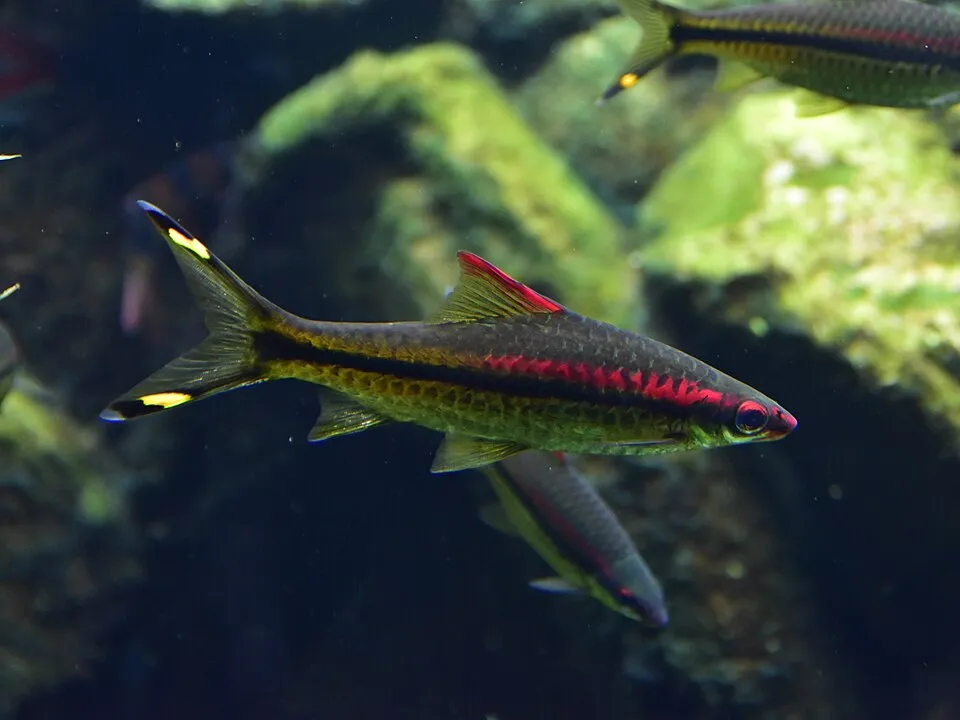
This is a carp relative in the family Cyprinidae, reaching about 11 cm, with a silver body marked by a black and red stripe down the side. Wild populations have been hit hard by collection for the trade, and the species is considered threatened in its native range, so most fish sold now come from commercial farms. Captive breeding is possible but tricky and usually needs hormones on a farm scale.
Did you know
Heavy demand from the aquarium trade pushed wild stocks down fast after the fish became popular, which is a big part of why it carries a threatened status today. The red stripe deepens with age and a good diet, so the brightest individuals you see are usually mature, well-kept fish rather than young ones at the shop.
Weekly picks
Tank mates
Redline torpedo barb is a peaceful, schooling species that keeps to the middle. These picks share a community profile with it, are safe together in both directions, and overlap on water type, temperature and pH.
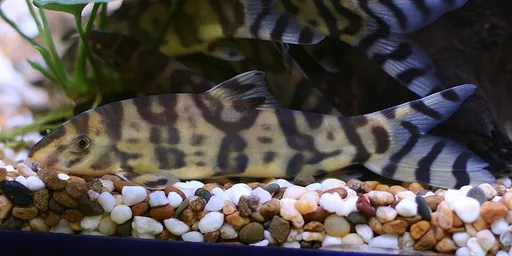
Burmese border loach
Botia histrionica
Freshwater5.1 in (13 cm) · 53 gal (200 L)72–82°F (22–28°C)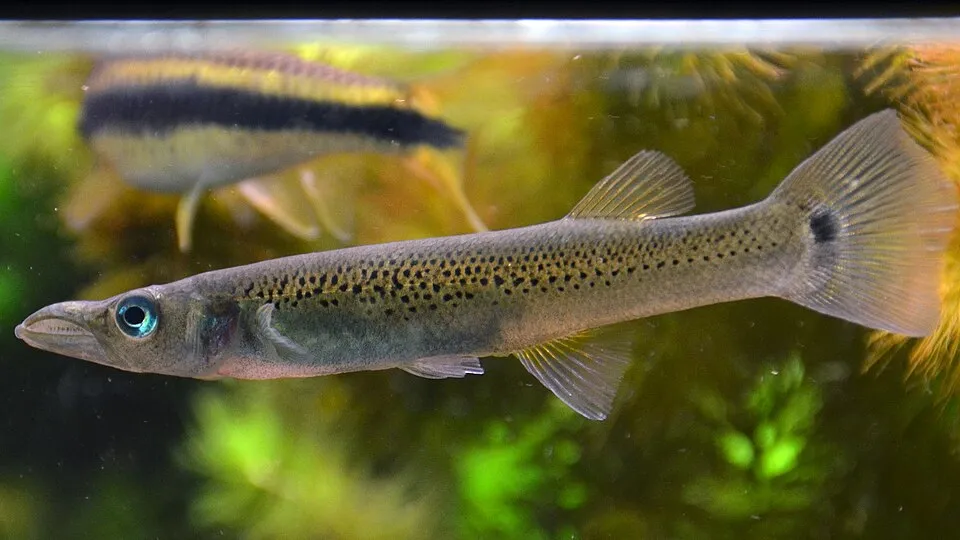
Pike topminnow
Belonesox belizanus
Freshwater7.9 in (20 cm) · 44 gal (165 L)73–82°F (23–28°C)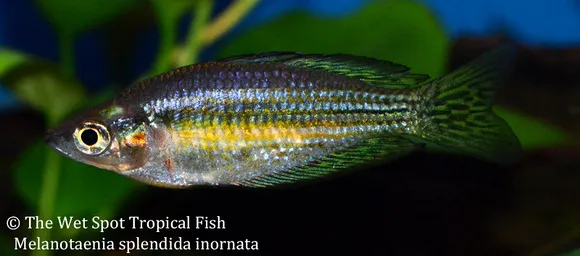
Checkered rainbowfish
Melanotaenia splendida inornata
Freshwater4.7 in (12 cm) · 53 gal (200 L)72–86°F (22–30°C)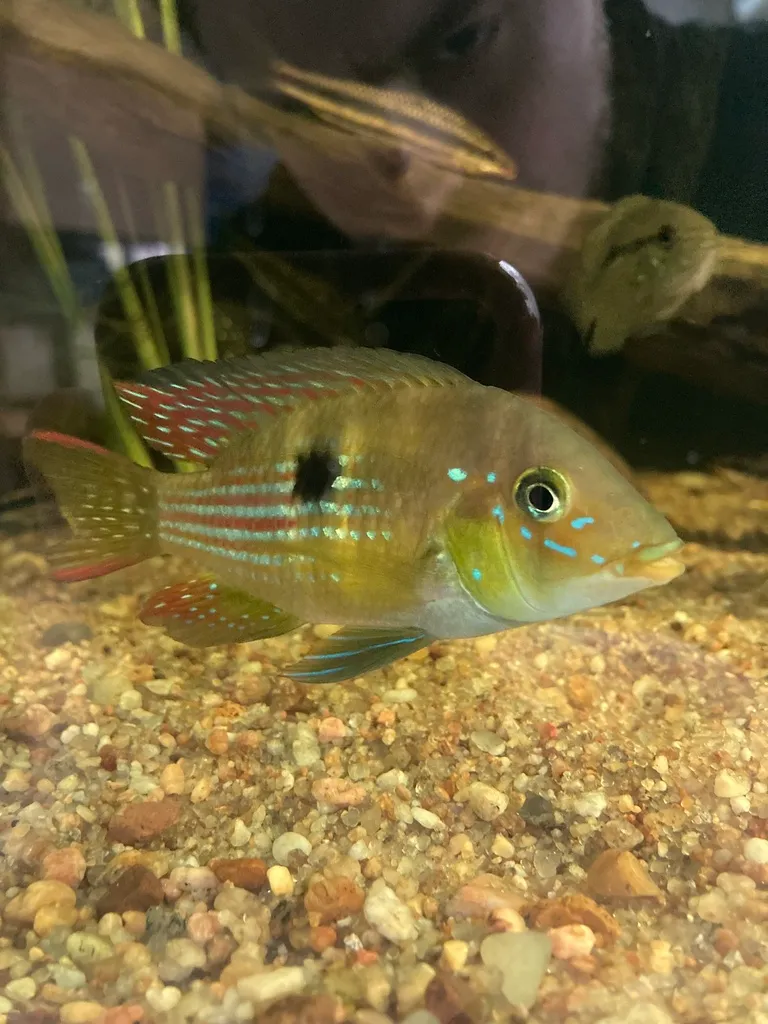
Purple earth eartheater
Gymnogeophagus terrapurpura
Freshwater4.3 in (11 cm) · 53 gal (200 L)61–79°F (16–26°C)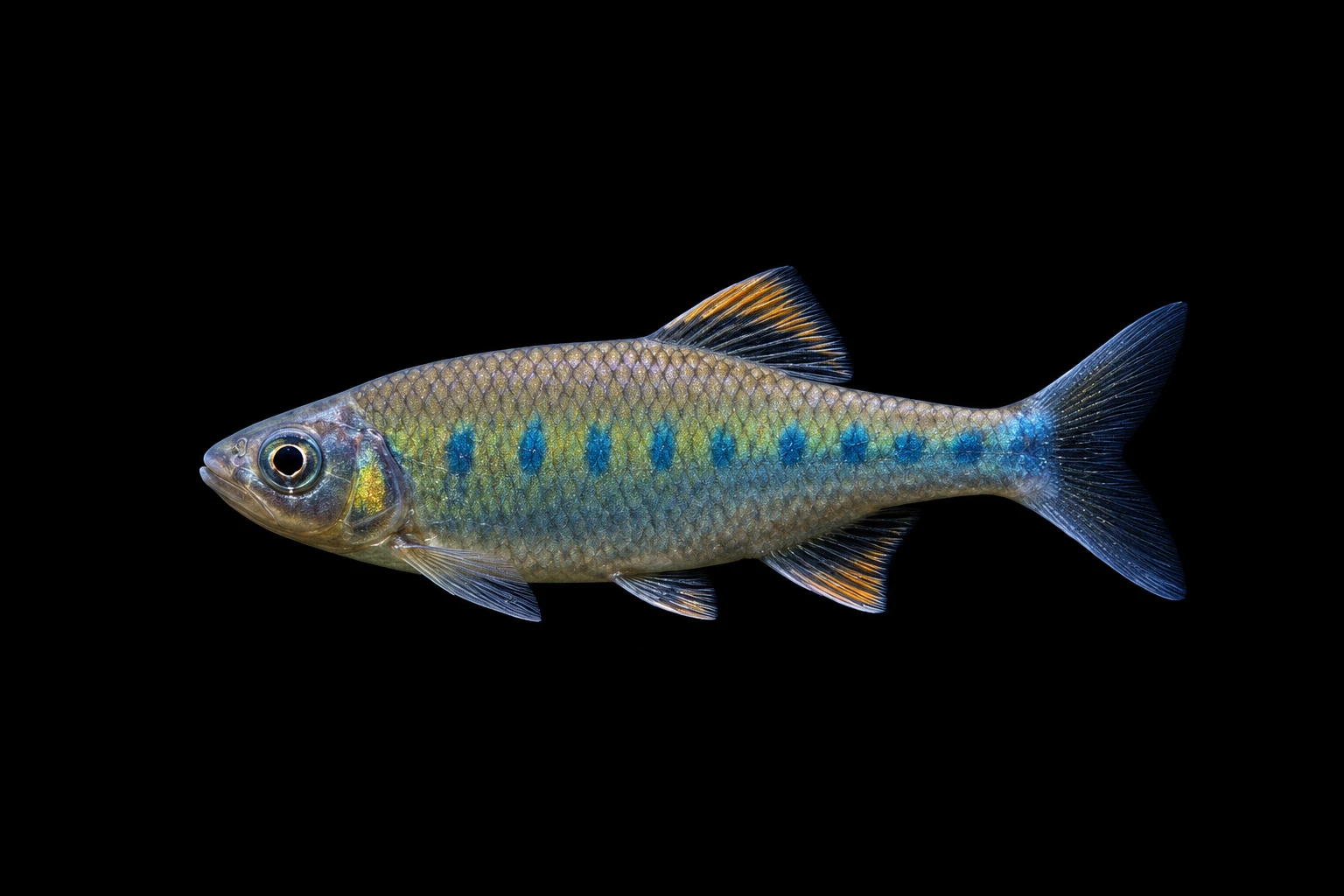
Blue spotted hill trout
Barilius bakeri
Freshwater5.1 in (13 cm) · 53 gal (200 L)64–79°F (18–26°C)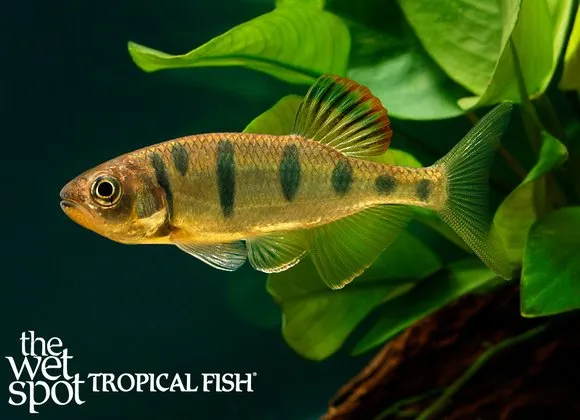
Jeweled baril
Opsarius pulchellus
Freshwater5.1 in (13 cm) · 53 gal (200 L)72–81°F (22–27°C)
Common questions
What size tank does a Redline torpedo barb need?
A Redline torpedo barb needs at least 53 gal (200 L). It spends most of its time in the middle.
What temperature and pH does a Redline torpedo barb need?
A Redline torpedo barb is comfortable at 59–77°F (15–25°C) with a pH of 6.8–7.8.
How big does a Redline torpedo barb get?
An adult Redline torpedo barb reaches about 4.3 in (11 cm).
Does a Redline torpedo barb need a group?
Yes. A Redline torpedo barb is a schooling species and should be kept in a group, not singly.
Related species
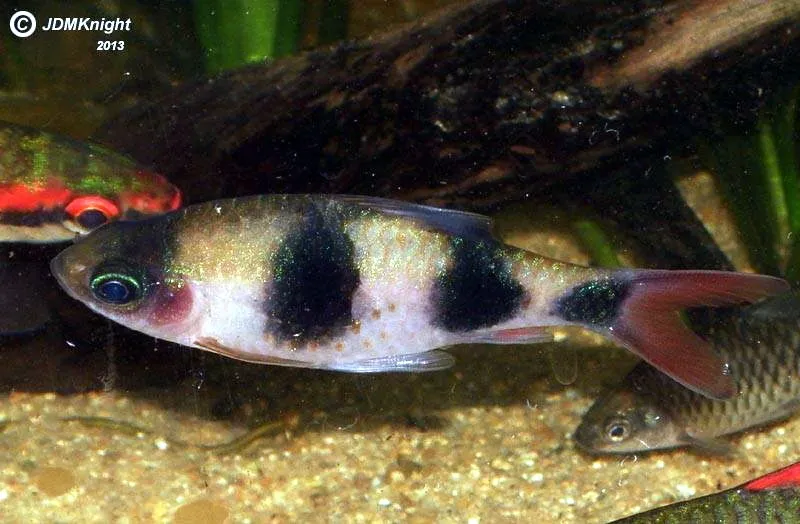 4.7 in (12 cm)37 gal (140 L)66–77°F (19–25°C)
Arulius barb
Dawkinsia arulius
4.7 in (12 cm) · 37 gal (140 L)
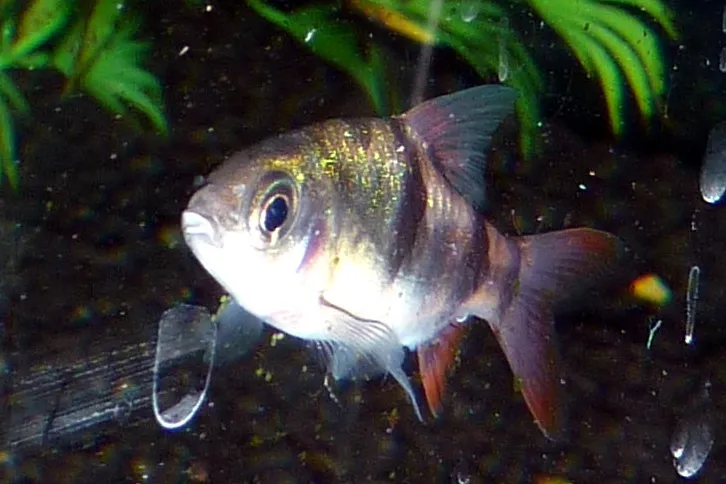 4.7 in (12 cm)40 gal (150 L)64–82°F (18–28°C)
Everett's barb
Barbodes everetti
4.7 in (12 cm) · 40 gal (150 L)
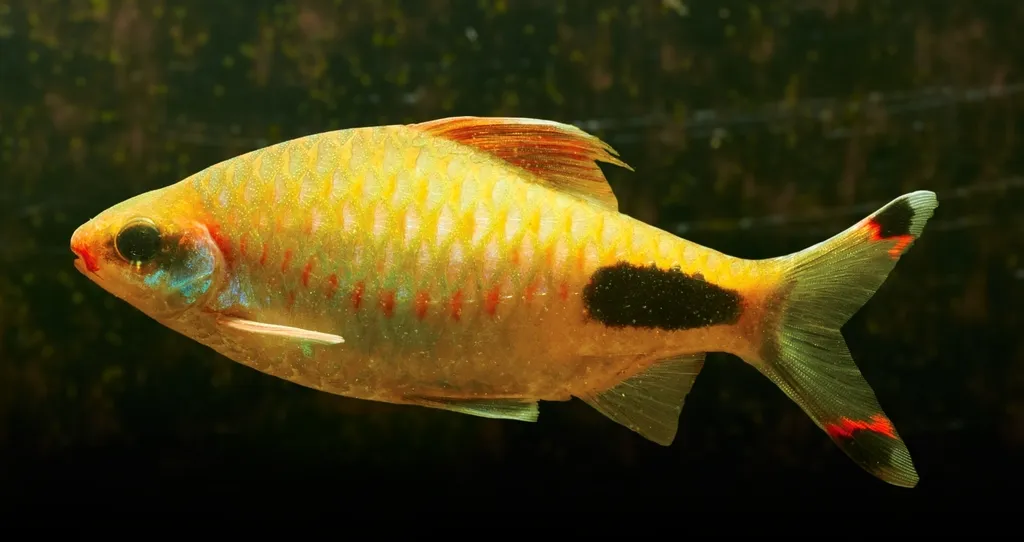 4.7 in (12 cm)53 gal (200 L)66–77°F (19–25°C)
Mascara barb
Dawkinsia assimilis
4.7 in (12 cm) · 53 gal (200 L)
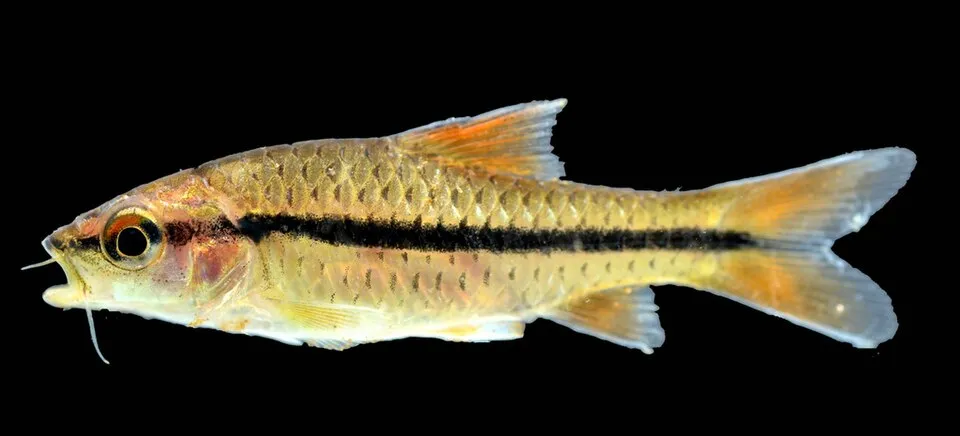 4.7 in (12 cm)32 gal (120 L)75–86°F (24–30°C)
Spotscale barb
Barbus holotaenia
4.7 in (12 cm) · 32 gal (120 L)
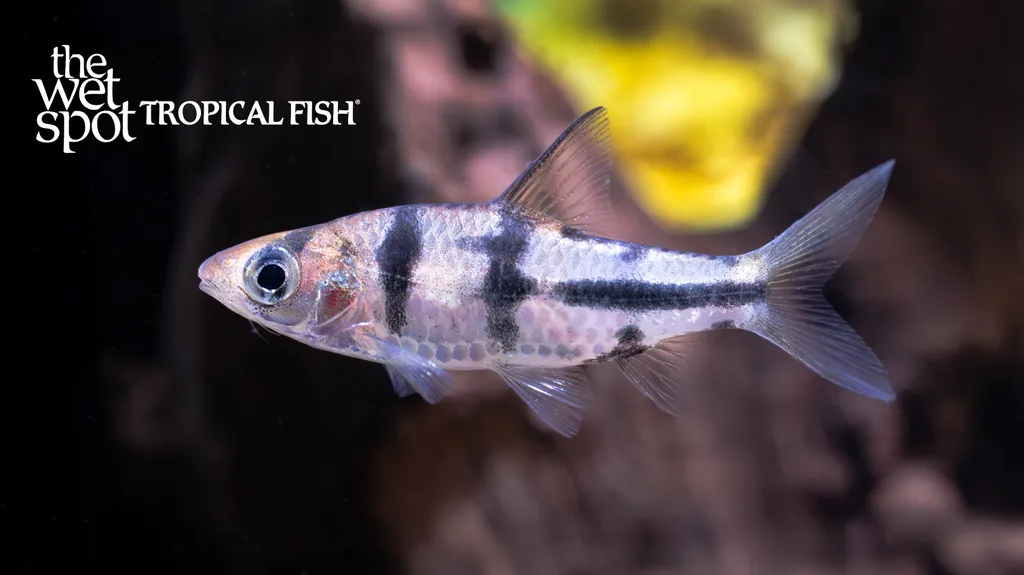 4.7 in (12 cm)40 gal (150 L)73–79°F (23–26°C)
Striped barb
Desmopuntius johorensis
4.7 in (12 cm) · 40 gal (150 L)
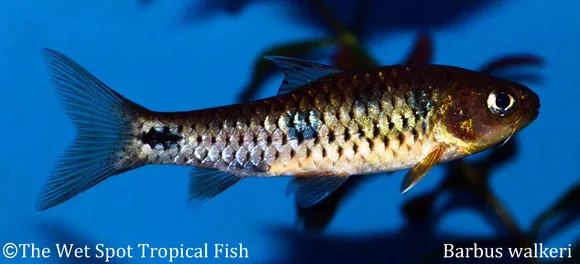 4.7 in (12 cm)29 gal (110 L)72–81°F (22–27°C)
Walker's barb
Enteromius walkeri
4.7 in (12 cm) · 29 gal (110 L)