Spotscale barb
Barbus holotaenia
Also known as African Spotscale Barb
FreshwaterFish
Care at a glance
- Temperature
- 75–86°F
- 24–30°C
- pH
- 6.0–7.0
- Adult size
- 4.7 in
- 12 cm
- Minimum tank
- 32 gal
- 120 L
- Temperament
- Peaceful
- Social behavior
- Schooling
- Swim level
- Middle
- Difficulty
- Medium
- Breeding
- No record
- Rarity
- Rare
- Family
- Cyprinidae
- Origin
- Africa
Overview
Spotscale barbs are peaceful, active shoaling fish that should be kept in a group of at least six, and more if you have room, as a good shoal keeps them settled and out in the open. They swim in the middle water and suit a spacious community with other calm, similarly sized fish that enjoy warm, soft water. They are easy to feed, taking flake, pellets, and frozen or live foods, with some vegetable matter to round out the diet. A larger group keeps their focus on one another rather than on smaller tankmates. A tank around 120 liters or larger keeps an active shoal content.
In the wild
This barb is an African species, native to the warm rivers and streams of the Congo basin and nearby waters in central Africa, where it lives in soft, often tannin stained water. It does best in warm conditions of about 24–30 C and a soft, acidic to neutral pH of 6.0–7.0. Recreate that with a gentle current, a base of sand and fine gravel, and driftwood and leaf litter to soften and shade the water. Some hardy planting and open swimming space complete a comfortable setting for this active fish.
Good to know
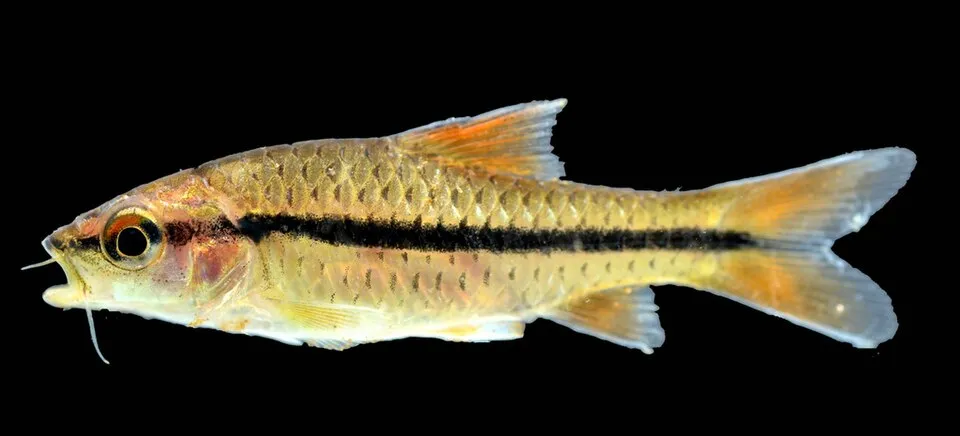
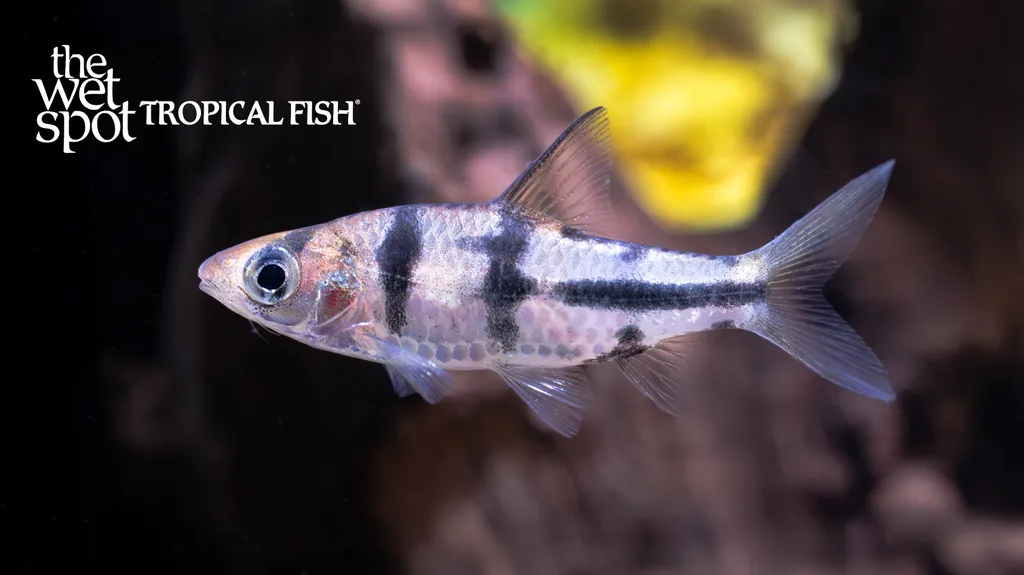
Barbus holotaenia is an African member of the family Cyprinidae that reaches around 12 cm. It is a streamlined, silvery barb whose most obvious feature is a dark stripe that runs unbroken along the length of the body from snout to tail. The species name holotaenia refers to that complete band. It is presumed to be an egg scattering, non guarding spawner like its relatives, but there is no established record of it being bred in home aquaria.
Did you know
The scientific name holotaenia comes from words meaning whole band, a reference to the single dark stripe that runs the entire length of the body without a break. That continuous line, rather than the spots the common name suggests, is the easiest way to pick this African barb out from its relatives.
Weekly picks
Tank mates
Spotscale barb is a peaceful, schooling species that keeps to the middle. These picks share a community profile with it, are safe together in both directions, and overlap on water type, temperature and pH.
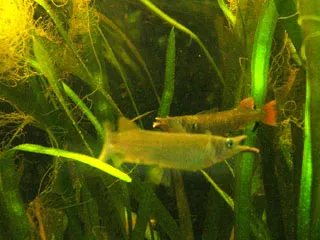
Redfin halfbeak
Nomorhamphus ebrardtii
Freshwater3.5 in (9 cm) · 29 gal (110 L)75–81°F (24–27°C)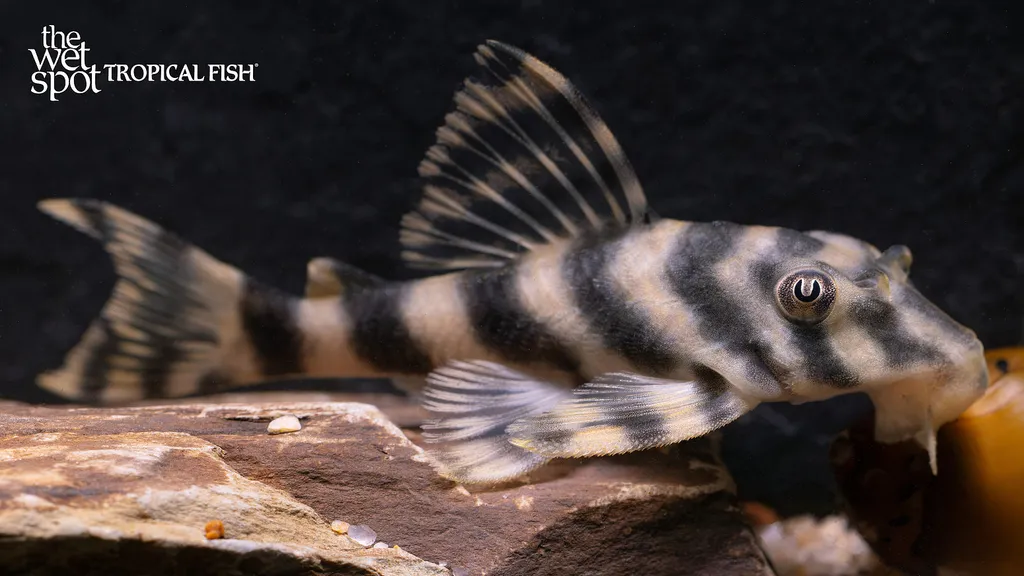
Candy striped pleco (L015)
Peckoltia vittata
Freshwater4.7 in (12 cm) · 30 gal (115 L)77–84°F (25–29°C)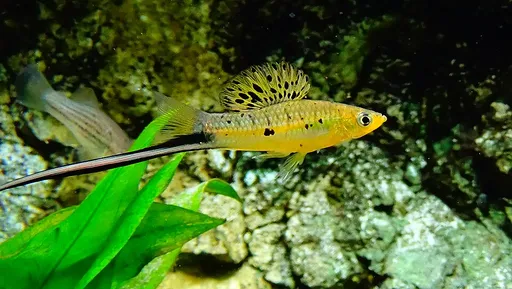
Montezuma swordtail
Xiphophorus montezumae
Freshwater5.5 in (14 cm) · 32 gal (120 L)68–79°F (20–26°C)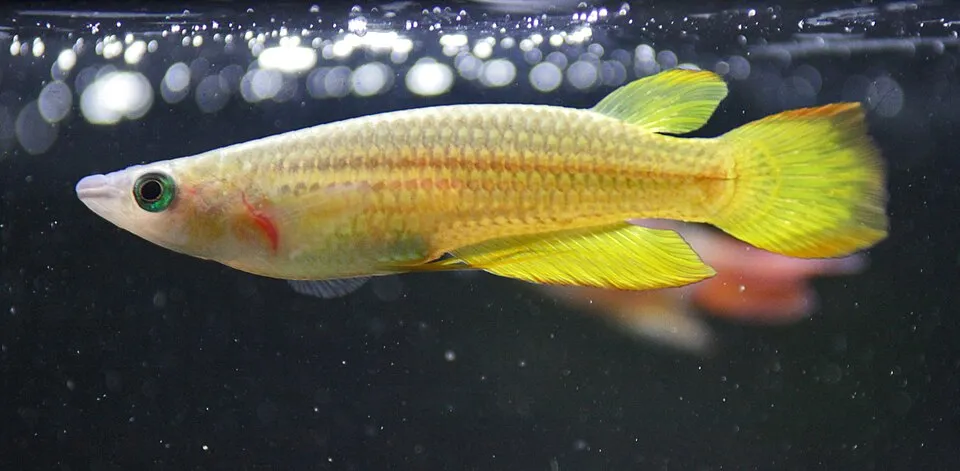
Striped panchax
Aplocheilus lineatus
Freshwater4.3 in (11 cm) · 30 gal (115 L)72–77°F (22–25°C)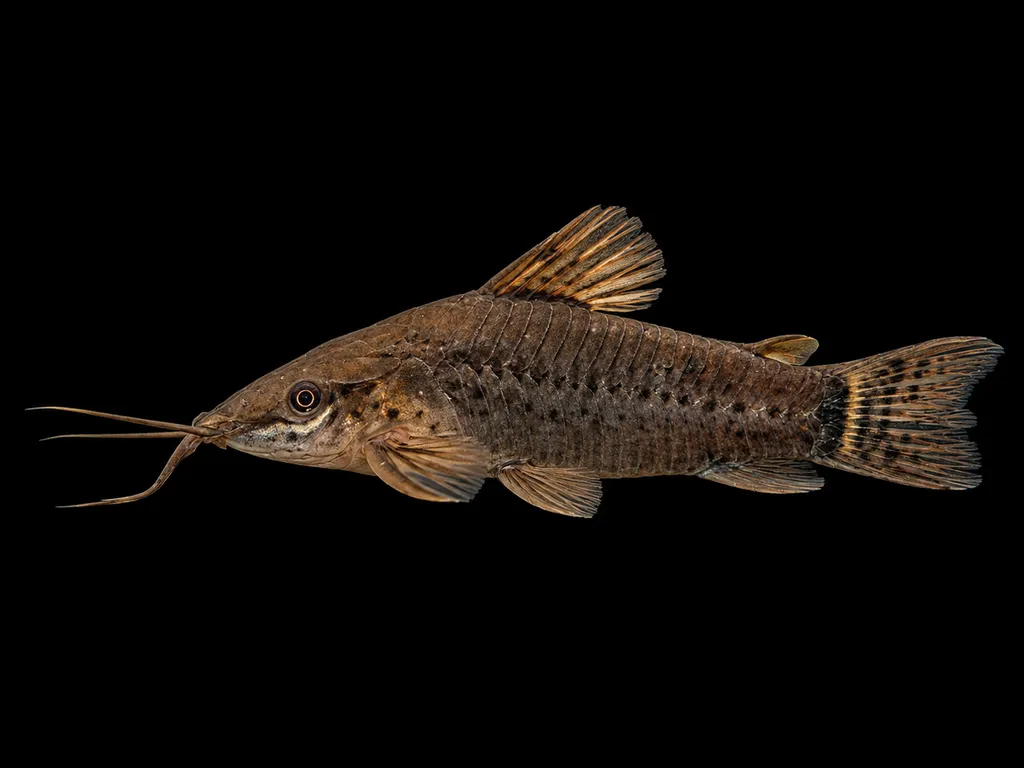
Panama hoplo
Hoplosternum punctatum
Freshwater3.1 in (8 cm) · 30 gal (115 L)72–79°F (22–26°C)
Slender rasbora
Rasbora daniconius
Freshwater3.9 in (10 cm) · 32 gal (120 L)72–81°F (22–27°C)
Common questions
What size tank does a Spotscale barb need?
A Spotscale barb needs at least 32 gal (120 L). It spends most of its time in the middle.
What temperature and pH does a Spotscale barb need?
A Spotscale barb is comfortable at 75–86°F (24–30°C) with a pH of 6.0–7.0.
How big does a Spotscale barb get?
An adult Spotscale barb reaches about 4.7 in (12 cm).
Does a Spotscale barb need a group?
Yes. A Spotscale barb is a schooling species and should be kept in a group, not singly.
Related species
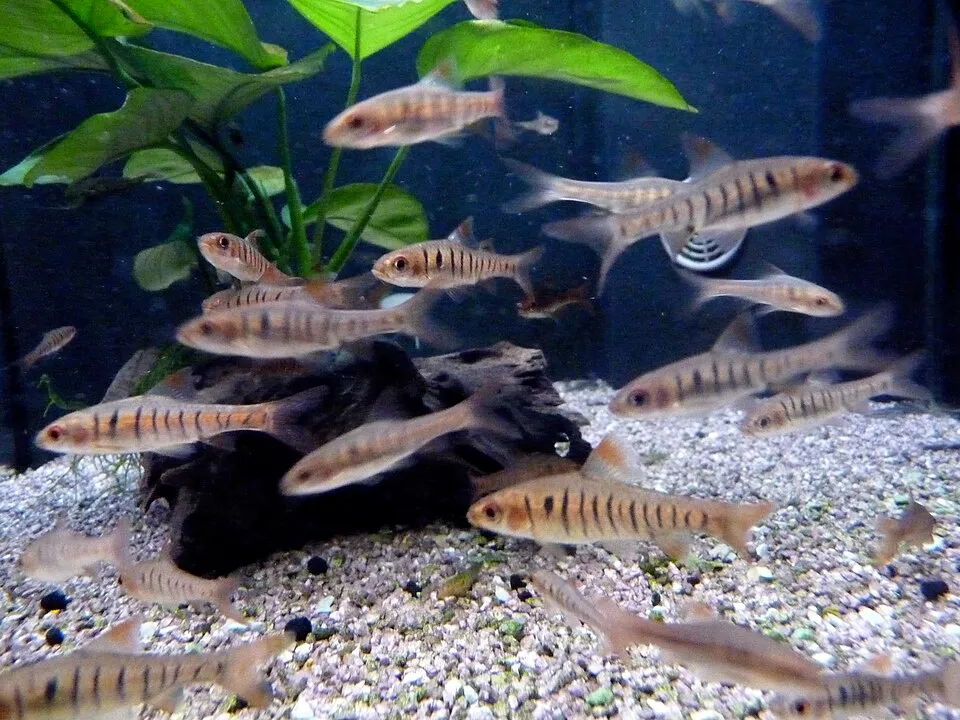 2.4 in (6 cm)20 gal (75 L)68–79°F (20–26°C)
African banded barb
Barbus fasciolatus
2.4 in (6 cm) · 20 gal (75 L)
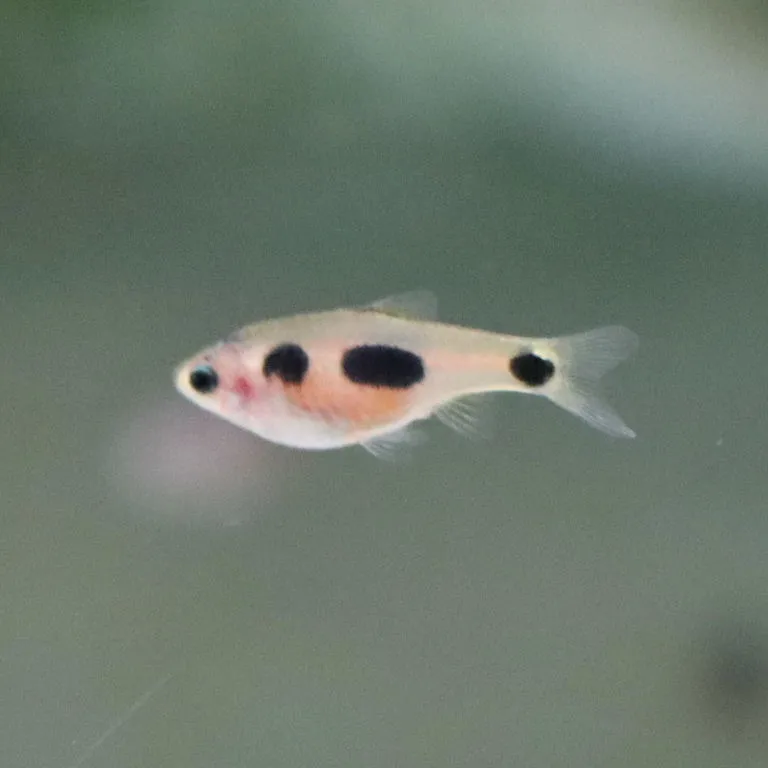 1.4 in (3.5 cm)11 gal (40 L)63–75°F (17–24°C)
African butterfly barb
Barbus hulstaerti
1.4 in (3.5 cm) · 11 gal (40 L)
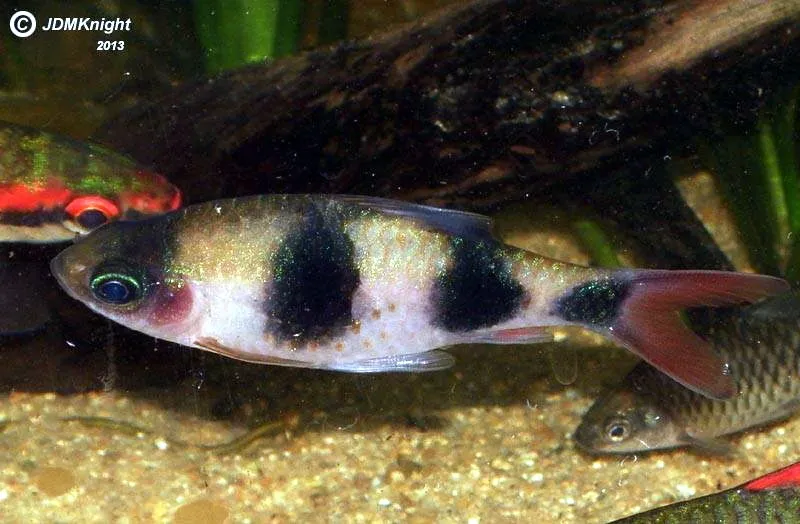 4.7 in (12 cm)37 gal (140 L)66–77°F (19–25°C)
Arulius barb
Dawkinsia arulius
4.7 in (12 cm) · 37 gal (140 L)
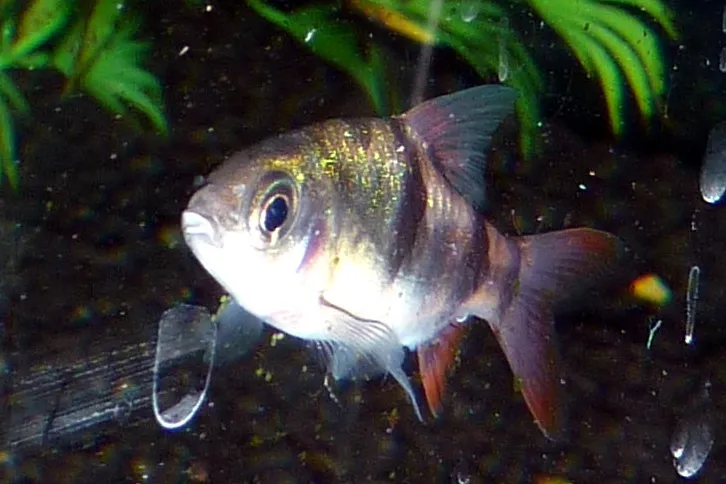 4.7 in (12 cm)40 gal (150 L)64–82°F (18–28°C)
Everett's barb
Barbodes everetti
4.7 in (12 cm) · 40 gal (150 L)
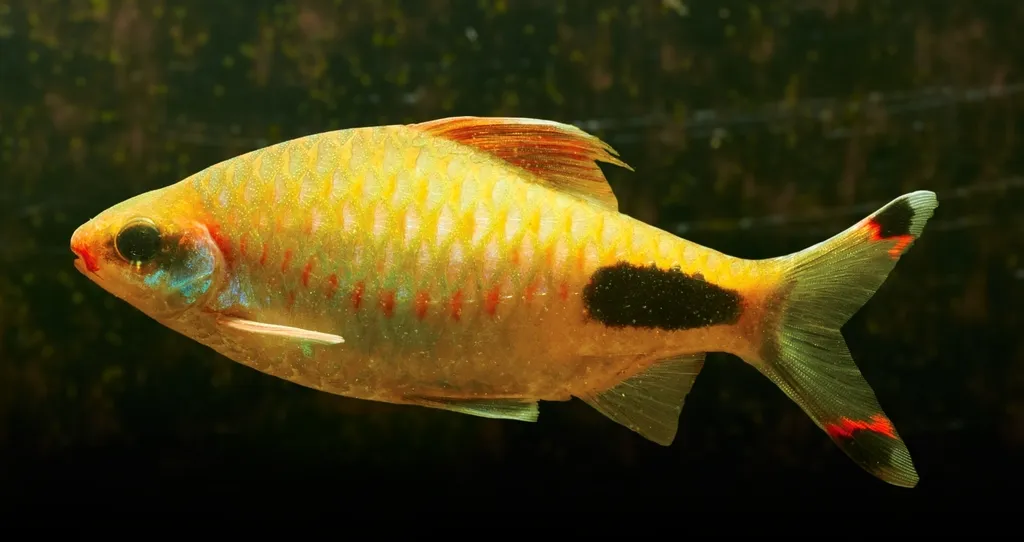 4.7 in (12 cm)53 gal (200 L)66–77°F (19–25°C)
Mascara barb
Dawkinsia assimilis
4.7 in (12 cm) · 53 gal (200 L)
 4.7 in (12 cm)40 gal (150 L)73–79°F (23–26°C)
Striped barb
Desmopuntius johorensis
4.7 in (12 cm) · 40 gal (150 L)