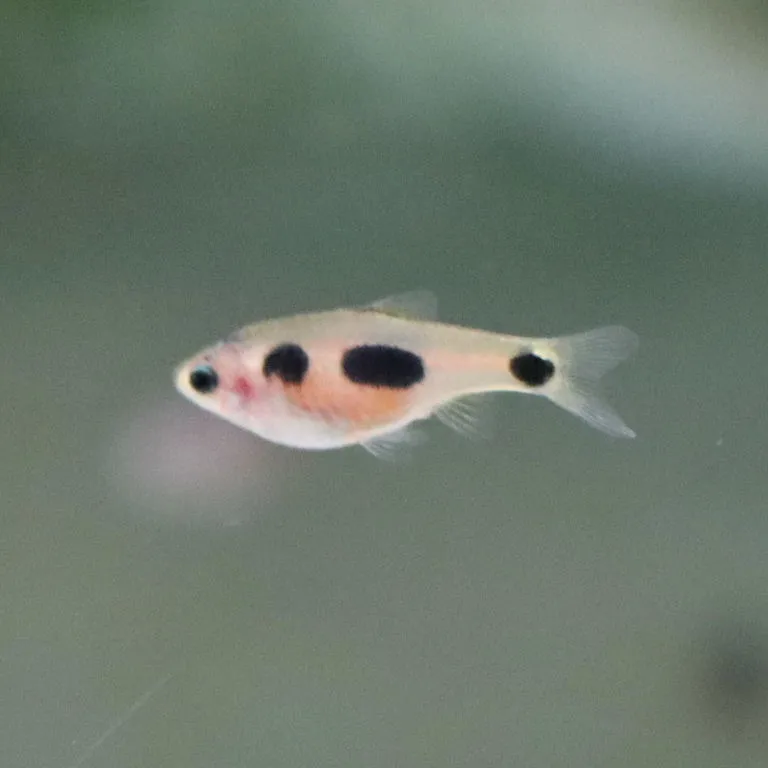
African butterfly barb
Barbus hulstaerti
FreshwaterFish
Care at a glance
- Temperature
- 63–75°F
- 17–24°C
- pH
- 5.0–6.5
- Adult size
- 1.4 in
- 3.5 cm
- Minimum tank
- 11 gal
- 40 L
- Temperament
- Peaceful
- Social behavior
- Schooling
- Swim level
- Middle
- Difficulty
- Medium
- Breeding
- Hard
- Rarity
- Very rare
- Family
- Cyprinidae
- Origin
- Central Africa
Overview
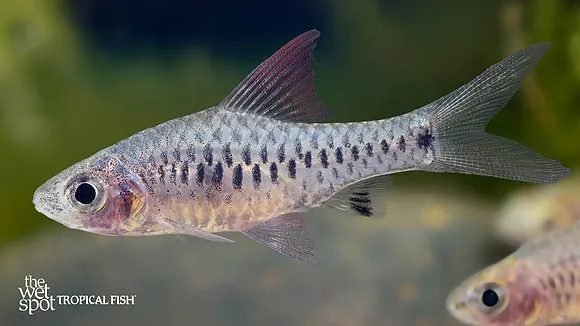
Keep a group of at least six, ideally more, in a tank around 40 liters or larger. They are shy and peaceful, sticking to the middle of the tank, and they color up best when they feel safe among plants. Skip boisterous tankmates, since they are easily outcompeted at feeding time. Offer small foods like micro pellets, fine flake, and live or frozen daphnia and mosquito larvae.
In the wild
The African butterfly barb comes from small, shaded forest streams in Central Africa. These are cool, soft, acidic waters running over leaf litter with not much light getting through the canopy. Aim for a dim, planted tank with leaf litter, soft acidic water, and a cooler temperature than most tropicals, roughly the high teens to low 20s C. Stable conditions matter more than warmth here.
Good to know
This is a small cyprinid that rarely passes 3.5 cm. The patterned fins are where the butterfly name comes from. Males and females differ in fin coloring, which helps with sexing. They are egg scatterers, and breeding is tricky, needing soft acidic water and careful attention to the cool temperature range.
Did you know
This species needs cooler water than most barbs and does poorly if kept too warm for too long. Many fishkeepers lose them by treating them like a standard tropical, when they actually do better in an unheated or lightly heated room-temperature tank.
Weekly picks
Tank mates
African butterfly barb is a peaceful, schooling species that keeps to the middle. These picks share a community profile with it, are safe together in both directions, and overlap on water type, temperature and pH.
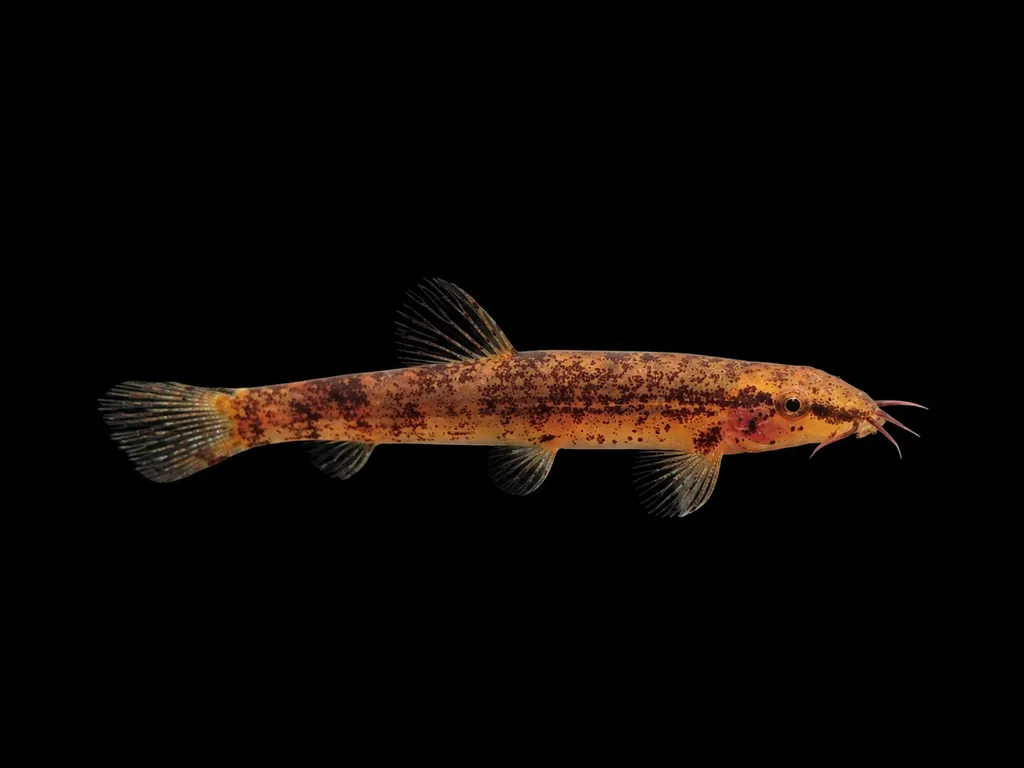
Dwarf lizard loach
Neohomaloptera johorensis
Freshwater1 in (2.5 cm) · 11 gal (40 L)72–79°F (22–26°C)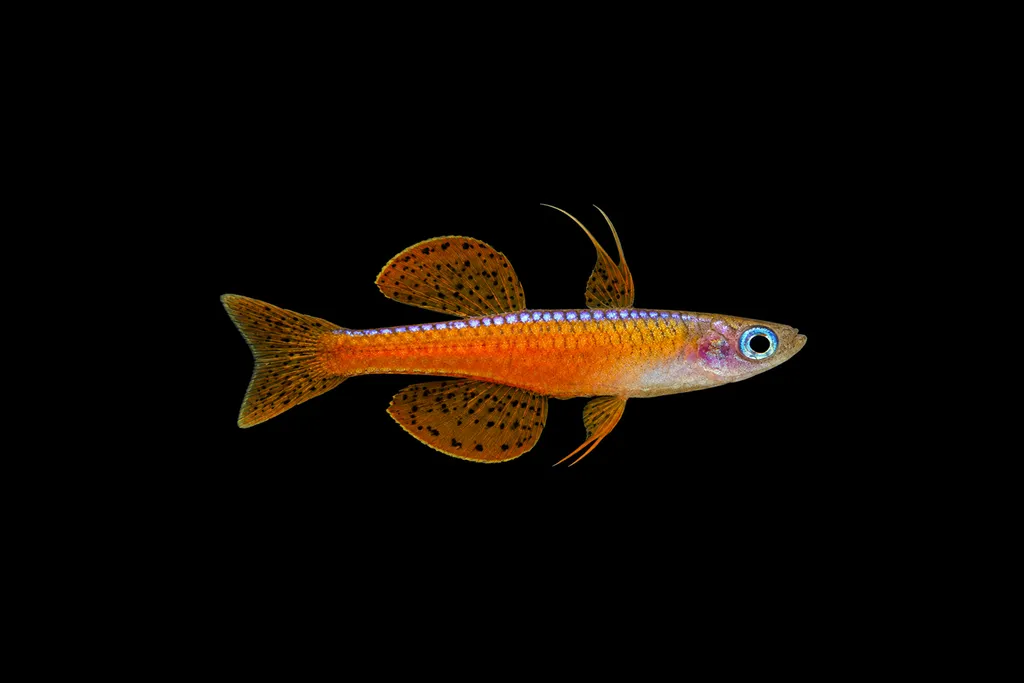
Paska's blue-eye
Pseudomugil paskai
Freshwater1.4 in (3.5 cm) · 11 gal (40 L)72–79°F (22–26°C)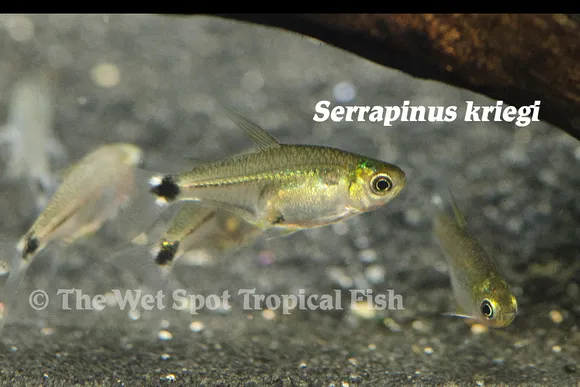
Krieg's tetra
Serrapinnus kriegi
Freshwater0.9 in (2.4 cm) · 11 gal (40 L)68–79°F (20–26°C)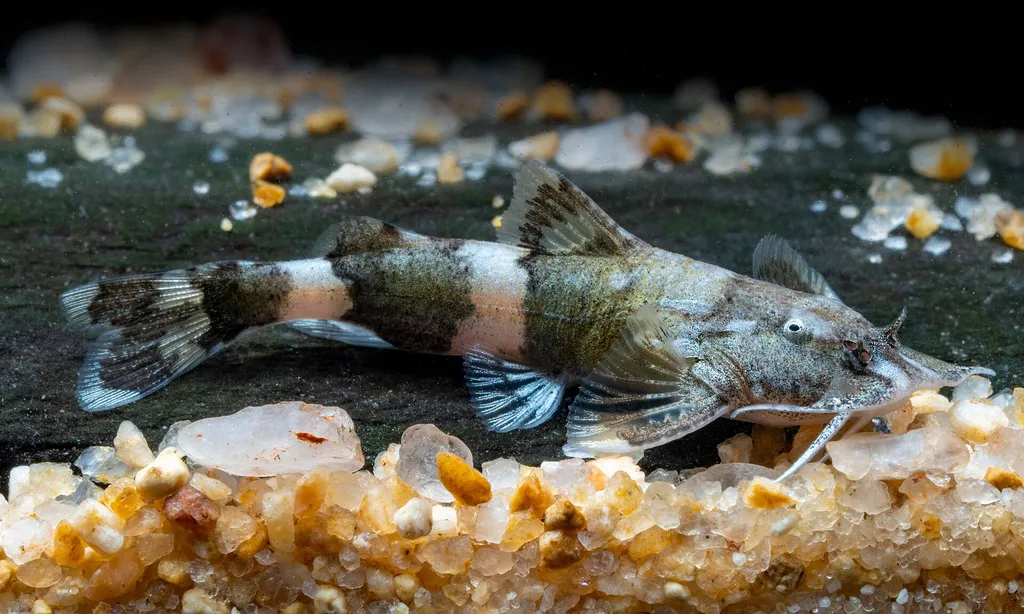
Cheetah moth catfish
Pseudolaguvia shawi
Freshwater1.5 in (3.8 cm) · 11 gal (40 L)68–79°F (20–26°C)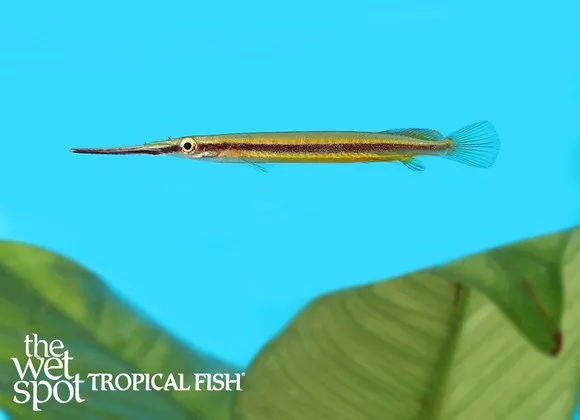
Borneo gold spot halfbeak
Hemirhamphodon tengah
Freshwater1.8 in (4.5 cm) · 11 gal (40 L)73–81°F (23–27°C)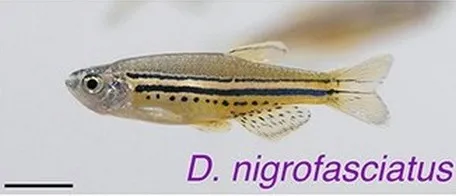
Spotted danio
Danio nigrofasciatus
Freshwater1.5 in (3.7 cm) · 11 gal (40 L)64–79°F (18–26°C)
Common questions
What size tank does an African butterfly barb need?
An African butterfly barb needs at least 11 gal (40 L). It spends most of its time in the middle.
What temperature and pH does an African butterfly barb need?
An African butterfly barb is comfortable at 63–75°F (17–24°C) with a pH of 5.0–6.5.
How big does an African butterfly barb get?
An adult African butterfly barb reaches about 1.4 in (3.5 cm).
Does an African butterfly barb need a group?
Yes. An African butterfly barb is a schooling species and should be kept in a group, not singly.
Related species
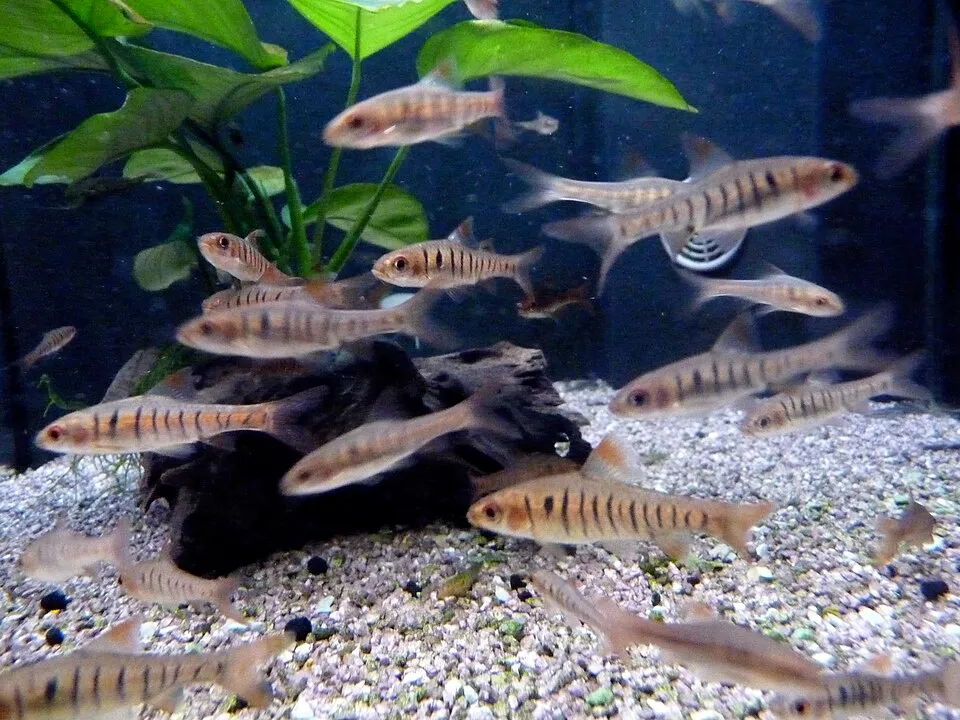 2.4 in (6 cm)20 gal (75 L)68–79°F (20–26°C)
African banded barb
Barbus fasciolatus
2.4 in (6 cm) · 20 gal (75 L)
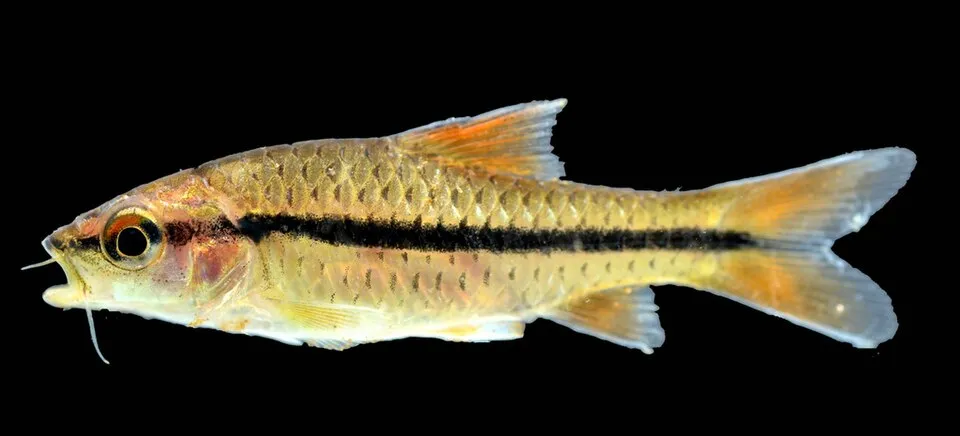 4.7 in (12 cm)32 gal (120 L)75–86°F (24–30°C)
Spotscale barb
Barbus holotaenia
4.7 in (12 cm) · 32 gal (120 L)
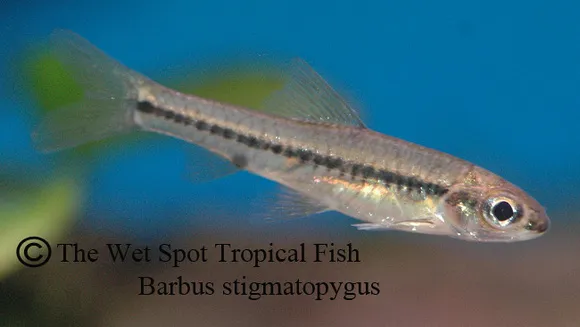 1.4 in (3.5 cm)11 gal (40 L)72–81°F (22–27°C)
Blackspot dwarf barb
Enteromius stigmatopygus
1.4 in (3.5 cm) · 11 gal (40 L)
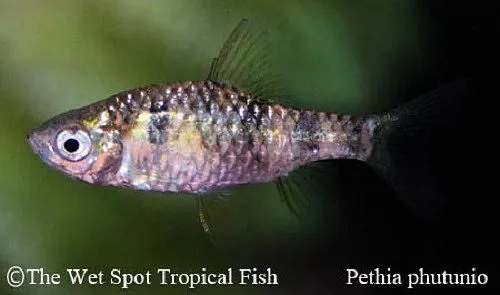 1.4 in (3.5 cm)12 gal (45 L)72–79°F (22–26°C)
Dwarf barb
Pethia phutunio
1.4 in (3.5 cm) · 12 gal (45 L)
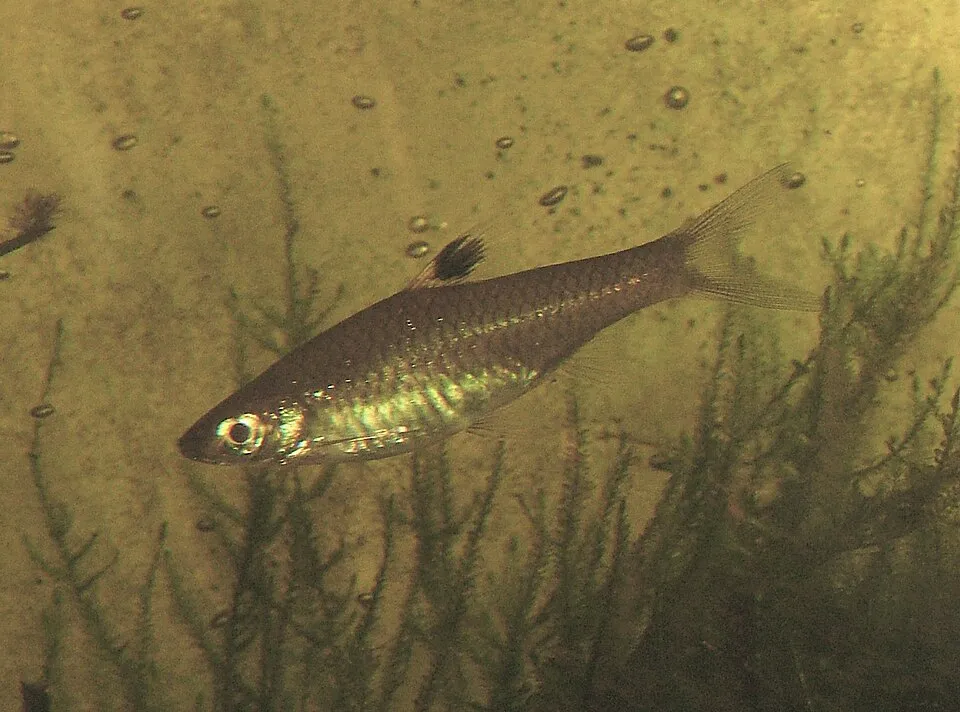 1.4 in (3.5 cm)9 gal (35 L)68–77°F (20–25°C)
Eyespot rasbora
Brevibora dorsiocellata
1.4 in (3.5 cm) · 9 gal (35 L)
 1.4 in (3.6 cm)14 gal (54 L)72–79°F (22–26°C)
Dwarf hi-fin barb
Oreichthys parvus
1.4 in (3.6 cm) · 14 gal (54 L)