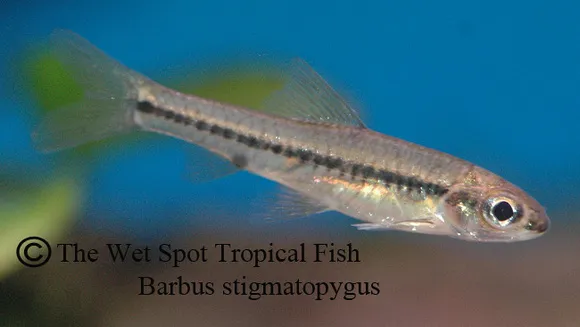
Blackspot dwarf barb
Enteromius stigmatopygus
Also known as Barbus stigmatopygus, Speckled barb
FreshwaterFish
Care at a glance
- Temperature
- 72–81°F
- 22–27°C
- pH
- 6.0–7.5
- Adult size
- 1.4 in
- 3.5 cm
- Minimum tank
- 11 gal
- 40 L
- Temperament
- Peaceful
- Social behavior
- Schooling
- Swim level
- Middle
- Difficulty
- Medium
- Breeding
- No record
- Rarity
- Rare
- Family
- Cyprinidae
- Origin
- Chad and Central African Republic drainages
Overview
The blackspot dwarf barb is a tiny African barb that schools in the middle of a planted nano tank. It is best kept by someone with a little experience.
Did you know
The blackspot dwarf barb's scientific name, stigmatopygus, singles out the one obvious feature it carries, a dark mark near the base of the tail.
Caring for the blackspot dwarf barb
Keep blackspot dwarf barbs in a group of eight or more, in a tank of 11 gal (40 L) or larger. Small schooling fish like these are timid, and they only relax and color up in numbers. A densely planted tank with some shade, cover and a dark substrate suits a group.
Keep the water clean and stable, at 72 to 81°F (22 to 27°C). They take a wide, forgiving pH range of 6.0 to 7.5, and gentle filtration and flow suit them. Feed small foods they can manage, such as finely crushed flake and micro pellets. Add small frozen or live foods like baby brine shrimp and cyclops.
The blackspot dwarf barb is thoroughly peaceful and swims in the middle of the tank. Keep it in a quiet nano community with other tiny, gentle species. It has no aquarium breeding records, though its relatives scatter eggs.
Good to know
Enteromius stigmatopygus is a small barb in the family Cyprinidae. It is one of many small African barbs once lumped into the genus Barbus and now placed in Enteromius.
In the wild
The blackspot dwarf barb lives in savanna streams and pools of north-central Africa, including the Chad basin. The water there is typically soft, warm and slow moving.
Weekly picks
Tank mates
The blackspot dwarf barb is a peaceful, schooling species that keeps to the middle. These picks share a community profile with it, are safe together in both directions, and overlap on water type, temperature and pH.
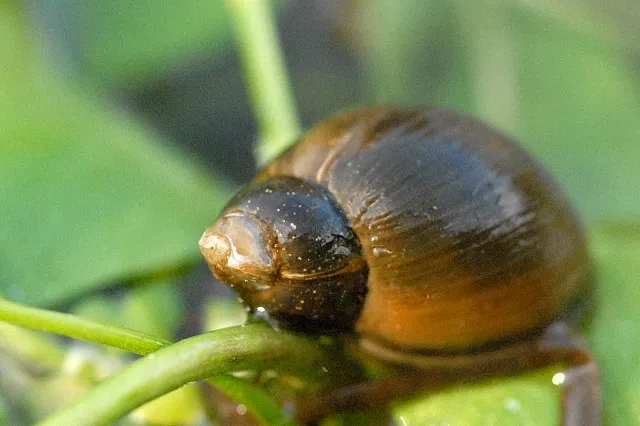
Wandering snail
Ampullaceana balthica
Freshwater0.8 in (2 cm) · 11 gal (40 L)50–84°F (10–29°C)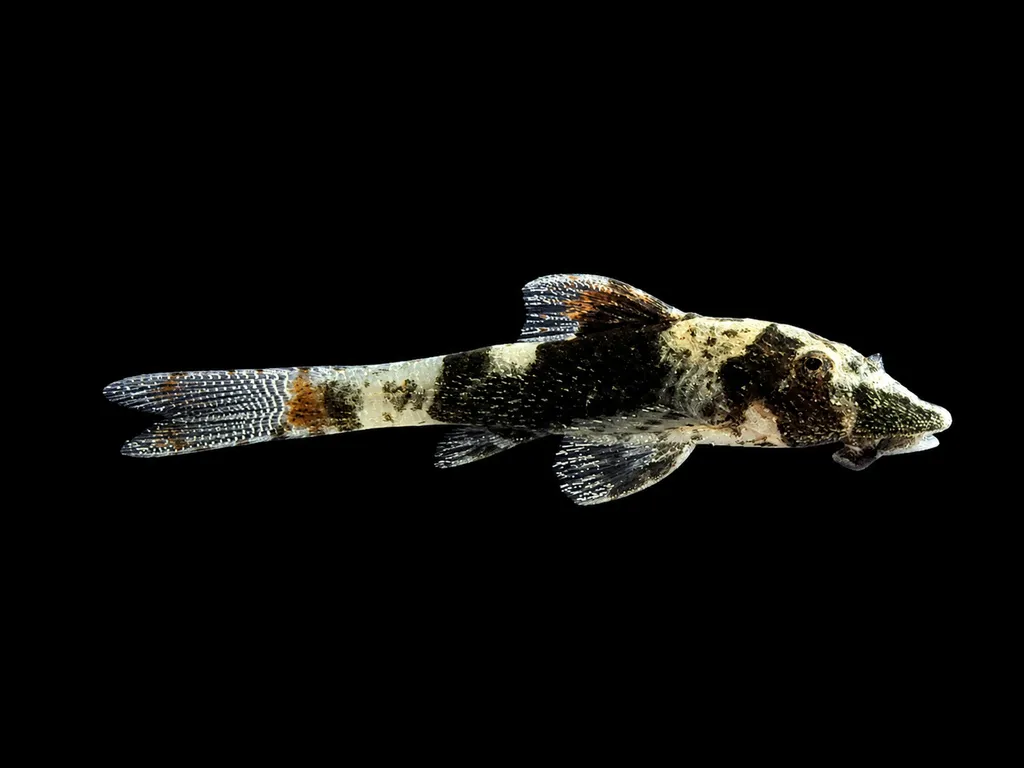
Bumblebee otocinclus
Rhinotocinclus isabelae
Freshwater0.8 in (2 cm) · 11 gal (40 L)73–82°F (23–28°C)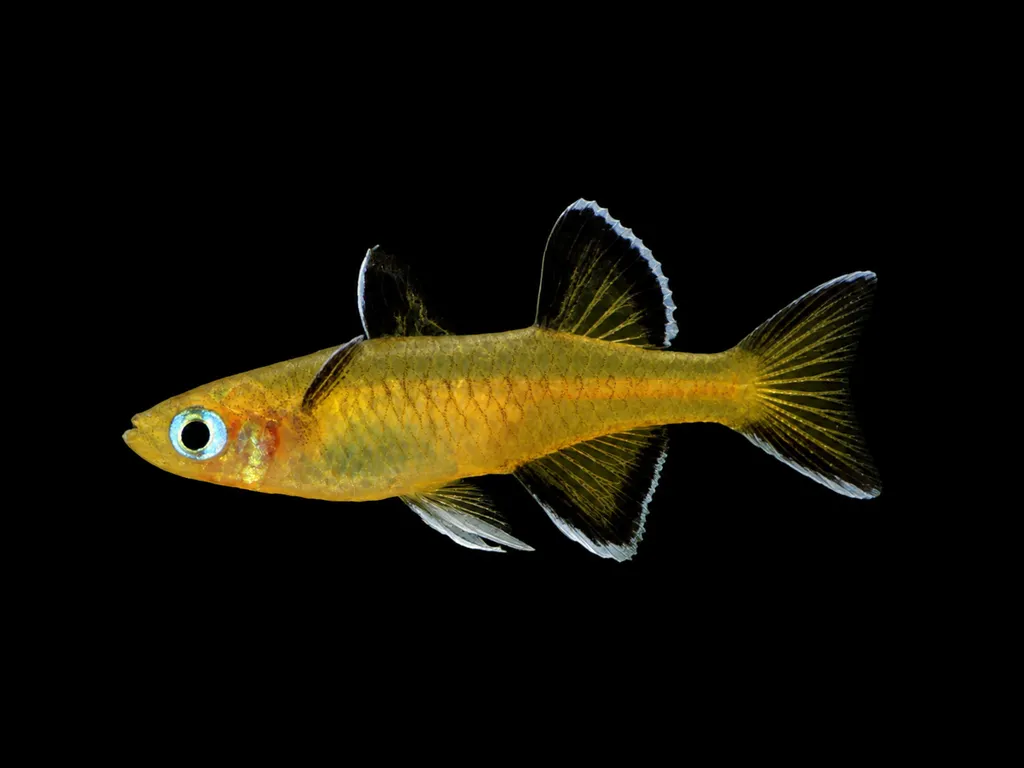
Honey blue-eye
Pseudomugil mellis
Freshwater1.4 in (3.5 cm) · 11 gal (40 L)68–82°F (20–28°C)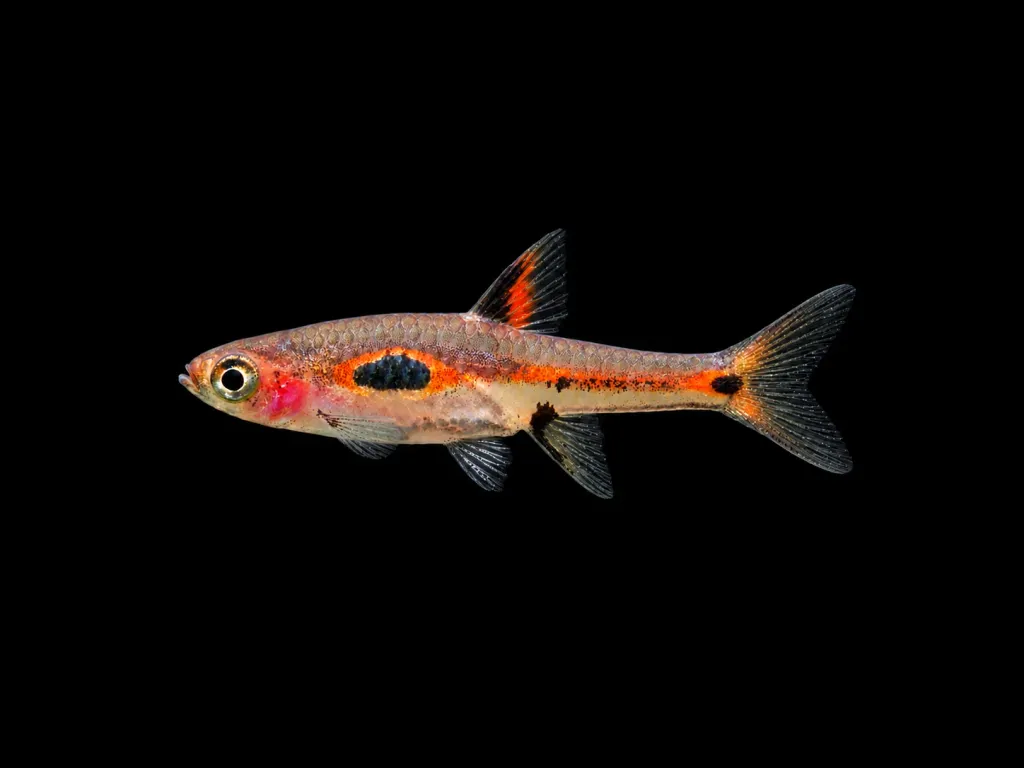
Phoenix rasbora
Boraras merah
Freshwater0.8 in (2 cm) · 11 gal (40 L)72–81°F (22–27°C)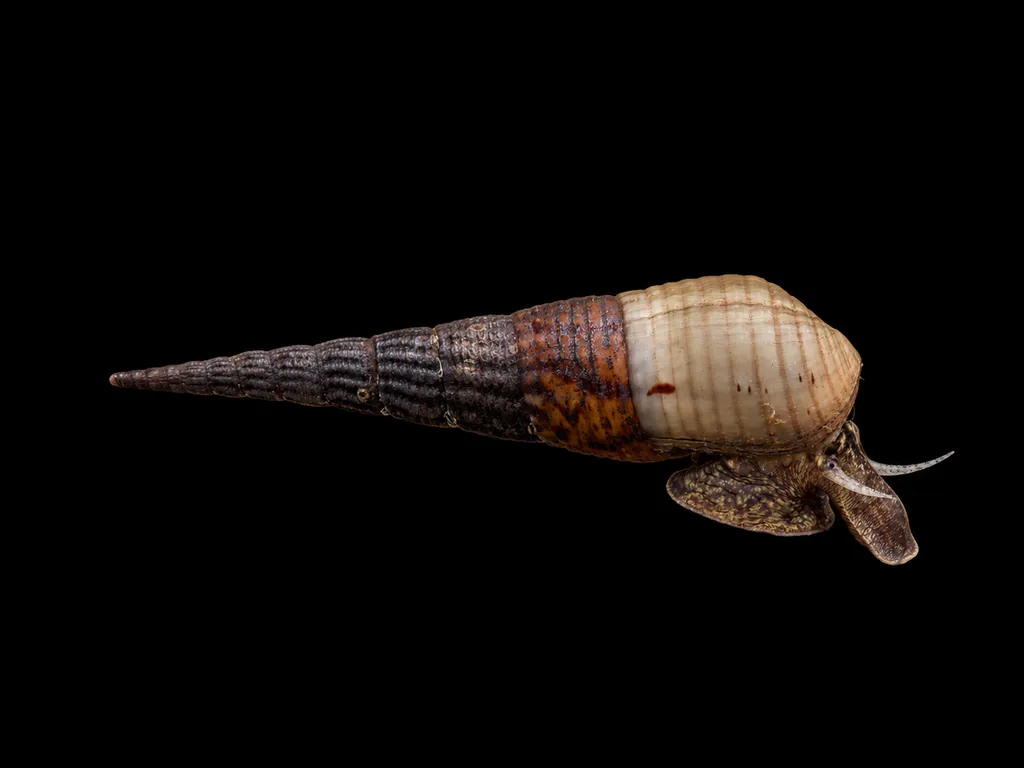
Chopstick snail
Stenomelania torulosa
Freshwater2 in (5 cm) · 11 gal (40 L)73–82°F (23–28°C)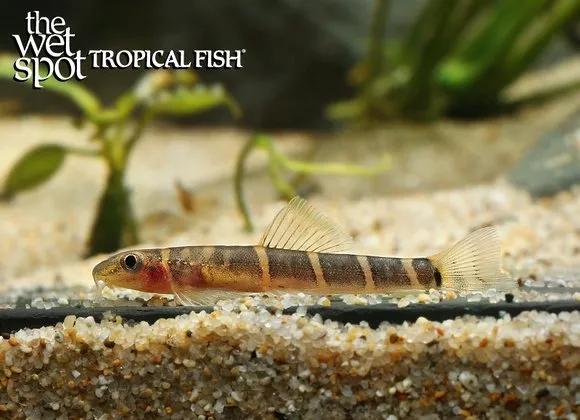
Fire-eyed loach
Barbucca diabolica
Freshwater1.2 in (3 cm) · 11 gal (40 L)72–79°F (22–26°C)
Common questions
What size tank does a blackspot dwarf barb need?
A blackspot dwarf barb needs at least 11 gal (40 L). It spends most of its time in the middle.
What temperature and pH does a blackspot dwarf barb need?
A blackspot dwarf barb is comfortable at 72–81°F (22–27°C) with a pH of 6.0–7.5.
What does a blackspot dwarf barb eat?
A blackspot dwarf barb eats small foods it can manage, such as finely crushed flake and micro pellets. It also takes small frozen or live foods like baby brine shrimp and cyclops.
How big does a blackspot dwarf barb get?
An adult blackspot dwarf barb reaches about 1.4 in (3.5 cm).
Does a blackspot dwarf barb need a group?
Yes. A blackspot dwarf barb is a schooling species and should be kept in a group, not singly.
How does a blackspot dwarf barb breed?
The blackspot dwarf barb has no recorded breeding in aquariums. Its relatives scatter their eggs.
Related species
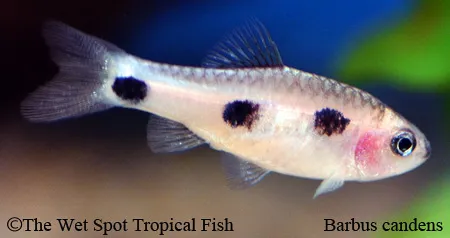 1.6 in (4 cm)14 gal (54 L)72–81°F (22–27°C)
Glowing ember barb
Enteromius candens
1.6 in (4 cm) · 14 gal (54 L)
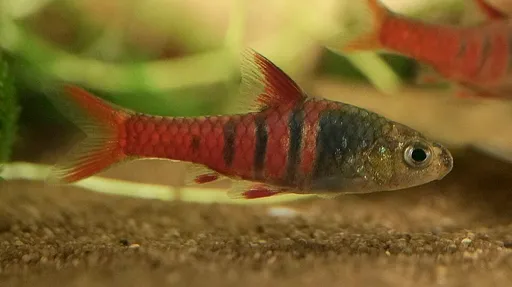 1.6 in (4 cm)16 gal (60 L)68–77°F (20–25°C)
Jae barb
Enteromius jae
1.6 in (4 cm) · 16 gal (60 L)
- 1.6 in (4 cm)14 gal (54 L)72–81°F (22–27°C)
Sierra Leone yellow fin barb
Enteromius leonensis
1.6 in (4 cm) · 14 gal (54 L)
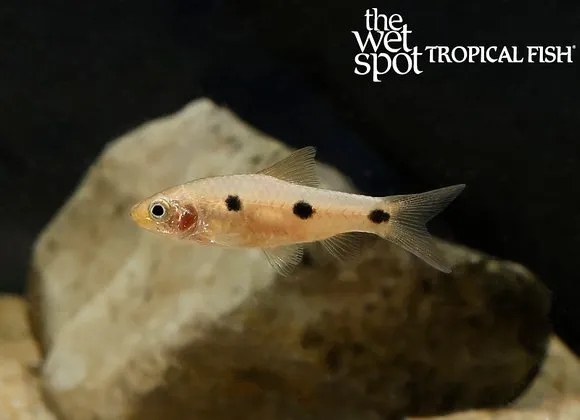 2.8 in (7 cm)24 gal (90 L)72–81°F (22–27°C)
Threespot barb
Enteromius trispilos
2.8 in (7 cm) · 24 gal (90 L)
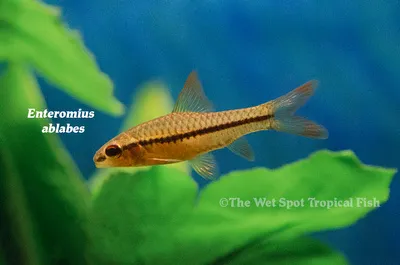 3.1 in (8 cm)24 gal (90 L)72–81°F (22–27°C)
Ablabes barb
Enteromius ablabes
3.1 in (8 cm) · 24 gal (90 L)
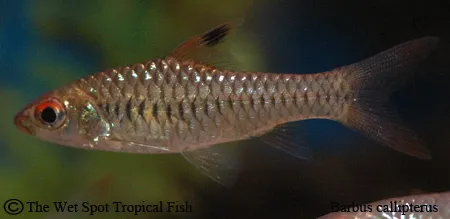 3.5 in (9 cm)24 gal (90 L)72–81°F (22–27°C)
Clipper barb
Enteromius callipterus
3.5 in (9 cm) · 24 gal (90 L)