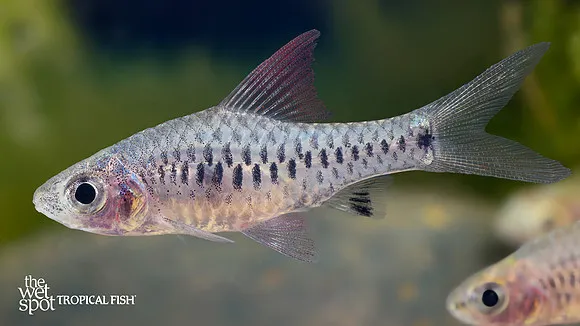
Dwarf hi-fin barb
Oreichthys parvus
Also known as Dwarf neon hi-fin barb, Thai hi-fin headstander barb
FreshwaterFish
Care at a glance
- Temperature
- 72–79°F
- 22–26°C
- pH
- 6.0–7.5
- Adult size
- 1.4 in
- 3.6 cm
- Minimum tank
- 14 gal
- 54 L
- Temperament
- Peaceful
- Social behavior
- Schooling
- Swim level
- Middle
- Difficulty
- Medium
- Breeding
- Egg scatterer · Medium
- Rarity
- Rare
- Family
- Cyprinidae
- Origin
- Southeastern Thailand and northern Malaya
Overview
The dwarf hi-fin barb is a peaceful schooling barb for a densely planted nano tank. It is a step up from the easiest fish.
Did you know
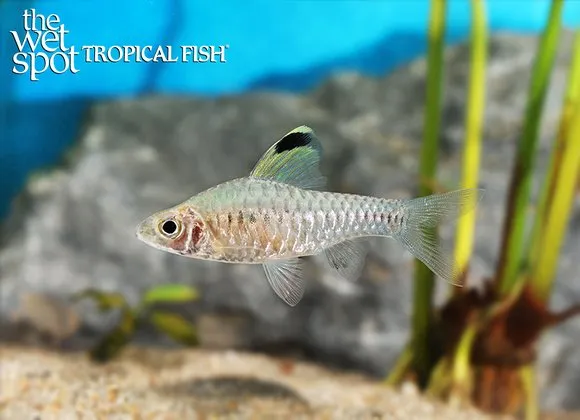
The dwarf hi-fin barb has an oversized attitude for such a tiny fish. Its males raise a full sail dorsal in the same silent duels that their much larger cousins stage.
Caring for the dwarf hi-fin barb
Keep dwarf hi-fin barbs in a group of eight or more, in a tank of 14 gal (54 L) or more. Plant it densely and add driftwood and a dark substrate, with subdued lighting and gentle filtration. They can be shy at first, so keep the surroundings calm.
Keep them in the mid-tropical range, at 72 to 79°F (22 to 26°C) and a pH of 6.0 to 7.5, in clean, stable water. Feed small foods such as micro pellets and fine flake. Small frozen or live foods such as baby brine shrimp and daphnia suit them too.
This tiny barb is peaceful and swims in the middle of the tank, so keep it with other nano-sized, gentle fish. Males carry a tall, black and white-edged sail dorsal. They flag it at one another over favorite leaves and open spots. Breeding them is moderately demanding, and they scatter their eggs.
Good to know
The dwarf hi-fin barb, Oreichthys parvus, is a barb of the family Cyprinidae. Its species name, parvus, means small. It often hangs at an angle with its nose tipped down as it drifts, which gave it the trade name hi-fin headstander. It also goes by dwarf neon hi-fin barb.
In the wild
The dwarf hi-fin barb comes from gentle streams and quiet waters of southeastern Thailand, the northern Malay Peninsula and the Mekong region.
Weekly picks
Tank mates
The dwarf hi-fin barb is a peaceful, schooling species that keeps to the middle. These picks share a community profile with it, are safe together in both directions, and overlap on water type, temperature and pH.
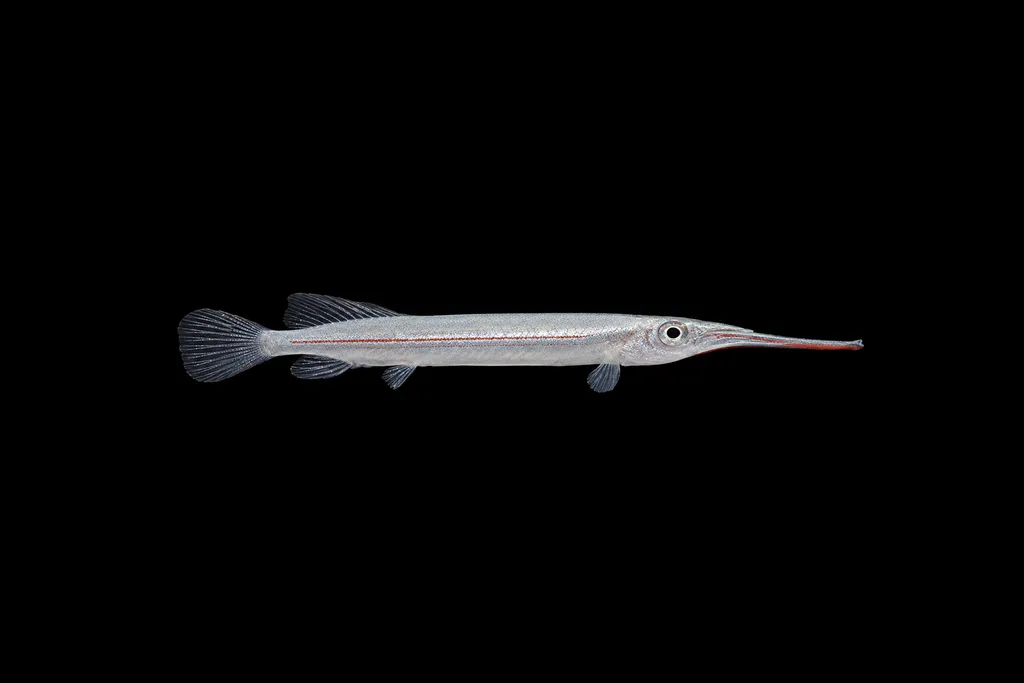
Fire halfbeak
Hemirhamphodon kapuasensis
Freshwater2.4 in (6 cm) · 14 gal (54 L)73–81°F (23–27°C)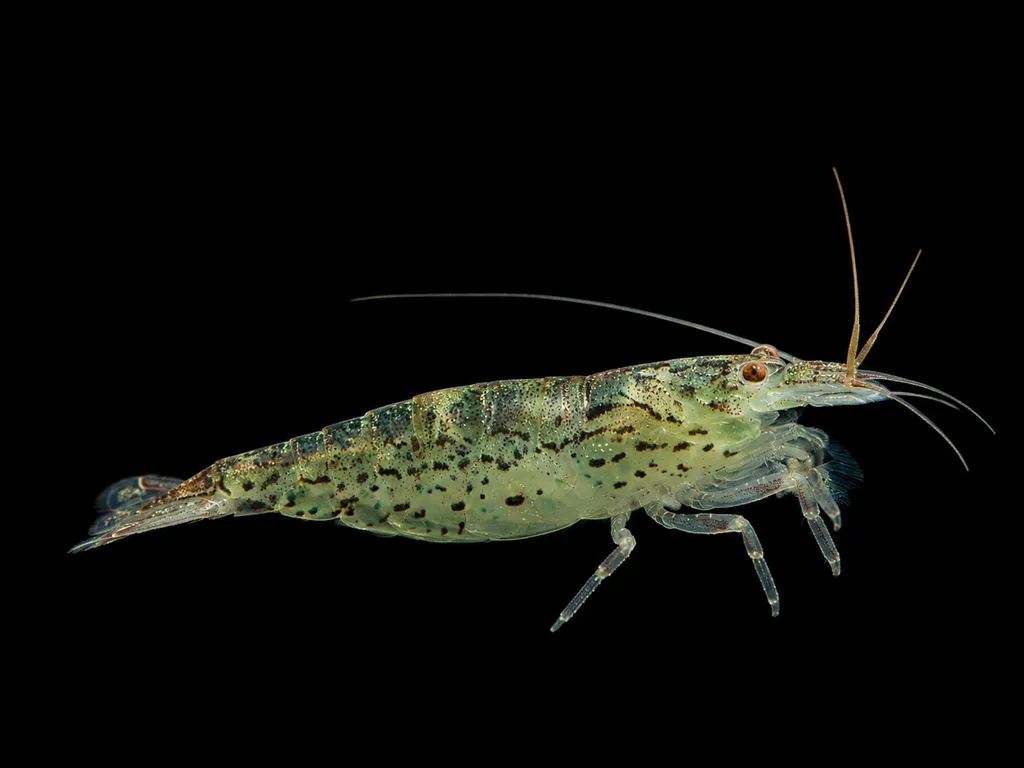
Green lace shrimp
Atyoida pilipes
Freshwater2.8 in (7 cm) · 14 gal (54 L)73–82°F (23–28°C)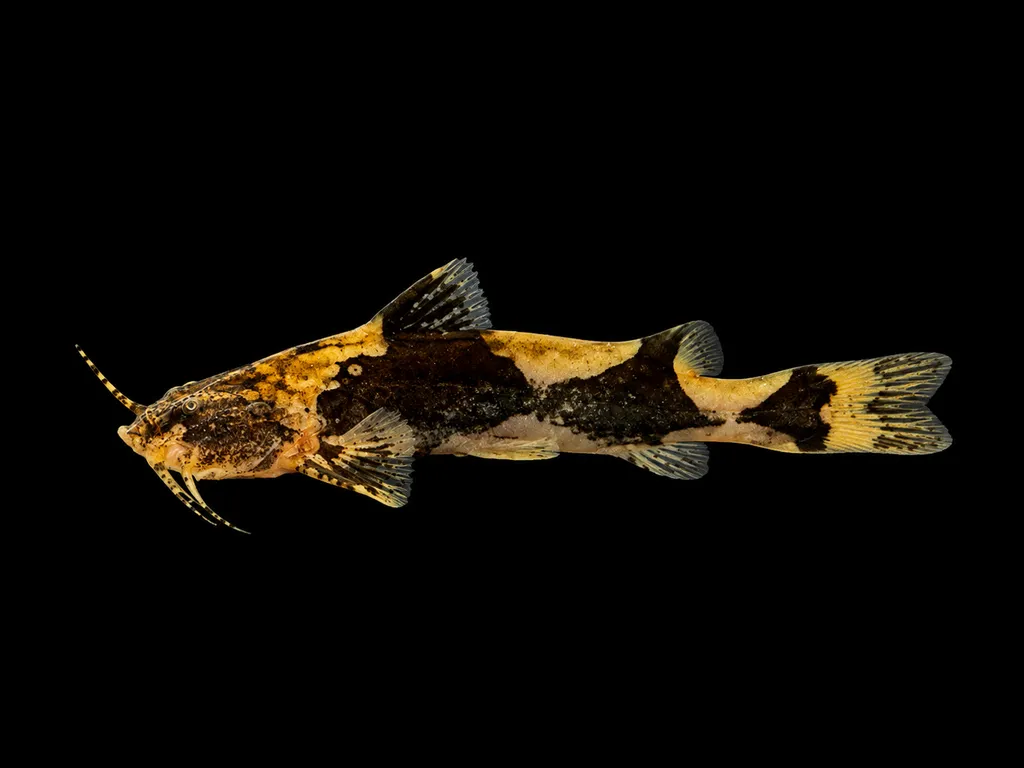
Portellus bee catfish
Akysis portellus
Freshwater1.6 in (4 cm) · 14 gal (54 L)72–79°F (22–26°C)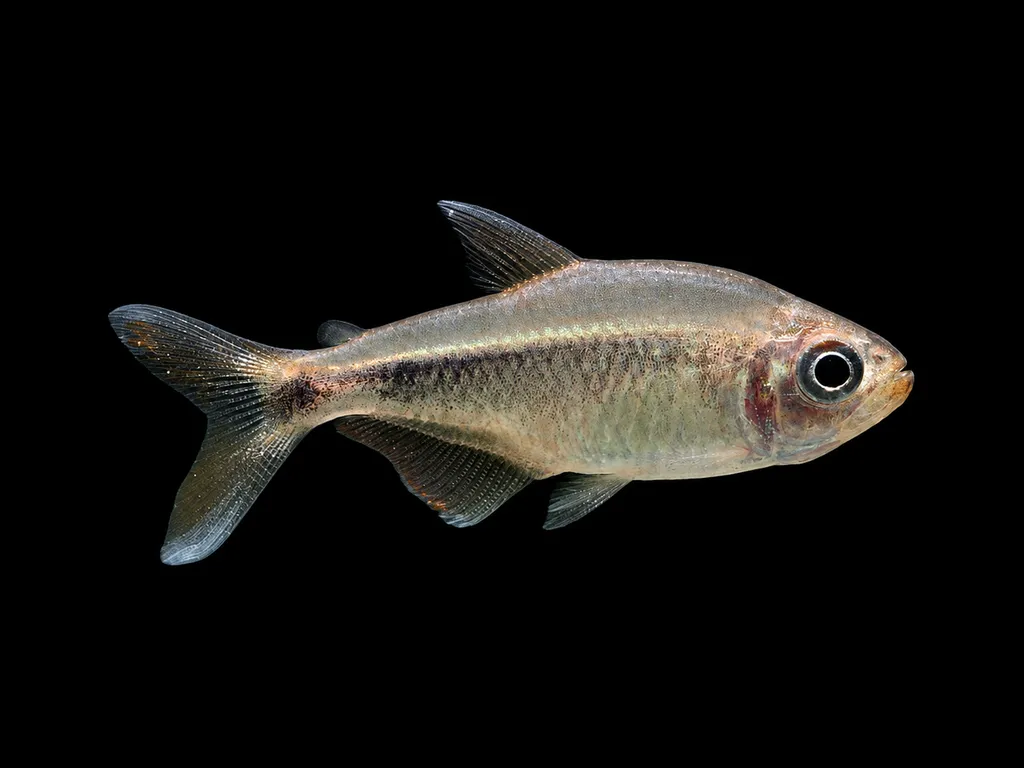
Hansen's hasemania
Hasemania hanseni
Freshwater1.6 in (4 cm) · 14 gal (54 L)72–81°F (22–27°C)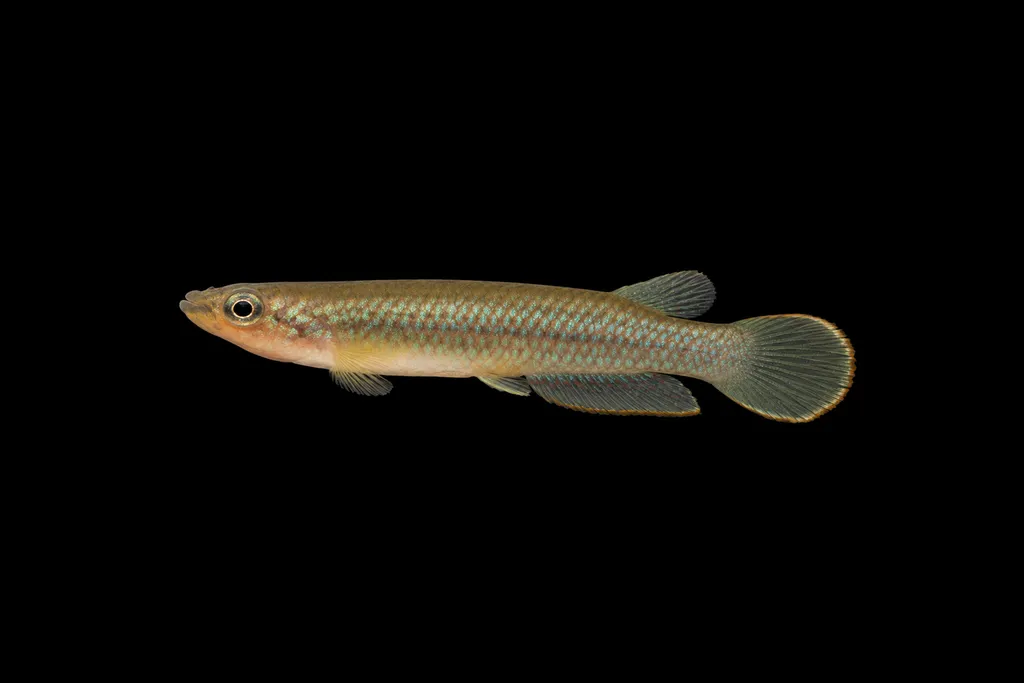
Guinean panchax
Epiplatys guineensis
Freshwater2.8 in (7 cm) · 14 gal (54 L)68–77°F (20–25°C)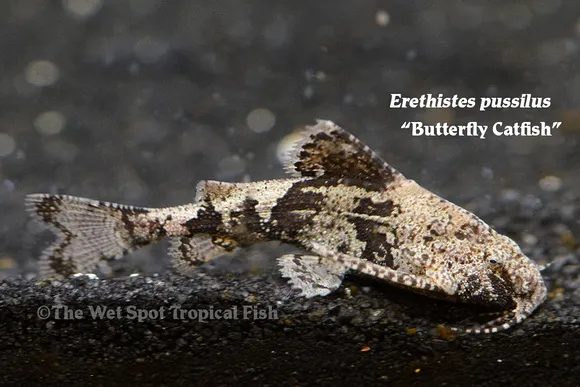
Butterfly moth catfish
Erethistes pusillus
Freshwater2 in (5 cm) · 14 gal (54 L)68–79°F (20–26°C)
Common questions
What size tank does a dwarf hi-fin barb need?
A dwarf hi-fin barb needs at least 14 gal (54 L). It spends most of its time in the middle.
What temperature and pH does a dwarf hi-fin barb need?
A dwarf hi-fin barb is comfortable at 72–79°F (22–26°C) with a pH of 6.0–7.5.
What does a dwarf hi-fin barb eat?
A dwarf hi-fin barb eats small foods such as micro pellets and fine flake. Small frozen or live foods such as baby brine shrimp and daphnia suit it too.
How big does a dwarf hi-fin barb get?
An adult dwarf hi-fin barb reaches about 1.4 in (3.6 cm).
Does a dwarf hi-fin barb need a group?
Yes. A dwarf hi-fin barb is a schooling species and should be kept in a group, not singly.
How can you tell a male dwarf hi-fin barb from a female?
Males carry a tall, black and white-edged sail dorsal. They flag it at one another over favorite leaves and open spots.
How does a dwarf hi-fin barb breed?
Dwarf hi-fin barbs scatter their eggs, and breeding them is moderately demanding.
Related species
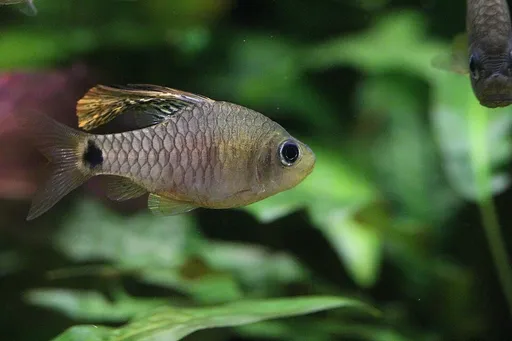 1.6 in (4 cm)14 gal (54 L)73–82°F (23–28°C)
Drape-fin barb
Oreichthys crenuchoides
1.6 in (4 cm) · 14 gal (54 L)
 3.1 in (8 cm)20 gal (75 L)68–79°F (20–26°C)
Cosuatis barb
Oreichthys cosuatis
3.1 in (8 cm) · 20 gal (75 L)
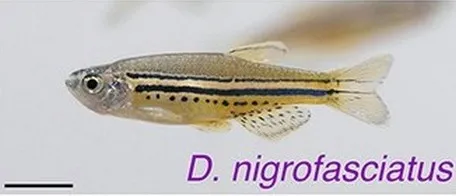 1.5 in (3.7 cm)15 gal (55 L)64–79°F (18–26°C)
Spotted danio
Danio nigrofasciatus
1.5 in (3.7 cm) · 15 gal (55 L)
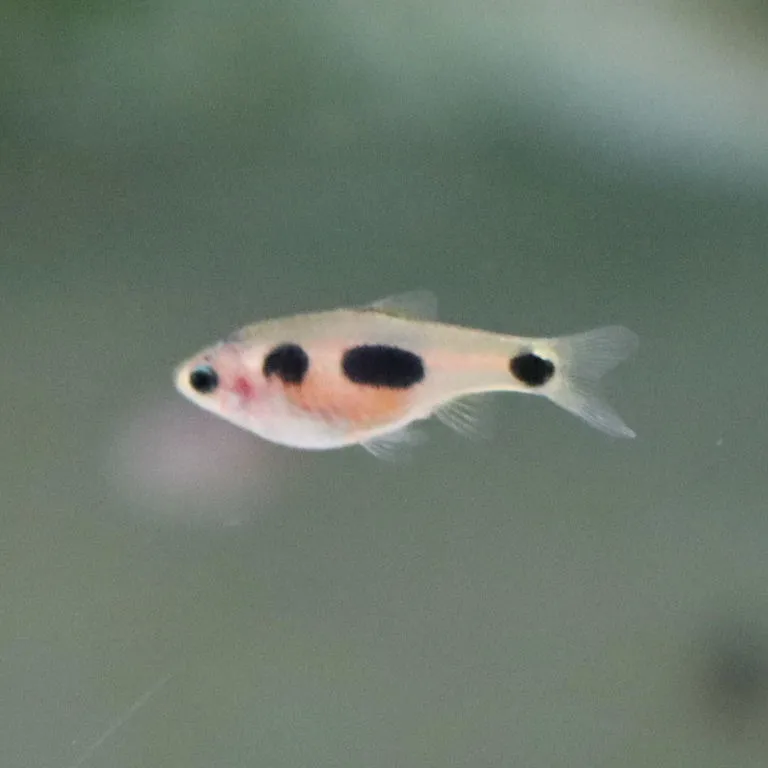 1.4 in (3.5 cm)11 gal (40 L)63–75°F (17–24°C)
African butterfly barb
Barbus hulstaerti
1.4 in (3.5 cm) · 11 gal (40 L)
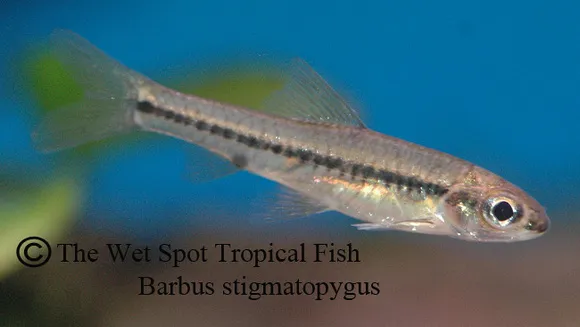 1.4 in (3.5 cm)11 gal (40 L)72–81°F (22–27°C)
Blackspot dwarf barb
Enteromius stigmatopygus
1.4 in (3.5 cm) · 11 gal (40 L)
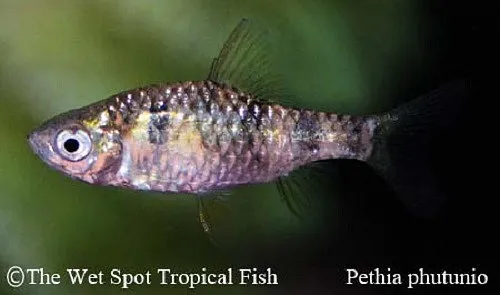 1.4 in (3.5 cm)12 gal (45 L)72–79°F (22–26°C)
Dwarf barb
Pethia phutunio
1.4 in (3.5 cm) · 12 gal (45 L)