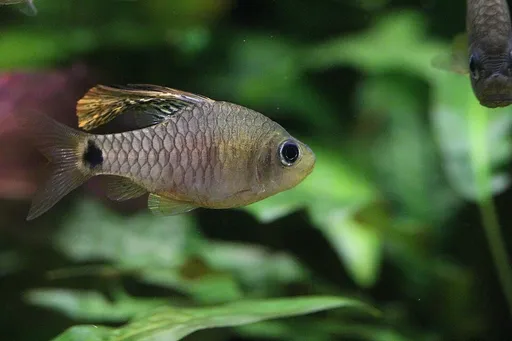
Drape-fin barb
Oreichthys crenuchoides
FreshwaterFish
Care at a glance
- Temperature
- 73–82°F
- 23–28°C
- pH
- 6.0–7.5
- Adult size
- 1.6 in
- 4 cm
- Minimum tank
- 14 gal
- 54 L
- Temperament
- Peaceful
- Social behavior
- Schooling
- Swim level
- Middle
- Difficulty
- Medium
- Breeding
- Medium
- Rarity
- Common
- Family
- Cyprinidae
- Origin
- Tributaries of the Brahmaputra River, West Bengal, eastern India (and possibly Nepal)
Overview
Keep them in a group of eight or more in a tank of at least 54 liters, since small groups or cramped tanks make them withdraw and let dominant males bully the rest without a break. They are peaceful, swim in the middle of the water column, and break up tension better when the layout has lots of plants and decor to block sightlines. Hold the temperature between 23 and 28 C and the pH from 6 to 7.5, and go gentle on filtration and flow since they react badly to water-quality swings. Do small, frequent water changes rather than large ones, feed small foods like micro pellets, crushed flakes, and frozen daphnia or baby brine, and keep tankmates calm and small, such as micro-rasboras, small tetras, and kuhli loaches. Skip anything boisterous or large that will intimidate them.
In the wild
Drape-fin barbs come from clear, plant-filled tributaries of the Brahmaputra River in West Bengal, eastern India, and possibly into Nepal. To match that, give them a heavily planted tank with floating plants for shade and a layer of dried leaf litter on the bottom. Use a soft sand or fine substrate, since the fish forage along the bottom with tiny sensory bristles on the lower jaw. Keep the water in the neutral range, moderately soft to moderately hard, with a temperature of 23 to 28 C and a pH of 6 to 7.5.
Good to know
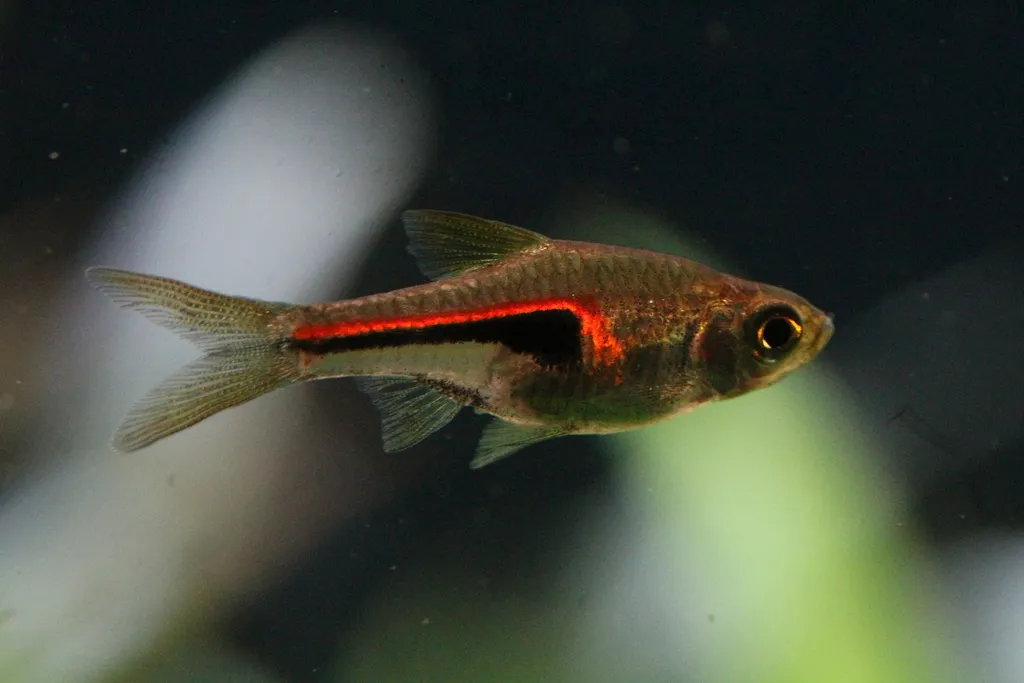
This is a small barb in the family Cyprinidae, reaching about 4 cm in total length including the males' extended dorsal fin. It is an egg scatterer with no parental care, and the tall sail-like dorsal that gives the fish its name is a male trait used in display. Adults stay shy and do best with plenty of cover.
Did you know
Only the males grow the tall dorsal fin, and they raise it like a flag when sparring or courting. When a male spreads that drape and flares at a rival, the fin can look nearly as tall as his body is long, which is why a group with several males puts on far more display than a single fish ever will.
Weekly picks
Tank mates
Drape-fin barb is a peaceful, schooling species that keeps to the middle. These picks share a community profile with it, are safe together in both directions, and overlap on water type, temperature and pH.
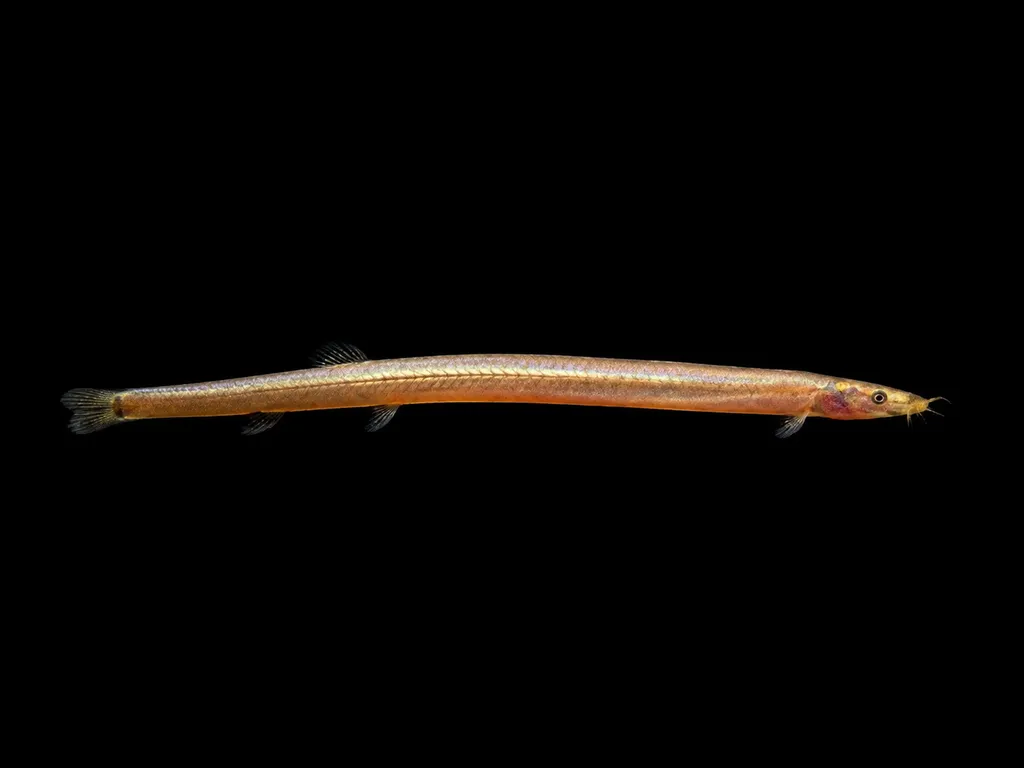
Sumatran neon loach
Pangio bitaimac
Freshwater3.7 in (9.5 cm) · 14 gal (54 L)73–82°F (23–28°C)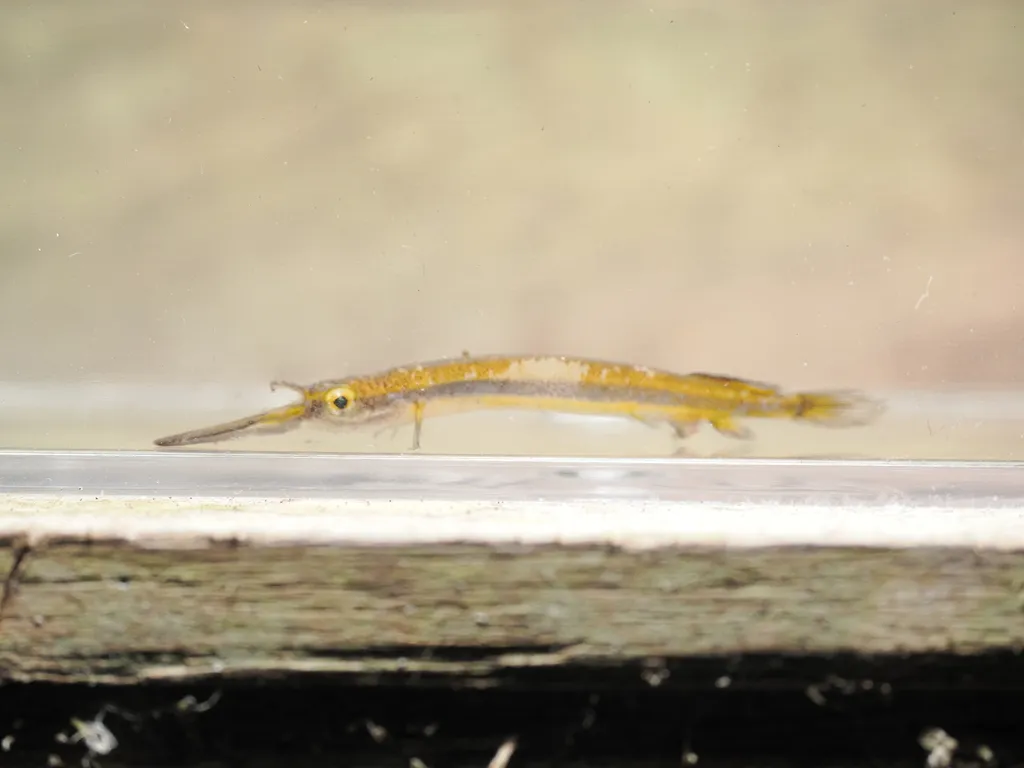
Gold-spotted halfbeak
Hemirhamphodon chrysopunctatus
Freshwater2.6 in (6.5 cm) · 14 gal (54 L)73–81°F (23–27°C)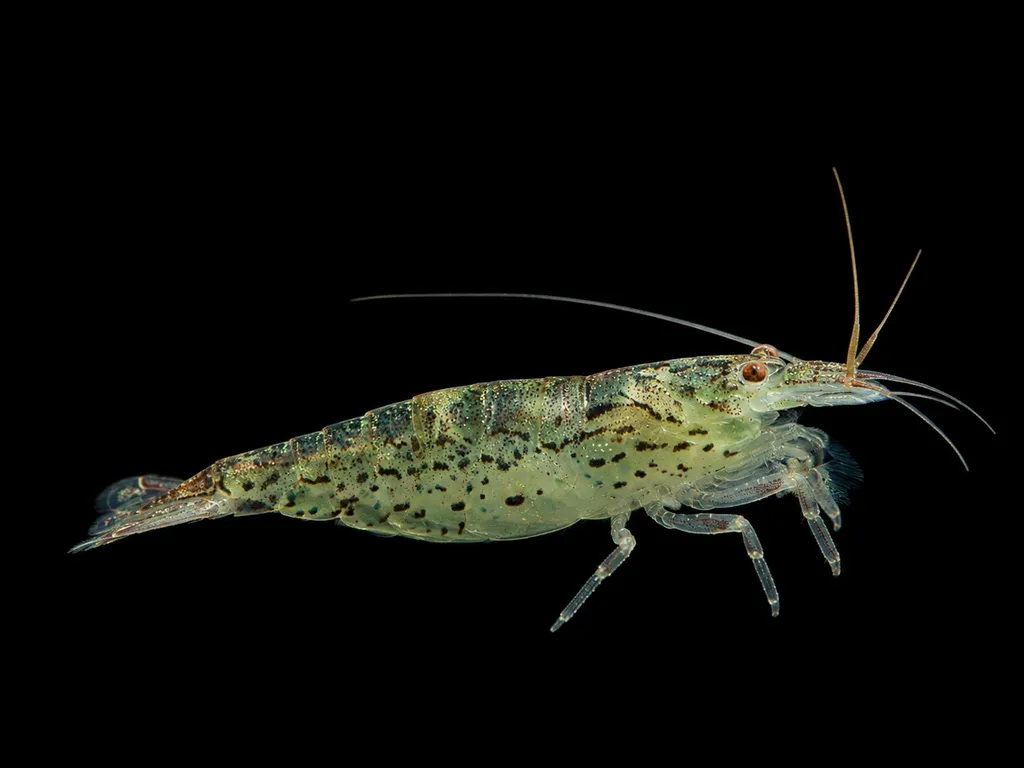
Green lace shrimp
Atyoida pilipes
Freshwater2.8 in (7 cm) · 14 gal (54 L)73–82°F (23–28°C)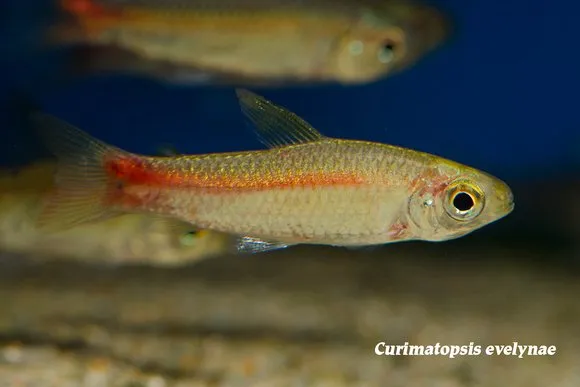
Spot-tail curimata
Curimatopsis evelynae
Freshwater1.6 in (4 cm) · 14 gal (54 L)73–82°F (23–28°C)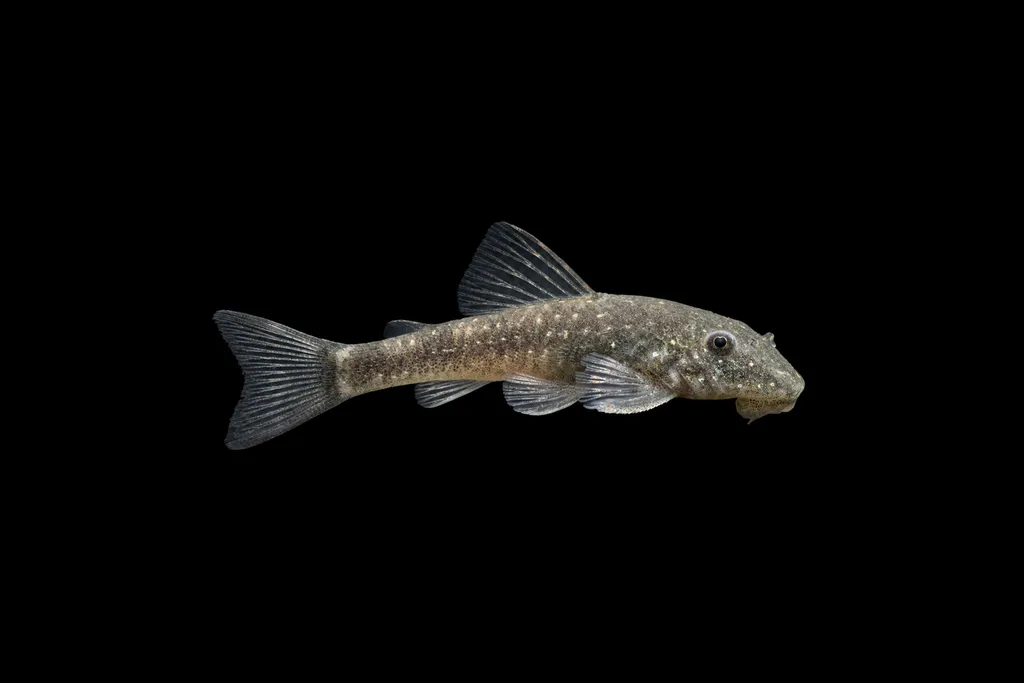
Bahia parotocinclus
Parotocinclus bahiensis
Freshwater1.6 in (4 cm) · 14 gal (54 L)72–81°F (22–27°C)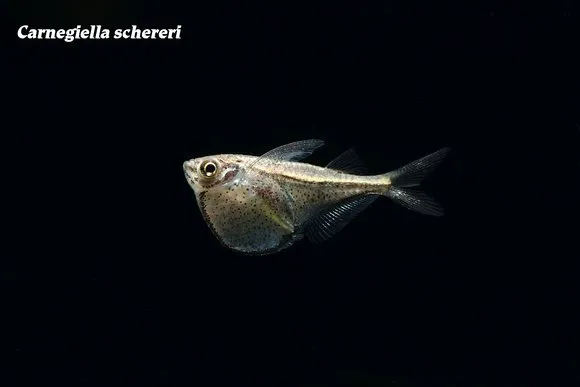
Scherer's hatchetfish
Carnegiella schereri
Freshwater1 in (2.6 cm) · 14 gal (54 L)73–82°F (23–28°C)
Common questions
What size tank does a Drape-fin barb need?
A Drape-fin barb needs at least 14 gal (54 L). It spends most of its time in the middle.
What temperature and pH does a Drape-fin barb need?
A Drape-fin barb is comfortable at 73–82°F (23–28°C) with a pH of 6.0–7.5.
How big does a Drape-fin barb get?
An adult Drape-fin barb reaches about 1.6 in (4 cm).
Does a Drape-fin barb need a group?
Yes. A Drape-fin barb is a schooling species and should be kept in a group, not singly.
Related species
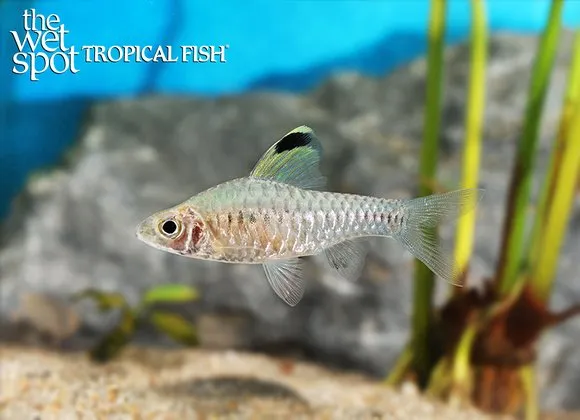
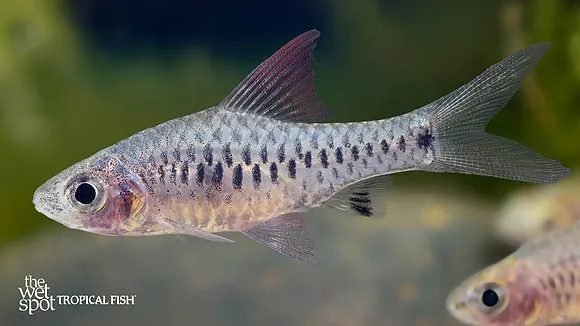 1.4 in (3.6 cm)14 gal (54 L)72–79°F (22–26°C)
Dwarf hi-fin barb
Oreichthys parvus
1.4 in (3.6 cm) · 14 gal (54 L)
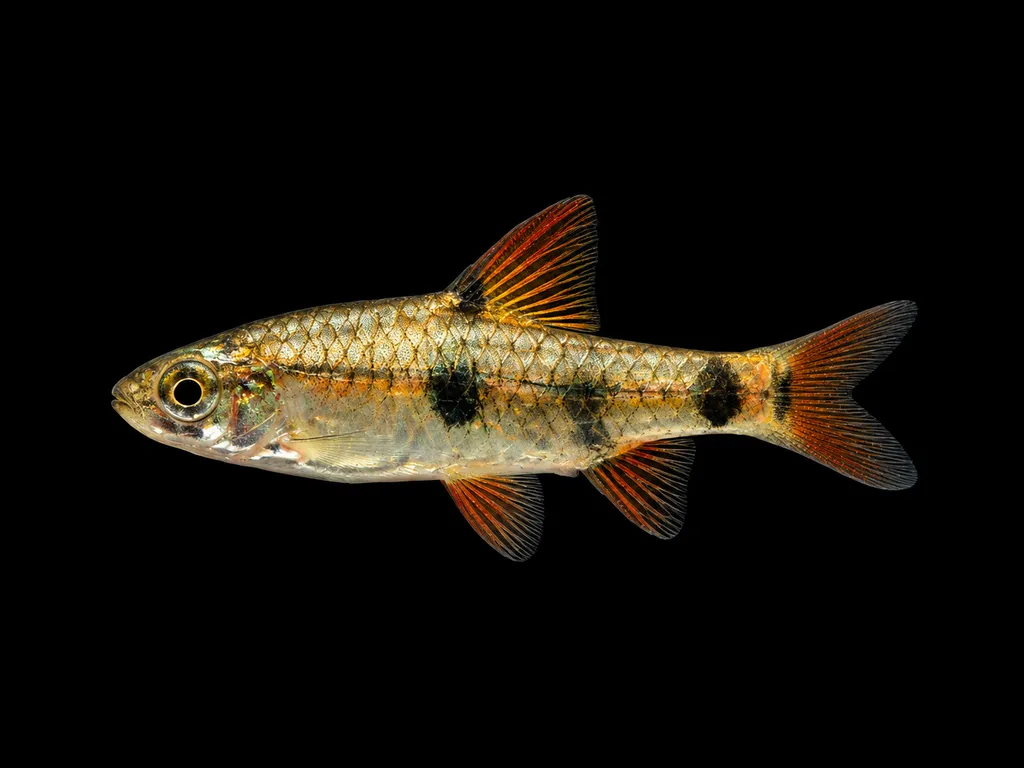
 3.1 in (8 cm)20 gal (75 L)68–79°F (20–26°C)
Cosuatis barb
Oreichthys cosuatis
3.1 in (8 cm) · 20 gal (75 L)
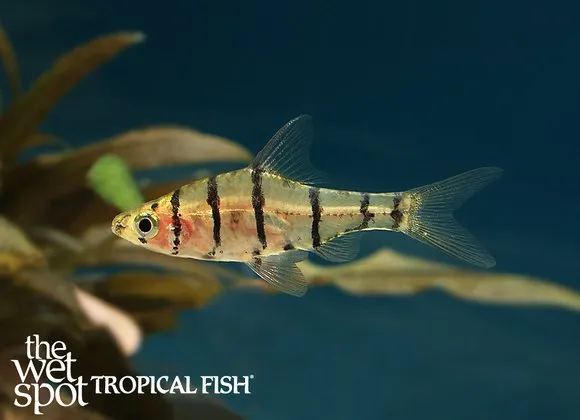
 1.6 in (4 cm)20 gal (75 L)68–79°F (20–26°C)
Canius barb
Pethia canius
1.6 in (4 cm) · 20 gal (75 L)
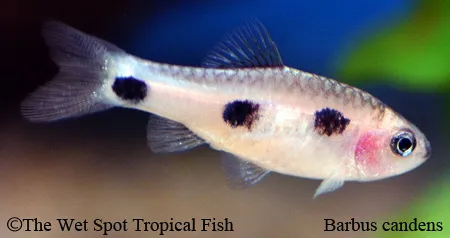
 1.6 in (4 cm)14 gal (54 L)73–81°F (23–27°C)
False eight-banded barb
Eirmotus octozona
1.6 in (4 cm) · 14 gal (54 L)
 1.6 in (4 cm)14 gal (54 L)72–81°F (22–27°C)
Glowing ember barb
Enteromius candens
1.6 in (4 cm) · 14 gal (54 L)
 1.6 in (4 cm)12 gal (45 L)73–82°F (23–28°C)
Glowlight rasbora
Trigonostigma hengeli
1.6 in (4 cm) · 12 gal (45 L)