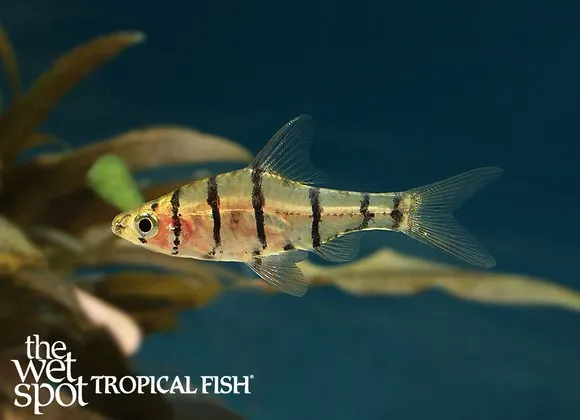
False eight-banded barb
Eirmotus octozona
Also known as False tiger barb, Eight banded false barb
FreshwaterFish
Care at a glance
- Temperature
- 73–81°F
- 23–27°C
- pH
- 5.0–6.8
- Adult size
- 1.6 in
- 4 cm
- Minimum tank
- 14 gal
- 54 L
- Temperament
- Peaceful
- Social behavior
- Schooling
- Swim level
- Middle
- Difficulty
- Medium
- Breeding
- No record
- Rarity
- Rare
- Family
- Cyprinidae
- Origin
- Blackwaters of the Malay Peninsula and western Borneo
Overview
The false eight-banded barb is a delicate, peaceful little barb for a quiet, softly lit tank. It is best with a little experience.
Caring for the false eight-banded barb
Keep false eight-banded barbs in a group of at least eight to ten, in a quiet tank of 14 gal (54 L) or more. A softly lit, planted tank with driftwood, leaf litter and gentle filtration suits them, and dried leaves will tint the water.
Keep the water warm, soft, acidic and stable, at 73 to 81°F (23 to 27°C) and a pH of 5.0 to 6.8. Feed powdered and fine flake, micro pellets and tiny frozen or live foods such as daphnia and cyclops. It feeds slowly, so give it time to reach the food.
The false eight-banded barb is peaceful but easily intimidated, and it does poorly with pushy or fast tank mates. It moves in a slow, deliberate way rather than dashing about. It swims in the middle water and suits a calm blackwater community of other small, gentle species. Its captive spawning is undocumented.
Good to know
Eirmotus octozona is a small, semi-transparent cyprinid with eight fine vertical bars along its pale body. It looks like a tiger barb with eight bars instead of four, but it is only a distant relative in a different genus.
In the wild
The false eight-banded barb comes from peat-swamp and blackwater forest streams of the Malay Peninsula and nearby Sundaland. The water there is soft, acidic and stained with tannins, over a bed of leaf litter.
Weekly picks
Tank mates
The false eight-banded barb is a peaceful, schooling species that keeps to the middle. These picks share a community profile with it, are safe together in both directions, and overlap on water type, temperature and pH.
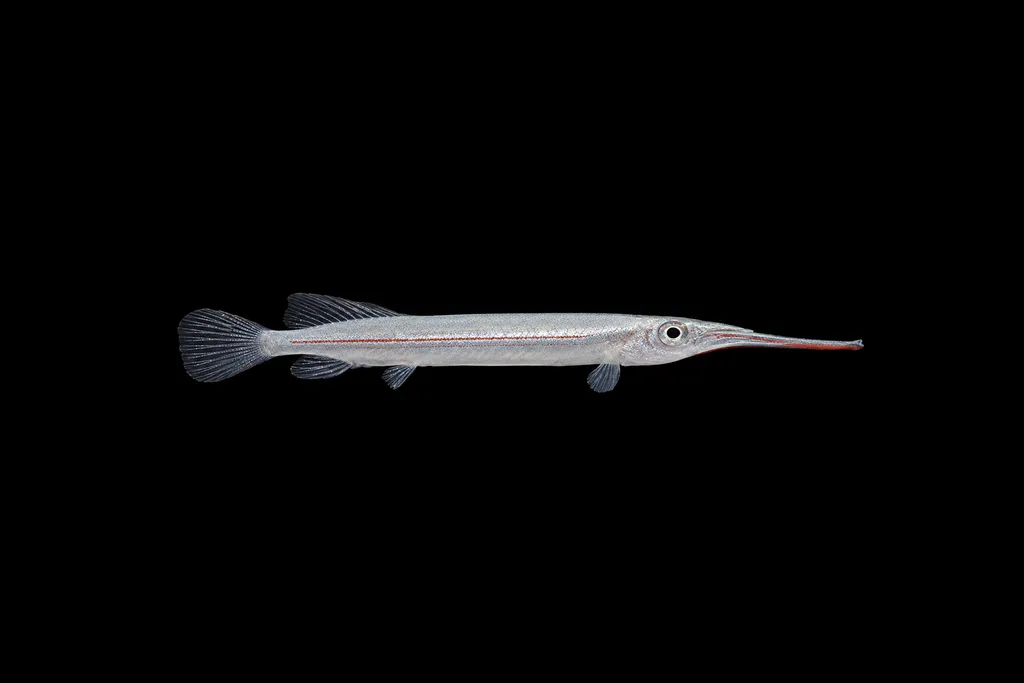
Fire halfbeak
Hemirhamphodon kapuasensis
Freshwater2.4 in (6 cm) · 14 gal (54 L)73–81°F (23–27°C)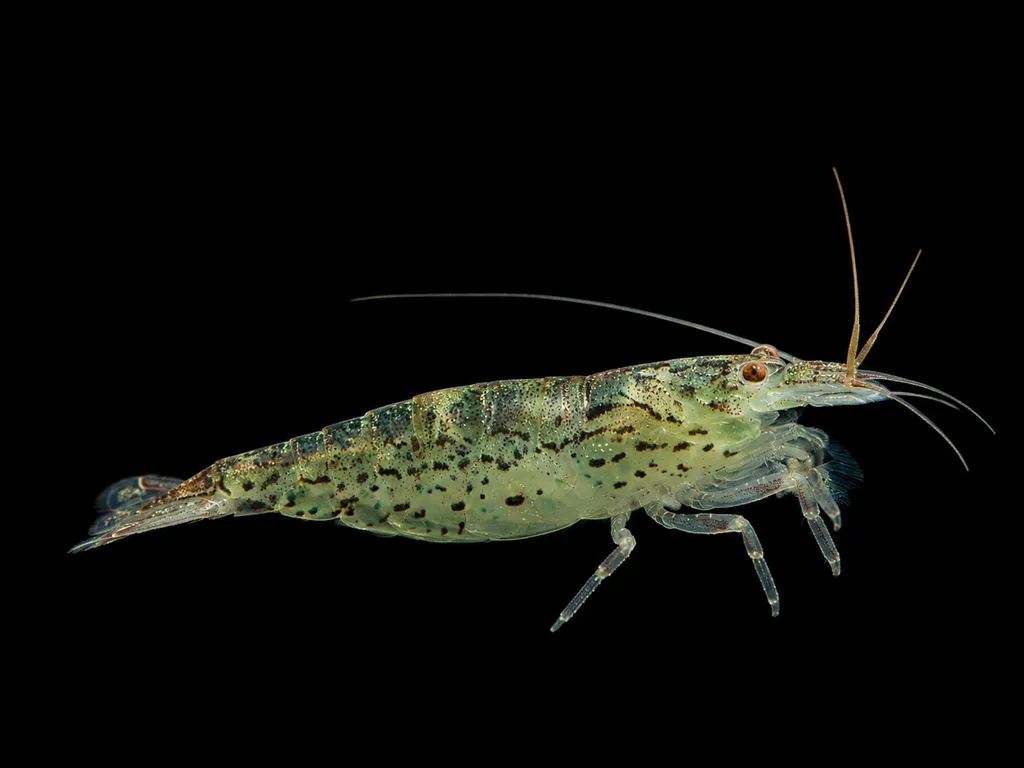
Green lace shrimp
Atyoida pilipes
Freshwater2.8 in (7 cm) · 14 gal (54 L)73–82°F (23–28°C)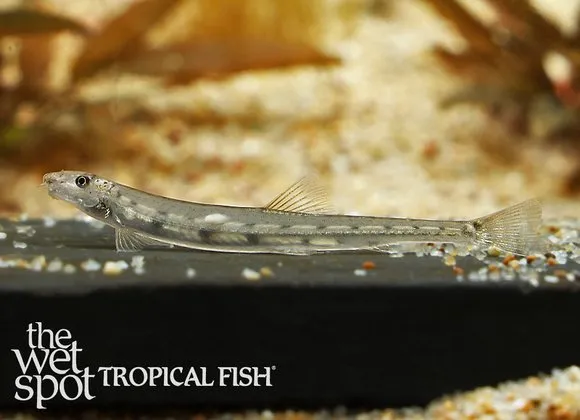
Dwarf horseface loach
Acanthopsoides robertsi
Freshwater2.2 in (5.5 cm) · 14 gal (54 L)72–81°F (22–27°C)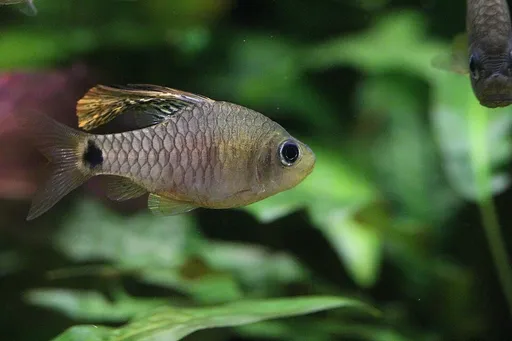
Drape-fin barb
Oreichthys crenuchoides
Freshwater1.6 in (4 cm) · 14 gal (54 L)73–82°F (23–28°C)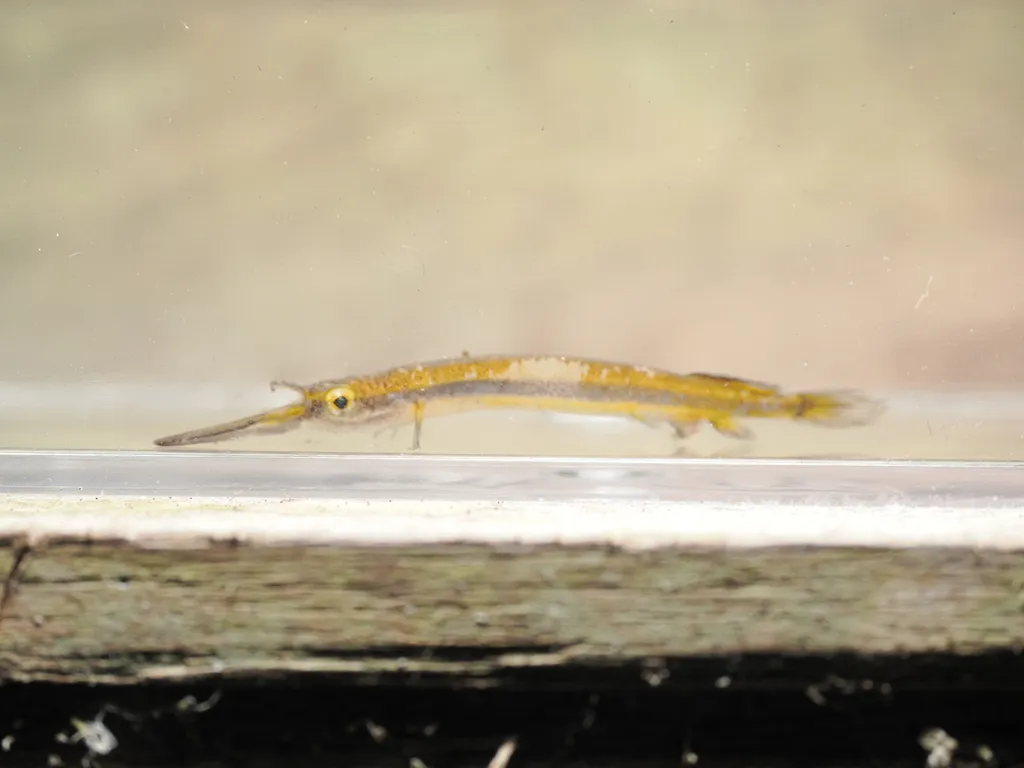
Gold-spotted halfbeak
Hemirhamphodon chrysopunctatus
Freshwater2.6 in (6.5 cm) · 14 gal (54 L)73–81°F (23–27°C)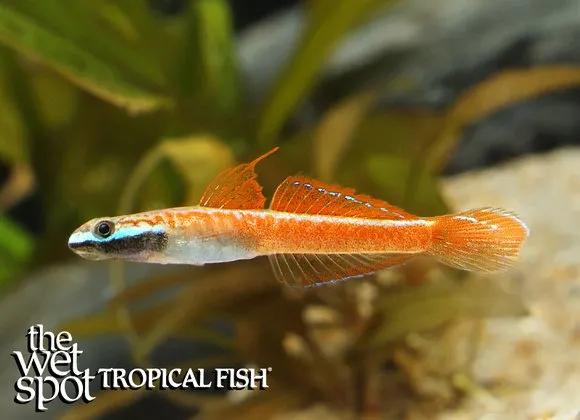
Annie's goby
Stiphodon annieae
Freshwater1.2 in (3 cm) · 14 gal (54 L)73–81°F (23–27°C)
Common questions
What size tank does a false eight-banded barb need?
A false eight-banded barb needs at least 14 gal (54 L). It spends most of its time in the middle.
What temperature and pH does a false eight-banded barb need?
A false eight-banded barb is comfortable at 73–81°F (23–27°C) with a pH of 5.0–6.8.
What does a false eight-banded barb eat?
A false eight-banded barb eats powdered and fine flake, micro pellets and tiny frozen or live foods such as daphnia and cyclops. It feeds slowly, so give it time to reach the food.
How big does a false eight-banded barb get?
An adult false eight-banded barb reaches about 1.6 in (4 cm).
Does a false eight-banded barb need a group?
Yes. A false eight-banded barb is a schooling species and should be kept in a group, not singly.
Related species
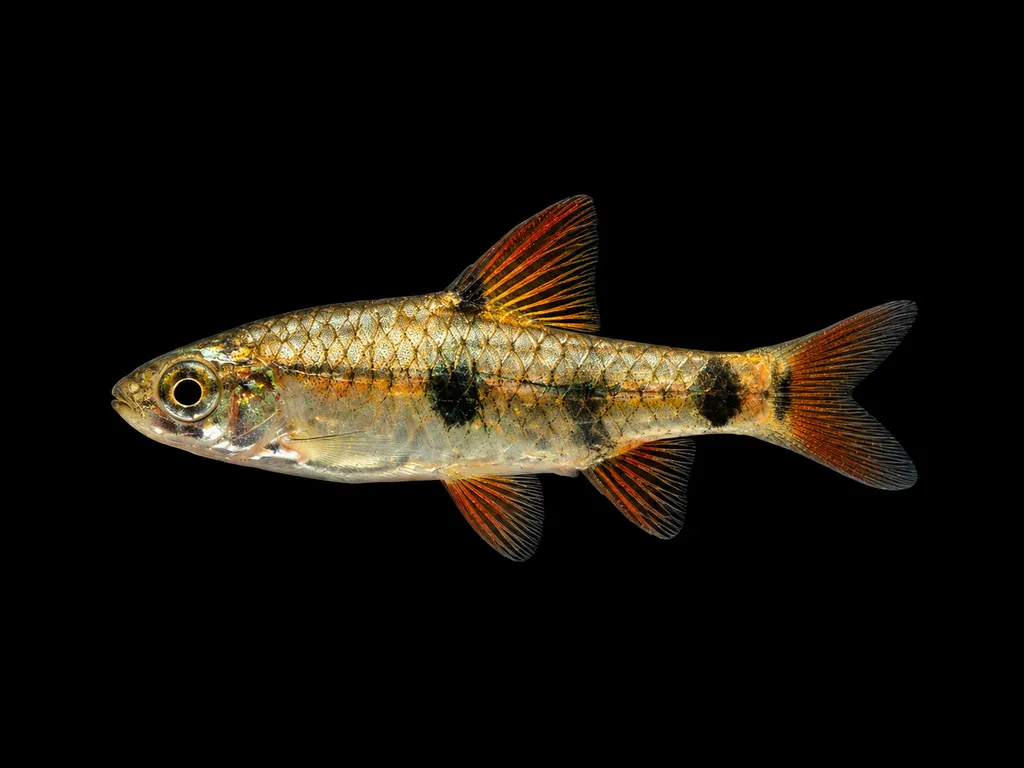 1.6 in (4 cm)20 gal (75 L)68–79°F (20–26°C)
Canius barb
Pethia canius
1.6 in (4 cm) · 20 gal (75 L)
- 1.6 in (4 cm)14 gal (54 L)73–82°F (23–28°C)
Drape-fin barb
Oreichthys crenuchoides
1.6 in (4 cm) · 14 gal (54 L)
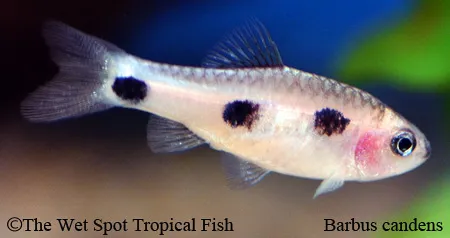 1.6 in (4 cm)14 gal (54 L)72–81°F (22–27°C)
Glowing ember barb
Enteromius candens
1.6 in (4 cm) · 14 gal (54 L)
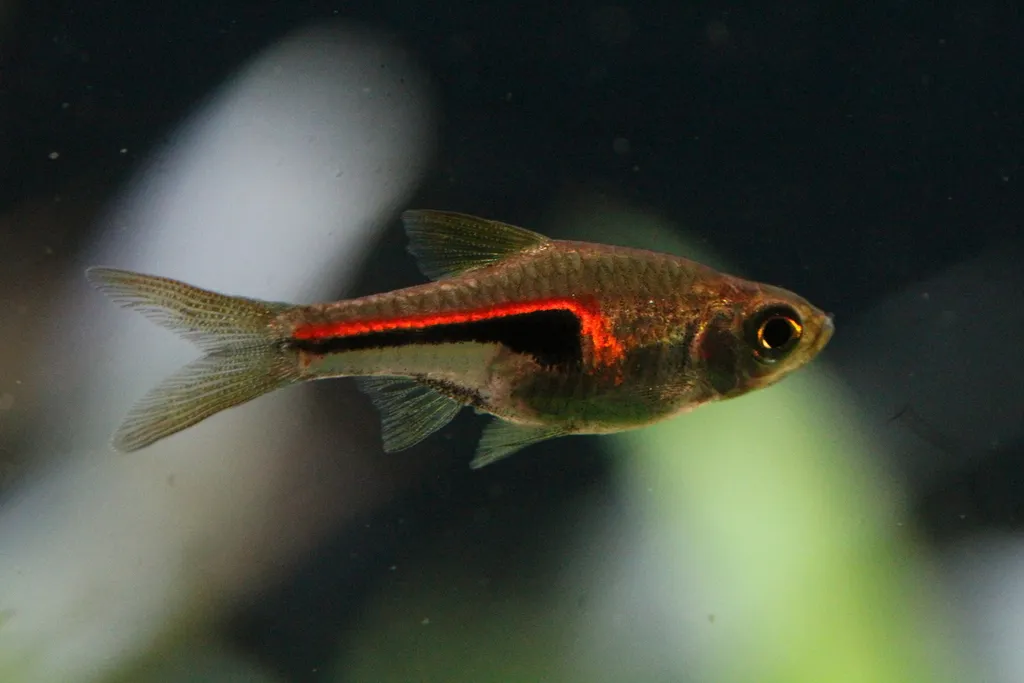 1.6 in (4 cm)12 gal (45 L)73–82°F (23–28°C)
Glowlight rasbora
Trigonostigma hengeli
1.6 in (4 cm) · 12 gal (45 L)
 1.6 in (4 cm)20 gal (75 L)64–75°F (18–24°C)
Golden dwarf barb
Pethia gelius
1.6 in (4 cm) · 20 gal (75 L)
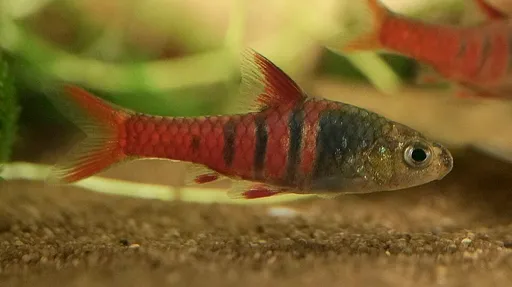 1.6 in (4 cm)16 gal (60 L)68–77°F (20–25°C)
Jae barb
Enteromius jae
1.6 in (4 cm) · 16 gal (60 L)