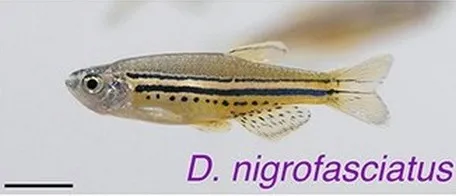
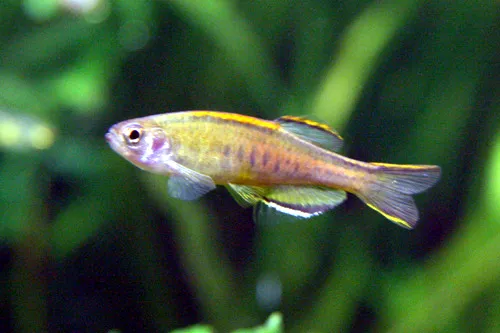
Spotted danio
Danio nigrofasciatus
Also known as Dwarf danio
FreshwaterFish
Care at a glance
- Temperature
- 64–79°F
- 18–26°C
- pH
- 6.0–7.5
- Adult size
- 1.5 in
- 3.7 cm
- Minimum tank
- 11 gal
- 40 L
- Temperament
- Peaceful
- Social behavior
- Schooling
- Swim level
- Middle
- Difficulty
- Easy
- Breeding
- Medium
- Rarity
- Common
- Family
- Cyprinidae
- Origin
- Myanmar
Overview
Keep them in a school of at least six in a tank of around 40 liters. They get nervous and nippy when kept in small numbers. They are fast, active swimmers in the middle and upper water and stay peaceful in a proper group. Feed quality flakes, small pellets, and occasional brine shrimp or bloodworms. They take a wide range of conditions but prefer soft, slightly cool, well-oxygenated water.
In the wild
Spotted danios come from clear, shallow streams and rivers in Myanmar, with moderate flow, plants, and submerged rocks. The water is soft and runs from slightly acidic to neutral. They handle cooler water than many tropicals, doing fine anywhere from the high teens to mid-20s C, so they suit an unheated or lightly heated room tank. Give them some current and open swimming space.
Good to know
Danio nigrofasciatus is a small cyprinid, in the same family and genus as the zebra danio. It stays small at under 4 cm. Its pattern mixes rows of spots with horizontal striping along the lower body. It is an egg scatterer with no parental care, and eggs hatch in about two days. It is hardy and not considered threatened, though local habitat loss is a concern.
Did you know
For a long time the spotted danio was thought to be just a variant of the zebra danio because the two look and act so much alike, and they will even hybridize. It was later confirmed as its own separate species.
Weekly picks
Tank mates
Spotted danio is a peaceful, schooling species that keeps to the middle. These picks share a community profile with it, are safe together in both directions, and overlap on water type, temperature and pH.
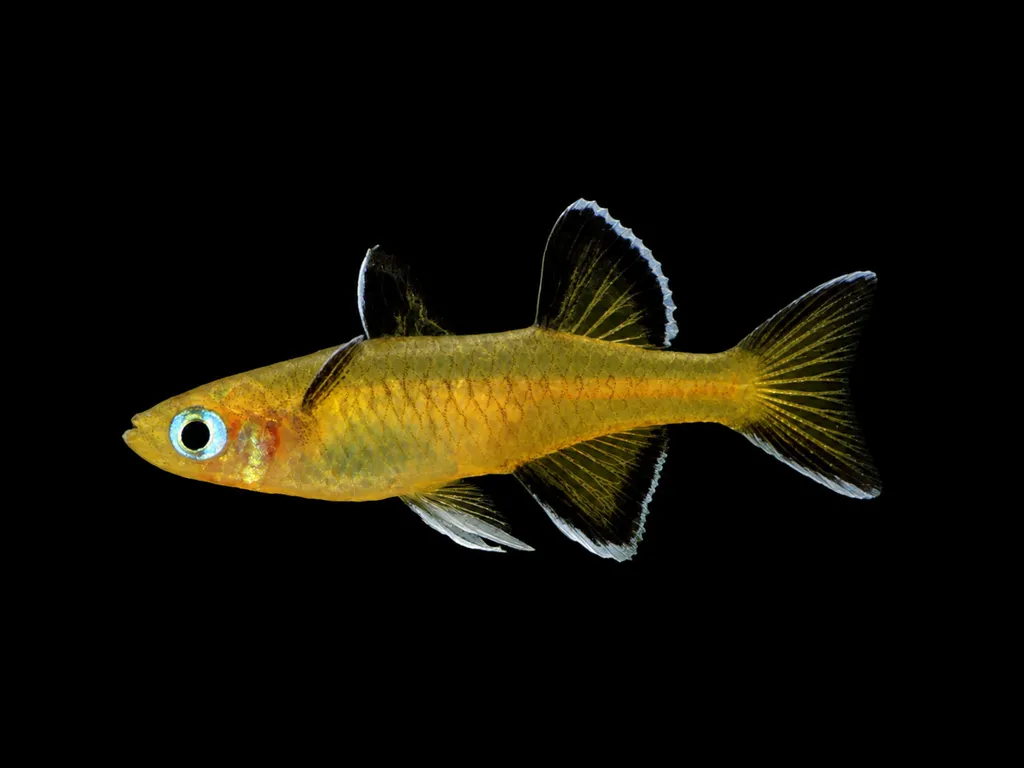
Honey blue-eye
Pseudomugil mellis
Freshwater1.4 in (3.5 cm) · 11 gal (40 L)68–82°F (20–28°C)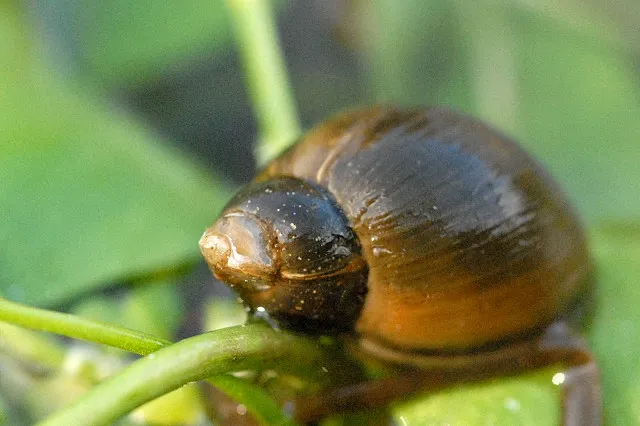
Wandering snail
Ampullaceana balthica
Freshwater0.8 in (2 cm) · 11 gal (40 L)50–84°F (10–29°C)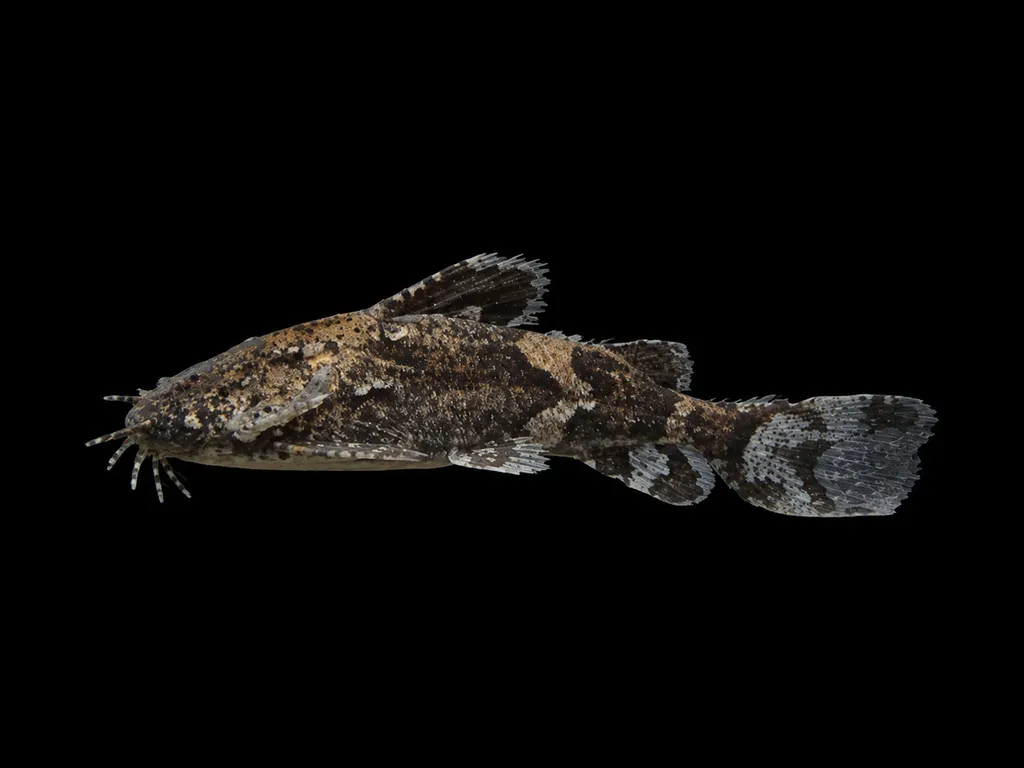
Burmese mini moth catfish
Hara minuscula
Freshwater1.2 in (3 cm) · 11 gal (40 L)68–79°F (20–26°C)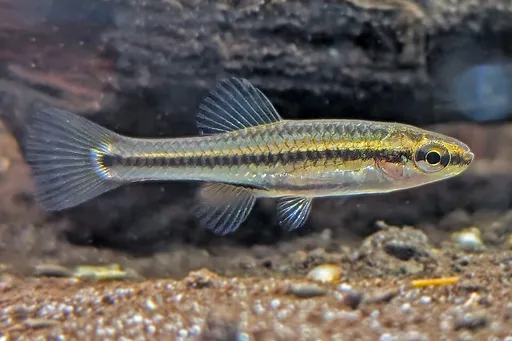
Bluefin killifish
Lucania goodei
Freshwater2 in (5 cm) · 11 gal (40 L)64–77°F (18–25°C)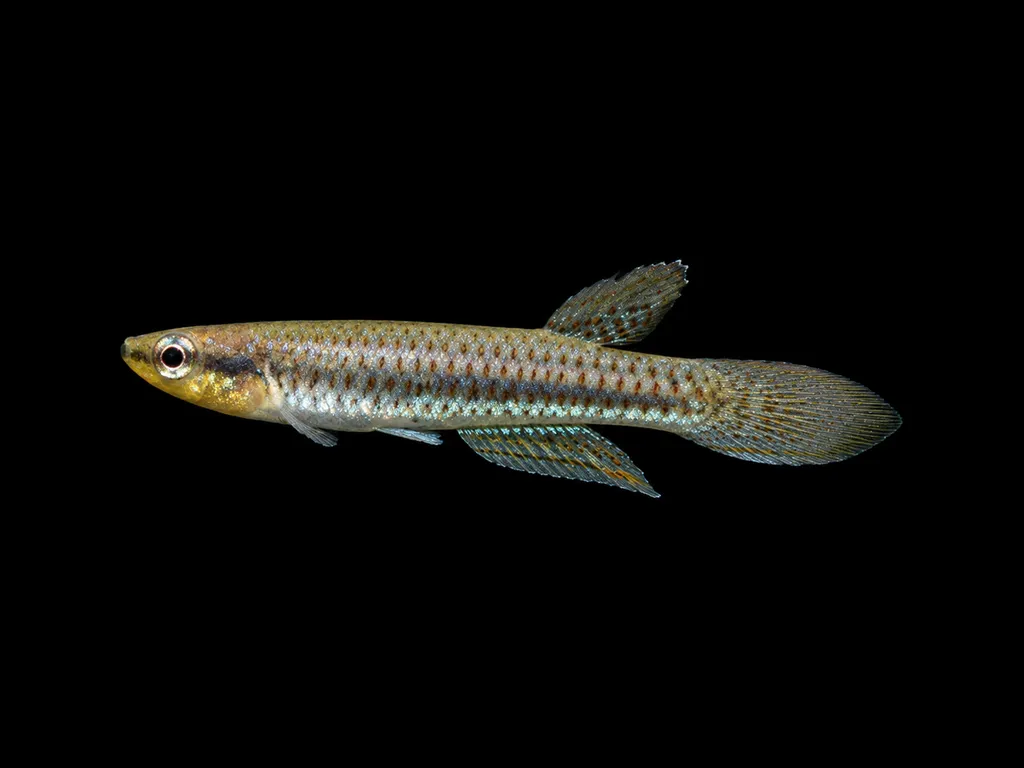
Dubois' panchax
Epiplatys duboisi
Freshwater1.4 in (3.5 cm) · 11 gal (40 L)68–77°F (20–25°C)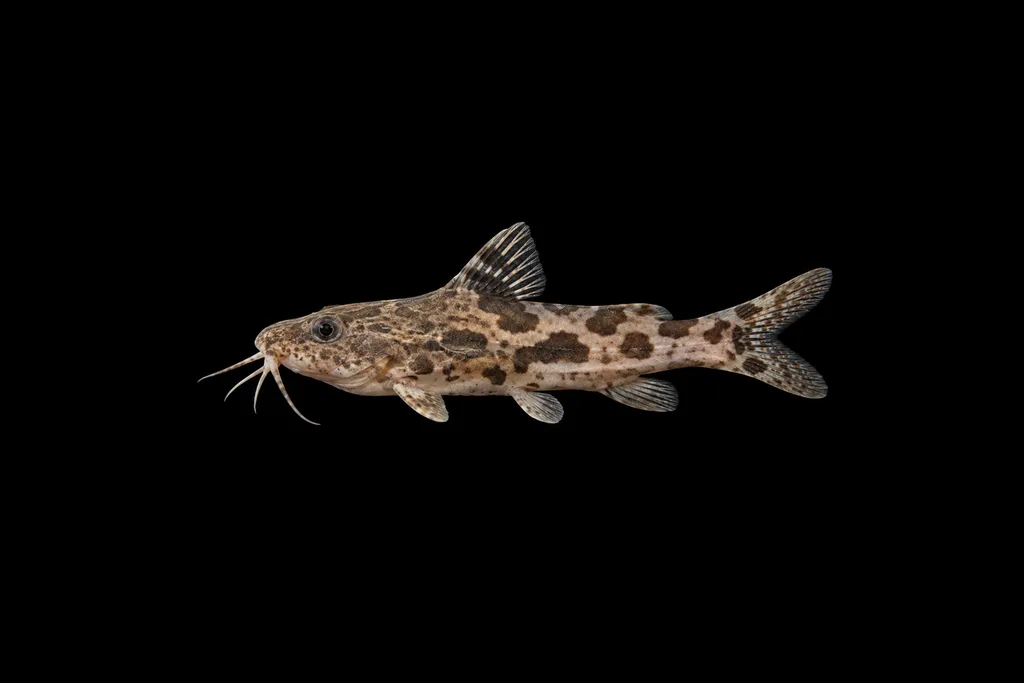
Harlequin moth catfish
Pseudolaguvia ribeiroi
Freshwater1.6 in (4 cm) · 11 gal (40 L)68–79°F (20–26°C)
Common questions
What size tank does a Spotted danio need?
A Spotted danio needs at least 11 gal (40 L). It spends most of its time in the middle.
What temperature and pH does a Spotted danio need?
A Spotted danio is comfortable at 64–79°F (18–26°C) with a pH of 6.0–7.5.
How big does a Spotted danio get?
An adult Spotted danio reaches about 1.5 in (3.7 cm).
Does a Spotted danio need a group?
Yes. A Spotted danio is a schooling species and should be kept in a group, not singly.
Related species
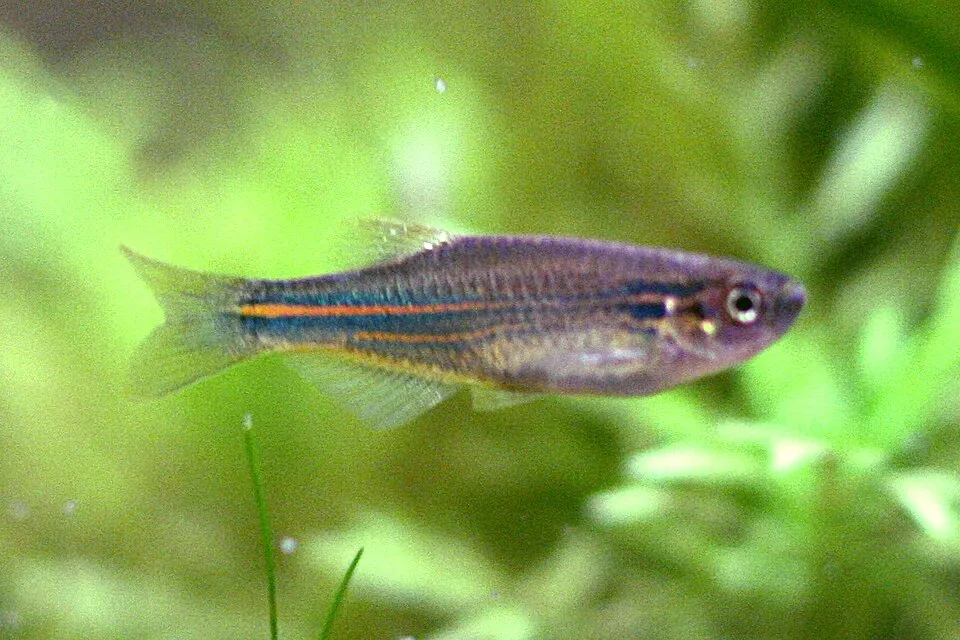 1.8 in (4.5 cm)11 gal (40 L)68–79°F (20–26°C)
Blue danio
Danio kerri
1.8 in (4.5 cm) · 11 gal (40 L)
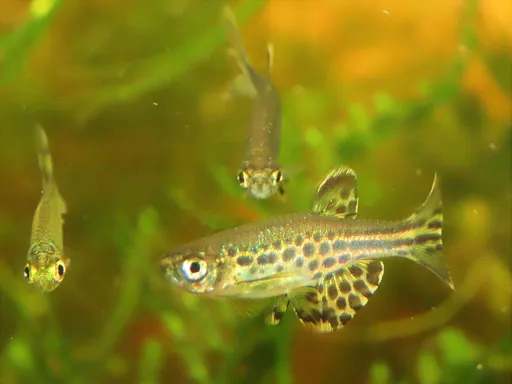 1.2 in (3 cm)11 gal (40 L)64–79°F (18–26°C)
Gold ring danio
Danio tinwini
1.2 in (3 cm) · 11 gal (40 L)
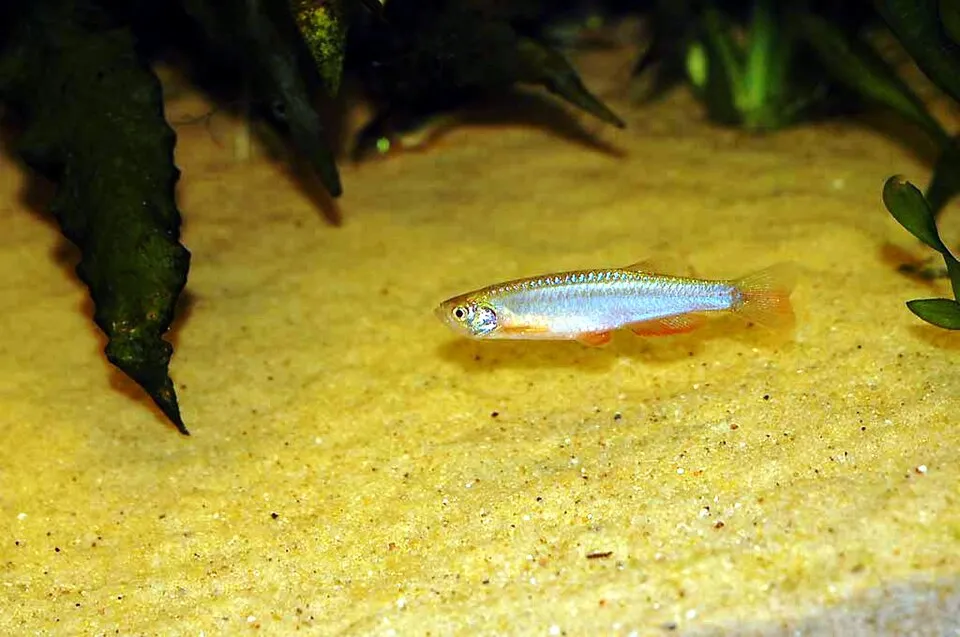 2.4 in (6 cm)18 gal (70 L)61–77°F (16–25°C)
Pearl danio
Danio albolineatus
2.4 in (6 cm) · 18 gal (70 L)
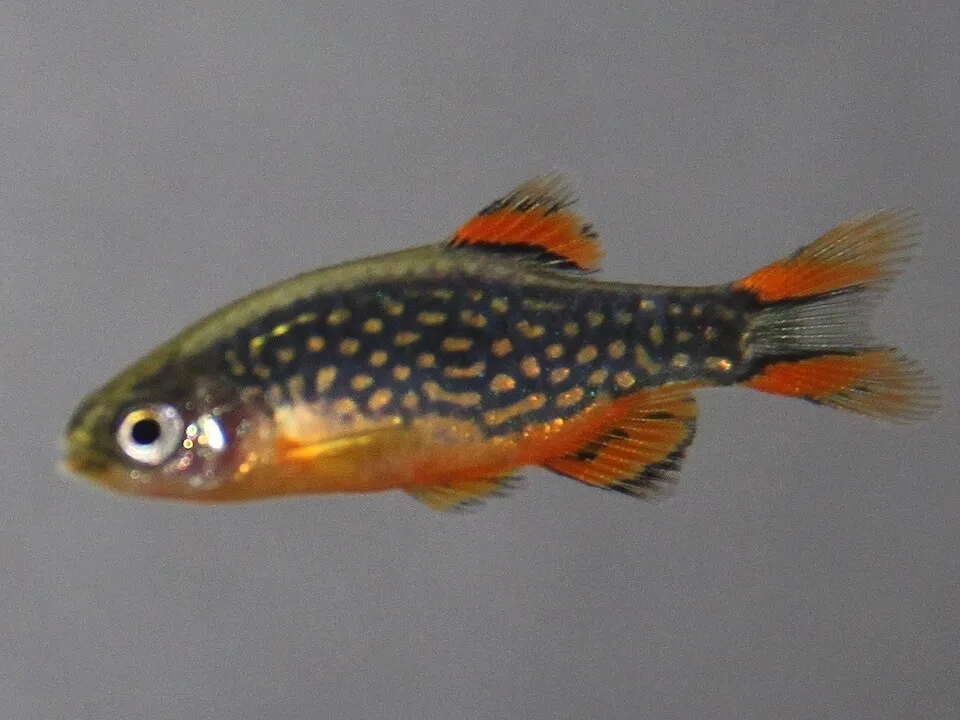 0.8 in (2 cm)9 gal (35 L)72–79°F (22–26°C)
Celestial Pearl danio
Danio margaritatus
0.8 in (2 cm) · 9 gal (35 L)
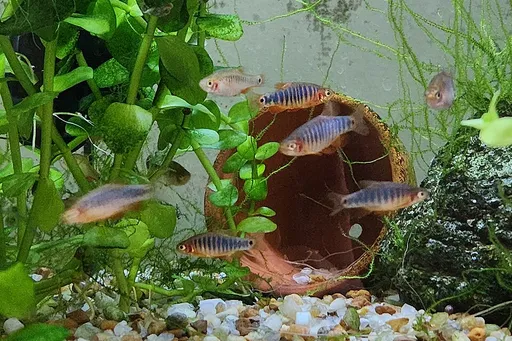 0.8 in (2 cm)11 gal (40 L)68–75°F (20–24°C)
Emerald dwarf rasbora
Danio erythromicron
0.8 in (2 cm) · 11 gal (40 L)
 1.2 in (3 cm)20 gal (75 L)72–79°F (22–26°C)
Glowlight danio
Danio choprae
1.2 in (3 cm) · 20 gal (75 L)