Gold ring danio
Danio tinwini
Also known as Brachydanio tinwini, Fire ring danio
FreshwaterFish
Care at a glance
- Temperature
- 64–79°F
- 18–26°C
- pH
- 6.5–7.5
- Adult size
- 1.2 in
- 3 cm
- Minimum tank
- 11 gal
- 40 L
- Temperament
- Peaceful
- Social behavior
- Schooling
- Swim level
- Middle
- Difficulty
- Beginner
- Breeding
- Egg scatterer · Medium
- Rarity
- Common
- Family
- Cyprinidae
- Origin
- Northern Myanmar (Mogaung Chaung, Kachin State; Irrawaddy basin)
Overview
The gold ring danio is a small, peaceful schooling danio that stays active most of the day. It is a good choice for a beginner.
Did you know
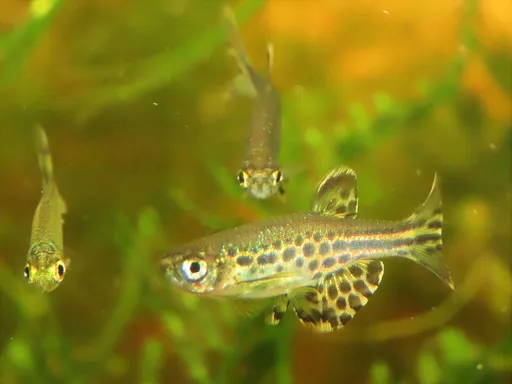
The gold ring danio is named for the broken pattern along its body, a row of dark blotches and dashes on pale gold. A zebra danio wears clean stripes instead. It was only described for science in 2007, and its species name honors Hla Tin Win, the Burmese collector who first found it.
Caring for the gold ring danio
Keep gold ring danios in a group of at least eight to ten, and more if you can. Bigger groups settle them down and bring out better color, while lone fish or small groups stay skittish. They swim through the middle of the tank.
Give them a planted tank of 11 gal (40 L) or more, with a darker substrate. Leave some open mid-water swimming room and keep the flow gentle to moderate. They are strong jumpers like other danios, so a tight-fitting lid is essential.
They handle a wide band of temperatures, from 64 to 79°F (18 to 26°C), so in a stable room a heater is often optional. Keep the water soft to moderately hard and slightly acidic to neutral, at a pH of 6.5 to 7.5. Feed small flakes, micro pellets and frozen treats such as daphnia or baby brine shrimp.
Gold ring danios are peaceful, but watch that they do not outcompete slow or shy tank mates at feeding time. They are egg scatterers with no parental care, and adults will eat their own eggs. Breeding them takes moderate effort.
Good to know
The gold ring danio is a small cyprinid in the family Cyprinidae, sometimes listed as Brachydanio tinwini. Most fish in the trade are commercially bred.
In the wild
Gold ring danios come from clear, slow streams in the Irrawaddy basin of northern Myanmar, around the Mogaung Chaung in Kachin State.
Weekly picks
Tank mates
The gold ring danio is a peaceful, schooling species that keeps to the middle. These picks share a community profile with it, are safe together in both directions, and overlap on water type, temperature and pH.
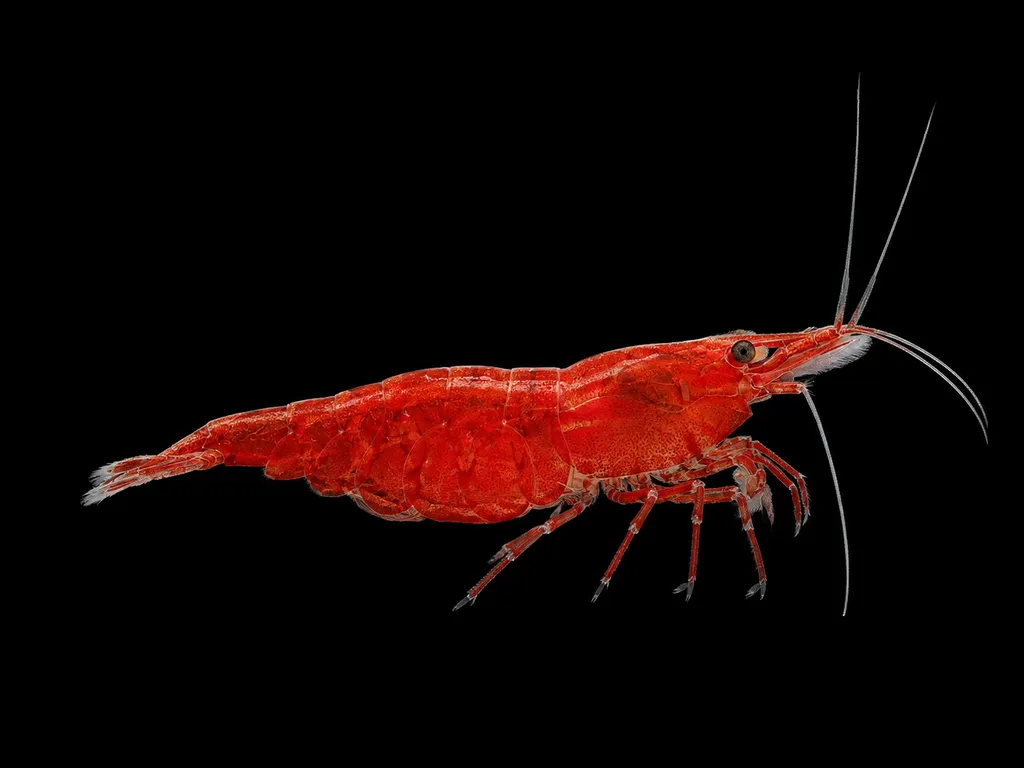
Neocaridina shrimp
Neocaridina davidi
Freshwater1.6 in (4 cm) · 5 gal (19 L)59–84°F (15–29°C)
Guppy
Poecilia reticulata
FreshwaterBrackish2.4 in (6 cm) · 10 gal (38 L)64–82°F (18–28°C)
Neon tetra
Paracheirodon innesi
Freshwater1.5 in (3.8 cm) · 11 gal (40 L)70–77°F (21–25°C)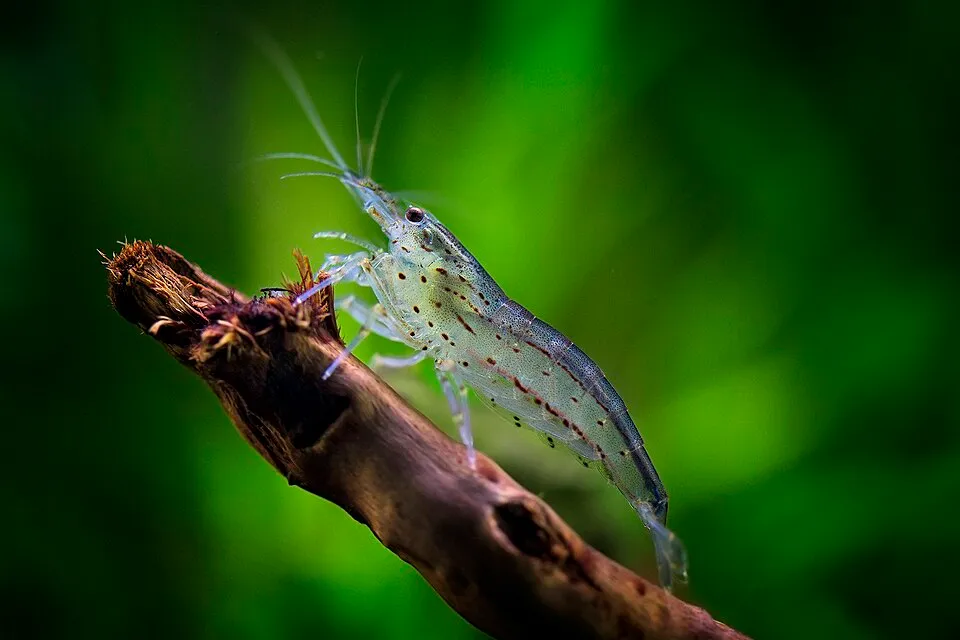
Amano shrimp
Caridina multidentata
FreshwaterBrackish2 in (5 cm) · 8 gal (30 L)59–81°F (15–27°C)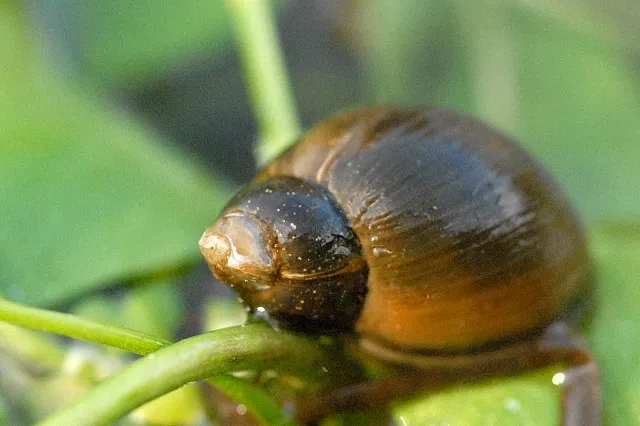
Wandering snail
Ampullaceana balthica
Freshwater0.8 in (2 cm) · 11 gal (40 L)50–84°F (10–29°C)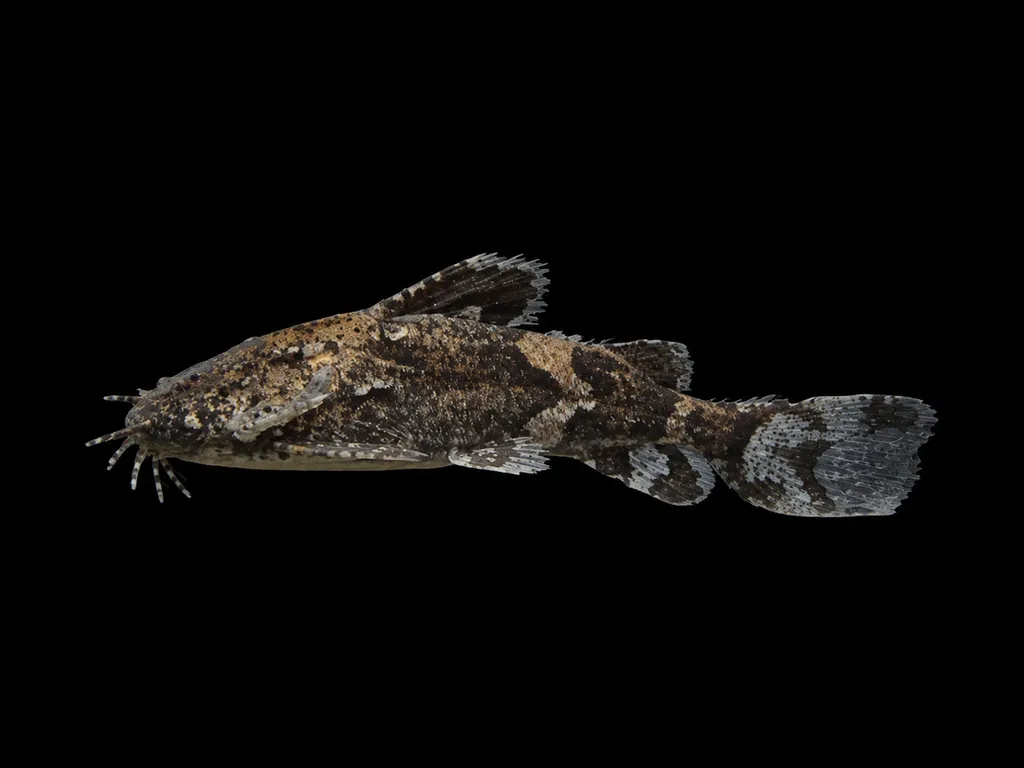
Burmese mini moth catfish
Hara minuscula
Freshwater1.2 in (3 cm) · 11 gal (40 L)68–79°F (20–26°C)
Common questions
What size tank does a gold ring danio need?
A gold ring danio needs at least 11 gal (40 L). It spends most of its time in the middle.
What temperature and pH does a gold ring danio need?
A gold ring danio is comfortable at 64–79°F (18–26°C) with a pH of 6.5–7.5.
What does a gold ring danio eat?
A gold ring danio eats small flakes, micro pellets and frozen treats such as daphnia or baby brine shrimp.
How big does a gold ring danio get?
An adult gold ring danio reaches about 1.2 in (3 cm).
Does a gold ring danio need a group?
Yes. A gold ring danio is a schooling species and should be kept in a group, not singly.
How does a gold ring danio breed?
Gold ring danios are egg scatterers with no parental care, and the adults will eat their own eggs. Breeding them takes moderate effort.
Related species
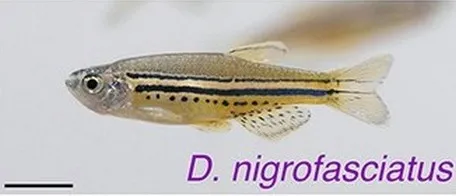 1.5 in (3.7 cm)15 gal (55 L)64–79°F (18–26°C)
Spotted danio
Danio nigrofasciatus
1.5 in (3.7 cm) · 15 gal (55 L)
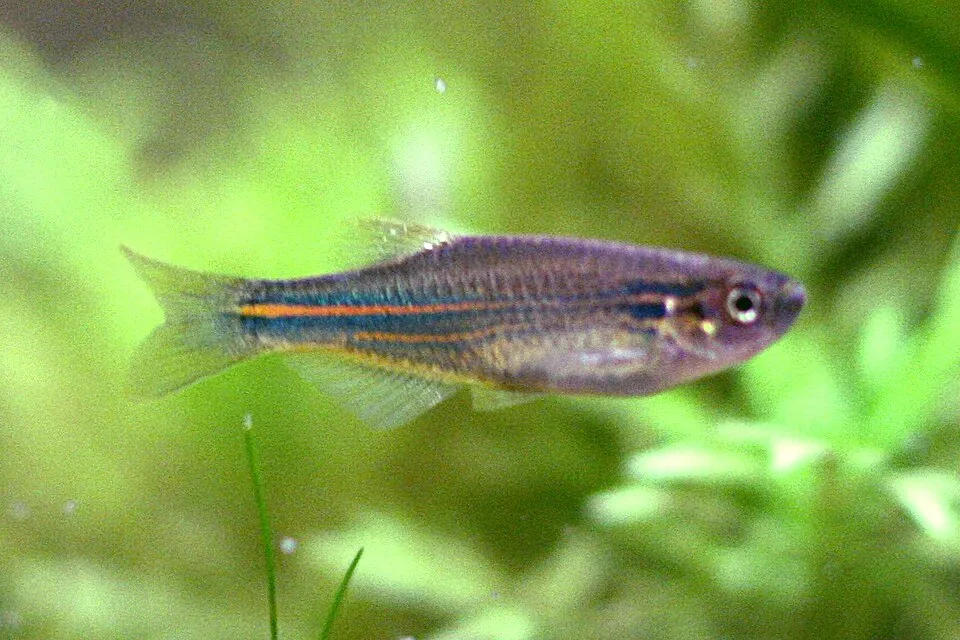 1.8 in (4.5 cm)18 gal (70 L)68–79°F (20–26°C)
Blue danio
Danio kerri
1.8 in (4.5 cm) · 18 gal (70 L)
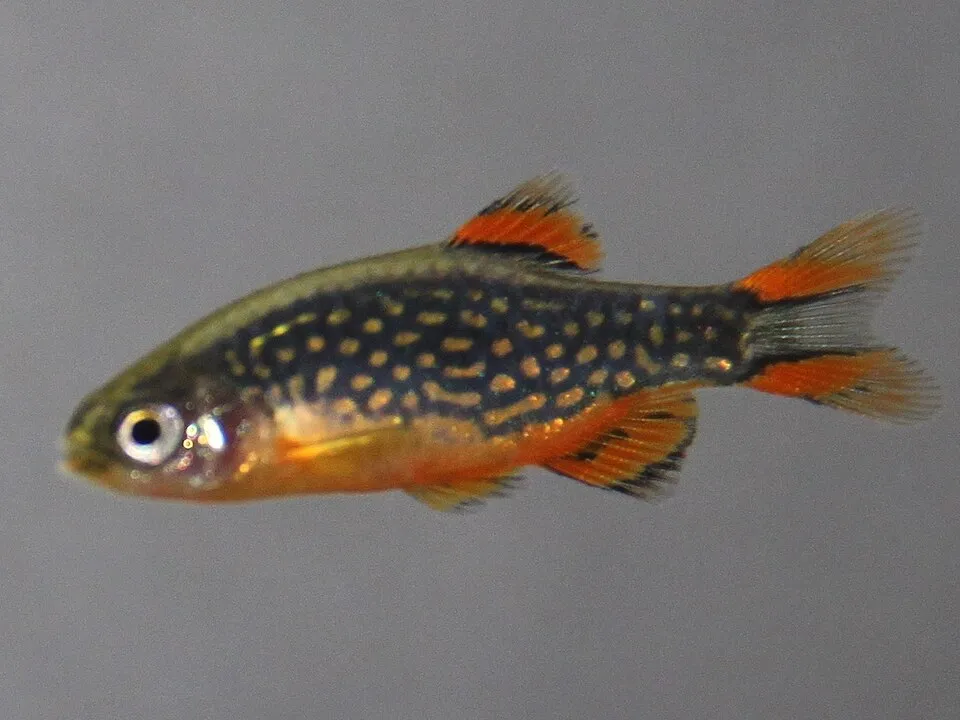 0.8 in (2 cm)9 gal (35 L)72–79°F (22–26°C)
Celestial Pearl danio
Danio margaritatus
0.8 in (2 cm) · 9 gal (35 L)
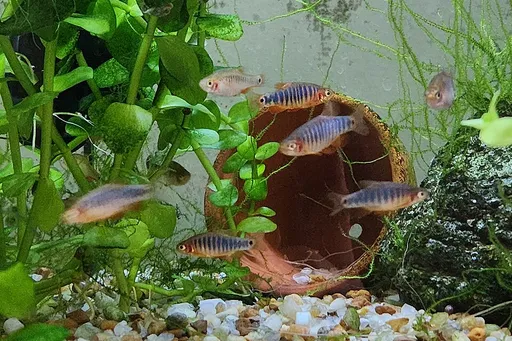 0.8 in (2 cm)11 gal (40 L)68–75°F (20–24°C)
Emerald dwarf rasbora
Danio erythromicron
0.8 in (2 cm) · 11 gal (40 L)
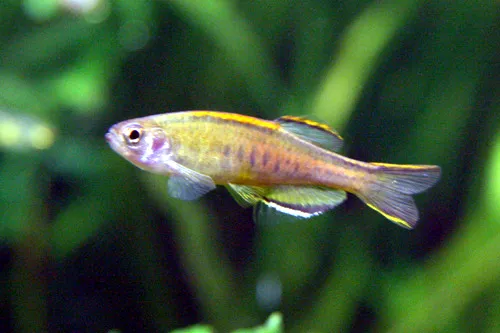 1.2 in (3 cm)20 gal (75 L)72–79°F (22–26°C)
Glowlight danio
Danio choprae
1.2 in (3 cm) · 20 gal (75 L)
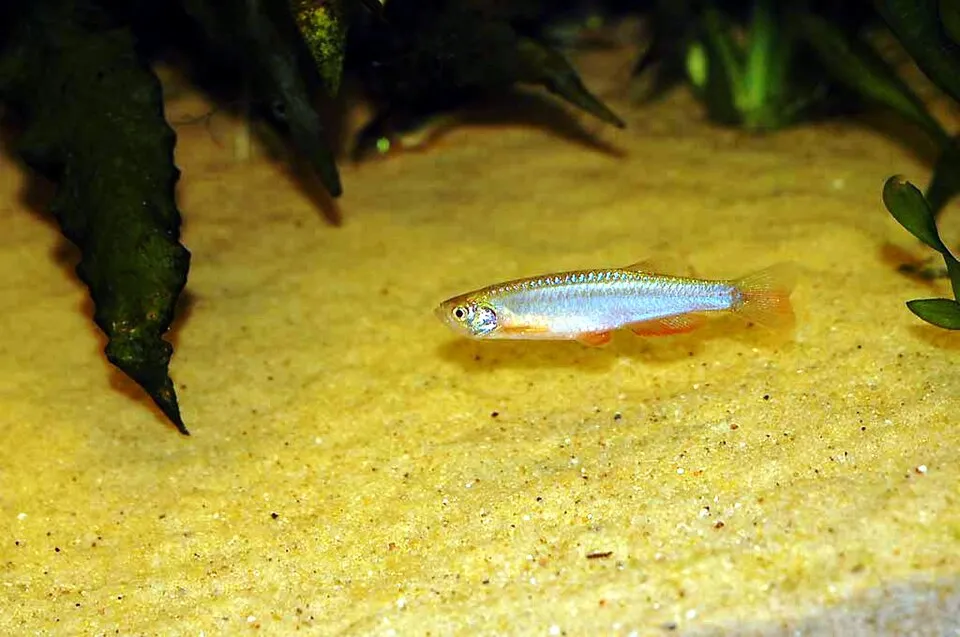 2.4 in (6 cm)18 gal (70 L)61–77°F (16–25°C)
Pearl danio
Danio albolineatus
2.4 in (6 cm) · 18 gal (70 L)