Blackstripe cory
Hoplisoma bondi
Also known as Corydoras bondi
FreshwaterFish
Care at a glance
- Temperature
- 70–79°F
- 21–26°C
- pH
- 6.0–7.5
- Adult size
- 2 in
- 5 cm
- Minimum tank
- 15 gal
- 55 L
- Temperament
- Peaceful
- Social behavior
- Shoaling
- Swim level
- Bottom
- Difficulty
- Medium
- Breeding
- No record
- Rarity
- Very rare
- Family
- Callichthyidae
- Origin
- The Guianas
Overview
The blackstripe cory is a peaceful, sociable little catfish for the bottom of a community tank. It suits a keeper with a little experience.
Did you know
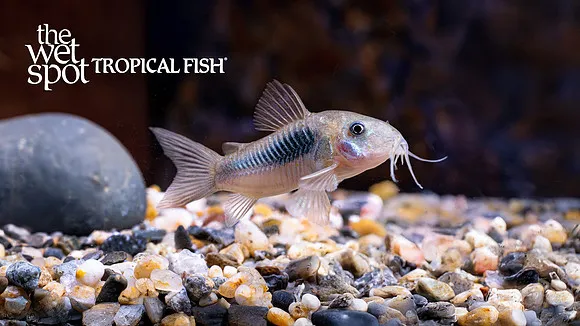
The blackstripe cory wears one clean dark line drawn straight along its flank, where many cories are speckled or masked. It belongs to a cluster of similar slender cories from the Guianas that can be tricky to tell apart.
Caring for the blackstripe cory
Keep blackstripe cories in a group of at least six, since they need the company of their own kind. A group settles well in 15 gal (55 L) or larger. Give them a fine sand bed, driftwood and some shady plant cover.
Keep the water clean and gently moving, at 70 to 79°F (21 to 26°C) and a pH of 6.0 to 7.5. Regular water changes keep this slender cory comfortable. Feed a varied diet of sinking pellets, frozen bloodworm and the occasional wafer, and make sure the food reaches the floor.
Blackstripe cories forage across the bottom in a loose shoal, working the sand with their barbels. They are peaceful, so house them with calm community fish that stay out of their way at feeding time. Aquarium breeding of this species is not well documented. Its close relatives pair briefly, then deposit sticky eggs onto firm surfaces.
Good to know
The blackstripe cory is a slim armored catfish in the family Callichthyidae, listed as Hoplisoma bondi and also known as Corydoras bondi. Like the rest of its family, it wears two overlapping rows of bony plates along each flank instead of scales.
In the wild
Blackstripe cories are native to the Guianas. They live in soft, warm rivers and streams, over sandy beds scattered with wood and leaves.
Weekly picks
Tank mates
The blackstripe cory is a peaceful, shoaling species that keeps to the bottom. These picks share a community profile with it, are safe together in both directions, and overlap on water type, temperature and pH.
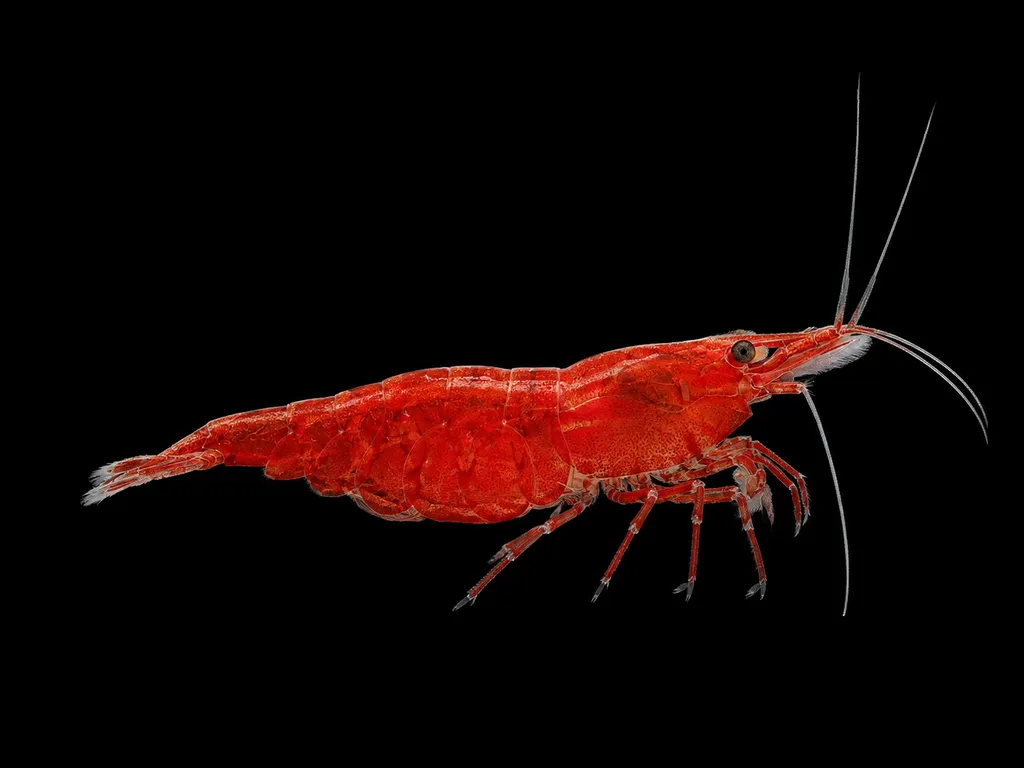
Neocaridina shrimp
Neocaridina davidi
Freshwater1.6 in (4 cm) · 5 gal (19 L)59–84°F (15–29°C)
Guppy
Poecilia reticulata
FreshwaterBrackish2.4 in (6 cm) · 10 gal (38 L)64–82°F (18–28°C)
Neon tetra
Paracheirodon innesi
Freshwater1.5 in (3.8 cm) · 11 gal (40 L)70–77°F (21–25°C)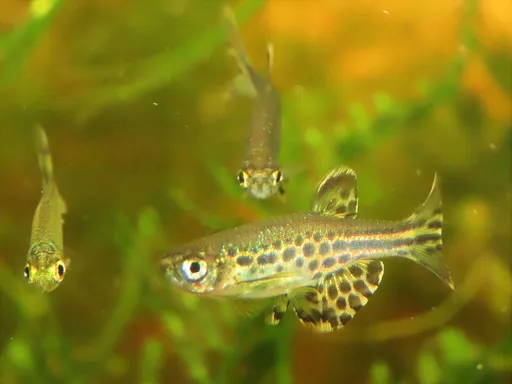
Gold ring danio
Danio tinwini
Freshwater1.2 in (3 cm) · 11 gal (40 L)64–79°F (18–26°C)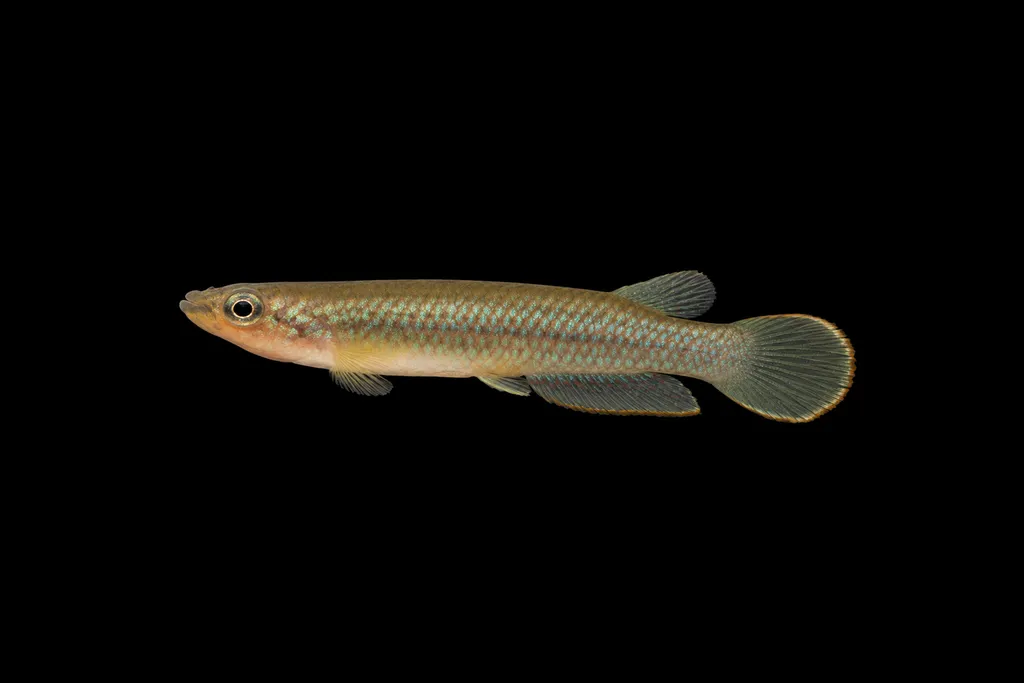
Guinean panchax
Epiplatys guineensis
Freshwater2.8 in (7 cm) · 14 gal (54 L)68–77°F (20–25°C)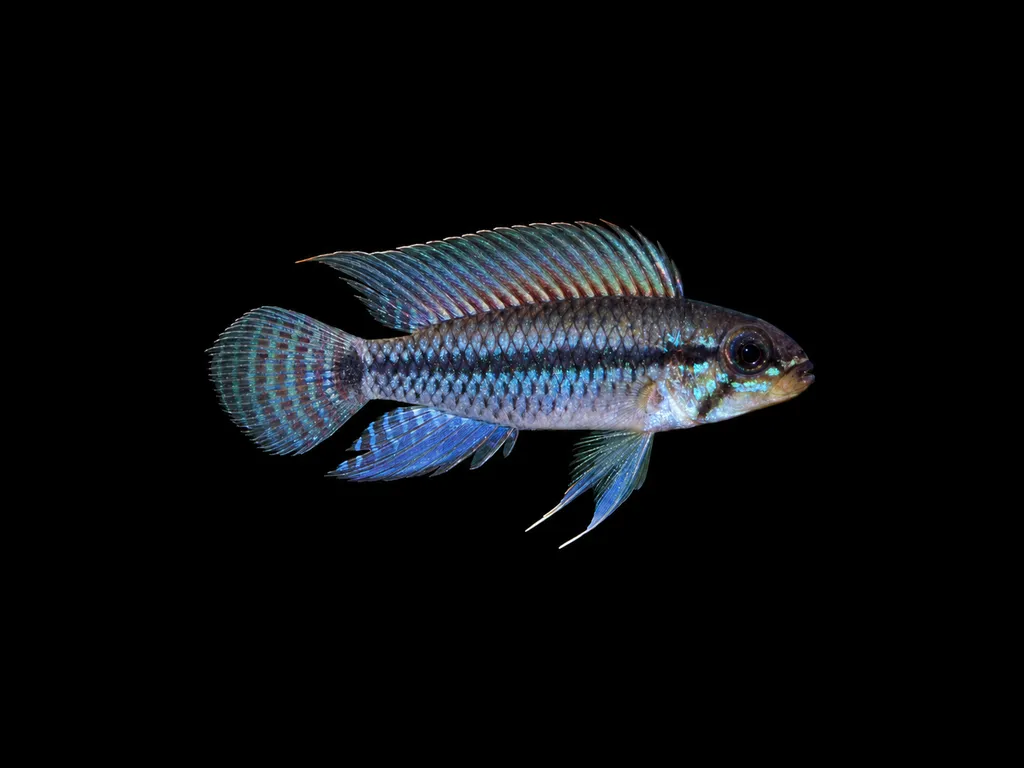
Amazon sail-fin dwarf cichlid
Apistogramma pertensis
Freshwater2 in (5 cm) · 15 gal (55 L)77–84°F (25–29°C)
Common questions
What size tank does a blackstripe cory need?
A blackstripe cory needs at least 15 gal (55 L). It spends most of its time in the bottom.
What temperature and pH does a blackstripe cory need?
A blackstripe cory is comfortable at 70–79°F (21–26°C) with a pH of 6.0–7.5.
What does a blackstripe cory eat?
A blackstripe cory eats a varied diet of sinking pellets, frozen bloodworm and the occasional wafer. Make sure the food reaches the floor, where it forages.
How big does a blackstripe cory get?
An adult blackstripe cory reaches about 2 in (5 cm).
Does a blackstripe cory need a group?
Yes. A blackstripe cory is a shoaling species and should be kept in a group, not singly.
How does a blackstripe cory breed?
Breeding the blackstripe cory in aquariums is not well documented. Its close relatives spawn after a brief pairing, depositing sticky eggs onto firm surfaces.
Related species
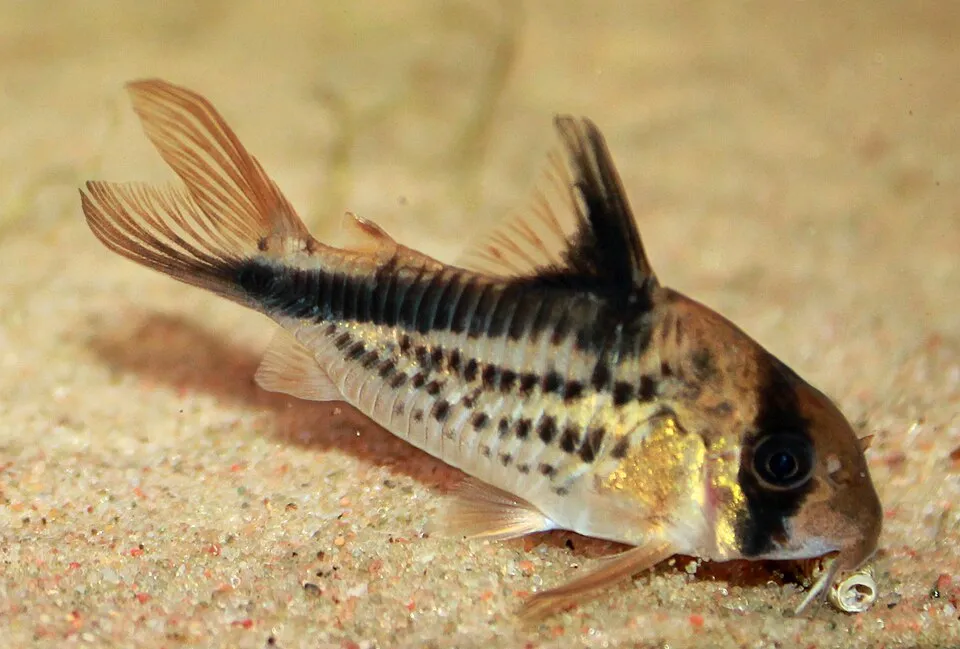 2 in (5 cm)16 gal (60 L)70–75°F (21–24°C)
Dirty bandit cory
Hoplisoma loxozonum
2 in (5 cm) · 16 gal (60 L)
 2 in (5 cm)20 gal (75 L)72–79°F (22–26°C)
Duplicate cory
Hoplisoma duplicareum
2 in (5 cm) · 20 gal (75 L)
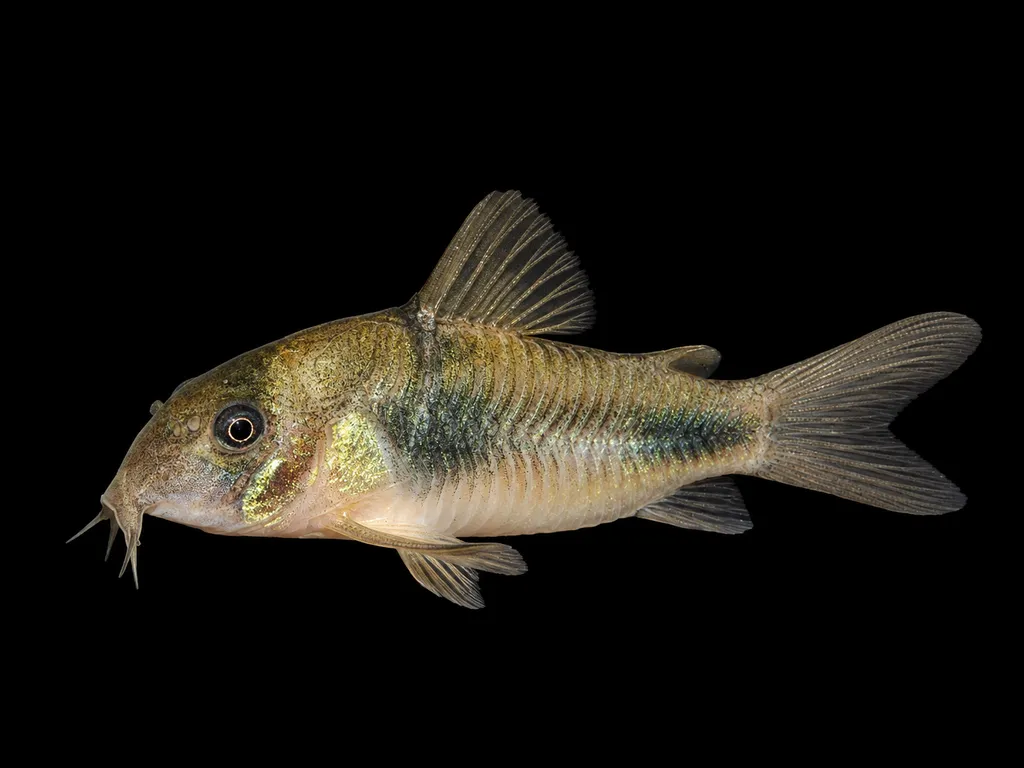 2 in (5 cm)16 gal (60 L)66–77°F (19–25°C)
Ehrhardt's cory
Hoplisoma ehrhardti
2 in (5 cm) · 16 gal (60 L)
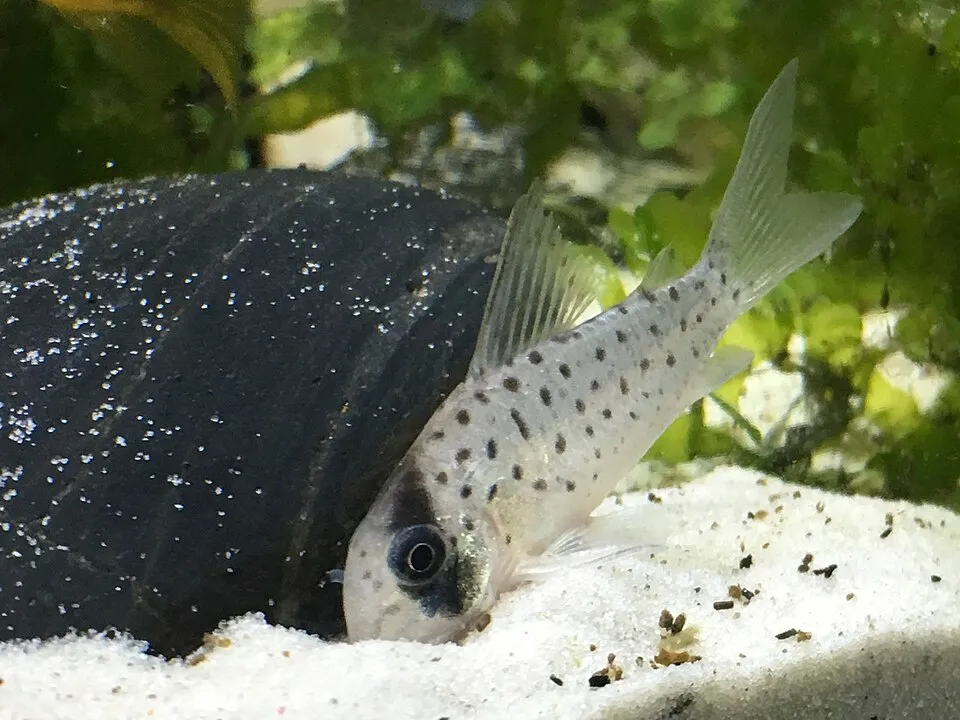 2 in (5 cm)16 gal (60 L)70–81°F (21–27°C)
Fairy cory
Hoplisoma atropersonatum
2 in (5 cm) · 16 gal (60 L)
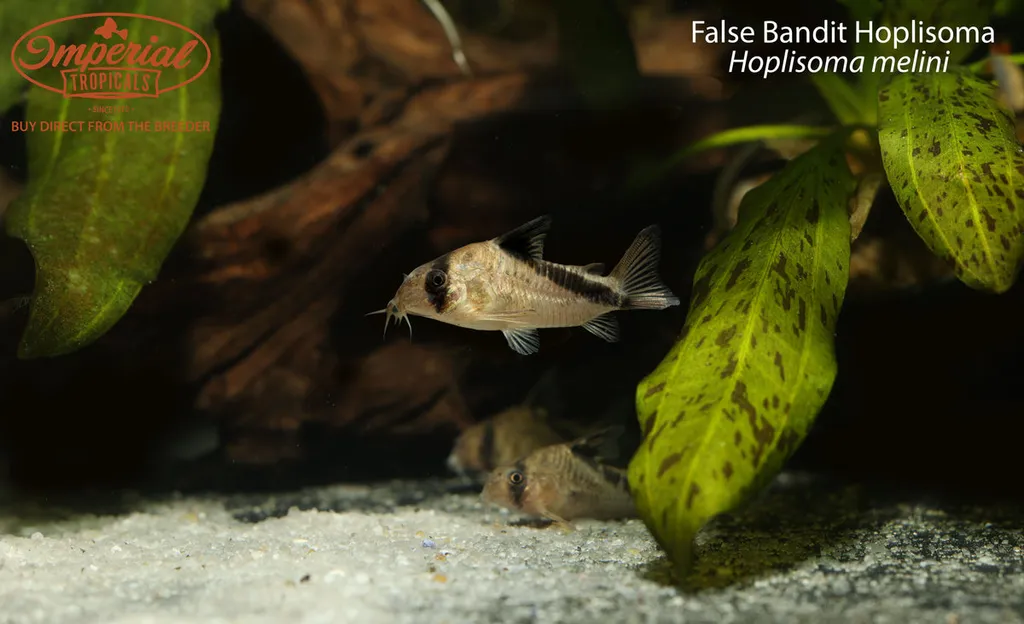 2 in (5 cm)16 gal (60 L)72–79°F (22–26°C)
False bandit cory
Hoplisoma melini
2 in (5 cm) · 16 gal (60 L)
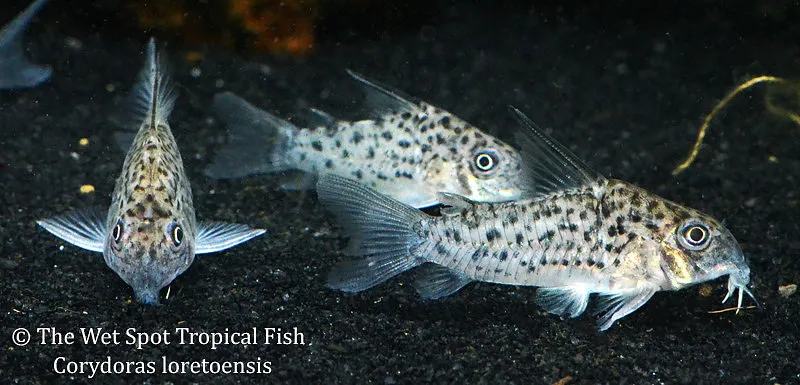 2 in (5 cm)16 gal (60 L)72–77°F (22–25°C)
Loreto cory
Hoplisoma loretoense
2 in (5 cm) · 16 gal (60 L)