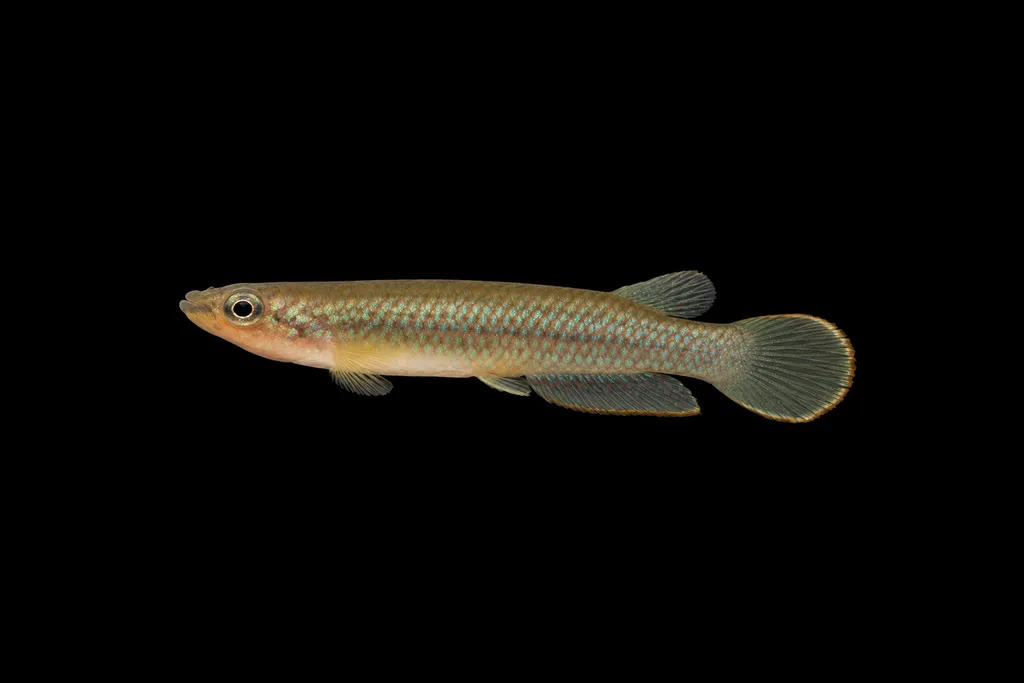
Guinean panchax
Epiplatys guineensis
Also known as Guineensis killi, Guinean killi
FreshwaterFish
Care at a glance
- Temperature
- 68–77°F
- 20–25°C
- pH
- 5.5–7.0
- Adult size
- 2.8 in
- 7 cm
- Minimum tank
- 14 gal
- 54 L
- Temperament
- Mostly peaceful
- Social behavior
- Social
- Swim level
- Top
- Diet
- Carnivore
- Difficulty
- Medium
- Breeding
- Egg depositor · Medium
- Rarity
- Rare
- Family
- Nothobranchiidae
- Origin
- Upper Guinea forests
Overview
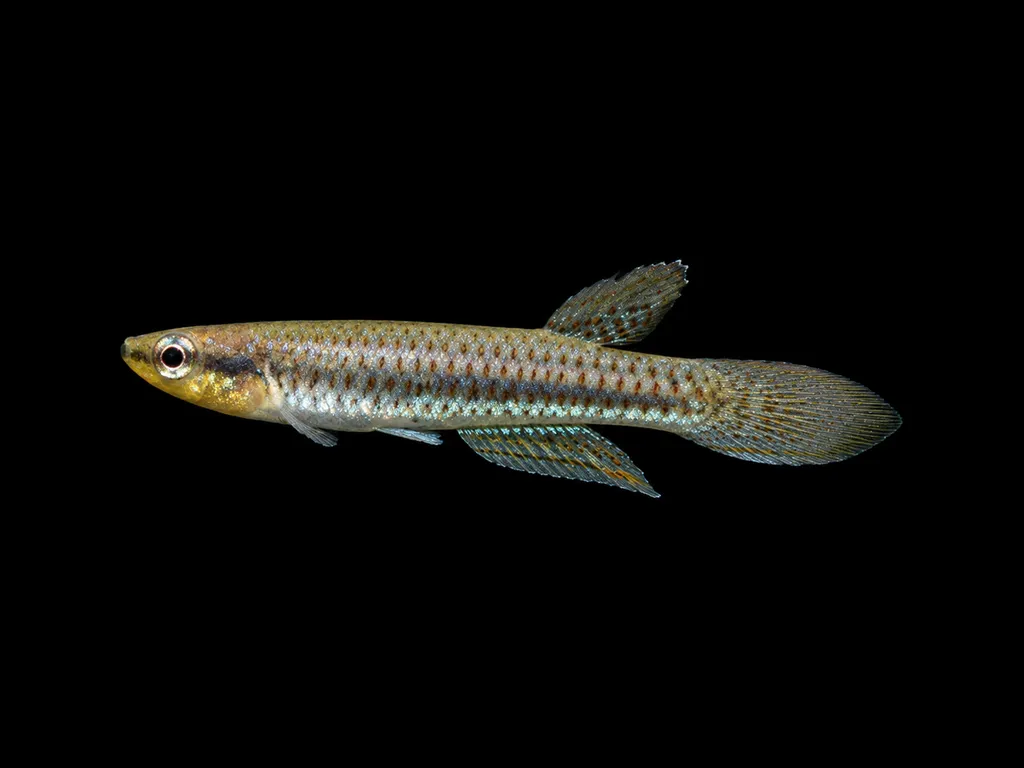
The Guinean panchax is a surface-dwelling pike killifish for a calm tank. It is a fish for the intermediate keeper.
Did you know
The Guinean panchax's genus name, Epiplatys, comes from Greek roots meaning roughly flat on top. It describes the straight, level back and flattened head that let a surface-hunting panchax lie almost unseen just beneath the film.
Caring for the Guinean panchax
Keep the Guinean panchax as a pair or a small harem in 14 gal (54 L) or more. It hangs under the surface film watching for prey, so give it floating plants, overhanging cover and open surface space. Fit a tight lid, since it jumps.
Keep the water soft and acidic to neutral, at 68 to 77°F (20 to 25°C) and a pH of 5.5 to 7.0. A dark base and gentle flow keep the surface quiet where it hunts.
Feed floating and live foods such as mosquito larvae, small crickets, wingless fruit flies, daphnia and frozen bloodworm. The Guinean panchax is mostly peaceful toward fish it cannot swallow, but it will pick off small tank mates. Avoid tiny surface fish and shrimp fry, and pair it with calm fish of similar or larger size.
It is a non-annual plant spawner. Pairs lay eggs on fine plants or spawning mops over many days, and the eggs develop in water. Breeding it is a moderate challenge.
Good to know
The Guinean panchax, Epiplatys guineensis, belongs to the family Nothobranchiidae. It is a barred hunter of the surface film.
In the wild
The Guinean panchax patrols the surface of shaded forest streams in the Upper Guinea region of West Africa, including Guinea and Liberia. The water there is soft and slow beneath the canopy.
Weekly picks
Tank mates
The Guinean panchax is a mostly peaceful, social species that keeps to the top. These picks share a community profile with it, are safe together in both directions, and overlap on water type, temperature and pH.
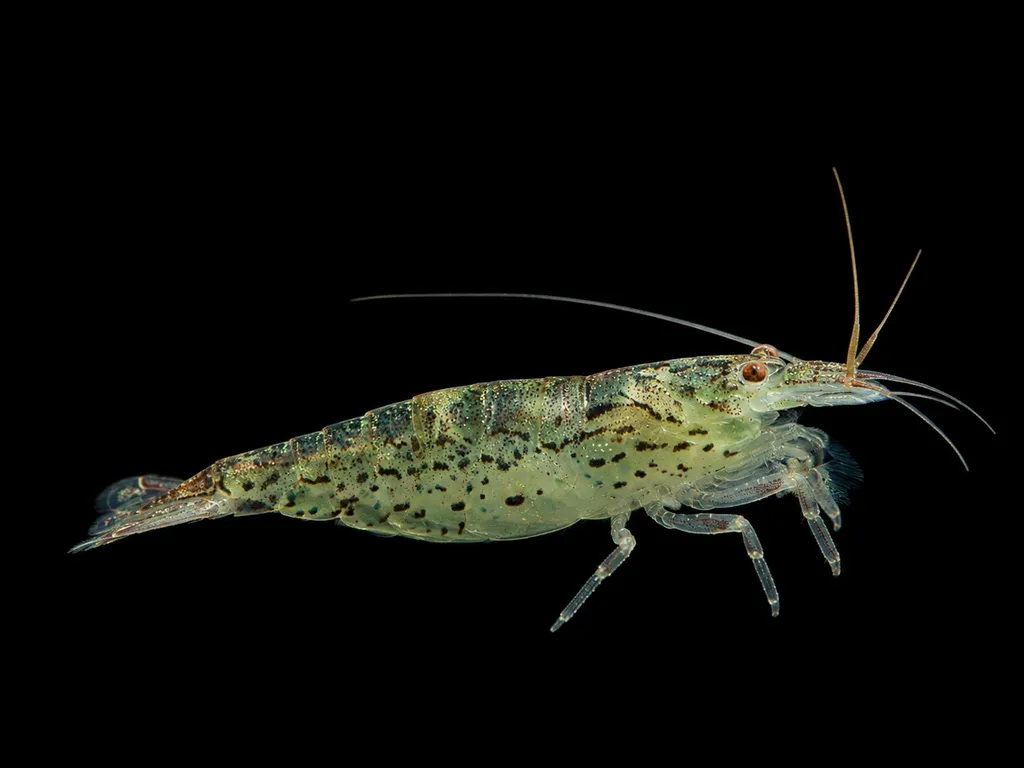
Green lace shrimp
Atyoida pilipes
Freshwater2.8 in (7 cm) · 14 gal (54 L)73–82°F (23–28°C)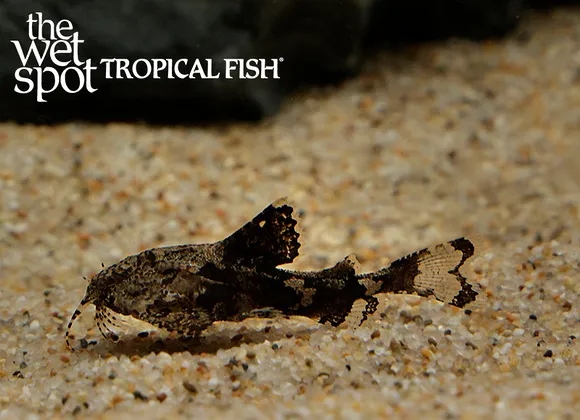
Butterfly hara catfish
Hara hara
Freshwater3.1 in (8 cm) · 14 gal (54 L)68–79°F (20–26°C)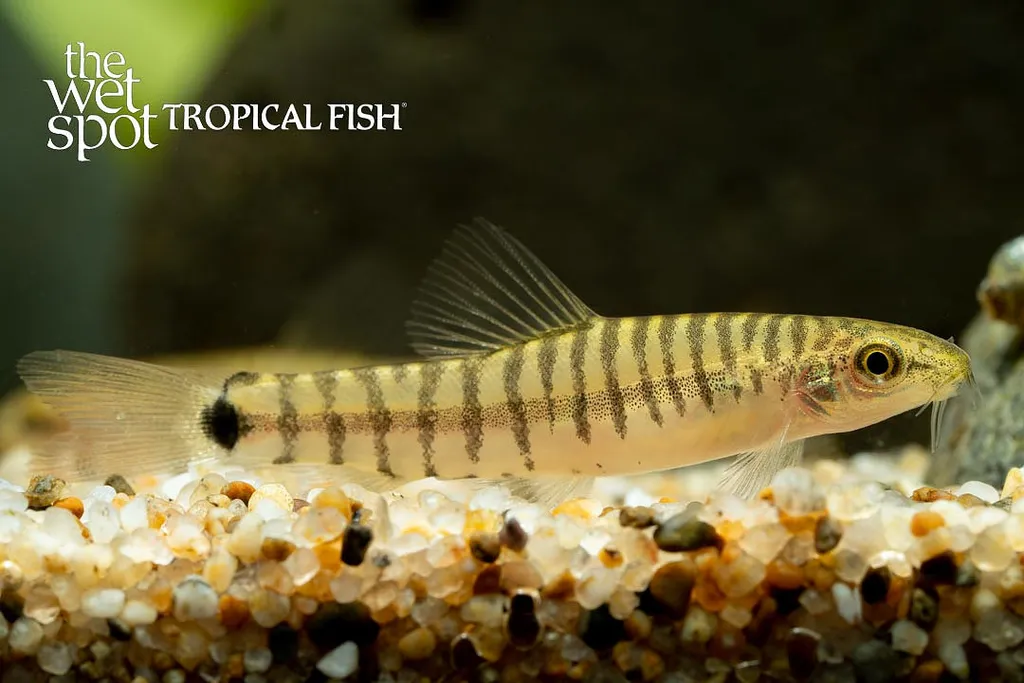
Cross loach
Micronemacheilus cruciatus
Freshwater1.6 in (4 cm) · 14 gal (54 L)68–77°F (20–25°C)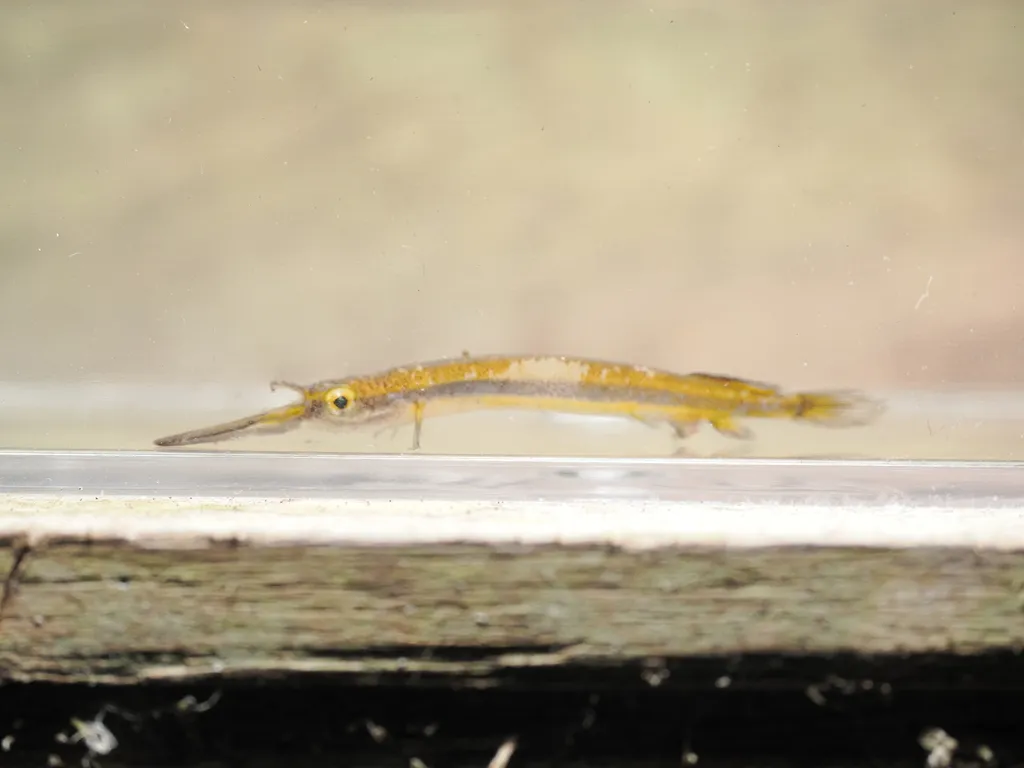
Gold-spotted halfbeak
Hemirhamphodon chrysopunctatus
Freshwater2.6 in (6.5 cm) · 14 gal (54 L)73–81°F (23–27°C)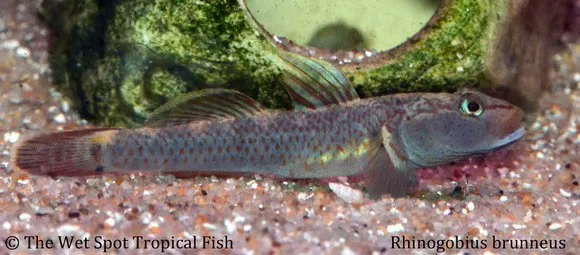
Mandarin rhinogobius
Rhinogobius brunneus
Freshwater2.4 in (6 cm) · 14 gal (54 L)64–75°F (18–24°C)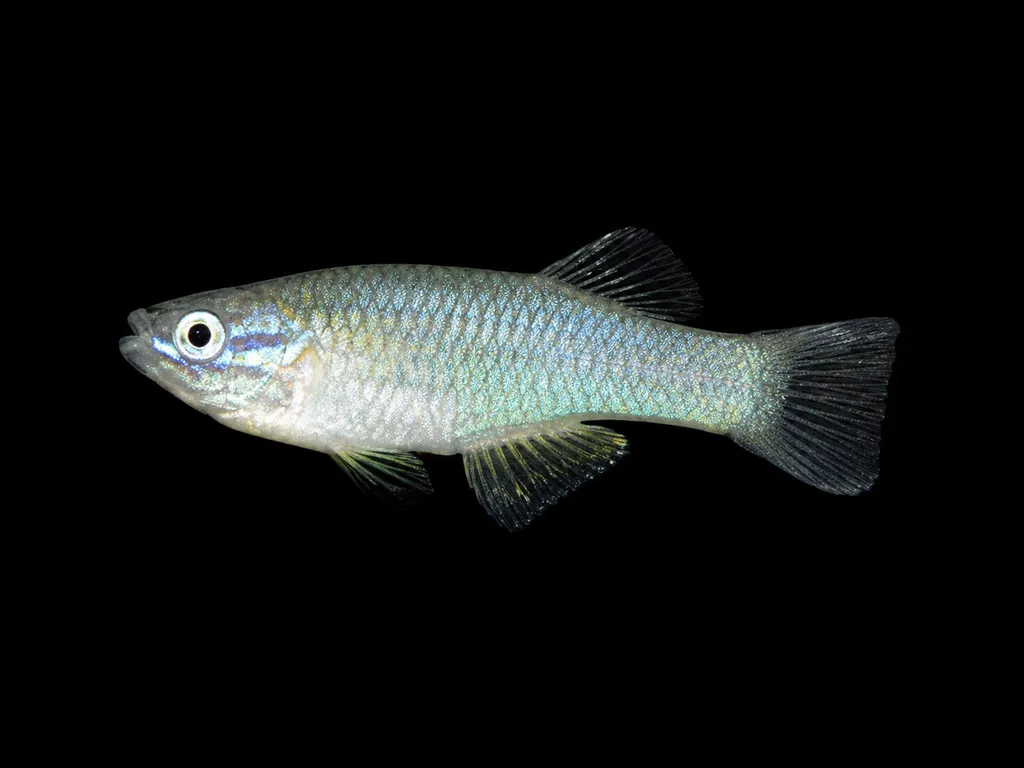
Mount Nimba lampeye
Rhexipanchax nimbaensis
Freshwater1.8 in (4.5 cm) · 14 gal (54 L)68–75°F (20–24°C)
Common questions
What size tank does a Guinean panchax need?
A Guinean panchax needs at least 14 gal (54 L). It spends most of its time in the top.
What temperature and pH does a Guinean panchax need?
A Guinean panchax is comfortable at 68–77°F (20–25°C) with a pH of 5.5–7.0.
What does a Guinean panchax eat?
A Guinean panchax eats floating and live foods, such as mosquito larvae, small crickets, wingless fruit flies, daphnia and frozen bloodworm.
How big does a Guinean panchax get?
An adult Guinean panchax reaches about 2.8 in (7 cm).
How does a Guinean panchax breed?
Guinean panchax pairs lay their eggs on fine plants or spawning mops over many days. The eggs develop in water, and breeding is moderately difficult.
Related species
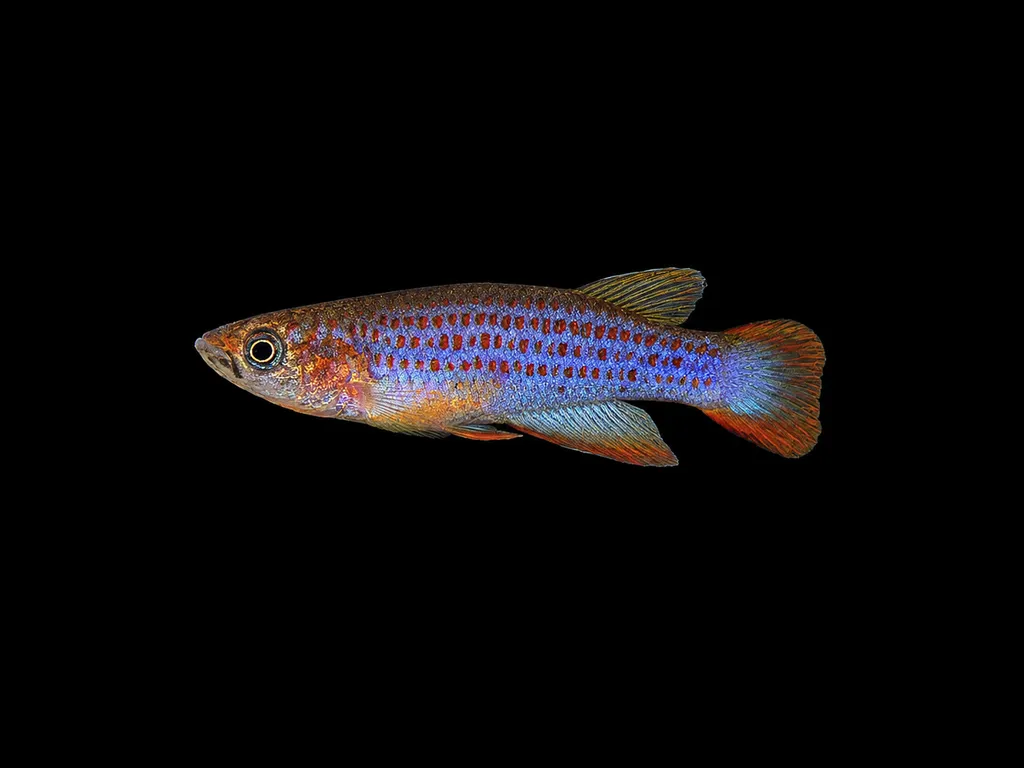 2.8 in (7 cm)14 gal (54 L)68–77°F (20–25°C)
Redspotted panchax
Epiplatys lamottei
2.8 in (7 cm) · 14 gal (54 L)
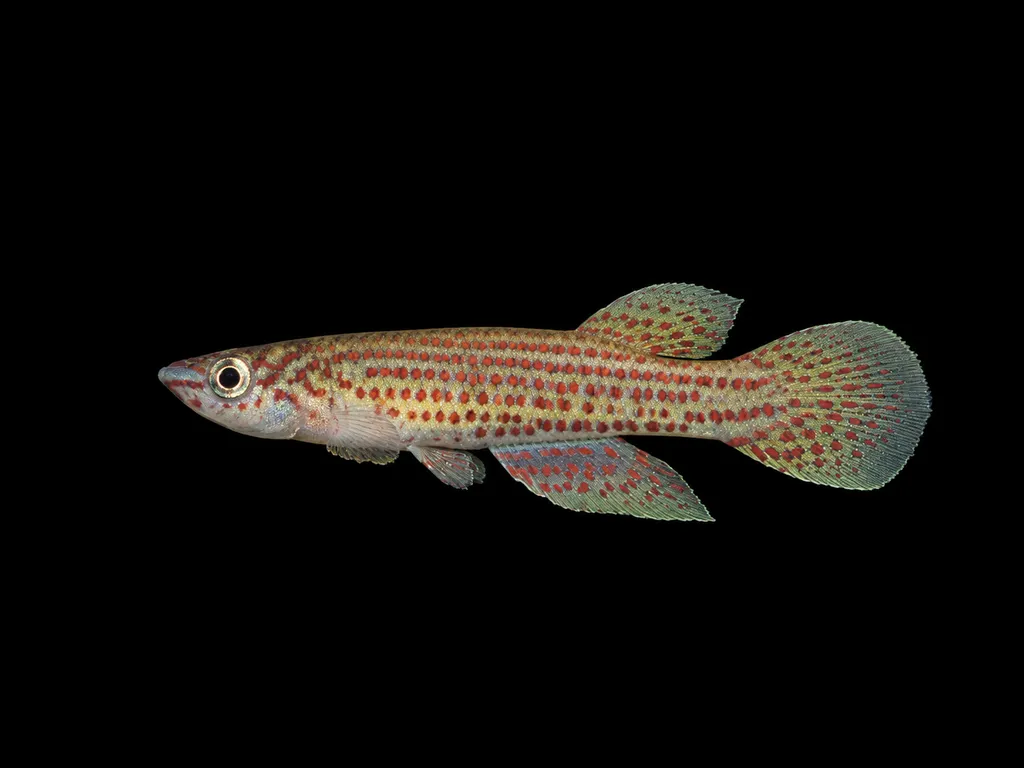
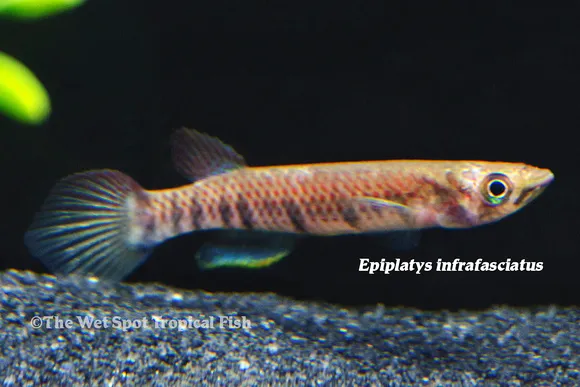 2.4 in (6 cm)14 gal (54 L)68–77°F (20–25°C)
Infrafasciatus killifish
Epiplatys infrafasciatus
2.4 in (6 cm) · 14 gal (54 L)
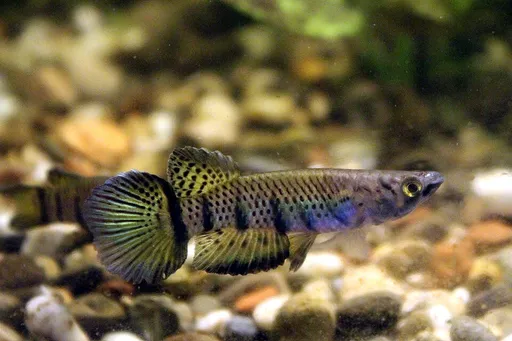
 2.4 in (6 cm)14 gal (54 L)68–77°F (20–25°C)
Singa panchax
Epiplatys singa
2.4 in (6 cm) · 14 gal (54 L)
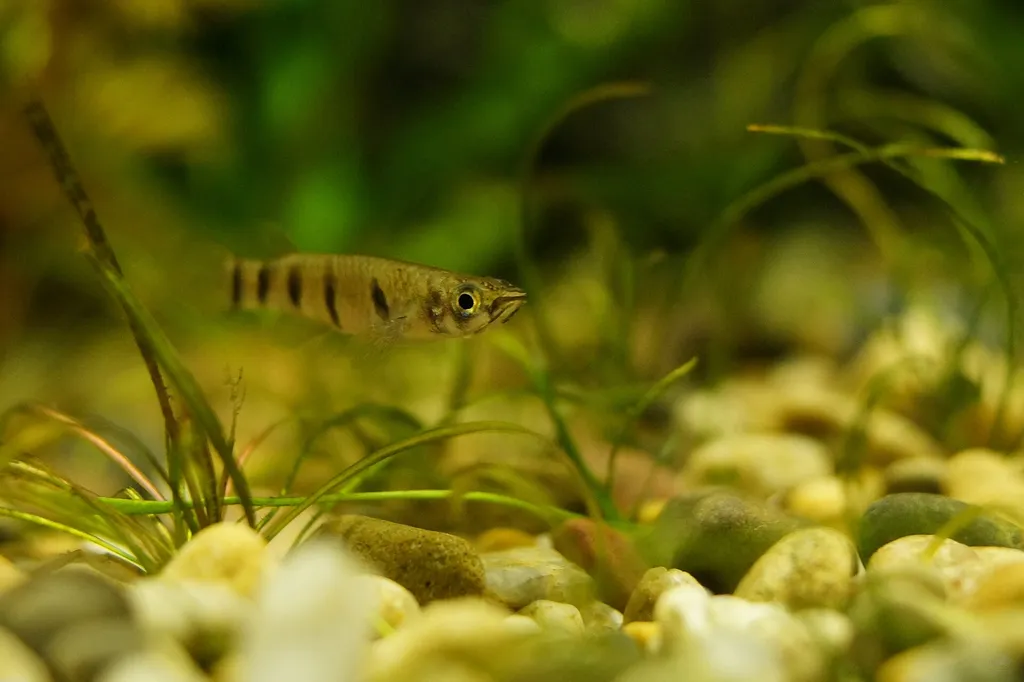
 3.9 in (10 cm)20 gal (75 L)72–81°F (22–27°C)
Six-barred panchax
Epiplatys sexfasciatus
3.9 in (10 cm) · 20 gal (75 L)
 1.8 in (4.5 cm)20 gal (75 L)70–75°F (21–24°C)
Red-chinned panchax
Epiplatys dageti
1.8 in (4.5 cm) · 20 gal (75 L)
 1.4 in (3.5 cm)11 gal (40 L)68–77°F (20–25°C)
Dubois' panchax
Epiplatys duboisi
1.4 in (3.5 cm) · 11 gal (40 L)