Redspotted panchax
Epiplatys lamottei
Also known as Lamotte's panchax
FreshwaterFish
Care at a glance
- Temperature
- 68–77°F
- 20–25°C
- pH
- 5.5–7.0
- Adult size
- 2.8 in
- 7 cm
- Minimum tank
- 14 gal
- 54 L
- Temperament
- Mostly peaceful
- Social behavior
- Social
- Swim level
- Top
- Diet
- Carnivore
- Difficulty
- Medium
- Breeding
- Egg depositor · Medium
- Rarity
- Rare
- Family
- Nothobranchiidae
- Origin
- Upper Guinea highlands, Guinea and Liberia
Overview
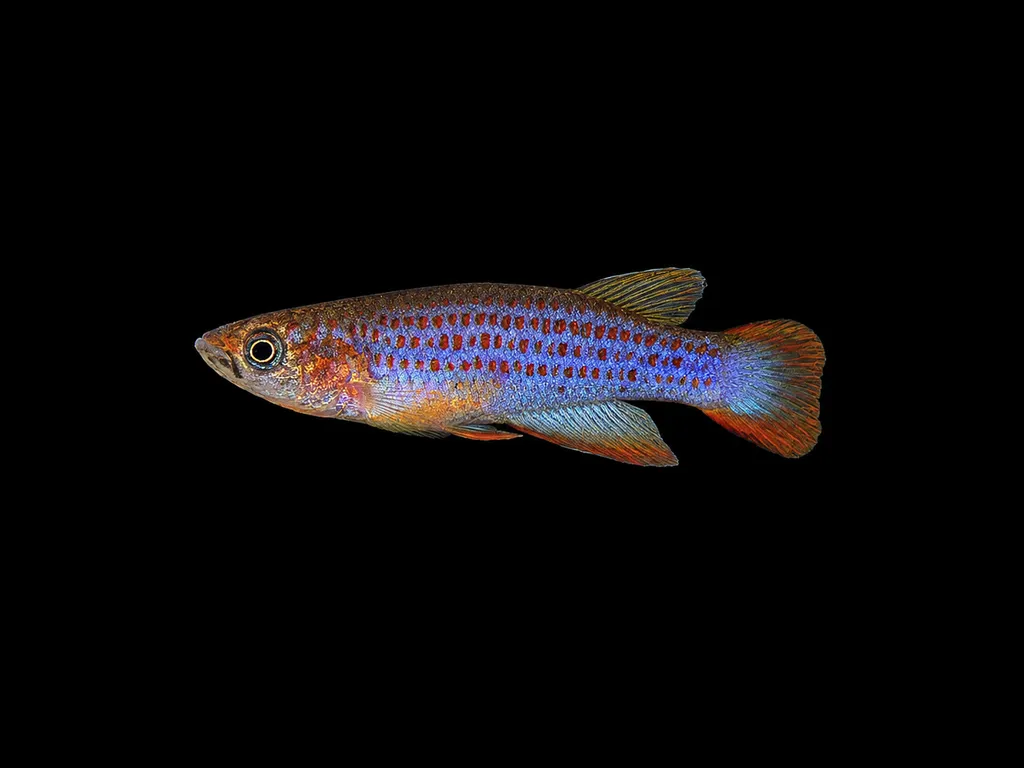
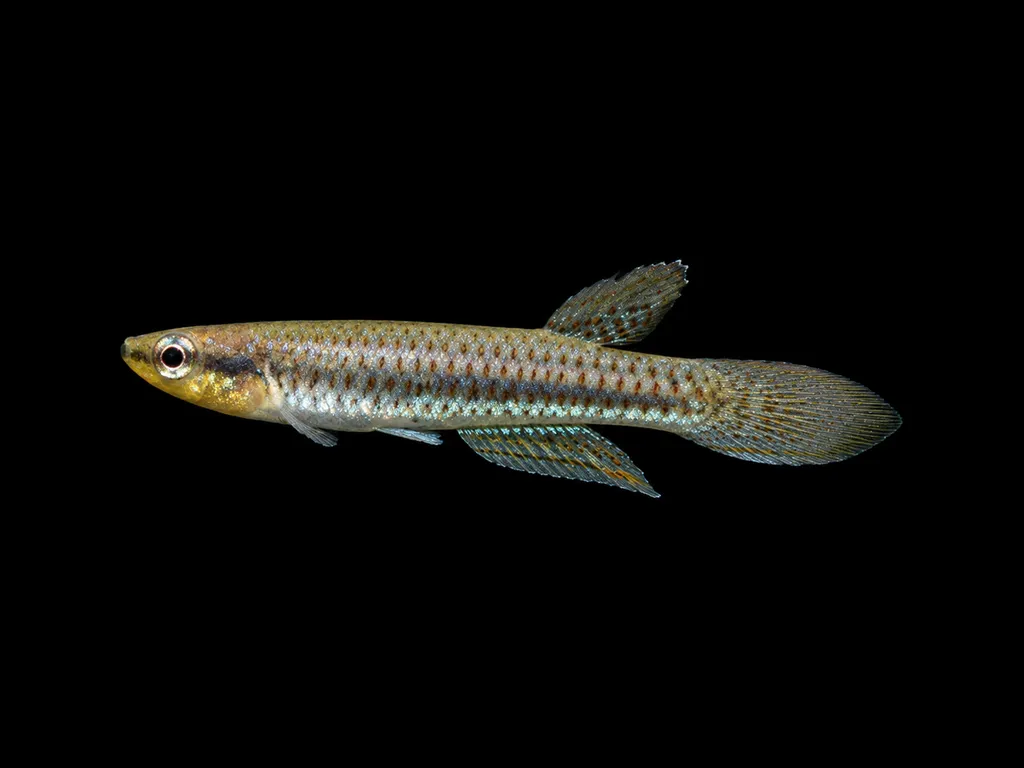
The redspotted panchax is a showy, shy killifish that keeps to the surface of a planted tank. It is mostly peaceful and suits a keeper with a little experience.
Did you know
The redspotted panchax is named after Maxime Lamotte, the French zoologist who led the landmark biological survey of Mount Nimba. That highland on the Guinea and Liberia border is famous for oddities such as its live-bearing toad.
Caring for the redspotted panchax
Keep redspotted panchax as a pair or a small harem in a tank of at least 14 gal (54 L). They are shy, so plant the tank heavily and shade it with floating plants, roots and a dark base. They stay near the top, and they can jump, so fit a tight lid.
Redspotted panchax are highland fish that dislike being kept too warm, so hold the water at 68 to 77°F (20 to 25°C). Keep it soft, at a pH of 5.5 to 7.0, with gentle flow. Dim, cool and settled conditions keep the red spotting at its best.
Feed live and frozen foods such as mosquito larvae, daphnia, wingless fruit flies and bloodworm. They are mostly peaceful with larger fish, but they can eat small tank mates. Choose calm fish of a similar or larger size, and avoid tiny surface fish.
Males are lavender toned and scattered with rows of red spots. They are plant spawners that lay their eggs on mops or fine plants, where the eggs develop in the water. Breeding them takes moderate effort.
Good to know
Epiplatys lamottei is a non-annual killifish in the family Nothobranchiidae. It is sometimes treated as a form of Epiplatys fasciolatus.
In the wild
The redspotted panchax lives in shaded forest brooks of the Upper Guinea highlands, in southeastern Guinea and northern Liberia. These brooks are cool, soft and dimly lit, under dense cover.
Weekly picks
Tank mates
The redspotted panchax is a mostly peaceful, social species that keeps to the top. These picks share a community profile with it, are safe together in both directions, and overlap on water type, temperature and pH.
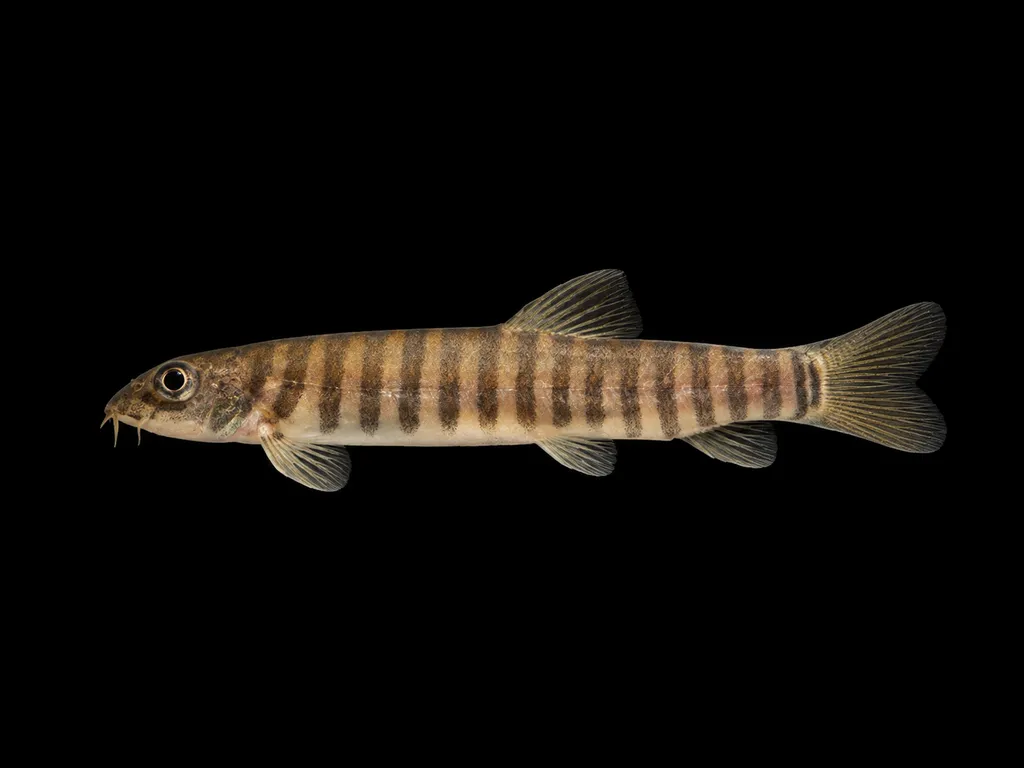
Assam banded loach
Neonoemacheilus assamensis
Freshwater1.8 in (4.5 cm) · 14 gal (54 L)68–79°F (20–26°C)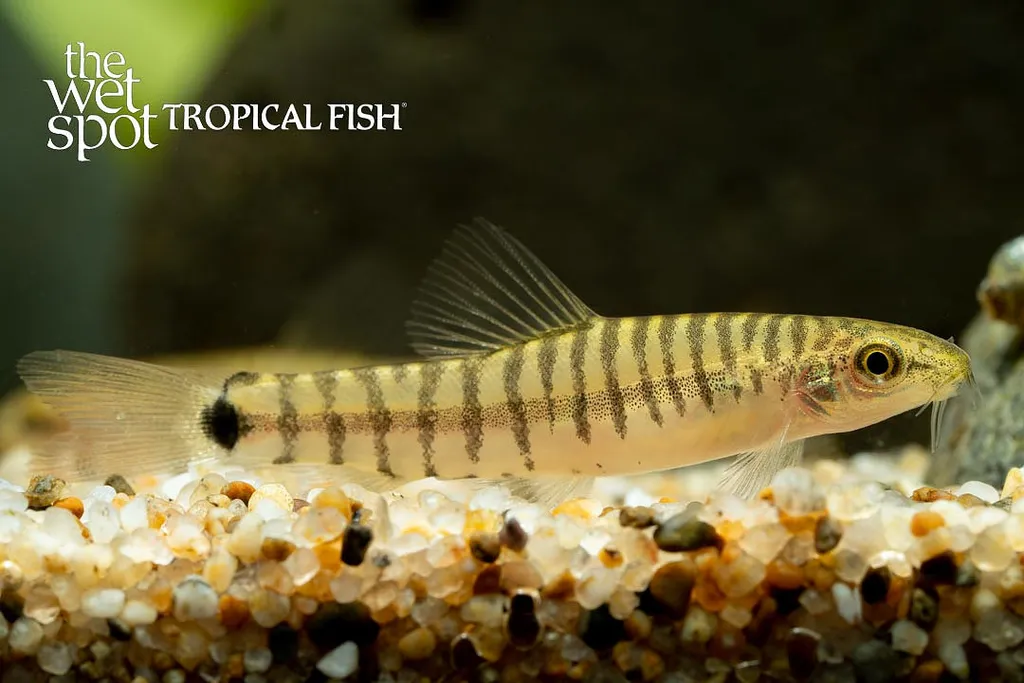
Cross loach
Micronemacheilus cruciatus
Freshwater1.6 in (4 cm) · 14 gal (54 L)68–77°F (20–25°C)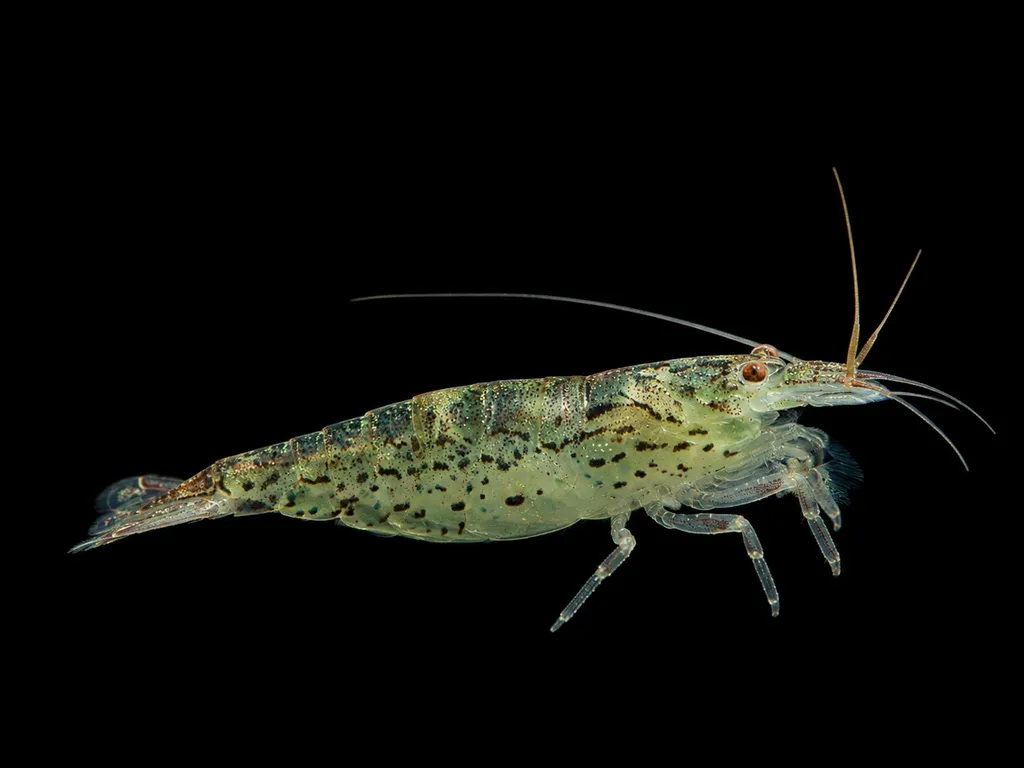
Green lace shrimp
Atyoida pilipes
Freshwater2.8 in (7 cm) · 14 gal (54 L)73–82°F (23–28°C)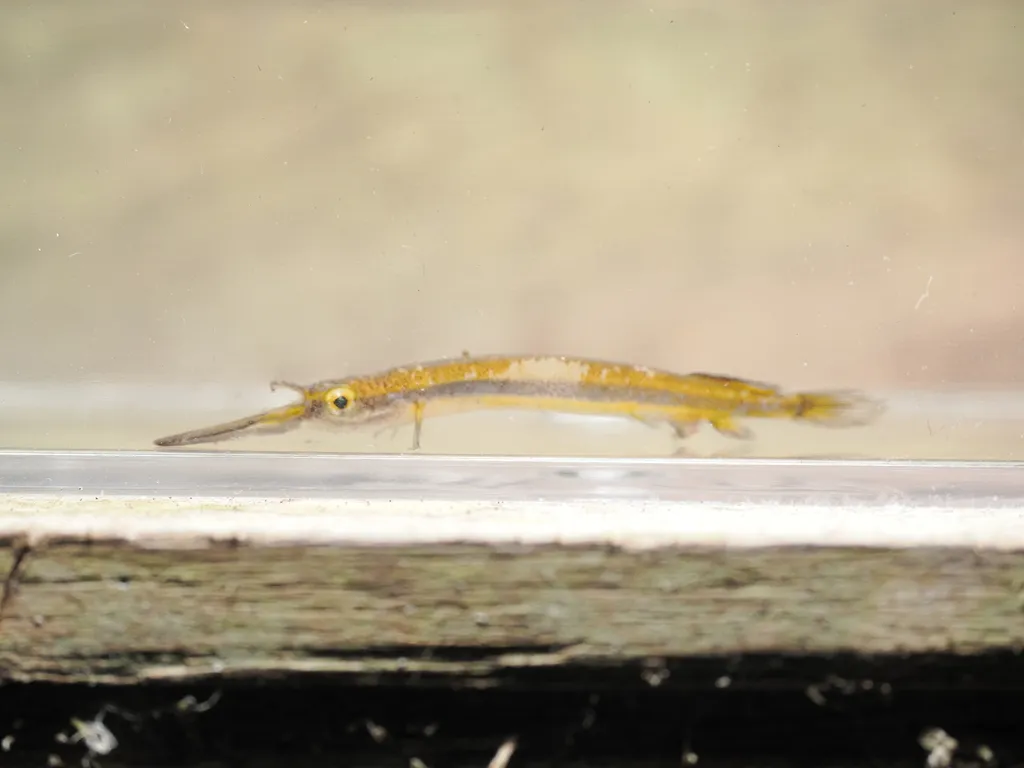
Gold-spotted halfbeak
Hemirhamphodon chrysopunctatus
Freshwater2.6 in (6.5 cm) · 14 gal (54 L)73–81°F (23–27°C)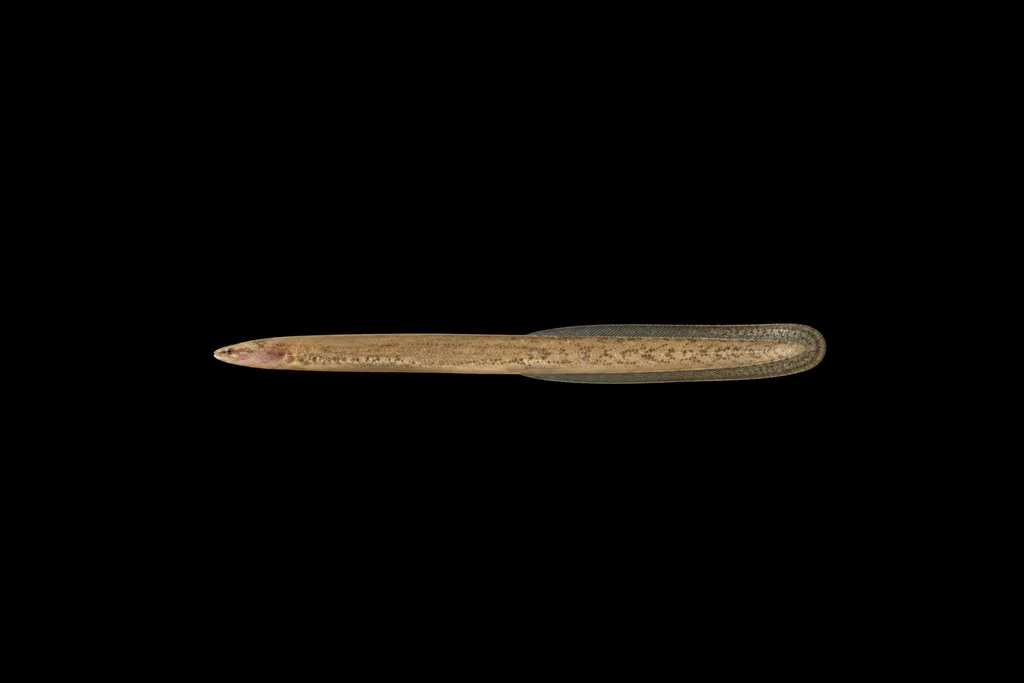
Dwarf spineless eel
Garo khajuriai
Freshwater2.8 in (7 cm) · 14 gal (54 L)68–79°F (20–26°C)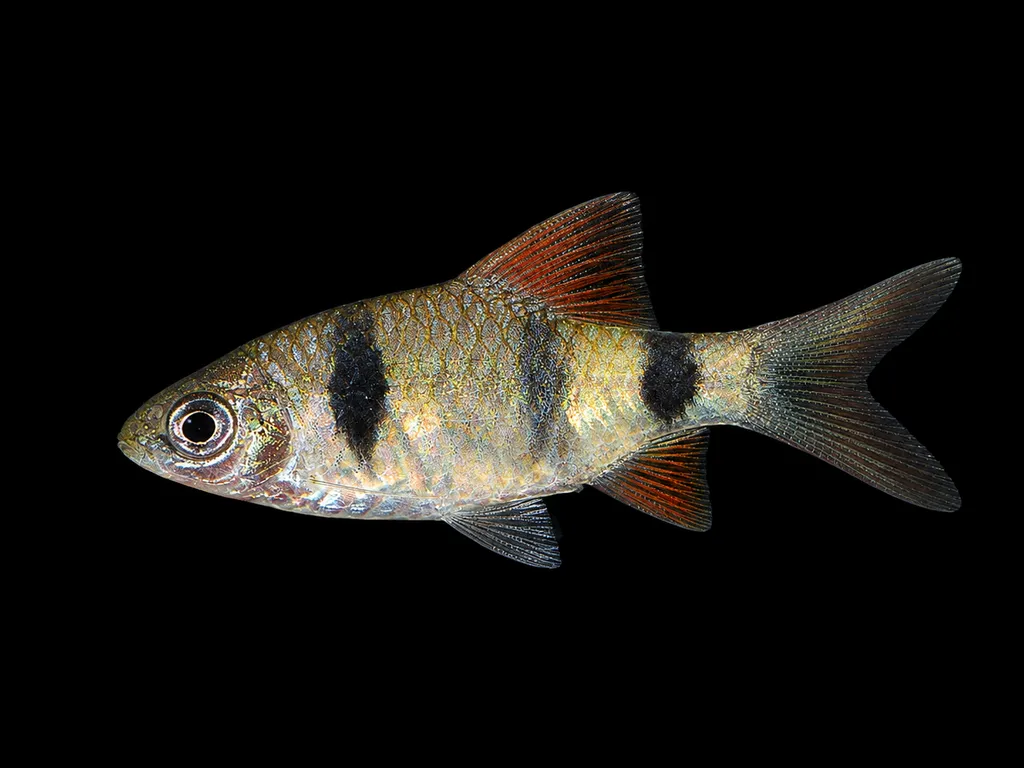
Narayan barb
Pethia narayani
Freshwater1.8 in (4.5 cm) · 14 gal (54 L)68–77°F (20–25°C)
Common questions
What size tank does a redspotted panchax need?
A redspotted panchax needs at least 14 gal (54 L). It spends most of its time in the top.
What temperature and pH does a redspotted panchax need?
A redspotted panchax is comfortable at 68–77°F (20–25°C) with a pH of 5.5–7.0.
What does a redspotted panchax eat?
A redspotted panchax eats live and frozen foods, such as mosquito larvae, daphnia, wingless fruit flies and bloodworm.
How big does a redspotted panchax get?
An adult redspotted panchax reaches about 2.8 in (7 cm).
How can you tell a male redspotted panchax from a female?
Males have a lavender tone and are scattered with rows of red spots.
How does a redspotted panchax breed?
Redspotted panchax are plant spawners that lay their eggs on mops or fine plants, and the eggs develop in the water. Breeding them takes moderate effort.
Related species
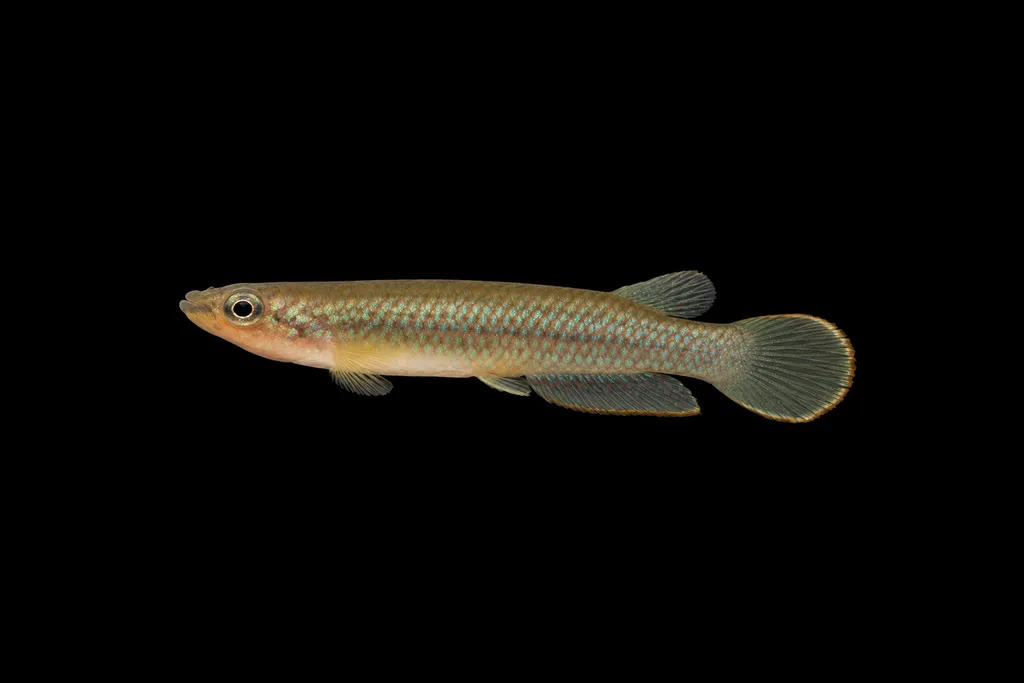 2.8 in (7 cm)14 gal (54 L)68–77°F (20–25°C)
Guinean panchax
Epiplatys guineensis
2.8 in (7 cm) · 14 gal (54 L)
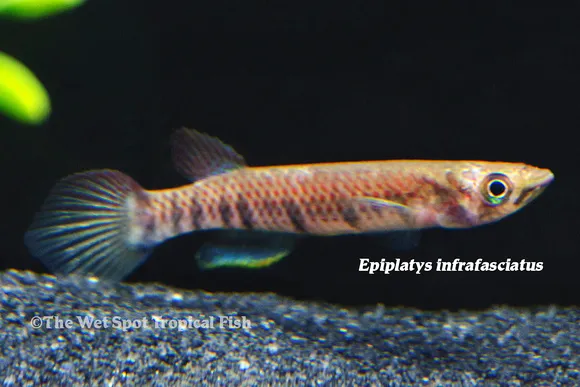 2.4 in (6 cm)14 gal (54 L)68–77°F (20–25°C)
Infrafasciatus killifish
Epiplatys infrafasciatus
2.4 in (6 cm) · 14 gal (54 L)
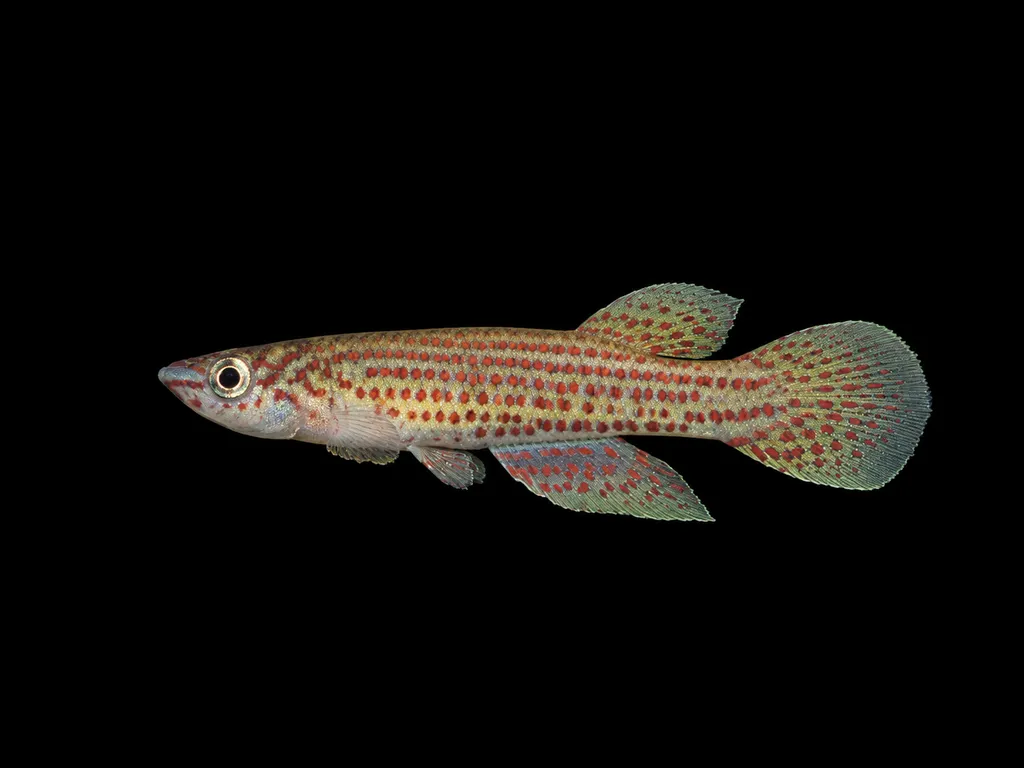 2.4 in (6 cm)14 gal (54 L)68–77°F (20–25°C)
Singa panchax
Epiplatys singa
2.4 in (6 cm) · 14 gal (54 L)
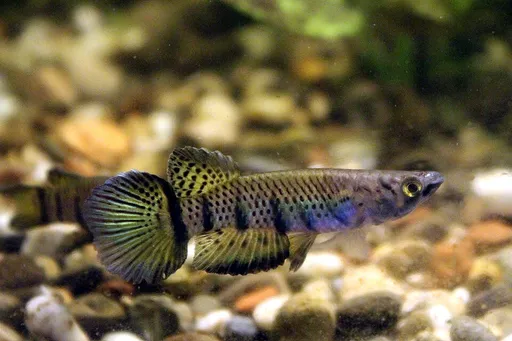 3.9 in (10 cm)20 gal (75 L)72–81°F (22–27°C)
Six-barred panchax
Epiplatys sexfasciatus
3.9 in (10 cm) · 20 gal (75 L)
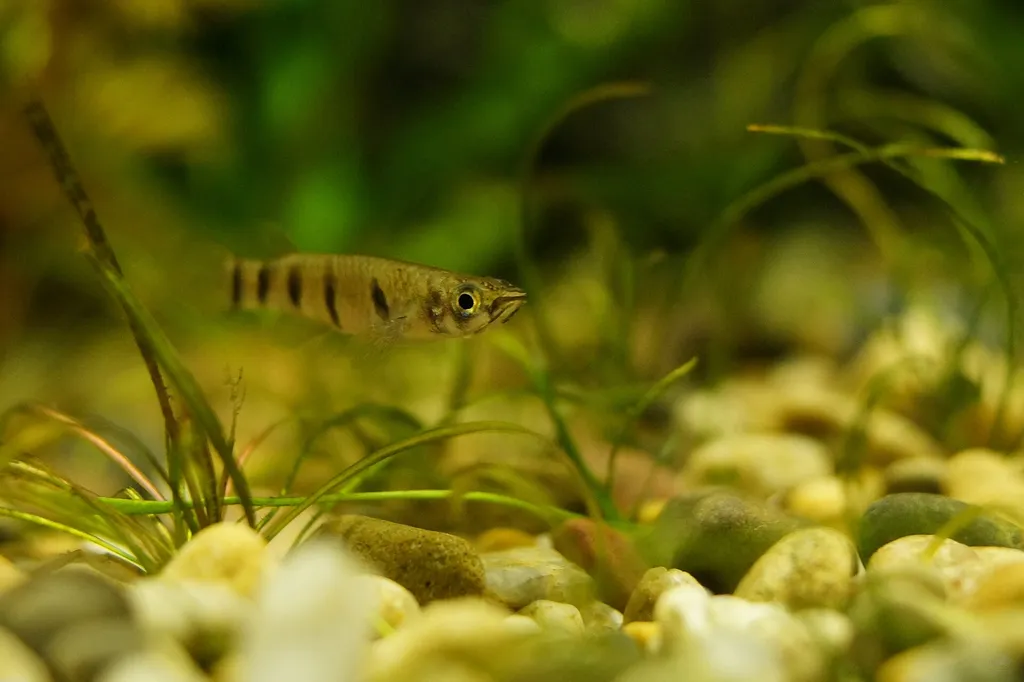 1.8 in (4.5 cm)20 gal (75 L)70–75°F (21–24°C)
Red-chinned panchax
Epiplatys dageti
1.8 in (4.5 cm) · 20 gal (75 L)
 1.4 in (3.5 cm)11 gal (40 L)68–77°F (20–25°C)
Dubois' panchax
Epiplatys duboisi
1.4 in (3.5 cm) · 11 gal (40 L)