Loreto cory
Hoplisoma loretoense
Also known as Corydoras loretoensis, Loreto corydoras
FreshwaterFish
Care at a glance
- Temperature
- 72–77°F
- 22–25°C
- pH
- 6.0–7.2
- Adult size
- 2 in
- 5 cm
- Minimum tank
- 16 gal
- 60 L
- Temperament
- Peaceful
- Social behavior
- Shoaling
- Swim level
- Bottom
- Difficulty
- Medium
- Breeding
- Medium
- Rarity
- Rare
- Family
- Callichthyidae
- Origin
- Upper Amazon in Peru, including the Rio Nanay in the Loreto region.
Overview
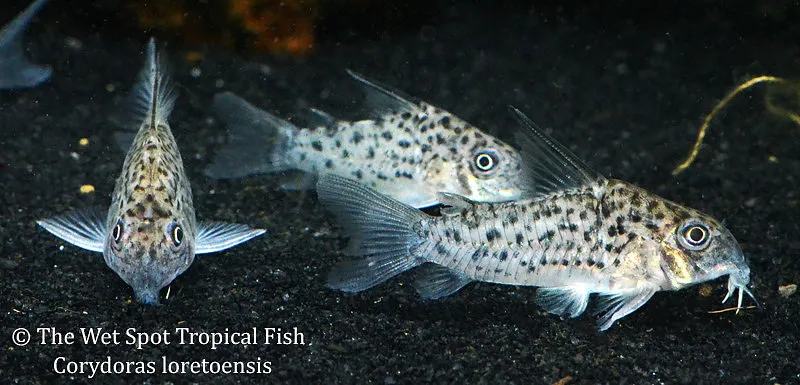
The Loreto cory is a peaceful, fine speckled cory that shoals on the bottom of a community tank. It is a fair choice once you have kept a few easier fish.
Did you know
A male Loreto cory grows an oversized dorsal fin that can stand taller than his body is deep. That fin sets the species apart from other fine speckled cories.
Caring for the Loreto cory
Give Loreto cories a tank of at least 16 gal (60 L) and a group of six or more. A quiet planted community with smooth sand suits them.
Keep the water soft, at 72 to 77°F (22 to 25°C) and a pH of 6.0 to 7.2. Offer sinking pellets and small frozen foods such as bloodworm and daphnia.
Loreto cories are peaceful community fish. You can tell males by their tall, sail like dorsal fin with a long leading spine. Breeding them takes moderate effort.
Good to know
The Loreto cory belongs to the family Callichthyidae. The 2024 revision moved it to the genus Hoplisoma as Hoplisoma loretoense, and it is also listed as Corydoras loretoensis.
In the wild
The Loreto cory lives in soft, slightly acidic tributaries of the upper Amazon in Peru. Its range includes the Rio Nanay in the Loreto region. It forages over sand and fine sediment in slow, shaded water, and groups gather near submerged wood and leaf litter.
Weekly picks
Tank mates
The Loreto cory is a peaceful, shoaling species that keeps to the bottom. These picks share a community profile with it, are safe together in both directions, and overlap on water type, temperature and pH.
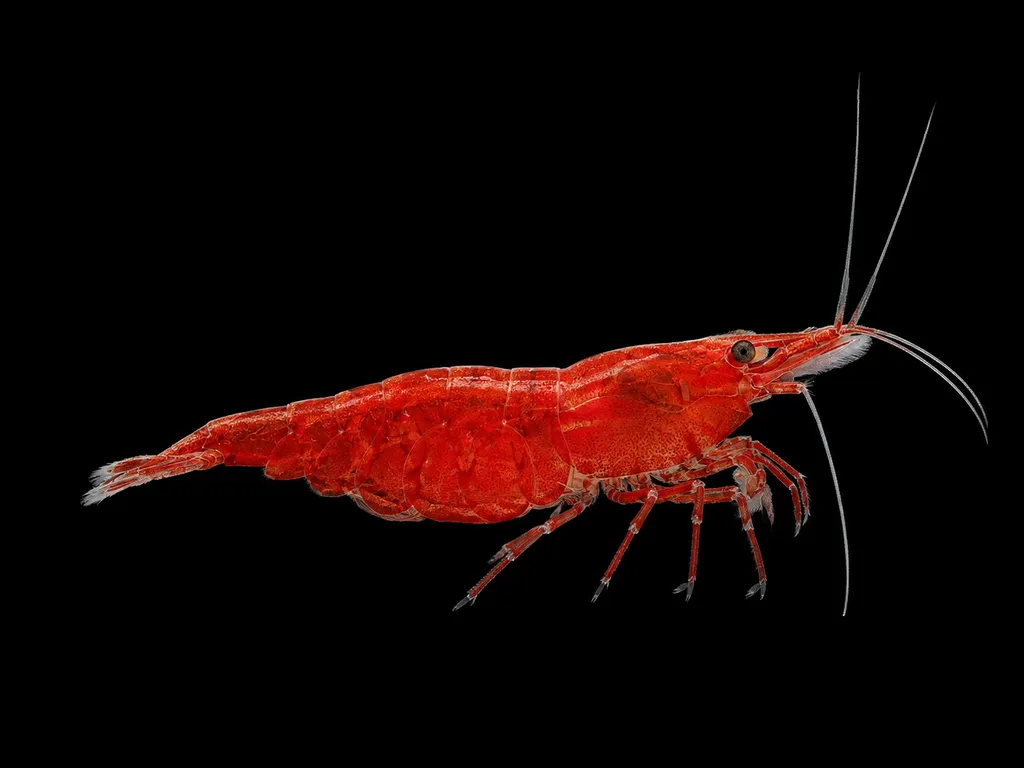
Neocaridina shrimp
Neocaridina davidi
Freshwater1.6 in (4 cm) · 5 gal (19 L)59–84°F (15–29°C)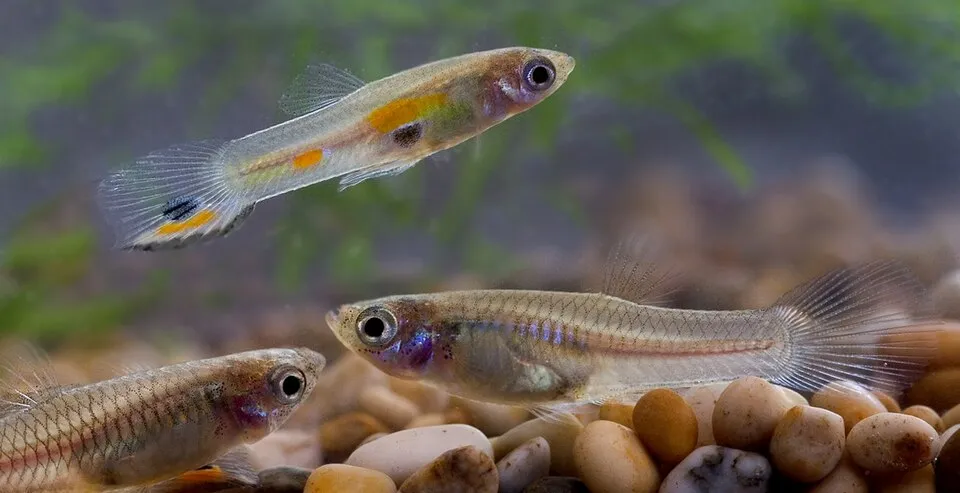
Guppy
Poecilia reticulata
FreshwaterBrackish2.4 in (6 cm) · 10 gal (38 L)64–82°F (18–28°C)
Neon tetra
Paracheirodon innesi
Freshwater1.5 in (3.8 cm) · 11 gal (40 L)70–77°F (21–25°C)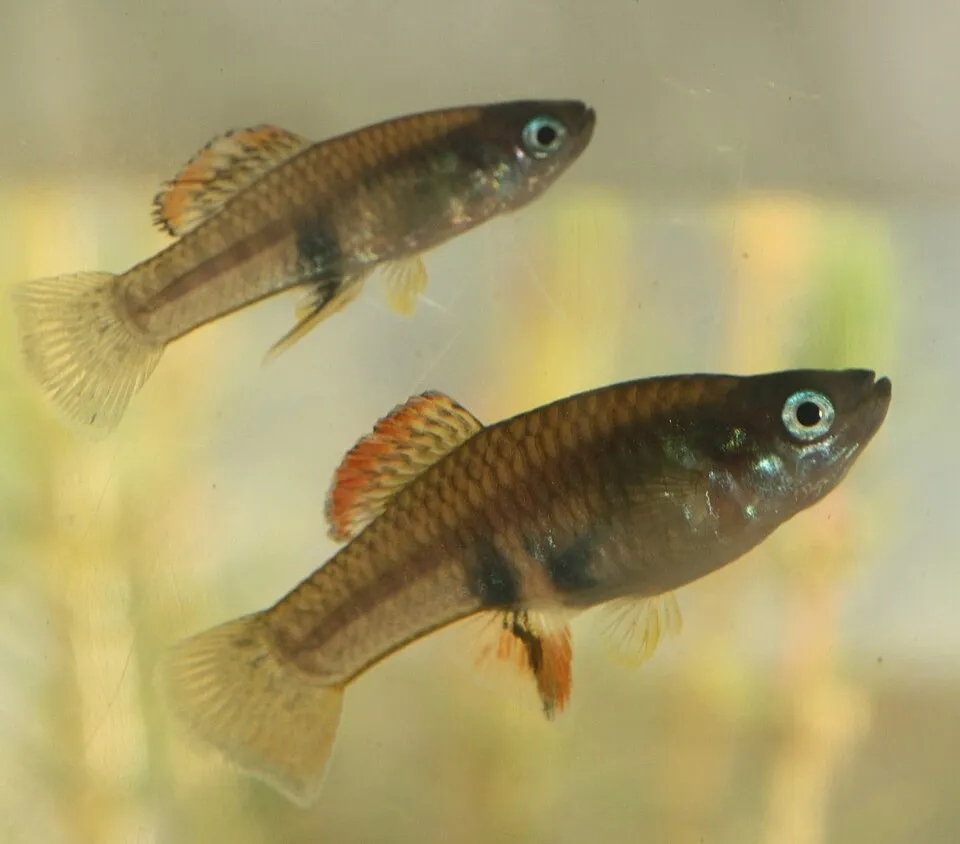
Cardinal toothcarp
Brachyrhaphis roseni
Freshwater2.4 in (6 cm) · 16 gal (60 L)72–86°F (22–30°C)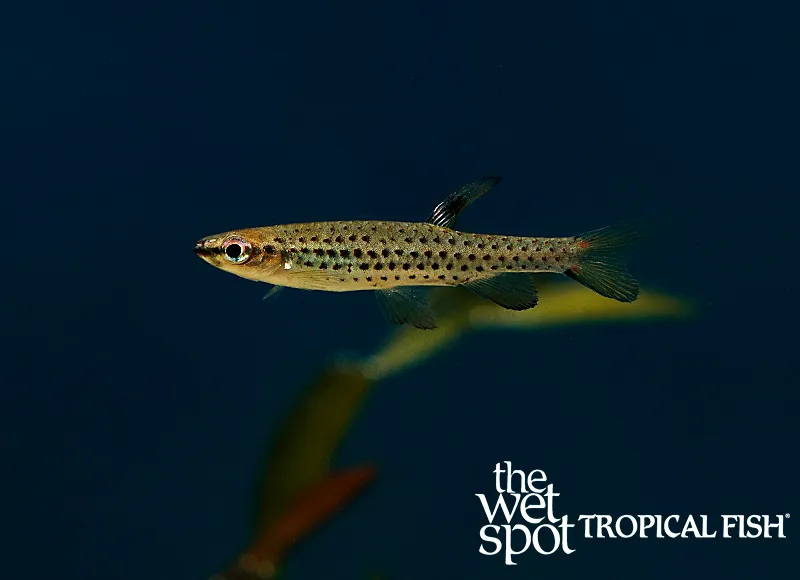
Spotted splash tetra
Copella nattereri
Freshwater2 in (5 cm) · 16 gal (60 L)75–82°F (24–28°C)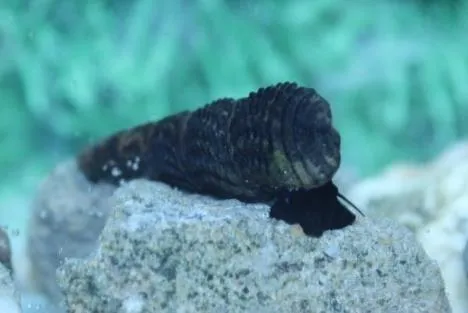
White spotted rabbit snail
Tylomelania towutica
Freshwater4.3 in (11 cm) · 16 gal (60 L)75–84°F (24–29°C)
Common questions
What size tank does a Loreto cory need?
A Loreto cory needs at least 16 gal (60 L). It spends most of its time in the bottom.
What temperature and pH does a Loreto cory need?
A Loreto cory is comfortable at 72–77°F (22–25°C) with a pH of 6.0–7.2.
What does a Loreto cory eat?
A Loreto cory eats sinking pellets and small frozen foods such as bloodworm and daphnia.
How big does a Loreto cory get?
An adult Loreto cory reaches about 2 in (5 cm).
Does a Loreto cory need a group?
Yes. A Loreto cory is a shoaling species and should be kept in a group, not singly.
How can you tell a male Loreto cory from a female?
Males have a tall, sail like dorsal fin with a long leading spine.
Related species
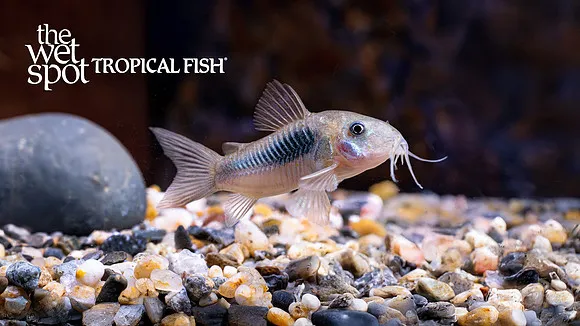 2 in (5 cm)15 gal (55 L)70–79°F (21–26°C)
Blackstripe cory
Hoplisoma bondi
2 in (5 cm) · 15 gal (55 L)
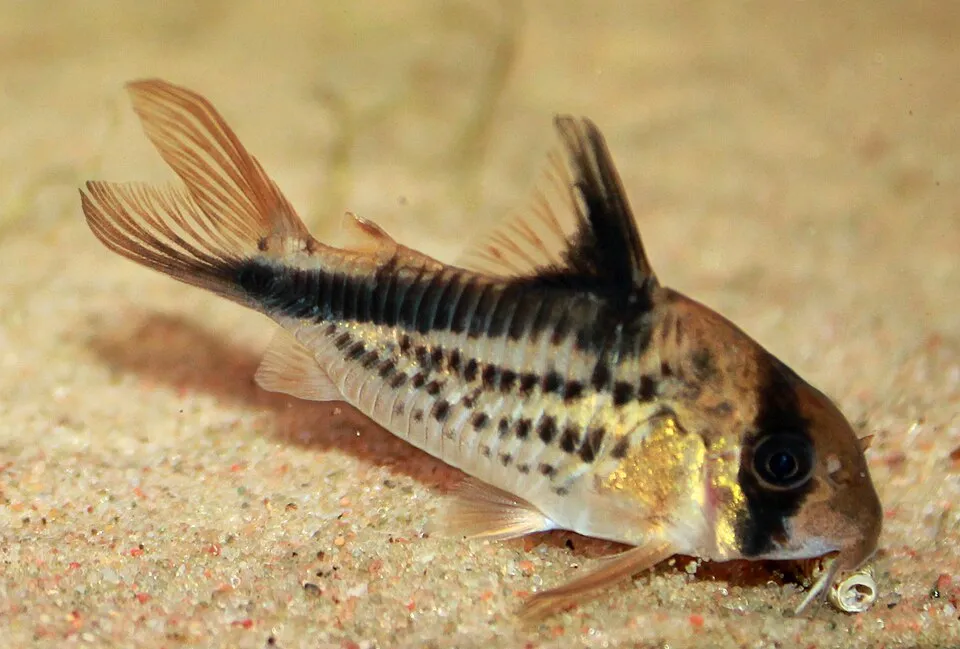 2 in (5 cm)16 gal (60 L)70–75°F (21–24°C)
Dirty bandit cory
Hoplisoma loxozonum
2 in (5 cm) · 16 gal (60 L)
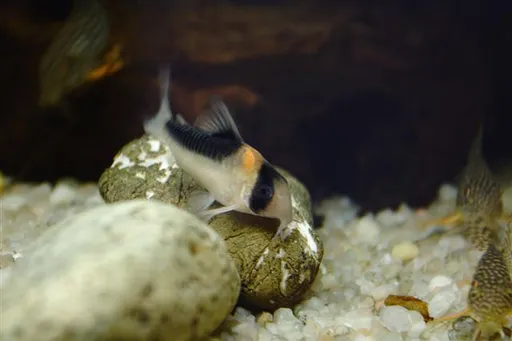 2 in (5 cm)20 gal (75 L)72–79°F (22–26°C)
Duplicate cory
Hoplisoma duplicareum
2 in (5 cm) · 20 gal (75 L)
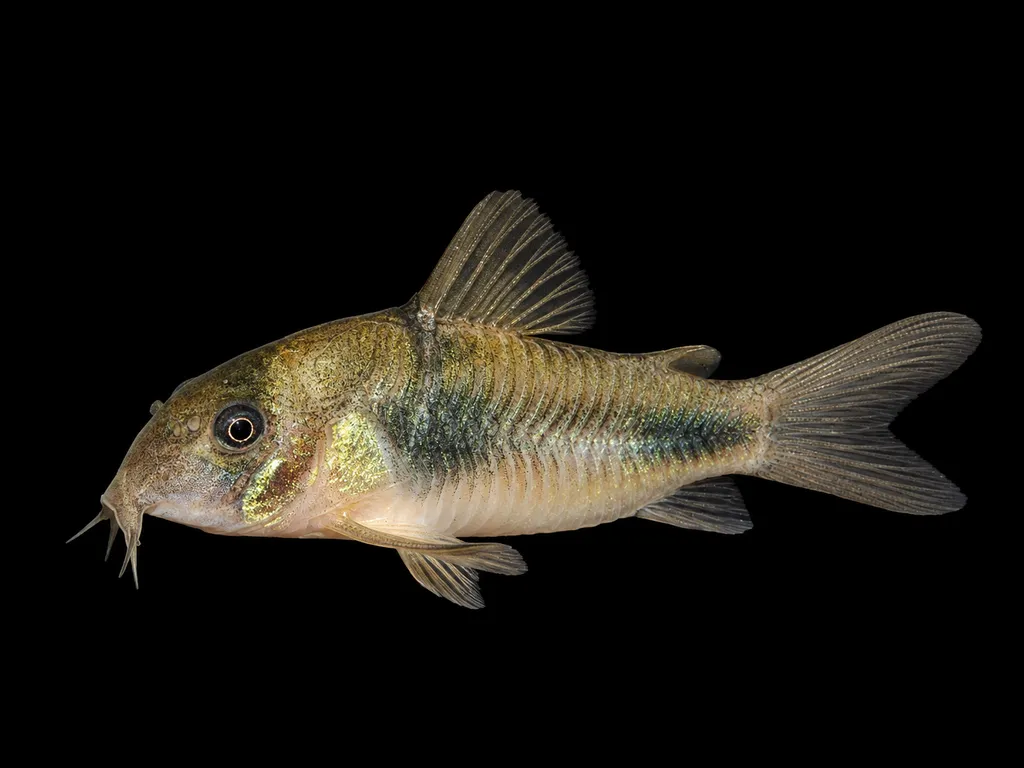 2 in (5 cm)16 gal (60 L)66–77°F (19–25°C)
Ehrhardt's cory
Hoplisoma ehrhardti
2 in (5 cm) · 16 gal (60 L)
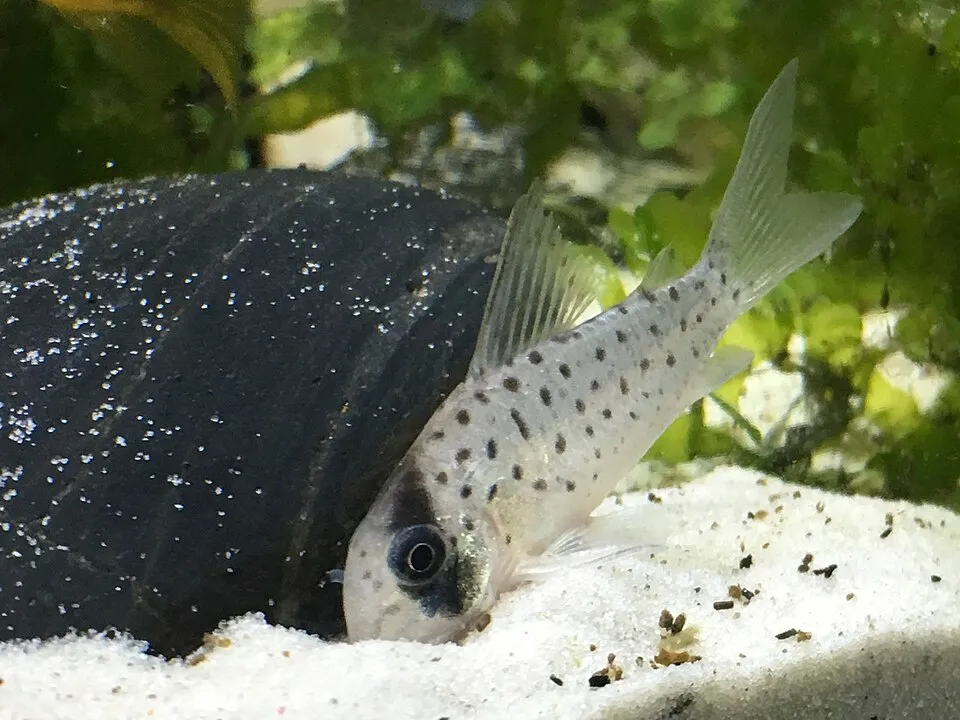 2 in (5 cm)16 gal (60 L)70–81°F (21–27°C)
Fairy cory
Hoplisoma atropersonatum
2 in (5 cm) · 16 gal (60 L)
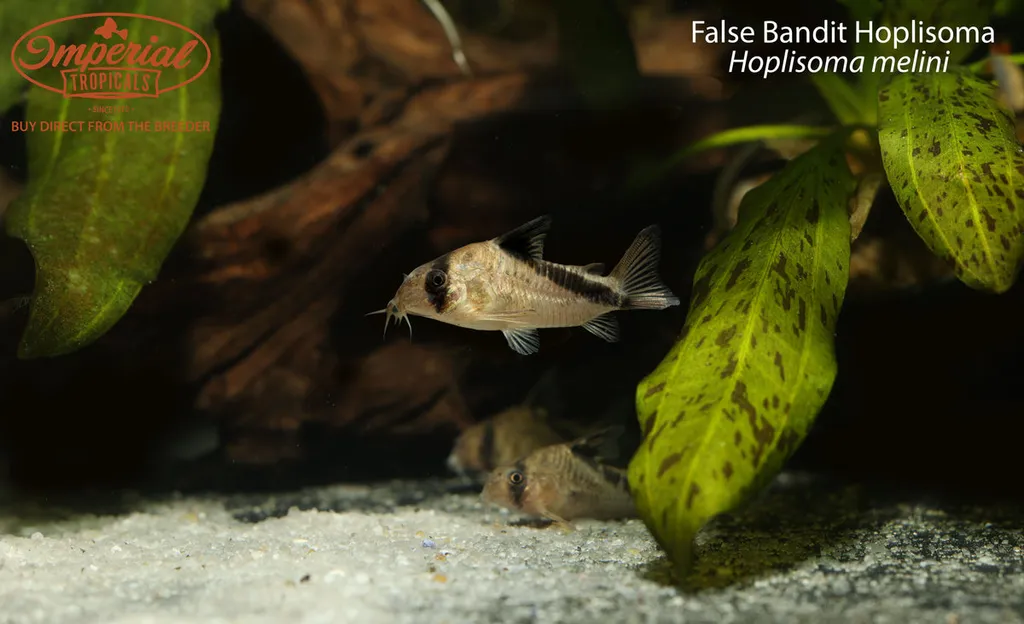 2 in (5 cm)16 gal (60 L)72–79°F (22–26°C)
False bandit cory
Hoplisoma melini
2 in (5 cm) · 16 gal (60 L)