Ehrhardt's cory
Hoplisoma ehrhardti
Also known as Corydoras ehrhardti
FreshwaterFish
Care at a glance
- Temperature
- 66–77°F
- 19–25°C
- pH
- 6.0–7.5
- Adult size
- 2 in
- 5 cm
- Minimum tank
- 16 gal
- 60 L
- Temperament
- Peaceful
- Social behavior
- Shoaling
- Swim level
- Bottom
- Diet
- Omnivore
- Difficulty
- Easy
- Breeding
- Hard
- Rarity
- Rare
- Family
- Callichthyidae
- Origin
- Brazil
Overview
Ehrhardt's cory is a hardy, peaceful shoaling catfish for the bottom of a community tank. Its adaptability makes it a forgiving choice and easy to keep.
Did you know
Unlike the many warmth-loving cories of the Amazon lowlands, Ehrhardt's cory stays healthy at room temperatures. Those temperatures would be too chilly for its tropical cousins.
Caring for the Ehrhardt's cory
Keep Ehrhardt's cories in a group of six or more, spread across the bottom of a tank of 16 gal (60 L) or larger. Provide a soft sand bed, driftwood and shaded planting.
They handle cooler water than most tropical cories, from 66 to 77°F (19 to 25°C), so they fit an unheated or lightly heated room tank. Keep the pH at 6.0 to 7.5 and the water clean and gently moving. Feed sinking pellets, frozen bloodworm and algae wafers, and make sure the food reaches the substrate.
Ehrhardt's cories are peaceful and sift the sand for food throughout the day. They mix easily with small, calm community fish. They have been spawned in captivity, but breeding them is challenging. A cool water change works best to trigger a group into breeding.
Good to know
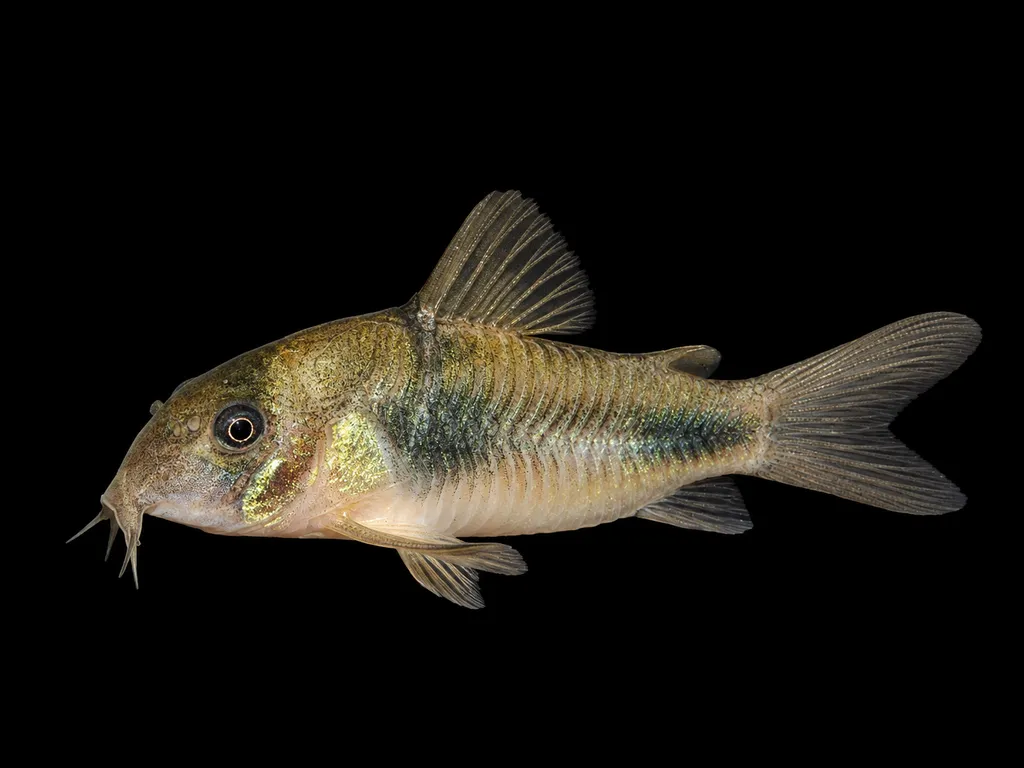
Ehrhardt's cory is an armored catfish of the family Callichthyidae. It wears a dark shoulder patch and an eye band over a pale, faintly spotted body. The species is listed as Hoplisoma ehrhardti and also known as Corydoras ehrhardti.
In the wild
Ehrhardt's cory comes from cooler coastal river systems of southeastern Brazil, around Santa Catarina. It lives over sand and among wood and leaves.
Weekly picks
Tank mates
The Ehrhardt's cory is a peaceful, shoaling species that keeps to the bottom. These picks share a community profile with it, are safe together in both directions, and overlap on water type, temperature and pH.
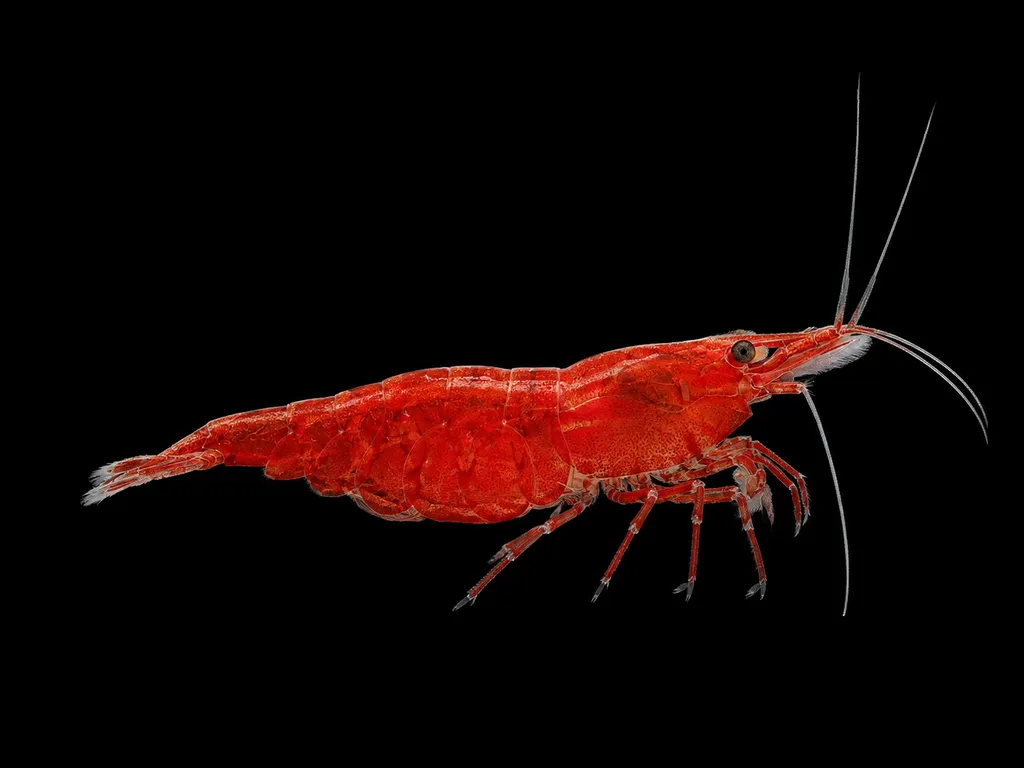
Neocaridina shrimp
Neocaridina davidi
Freshwater1.6 in (4 cm) · 5 gal (19 L)59–84°F (15–29°C)
Guppy
Poecilia reticulata
FreshwaterBrackish2.4 in (6 cm) · 10 gal (38 L)64–82°F (18–28°C)
Neon tetra
Paracheirodon innesi
Freshwater1.5 in (3.8 cm) · 11 gal (40 L)70–77°F (21–25°C)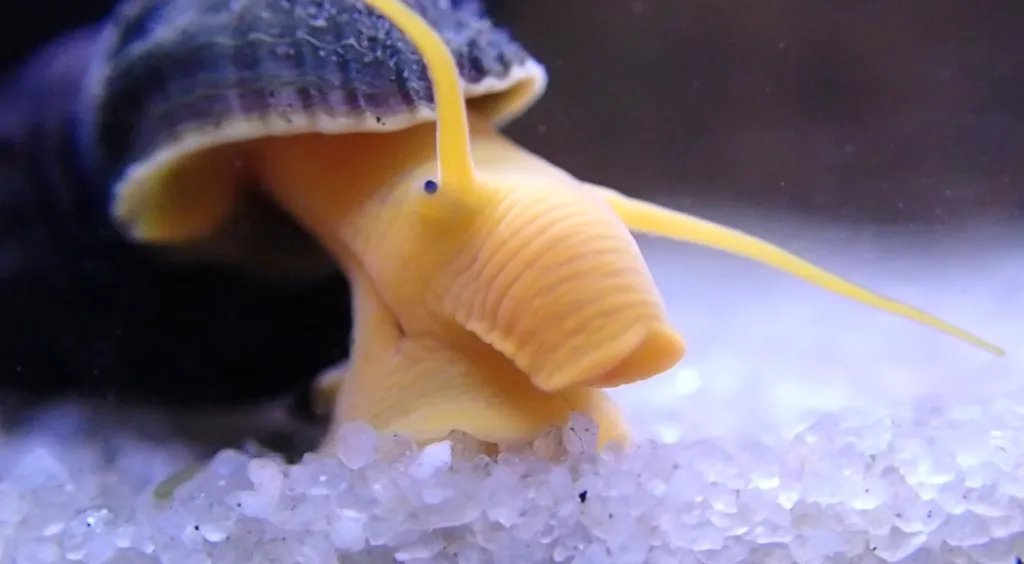
Gold rabbit snail
Tylomelania gemmifera
Freshwater2.8 in (7 cm) · 16 gal (60 L)75–82°F (24–28°C)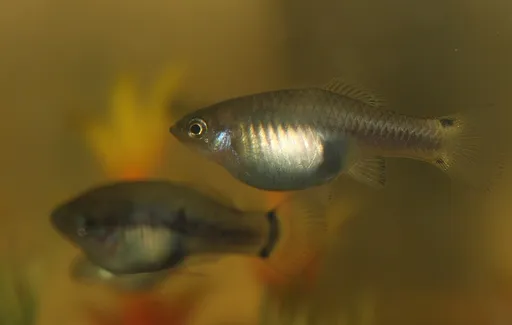
Spiketail platy
Xiphophorus xiphidium
Freshwater2 in (5 cm) · 16 gal (60 L)68–79°F (20–26°C)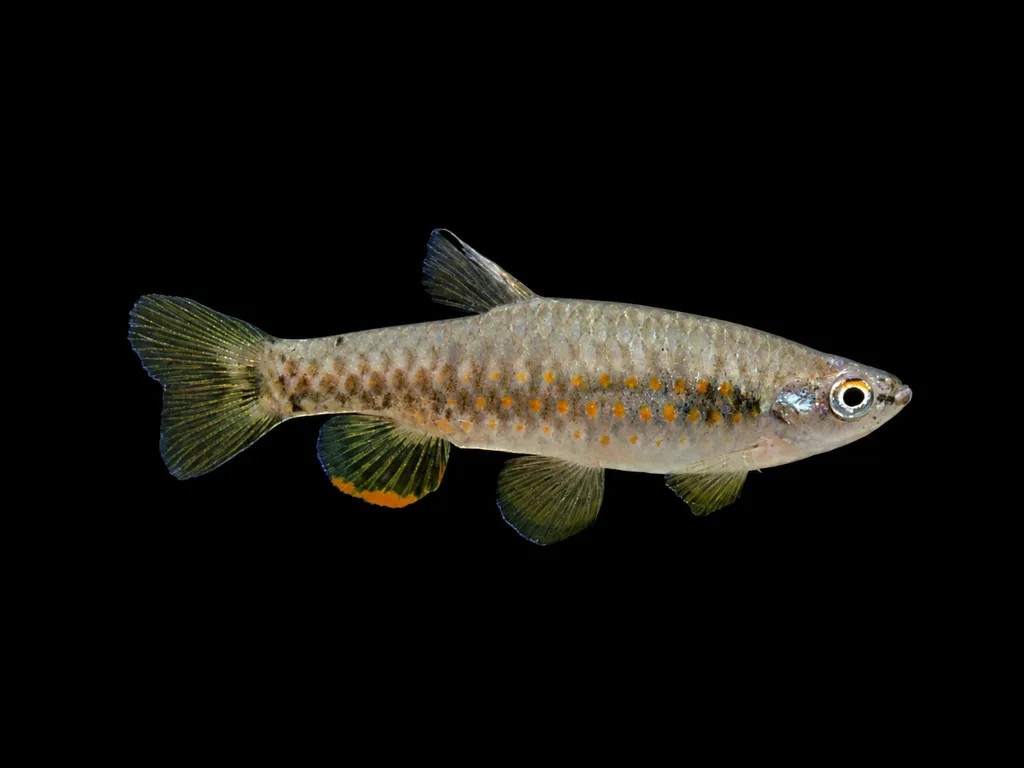
Fanning characin
Pyrrhulina rachoviana
Freshwater2 in (5 cm) · 16 gal (60 L)68–79°F (20–26°C)
Common questions
What size tank does an Ehrhardt's cory need?
An Ehrhardt's cory needs at least 16 gal (60 L). It spends most of its time in the bottom.
What temperature and pH does an Ehrhardt's cory need?
An Ehrhardt's cory is comfortable at 66–77°F (19–25°C) with a pH of 6.0–7.5.
What does an Ehrhardt's cory eat?
An Ehrhardt's cory eats sinking pellets, frozen bloodworm and algae wafers. Make sure the food reaches the substrate, where it feeds.
How big does an Ehrhardt's cory get?
An adult Ehrhardt's cory reaches about 2 in (5 cm).
Does an Ehrhardt's cory need a group?
Yes. An Ehrhardt's cory is a shoaling species and should be kept in a group, not singly.
How does an Ehrhardt's cory breed?
Ehrhardt's cories have been spawned in captivity, but they are challenging to breed. A cool water change works best to trigger a group into spawning.
Related species
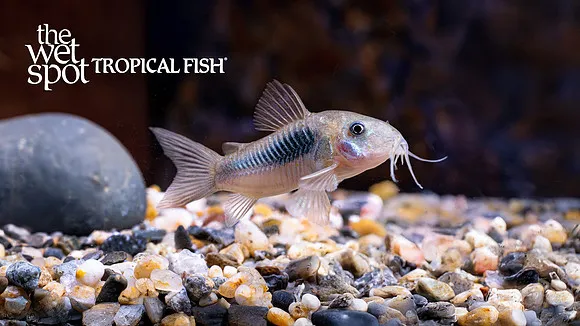 2 in (5 cm)15 gal (55 L)70–79°F (21–26°C)
Blackstripe cory
Hoplisoma bondi
2 in (5 cm) · 15 gal (55 L)
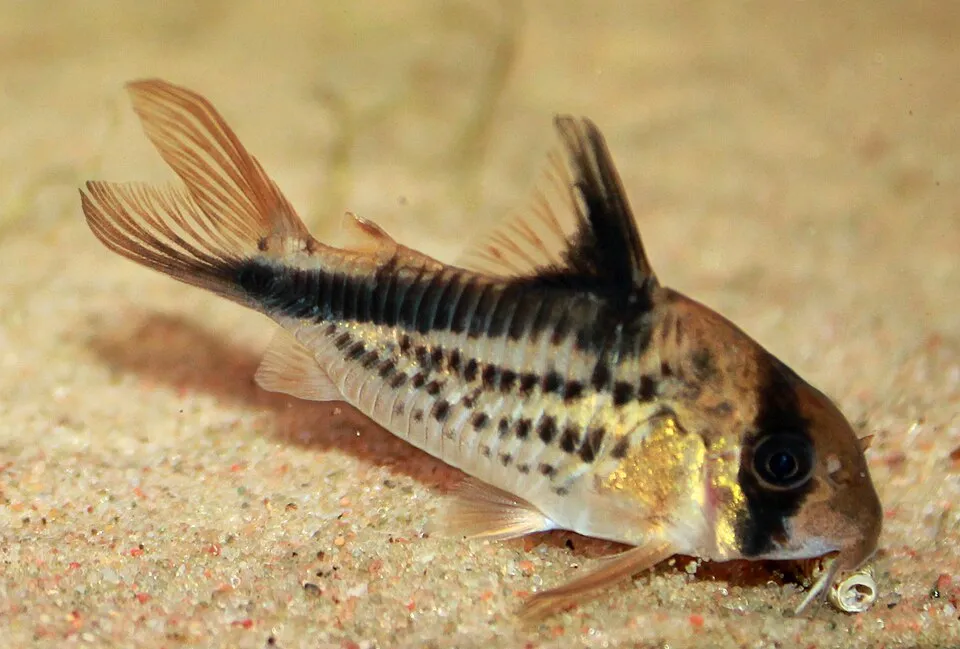 2 in (5 cm)16 gal (60 L)70–75°F (21–24°C)
Dirty bandit cory
Hoplisoma loxozonum
2 in (5 cm) · 16 gal (60 L)
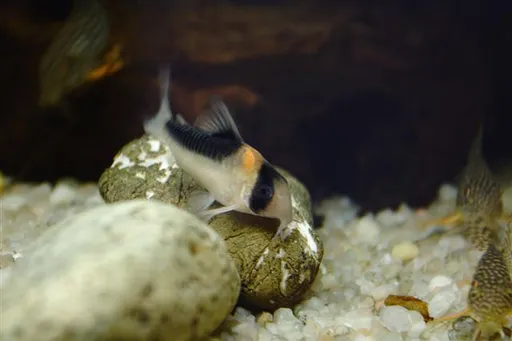 2 in (5 cm)20 gal (75 L)72–79°F (22–26°C)
Duplicate cory
Hoplisoma duplicareum
2 in (5 cm) · 20 gal (75 L)
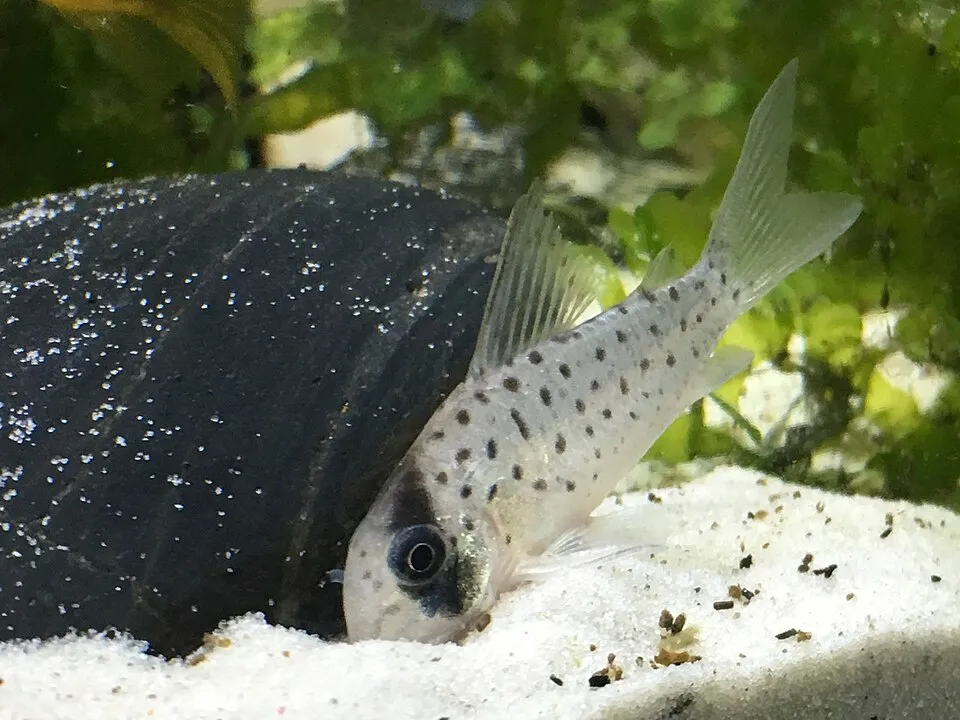 2 in (5 cm)16 gal (60 L)70–81°F (21–27°C)
Fairy cory
Hoplisoma atropersonatum
2 in (5 cm) · 16 gal (60 L)
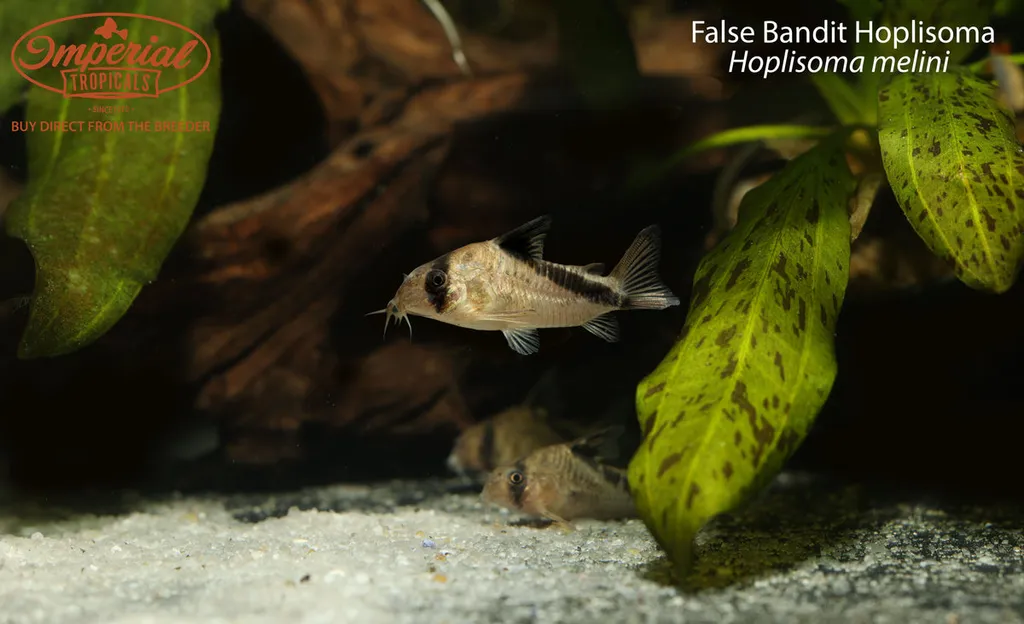 2 in (5 cm)16 gal (60 L)72–79°F (22–26°C)
False bandit cory
Hoplisoma melini
2 in (5 cm) · 16 gal (60 L)
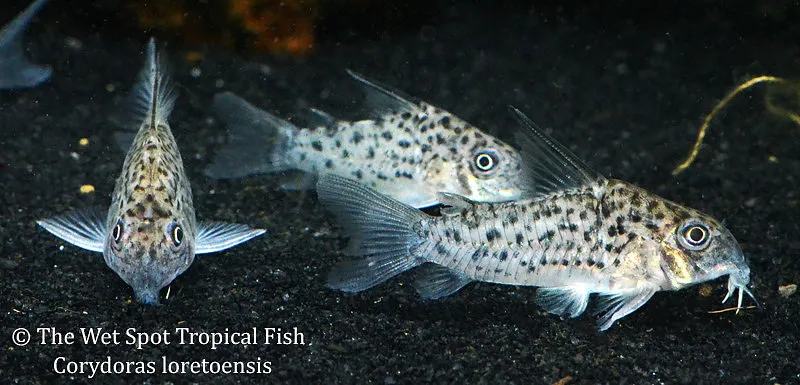 2 in (5 cm)16 gal (60 L)72–77°F (22–25°C)
Loreto cory
Hoplisoma loretoense
2 in (5 cm) · 16 gal (60 L)