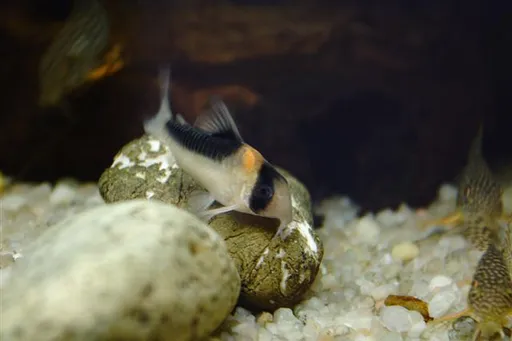
Duplicate cory
Hoplisoma duplicareum
Also known as Corydoras duplicareus, False adolfo cory
FreshwaterFish
Care at a glance
- Temperature
- 72–79°F
- 22–26°C
- pH
- 6.0–7.2
- Adult size
- 2 in
- 5 cm
- Minimum tank
- 20 gal
- 75 L
- Temperament
- Peaceful
- Social behavior
- Shoaling
- Swim level
- Bottom
- Difficulty
- Medium
- Breeding
- Medium
- Rarity
- Common
- Family
- Callichthyidae
- Origin
- Upper Rio Negro system, Brazil
Overview
Keep them in a school of at least six, more if you have room, in a tank of 75 liters or larger. They are peaceful bottom dwellers that forage over the sand all day, and they settle and color up better in a group. Hold the water from 22 to 26 C with a pH of 6 to 7.2, soft and on the acidic side, ideally a blackwater setup with leaf litter. Feed sinking pellets, frozen bloodworms, and the odd algae wafer, and pick small, calm tankmates. The pectoral fin spines can give a painful sting, so net and handle them with care.
In the wild
Duplicate corys come from the upper Rio Negro system in Brazil, soft blackwater streams stained dark by tannins and littered with fallen leaves over a sandy bottom. To match that, give them a soft sand substrate, some leaf litter, driftwood, and dim light over soft, slightly acidic water. Run the tank warm, from 22 to 26 C, with a pH between 6 and 7.2. The sand really matters here, since sharp gravel scrapes and infects their barbels.
Good to know
This is a cory catfish in the family Callichthyidae, staying small at around 5 cm. Breeding is medium difficulty, with the fish laying sticky eggs on glass and plants in the T-position cories are known for, and the parents give no care after spawning. A healthy adult can live several years. Most fish in the trade are wild-caught, though tank-bred ones turn up.
Did you know
This fish is easy to mix up with Corydoras adolfoi, and the two get sold under each other's names all the time. The tell is the black shoulder patch, which sits wider and heavier on the duplicate cory, along with a thicker black band running down the back.
Weekly picks
Tank mates
Duplicate cory is a peaceful, shoaling species that keeps to the bottom. These picks share a community profile with it, are safe together in both directions, and overlap on water type, temperature and pH.
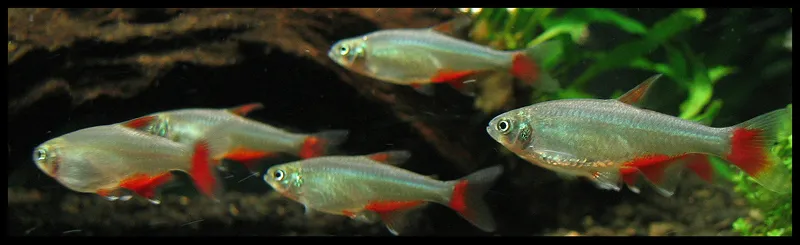
Bloodfin tetra
Aphyocharax anisitsi
Freshwater2.2 in (5.5 cm) · 20 gal (75 L)72–82°F (22–28°C)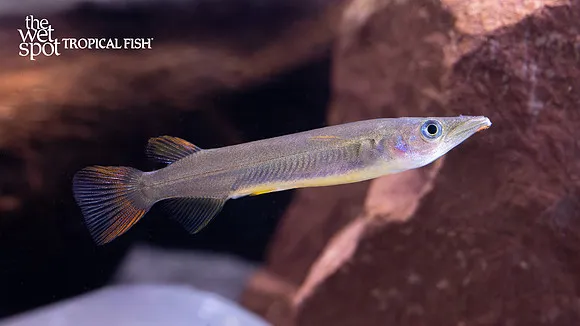
Rex halfbeak
Nomorhamphus rex
Freshwater2.2 in (5.5 cm) · 20 gal (75 L)72–79°F (22–26°C)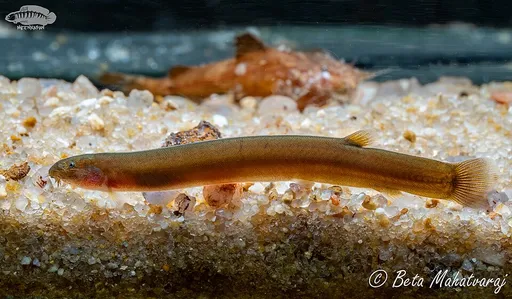
Cinnamon loach
Pangio pangia
Freshwater2.4 in (6 cm) · 20 gal (75 L)72–81°F (22–27°C)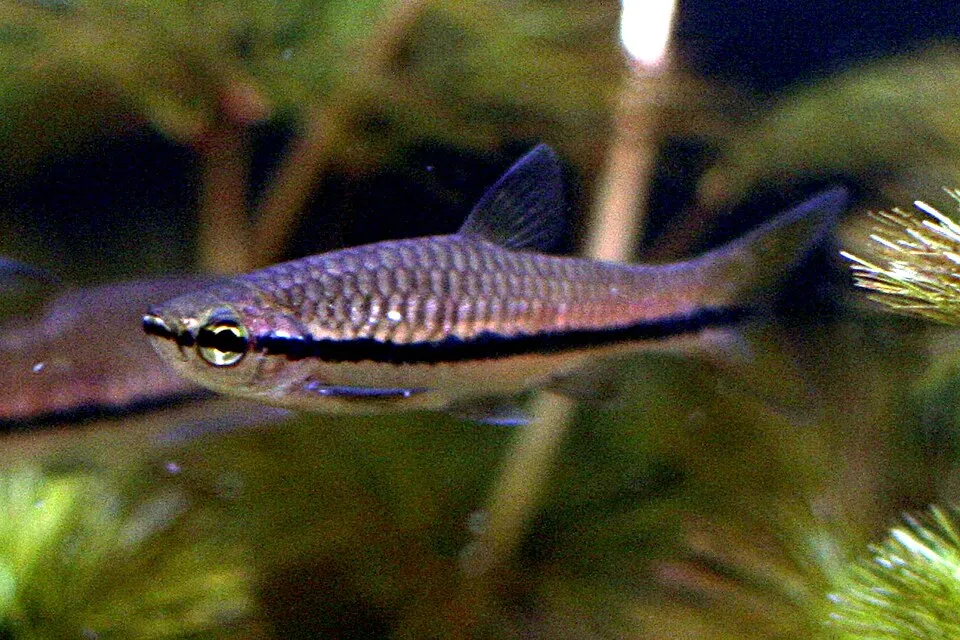
Brilliant rasbora
Rasbora einthovenii
Freshwater3.5 in (9 cm) · 20 gal (75 L)72–82°F (22–28°C)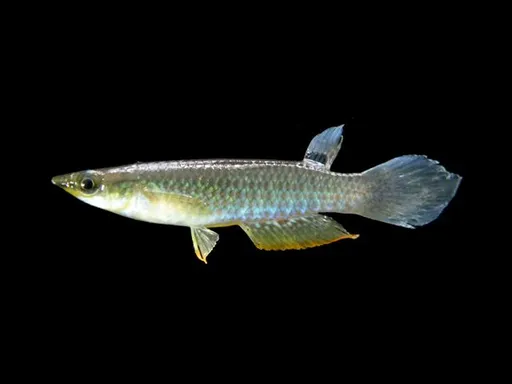
Blue panchax
Aplocheilus panchax
Freshwater3.5 in (9 cm) · 20 gal (75 L)72–82°F (22–28°C)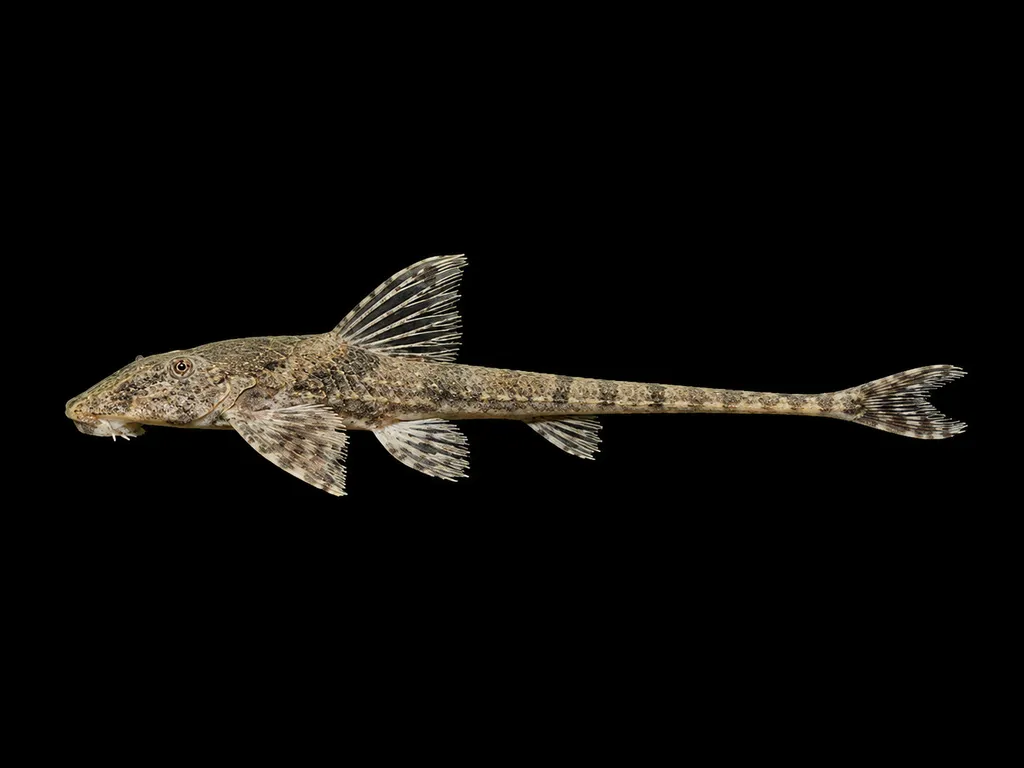
Common whiptail
Rineloricaria parva
Freshwater4.7 in (12 cm) · 20 gal (75 L)68–79°F (20–26°C)
Common questions
What size tank does a Duplicate cory need?
A Duplicate cory needs at least 20 gal (75 L). It spends most of its time in the bottom.
What temperature and pH does a Duplicate cory need?
A Duplicate cory is comfortable at 72–79°F (22–26°C) with a pH of 6.0–7.2.
How big does a Duplicate cory get?
An adult Duplicate cory reaches about 2 in (5 cm).
Does a Duplicate cory need a group?
Yes. A Duplicate cory is a shoaling species and should be kept in a group, not singly.
Related species
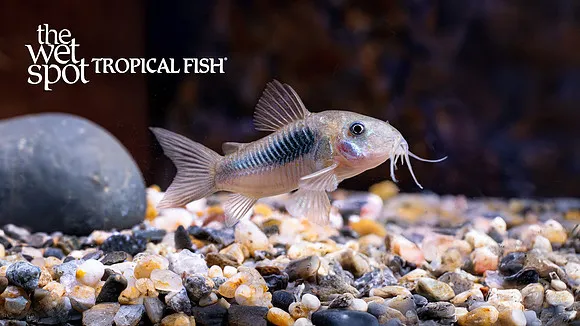 2 in (5 cm)15 gal (55 L)70–79°F (21–26°C)
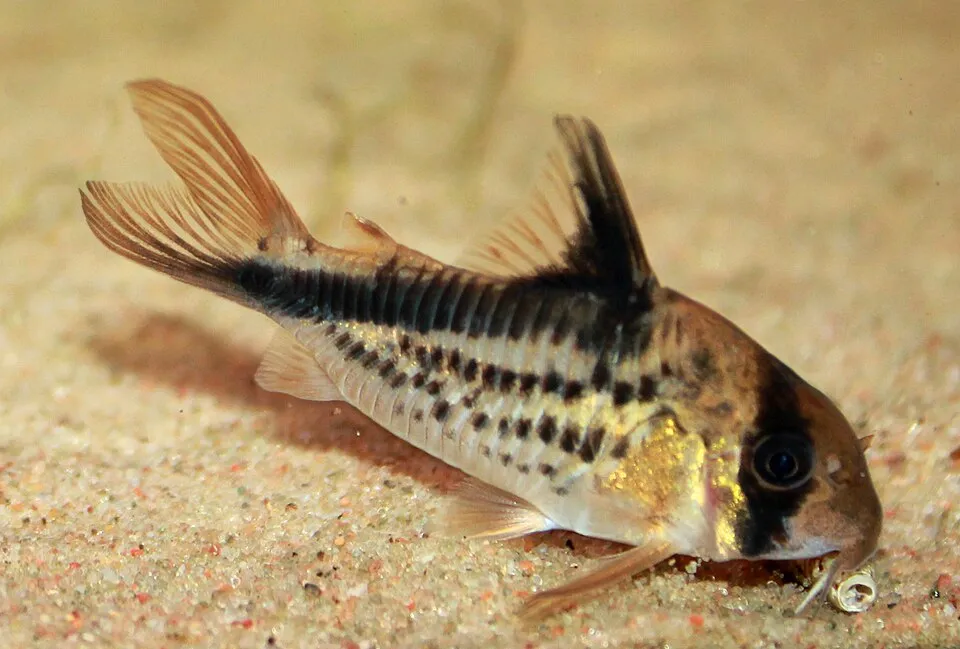
Blackstripe cory
Hoplisoma bondi
2 in (5 cm) · 15 gal (55 L)
 2 in (5 cm)16 gal (60 L)70–75°F (21–24°C)
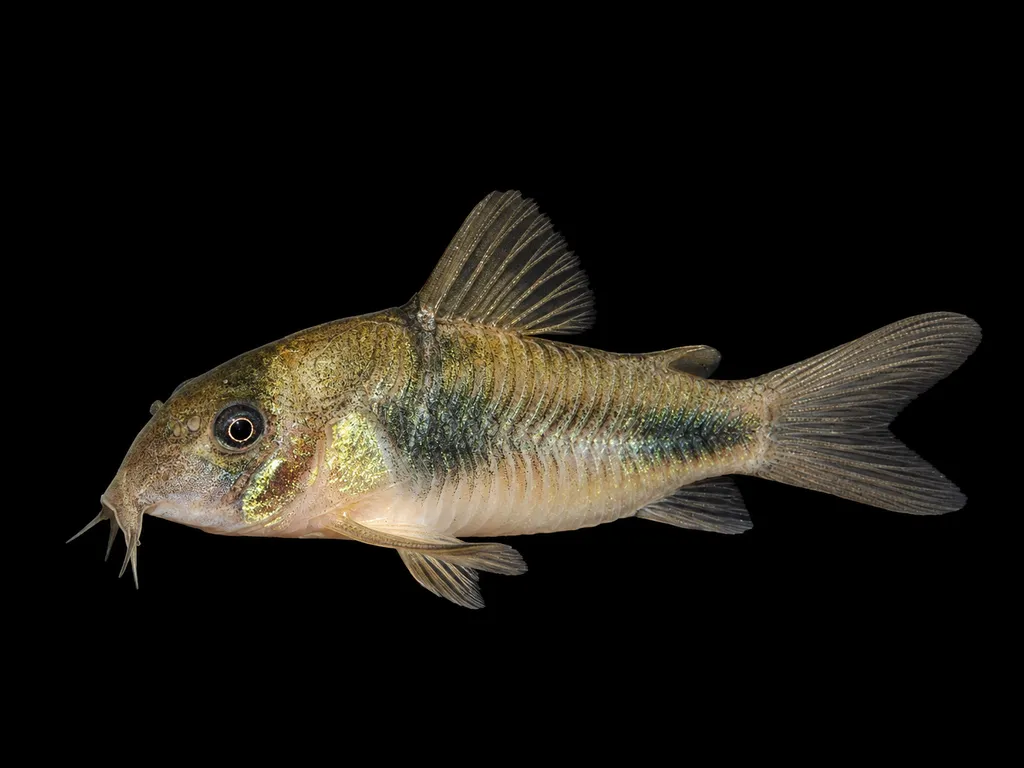
Dirty bandit cory
Hoplisoma loxozonum
2 in (5 cm) · 16 gal (60 L)
 2 in (5 cm)16 gal (60 L)66–77°F (19–25°C)
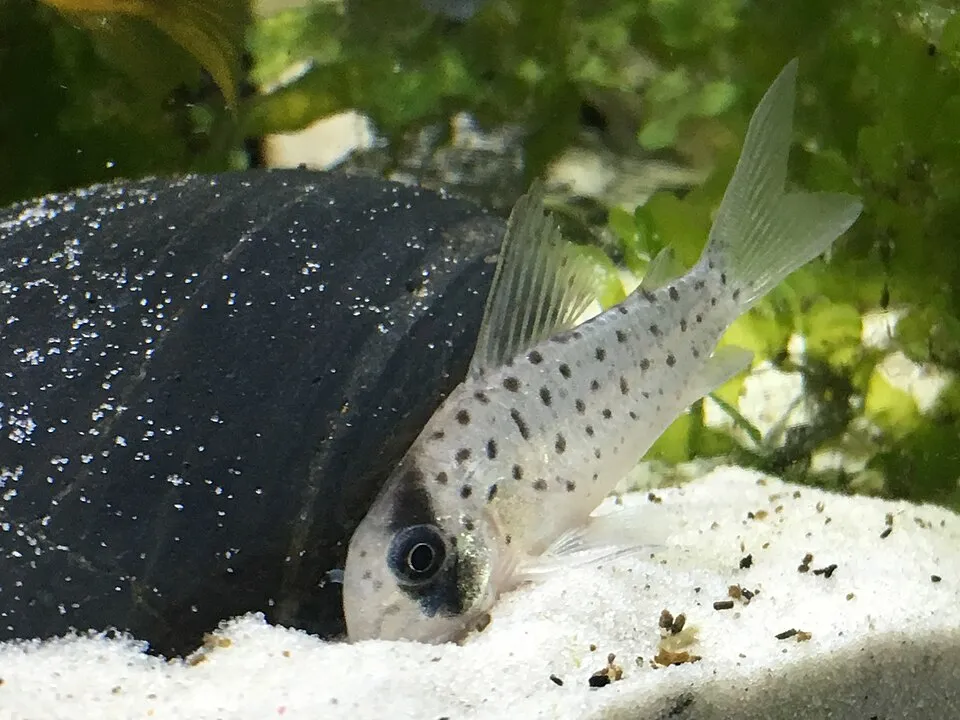
Ehrhardt's cory
Hoplisoma ehrhardti
2 in (5 cm) · 16 gal (60 L)
 2 in (5 cm)16 gal (60 L)70–81°F (21–27°C)
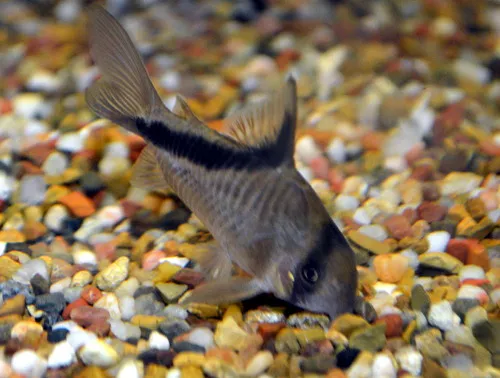
Fairy cory
Hoplisoma atropersonatum
2 in (5 cm) · 16 gal (60 L)
 2 in (5 cm)16 gal (60 L)72–79°F (22–26°C)
False bandit cory
Hoplisoma melini
2 in (5 cm) · 16 gal (60 L)
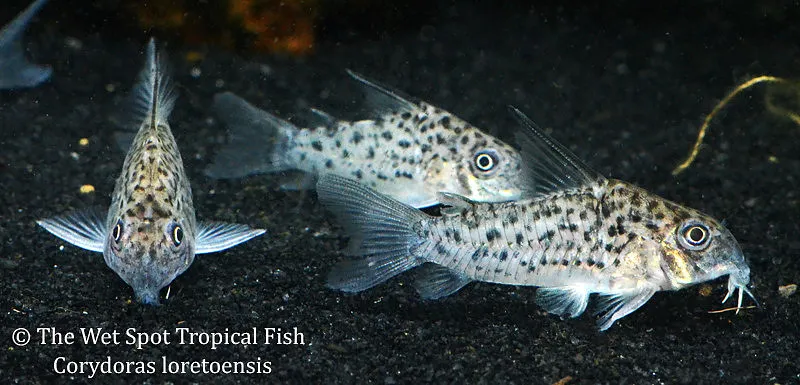 2 in (5 cm)16 gal (60 L)72–77°F (22–25°C)
Loreto cory
Hoplisoma loretoense
2 in (5 cm) · 16 gal (60 L)