Malabar danio
Devario malabaricus
FreshwaterFish
Care at a glance
- Temperature
- 64–77°F
- 18–25°C
- pH
- 6.0–7.5
- Adult size
- 5.1 in
- 13 cm
- Minimum tank
- 48 gal
- 180 L
- Temperament
- Mostly peaceful
- Social behavior
- Schooling
- Swim level
- Middle
- Difficulty
- Medium
- Breeding
- Medium
- Rarity
- Rare
- Family
- Cyprinidae
- Origin
- India
Overview
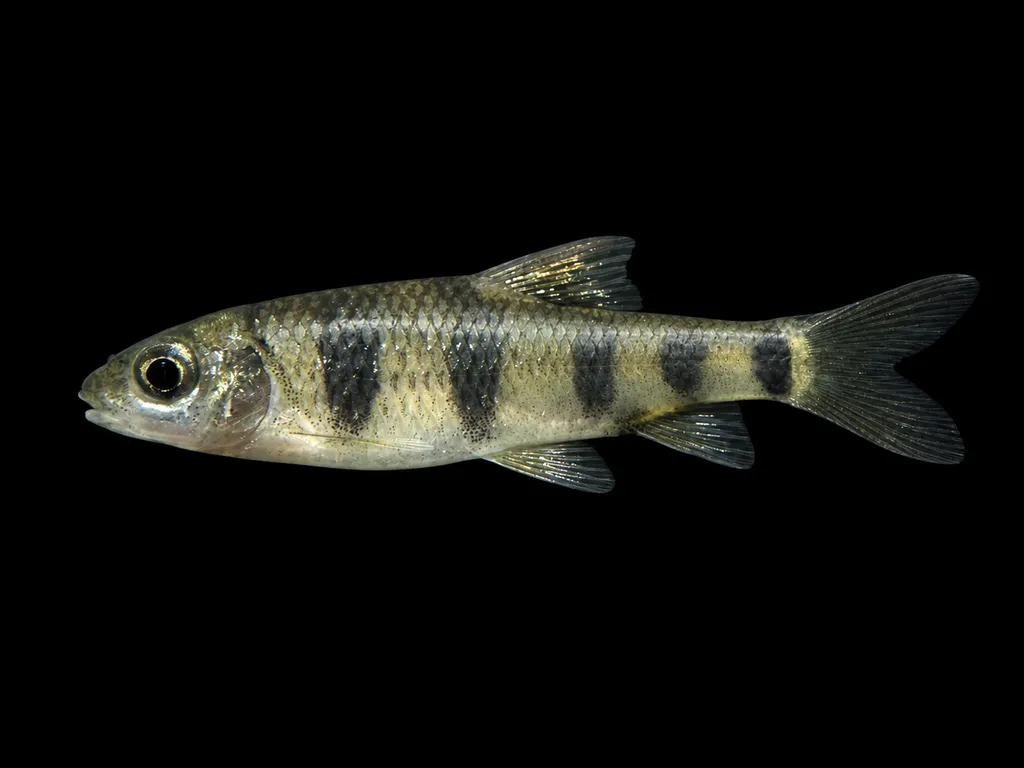
Malabar danios are fast, energetic shoaling fish that should be kept in a group of at least six, and more if space allows, as a larger shoal keeps them calm and reduces any nipping. They race through the middle and upper water and are mostly peaceful, but their speed and size can unsettle small or slow tankmates, so pair them with other active, robust community fish. They are not fussy eaters and take flake, pellets, and frozen or live foods readily. A secure lid is important because they are accomplished jumpers. A tank around 180 liters or larger gives this active danio the length it needs to swim.
In the wild
This danio is native to the hill streams and rivers of the Western Ghats in southwestern India, and its range extends into Sri Lanka, where it lives in clear, flowing, well oxygenated water. It handles a fairly wide range of about 18–25 C and a pH of 6.0–7.5. Recreate that with a good current, a substrate of sand and rounded gravel, and water worn stones and driftwood. Plant the sides and back with hardy species and keep a long central channel open, since this fish spends its day swimming rather than hiding.
Good to know
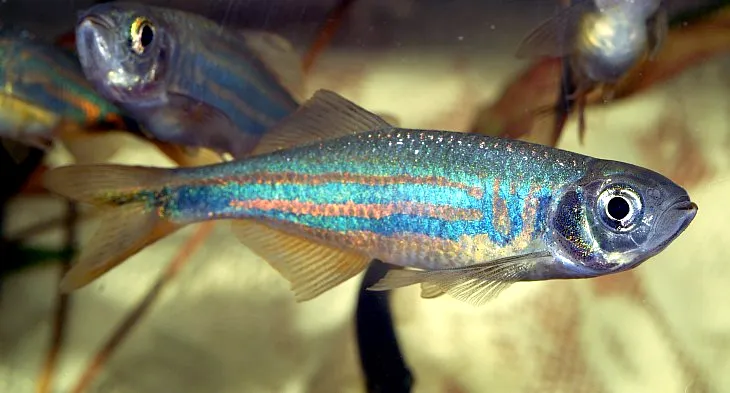
Devario malabaricus is a member of the family Cyprinidae and one of the larger danios in the hobby, reaching around 13 cm. It is a slim, silvery fish crossed by blue and gold horizontal stripes and bars along the flanks, built for constant, fast swimming. It is an egg scattering, non guarding spawner that can be bred in a dedicated tank with moderate effort. The name has long been a source of confusion, as several similar looking Devario have at times been sold under it.
Did you know
The Malabar danio takes its name from the Malabar Coast of southwestern India, the lush, river laced region where it was first found. It looks so similar to several of its relatives that the scientific name has been misapplied for years, and fish sold as this species are not always the same thing.
Weekly picks
Tank mates
Malabar danio is a mostly peaceful, schooling species that keeps to the middle. These picks share a community profile with it, are safe together in both directions, and overlap on water type, temperature and pH.
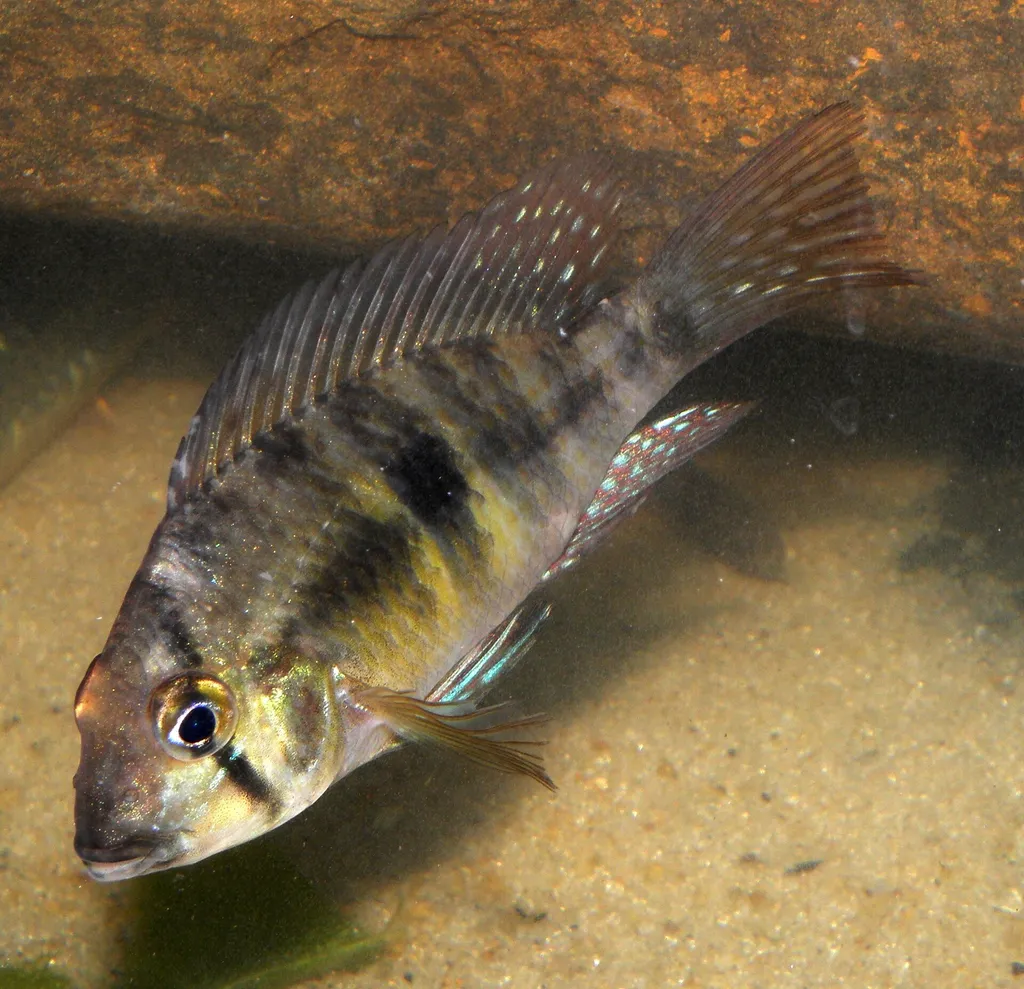
Meridionalis eartheater
Gymnogeophagus meridionalis
Freshwater4.3 in (11 cm) · 53 gal (200 L)61–79°F (16–26°C)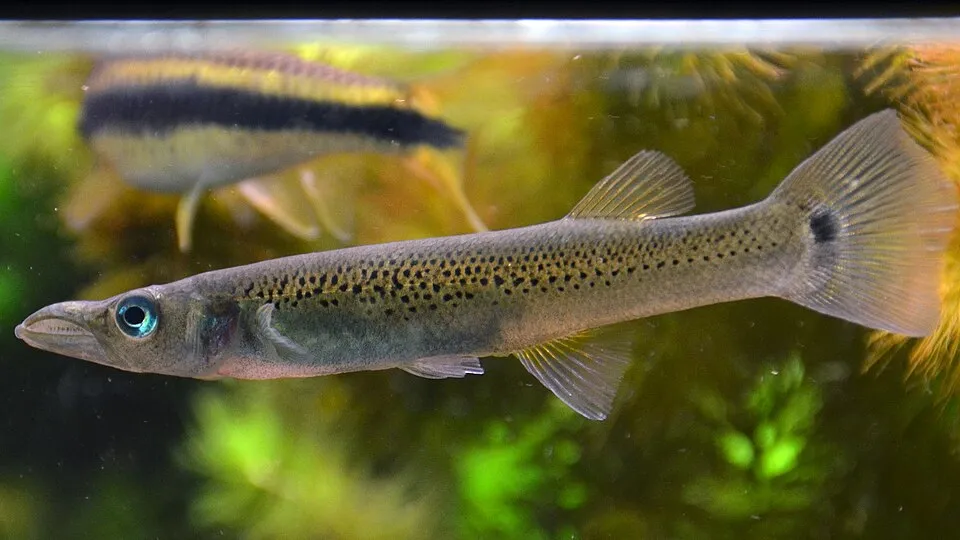
Pike topminnow
Belonesox belizanus
Freshwater7.9 in (20 cm) · 44 gal (165 L)73–82°F (23–28°C)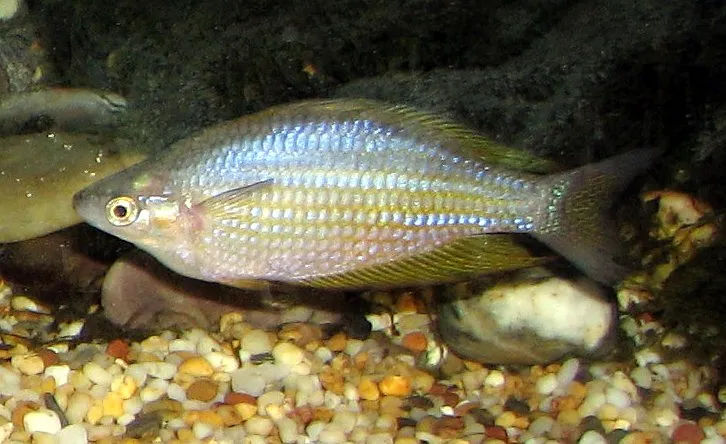
Eastern rainbowfish
Melanotaenia splendida splendida
Freshwater5.9 in (15 cm) · 50 gal (190 L)75–84°F (24–29°C)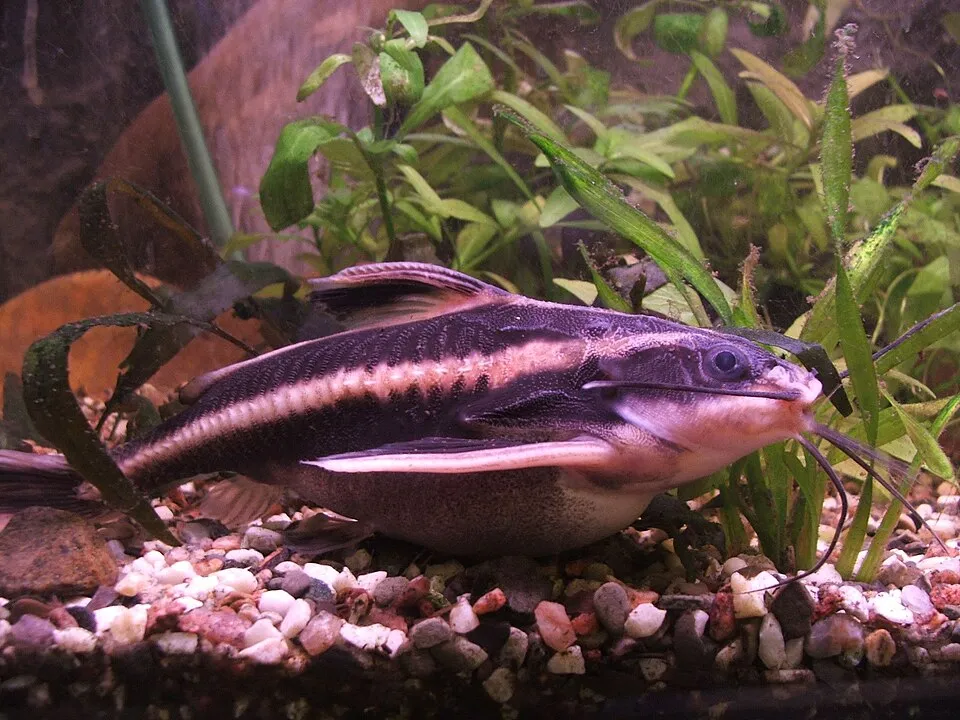
Striped raphael catfish
Platydoras armatulus
Freshwater8.7 in (22 cm) · 45 gal (170 L)75–86°F (24–30°C)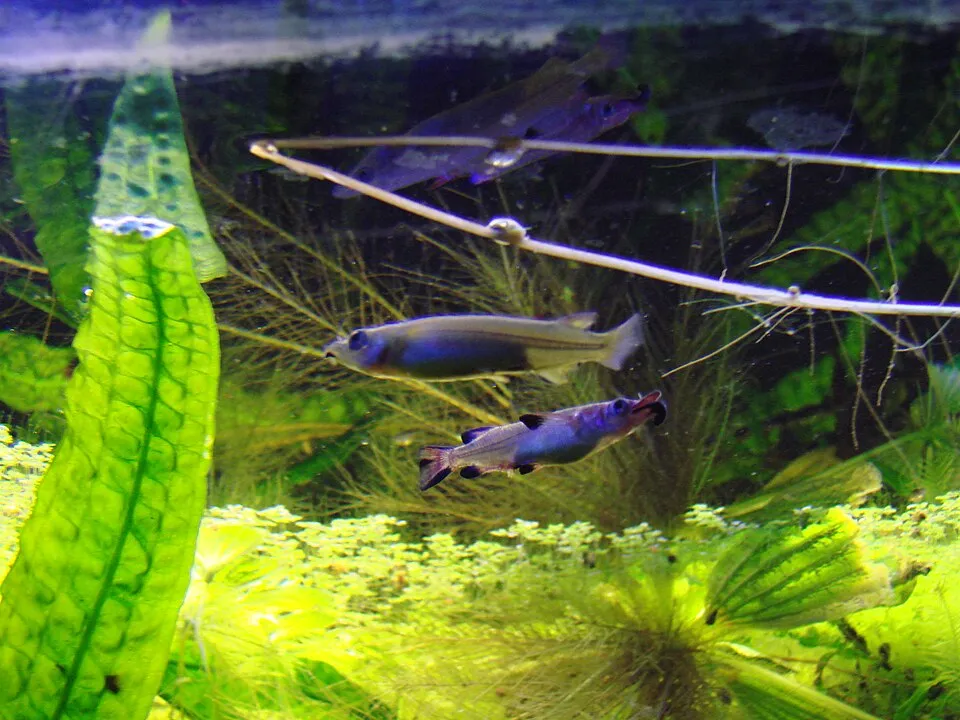
Celebes halfbeak
Nomorhamphus liemi
Freshwater3.5 in (9 cm) · 40 gal (150 L)68–77°F (20–25°C)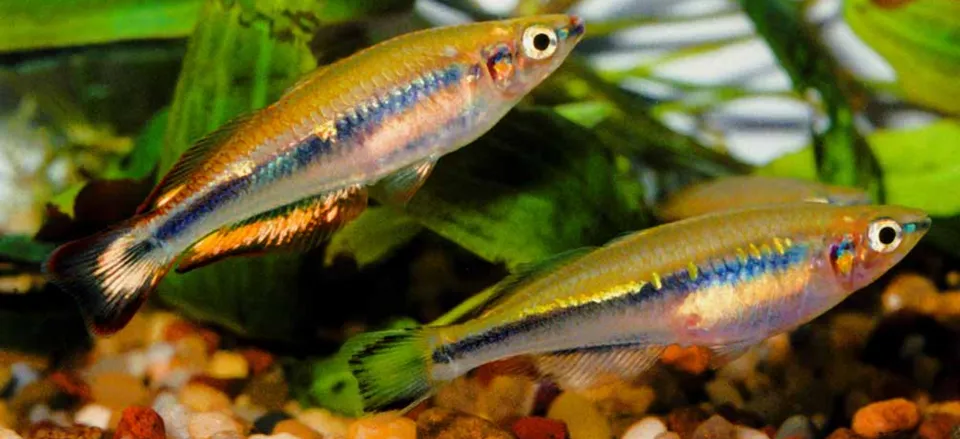
Madagascar rainbowfish
Bedotia madagascariensis
Freshwater3.3 in (8.5 cm) · 45 gal (170 L)73–90°F (23–32°C)
Common questions
What size tank does a Malabar danio need?
A Malabar danio needs at least 48 gal (180 L). It spends most of its time in the middle.
What temperature and pH does a Malabar danio need?
A Malabar danio is comfortable at 64–77°F (18–25°C) with a pH of 6.0–7.5.
How big does a Malabar danio get?
An adult Malabar danio reaches about 5.1 in (13 cm).
Does a Malabar danio need a group?
Yes. A Malabar danio is a schooling species and should be kept in a group, not singly.
Related species
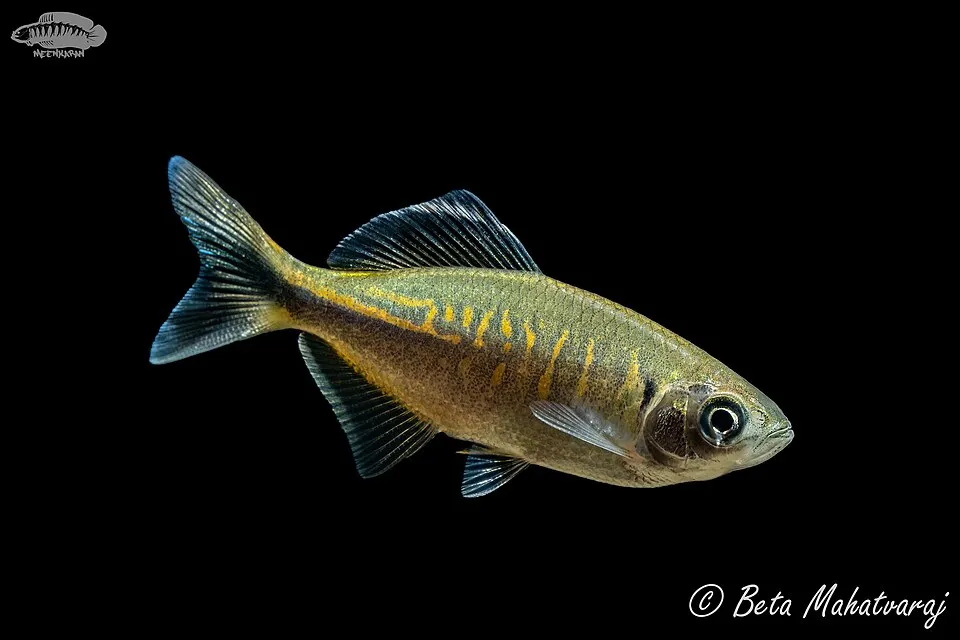 3.5 in (9 cm)34 gal (130 L)59–81°F (15–27°C)
Bengal danio
Devario devario
3.5 in (9 cm) · 34 gal (130 L)
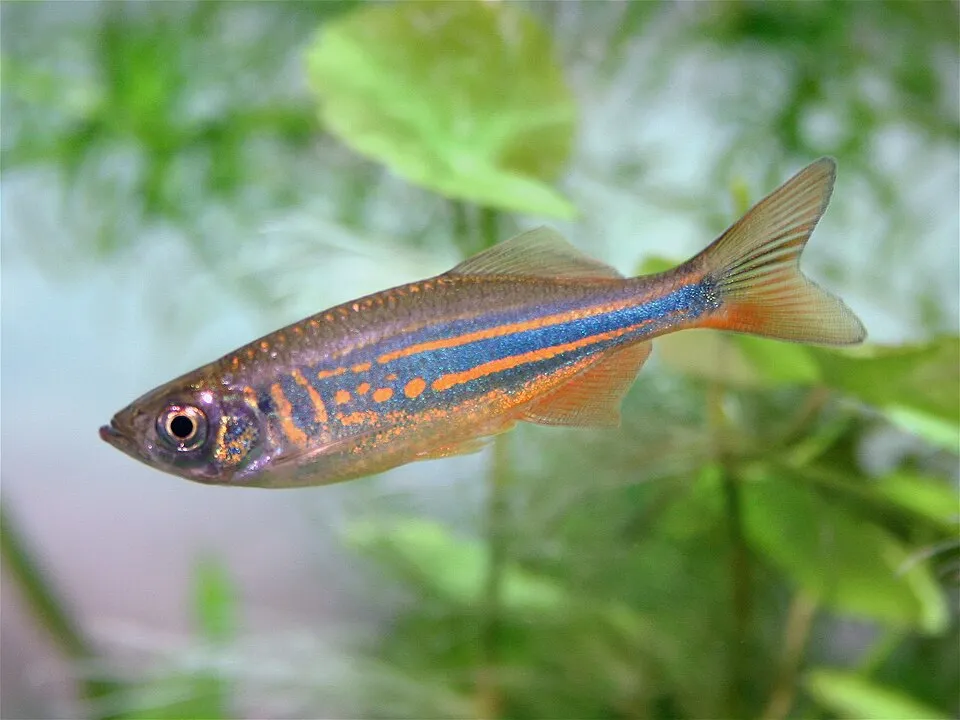 5.9 in (15 cm)50 gal (190 L)72–81°F (22–27°C)
Giant danio
Devario aequipinnatus
5.9 in (15 cm) · 50 gal (190 L)
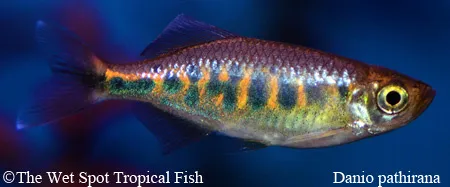 2.4 in (6 cm)24 gal (90 L)70–79°F (21–26°C)
Barred danio
Devario pathirana
2.4 in (6 cm) · 24 gal (90 L)
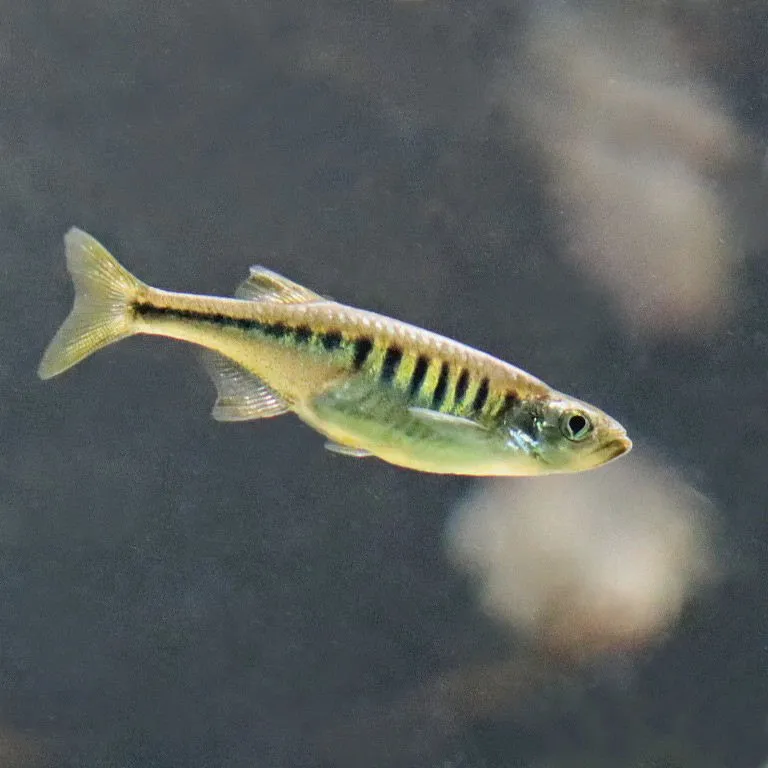 3.1 in (8 cm)24 gal (90 L)64–77°F (18–25°C)
Lake Inle danio
Devario auropurpureus
3.1 in (8 cm) · 24 gal (90 L)
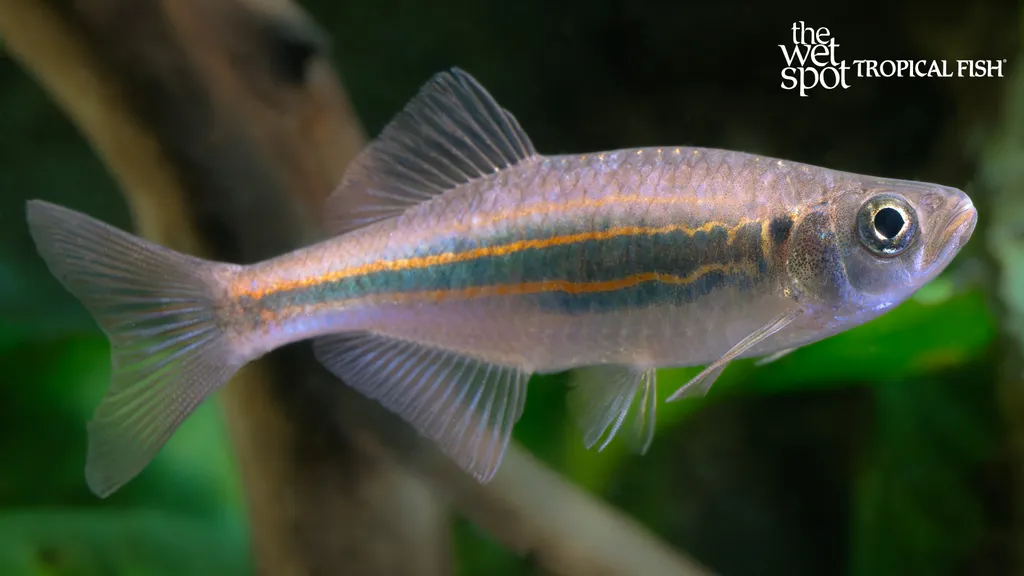 3.1 in (8 cm)30 gal (115 L)68–79°F (20–26°C)
Queen danio
Devario regina
3.1 in (8 cm) · 30 gal (115 L)
 5.1 in (13 cm)53 gal (200 L)64–79°F (18–26°C)
Beijiang barb
Acrossocheilus beijiangensis
5.1 in (13 cm) · 53 gal (200 L)