Bengal danio
Devario devario
Also known as Hatchet Body Danio
FreshwaterFish
Care at a glance
- Temperature
- 59–81°F
- 15–27°C
- pH
- 6.0–7.5
- Adult size
- 3.5 in
- 9 cm
- Minimum tank
- 34 gal
- 130 L
- Temperament
- Mostly peaceful
- Social behavior
- Schooling
- Swim level
- Middle
- Difficulty
- Medium
- Breeding
- Hard
- Rarity
- Rare
- Family
- Cyprinidae
- Origin
- India, Nepal, Bangladesh
Overview
Keep Bengal danios in a lively group of at least six, and ideally eight or more, as a bigger shoal keeps them settled and cuts down on any fin nipping. They are fast, restless swimmers that patrol the open middle water, so give them length to cruise and a secure lid because they jump. They are mostly peaceful and suit active community tanks with other robust, quick fish rather than slow or long finned tankmates. Feed a varied diet of quality flake, small sinking pellets, and frozen foods such as daphnia and bloodworm. Aim for a tank around 130 liters or larger so the group has room to move.
In the wild
This danio comes from rivers and streams across northern India, Nepal, and Bangladesh, including parts of the Ganges system, where it lives in clear flowing stretches over gravel and stone. It handles a wide temperature band, roughly 15–27 C, which runs from cool foothill water to warmer lowland reaches, and it does well at a pH of about 6.0–7.5. Recreate that with a moderate current from the filter or a powerhead, a substrate of sand and rounded gravel, some water worn rocks, and hardy plants around the edges that leave the central swimming lane open.
Good to know
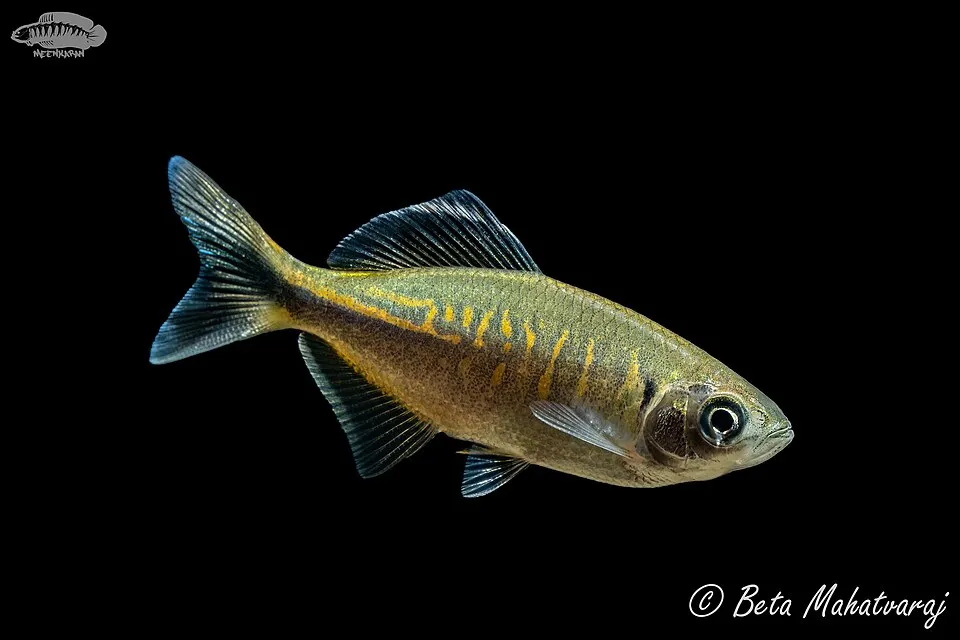
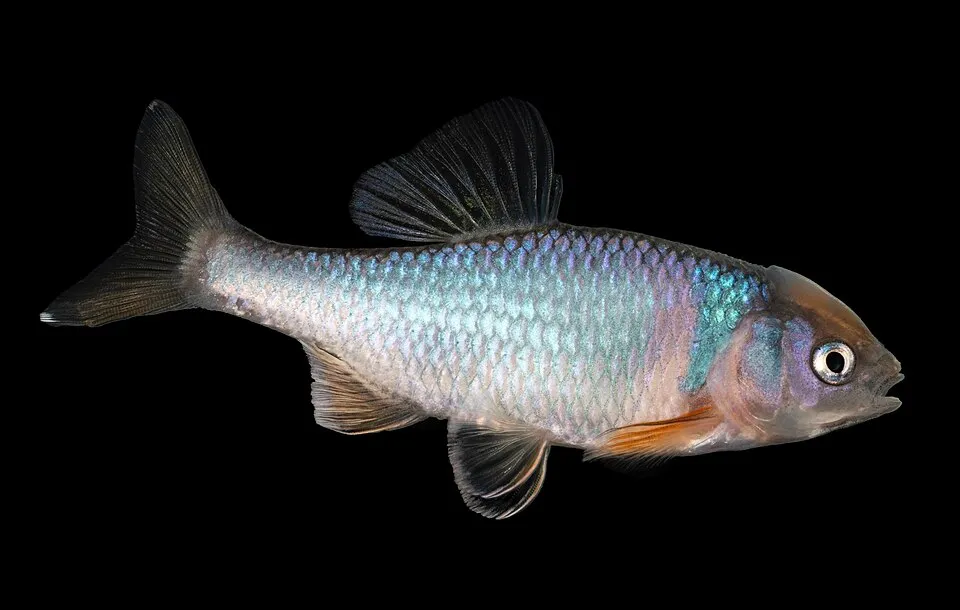
Devario devario belongs to the carp and minnow family Cyprinidae and is one of the larger danios kept in aquaria, reaching about 9 cm. It was described by Francis Hamilton in 1822, making it one of the earliest danios known to science. Like its relatives it is a slim, deep bodied, silver fish marked with blue and gold bars toward the tail, built for constant swimming in flowing water. It is an egg scattering species that gives no parental care, and home breeding is difficult, so most fish in the trade are commercially raised.
Did you know
Bengal danios are easy to mix up with other large Devario species, especially the Malabar danio, since they share the same slim silvery body and blue and gold barring. Careful counting of the flank stripes and fin markings is often the only reliable way to tell members of this genus apart.
Weekly picks
Tank mates
Bengal danio is a mostly peaceful, schooling species that keeps to the middle. These picks share a community profile with it, are safe together in both directions, and overlap on water type, temperature and pH.
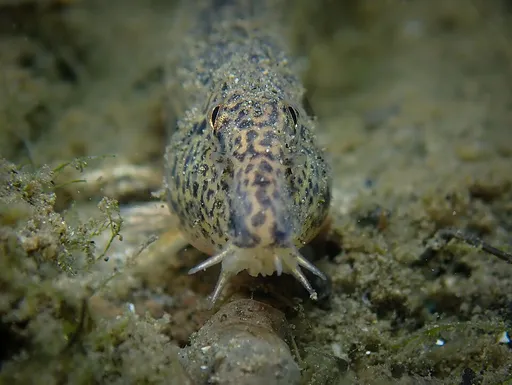
Spined loach
Cobitis taenia
Freshwater4.3 in (11 cm) · 32 gal (120 L)39–68°F (4–20°C)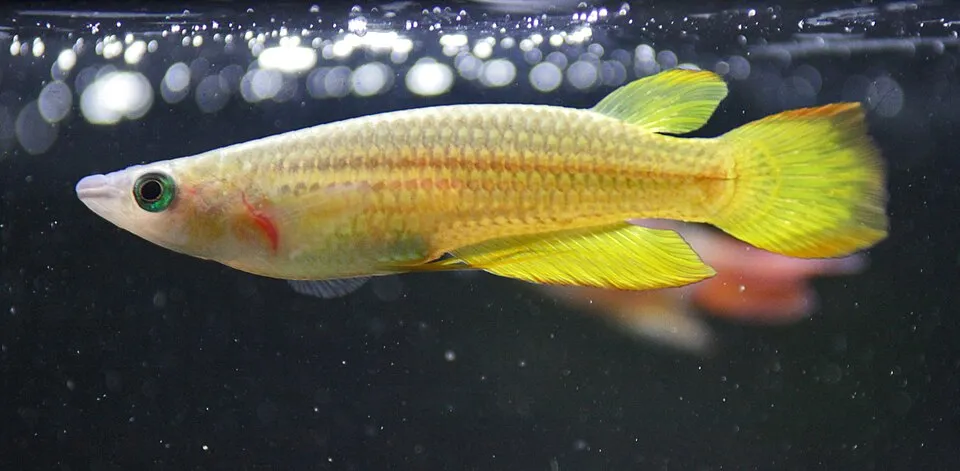
Striped panchax
Aplocheilus lineatus
Freshwater4.3 in (11 cm) · 30 gal (115 L)72–77°F (22–25°C)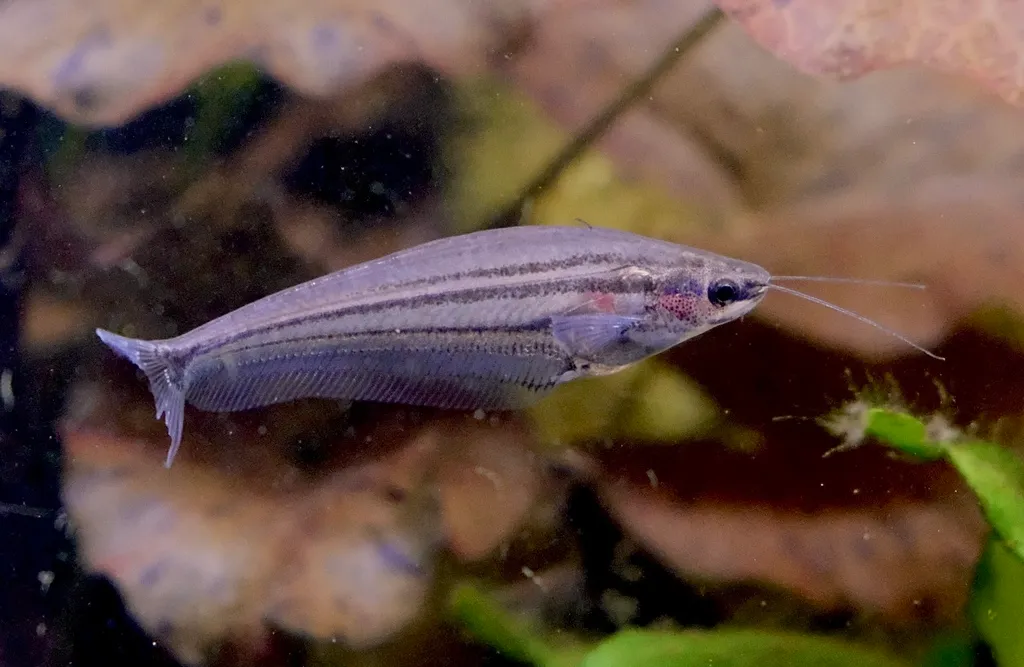
Striped glass catfish
Kryptopterus macrocephalus
Freshwater3.5 in (9 cm) · 36 gal (135 L)70–79°F (21–26°C)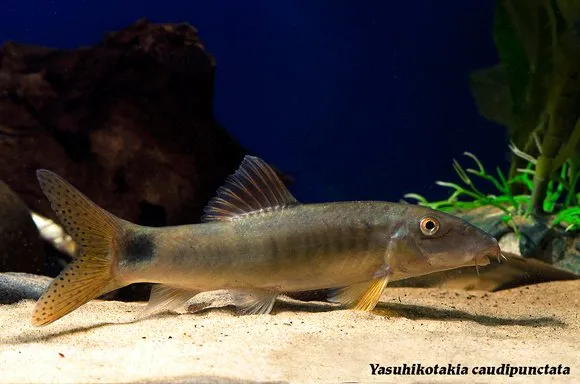
Spottail loach
Yasuhikotakia caudipunctata
Freshwater4.3 in (11 cm) · 37 gal (140 L)73–82°F (23–28°C)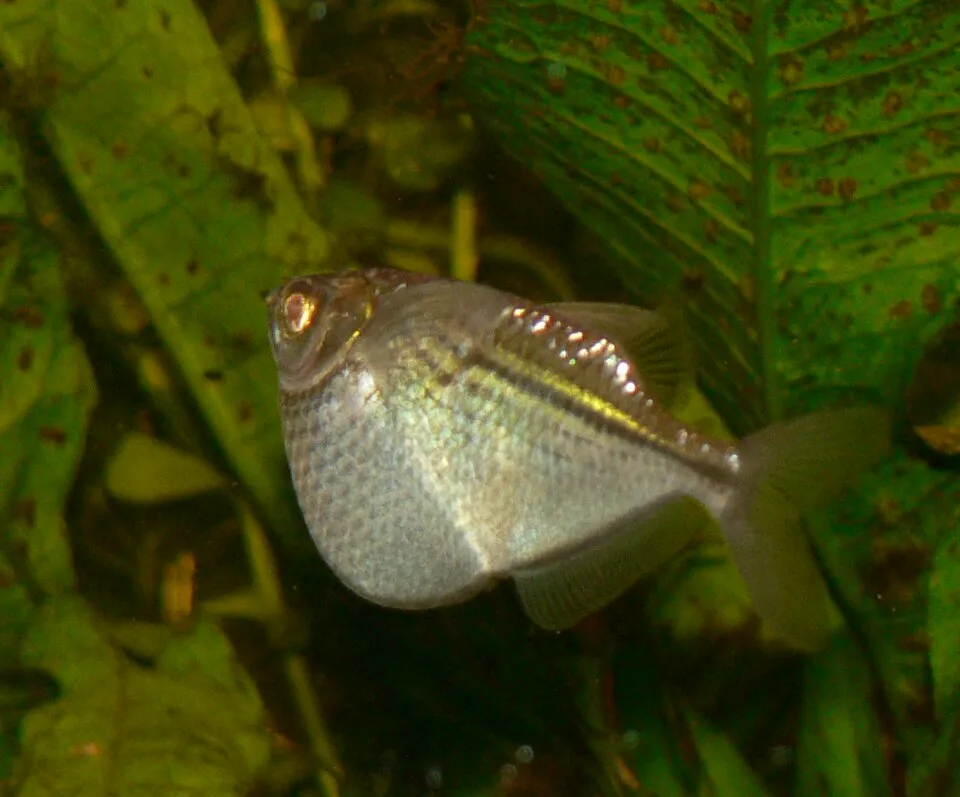
Common hatchetfish
Gasteropelecus sternicla
Freshwater1.6 in (4 cm) · 33 gal (125 L)68–82°F (20–28°C)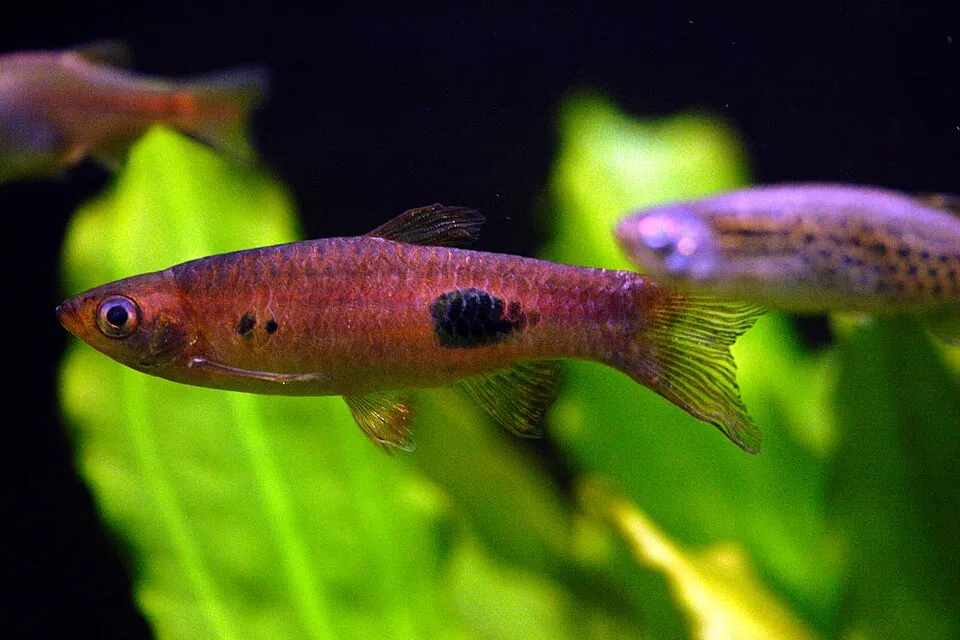
Clown rasbora
Rasbora kalochroma
Freshwater3.9 in (10 cm) · 34 gal (130 L)73–82°F (23–28°C)
Common questions
What size tank does a Bengal danio need?
A Bengal danio needs at least 34 gal (130 L). It spends most of its time in the middle.
What temperature and pH does a Bengal danio need?
A Bengal danio is comfortable at 59–81°F (15–27°C) with a pH of 6.0–7.5.
How big does a Bengal danio get?
An adult Bengal danio reaches about 3.5 in (9 cm).
Does a Bengal danio need a group?
Yes. A Bengal danio is a schooling species and should be kept in a group, not singly.
Related species
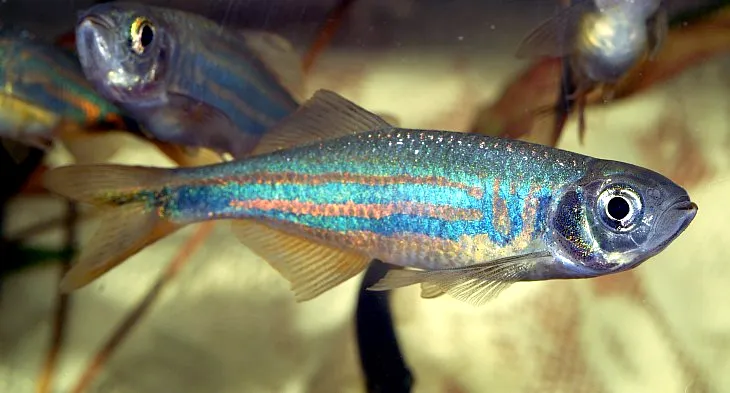 5.1 in (13 cm)48 gal (180 L)64–77°F (18–25°C)
Malabar danio
Devario malabaricus
5.1 in (13 cm) · 48 gal (180 L)
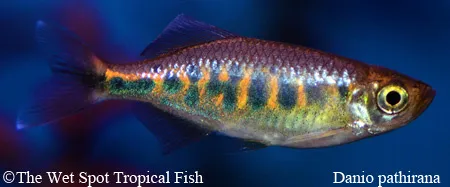 2.4 in (6 cm)24 gal (90 L)70–79°F (21–26°C)
Barred danio
Devario pathirana
2.4 in (6 cm) · 24 gal (90 L)
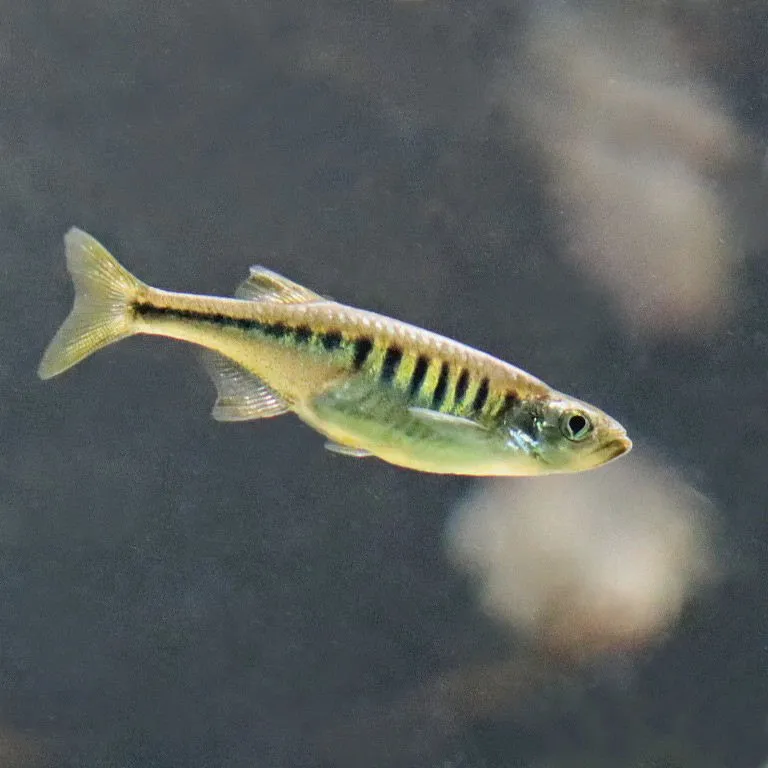 3.1 in (8 cm)24 gal (90 L)64–77°F (18–25°C)
Lake Inle danio
Devario auropurpureus
3.1 in (8 cm) · 24 gal (90 L)
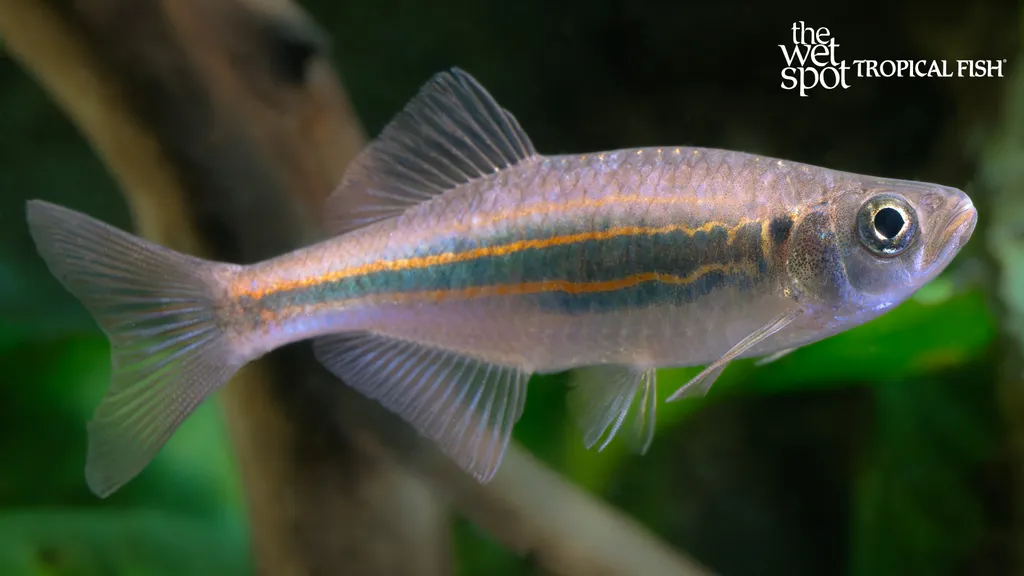 3.1 in (8 cm)30 gal (115 L)68–79°F (20–26°C)
Queen danio
Devario regina
3.1 in (8 cm) · 30 gal (115 L)
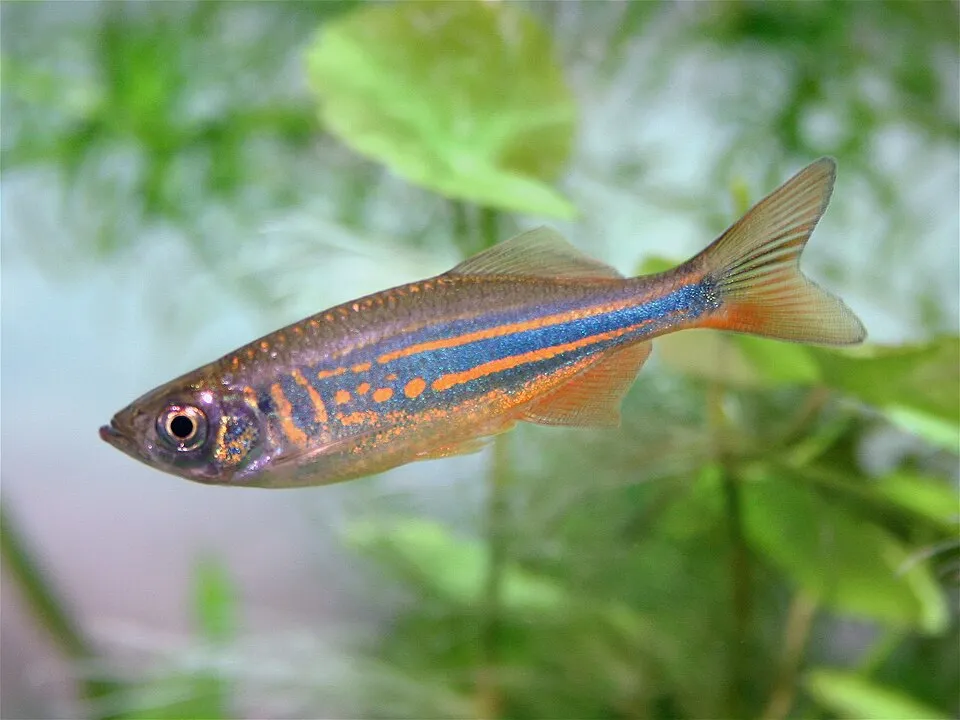 5.9 in (15 cm)50 gal (190 L)72–81°F (22–27°C)
Giant danio
Devario aequipinnatus
5.9 in (15 cm) · 50 gal (190 L)
 3.5 in (9 cm)36 gal (135 L)57–77°F (14–25°C)
Red shiner
Cyprinella lutrensis
3.5 in (9 cm) · 36 gal (135 L)