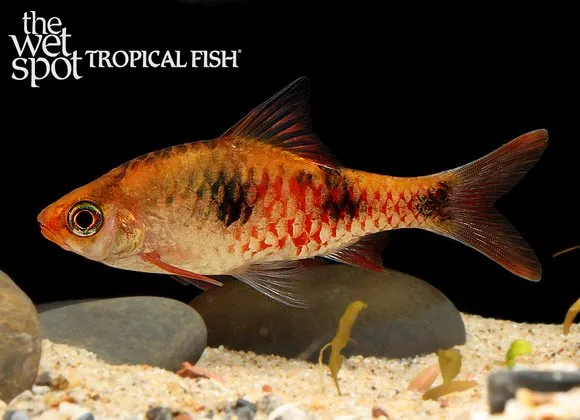
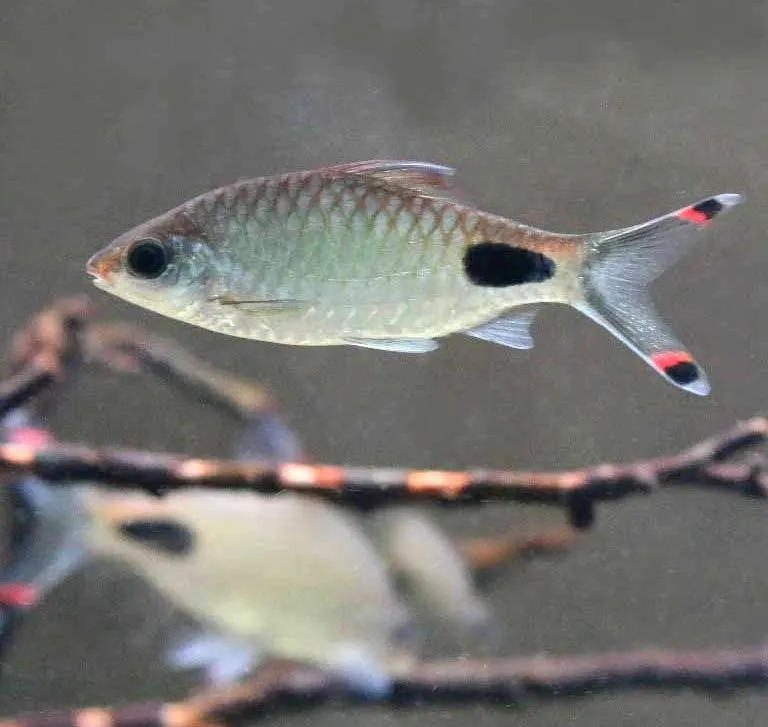
Ruby-tinted barb
Dawkinsia rubrotincta
Also known as Rubrotincta filament barb, Red tinged barb
FreshwaterFish
Care at a glance
- Temperature
- 70–79°F
- 21–26°C
- pH
- 6.0–7.5
- Adult size
- 3.9 in
- 10 cm
- Minimum tank
- 42 gal
- 160 L
- Temperament
- Peaceful
- Social behavior
- Schooling
- Swim level
- Middle
- Diet
- Omnivore
- Difficulty
- Medium
- Breeding
- No record
- Rarity
- Rare
- Family
- Cyprinidae
- Origin
- Kaveri basin, southern India
Overview
The ruby-tinted barb is an active, peaceful filament barb that lives in shoals. It suits a roomy river-style tank and a keeper with a little experience.
Did you know
The ruby-tinted barb looks like one of the recently described Western Ghats filament barbs, but it has carried a scientific name since 1849. Jerdon first recorded it from the Kaveri that year, and only its modern genus, Dawkinsia, is new.
Caring for the ruby-tinted barb
Keep ruby-tinted barbs in a group of six or more. In numbers the males display to one another, and the group settles rather than chasing. They are strong swimmers of the middle water and are in constant motion, so length matters more than fancy planting. A tank of 42 gal (160 L) gives a small group real room to move.
Set up a river-style tank with brisk current, a sand or gravel bed, water-worn stones and some hardy plants. Keep the water at 70 to 79°F (21 to 26°C) and a pH of 6.0 to 7.5.
Ruby-tinted barbs are hearty eaters and take flake, pellets and frozen foods readily, with some greens. They are peaceful and do well with other lively but gentle fish, such as other barbs, larger rasboras and peaceful catfish.
Breeding males grow extended dorsal rays, like their filament-barb relatives. Aquarium spawning is not on record.
Good to know
Dawkinsia rubrotincta belongs to the carp family, Cyprinidae, and was placed in the genus Dawkinsia in 2012. The name rubrotincta means red-tinted, for the ruby wash that spreads through the fins and flank of mature fish. It is also called the rubrotincta filament barb or the red tinged barb.
In the wild
The ruby-tinted barb is native to the Kaveri (Cauvery) river system of southern India. It lives in clear, flowing rivers and hill streams over rock and gravel.
Weekly picks
Tank mates
The ruby-tinted barb is a peaceful, schooling species that keeps to the middle. These picks share a community profile with it, are safe together in both directions, and overlap on water type, temperature and pH.
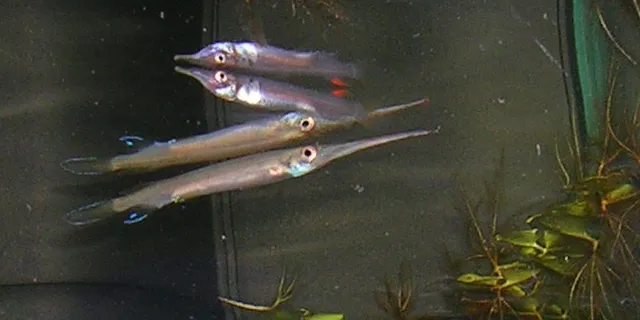
Forest halfbeak
Hemirhamphodon pogonognathus
Freshwater3.5 in (9 cm) · 34 gal (130 L)75–82°F (24–28°C)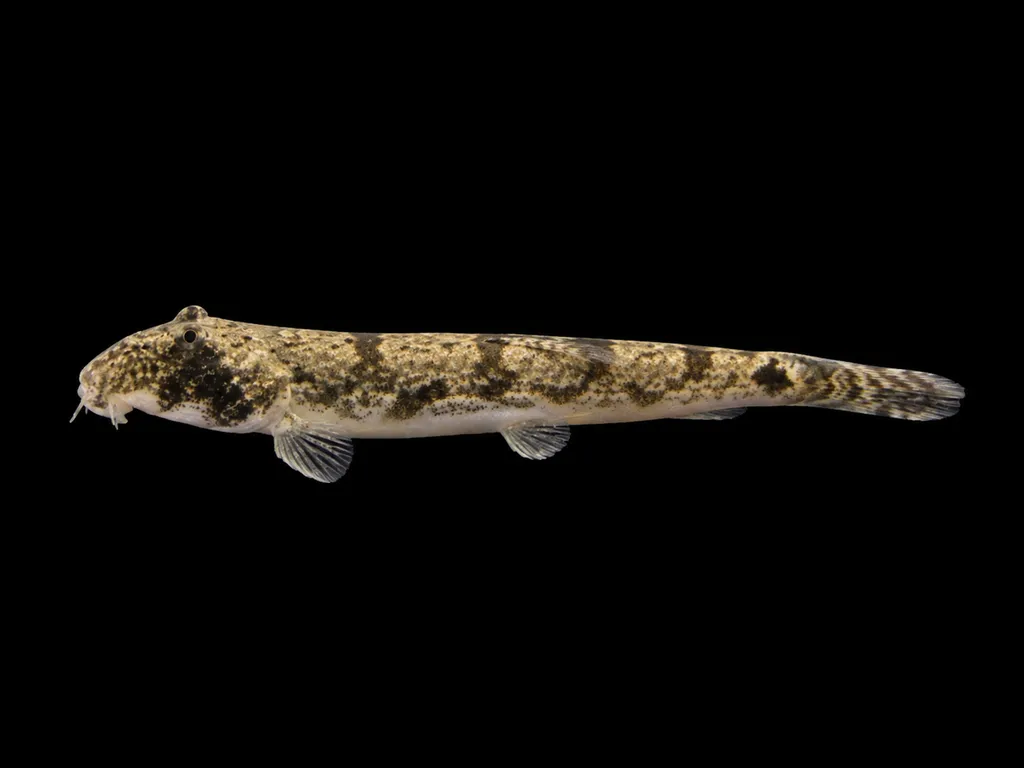
Gongota loach
Canthophrys gongota
Freshwater5.1 in (13 cm) · 42 gal (160 L)70–81°F (21–27°C)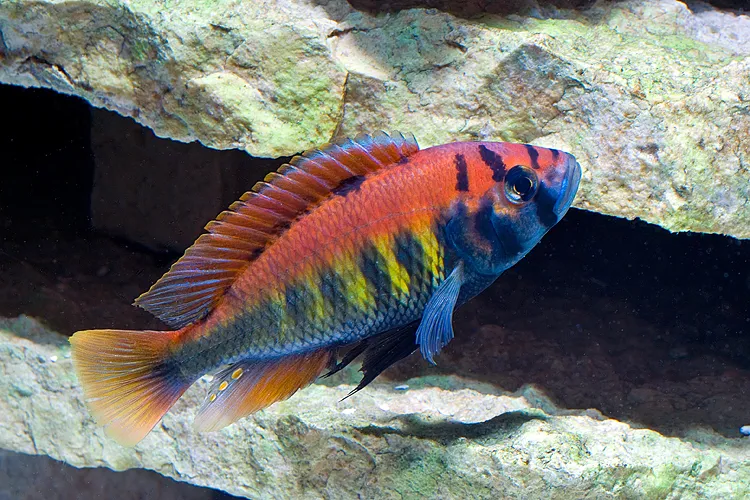
Flameback cichlid
Pundamilia nyererei
Freshwater3.5 in (9 cm) · 42 gal (160 L)73–81°F (23–27°C)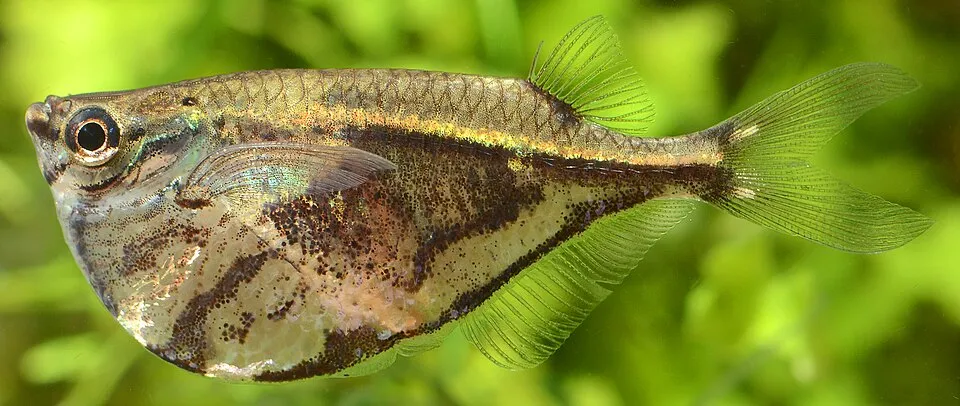
Marbled hatchetfish
Carnegiella strigata
Freshwater1.6 in (4 cm) · 32 gal (120 L)68–82°F (20–28°C)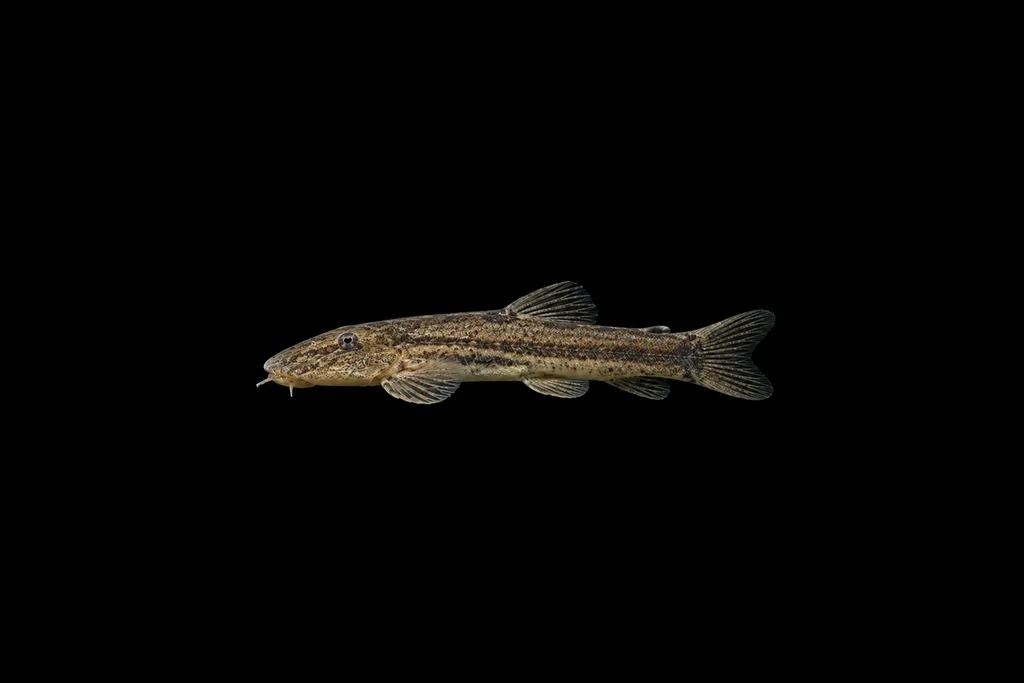
Torrent catfish
Glyptothorax dorsalis
Freshwater5.9 in (15 cm) · 42 gal (160 L)68–79°F (20–26°C)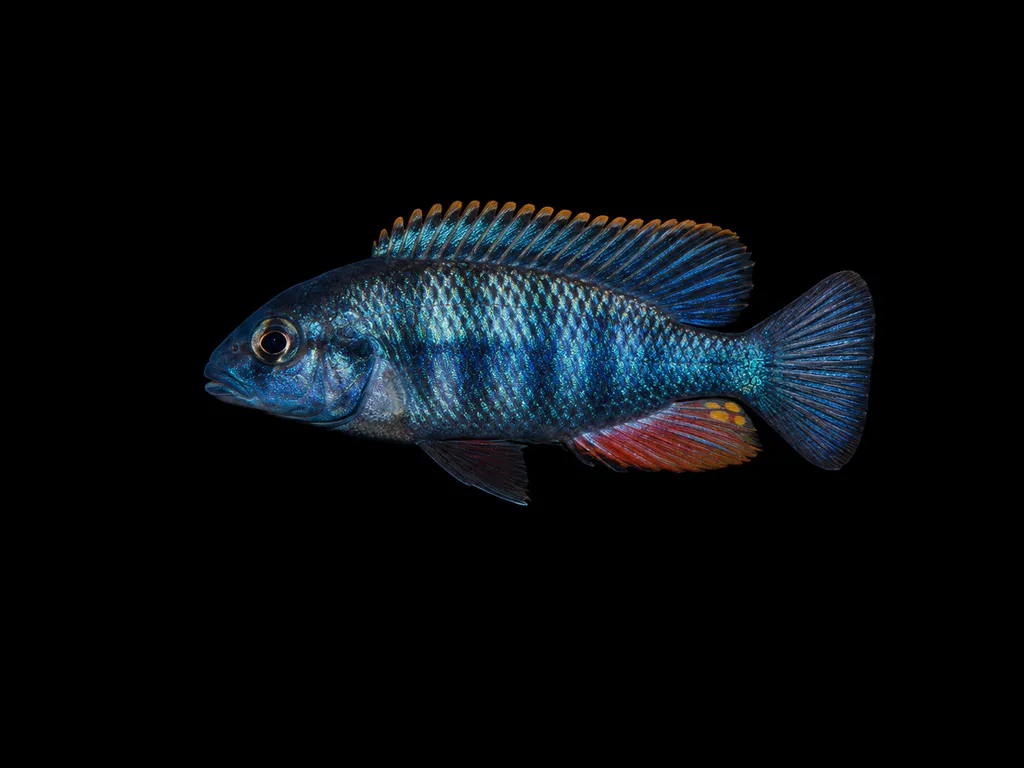
Perrieri hap
Prognathochromis perrieri
Freshwater3.1 in (8 cm) · 42 gal (160 L)73–81°F (23–27°C)
Common questions
What size tank does a ruby-tinted barb need?
A ruby-tinted barb needs at least 42 gal (160 L). It spends most of its time in the middle.
What temperature and pH does a ruby-tinted barb need?
A ruby-tinted barb is comfortable at 70–79°F (21–26°C) with a pH of 6.0–7.5.
What does a ruby-tinted barb eat?
A ruby-tinted barb is a hearty eater. It takes flake, pellets and frozen foods readily, along with some greens.
How big does a ruby-tinted barb get?
An adult ruby-tinted barb reaches about 3.9 in (10 cm).
Does a ruby-tinted barb need a group?
Yes. A ruby-tinted barb is a schooling species and should be kept in a group, not singly.
How can you tell a male ruby-tinted barb from a female?
Males grow extended dorsal rays when breeding, like other filament barbs.
Related species
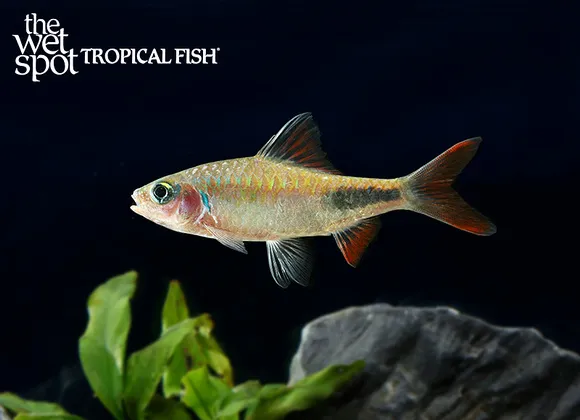 3.9 in (10 cm)42 gal (160 L)70–79°F (21–26°C)
Rohan's barb
Dawkinsia rohani
3.9 in (10 cm) · 42 gal (160 L)
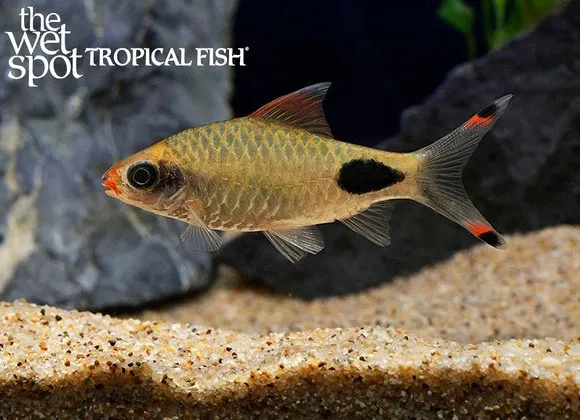 3.5 in (9 cm)42 gal (160 L)70–79°F (21–26°C)
Apsara barb
Dawkinsia apsara
3.5 in (9 cm) · 42 gal (160 L)
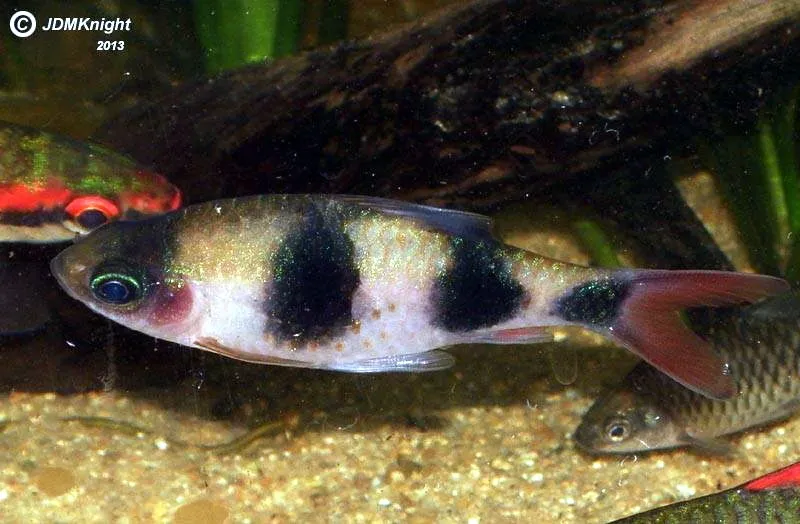
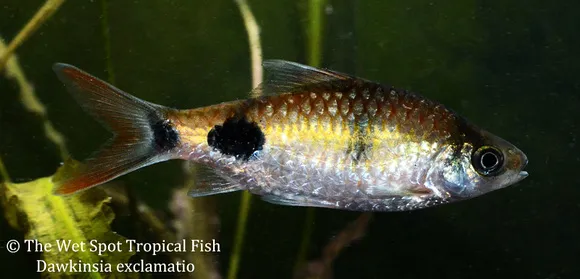 3.5 in (9 cm)42 gal (160 L)70–79°F (21–26°C)
Exclamation barb
Dawkinsia exclamatio
3.5 in (9 cm) · 42 gal (160 L)
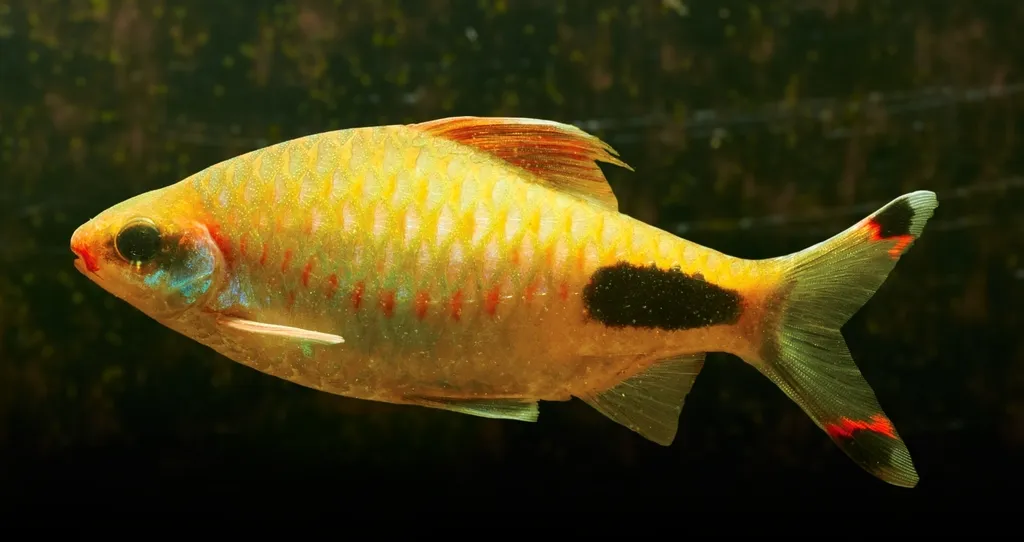
 4.7 in (12 cm)37 gal (140 L)66–77°F (19–25°C)
Arulius barb
Dawkinsia arulius
4.7 in (12 cm) · 37 gal (140 L)
 4.7 in (12 cm)53 gal (200 L)66–77°F (19–25°C)
Mascara barb
Dawkinsia assimilis
4.7 in (12 cm) · 53 gal (200 L)
 5.1 in (13 cm)53 gal (200 L)68–77°F (20–25°C)
Filament barb
Dawkinsia filamentosa
5.1 in (13 cm) · 53 gal (200 L)