Tambraparni barb
Dawkinsia tambraparniei
Also known as Trade arulius barb, Tamiraparani filament barb
FreshwaterFish
Care at a glance
- Temperature
- 70–79°F
- 21–26°C
- pH
- 6.0–7.5
- Adult size
- 5.1 in
- 13 cm
- Minimum tank
- 42 gal
- 160 L
- Temperament
- Peaceful
- Social behavior
- Schooling
- Swim level
- Middle
- Diet
- Omnivore
- Difficulty
- Medium
- Breeding
- Egg scatterer · Medium
- Rarity
- Common
- Family
- Cyprinidae
- Origin
- Tamiraparani River, Tamil Nadu, India
Overview
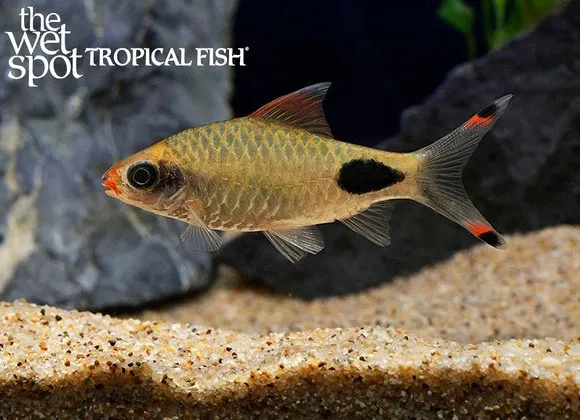
The Tambraparni barb is a lively filament barb that schools in the middle water of a river-style tank. It is a step up from the easiest fish.
Did you know
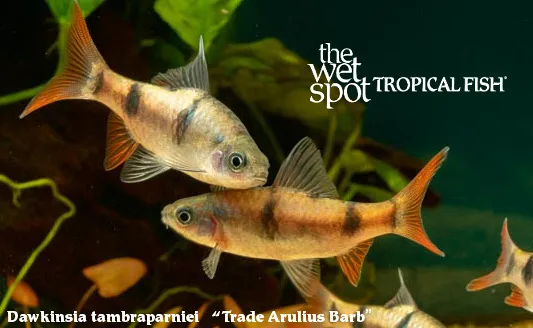
Nearly every fish sold as the arulius barb is really the Tambraparni barb, and most hobby writing about the arulius is about this fish. The true Dawkinsia arulius, from the Kaveri basin, is a rare import. The dorsal streamers on adult males are the giveaway, since the true arulius never grows them.
Caring for the Tambraparni barb
Keep Tambraparni barbs in a group of six or more. A tank of 42 gal (160 L) holds a small group, and more length is always welcome. In a longer tank, these strong swimmers of the middle water show near-constant motion and color. Give them open swimming lanes over a rocky, river-style layout of water-worn stone, sand and hardy plants.
Run a brisk but not violent current, and keep conditions stable and clean. Keep the water at 70 to 79°F (21 to 26°C) and a pH of 6.0 to 7.5. The Tambraparni barb eats almost anything, from flake and pellets to frozen and live foods, with some greens.
The Tambraparni barb is lively but peaceful, and it suits a river community of other active, gentle fish. In a group the males display constantly, and the school stays settled.
Breeding males grow trailing dorsal filaments and a tubercled snout. The species is an egg scatterer that lays among fine plants, and spawning it is moderately achievable.
Good to know
The Tambraparni barb, Dawkinsia tambraparniei, belongs to the carp family, Cyprinidae, and is listed as Endangered. Silas described it in 1954 as a subspecies of the arulius barb, and it was raised to a full species in 2005. Its maxillary barbels run longer than half the eye, while the true arulius barb has barbels too short to notice.
In the wild
The Tambraparni barb is found only in the Tamiraparani River of southern Tamil Nadu, India. It lives in gently flowing, rocky-bottomed stretches of clear water.
Weekly picks
Tank mates
The Tambraparni barb is a peaceful, schooling species that keeps to the middle. These picks share a community profile with it, are safe together in both directions, and overlap on water type, temperature and pH.
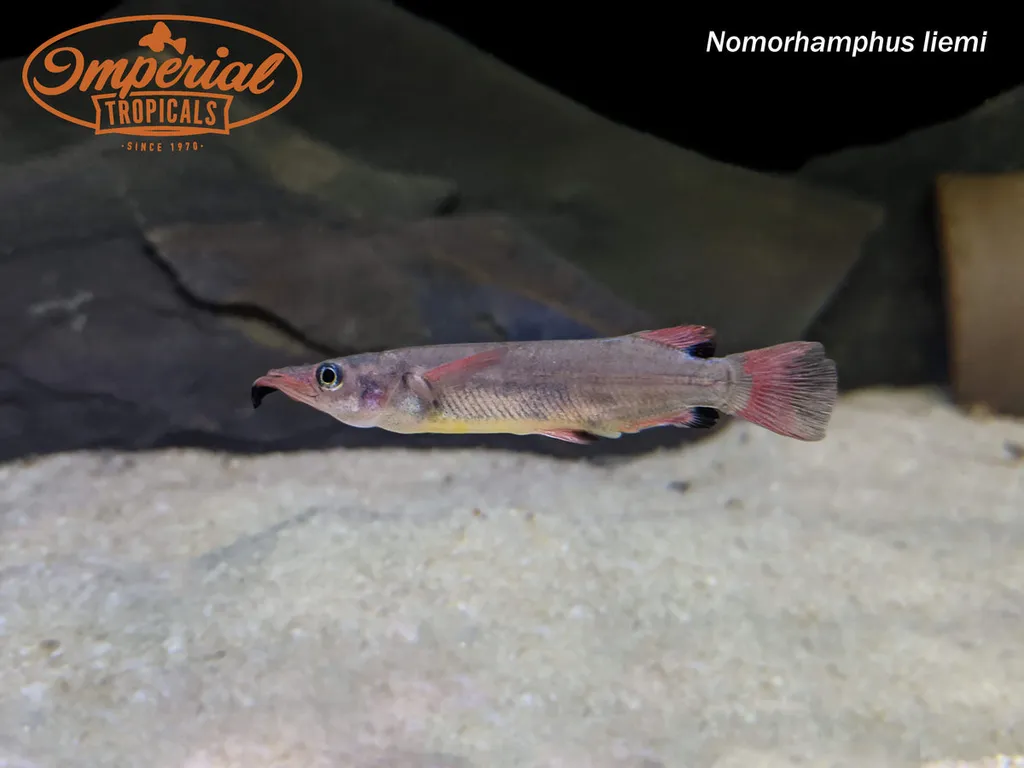
Celebes halfbeak
Nomorhamphus liemi
Freshwater3.5 in (9 cm) · 40 gal (150 L)68–77°F (20–25°C)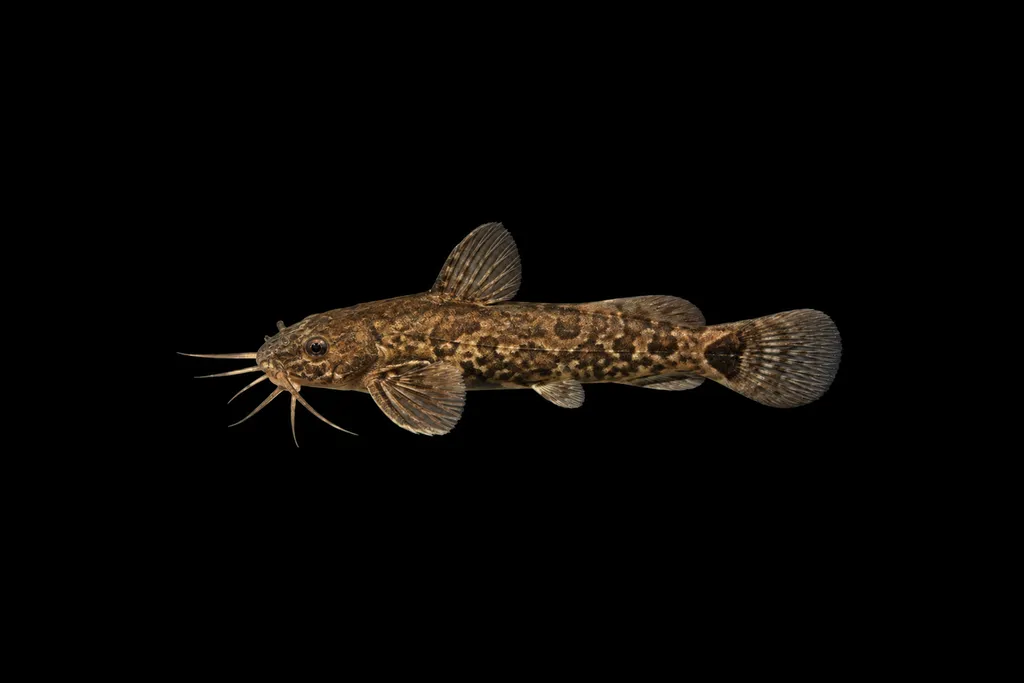
Blotched sisorid catfish
Glyptothorax macromaculatus
Freshwater6.3 in (16 cm) · 42 gal (160 L)68–79°F (20–26°C)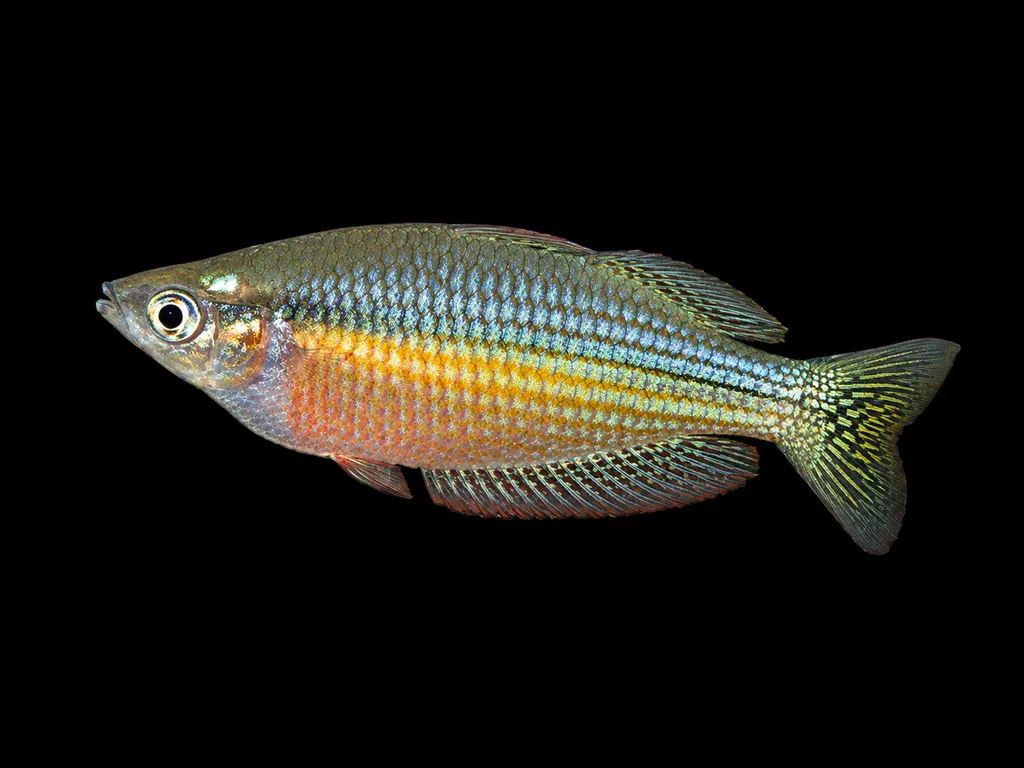
Desert rainbowfish
Melanotaenia splendida tatei
Freshwater3.9 in (10 cm) · 42 gal (160 L)64–86°F (18–30°C)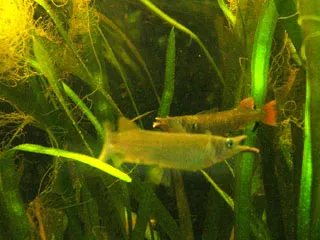
Redfin halfbeak
Nomorhamphus ebrardtii
Freshwater3.5 in (9 cm) · 29 gal (110 L)75–81°F (24–27°C)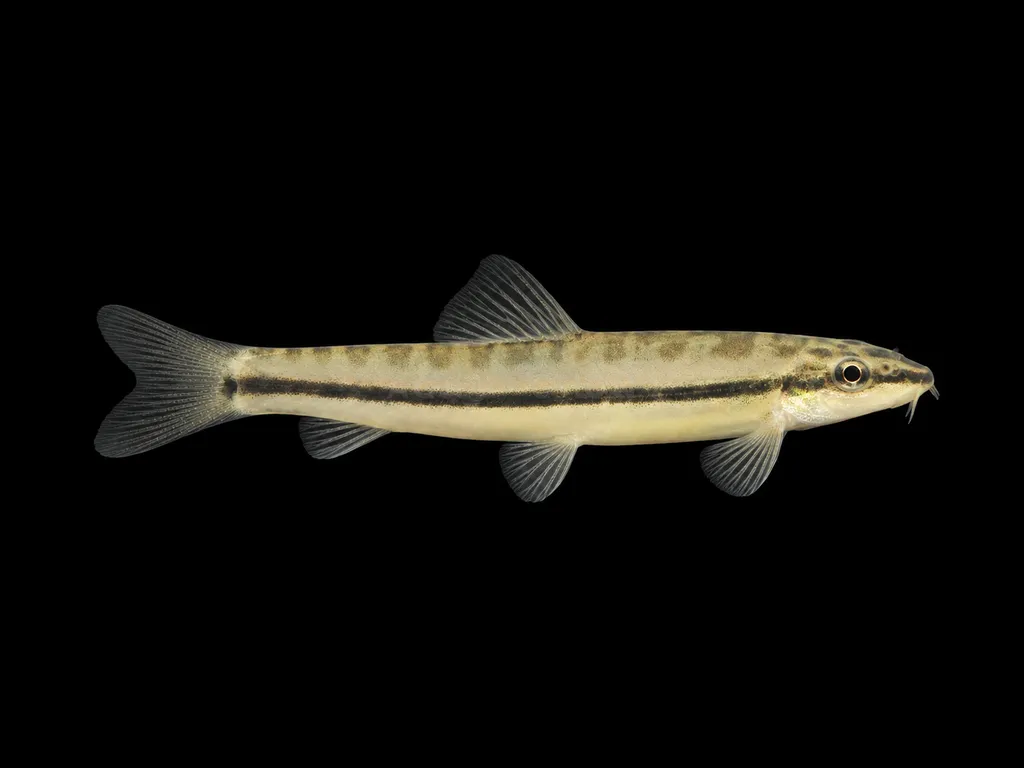
Longstripe loach
Nemacheilus longistriatus
Freshwater5.9 in (15 cm) · 42 gal (160 L)72–81°F (22–27°C)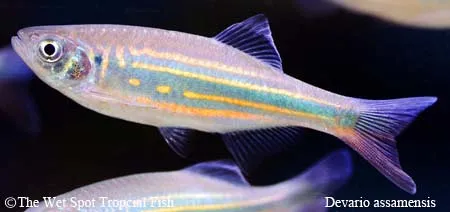
Assam giant danio
Devario assamensis
Freshwater4.3 in (11 cm) · 42 gal (160 L)68–79°F (20–26°C)
Common questions
What size tank does a Tambraparni barb need?
A Tambraparni barb needs at least 42 gal (160 L). It spends most of its time in the middle.
What temperature and pH does a Tambraparni barb need?
A Tambraparni barb is comfortable at 70–79°F (21–26°C) with a pH of 6.0–7.5.
What does a Tambraparni barb eat?
A Tambraparni barb eats almost anything, from flake and pellets to frozen and live foods. Give it some greens as well.
How big does a Tambraparni barb get?
An adult Tambraparni barb reaches about 5.1 in (13 cm).
Does a Tambraparni barb need a group?
Yes. A Tambraparni barb is a schooling species and should be kept in a group, not singly.
How can you tell a male Tambraparni barb from a female?
Males grow trailing dorsal filaments and a tubercled snout when they are in breeding condition.
How does a Tambraparni barb breed?
A Tambraparni barb is an egg scatterer that lays its eggs among fine plants. Spawning it is moderately achievable.
Related species
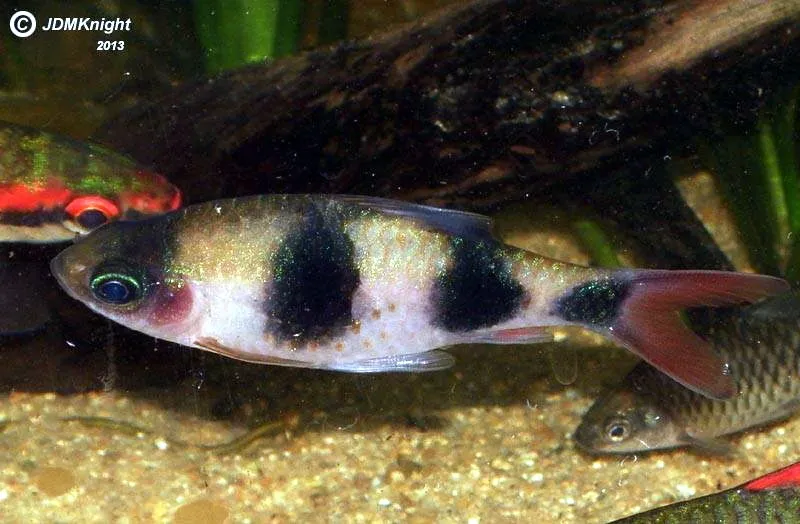
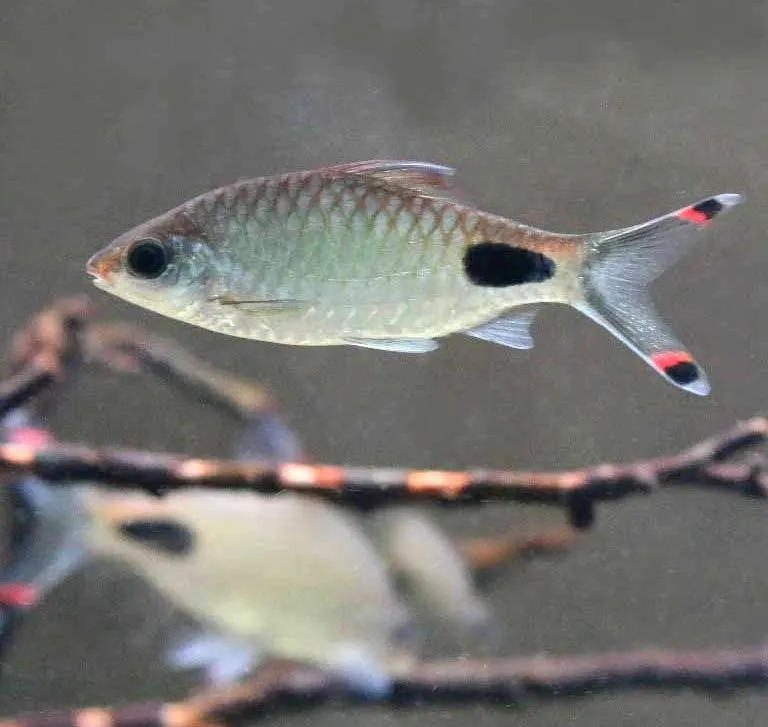 5.1 in (13 cm)53 gal (200 L)68–77°F (20–25°C)
Filament barb
Dawkinsia filamentosa
5.1 in (13 cm) · 53 gal (200 L)
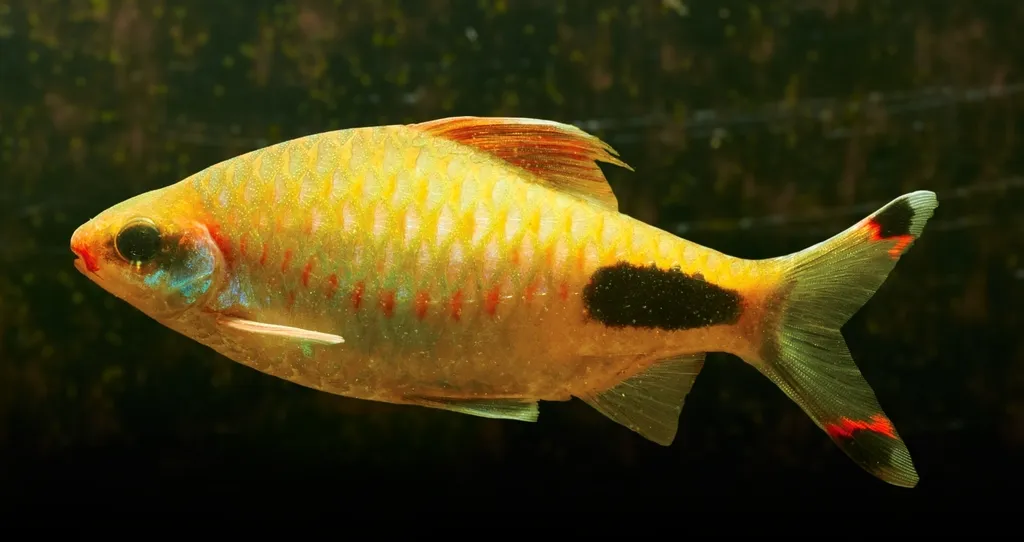
 4.7 in (12 cm)37 gal (140 L)66–77°F (19–25°C)
Arulius barb
Dawkinsia arulius
4.7 in (12 cm) · 37 gal (140 L)
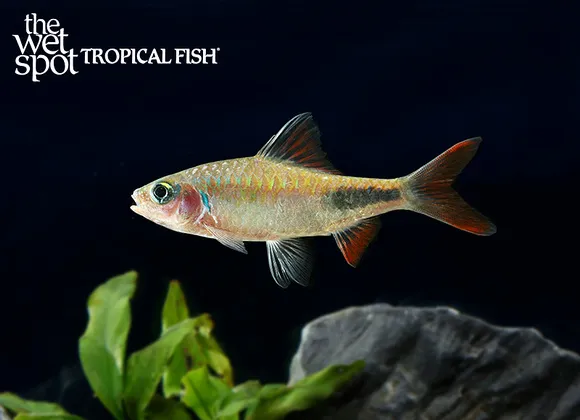
 4.7 in (12 cm)53 gal (200 L)66–77°F (19–25°C)
Mascara barb
Dawkinsia assimilis
4.7 in (12 cm) · 53 gal (200 L)
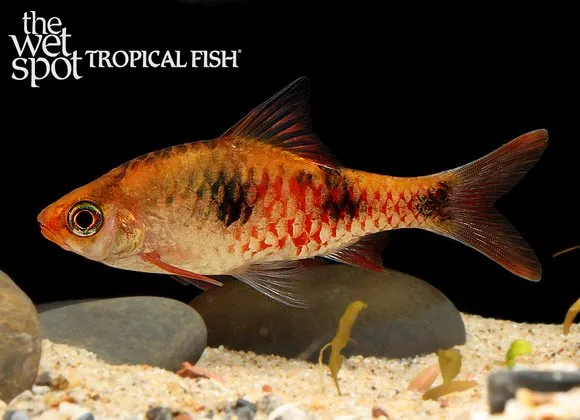
 3.9 in (10 cm)42 gal (160 L)70–79°F (21–26°C)
Rohan's barb
Dawkinsia rohani
3.9 in (10 cm) · 42 gal (160 L)
 3.9 in (10 cm)42 gal (160 L)70–79°F (21–26°C)
Ruby-tinted barb
Dawkinsia rubrotincta
3.9 in (10 cm) · 42 gal (160 L)
 3.5 in (9 cm)42 gal (160 L)70–79°F (21–26°C)
Apsara barb
Dawkinsia apsara
3.5 in (9 cm) · 42 gal (160 L)