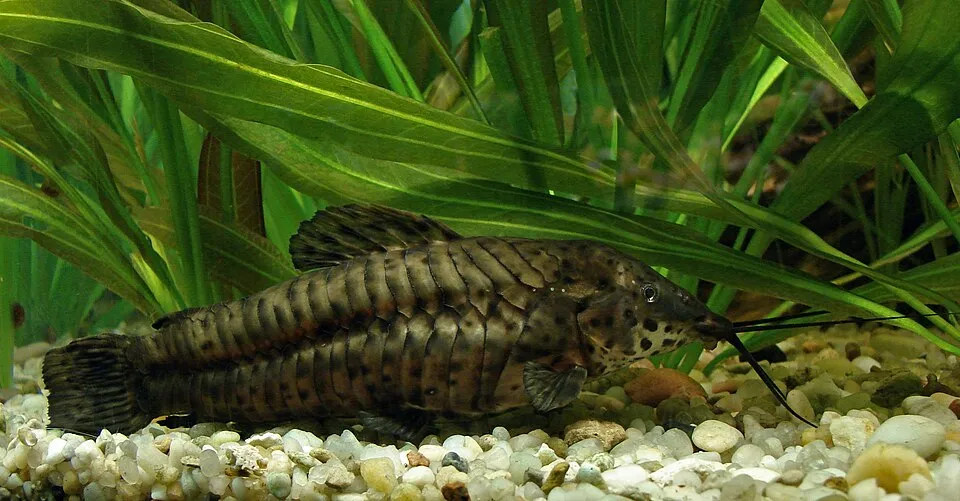
Spotted hoplo
Megalechis thoracata
Also known as Marble hoplo
FreshwaterFish
Care at a glance
- Temperature
- 64–82°F
- 18–28°C
- pH
- 6.0–8.0
- Adult size
- 5.9 in
- 15 cm
- Minimum tank
- 40 gal
- 150 L
- Temperament
- Peaceful
- Social behavior
- Social
- Swim level
- Bottom
- Difficulty
- Easy
- Breeding
- Hard
- Rarity
- Common
- Family
- Callichthyidae
- Origin
- Venezuela, The Guianas, Colombia
Overview
Keep it as a peaceful bottom dweller in a tank of at least 150 liters, with a small group if you have room. Aim for soft to neutral water, pH 6 to 8, and temperatures in the low to mid 20s C. It is an omnivore that scavenges, so sinking pellets, frozen bloodworms, and the occasional veg all work. It gets along fine with other calm community fish and won't bother tankmates.
In the wild
The spotted hoplo comes from northern South America, including Venezuela, the Guianas, and Colombia. It lives in slow, shallow, often muddy waters that can get low in oxygen, which is why it can gulp air at the surface. Give it a soft sand bottom it can sift through, some leaf litter or driftwood for cover, and gentle filtration. It handles a wide temperature range, anywhere from the high teens to high 20s C.
Good to know
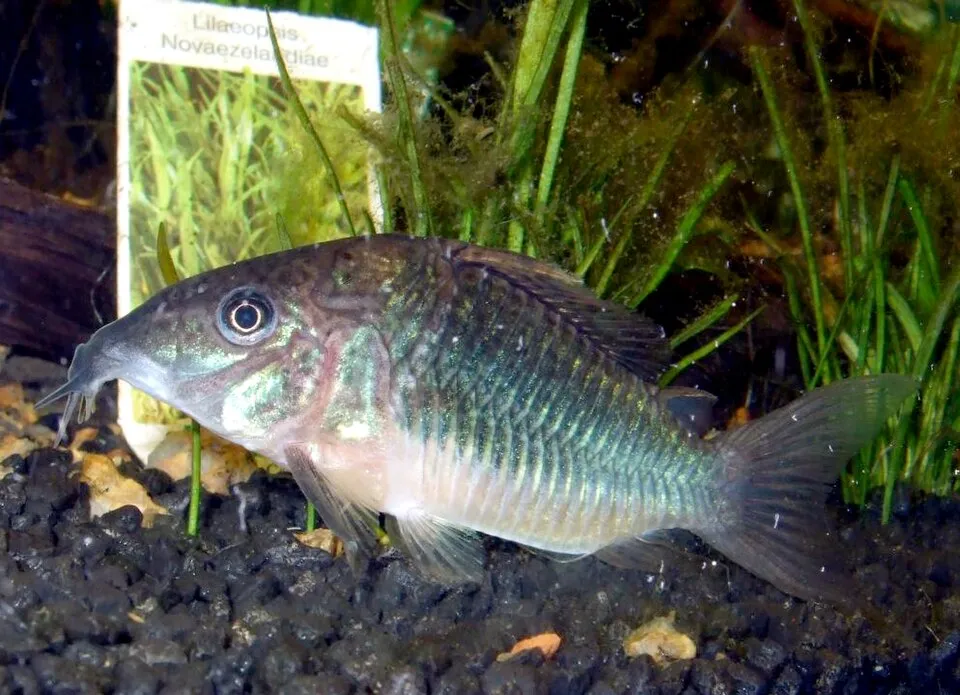
This is an armored catfish in the family Callichthyidae, so its body is covered in bony plates instead of scales. Adults reach about 15 cm. It is an air-breather that can take oxygen from the surface using its gut. Males build and guard a bubble nest, which makes it a substrate and nest spawner rather than an egg scatterer.
Did you know
During spawning the male whips up a foam nest at the surface and packs it under a floating leaf or plant, then guards the eggs there until they hatch. Hobbyists sometimes hear it make a faint croaking sound when handled, made by movement of its pectoral spines.
Weekly picks
Tank mates
Spotted hoplo is a peaceful, social species that keeps to the bottom. These picks share a community profile with it, are safe together in both directions, and overlap on water type, temperature and pH.
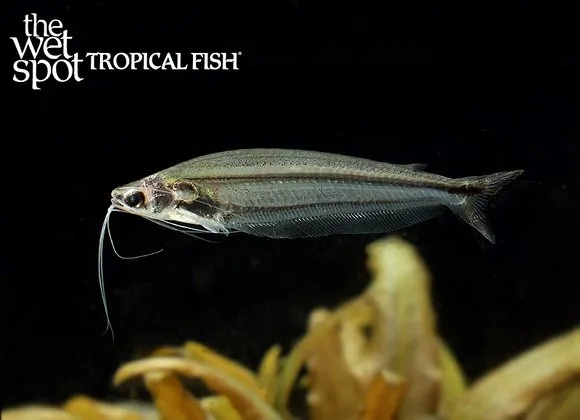
African glass cat
Parailia pellucida
Freshwater4.7 in (12 cm) · 40 gal (150 L)73–82°F (23–28°C)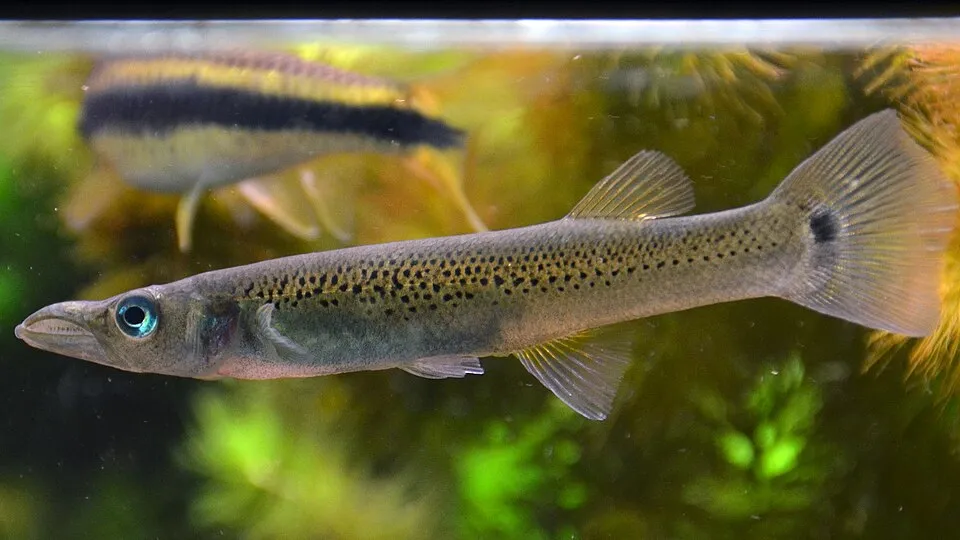
Pike topminnow
Belonesox belizanus
Freshwater7.9 in (20 cm) · 44 gal (165 L)73–82°F (23–28°C)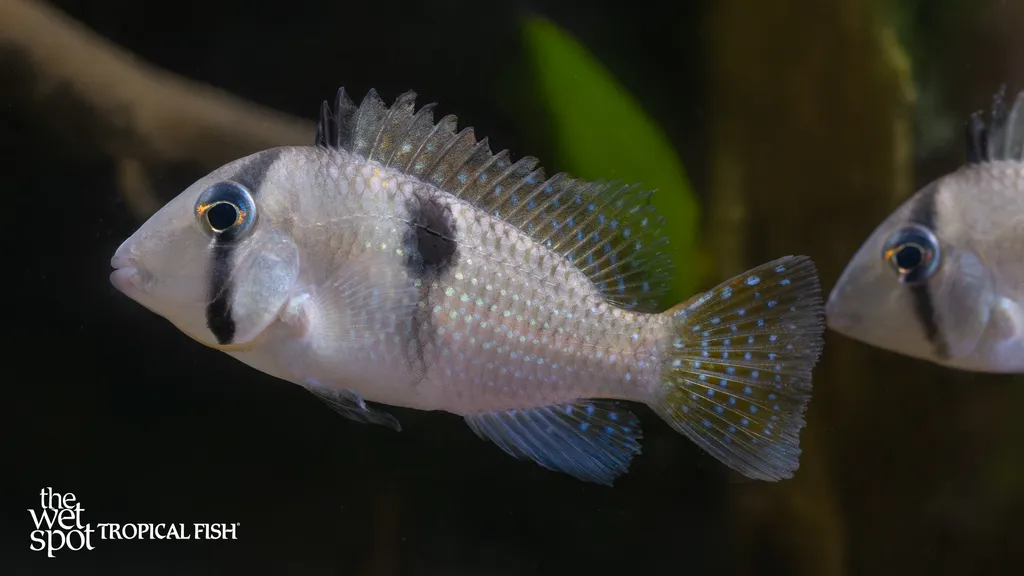
Bandit cichlid
Guianacara geayi
Freshwater5.1 in (13 cm) · 40 gal (150 L)75–82°F (24–28°C)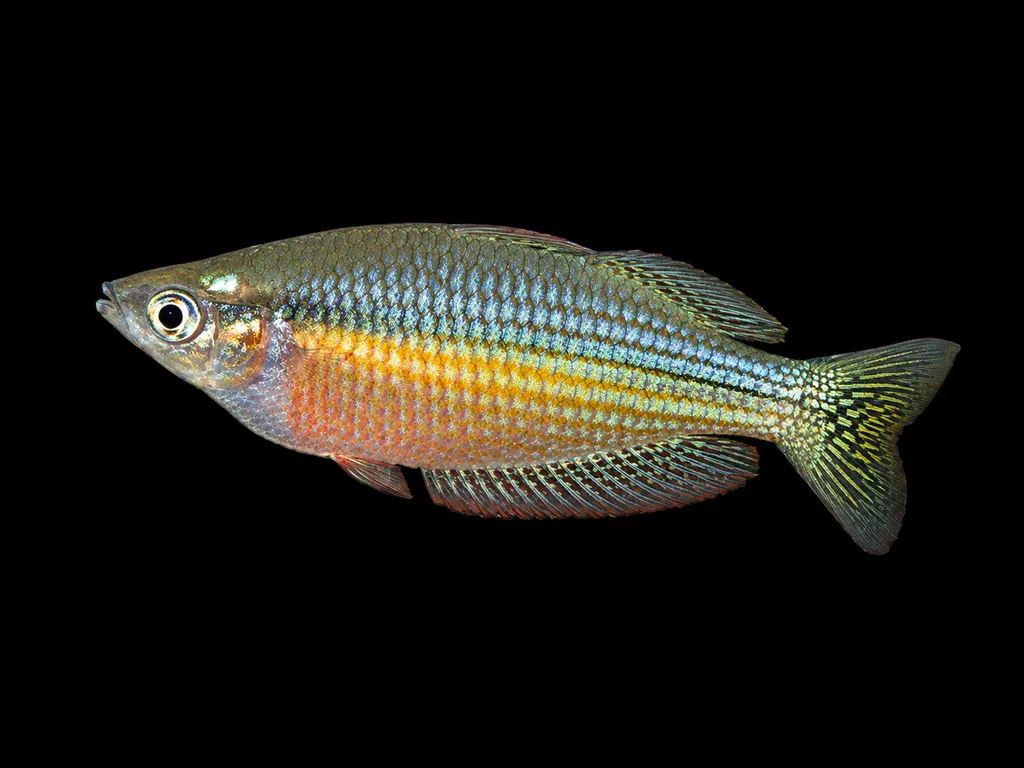
Desert rainbowfish
Melanotaenia splendida tatei
Freshwater3.9 in (10 cm) · 42 gal (160 L)64–86°F (18–30°C)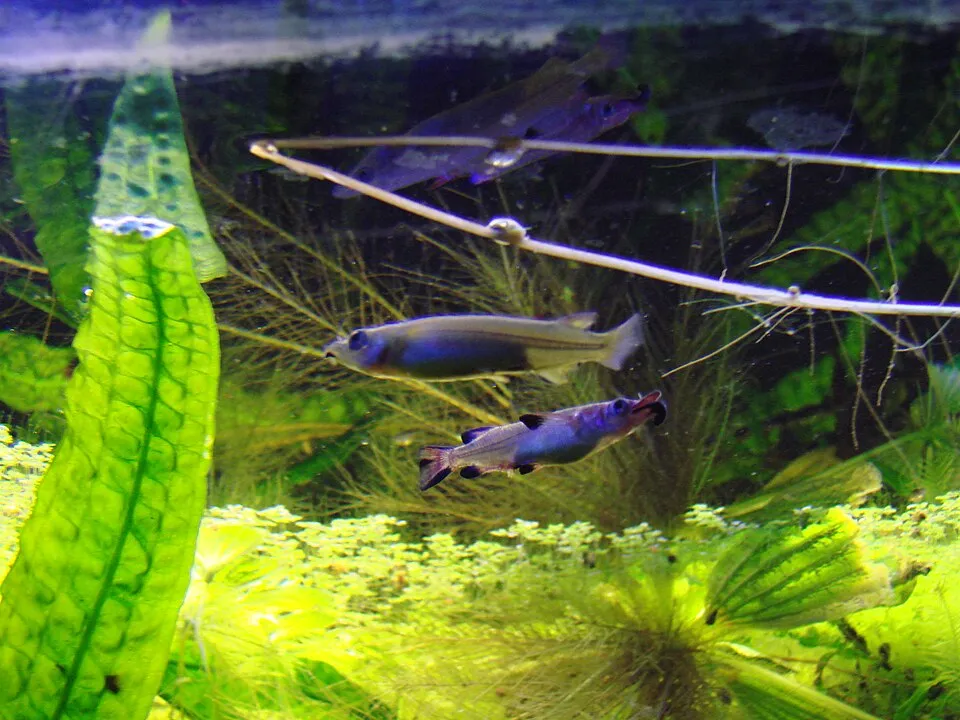
Celebes halfbeak
Nomorhamphus liemi
Freshwater3.5 in (9 cm) · 40 gal (150 L)68–77°F (20–25°C)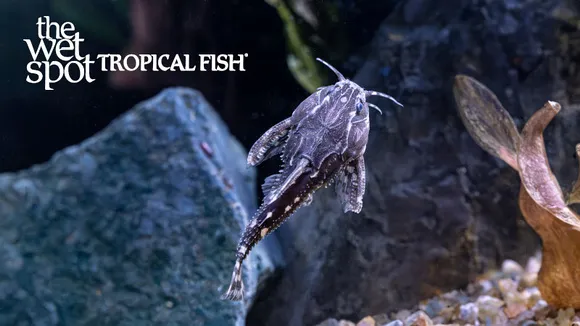
Orinoco spotted raphael
Agamyxis albomaculatus
Freshwater5.9 in (15 cm) · 40 gal (150 L)73–82°F (23–28°C)
Common questions
What size tank does a Spotted hoplo need?
A Spotted hoplo needs at least 40 gal (150 L). It spends most of its time in the bottom.
What temperature and pH does a Spotted hoplo need?
A Spotted hoplo is comfortable at 64–82°F (18–28°C) with a pH of 6.0–8.0.
How big does a Spotted hoplo get?
An adult Spotted hoplo reaches about 5.9 in (15 cm).
Related species
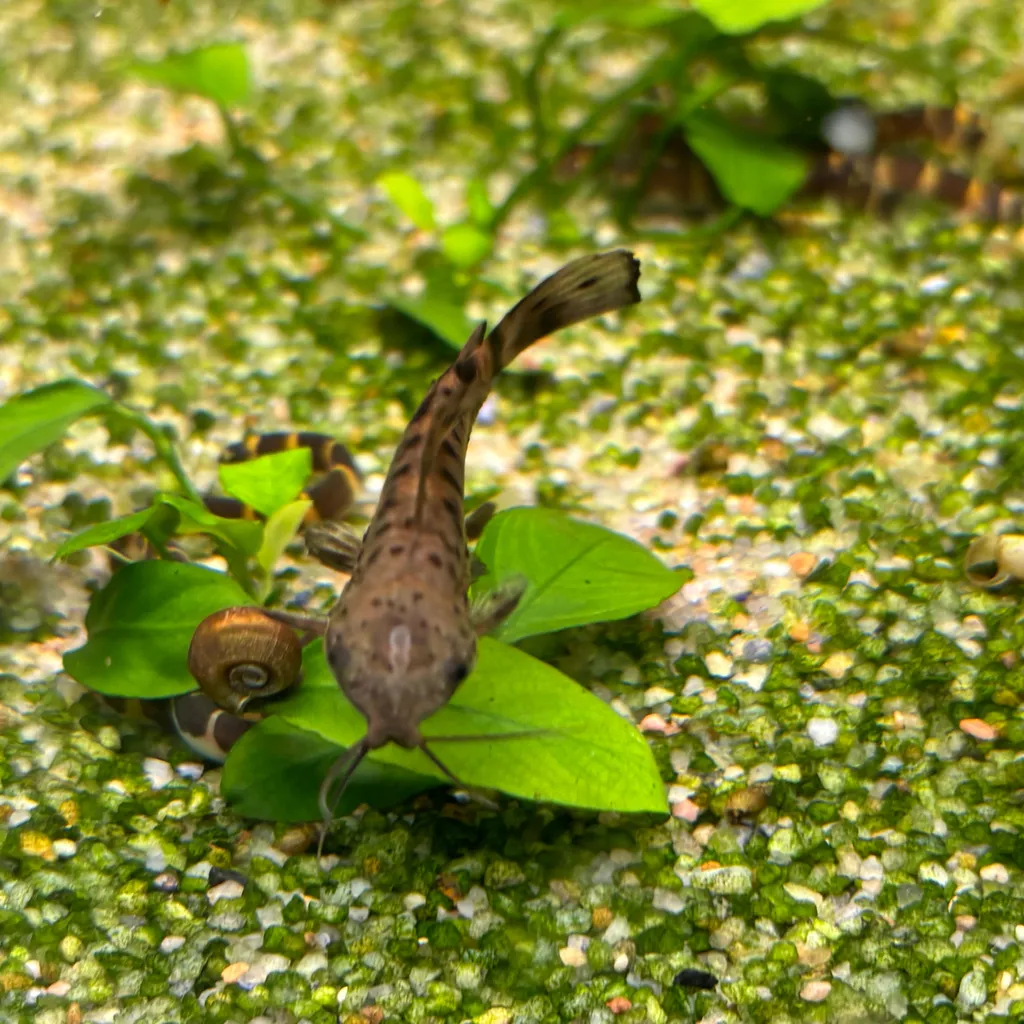 5.9 in (15 cm)53 gal (200 L)72–79°F (22–26°C)
Bar-tailed hoplo
Megalechis picta
5.9 in (15 cm) · 53 gal (200 L)
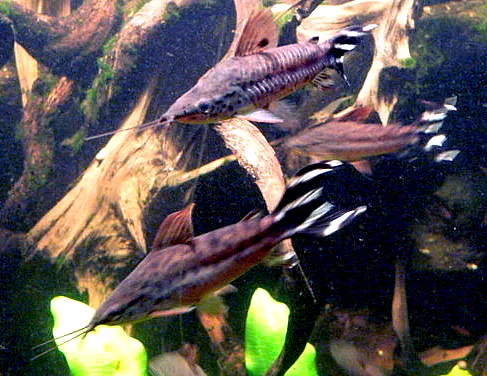 4.9 in (12.5 cm)40 gal (150 L)77–82°F (25–28°C)
Flagtail catfish
Dianema urostriatum
4.9 in (12.5 cm) · 40 gal (150 L)
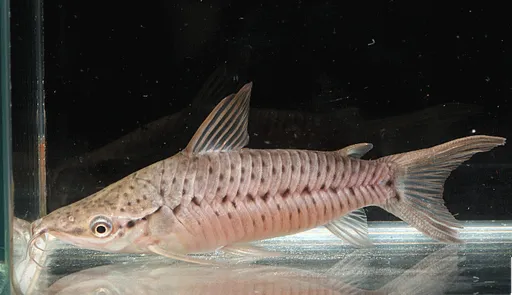 3.9 in (10 cm)26 gal (100 L)75–82°F (24–28°C)
Porthole catfish
Dianema longibarbis
3.9 in (10 cm) · 26 gal (100 L)
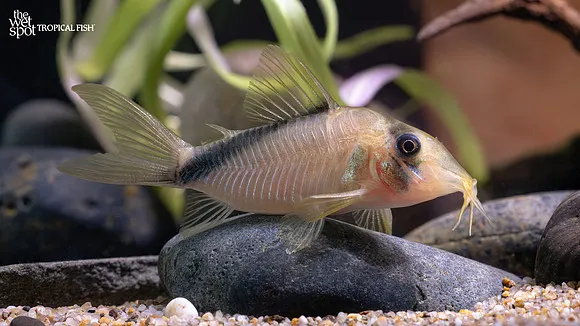 3.5 in (9 cm)40 gal (150 L)70–79°F (21–26°C)
Giant brochis
Brochis britskii
3.5 in (9 cm) · 40 gal (150 L)
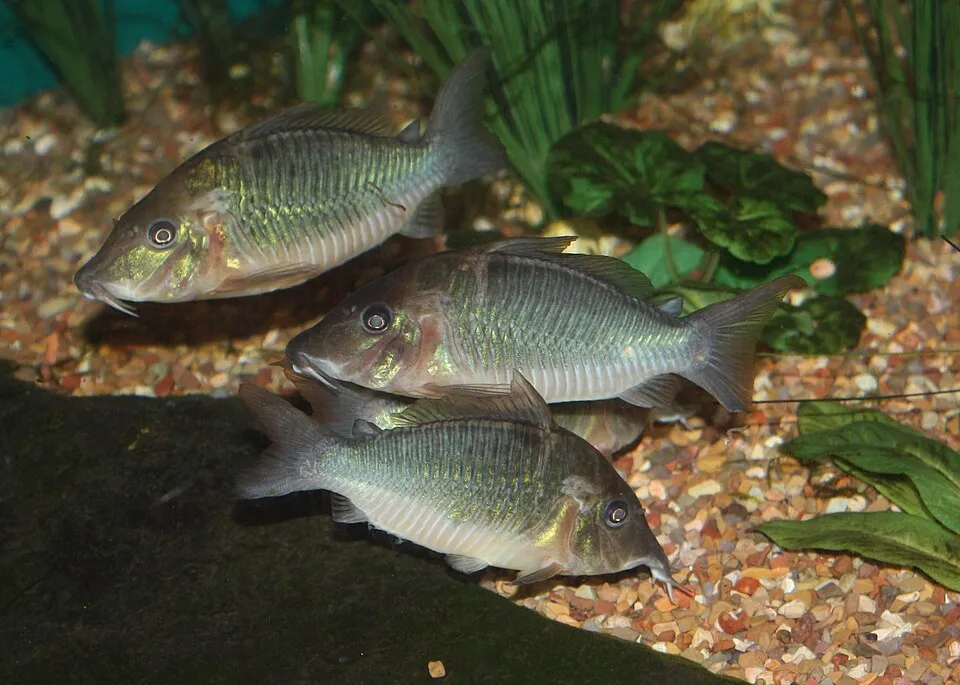 3.5 in (9 cm)40 gal (150 L)70–79°F (21–26°C)
Hognosed brochis
Brochis multiradiatus
3.5 in (9 cm) · 40 gal (150 L)
 3.1 in (8 cm)40 gal (150 L)70–82°F (21–28°C)
Emerald catfish
Brochis splendens
3.1 in (8 cm) · 40 gal (150 L)