Emerald catfish
Brochis splendens
Also known as Corydoras splendens, Emerald green brochis
FreshwaterFish
Care at a glance
- Temperature
- 70–82°F
- 21–28°C
- pH
- 6.5–7.5
- Adult size
- 3.1 in
- 8 cm
- Minimum tank
- 40 gal
- 150 L
- Temperament
- Peaceful
- Social behavior
- Shoaling
- Swim level
- Bottom
- Difficulty
- Medium
- Breeding
- No record
- Rarity
- Rare
- Family
- Callichthyidae
- Origin
- Brazil, Peru, Ecuador, Colombia
Overview
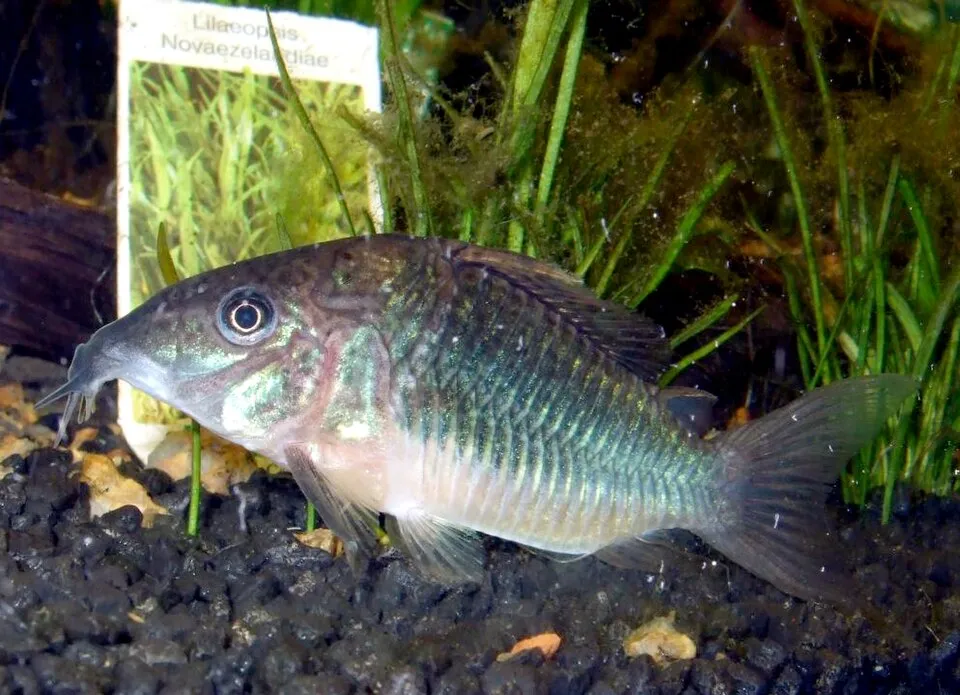
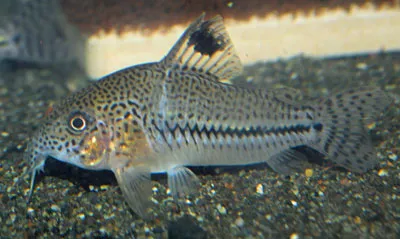
The emerald catfish is a larger, deep bodied cory that still shoals, so keep at least six together and give them plenty of open floor. They are peaceful and mix well with medium sized calm community fish, spending their time grazing the bottom for food. Offer sinking pellets, frozen bloodworm and other meaty foods, and some vegetable matter, making sure enough sinks past the mid water fish. Because these are bulky and active, plan on a tank of around 150 liters or larger for a group.
In the wild
Corydoras splendens is widespread in the upper Amazon across Brazil, Peru, Ecuador, and Colombia, living over sand and mud in warm, soft, slow moving water. Give it a soft sand bed, driftwood, and shaded planting, with clean, gently filtered water. It suits a warm range of about 21 to 28 C and a near neutral pH of 6.5 to 7.5. Roomy open bottom lets a group forage naturally.
Good to know
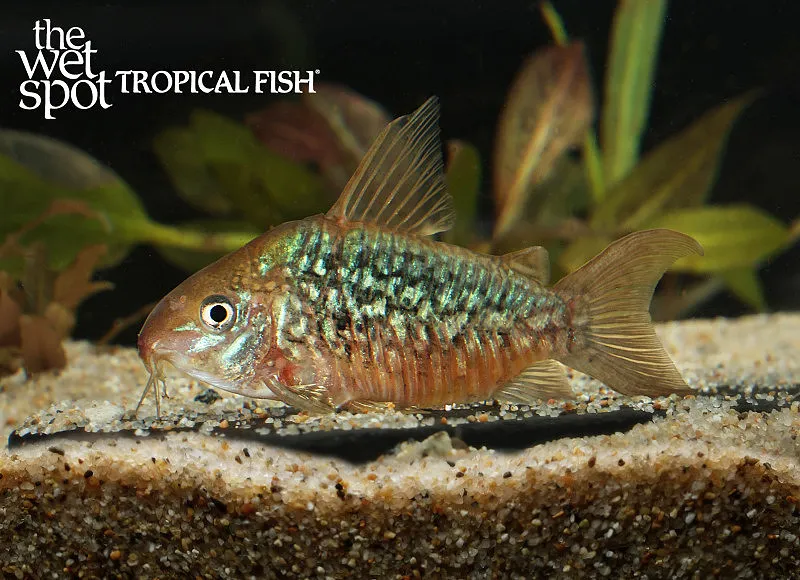
This robust armored catfish of the family Callichthyidae reaches around 8 cm and shines with an emerald green metallic sheen along the flanks. For years it was placed in the genus Brochis as Brochis splendens, and it still carries a fuller, deeper body and a higher dorsal fin ray count than a typical Corydoras. Home spawning is not commonly recorded, but the group lays adhesive eggs the female carries briefly between her pelvic fins.
Did you know
Long known to hobbyists as the emerald brochis, this fish spent decades in the separate genus Brochis, set apart by its stout body and the extra rays in its fan shaped dorsal fin. The green sheen that names it can glow almost metallic under good light.
Weekly picks
Tank mates
Emerald catfish is a peaceful, shoaling species that keeps to the bottom. These picks share a community profile with it, are safe together in both directions, and overlap on water type, temperature and pH.
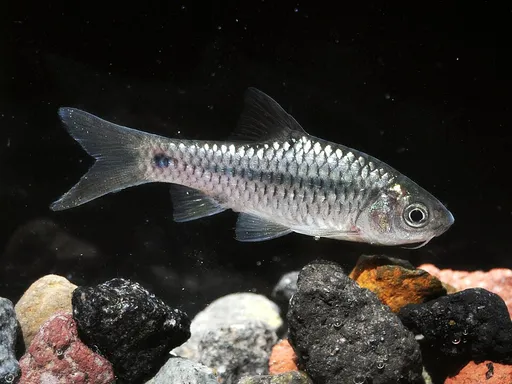
Spotted barb
Barbodes binotatus
Freshwater5.9 in (15 cm) · 40 gal (150 L)72–79°F (22–26°C)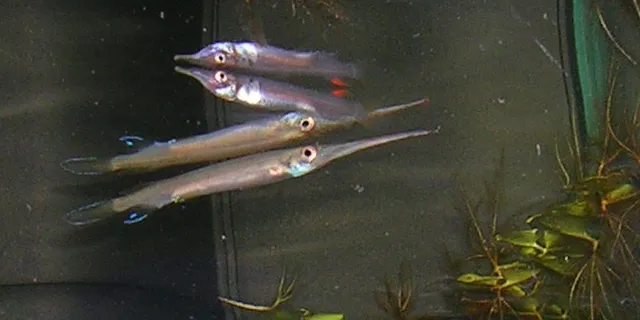
Forest halfbeak
Hemirhamphodon pogonognathus
Freshwater3.5 in (9 cm) · 34 gal (130 L)75–82°F (24–28°C)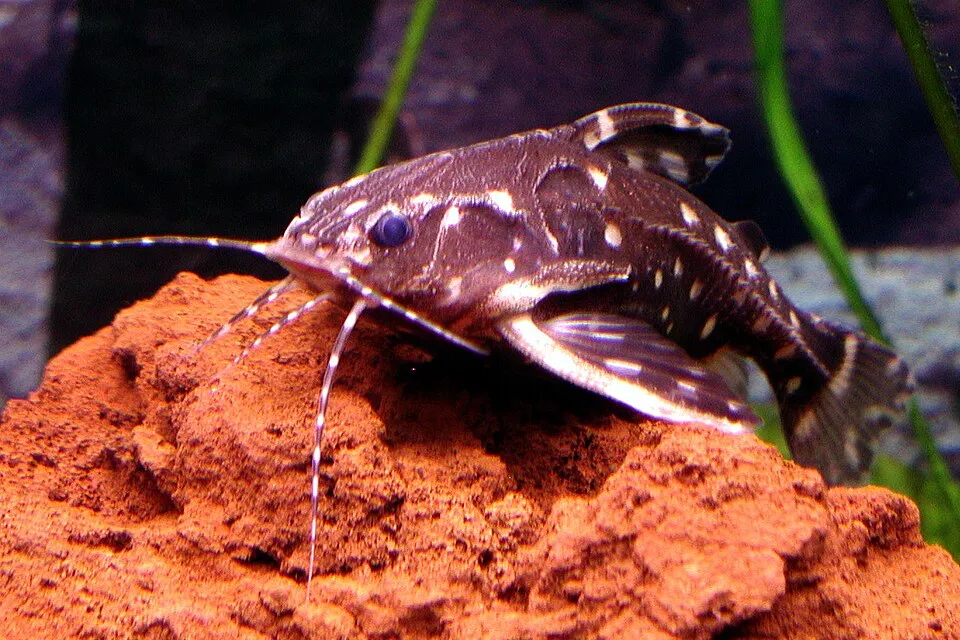
Spotted raphael catfish
Agamyxis pectinifrons
Freshwater5.9 in (15 cm) · 40 gal (150 L)72–79°F (22–26°C)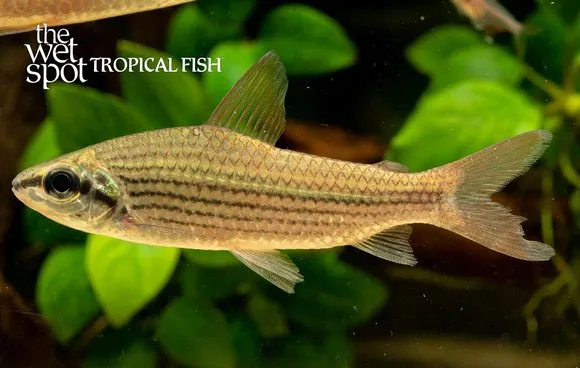
Golden curimata
Cyphocharax multilineatus
Freshwater4.3 in (11 cm) · 40 gal (150 L)73–82°F (23–28°C)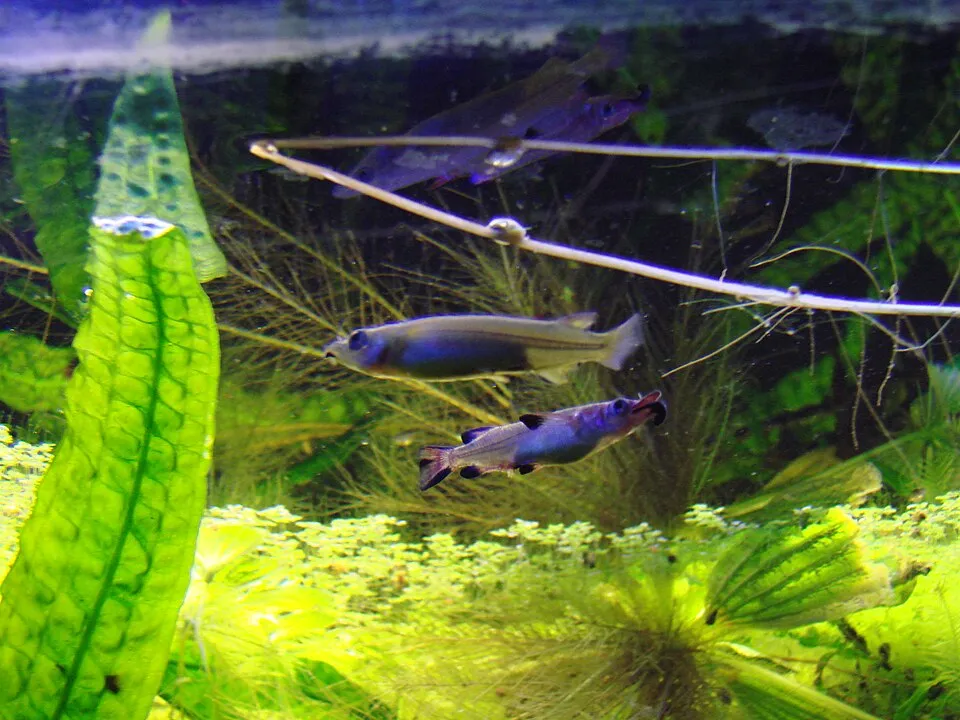
Celebes halfbeak
Nomorhamphus liemi
Freshwater3.5 in (9 cm) · 40 gal (150 L)68–77°F (20–25°C)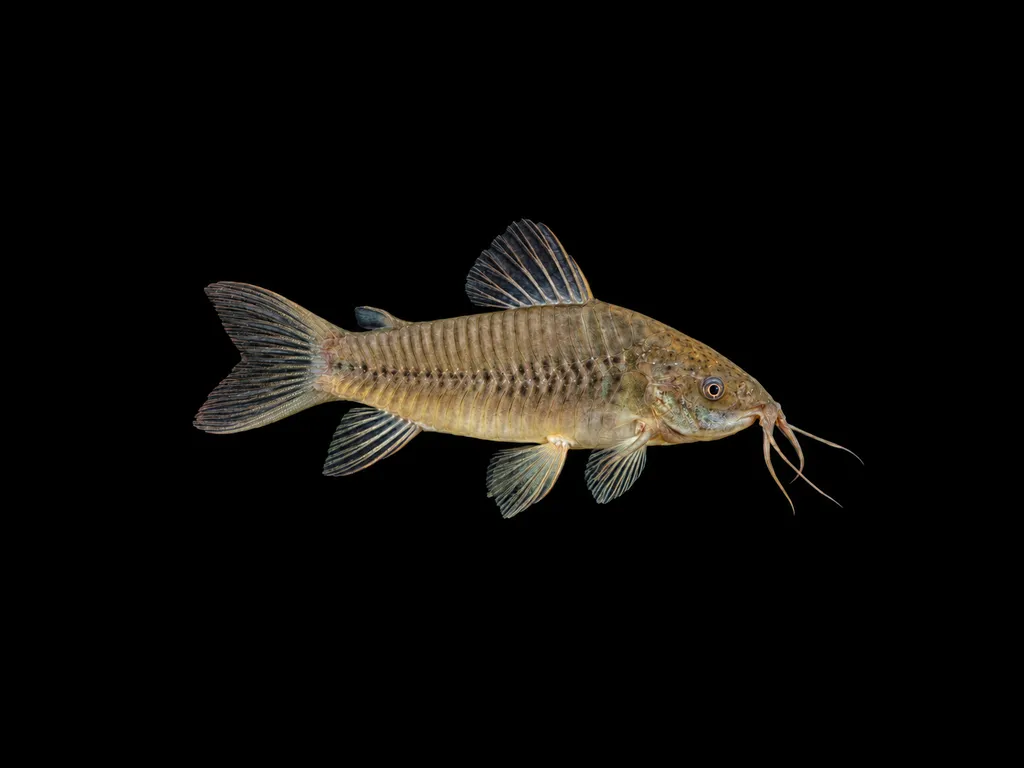
Hoplo catfish
Hoplosternum littorale
Freshwater7.9 in (20 cm) · 40 gal (150 L)72–81°F (22–27°C)
Common questions
What size tank does an Emerald catfish need?
An Emerald catfish needs at least 40 gal (150 L). It spends most of its time in the bottom.
What temperature and pH does an Emerald catfish need?
An Emerald catfish is comfortable at 70–82°F (21–28°C) with a pH of 6.5–7.5.
How big does an Emerald catfish get?
An adult Emerald catfish reaches about 3.1 in (8 cm).
Does an Emerald catfish need a group?
Yes. An Emerald catfish is a shoaling species and should be kept in a group, not singly.
Related species
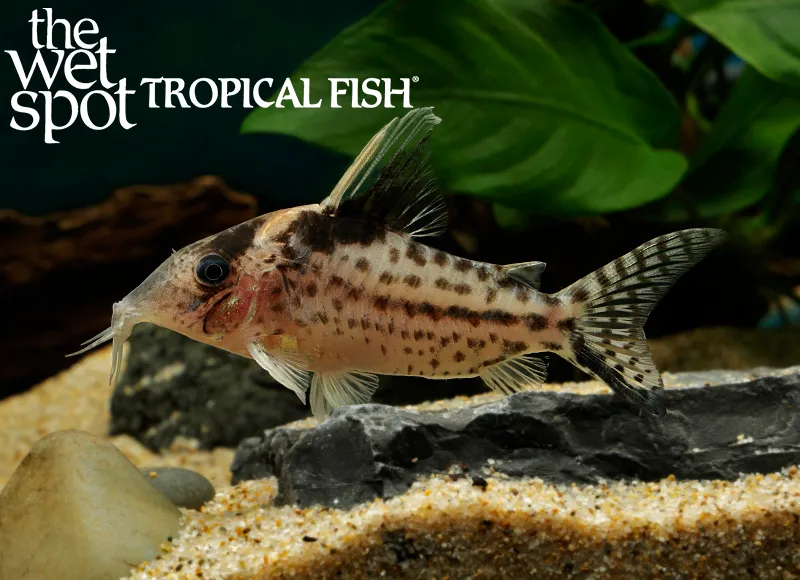 3.1 in (8 cm)40 gal (150 L)72–79°F (22–26°C)
Robust cory
Brochis robusta
3.1 in (8 cm) · 40 gal (150 L)
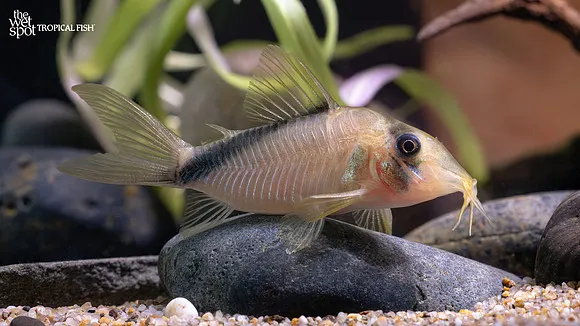
 3 in (7.5 cm)26 gal (100 L)72–82°F (22–28°C)
Pantanal cory
Brochis pantanalensis
3 in (7.5 cm) · 26 gal (100 L)
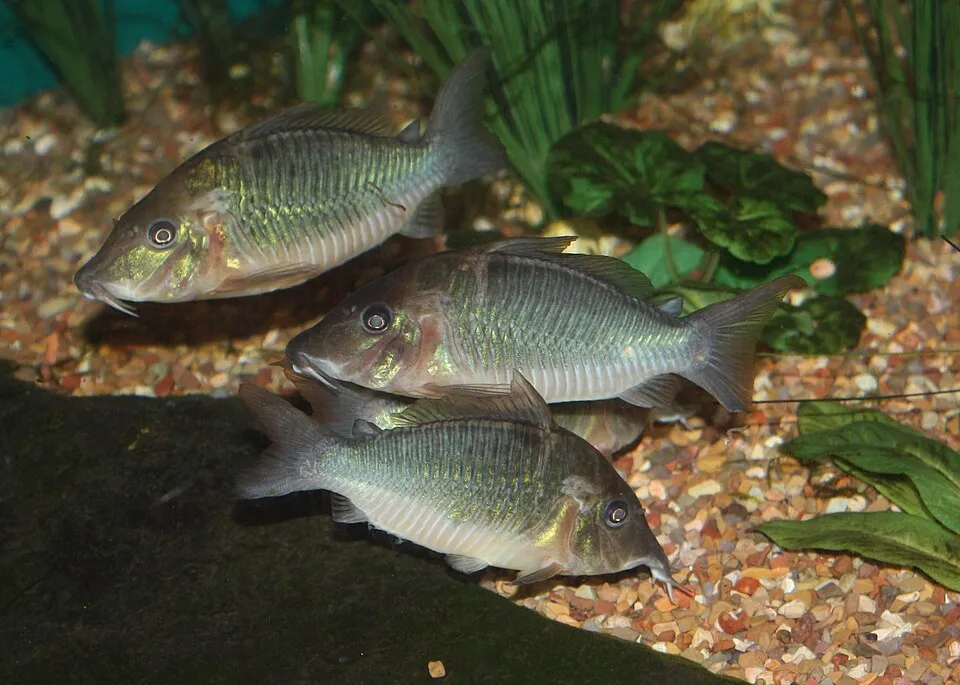
 3.5 in (9 cm)40 gal (150 L)70–79°F (21–26°C)
Giant brochis
Brochis britskii
3.5 in (9 cm) · 40 gal (150 L)
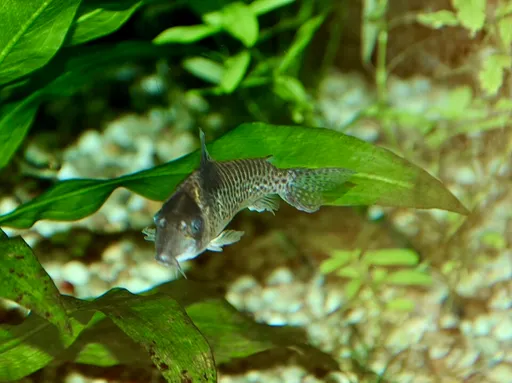
 3.5 in (9 cm)40 gal (150 L)70–79°F (21–26°C)
Hognosed brochis
Brochis multiradiatus
3.5 in (9 cm) · 40 gal (150 L)
 2.8 in (7 cm)24 gal (90 L)72–79°F (22–26°C)
Agassiz's cory
Brochis agassizii
2.8 in (7 cm) · 24 gal (90 L)
 2.8 in (7 cm)24 gal (90 L)72–79°F (22–26°C)
Leopard cory
Brochis leopardus
2.8 in (7 cm) · 24 gal (90 L)