European bitterling
Rhodeus amarus
FreshwaterFish
Care at a glance
- Temperature
- 55–72°F
- 13–22°C
- pH
- 6.5–8.0
- Adult size
- 3.9 in
- 10 cm
- Minimum tank
- 34 gal
- 130 L
- Temperament
- Peaceful
- Social behavior
- Shoaling
- Swim level
- Middle
- Difficulty
- Medium
- Breeding
- No record
- Rarity
- Very rare
- Family
- Cyprinidae
- Origin
- Europe
Overview
European bitterlings are peaceful, shoaling coldwater fish that should be kept in a group of six or more, with a mix of males and females if you hope to see natural behavior. They swim in the middle water and get along well with other temperate, gentle species, making them a good choice for an unheated tank or a cool community. They are undemanding feeders that take flake, small pellets, frozen foods, and some vegetable matter. If you want to breed them you will also need a living freshwater mussel, which is central to how they reproduce. A tank around 130 liters or larger suits a group.
In the wild
The European bitterling is native to slow, weedy lowland waters across much of Europe, including ponds, canals, backwaters, and the quiet margins of rivers where freshwater mussels live. It is a temperate fish, comfortable in cool water of about 13–22 C and a neutral to slightly alkaline pH of 6.5–8.0, and it benefits from a seasonal cool period. Furnish its tank with a soft substrate, dense planting, and open swimming space, and keep the water clean and well oxygenated. A sandy area suits the mussels it depends on for spawning.
Good to know
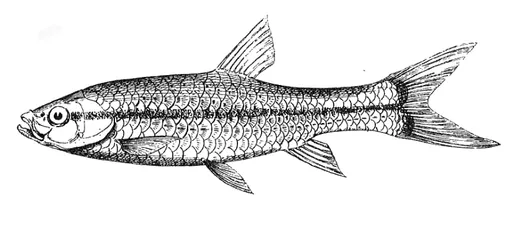
Rhodeus amarus is a small, deep bodied member of the family Cyprinidae that reaches about 10 cm. It is best known for an extraordinary breeding strategy: the female grows a long tube called an ovipositor and uses it to place her eggs inside the gill chamber of a living freshwater mussel, where the male's milt is drawn in to fertilize them. The young develop in safety within the mussel and swim free after a few weeks. This mussel dependence means it is not casually spawned in a bare aquarium.
Did you know
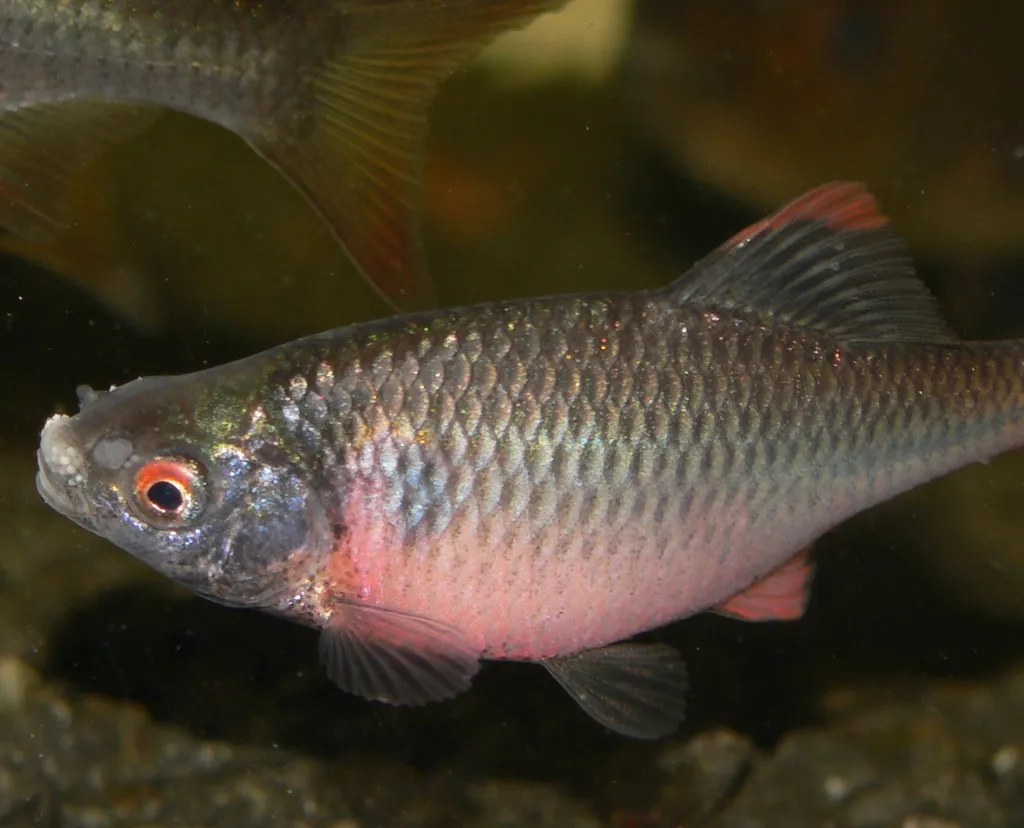
The bitterling and the freshwater mussel share a two way partnership. The fish shelters its eggs inside the mussel, while the mussel's own larvae, called glochidia, hitch a ride on the bitterling's skin and gills to disperse. During courtship the male turns iridescent pink and purple and defends the mussel like a prized territory.
Symbiotic relationships
Bitterlings and freshwater mussels
Bitterlings do not lay their eggs in the open at all. In spring the female grows a long egg tube and slips her eggs through the outflow siphon of a living freshwater mussel, into its gill chamber, while the male releases sperm over the inflow siphon so the mussel draws it in. The embryos develop inside the mussel for about a month, protected from everything, then swim out. The mussel's own larvae attach to passing fish to develop, so the two use each other. Biologists now read it as a mild parasitism running both ways rather than a partnership: the eggs cost the mussel oxygen and food, and bitterlings have evolved to shed the mussel larvae that other fish carry.
Bitterlings are cool-water fish for an unheated tank and breed only with a live mussel present. Swan or duck mussels are the usual hosts; they are filter feeders that starve in clean water and need a mature, well fed tank with fine sand to sit in, which is why breeding bitterlings is a project rather than a happy accident. Watch the female's egg tube lengthen and the male stake out the mussel, and you have seen the whole ritual.
Weekly picks
Tank mates
European bitterling is a peaceful, shoaling species that keeps to the middle. These picks share a community profile with it, are safe together in both directions, and overlap on water type, temperature and pH.
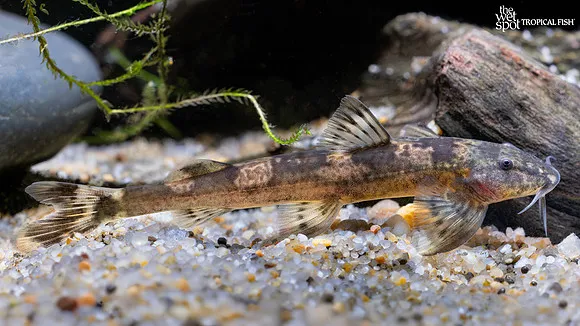
Senegal kuhli cat
Amphilius rheophilus
Freshwater4.7 in (12 cm) · 30 gal (112 L)70–79°F (21–26°C)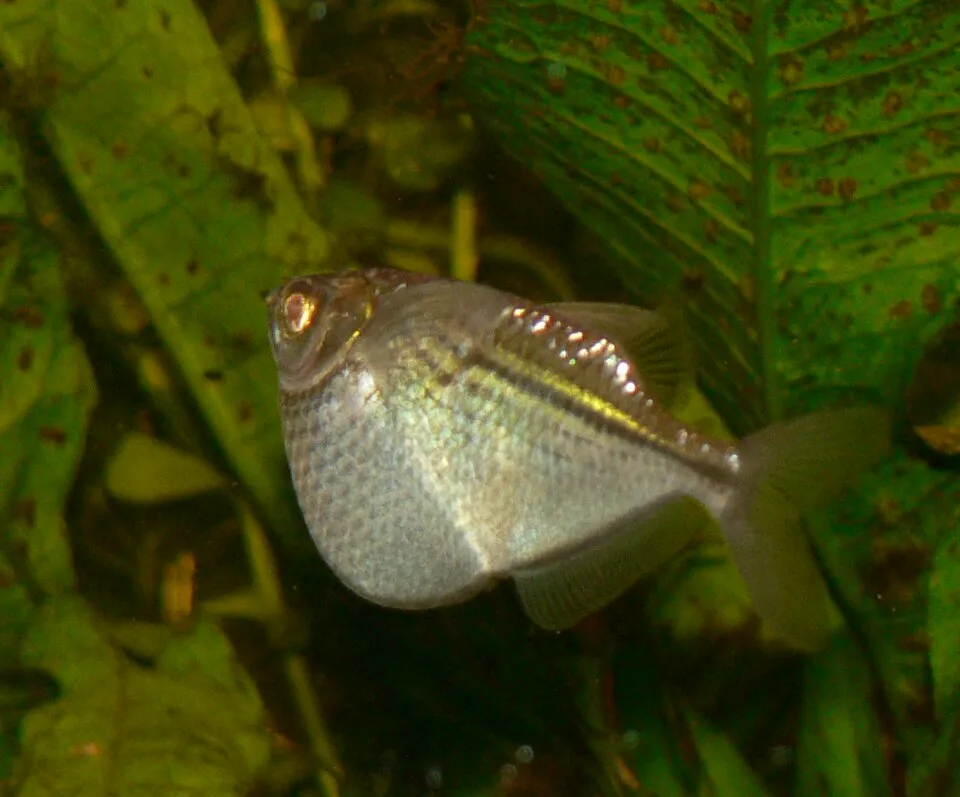
Common hatchetfish
Gasteropelecus sternicla
Freshwater1.6 in (4 cm) · 33 gal (125 L)68–82°F (20–28°C)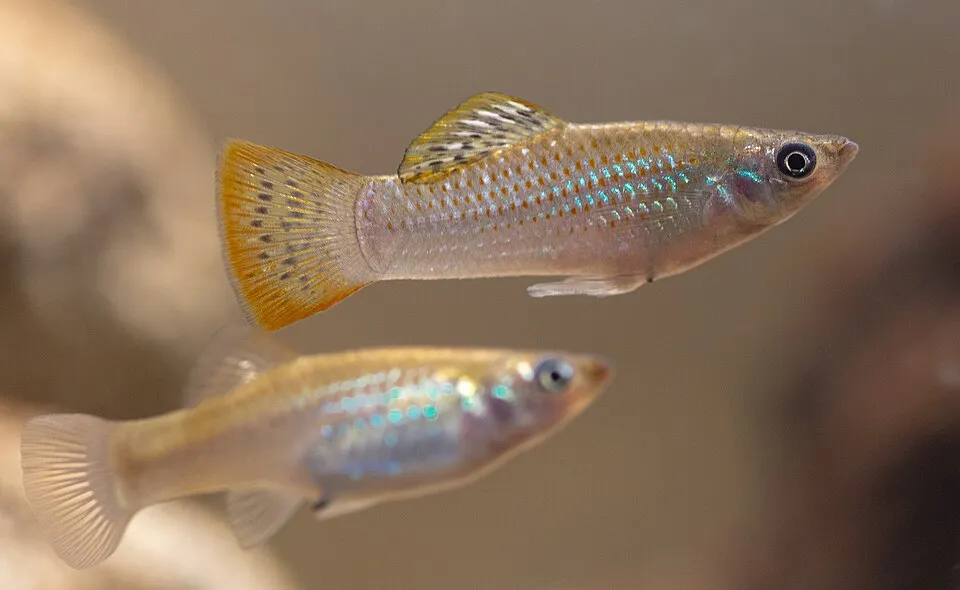
Shortfin molly
Poecilia mexicana
FreshwaterBrackish4.3 in (11 cm) · 32 gal (120 L)72–82°F (22–28°C)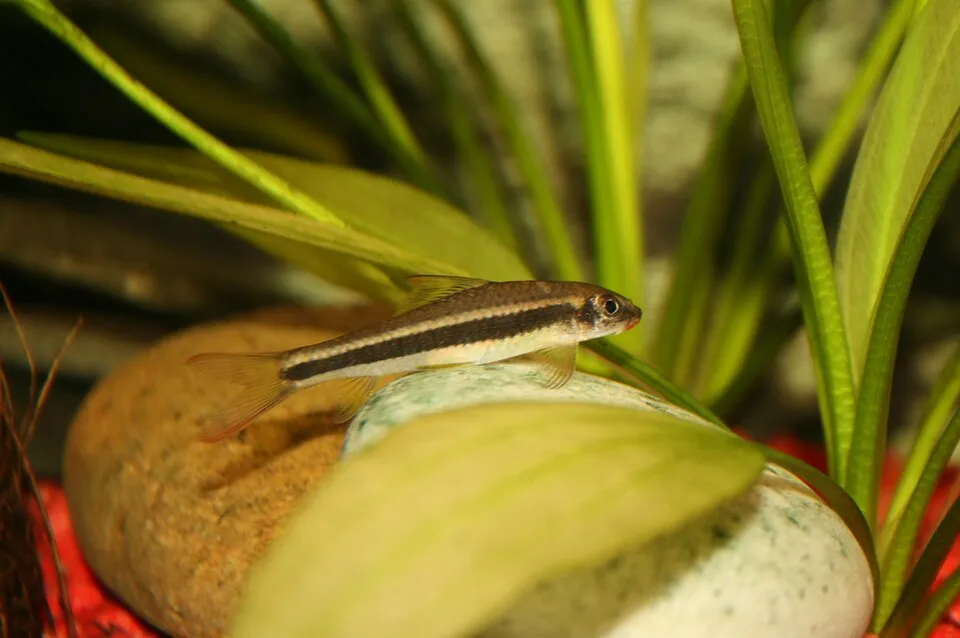
Cambodian log sucker
Garra cambodgiensis
Freshwater5.9 in (15 cm) · 32 gal (120 L)68–81°F (20–27°C)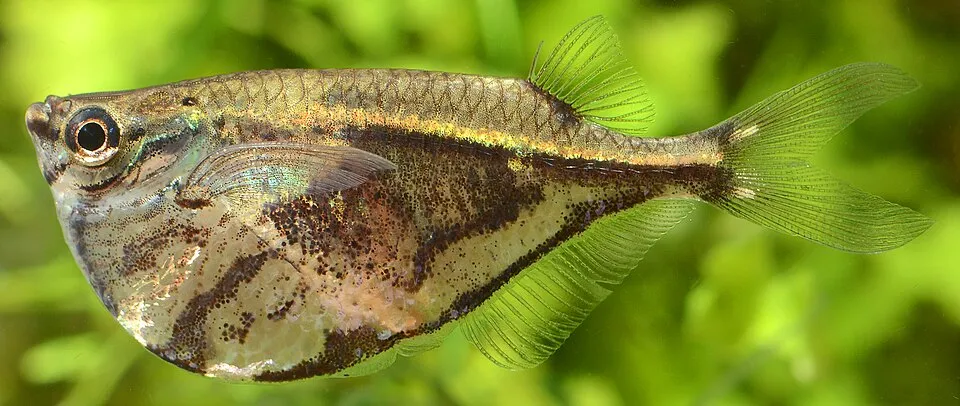
Marbled hatchetfish
Carnegiella strigata
Freshwater1.6 in (4 cm) · 32 gal (120 L)68–82°F (20–28°C)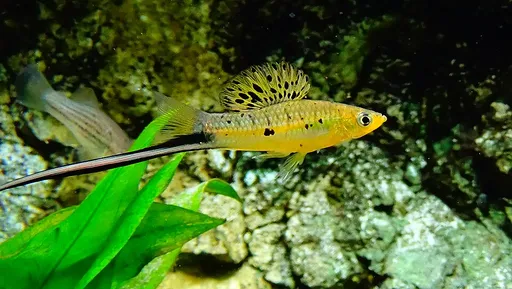
Montezuma swordtail
Xiphophorus montezumae
Freshwater5.5 in (14 cm) · 32 gal (120 L)68–79°F (20–26°C)
Common questions
What size tank does a European bitterling need?
A European bitterling needs at least 34 gal (130 L). It spends most of its time in the middle.
What temperature and pH does a European bitterling need?
A European bitterling is comfortable at 55–72°F (13–22°C) with a pH of 6.5–8.0.
How big does a European bitterling get?
An adult European bitterling reaches about 3.9 in (10 cm).
Does a European bitterling need a group?
Yes. A European bitterling is a shoaling species and should be kept in a group, not singly.
Related species
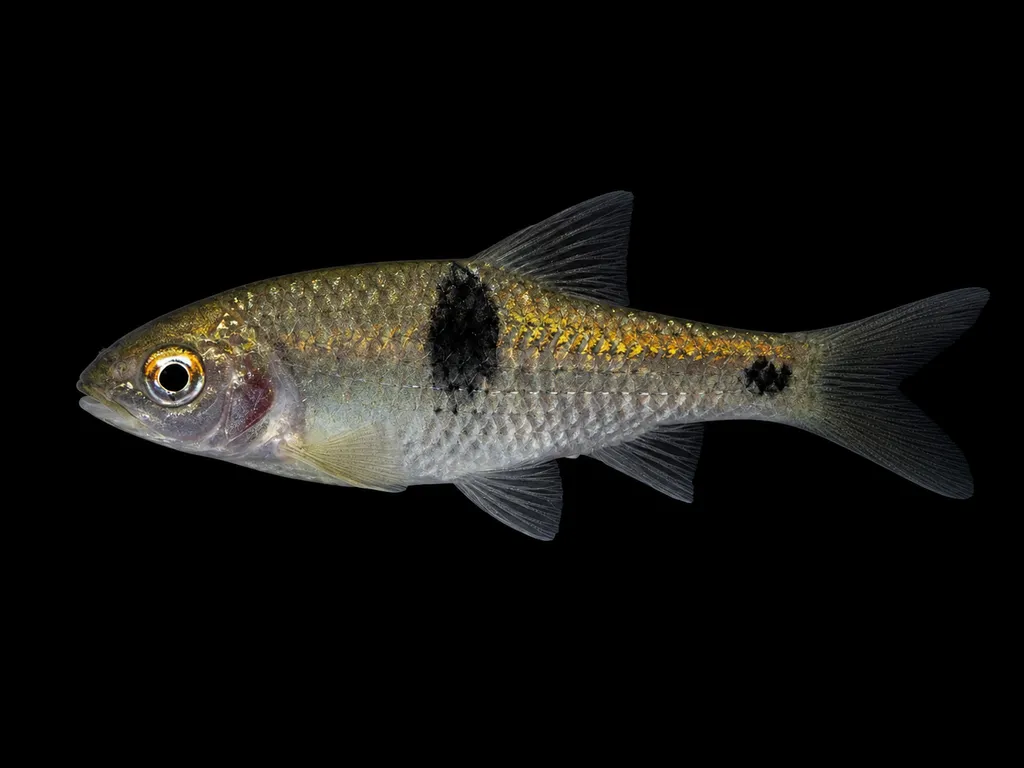 3.9 in (10 cm)29 gal (110 L)72–81°F (22–27°C)
Binduchitra barb
Systomus binduchitra
3.9 in (10 cm) · 29 gal (110 L)
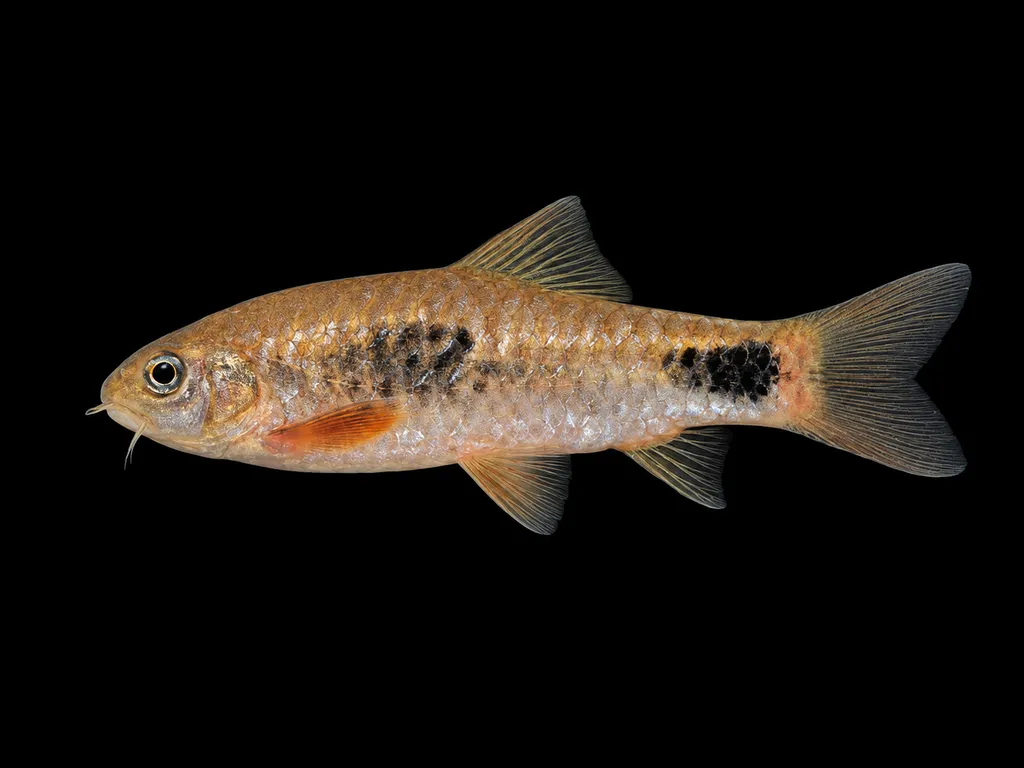 3.9 in (10 cm)24 gal (90 L)72–81°F (22–27°C)
Cameroon barb
Enteromius camptacanthus
3.9 in (10 cm) · 24 gal (90 L)
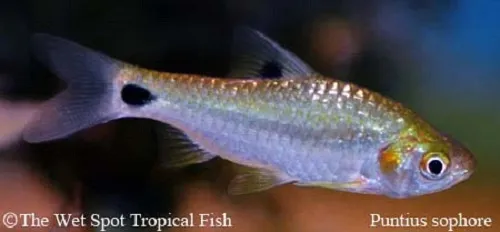 3.9 in (10 cm)29 gal (110 L)68–81°F (20–27°C)
Pool barb
Puntius sophore
3.9 in (10 cm) · 29 gal (110 L)
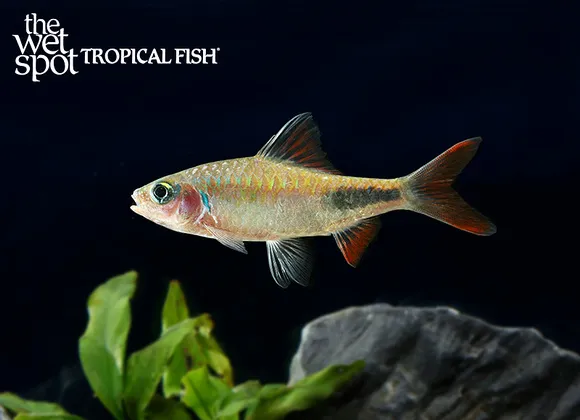 3.9 in (10 cm)42 gal (160 L)70–79°F (21–26°C)
Rohan's barb
Dawkinsia rohani
3.9 in (10 cm) · 42 gal (160 L)
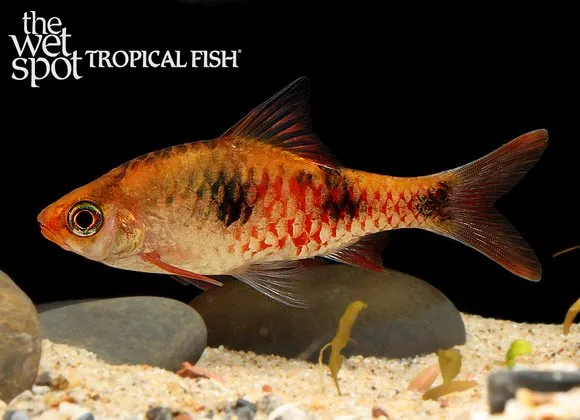 3.9 in (10 cm)42 gal (160 L)70–79°F (21–26°C)
Ruby-tinted barb
Dawkinsia rubrotincta
3.9 in (10 cm) · 42 gal (160 L)
 3.9 in (10 cm)32 gal (120 L)72–81°F (22–27°C)
Slender rasbora
Rasbora daniconius
3.9 in (10 cm) · 32 gal (120 L)