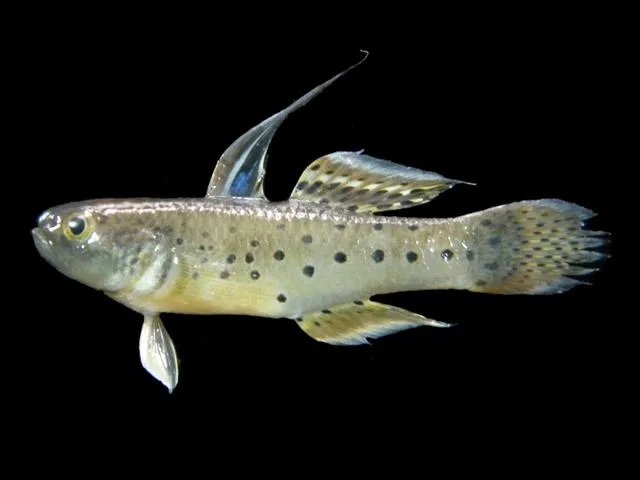
Neon golden-stripe shark
Sarcocheilichthys parvus
Also known as Chinese neon golden stripe shark, Golden-stripe gudgeon
FreshwaterFish
Care at a glance
- Temperature
- 61–75°F
- 16–24°C
- pH
- 6.5–7.8
- Adult size
- 3.5 in
- 9 cm
- Minimum tank
- 30 gal
- 112 L
- Temperament
- Mostly peaceful
- Social behavior
- Schooling
- Swim level
- Bottom
- Difficulty
- Medium
- Breeding
- No record
- Rarity
- Rare
- Family
- Gobionidae
- Origin
- Hill streams of southern China
Overview
The neon golden-stripe shark is a small, sociable bottom fish for a cool, unheated tank with steady flow. It is best with a little experience.
Did you know
The gold stripe that gives the neon golden-stripe shark its shop name is strongly iridescent, catching light like polished metal. Against a dark substrate, the fish can look almost lit from within.
Caring for the neon golden-stripe shark
Keep neon golden-stripe sharks in a group of six or more, in a tank of at least 30 gal (112 L). A group settles them and spreads out any low-level squabbling. Give them open sand and rounded gravel with a few smooth boulders, and leave room to forage.
Run the tank unheated or lightly cooled, at 61 to 75°F (16 to 24°C) with a neutral pH of 6.5 to 7.8. A decent, steady current recreates the open, running water they prefer and keeps their colors strong.
They spend their time near the bottom, pecking at surfaces. Feed sinking foods that are not too coarse, such as micro pellets, crushed wafers and small frozen bloodworm and daphnia.
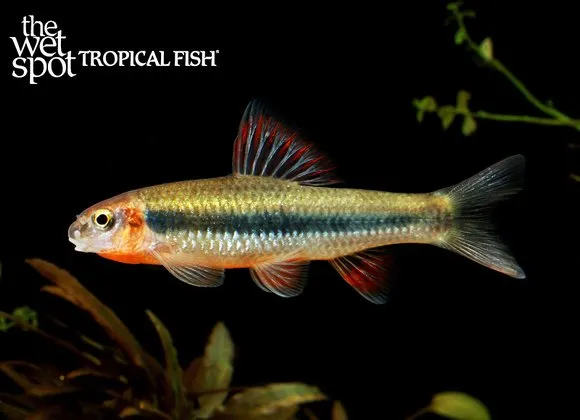
Neon golden-stripe sharks are mostly peaceful and safe in a community, so choose calm tank mates of a similar size. Breeding males flush their fins with pink-red and develop a pale patch on the snout. There is no established record of them breeding in the aquarium.
Good to know
The neon golden-stripe shark is sold as a shark, but it is a gudgeon in the family Gobionidae. A bright gold stripe runs the length of its pewter body. Like other members of its genus, Sarcocheilichthys, it has a small, downturned mouth suited to picking food from surfaces.
In the wild
The neon golden-stripe shark comes from clear, cool hill streams in southern China. It lives over gravel and stone in flowing water.
Weekly picks
Tank mates
The neon golden-stripe shark is a mostly peaceful, schooling species that keeps to the bottom. These picks share a community profile with it, are safe together in both directions, and overlap on water type, temperature and pH.
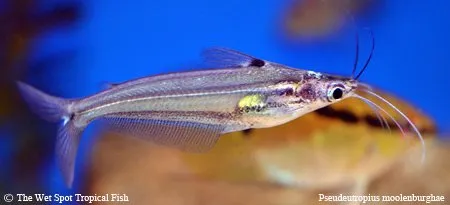
Moolenburgh's glass catfish
Pseudeutropius moolenburghae
Freshwater3.9 in (10 cm) · 30 gal (112 L)73–82°F (23–28°C)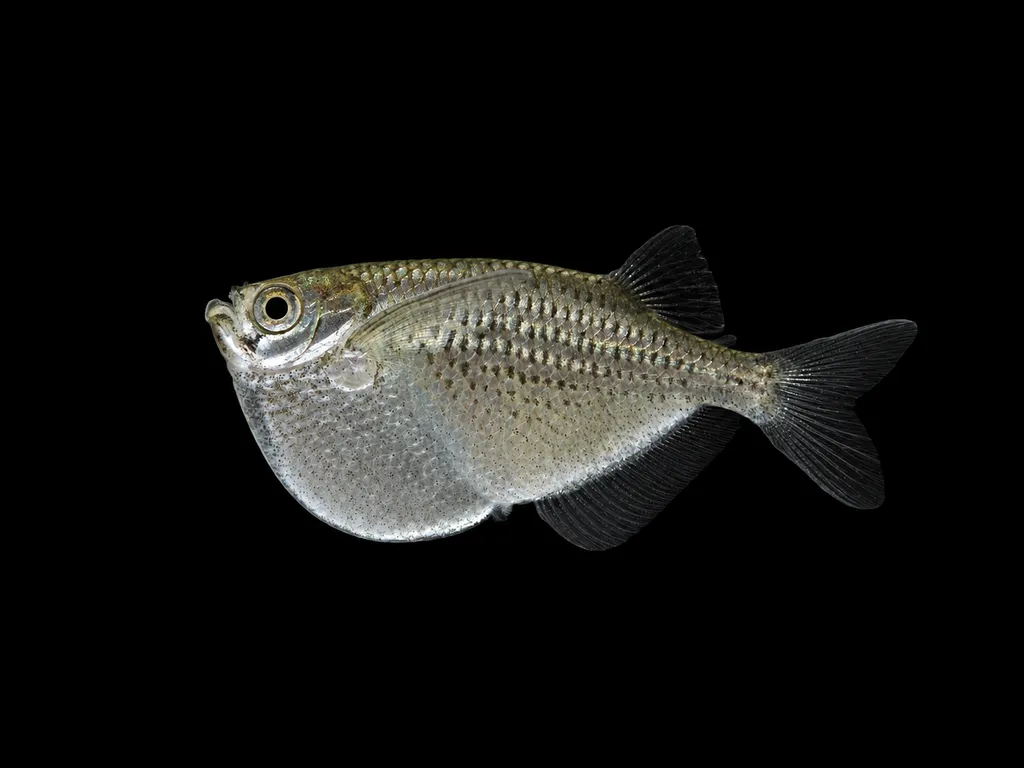
Silver hatchetfish
Gasteropelecus levis
Freshwater1.4 in (3.5 cm) · 30 gal (112 L)73–82°F (23–28°C)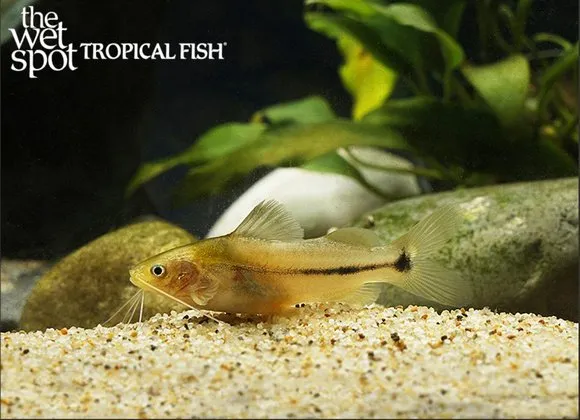
Mees' antenna catfish
Brachyrhamdia meesi
Freshwater2.4 in (6 cm) · 30 gal (112 L)73–82°F (23–28°C)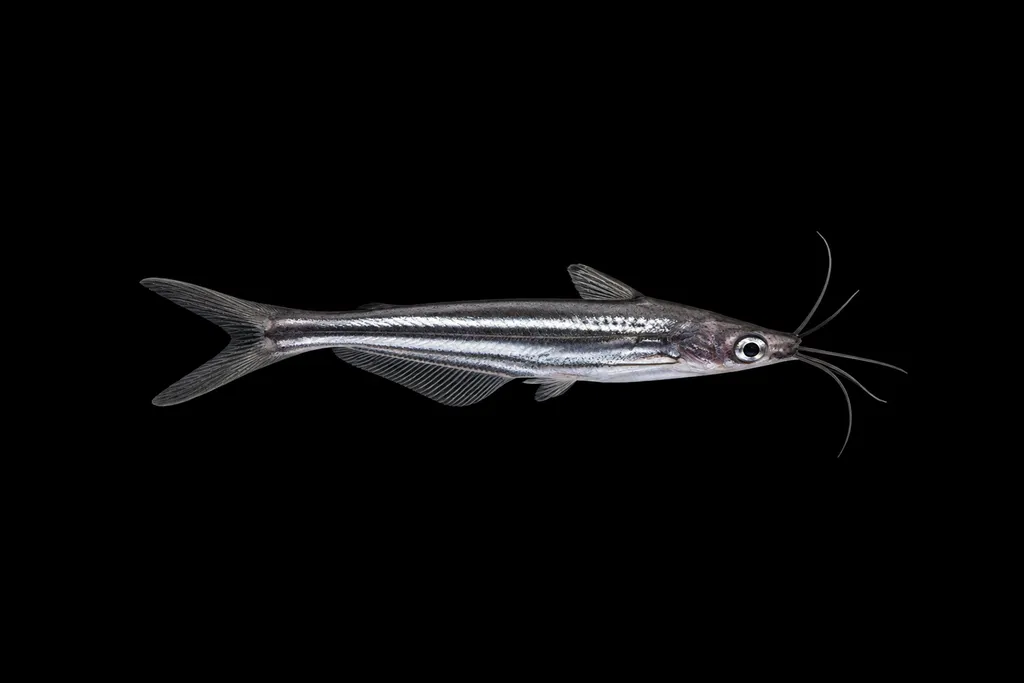
Mini shark cat
Pseudeutropius brachypopterus
Freshwater4.3 in (11 cm) · 30 gal (112 L)73–82°F (23–28°C)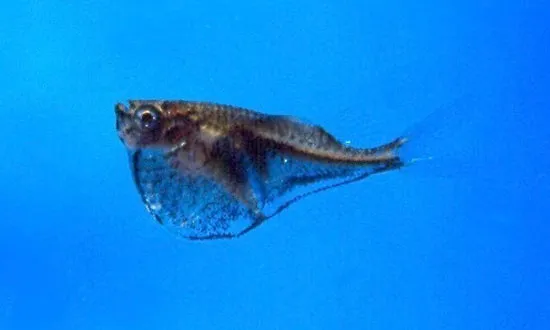
Blackwing hatchetfish
Carnegiella marthae
Freshwater1.4 in (3.5 cm) · 30 gal (115 L)68–82°F (20–28°C)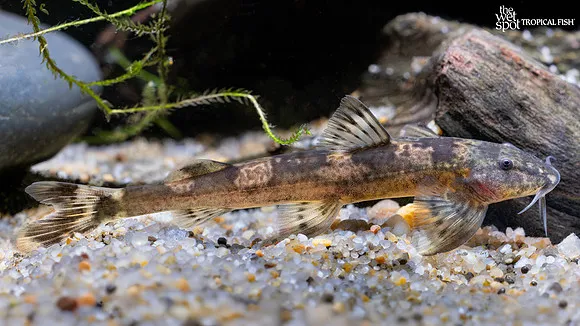
Senegal kuhli cat
Amphilius rheophilus
Freshwater4.7 in (12 cm) · 30 gal (112 L)70–79°F (21–26°C)
Common questions
What size tank does a neon golden-stripe shark need?
A neon golden-stripe shark needs at least 30 gal (112 L). It spends most of its time in the bottom.
What temperature and pH does a neon golden-stripe shark need?
A neon golden-stripe shark is comfortable at 61–75°F (16–24°C) with a pH of 6.5–7.8.
What does a neon golden-stripe shark eat?
A neon golden-stripe shark eats sinking foods that are not too coarse. Offer micro pellets, crushed wafers and small frozen foods such as bloodworm and daphnia.
How big does a neon golden-stripe shark get?
An adult neon golden-stripe shark reaches about 3.5 in (9 cm).
Does a neon golden-stripe shark need a group?
Yes. A neon golden-stripe shark is a schooling species and should be kept in a group, not singly.
How can you tell a male neon golden-stripe shark from a female?
Males in breeding condition flush their fins pink-red and develop a pale patch on the snout.
Related species
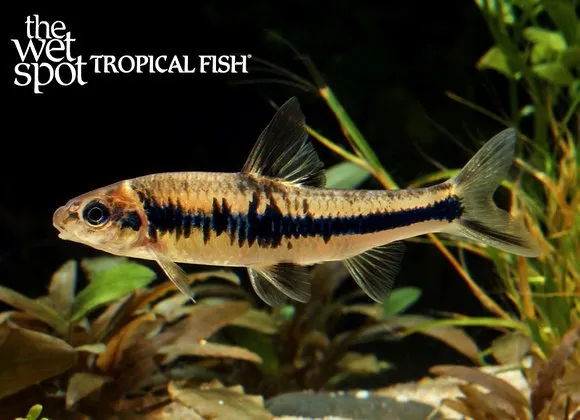 6.3 in (16 cm)53 gal (200 L)57–75°F (14–24°C)
Rainbow gudgeon
Sarcocheilichthys nigripinnis
6.3 in (16 cm) · 53 gal (200 L)
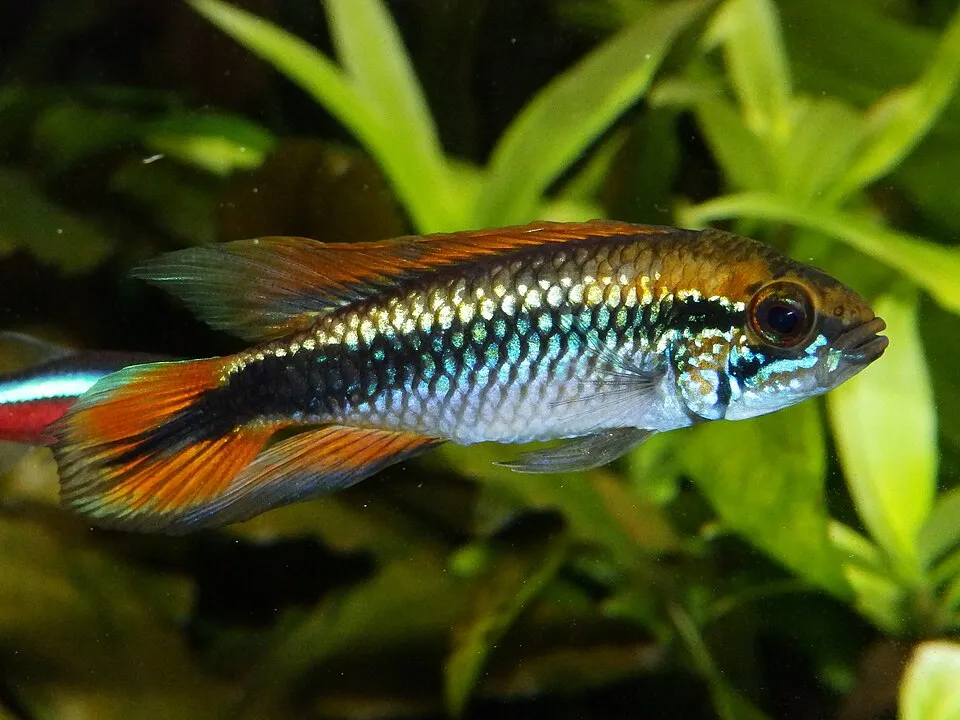 3.5 in (9 cm)20 gal (75 L)72–84°F (22–29°C)
Agassiz's dwarf cichlid
Apistogramma agassizii
3.5 in (9 cm) · 20 gal (75 L)
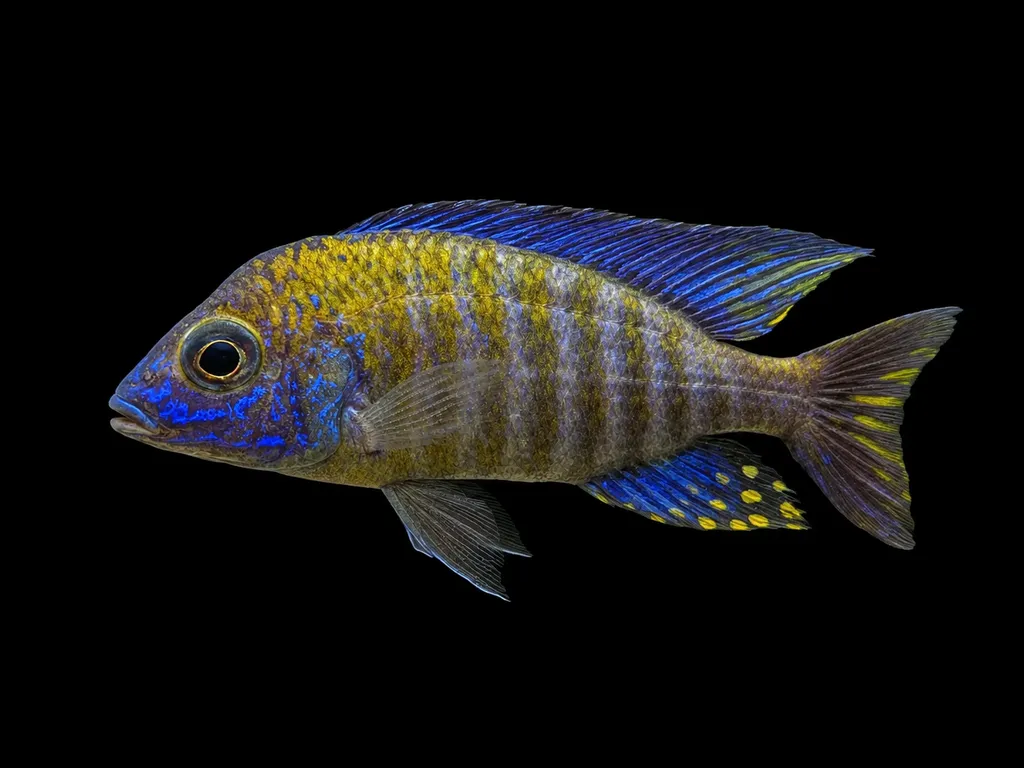 3.5 in (9 cm)63 gal (240 L)75–81°F (24–27°C)
Chitande aulonocara
Aulonocara ethelwynnae
3.5 in (9 cm) · 63 gal (240 L)
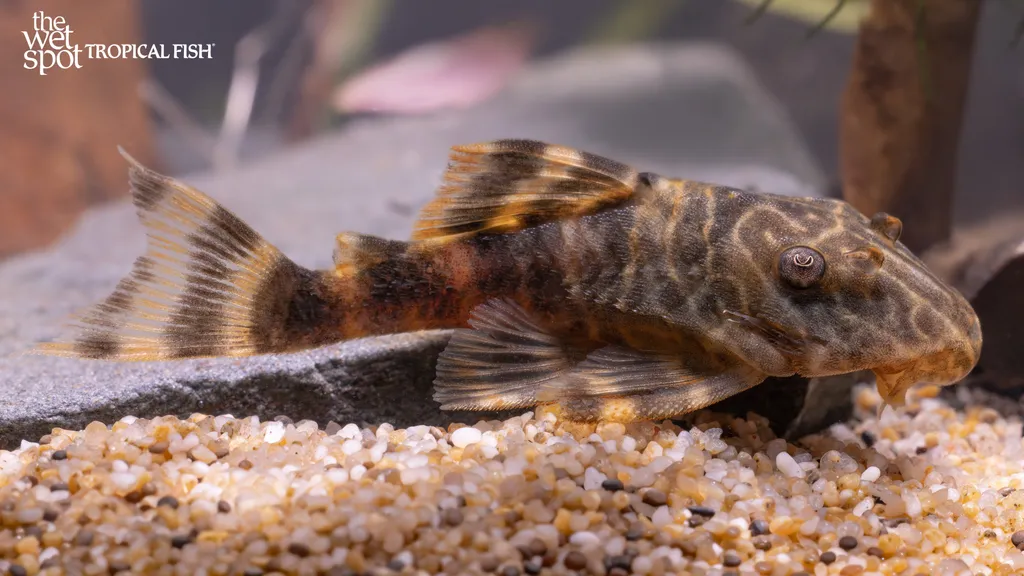 3.5 in (9 cm)20 gal (75 L)73–82°F (23–28°C)
Clown pleco
Panaqolus maccus
3.5 in (9 cm) · 20 gal (75 L)
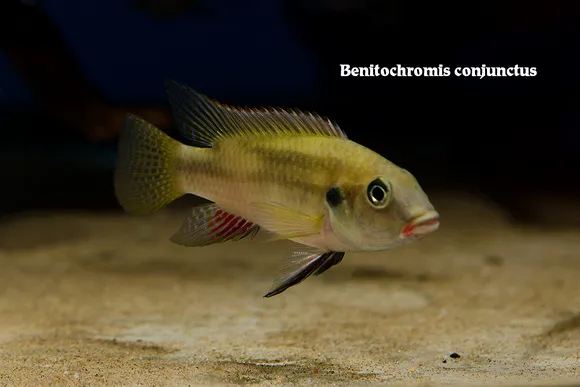 3.5 in (9 cm)42 gal (160 L)73–81°F (23–27°C)
Conjunctus benitochromis
Benitochromis conjunctus
3.5 in (9 cm) · 42 gal (160 L)
 3.5 in (9 cm)21 gal (80 L)68–79°F (20–26°C)
Knight goby
Stigmatogobius sadanundio
3.5 in (9 cm) · 21 gal (80 L)