Blue Amur bitterling
Paracheilognathus himantegus
Also known as Taiwanese bitterling, Himantegus bitterling
FreshwaterFish
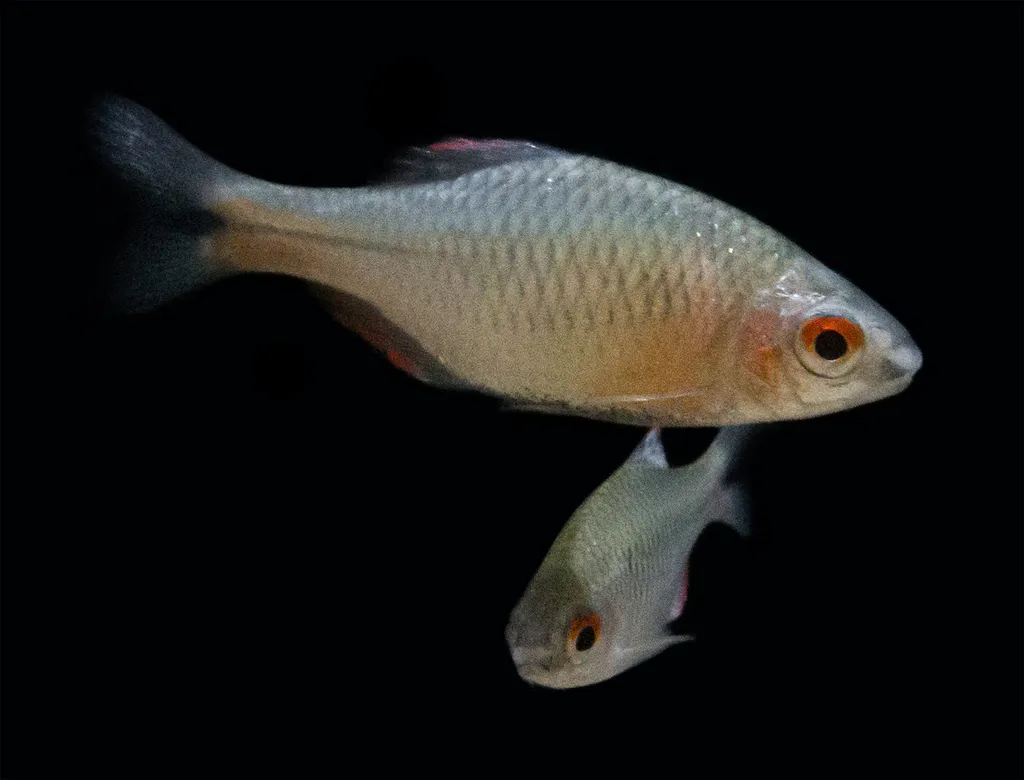
Care at a glance
- Temperature
- 57–79°F
- 14–26°C
- pH
- 6.8–8.0
- Adult size
- 3.1 in
- 8 cm
- Minimum tank
- 30 gal
- 112 L
- Temperament
- Peaceful
- Social behavior
- Schooling
- Swim level
- Middle
- Diet
- Omnivore
- Difficulty
- Medium
- Breeding
- Egg layer · Hard
- Rarity
- Rare
- Family
- Acheilognathidae
- Origin
- Taiwan and southern China
Overview
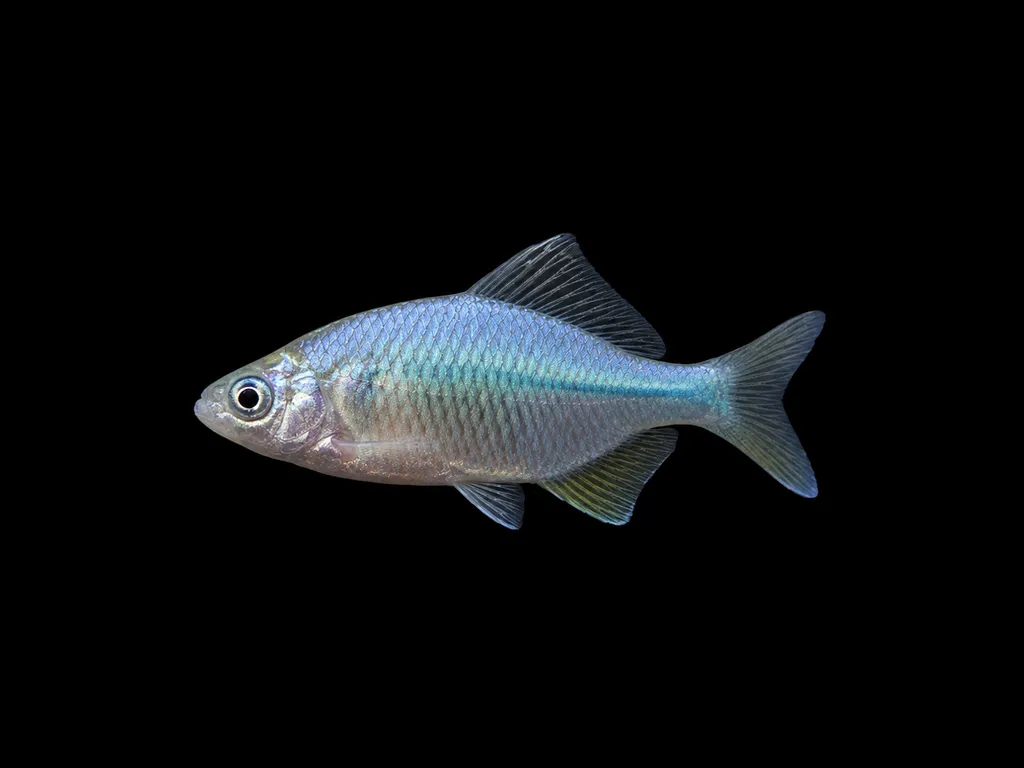
The blue Amur bitterling is a peaceful schooling fish for an unheated, planted community tank. It is a step up from the easiest fish.
Caring for the blue Amur bitterling
Keep blue Amur bitterlings in a group of six or more, in a tank of at least 30 gal (112 L). They are sociable shoalers that swim in the middle of the tank. Give them dense planting, a soft substrate and gentle flow.
The blue Amur bitterling is a coolwater fish that colors up without a heater. It tolerates a wide span of 57 to 79°F (14 to 26°C), with a neutral to slightly alkaline pH of 6.8 to 8.0. A cooler winter rest suits it.
Feed it as an omnivore, with small frozen foods, flake and some vegetable matter or algae. It is peaceful and mixes well with other calm, temperate fish.
Males show their best blue and rose tones when several are kept together, and they flush with color in the spawning season. The female uses a long ovipositor to place her eggs in the gill chamber of a living freshwater mussel, where they develop in safety. Breeding is hard, mostly because it depends on healthy mussels.
Good to know
The blue Amur bitterling, Paracheilognathus himantegus, is a bitterling in the family Acheilognathidae. It is also known as the Taiwanese bitterling or the himantegus bitterling.
In the wild
The blue Amur bitterling lives in slow, weedy lowland streams and ponds of Taiwan and southern China. It stays among plants over soft beds, in temperate water.
Symbiotic relationships
Bitterlings and freshwater mussels
Bitterlings do not lay their eggs in the open at all. In spring the female grows a long egg tube and slips her eggs through the outflow siphon of a living freshwater mussel, into its gill chamber, while the male releases sperm over the inflow siphon so the mussel draws it in. The embryos develop inside the mussel for about a month, protected from everything, then swim out. The mussel's own larvae attach to passing fish to develop, so the two use each other. Biologists now read it as a mild parasitism running both ways rather than a partnership: the eggs cost the mussel oxygen and food, and bitterlings have evolved to shed the mussel larvae that other fish carry.
Bitterlings are cool-water fish for an unheated tank and breed only with a live mussel present. Swan or duck mussels are the usual hosts; they are filter feeders that starve in clean water and need a mature, well fed tank with fine sand to sit in, which is why breeding bitterlings is a project rather than a happy accident. Watch the female's egg tube lengthen and the male stake out the mussel, and you have seen the whole ritual.
Weekly picks
Tank mates
The blue Amur bitterling is a peaceful, schooling species that keeps to the middle. These picks share a community profile with it, are safe together in both directions, and overlap on water type, temperature and pH.
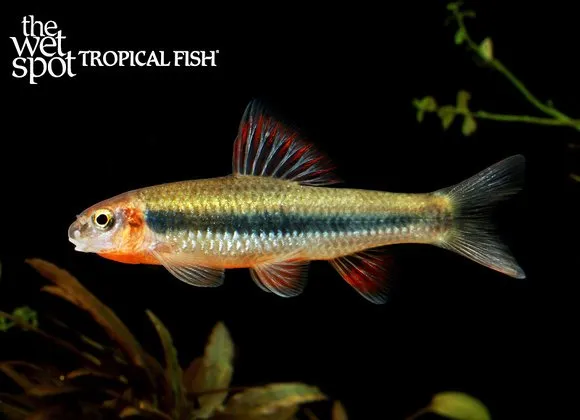
Neon golden-stripe shark
Sarcocheilichthys parvus
Freshwater3.5 in (9 cm) · 30 gal (112 L)61–75°F (16–24°C)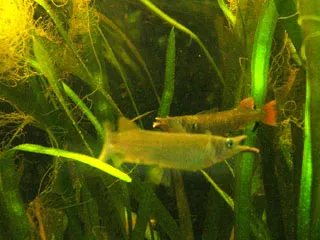
Redfin halfbeak
Nomorhamphus ebrardtii
Freshwater3.5 in (9 cm) · 29 gal (110 L)75–81°F (24–27°C)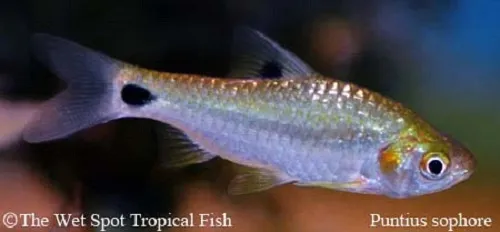
Pool barb
Puntius sophore
Freshwater3.9 in (10 cm) · 29 gal (110 L)68–81°F (20–27°C)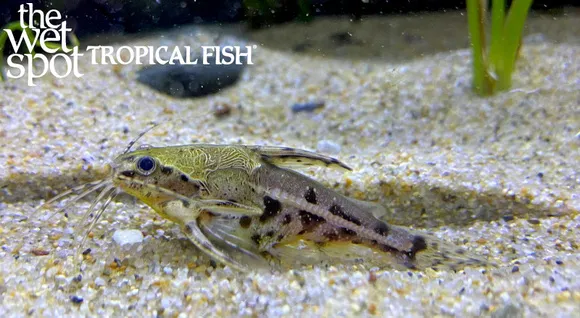
Marbled talking catfish
Amblydoras nauticus
Freshwater4.3 in (11 cm) · 30 gal (112 L)73–82°F (23–28°C)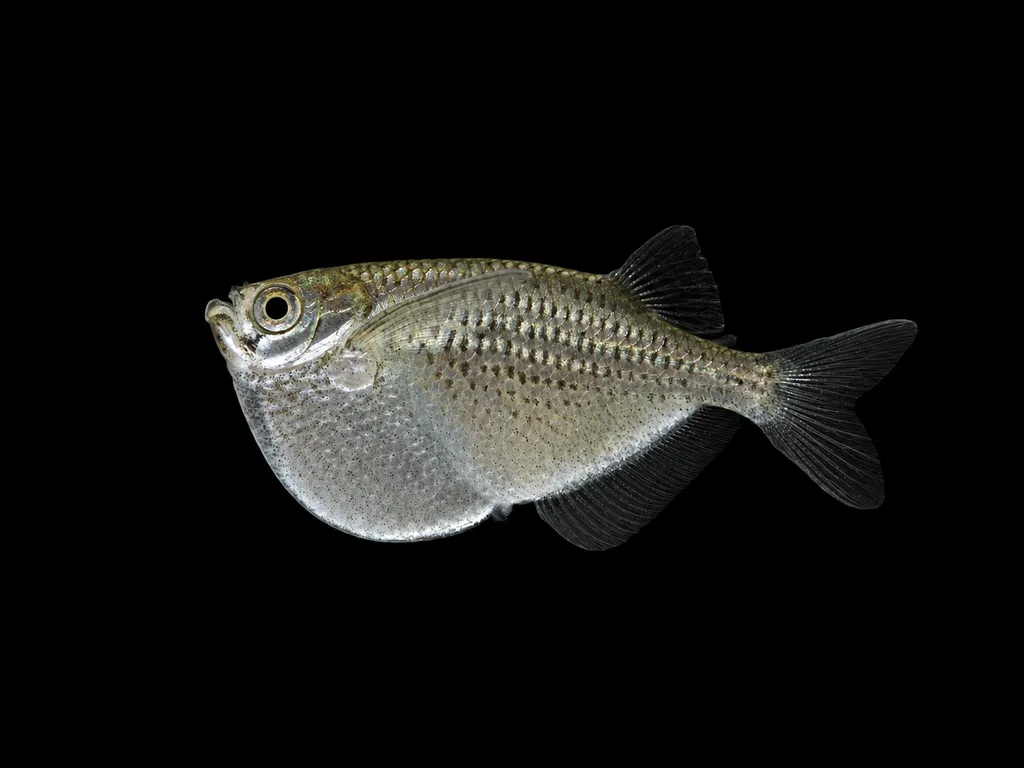
Silver hatchetfish
Gasteropelecus levis
Freshwater1.4 in (3.5 cm) · 30 gal (112 L)73–82°F (23–28°C)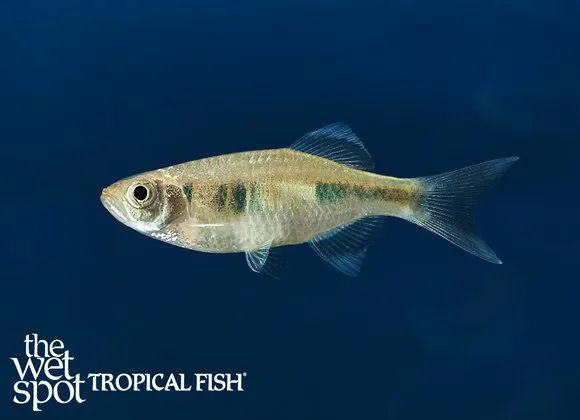
Rakhine danio
Devario xyrops
Freshwater3.7 in (9.5 cm) · 29 gal (110 L)68–79°F (20–26°C)
Common questions
What size tank does a blue Amur bitterling need?
A blue Amur bitterling needs at least 30 gal (112 L). It spends most of its time in the middle.
What temperature and pH does a blue Amur bitterling need?
A blue Amur bitterling is comfortable at 57–79°F (14–26°C) with a pH of 6.8–8.0.
What does a blue Amur bitterling eat?
A blue Amur bitterling is an omnivore. It eats small frozen foods and flake, along with some vegetable matter or algae.
How big does a blue Amur bitterling get?
An adult blue Amur bitterling reaches about 3.1 in (8 cm).
Does a blue Amur bitterling need a group?
Yes. A blue Amur bitterling is a schooling species and should be kept in a group, not singly.
How can you tell a male blue Amur bitterling from a female?
Males flush with color in the spawning season and show blue and rose tones, best when several are kept together. Females use a long ovipositor to place their eggs.
How does a blue Amur bitterling breed?
A female blue Amur bitterling places her eggs in the gill chamber of a living freshwater mussel, where they develop in safety. Breeding is hard, mostly because it depends on keeping the mussels healthy.
Related species
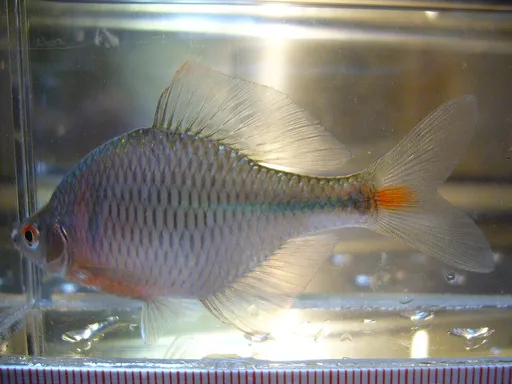 3.1 in (8 cm)21 gal (80 L)64–75°F (18–24°C)
Rosy bitterling
Rhodeus ocellatus
3.1 in (8 cm) · 21 gal (80 L)
- 4.7 in (12 cm)40 gal (150 L)61–79°F (16–26°C)
Red-tail bitterling
Acheilognathus tonkinensis
4.7 in (12 cm) · 40 gal (150 L)
 10.6 in (27 cm)106 gal (400 L)57–79°F (14–26°C)
Rainbow bitterling
Acheilognathus macropterus
10.6 in (27 cm) · 106 gal (400 L)
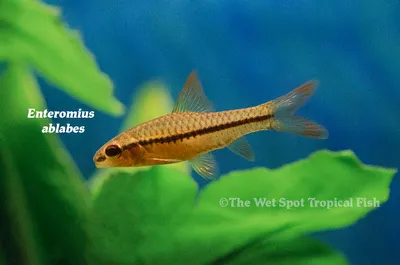 3.1 in (8 cm)24 gal (90 L)72–81°F (22–27°C)
Ablabes barb
Enteromius ablabes
3.1 in (8 cm) · 24 gal (90 L)
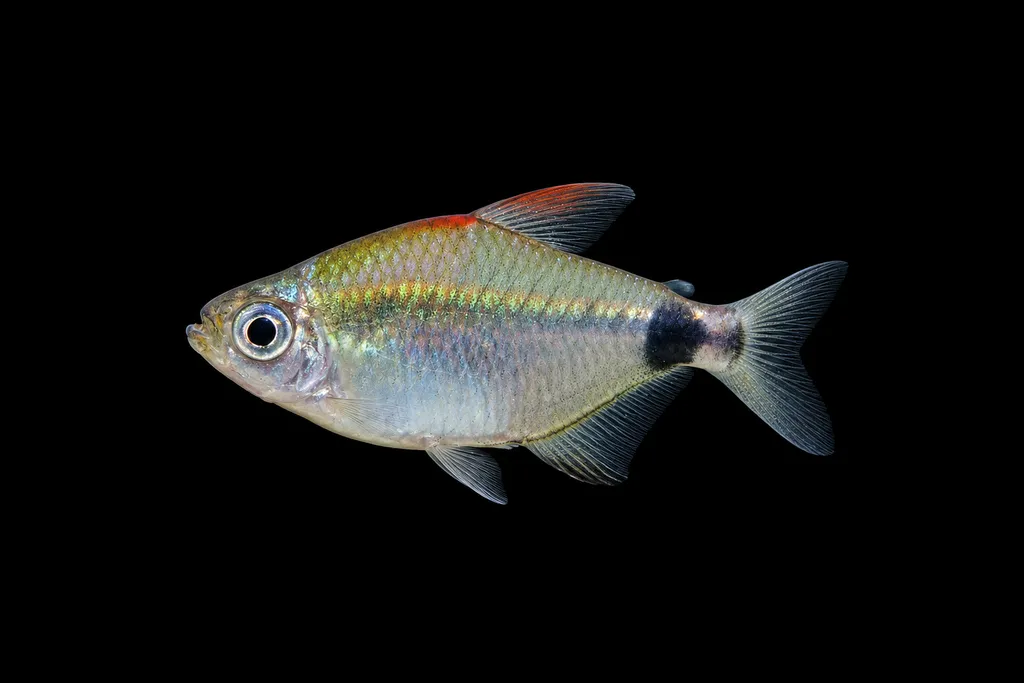 3.1 in (8 cm)22 gal (85 L)72–77°F (22–25°C)
African moon tetra
Bathyaethiops caudomaculatus
3.1 in (8 cm) · 22 gal (85 L)
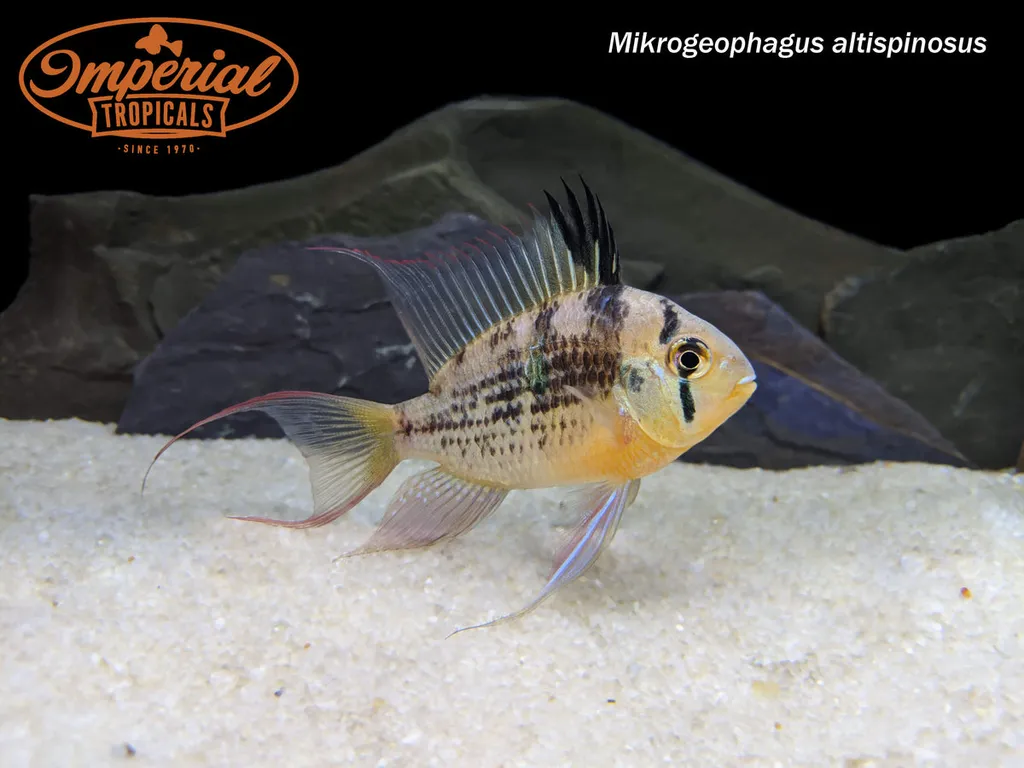 3.1 in (8 cm)45 gal (170 L)75–82°F (24–28°C)
Bolivian ram
Mikrogeophagus altispinosus
3.1 in (8 cm) · 45 gal (170 L)