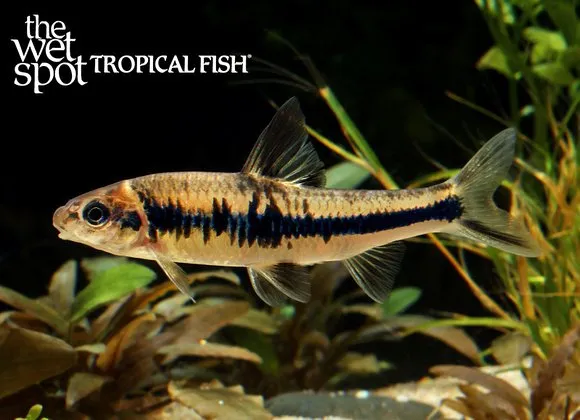
Rainbow gudgeon
Sarcocheilichthys nigripinnis
Also known as Chinese rainbow gudgeon
FreshwaterFish
Care at a glance
- Temperature
- 57–75°F
- 14–24°C
- pH
- 6.5–7.8
- Adult size
- 6.3 in
- 16 cm
- Minimum tank
- 53 gal
- 200 L
- Temperament
- Mostly peaceful
- Social behavior
- Schooling
- Swim level
- Bottom
- Difficulty
- Medium
- Breeding
- Egg layer
- Rarity
- Rare
- Family
- Gobionidae
- Origin
- Yangtze and coastal drainages, China
Overview
The rainbow gudgeon is a sociable coldwater fish that forages along the bottom of a large, unheated tank. It is a step up from the easiest fish.
Did you know
The rainbow gudgeon borrows a nursery from a mussel. Its young develop in safety behind the shell before swimming out, the same trick used by the unrelated bitterlings.
Caring for the rainbow gudgeon
Keep rainbow gudgeons in a group of six or more, in a tank of at least 53 gal (200 L). That gives the group room to move. They grow to a fair size for a gudgeon, so give them plenty of floor space. A bottom of gravel and sand with smooth stones suits them.
Run the tank unheated or cool, at 57 to 75°F (14 to 24°C) with a neutral pH of 6.5 to 7.8. Give them moderate current and clean water. The cooler end of the range brings out their breeding colors.
They are busy foragers that work the gravel and open sand for food. Feed sinking foods such as pellets and wafers, along with frozen bloodworm, daphnia and chopped prawn.
Rainbow gudgeons are mostly peaceful, so choose calm tank mates of a similar size rather than tiny or nippy fish. In the wild, females use a long ovipositor to lay their eggs inside living freshwater mussels. The species is not reliably bred in aquariums.
Good to know
The rainbow gudgeon, Sarcocheilichthys nigripinnis, belongs to the family Gobionidae. Its species name, nigripinnis, means black-finned. Through the breeding season it turns rose, pewter and near-black, the source of its rainbow name.
In the wild
The rainbow gudgeon lives in cool rivers across much of China, from the Yangtze system to coastal drainages. It works gravel runs and slower, gravelly margins.
Weekly picks
Tank mates
The rainbow gudgeon is a mostly peaceful, schooling species that keeps to the bottom. These picks share a community profile with it, are safe together in both directions, and overlap on water type, temperature and pH.
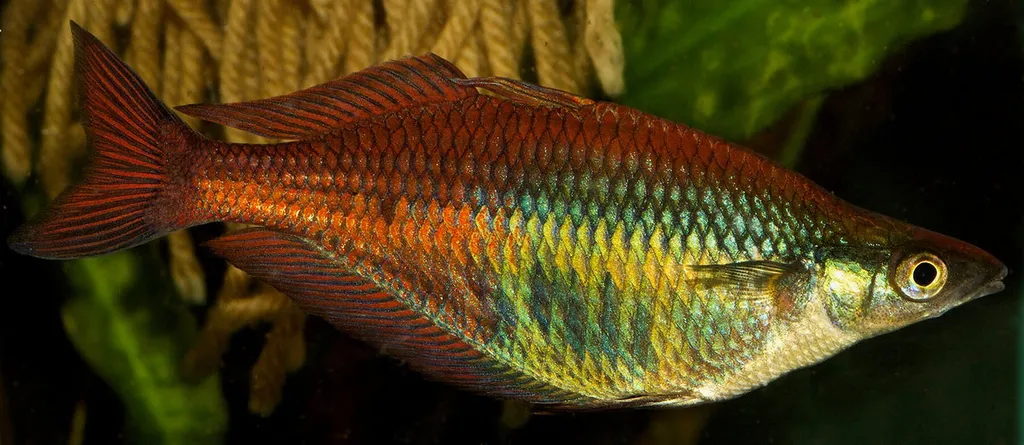
Barred rainbowfish
Chilatherina fasciata
Freshwater4.7 in (12 cm) · 53 gal (200 L)75–86°F (24–30°C)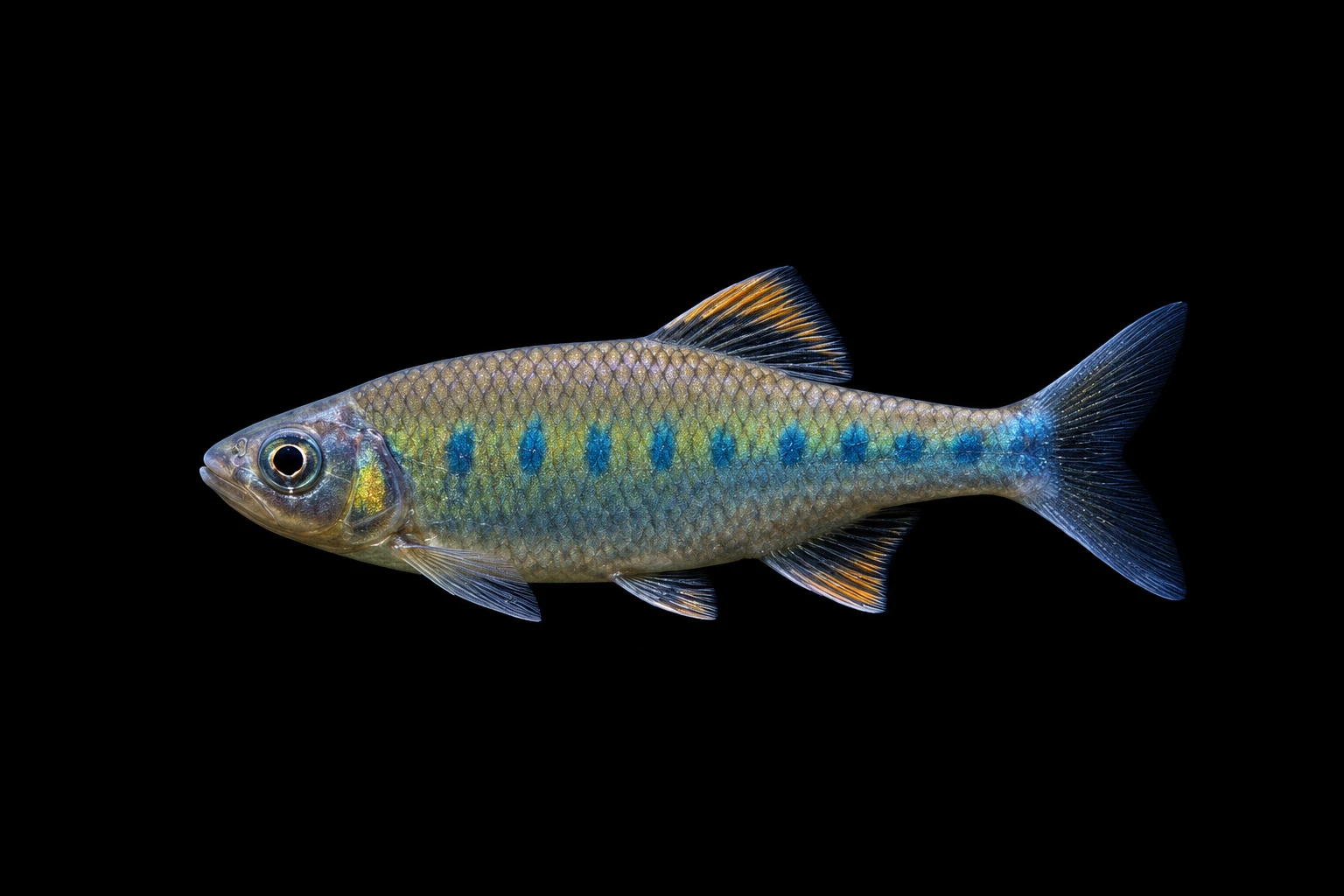
Blue spotted hill trout
Barilius bakeri
Freshwater5.1 in (13 cm) · 53 gal (200 L)64–79°F (18–26°C)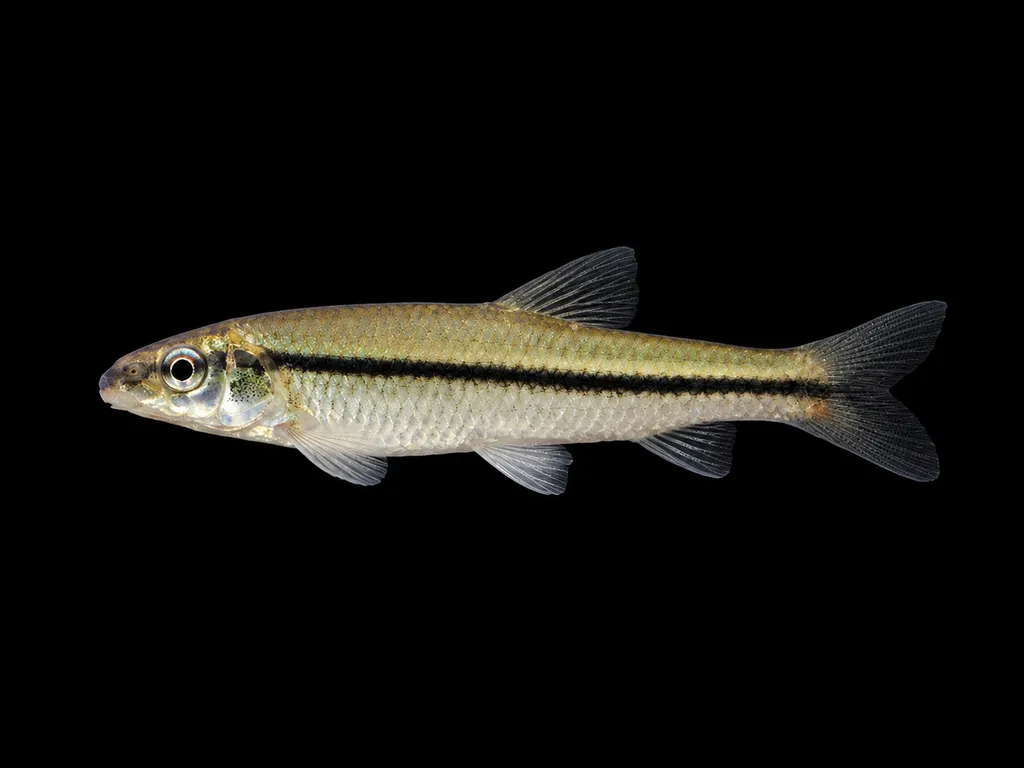
Darter characin
Apareiodon affinis
Freshwater7.1 in (18 cm) · 53 gal (200 L)64–77°F (18–25°C)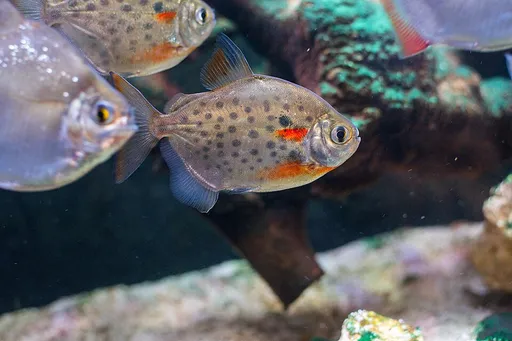
Spotted silver dollar
Metynnis lippincottianus
Freshwater5.5 in (14 cm) · 53 gal (200 L)73–81°F (23–27°C)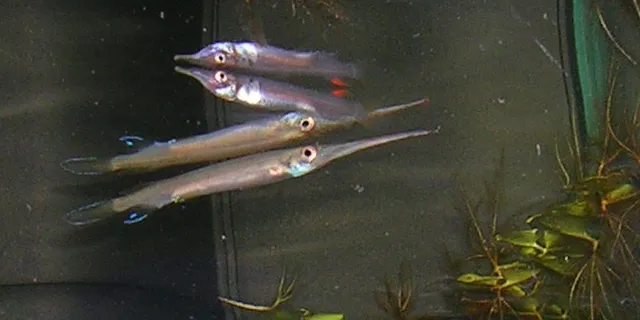
Forest halfbeak
Hemirhamphodon pogonognathus
Freshwater3.5 in (9 cm) · 34 gal (130 L)75–82°F (24–28°C)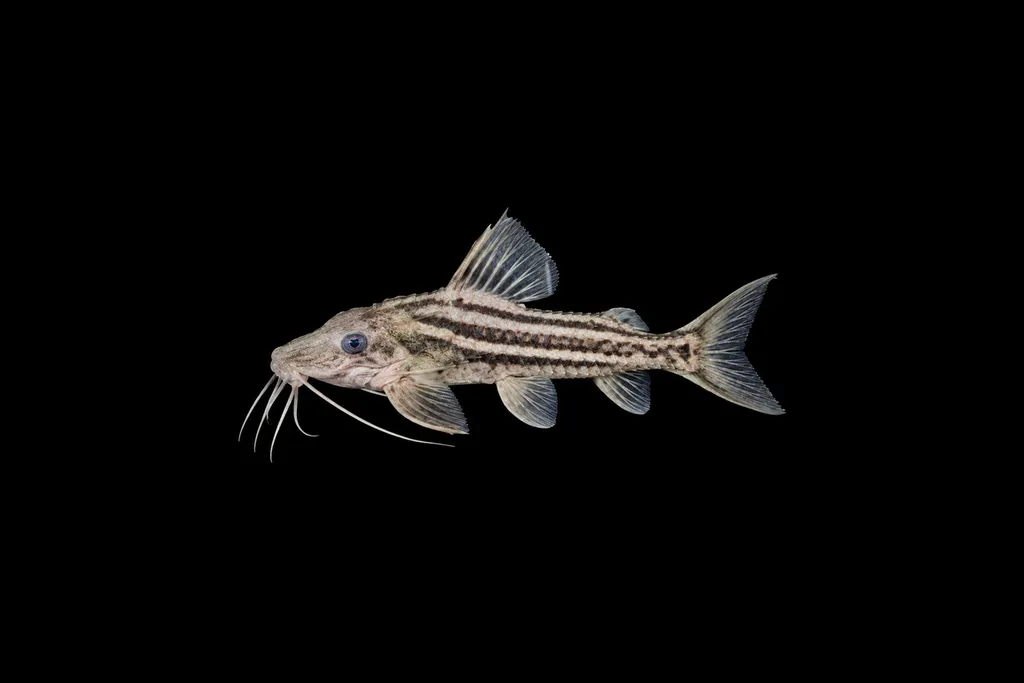
Hancock's talking catfish
Platydoras hancockii
Freshwater5.9 in (15 cm) · 53 gal (200 L)73–82°F (23–28°C)
Common questions
What size tank does a rainbow gudgeon need?
A rainbow gudgeon needs at least 53 gal (200 L). It spends most of its time in the bottom.
What temperature and pH does a rainbow gudgeon need?
A rainbow gudgeon is comfortable at 57–75°F (14–24°C) with a pH of 6.5–7.8.
What does a rainbow gudgeon eat?
A rainbow gudgeon eats sinking foods. Offer pellets and wafers, along with frozen bloodworm, daphnia and chopped prawn.
How big does a rainbow gudgeon get?
An adult rainbow gudgeon reaches about 6.3 in (16 cm).
Does a rainbow gudgeon need a group?
Yes. A rainbow gudgeon is a schooling species and should be kept in a group, not singly.
How does a rainbow gudgeon breed?
A female rainbow gudgeon uses a long ovipositor to lay her eggs inside a living freshwater mussel. The species is not reliably bred in aquariums.
Related species
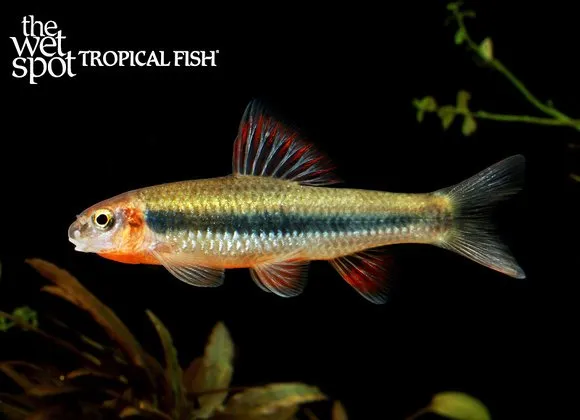 3.5 in (9 cm)30 gal (112 L)61–75°F (16–24°C)
Neon golden-stripe shark
Sarcocheilichthys parvus
3.5 in (9 cm) · 30 gal (112 L)
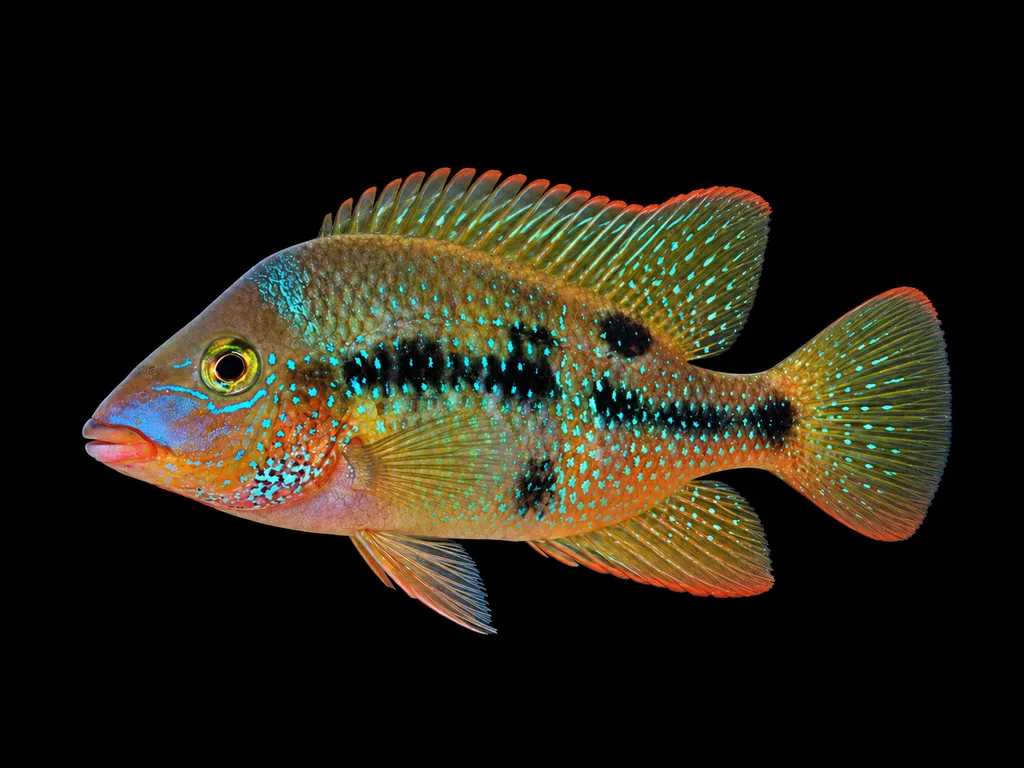 6.3 in (16 cm)79 gal (300 L)75–84°F (24–29°C)
Altifrons cichlid
Cribroheros altifrons
6.3 in (16 cm) · 79 gal (300 L)
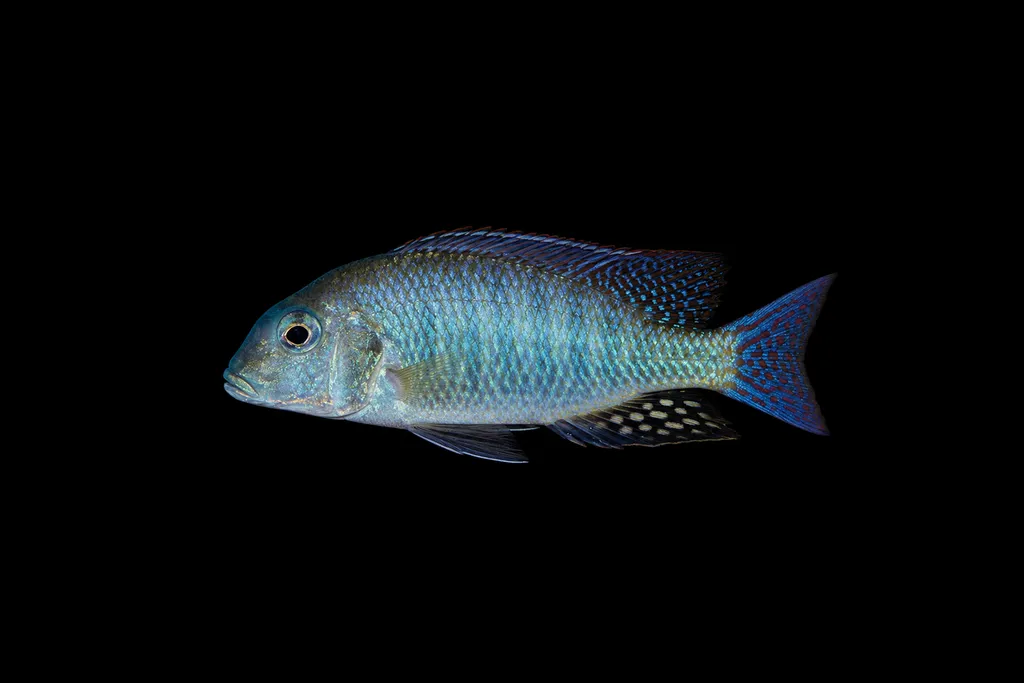 6.3 in (16 cm)79 gal (300 L)75–81°F (24–27°C)
Altus lethrinops
Lethrinops altus
6.3 in (16 cm) · 79 gal (300 L)
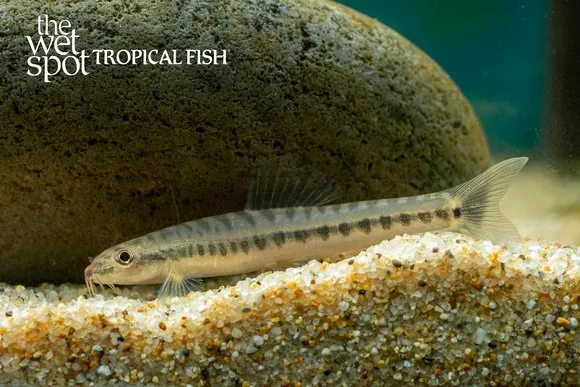 6.3 in (16 cm)42 gal (160 L)72–81°F (22–27°C)
Arrow loach
Nemacheilus masyae
6.3 in (16 cm) · 42 gal (160 L)
 6.3 in (16 cm)29 gal (110 L)72–79°F (22–26°C)
Brichard's synodontis
Synodontis brichardi
6.3 in (16 cm) · 29 gal (110 L)
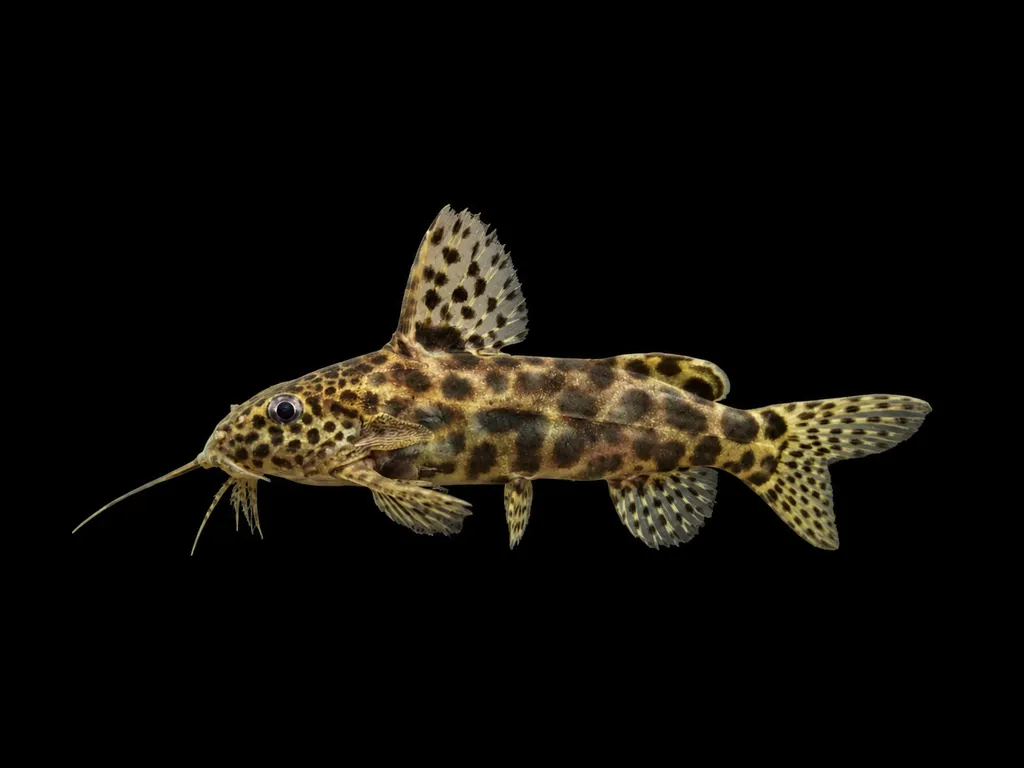 6.3 in (16 cm)21 gal (80 L)73–81°F (23–27°C)
Cheetah squeaker
Synodontis waterloti
6.3 in (16 cm) · 21 gal (80 L)