Melon barb
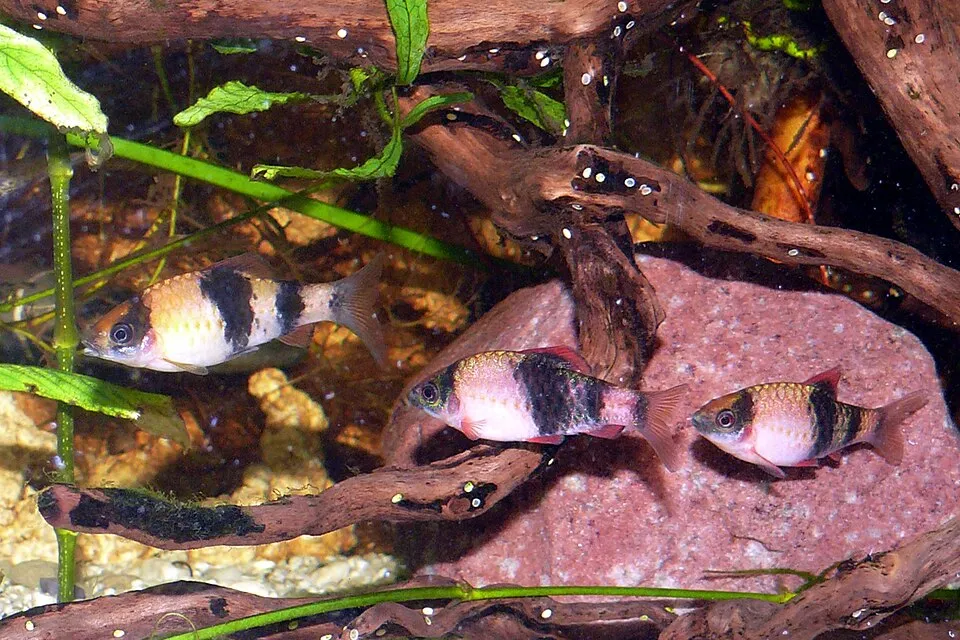
Haludaria fasciata
Also known as Red Panda Barb
FreshwaterFish
Care at a glance
- Temperature
- 72–79°F
- 22–26°C
- pH
- 6.0–7.5
- Adult size
- 2.8 in
- 7 cm
- Minimum tank
- 40 gal
- 150 L
- Temperament
- Peaceful
- Social behavior
- Schooling
- Swim level
- Middle
- Difficulty
- Medium
- Breeding
- Medium
- Rarity
- Rare
- Family
- Cyprinidae
- Origin
- India
Overview
Melon barbs are peaceful, colorful shoaling fish that should be kept in a group of at least six to eight, which keeps them settled and encourages the males to show their best color. They swim mostly in the middle water and mix well in a community with other calm, similarly sized fish, though a small, under grouped bunch can turn to nipping fins. Feed them a varied diet of flake, small pellets, frozen foods, and some vegetable matter or algae. A dark substrate and gentle lighting deepen their red tones. A tank around 150 liters or larger suits a good group.
In the wild
This barb comes from the streams and rivers of the Western Ghats in southwestern India, including shaded, forested waters that run clear and soft. It does well in warm water of about 22–26 C and a pH of 6.0–7.5. Recreate that with a dark substrate, driftwood and leaf litter, and areas of planting broken by open swimming space. Slightly soft, tea stained water under subdued lighting brings out the melon red flush that gives the fish its name.
Good to know
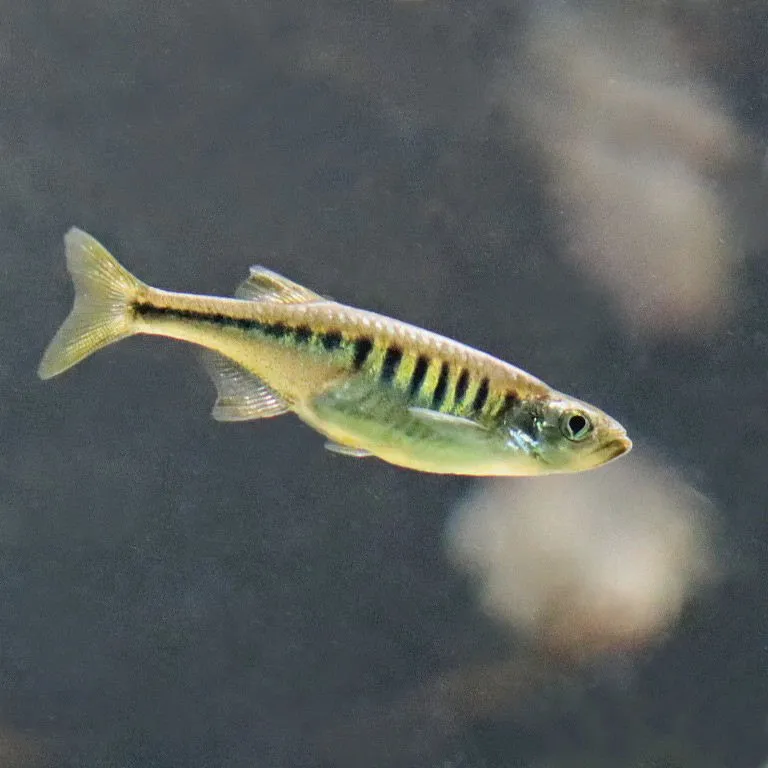
Haludaria fasciata is a member of the family Cyprinidae that reaches around 7 cm. It was long known as Puntius fasciatus before being moved into the genus Haludaria. Breeding males take on a warm melon to orange red body crossed by several dark vertical bars, while females stay plainer. It is an egg scattering, non guarding spawner that eats its own eggs, and it can be bred in a dedicated tank with moderate effort.
Did you know
The melon barb is also sold as the red panda barb, both names pointing to the warm, melon like orange red that males flush with when they are in breeding condition. The species name fasciata refers to the bold dark bands that cross that colorful body.
Weekly picks
Tank mates
Melon barb is a peaceful, schooling species that keeps to the middle. These picks share a community profile with it, are safe together in both directions, and overlap on water type, temperature and pH.
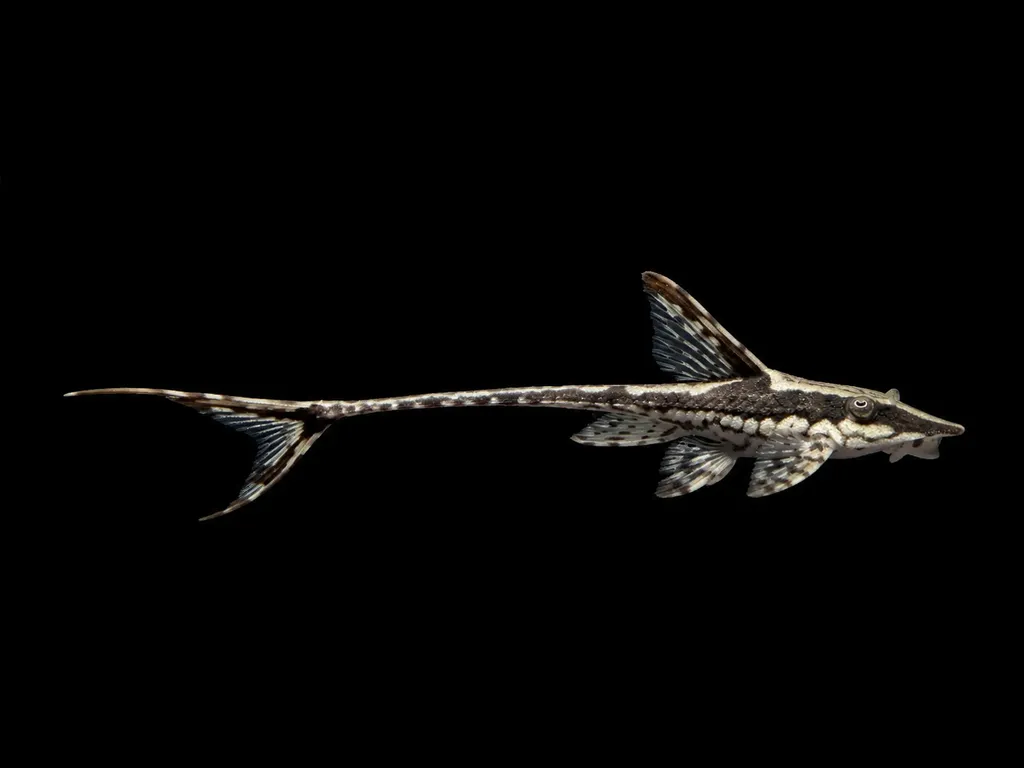
Royal whiptail catfish
Sturisoma panamense
Freshwater7.9 in (20 cm) · 40 gal (150 L)72–82°F (22–28°C)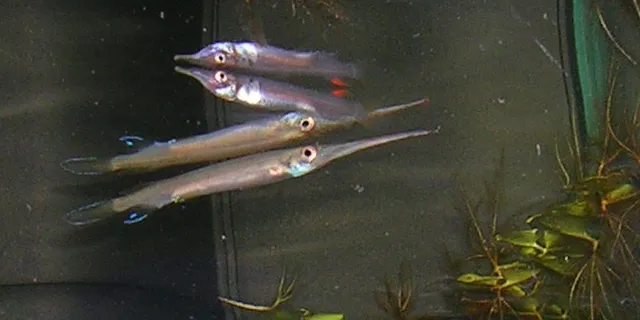
Forest halfbeak
Hemirhamphodon pogonognathus
Freshwater3.5 in (9 cm) · 34 gal (130 L)75–82°F (24–28°C)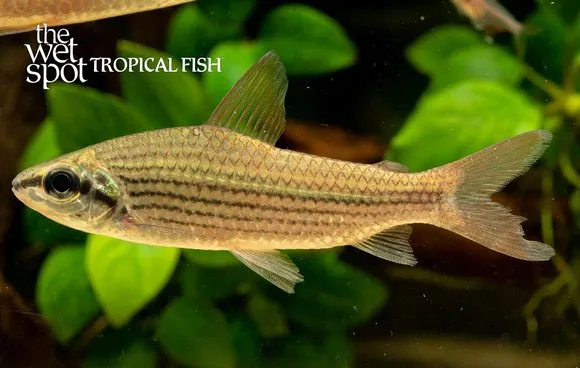
Golden curimata
Cyphocharax multilineatus
Freshwater4.3 in (11 cm) · 40 gal (150 L)73–82°F (23–28°C)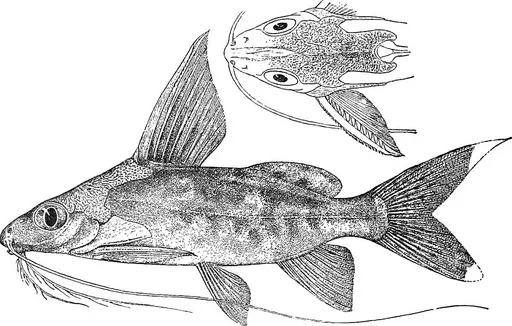
Bigeye squeaker
Synodontis alberti
Freshwater7.9 in (20 cm) · 40 gal (150 L)72–79°F (22–26°C)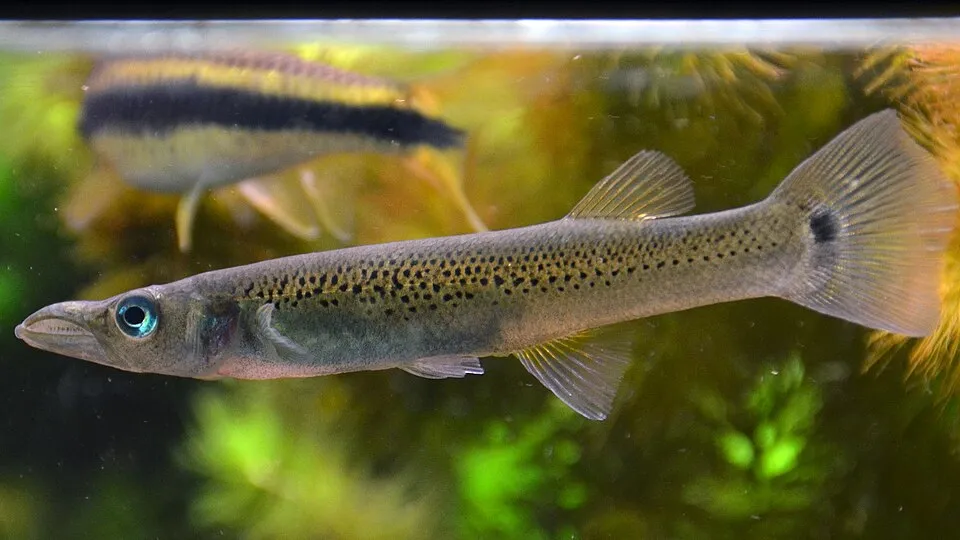
Pike topminnow
Belonesox belizanus
Freshwater7.9 in (20 cm) · 44 gal (165 L)73–82°F (23–28°C)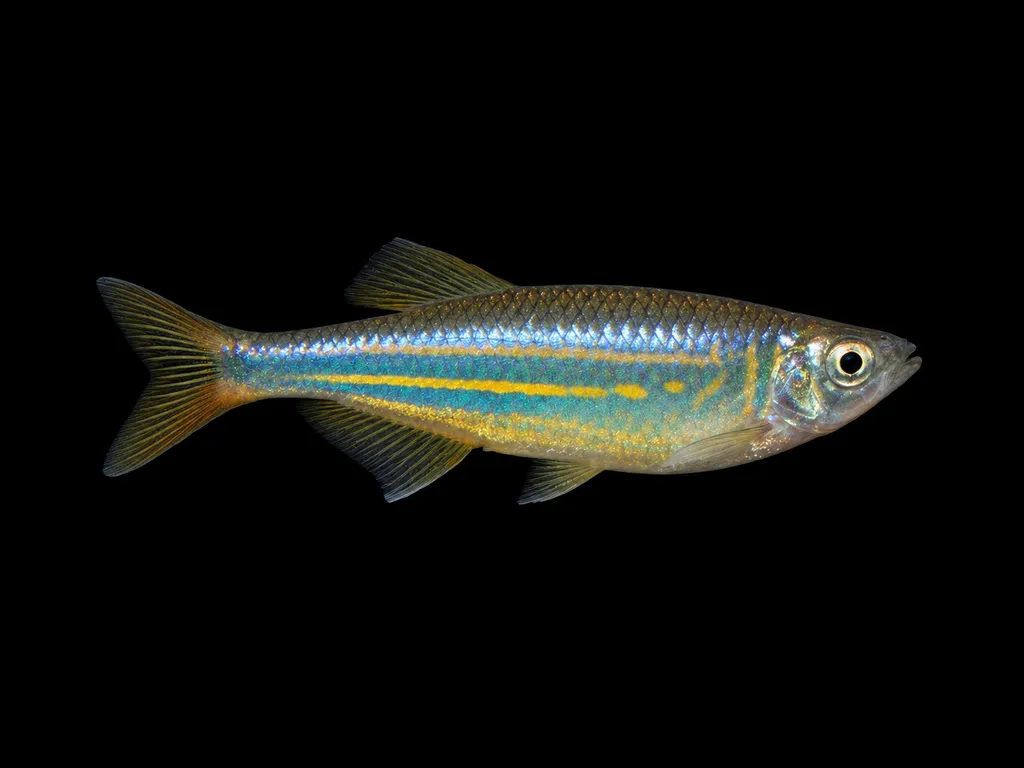
Annandale danio
Devario annandalei
Freshwater4.3 in (11 cm) · 42 gal (160 L)68–79°F (20–26°C)
Common questions
What size tank does a Melon barb need?
A Melon barb needs at least 40 gal (150 L). It spends most of its time in the middle.
What temperature and pH does a Melon barb need?
A Melon barb is comfortable at 72–79°F (22–26°C) with a pH of 6.0–7.5.
How big does a Melon barb get?
An adult Melon barb reaches about 2.8 in (7 cm).
Does a Melon barb need a group?
Yes. A Melon barb is a schooling species and should be kept in a group, not singly.
Related species
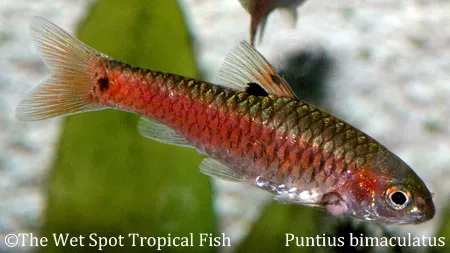 2.8 in (7 cm)20 gal (75 L)72–81°F (22–27°C)
Java spotted barb
Puntius bimaculatus
2.8 in (7 cm) · 20 gal (75 L)
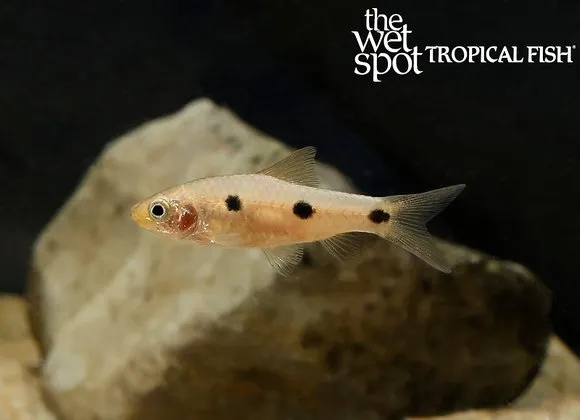 2.8 in (7 cm)24 gal (90 L)72–81°F (22–27°C)
Threespot barb
Enteromius trispilos
2.8 in (7 cm) · 24 gal (90 L)
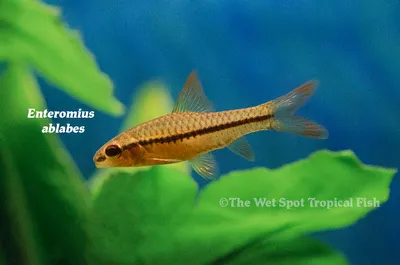 3.1 in (8 cm)24 gal (90 L)72–81°F (22–27°C)
Ablabes barb
Enteromius ablabes
3.1 in (8 cm) · 24 gal (90 L)
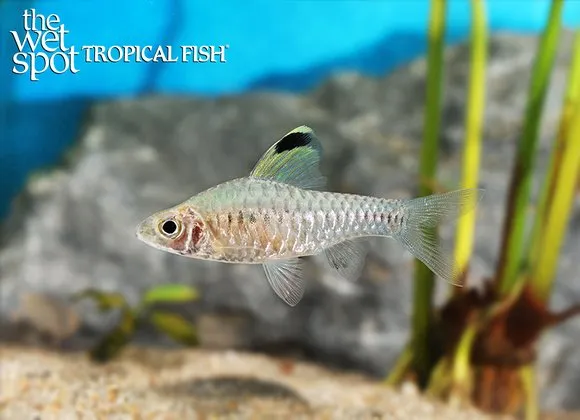 3.1 in (8 cm)20 gal (75 L)68–79°F (20–26°C)
Cosuatis barb
Oreichthys cosuatis
3.1 in (8 cm) · 20 gal (75 L)
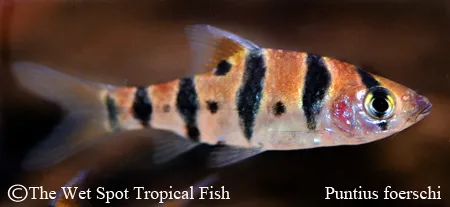 3.1 in (8 cm)29 gal (110 L)73–82°F (23–28°C)
Foersch's barb
Desmopuntius foerschi
3.1 in (8 cm) · 29 gal (110 L)
 3.1 in (8 cm)24 gal (90 L)64–77°F (18–25°C)
Lake Inle danio
Devario auropurpureus
3.1 in (8 cm) · 24 gal (90 L)