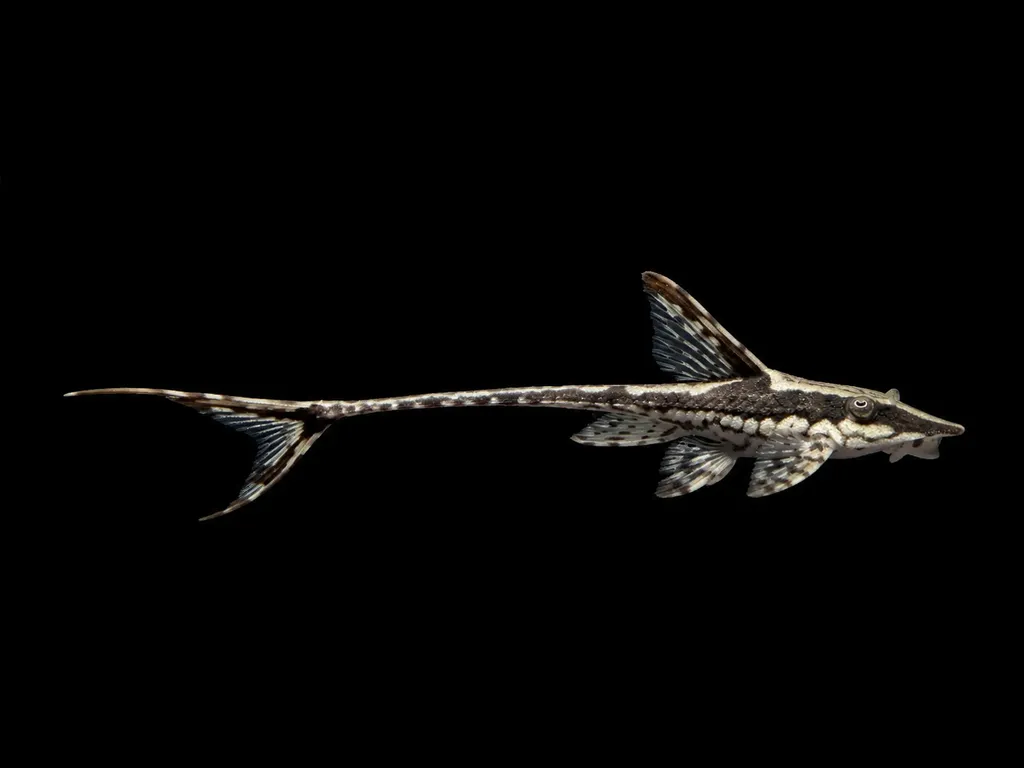
Royal whiptail catfish
Sturisoma panamense
Also known as Royal farlowella
FreshwaterFish
Care at a glance
- Temperature
- 72–82°F
- 22–28°C
- pH
- 6.0–7.5
- Adult size
- 7.9 in
- 20 cm
- Minimum tank
- 40 gal
- 150 L
- Temperament
- Peaceful
- Social behavior
- Social
- Swim level
- Bottom
- Difficulty
- Medium
- Breeding
- Medium
- Rarity
- Common
- Family
- Loricariidae
- Origin
- Pacific and Caribbean slope rivers of Panama, Colombia, Ecuador
Overview
Keep them in a small social group in a long tank of 150 liters or more, since they're peaceful and spend their time on the bottom. They want warm water from 22 to 28 C, a pH between 6 and 7.5, strong flow, and high oxygen, with smooth fine sand to protect the delicate underside. They're mostly herbivores that graze algae and biofilm, so supplement with blanched vegetables like zucchini and spinach, plus a quality algae wafer, because they can starve in a tank scrubbed too clean. Pair them with other calm, peaceful fish and avoid anything pushy that will outcompete them at feeding time.
In the wild
Royal whiptail catfish come from fast, oxygen-rich rivers on the Pacific and Caribbean slopes of Panama, Colombia, and Ecuador, where they cling to wood and stones in the current. To match that, give them a long tank of at least 150 liters with smooth fine sand, plenty of driftwood, and strong flow from a powerhead or oversized filter. Keep the water warm, between 22 and 28 C, with a pH from 6 to 7.5, and stay on top of clean, stable conditions since they don't handle neglect. Floor space and tank length matter more than height here.
Good to know
This is a whiptail in the family Loricariidae, reaching about 20 cm including the long trailing filament off the tail. Breeding is medium difficulty, and the male guards the eggs once they're laid, usually on a flat surface or the glass. They're a cave and surface spawner with real parental care from the male. A healthy adult can live several years in stable water.
Did you know
The long filament streaming off the tail isn't just for show, and it can get torn or nipped if tankmates are rough, though it grows back over time. When the male is guarding a clutch, he fans the eggs with his fins to keep fresh, oxygen-rich water moving over them until they hatch.
Weekly picks
Tank mates
Royal whiptail catfish is a peaceful, social species that keeps to the bottom. These picks share a community profile with it, are safe together in both directions, and overlap on water type, temperature and pH.
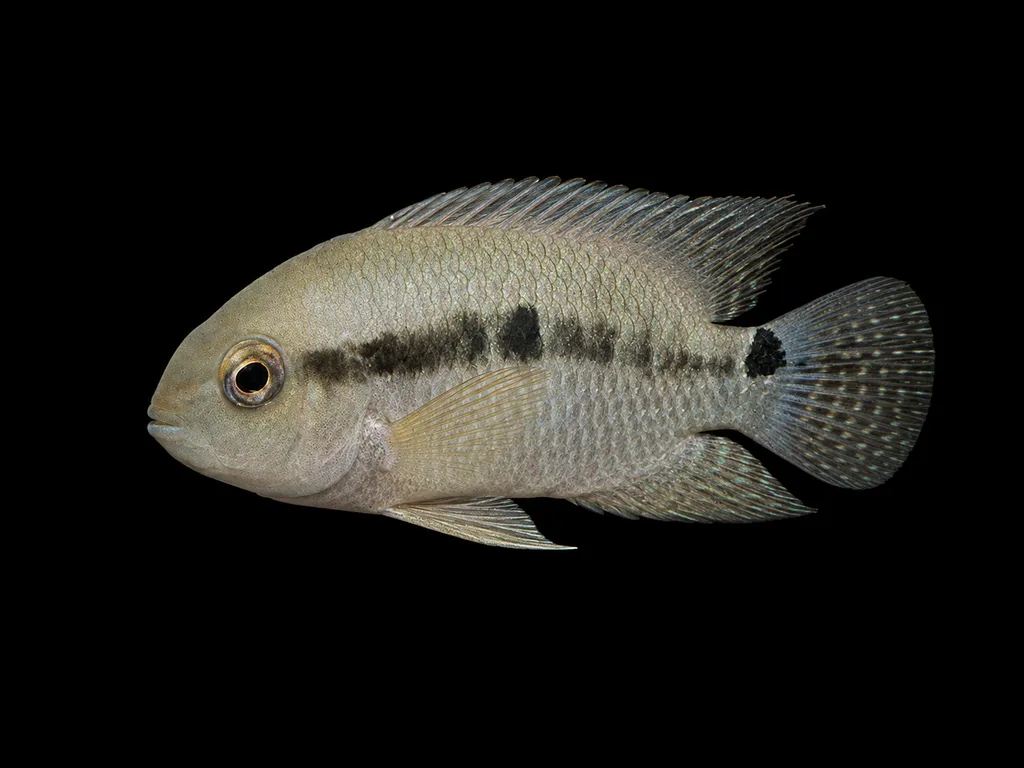
Black acara
Cichlasoma bimaculatum
Freshwater7.1 in (18 cm) · 40 gal (150 L)68–82°F (20–28°C)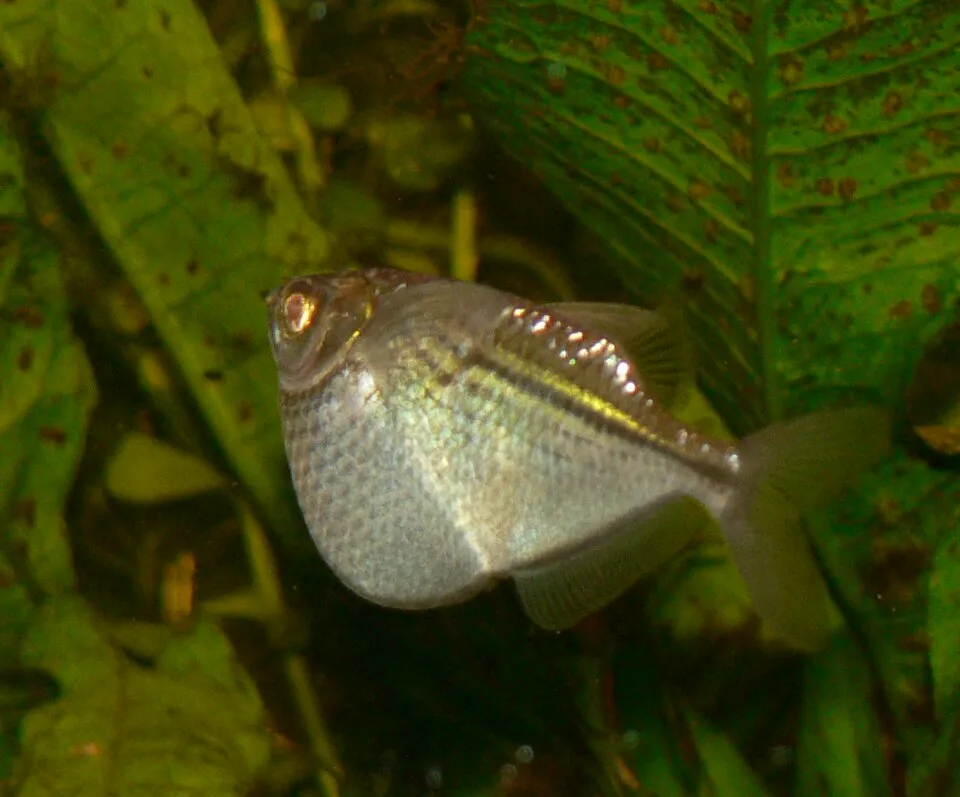
Common hatchetfish
Gasteropelecus sternicla
Freshwater1.6 in (4 cm) · 33 gal (125 L)68–82°F (20–28°C)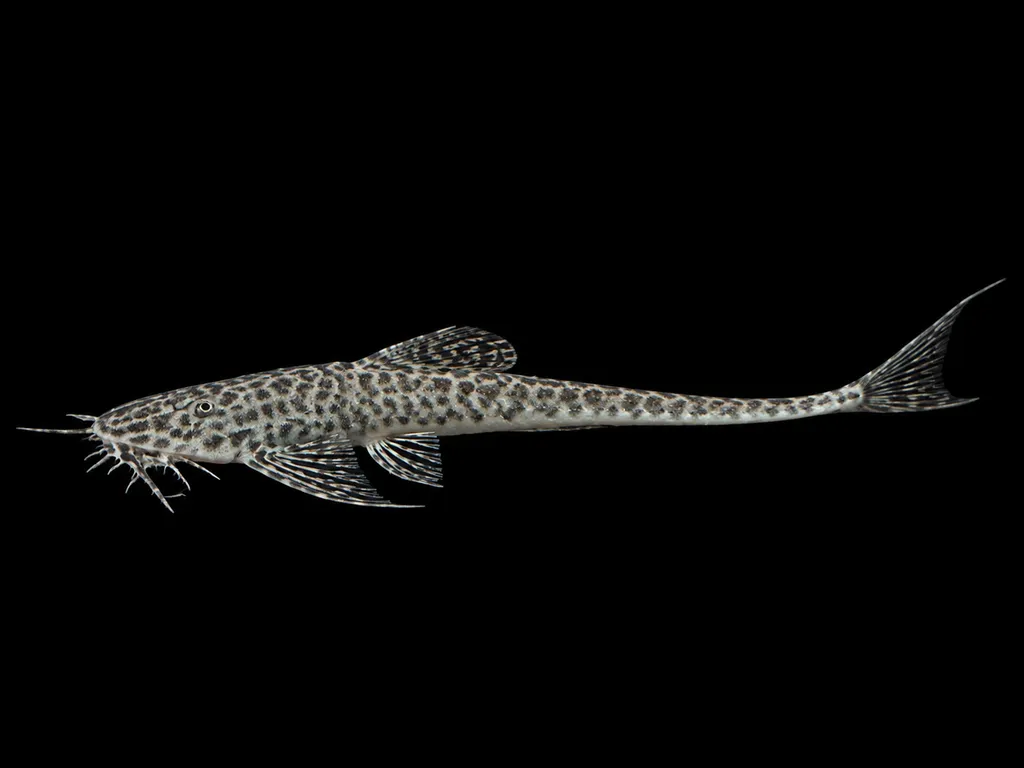
Ommation whiptail
Rhadinoloricaria ommation
Freshwater5.7 in (14.5 cm) · 40 gal (150 L)73–82°F (23–28°C)Red-tail bitterling
Acheilognathus tonkinensis
Freshwater4.7 in (12 cm) · 40 gal (150 L)61–79°F (16–26°C)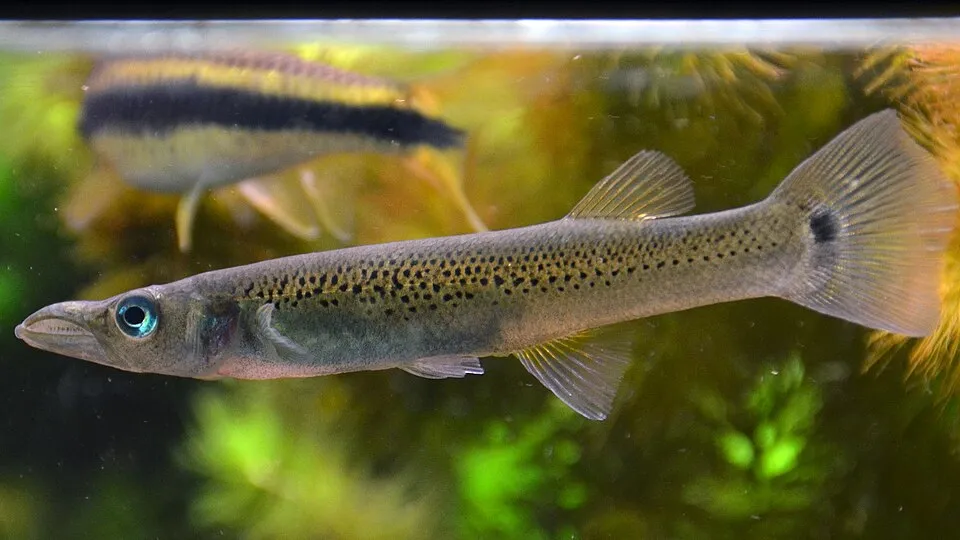
Pike topminnow
Belonesox belizanus
Freshwater7.9 in (20 cm) · 44 gal (165 L)73–82°F (23–28°C)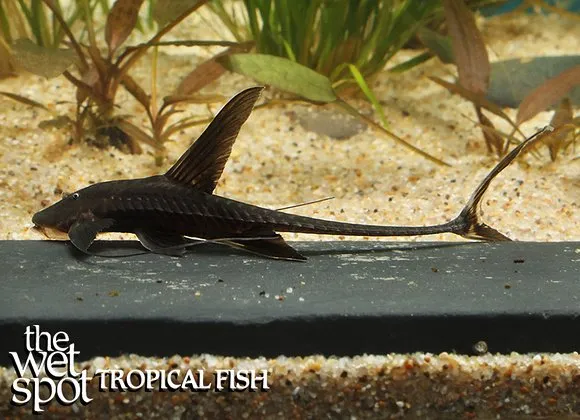
Antenna whiptail
Pterosturisoma microps
Freshwater6.3 in (16 cm) · 40 gal (150 L)73–82°F (23–28°C)
Common questions
What size tank does a Royal whiptail catfish need?
A Royal whiptail catfish needs at least 40 gal (150 L). It spends most of its time in the bottom.
What temperature and pH does a Royal whiptail catfish need?
A Royal whiptail catfish is comfortable at 72–82°F (22–28°C) with a pH of 6.0–7.5.
How big does a Royal whiptail catfish get?
An adult Royal whiptail catfish reaches about 7.9 in (20 cm).
Related species
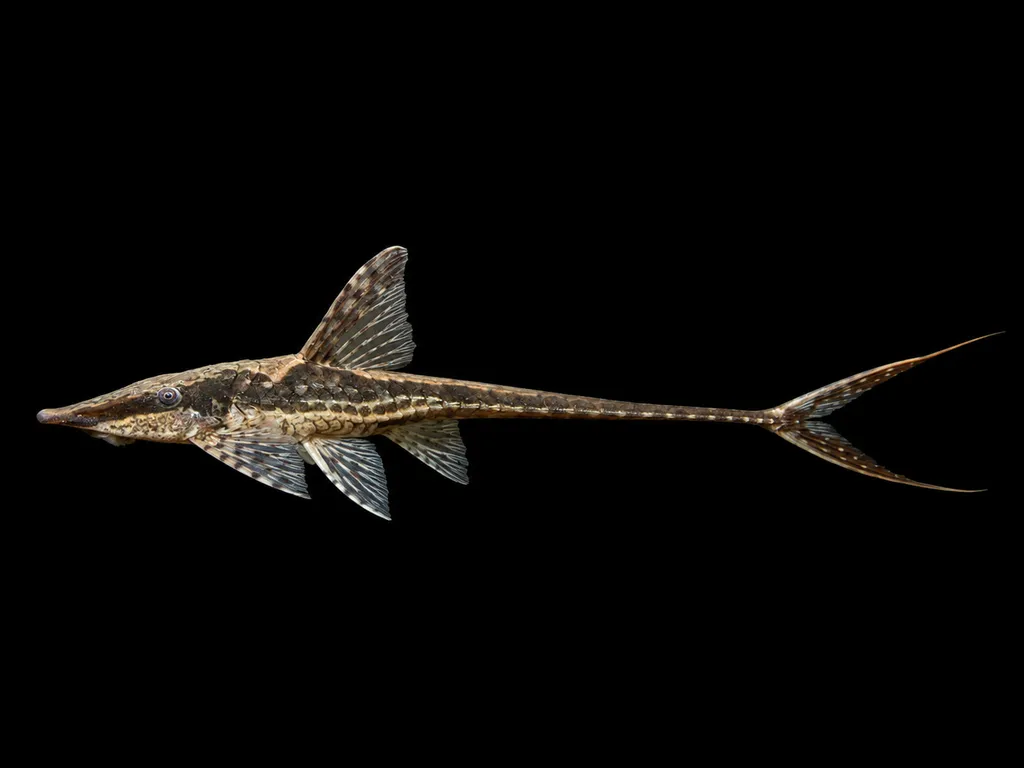 8.7 in (22 cm)66 gal (250 L)75–82°F (24–28°C)
Peruvian royal whiptail
Sturisoma nigrirostrum
8.7 in (22 cm) · 66 gal (250 L)
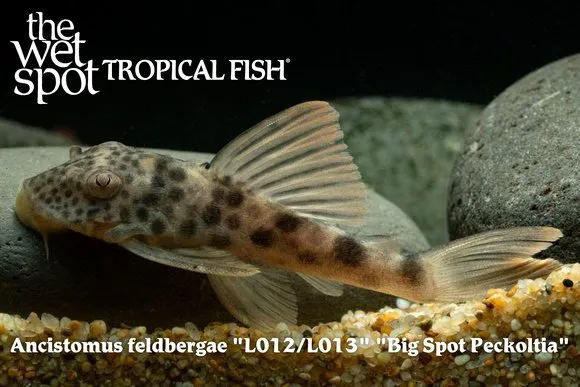 7.9 in (20 cm)66 gal (250 L)79–86°F (26–30°C)
Big spot pleco
Ancistomus feldbergae
7.9 in (20 cm) · 66 gal (250 L)
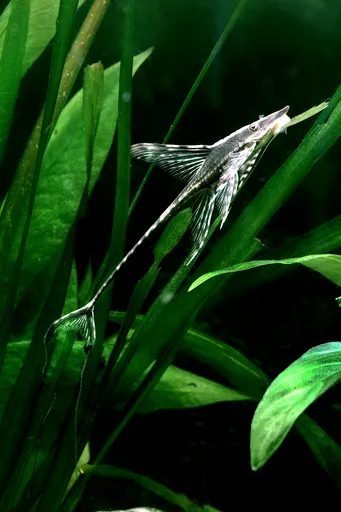 7.9 in (20 cm)53 gal (200 L)73–81°F (23–27°C)
Giant whiptail catfish
Sturisomatichthys aureus
7.9 in (20 cm) · 53 gal (200 L)
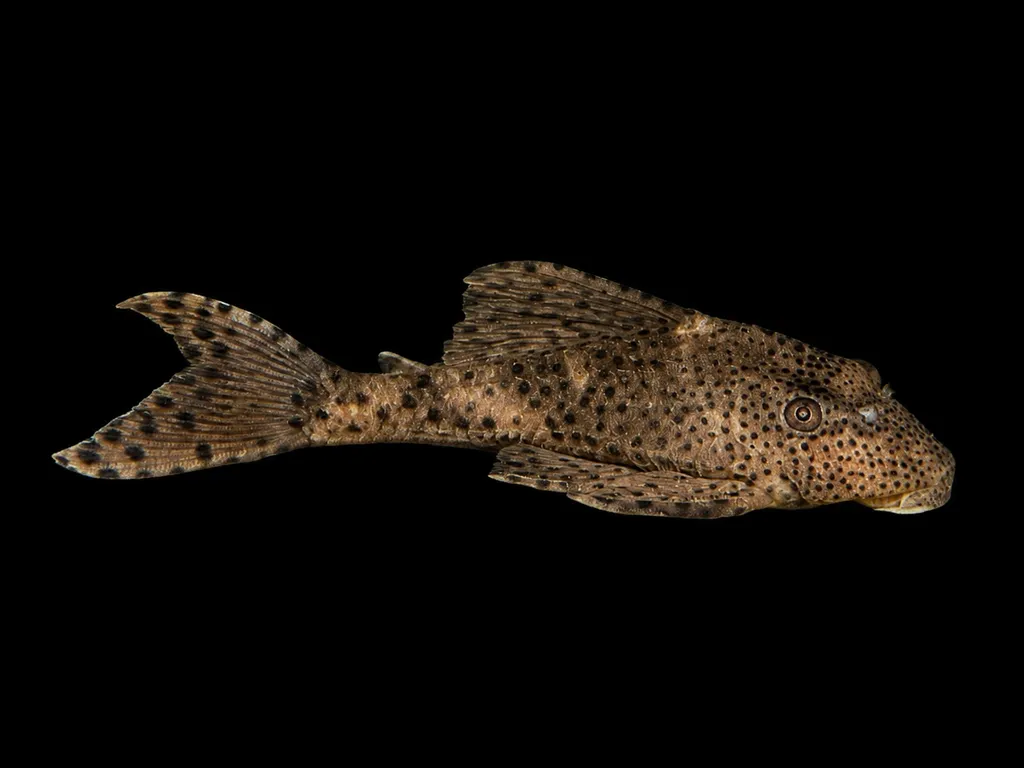 7.9 in (20 cm)79 gal (300 L)77–84°F (25–29°C)
Macushi pleco
Hypostomus macushi
7.9 in (20 cm) · 79 gal (300 L)
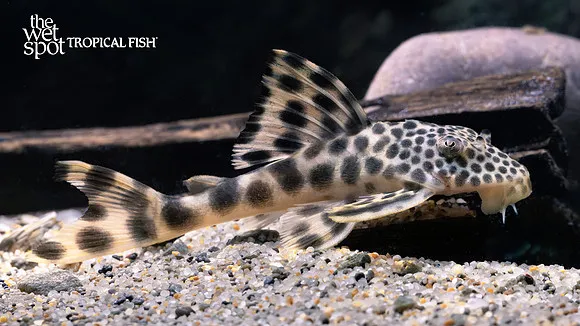 7.9 in (20 cm)66 gal (250 L)77–84°F (25–29°C)
Para pleco
Peckoltia sabaji
7.9 in (20 cm) · 66 gal (250 L)
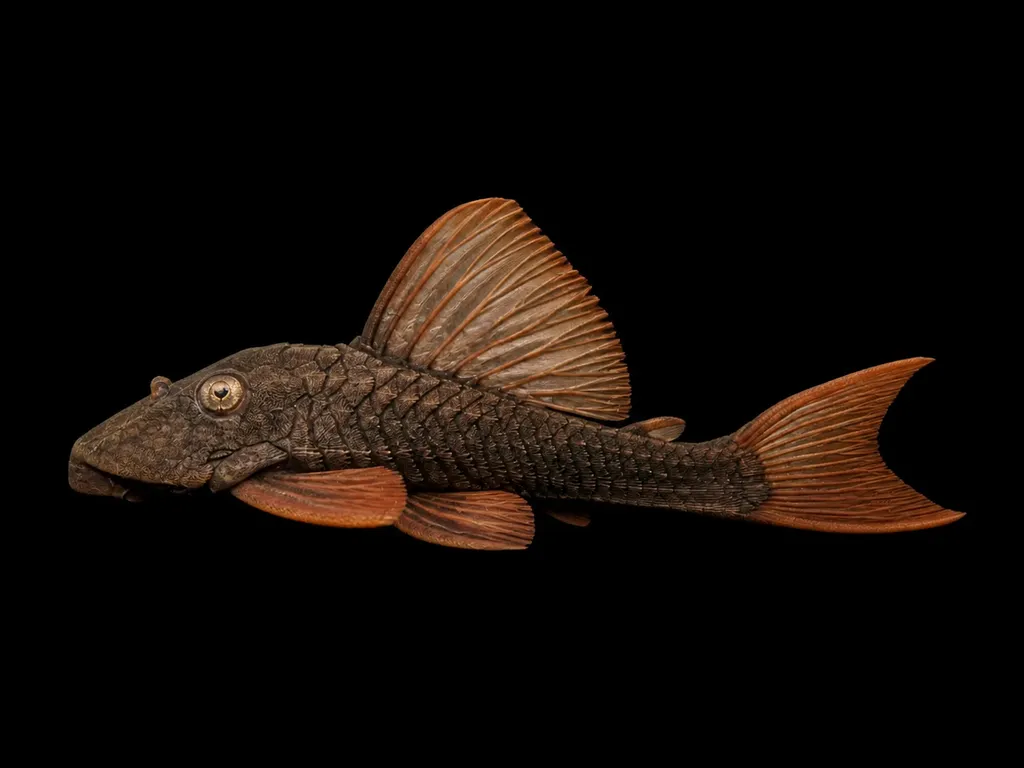 7.9 in (20 cm)79 gal (300 L)77–84°F (25–29°C)
Red bruno pleco
Hypostomus soniae
7.9 in (20 cm) · 79 gal (300 L)