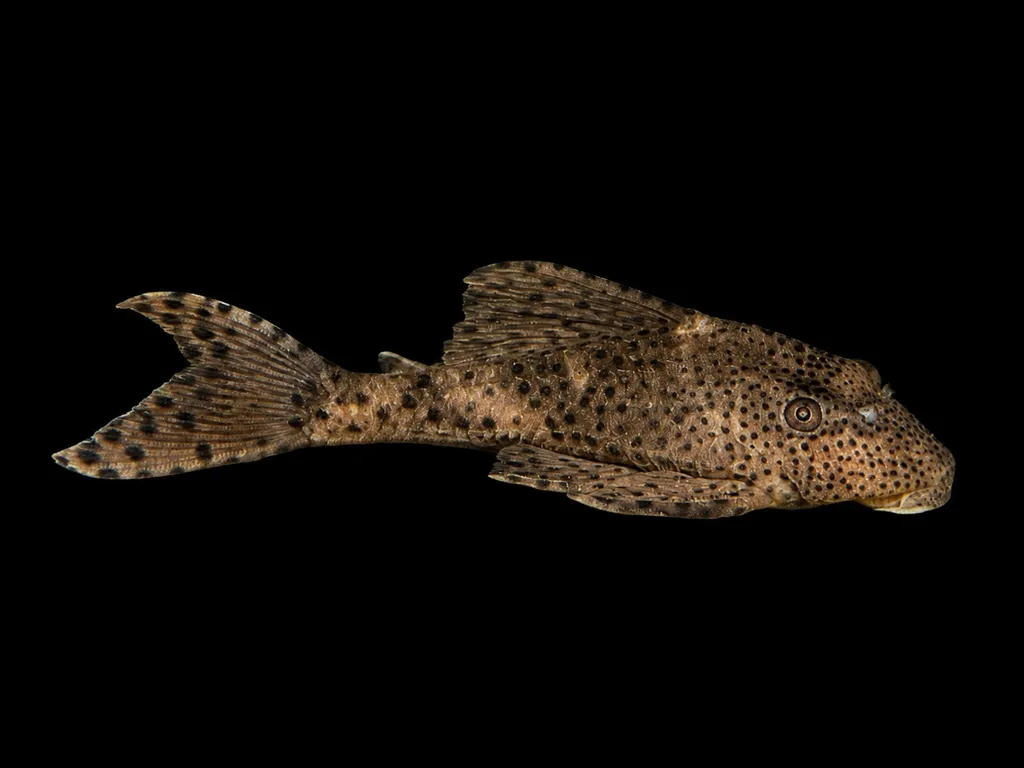
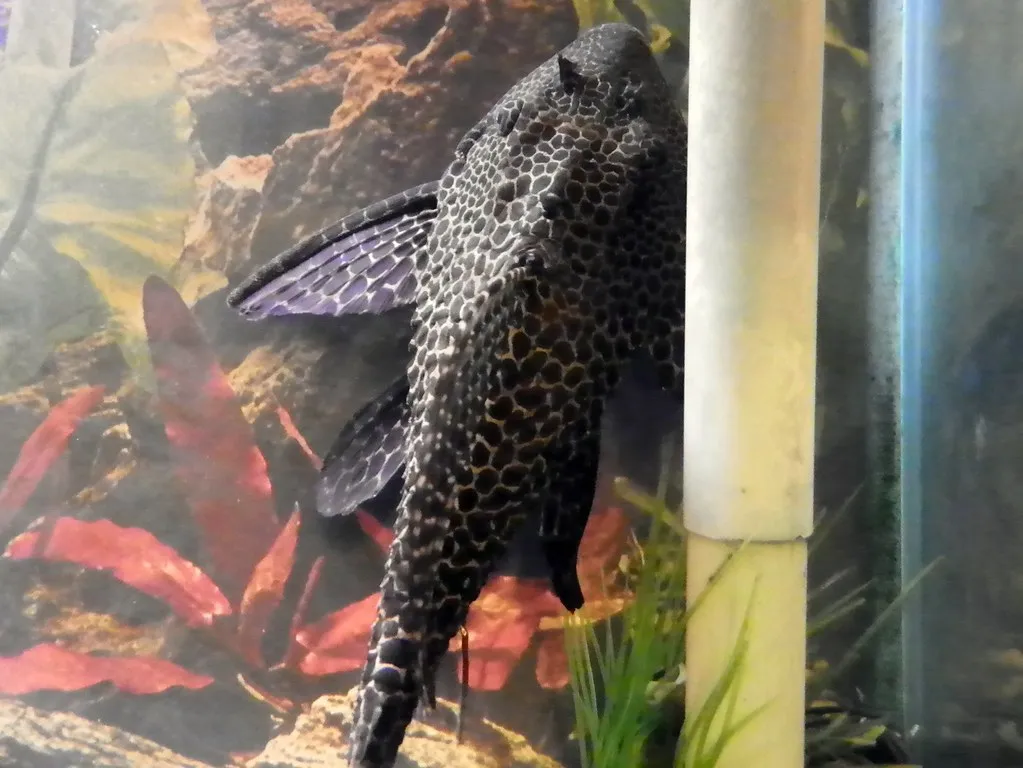
Macushi pleco
Hypostomus macushi
Also known as L303, Rupununi hypostomus
FreshwaterFish
Care at a glance
- Temperature
- 77–84°F
- 25–29°C
- pH
- 6.0–7.4
- Adult size
- 7.9 in
- 20 cm
- Minimum tank
- 79 gal
- 300 L
- Temperament
- Peaceful
- Social behavior
- Solitary
- Swim level
- Bottom
- Diet
- Omnivore
- Difficulty
- Medium
- Breeding
- Hard
- Rarity
- Rare
- Family
- Loricariidae
- Origin
- Rupununi savanna rivers, Guyana
Overview
The Macushi pleco is a steady, medium-large catfish for a peaceful community. It suits a keeper with a little experience.
Did you know
Like several of its relatives, the Macushi pleco is thought to be able to breathe air. It would gulp air at the surface and take up the oxygen through its gut. That helps when warm, still pools run low on oxygen.
Caring for the Macushi pleco
Give a Macushi pleco at least 79 gal (300 L), with driftwood over a sand or fine gravel floor. Add some laterite-toned rock and a few shaded hides. Leave open space as well, since it wants room to roam the floor.
Keep the water soft to neutral and warm, at 77 to 84°F (25 to 29°C) and a pH of 6.0 to 7.4. It is hardy and forgiving of ordinary tap-water conditions, but it likes a steady current.
The Macushi pleco is an adaptable omnivore. Feed vegetables, sinking prepared foods and gel diets. It will also rasp driftwood and biofilm.
Keep it on its own, since it does not need company of its kind. It is peaceful toward tank mates, so pair it with calm community fish. Breeding it is rated hard and is not well documented in aquariums.
Good to know
Hypostomus macushi is a catfish in the family Loricariidae, sold as L303 or the red pepper pleco. It belongs to the wood-associated cochliodon group and has spoon-shaped teeth. It is named for the Macushi people of the Rupununi, who collected the first specimens and hosted the scientists who described it.
In the wild
The Macushi pleco lives in the Rupununi savanna rivers of Guyana. It spends its days near dead, submerged wood, in water with moderate to fast flow.
Weekly picks
Tank mates
The Macushi pleco is a peaceful, solitary species that keeps to the bottom. These picks share a community profile with it, are safe together in both directions, and overlap on water type, temperature and pH.
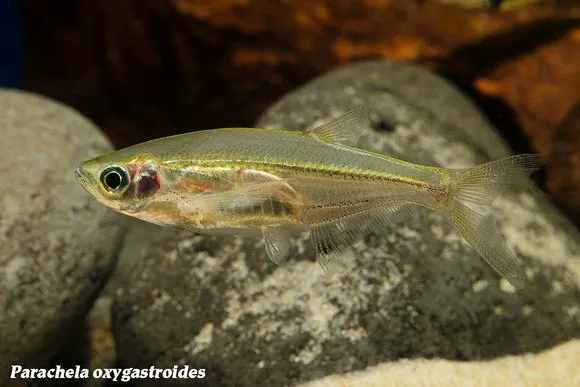
Asian glass hatchetfish
Parachela oxygastroides
Freshwater7.9 in (20 cm) · 79 gal (300 L)73–82°F (23–28°C)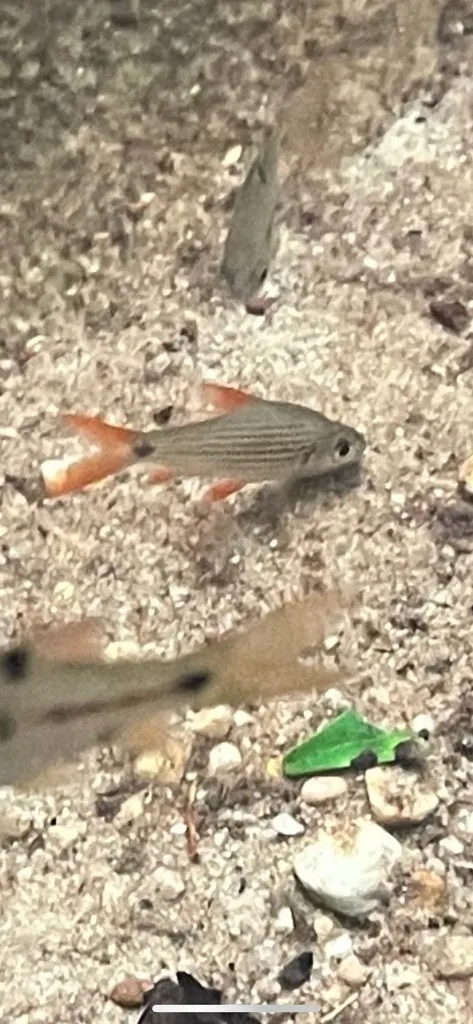
Beardless barb
Cyclocheilichthys apogon
Freshwater7.9 in (20 cm) · 66 gal (250 L)72–82°F (22–28°C)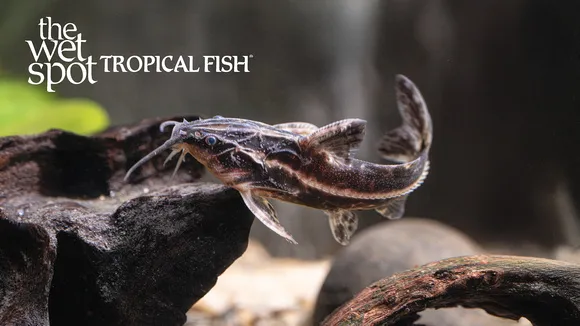
Orinoco talking catfish
Orinocodoras eigenmanni
Freshwater7.9 in (20 cm) · 70 gal (265 L)73–82°F (23–28°C)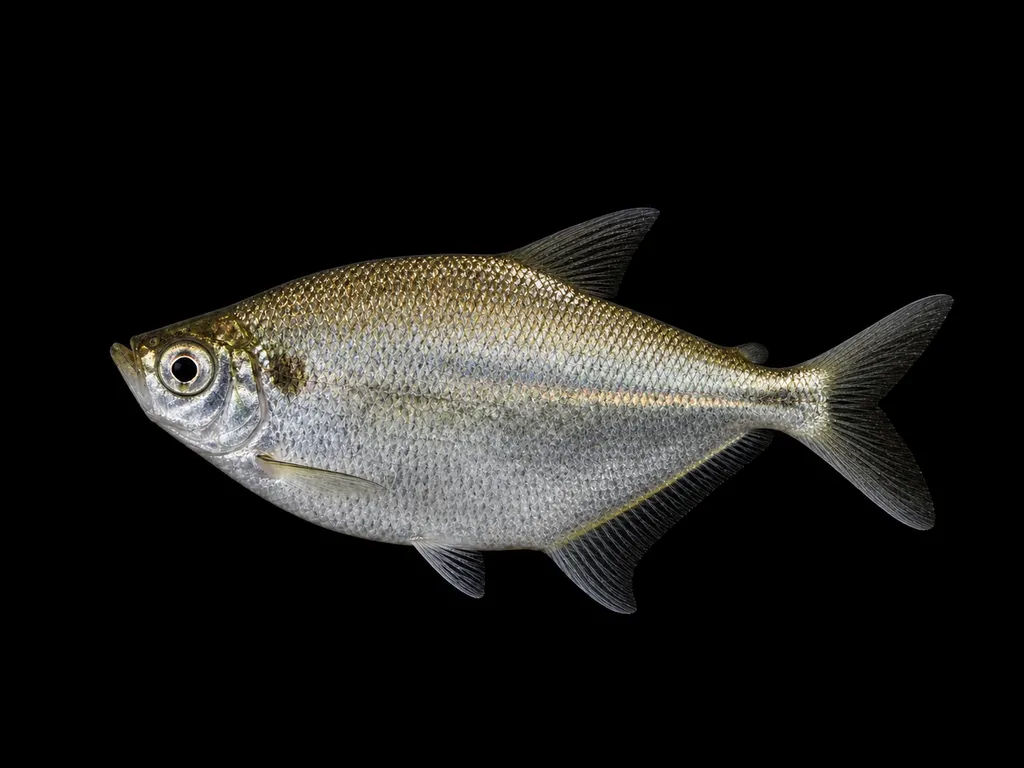
Giant river hatchetfish
Triportheus rotundatus
Freshwater9.8 in (25 cm) · 79 gal (300 L)73–82°F (23–28°C)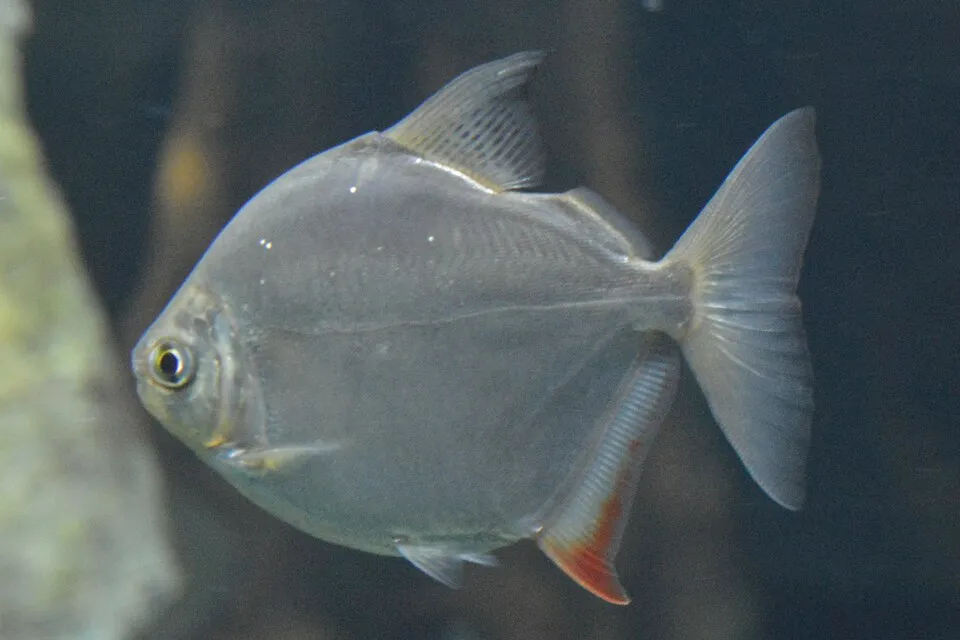
Plain metynnis
Metynnis hypsauchen
Freshwater5.5 in (14 cm) · 70 gal (265 L)75–82°F (24–28°C)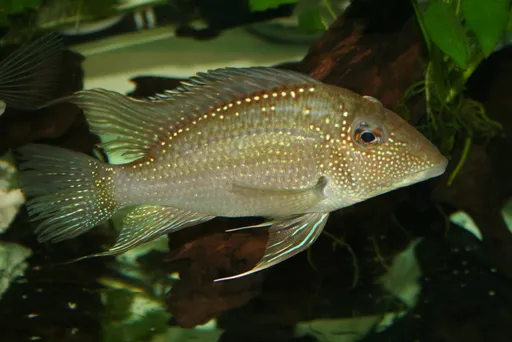
Whitespot eartheater
Satanoperca leucosticta
Freshwater7.1 in (18 cm) · 79 gal (300 L)75–84°F (24–29°C)
Common questions
What size tank does a Macushi pleco need?
A Macushi pleco needs at least 79 gal (300 L). It spends most of its time in the bottom.
What temperature and pH does a Macushi pleco need?
A Macushi pleco is comfortable at 77–84°F (25–29°C) with a pH of 6.0–7.4.
What does a Macushi pleco eat?
A Macushi pleco is an adaptable omnivore that takes vegetables, sinking prepared foods and gel diets. It also rasps driftwood and biofilm.
How big does a Macushi pleco get?
An adult Macushi pleco reaches about 7.9 in (20 cm).
Related species
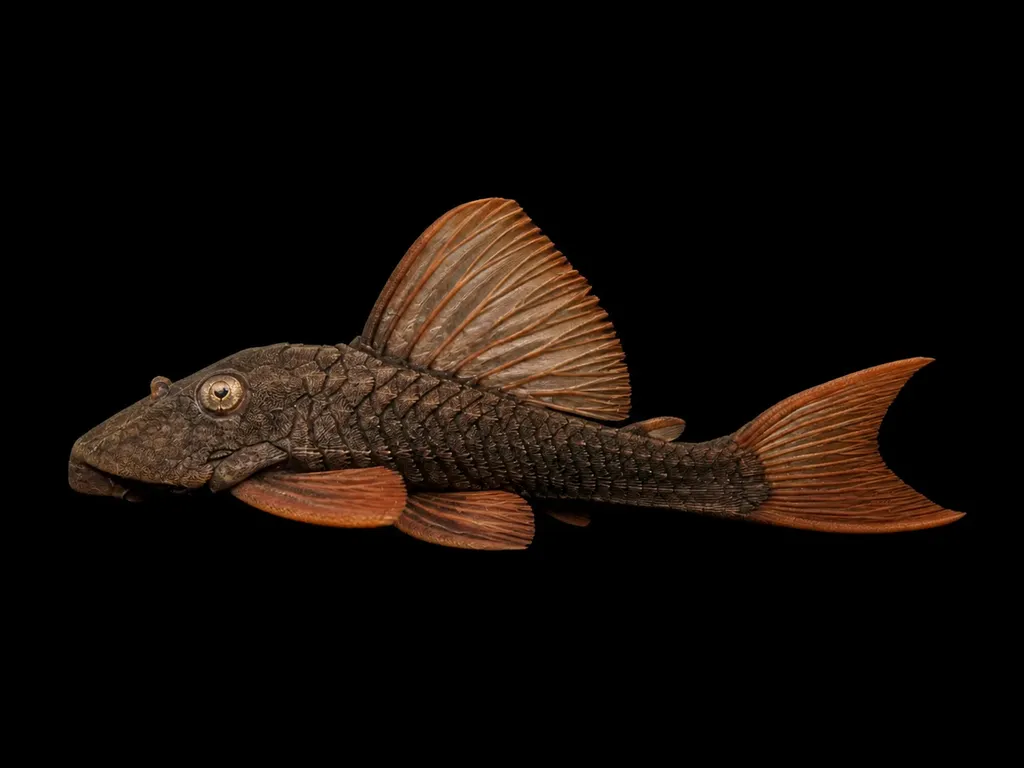 7.9 in (20 cm)79 gal (300 L)77–84°F (25–29°C)
Red bruno pleco
Hypostomus soniae
7.9 in (20 cm) · 79 gal (300 L)
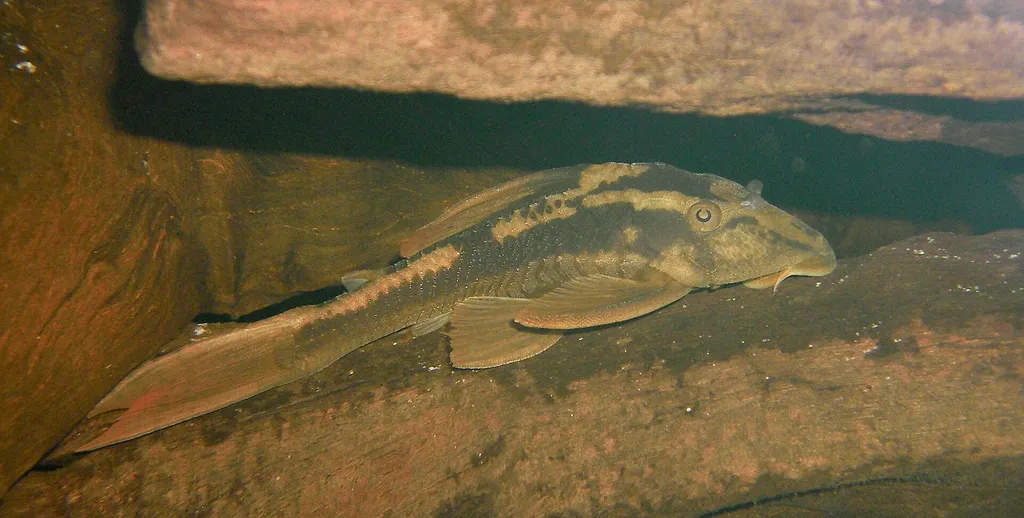 9.4 in (24 cm)79 gal (300 L)77–84°F (25–29°C)
Basilisk pleco
Hypostomus basilisko
9.4 in (24 cm) · 79 gal (300 L)
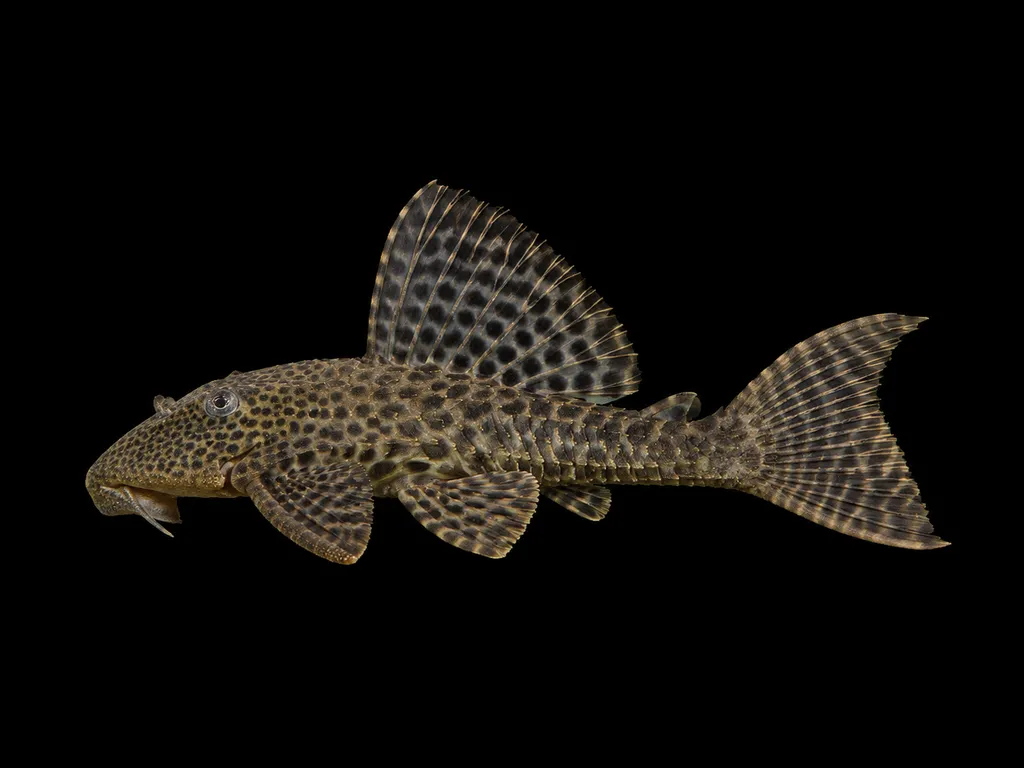 10.2 in (26 cm)79 gal (300 L)77–84°F (25–29°C)
Brown pleco
Hypostomus plecostomoides
10.2 in (26 cm) · 79 gal (300 L)
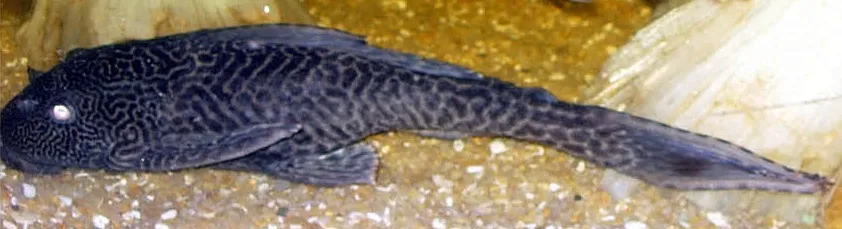 11.8 in (30 cm)79 gal (300 L)72–82°F (22–28°C)
Spotted pleco
Hypostomus punctatus
11.8 in (30 cm) · 79 gal (300 L)
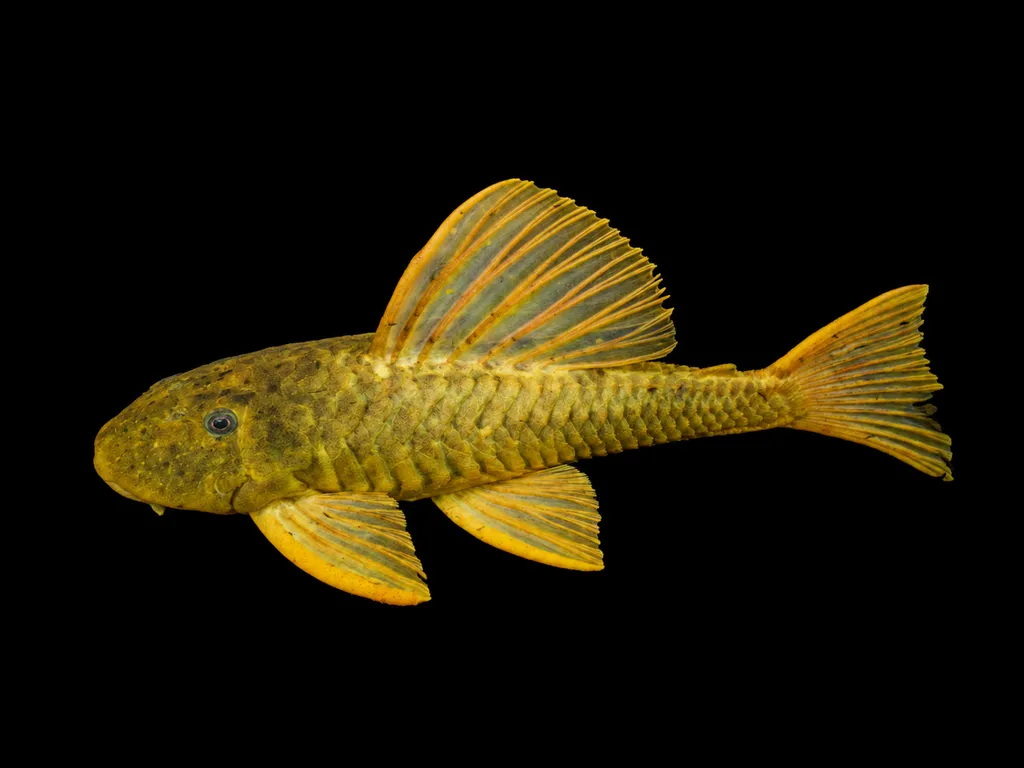 13.8 in (35 cm)106 gal (400 L)64–79°F (18–26°C)
Golden hypostomus
Hypostomus luteus
13.8 in (35 cm) · 106 gal (400 L)
 15.7 in (40 cm)85 gal (320 L)72–86°F (22–30°C)
Common pleco
Hypostomus plecostomus
15.7 in (40 cm) · 85 gal (320 L)