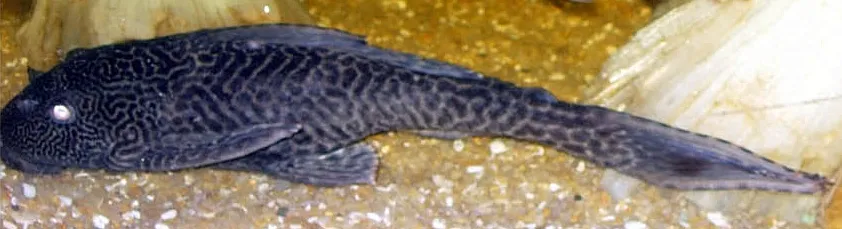
Spotted pleco
Hypostomus punctatus
FreshwaterFish
Care at a glance
- Temperature
- 72–82°F
- 22–28°C
- pH
- 6.0–7.8
- Adult size
- 11.8 in
- 30 cm
- Minimum tank
- 79 gal
- 300 L
- Temperament
- Mostly peaceful
- Social behavior
- Solitary
- Swim level
- Bottom
- Difficulty
- Medium
- Breeding
- No record
- Rarity
- Common
- Family
- Loricariidae
- Origin
- South America: coastal drainages of southeastern Brazil
Overview
Despite the small size at purchase, this fish grows fast and gets big, so plan on a tank of at least 300 liters and larger if you can manage it. Keep just one per tank, since males are territorial toward other plecos unless the system is very large. They are mostly peaceful toward other species and sit on the bottom, grazing at night. They are heavy waste producers, so run oversized filtration with good flow and do large, frequent water changes. Do not treat them as a cleanup crew. Feed them properly with sinking wafers, blanched vegetables, and the occasional bit of protein. Their bulk can uproot plants and knock over decor, so anchor things down. These are often sold generically as common plecos and can outgrow a casual setup, so never release one into local waterways and check your local rules, since large plecos are restricted in some regions.
In the wild
Spotted plecos come from coastal river drainages in southeastern Brazil, including fast-flowing stretches with plenty of current. They are armored suckermouth catfish that rasp at surfaces and wedge into cover, so give them sand or smooth gravel, driftwood to graze and chew on, and snug caves to hole up in during the day. They are hardy on water chemistry and do fine across a pH of 6 to 7.8 and a temperature of 22 to 28 C. Strong flow suits them, since that matches the rivers they live in.
Good to know
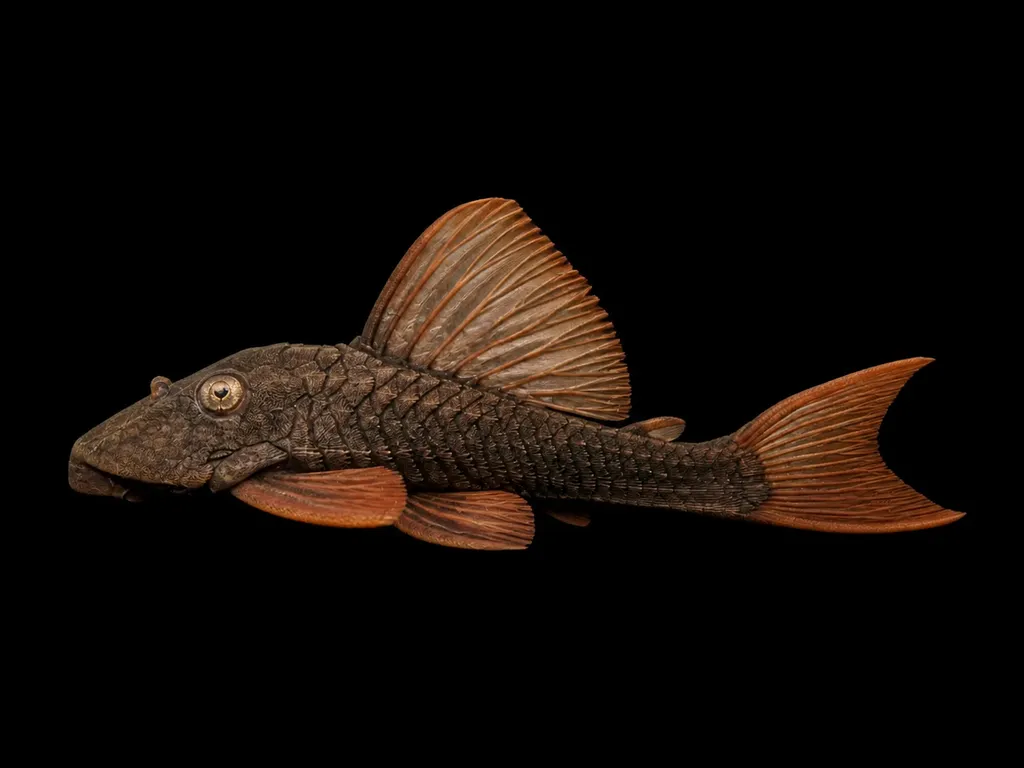
This is Hypostomus punctatus, a large catfish in the family Loricariidae that reaches about 30 cm as an adult. It is long lived, often 10 to 15 years or more. There is no reliable record of it breeding in home aquariums, since it is a big fish that spawns in burrows, so the fish you buy are pond or farm raised commercially.
Did you know
The mouth works like a suction cup, which lets the fish cling to rocks and wood in strong current while it rasps off algae and detritus. It also rasps at driftwood, and many keepers find that a piece of bogwood in the tank slowly gets worn down over the years.
Weekly picks
Tank mates
Spotted pleco is a mostly peaceful, solitary species that keeps to the bottom. These picks share a community profile with it, are safe together in both directions, and overlap on water type, temperature and pH.
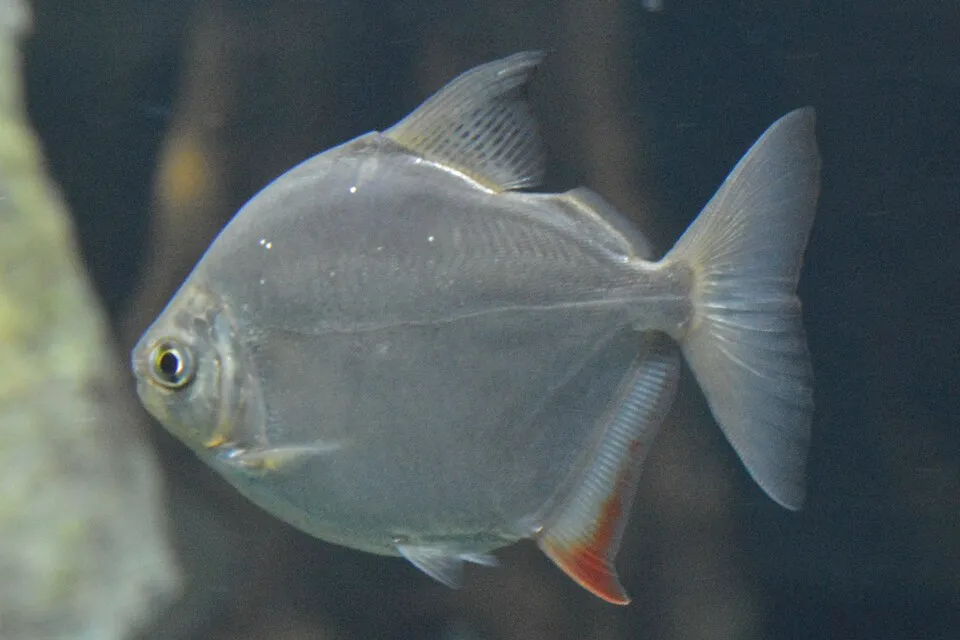
Plain metynnis
Metynnis hypsauchen
Freshwater5.5 in (14 cm) · 70 gal (265 L)75–82°F (24–28°C)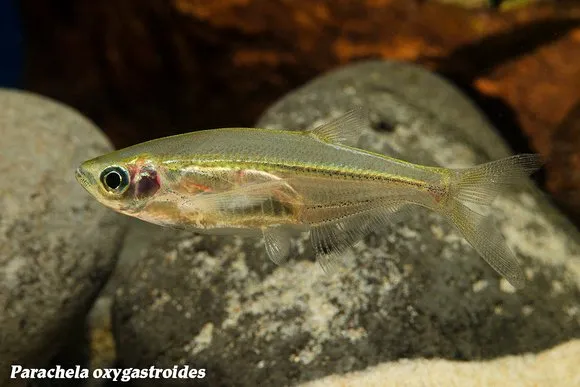
Asian glass hatchetfish
Parachela oxygastroides
Freshwater7.9 in (20 cm) · 79 gal (300 L)73–82°F (23–28°C)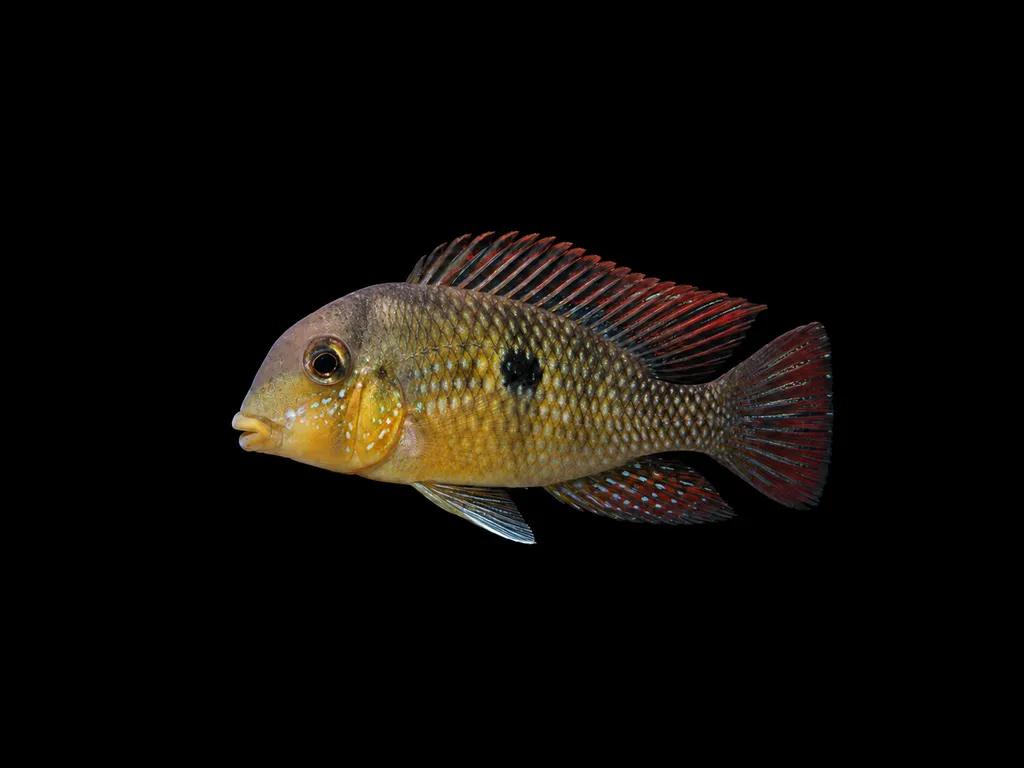
Thicklip gymnogeophagus
Gymnogeophagus labiatus
Freshwater7.1 in (18 cm) · 79 gal (300 L)61–79°F (16–26°C)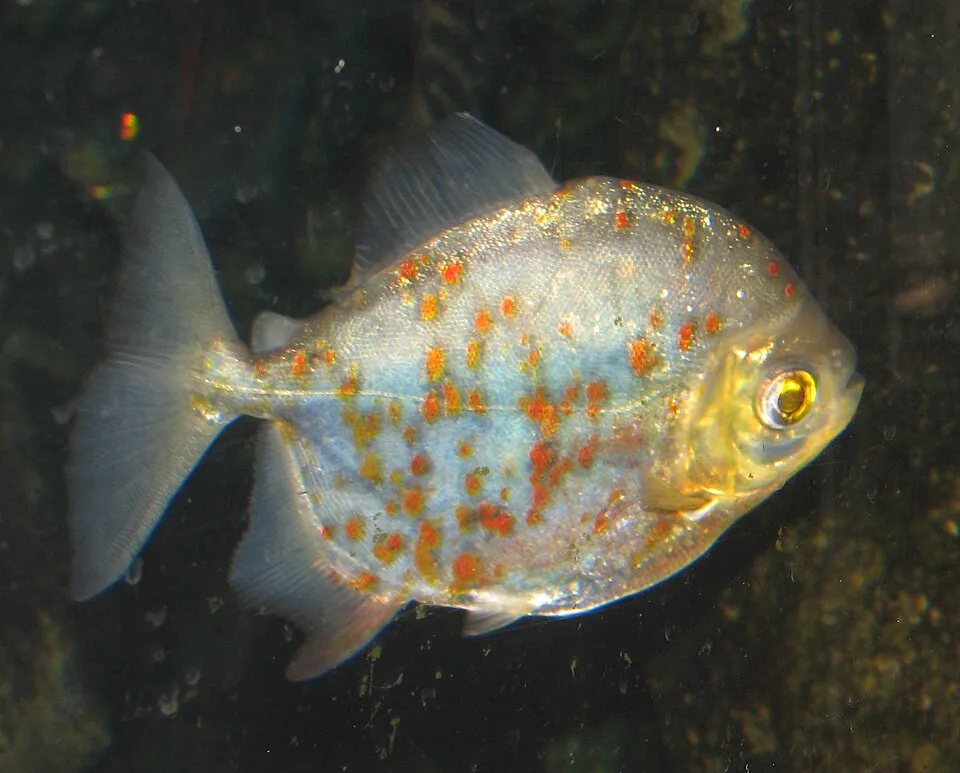
Redhook
Myloplus rubripinnis
Freshwater9.8 in (25 cm) · 70 gal (265 L)73–81°F (23–27°C)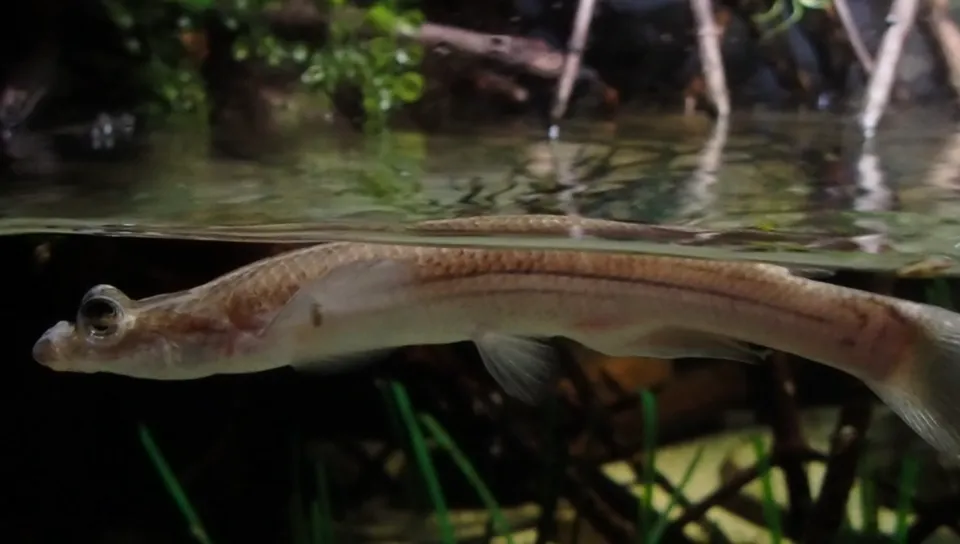
Largescale four-eyed fish
Anableps anableps
FreshwaterBrackish11.8 in (30 cm) · 70 gal (265 L)77–88°F (25–31°C)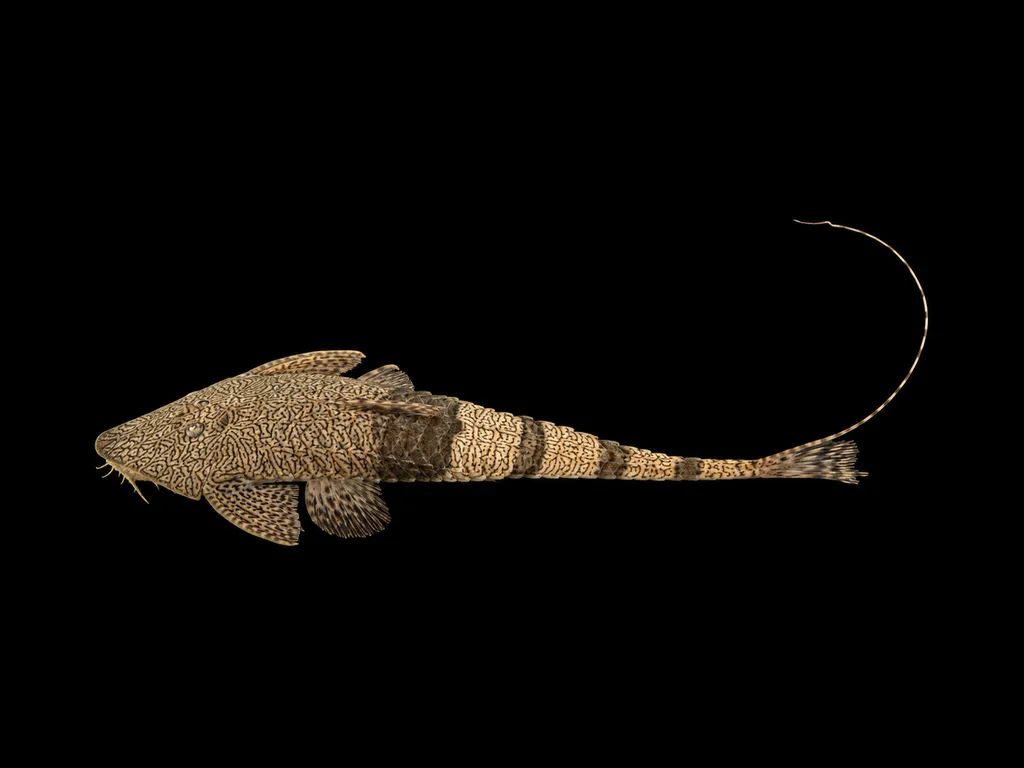
Chameleon whiptail
Pseudohemiodon apithanos
Freshwater6.7 in (17 cm) · 79 gal (300 L)75–82°F (24–28°C)
Common questions
What size tank does a Spotted pleco need?
A Spotted pleco needs at least 79 gal (300 L). It spends most of its time in the bottom.
What temperature and pH does a Spotted pleco need?
A Spotted pleco is comfortable at 72–82°F (22–28°C) with a pH of 6.0–7.8.
How big does a Spotted pleco get?
An adult Spotted pleco reaches about 11.8 in (30 cm).
Related species
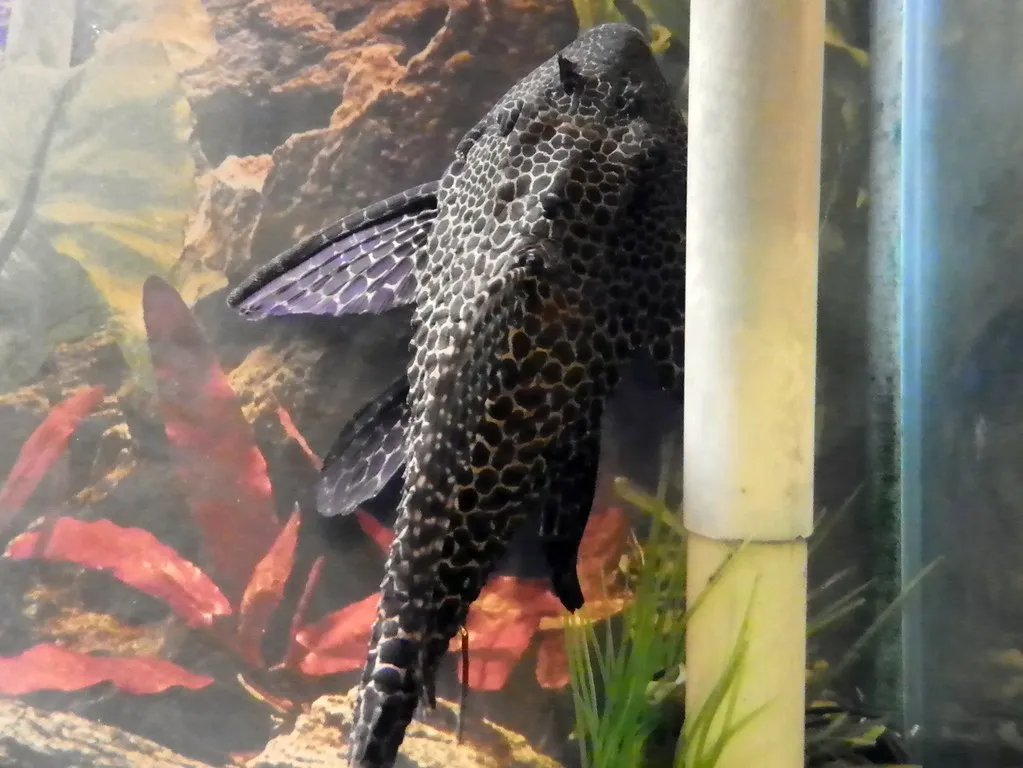
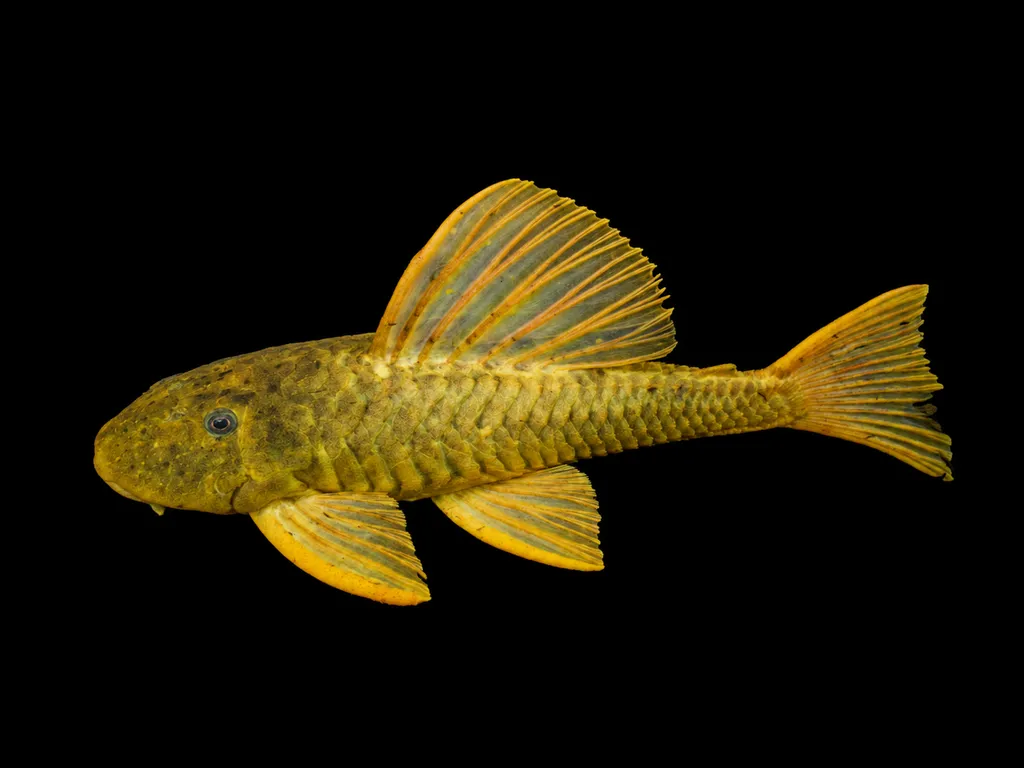 13.8 in (35 cm)106 gal (400 L)64–79°F (18–26°C)
Golden hypostomus
Hypostomus luteus
13.8 in (35 cm) · 106 gal (400 L)
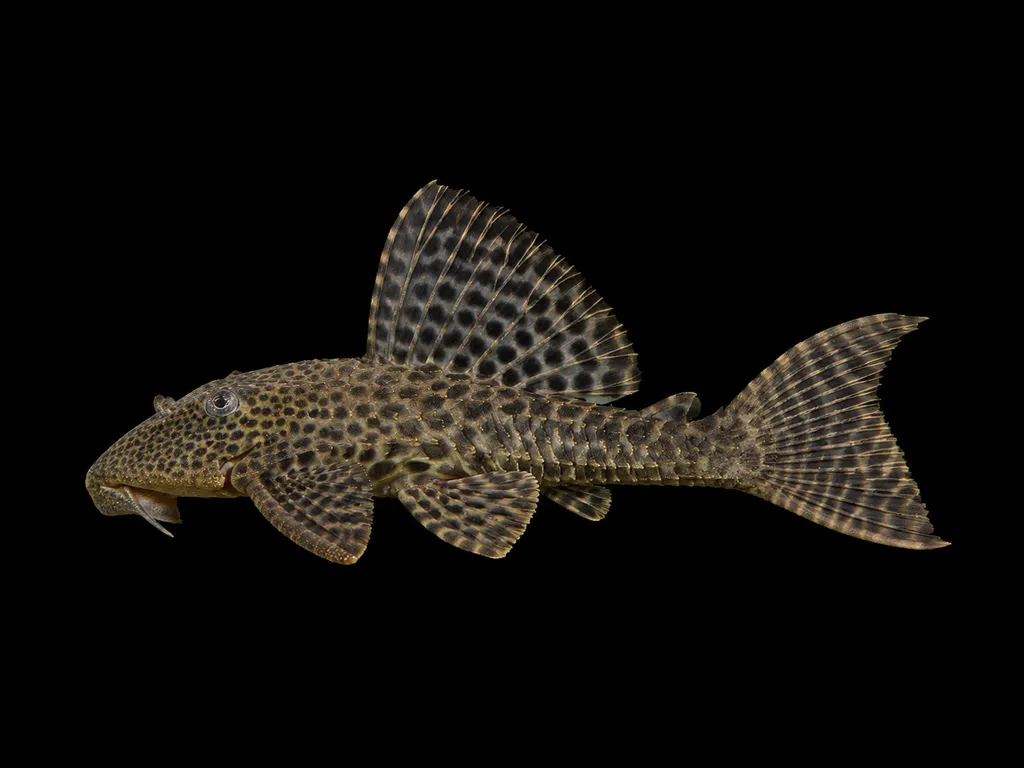
 15.7 in (40 cm)85 gal (320 L)72–86°F (22–30°C)
Common pleco
Hypostomus plecostomus
15.7 in (40 cm) · 85 gal (320 L)
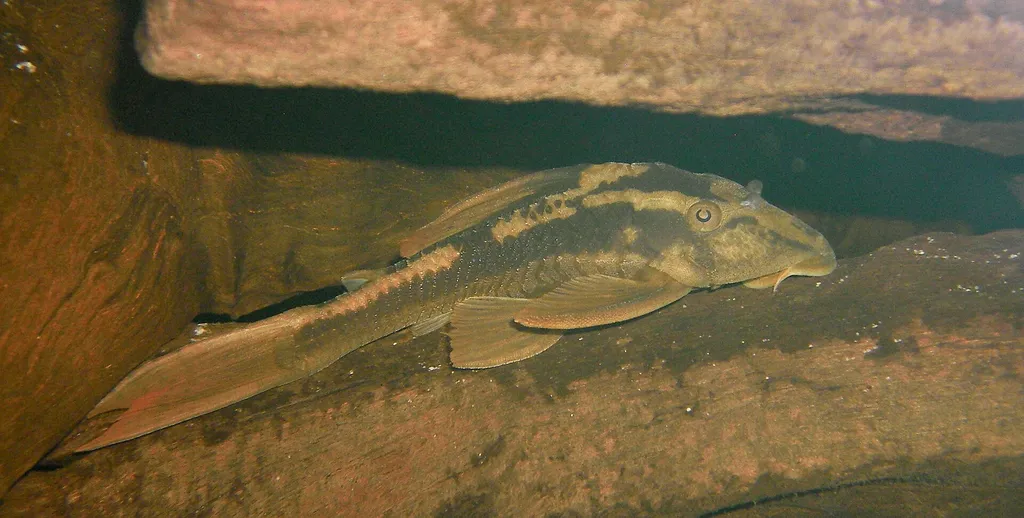
 10.2 in (26 cm)79 gal (300 L)77–84°F (25–29°C)
Brown pleco
Hypostomus plecostomoides
10.2 in (26 cm) · 79 gal (300 L)
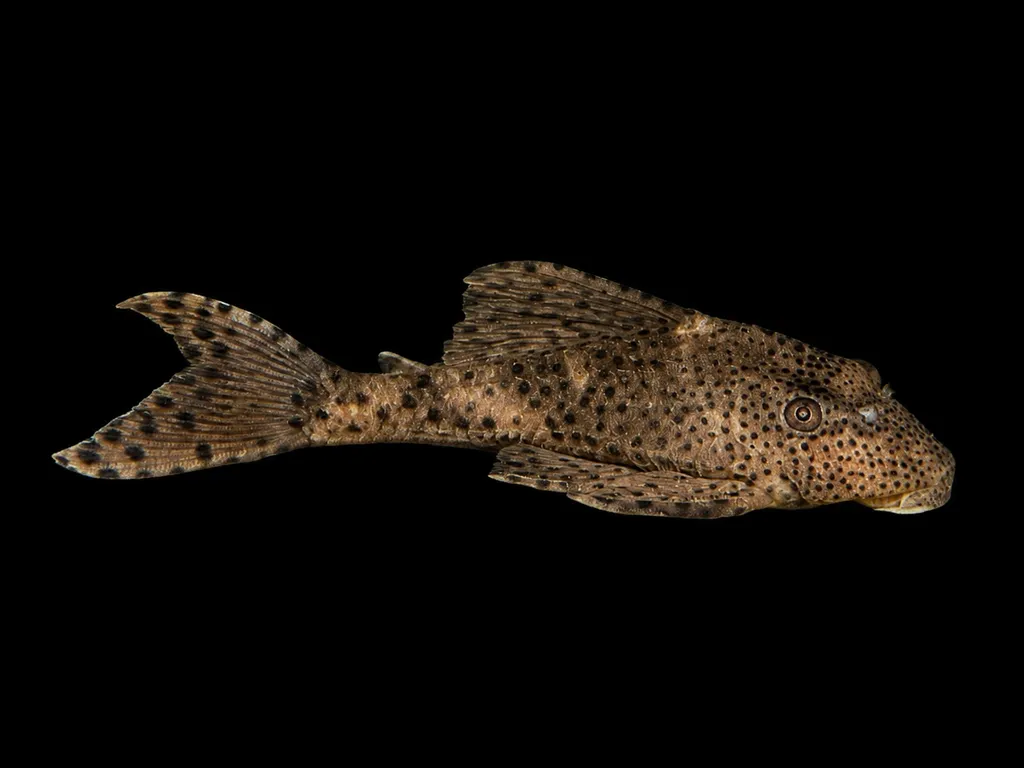
 9.4 in (24 cm)79 gal (300 L)77–84°F (25–29°C)
Basilisk pleco
Hypostomus basilisko
9.4 in (24 cm) · 79 gal (300 L)
 7.9 in (20 cm)79 gal (300 L)77–84°F (25–29°C)
Macushi pleco
Hypostomus macushi
7.9 in (20 cm) · 79 gal (300 L)
 7.9 in (20 cm)79 gal (300 L)77–84°F (25–29°C)
Red bruno pleco
Hypostomus soniae
7.9 in (20 cm) · 79 gal (300 L)