African glass cat
Parailia pellucida
Also known as African glass catfish
FreshwaterFish
Care at a glance
- Temperature
- 73–82°F
- 23–28°C
- pH
- 6.5–7.2
- Adult size
- 4.7 in
- 12 cm
- Minimum tank
- 40 gal
- 150 L
- Temperament
- Peaceful
- Social behavior
- Schooling
- Swim level
- Middle
- Difficulty
- Medium
- Breeding
- No record
- Rarity
- Rare
- Family
- Schilbeidae
- Origin
- Nile, Niger, and Congo basins, Africa
Overview
The African glass cat is a slender, semi-transparent catfish that hovers in midwater in a loose shoal. It suits a keeper with a little experience.
Did you know
The African glass cat and the glass catfish of Asia are both see-through, but they are unrelated. Transparency evolved twice over, once in Africa and once, separately, in the Asian genus Kryptopterus.
Caring for the African glass cat
Give a group of African glass cats a planted, dimly lit tank of at least 40 gal (150 L). Leave open midwater for them to hover in. Dim, tannin-tinted water suits them, so soften the light with driftwood, leaf litter and floating or tall plants. Add a soft substrate and gentle, steady filtration.
Keep the water warm, at 73 to 82°F (23 to 28°C), and soft to neutral with a pH of 6.5 to 7.2. Feed small foods they can take from the water column, such as frozen daphnia, cyclops, baby brine shrimp, chopped bloodworm and fine dried foods.
The African glass cat is a schooling fish that frets on its own. Keep a group of six or more, and ideally ten, to keep it settled and out in the open. It is peaceful and a little timid, so match it with calm, similarly sized community fish rather than boisterous or very large ones. It is not known to breed in home aquariums.
Good to know
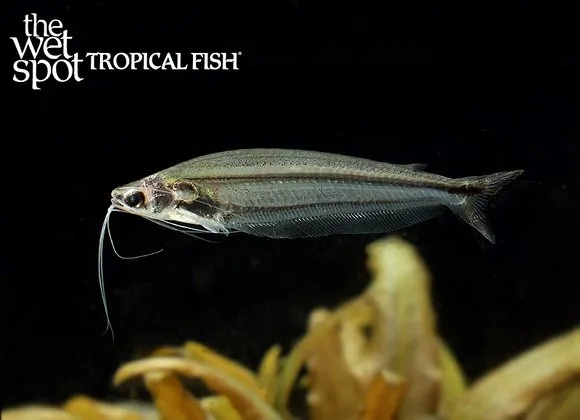
The African glass cat, Parailia pellucida, is a schilbeid catfish. Its body is semi-transparent, more so in young fish, with faint dark bars showing along the flank. It carries several pairs of long barbels. It is one of Africa's few transparent catfishes, built for a life spent hanging in open midwater.
In the wild
The African glass cat lives in the slow, shaded waters of large rivers and lakes across tropical Africa. Its range includes the Nile, Niger and Congo basins. There it feeds on small drifting invertebrates and crustaceans.
Weekly picks
Tank mates
The African glass cat is a peaceful, schooling species that keeps to the middle. These picks share a community profile with it, are safe together in both directions, and overlap on water type, temperature and pH.
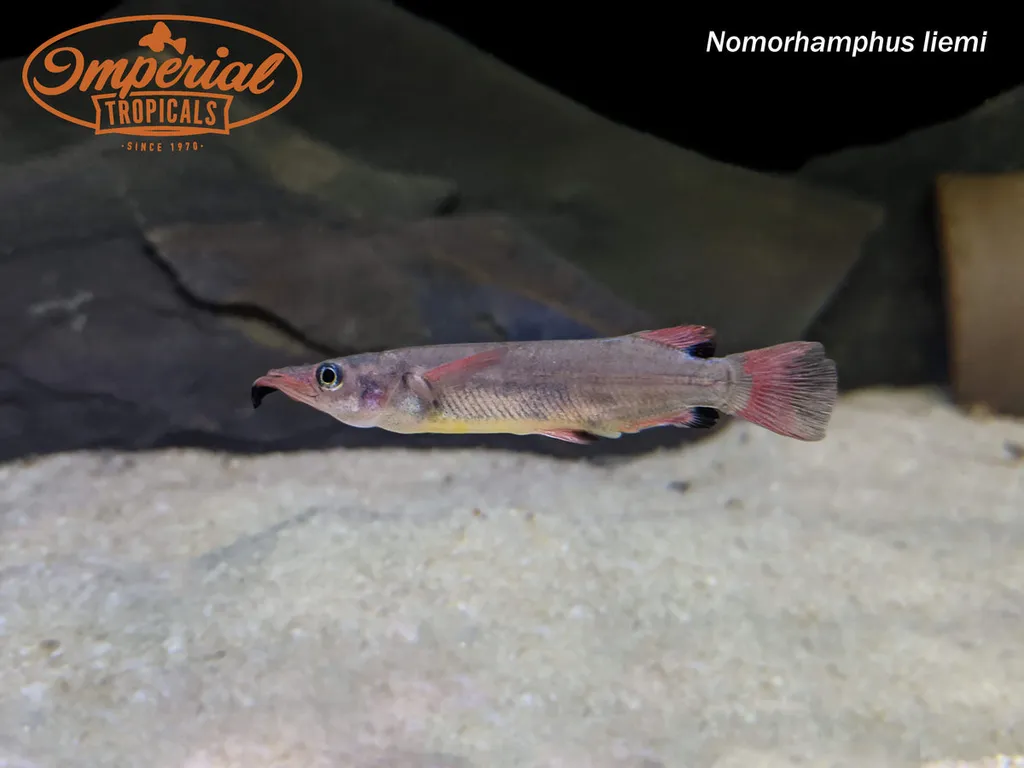
Celebes halfbeak
Nomorhamphus liemi
Freshwater3.5 in (9 cm) · 40 gal (150 L)68–77°F (20–25°C)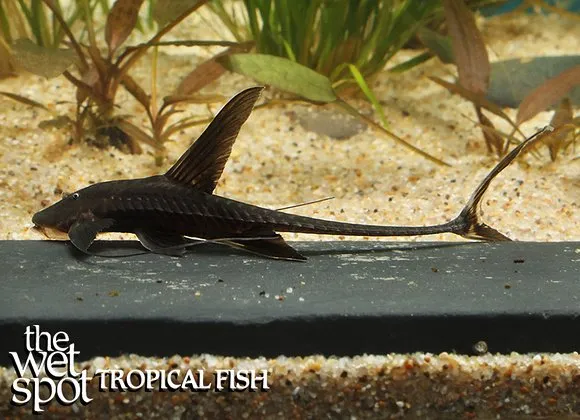
Antenna whiptail
Pterosturisoma microps
Freshwater6.3 in (16 cm) · 40 gal (150 L)73–82°F (23–28°C)
Melon barb
Haludaria fasciata
Freshwater2.8 in (7 cm) · 40 gal (150 L)72–79°F (22–26°C)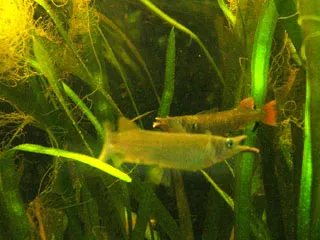
Redfin halfbeak
Nomorhamphus ebrardtii
Freshwater3.5 in (9 cm) · 29 gal (110 L)75–81°F (24–27°C)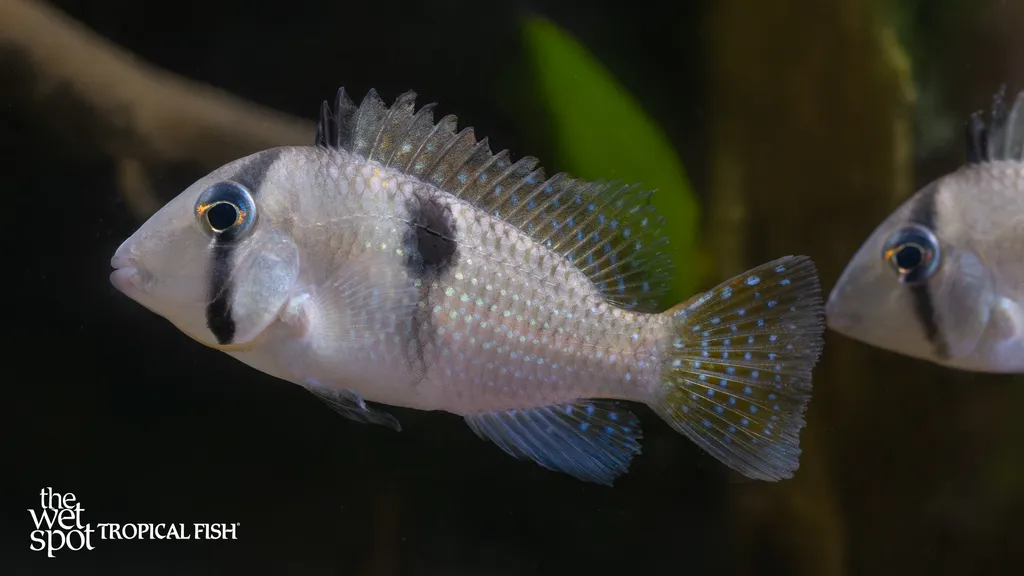
Bandit cichlid
Guianacara geayi
Freshwater5.1 in (13 cm) · 40 gal (150 L)75–82°F (24–28°C)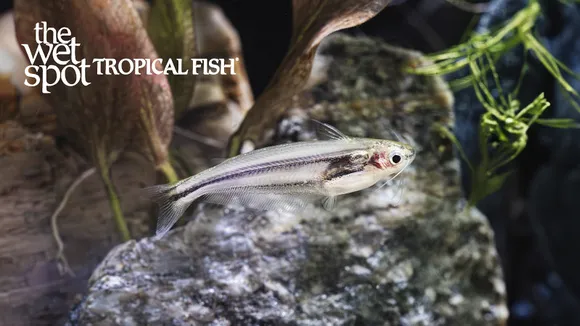
Debauwi cat
Pareutropius debauwi
Freshwater5.1 in (13 cm) · 40 gal (150 L)73–82°F (23–28°C)
Common questions
What size tank does an African glass cat need?
An African glass cat needs at least 40 gal (150 L). It spends most of its time in the middle.
What temperature and pH does an African glass cat need?
An African glass cat is comfortable at 73–82°F (23–28°C) with a pH of 6.5–7.2.
What does an African glass cat eat?
An African glass cat eats small foods it can take from the water column. Offer frozen daphnia, cyclops, baby brine shrimp, chopped bloodworm and fine dried foods.
How big does an African glass cat get?
An adult African glass cat reaches about 4.7 in (12 cm).
Does an African glass cat need a group?
Yes. An African glass cat is a schooling species and should be kept in a group, not singly.
Related species
- 5.1 in (13 cm)40 gal (150 L)73–82°F (23–28°C)
Debauwi cat
Pareutropius debauwi
5.1 in (13 cm) · 40 gal (150 L)
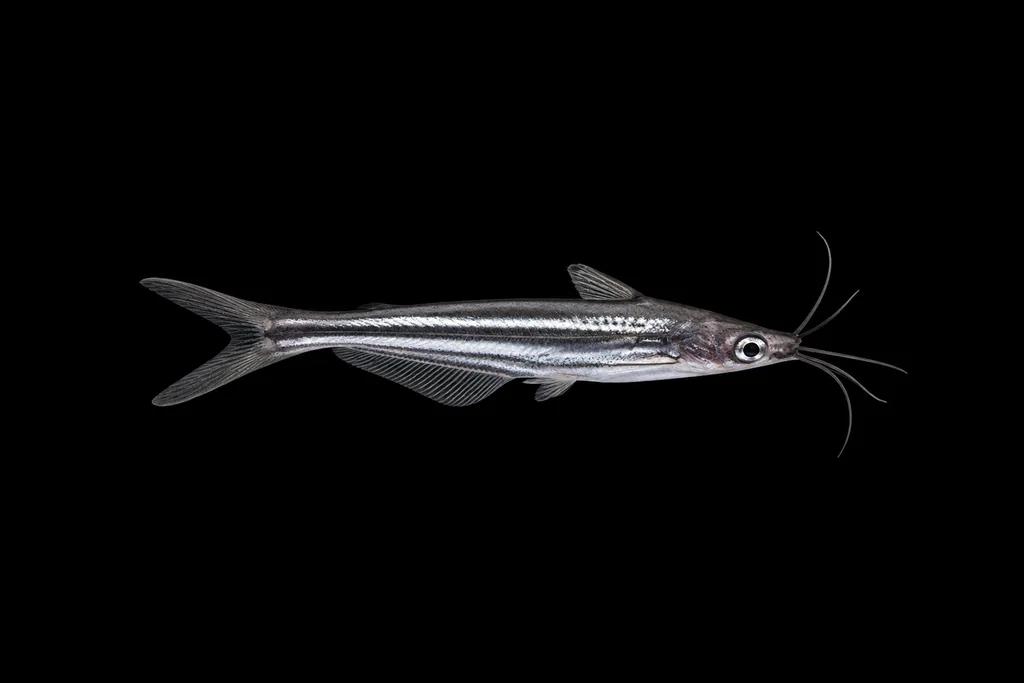 4.3 in (11 cm)30 gal (112 L)73–82°F (23–28°C)
Mini shark cat
Pseudeutropius brachypopterus
4.3 in (11 cm) · 30 gal (112 L)
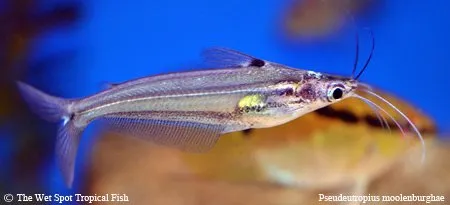 3.9 in (10 cm)30 gal (112 L)73–82°F (23–28°C)
Moolenburgh's glass catfish
Pseudeutropius moolenburghae
3.9 in (10 cm) · 30 gal (112 L)
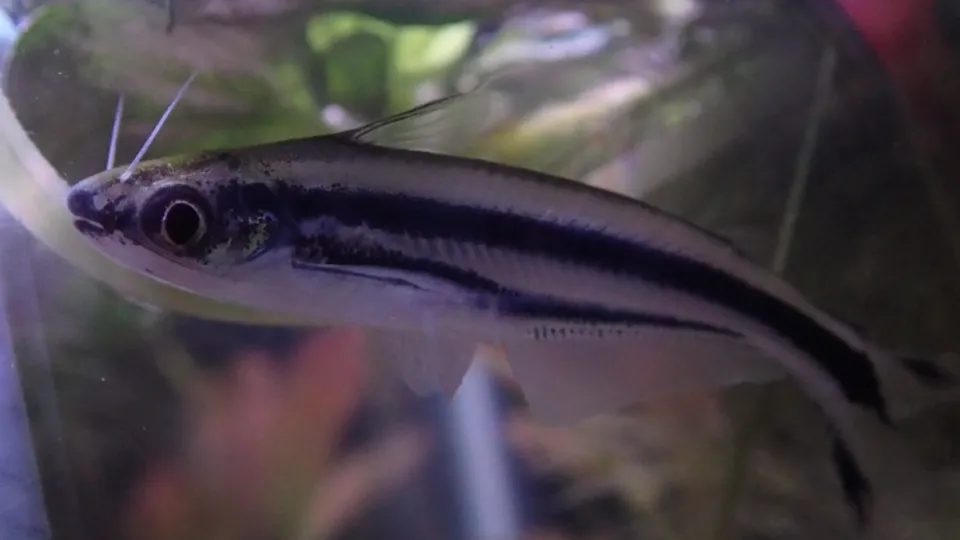 3.1 in (8 cm)20 gal (75 L)75–82°F (24–28°C)
Three-striped African catfish
Pareutropius buffei
3.1 in (8 cm) · 20 gal (75 L)
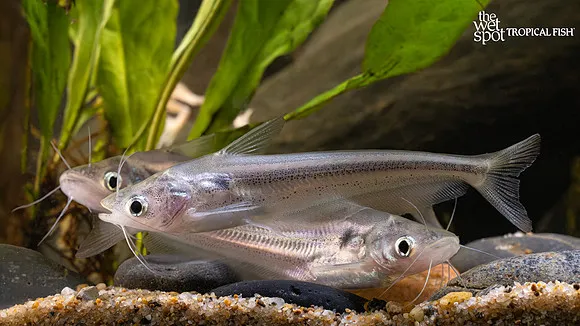 19.7 in (50 cm)264 gal (1,000 L)73–82°F (23–28°C)
African butter catfish
Schilbe intermedius
19.7 in (50 cm) · 264 gal (1,000 L)
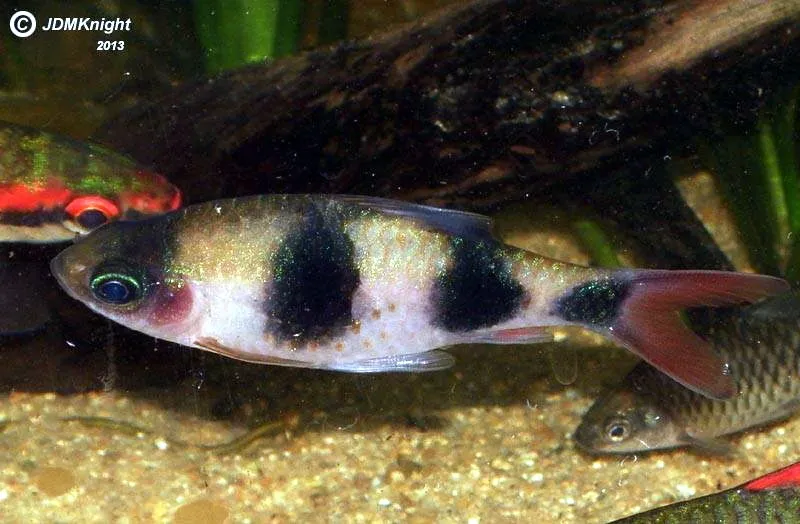 4.7 in (12 cm)37 gal (140 L)66–77°F (19–25°C)
Arulius barb
Dawkinsia arulius
4.7 in (12 cm) · 37 gal (140 L)