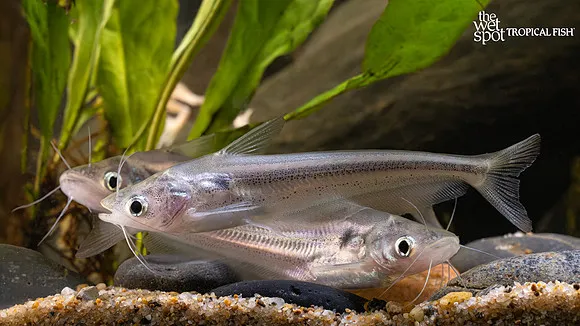
African butter catfish
Schilbe intermedius
Also known as Silver butter catfish, Grass cutter catfish
FreshwaterFish
Care at a glance
- Temperature
- 73–82°F
- 23–28°C
- pH
- 6.5–7.8
- Adult size
- 19.7 in
- 50 cm
- Minimum tank
- 264 gal
- 1,000 L
- Temperament
- Mostly peaceful
- Social behavior
- Schooling
- Swim level
- Middle
- Diet
- Carnivore
- Difficulty
- Difficult
- Breeding
- No record
- Rarity
- Rare
- Family
- Schilbeidae
- Origin
- Most of tropical Africa, Nile to the Zambezi
Overview
The African butter catfish is a large, restless catfish for the open water of a very big aquarium. It is only for experienced keepers.
Did you know
The African butter catfish is a staple food fish in much of Africa. It climbs toward the surface to feed after dark, then drops back down as the light returns.
Caring for the African butter catfish
The African butter catfish needs a very big aquarium of at least 264 gal (1,000 L), since even a single fish needs enormous space. Leave long, clear swimming lanes, with some driftwood and shade at the sides. Add strong filtration, firm, well-oxygenated flow and a secure lid.
Keep it warm, at 73 to 82°F (23 to 28°C), in roughly neutral water with a pH of 6.5 to 7.8. Feed meaty foods such as fish fillet, prawn, mussel, earthworms and large sinking pellets.
It swims almost constantly in open water rather than resting on the bottom. In nature it travels in shoals, so keep a group. It does not bully its own kind, but it is a hunter that eats fish it can swallow. Keep only tank mates too large to become a meal.
Females grow larger than males. In the wild it breeds in the rainy season, migrating in compact shoals up into rivers. It is not known to spawn in aquariums.
Good to know
The African butter catfish, Schilbe intermedius, is a schilbeid catfish that commonly reaches about 30 cm. Young fish take insects and invertebrates, but adults become mainly piscivorous, hunting other fish. A slender silver body and long anal fin mark it out as an open-water cruiser built for the chase.
In the wild
The African butter catfish ranges across much of tropical Africa, from the Nile to the Zambezi. It lives in the open and shallow waters of large rivers and lakes.
Weekly picks
Tank mates
The African butter catfish is a mostly peaceful, schooling species that keeps to the middle. These picks share a community profile with it, are safe together in both directions, and overlap on water type, temperature and pH.
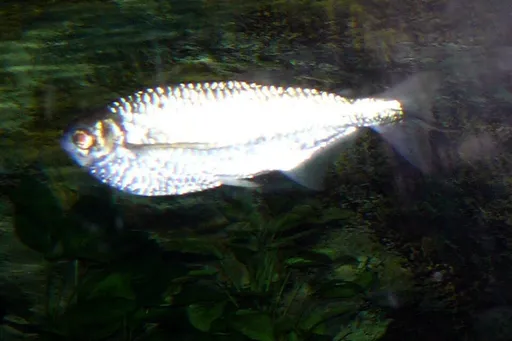
Narrow hatchetfish
Triportheus angulatus
Freshwater9.8 in (25 cm) · 79 gal (300 L)73–82°F (23–28°C)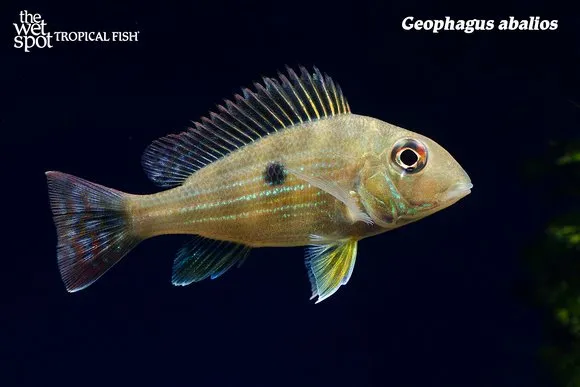
Abalios eartheater
Geophagus abalios
Freshwater9.8 in (25 cm) · 172 gal (650 L)77–84°F (25–29°C)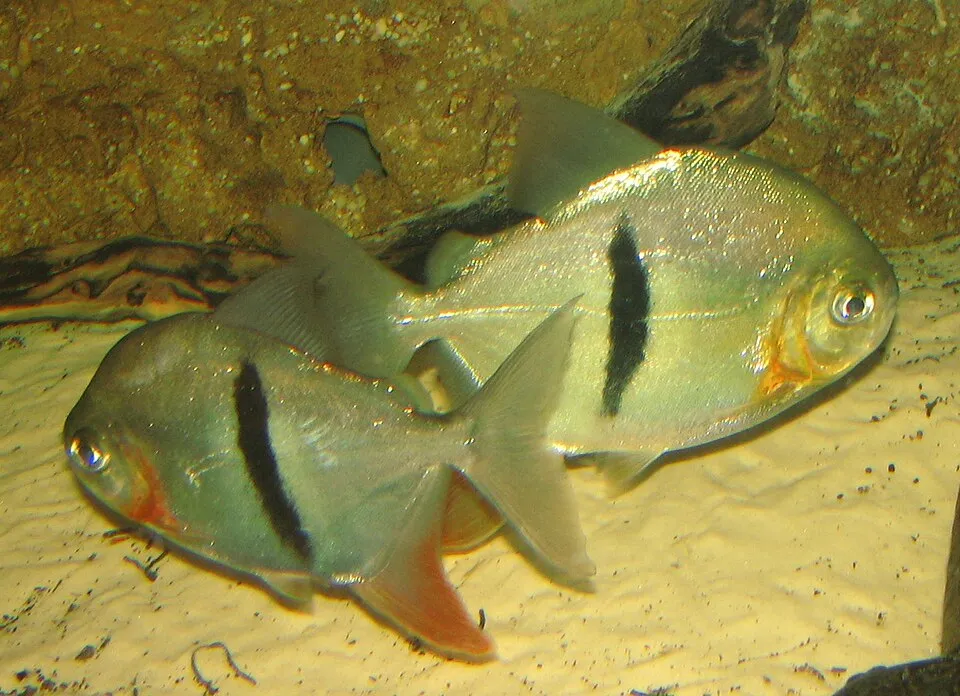
Disk tetra
Myloplus schomburgkii
Freshwater15.7 in (40 cm) · 170 gal (645 L)73–81°F (23–27°C)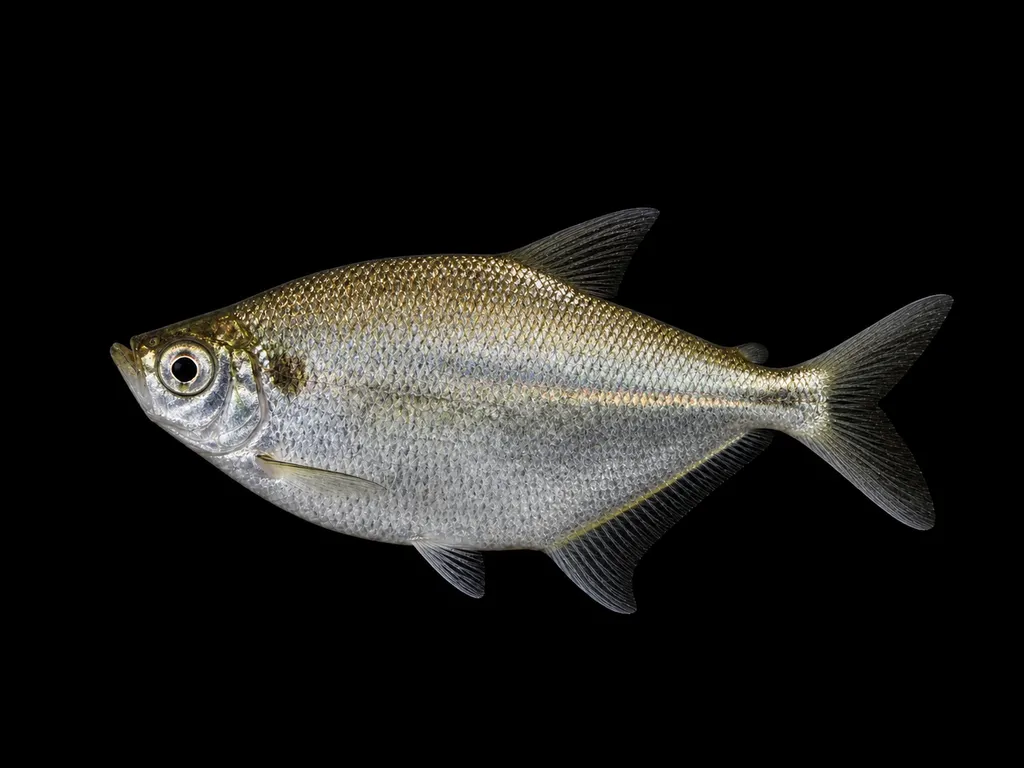
Giant river hatchetfish
Triportheus rotundatus
Freshwater9.8 in (25 cm) · 79 gal (300 L)73–82°F (23–28°C)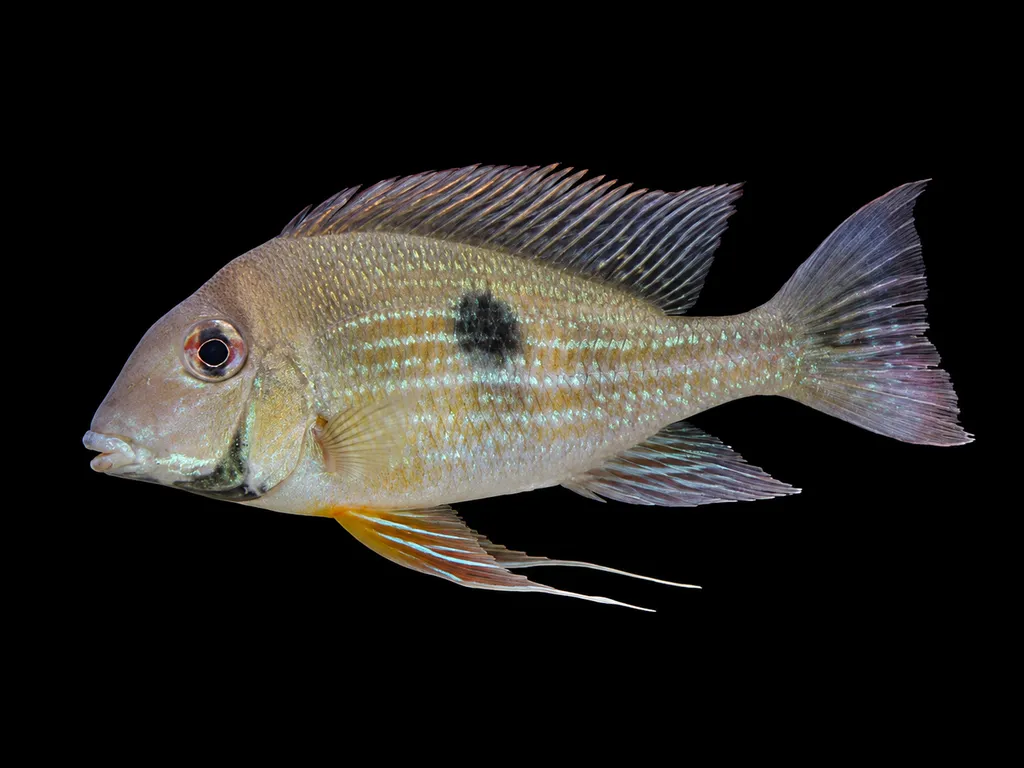
Dicrozoster eartheater
Geophagus dicrozoster
Freshwater9.8 in (25 cm) · 172 gal (650 L)77–84°F (25–29°C)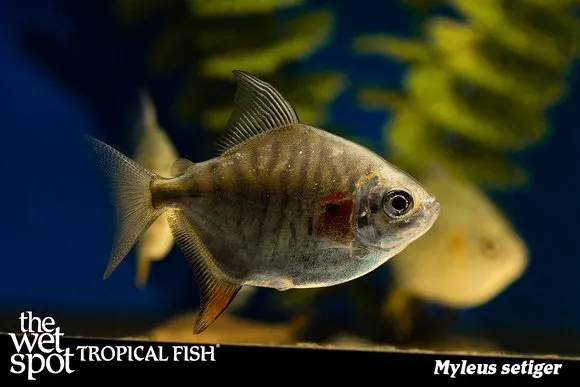
Sailfin red hook
Myleus setiger
Freshwater11 in (28 cm) · 159 gal (600 L)73–82°F (23–28°C)
Common questions
What size tank does an African butter catfish need?
An African butter catfish needs at least 264 gal (1,000 L). It spends most of its time in the middle.
What temperature and pH does an African butter catfish need?
An African butter catfish is comfortable at 73–82°F (23–28°C) with a pH of 6.5–7.8.
What does an African butter catfish eat?
An African butter catfish eats meaty foods such as fish fillet, prawn, mussel, earthworms and large sinking pellets.
How big does an African butter catfish get?
An adult African butter catfish reaches about 19.7 in (50 cm).
Does an African butter catfish need a group?
Yes. An African butter catfish is a schooling species and should be kept in a group, not singly.
How can you tell a male African butter catfish from a female?
Female African butter catfish grow larger than males.
Related species
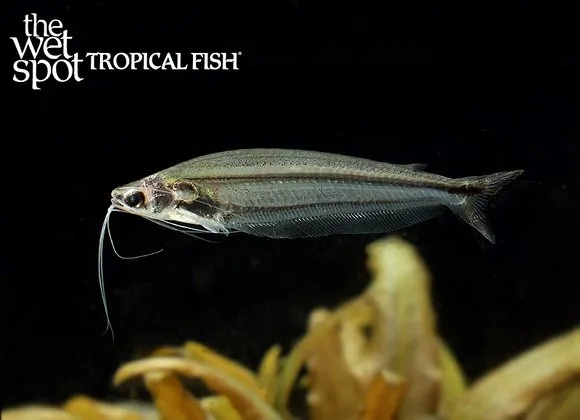
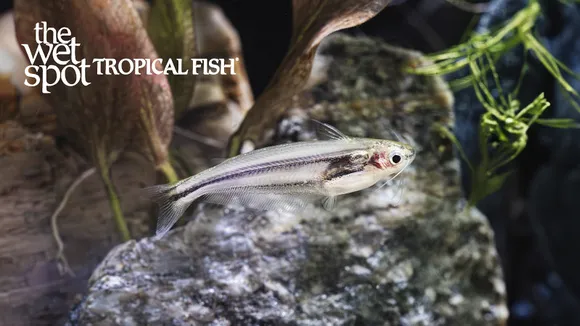 5.1 in (13 cm)40 gal (150 L)73–82°F (23–28°C)
Debauwi cat
Pareutropius debauwi
5.1 in (13 cm) · 40 gal (150 L)
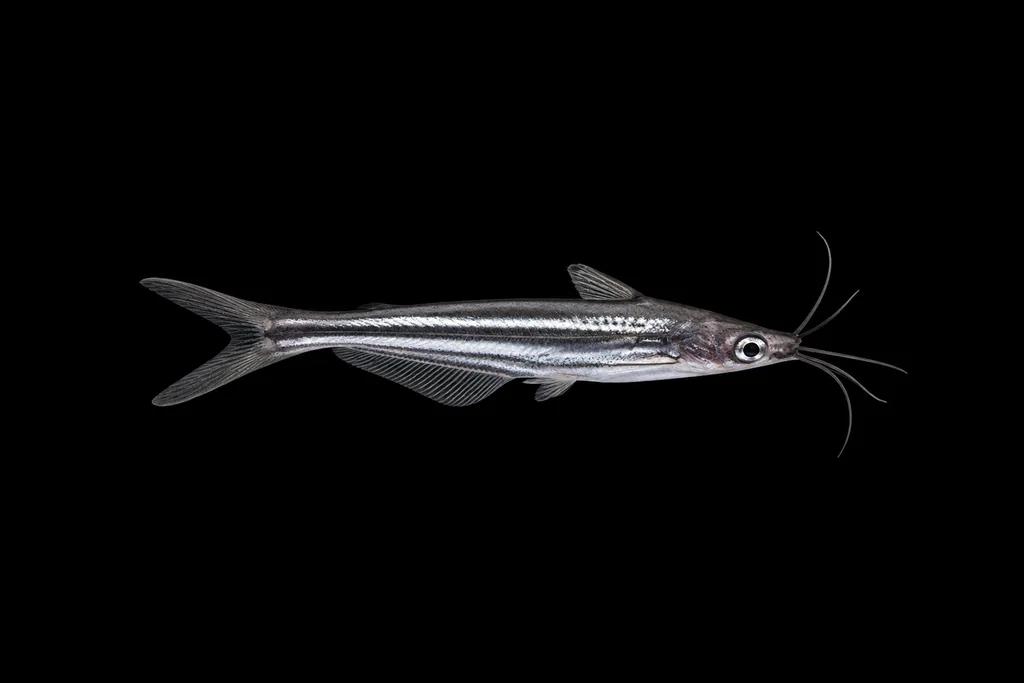
 4.7 in (12 cm)40 gal (150 L)73–82°F (23–28°C)
African glass cat
Parailia pellucida
4.7 in (12 cm) · 40 gal (150 L)
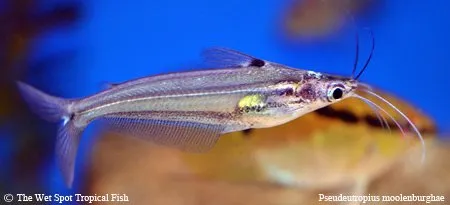
 4.3 in (11 cm)30 gal (112 L)73–82°F (23–28°C)
Mini shark cat
Pseudeutropius brachypopterus
4.3 in (11 cm) · 30 gal (112 L)
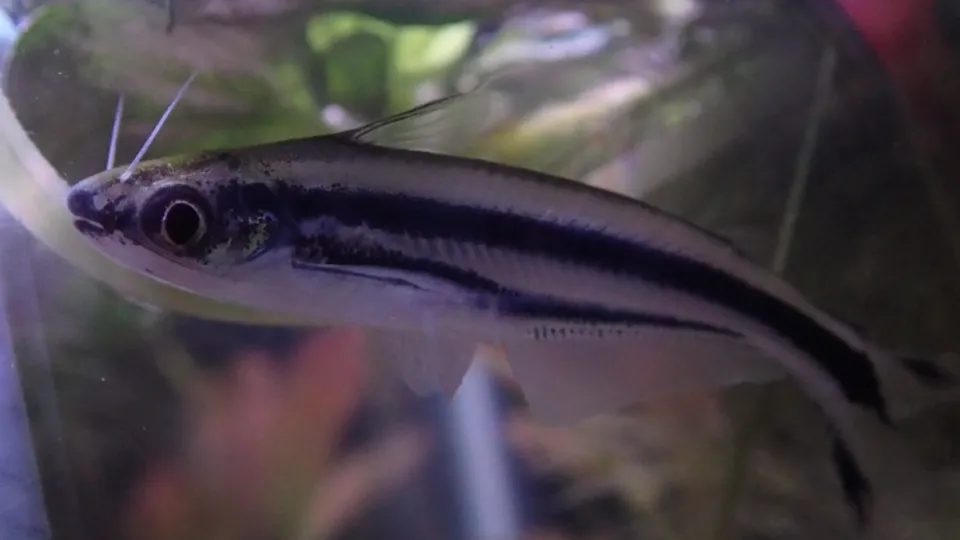
 3.9 in (10 cm)30 gal (112 L)73–82°F (23–28°C)
Moolenburgh's glass catfish
Pseudeutropius moolenburghae
3.9 in (10 cm) · 30 gal (112 L)
 3.1 in (8 cm)20 gal (75 L)75–82°F (24–28°C)
Three-striped African catfish
Pareutropius buffei
3.1 in (8 cm) · 20 gal (75 L)
 19.7 in (50 cm)95 gal (360 L)77–86°F (25–30°C)
Bay snook
Petenia splendida
19.7 in (50 cm) · 95 gal (360 L)