Disk tetra
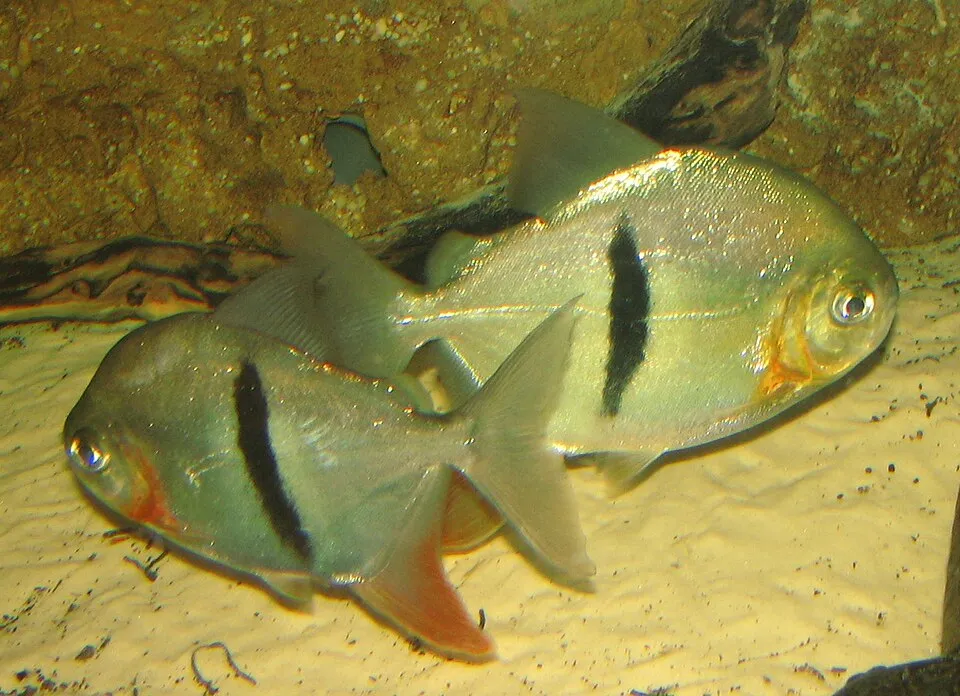
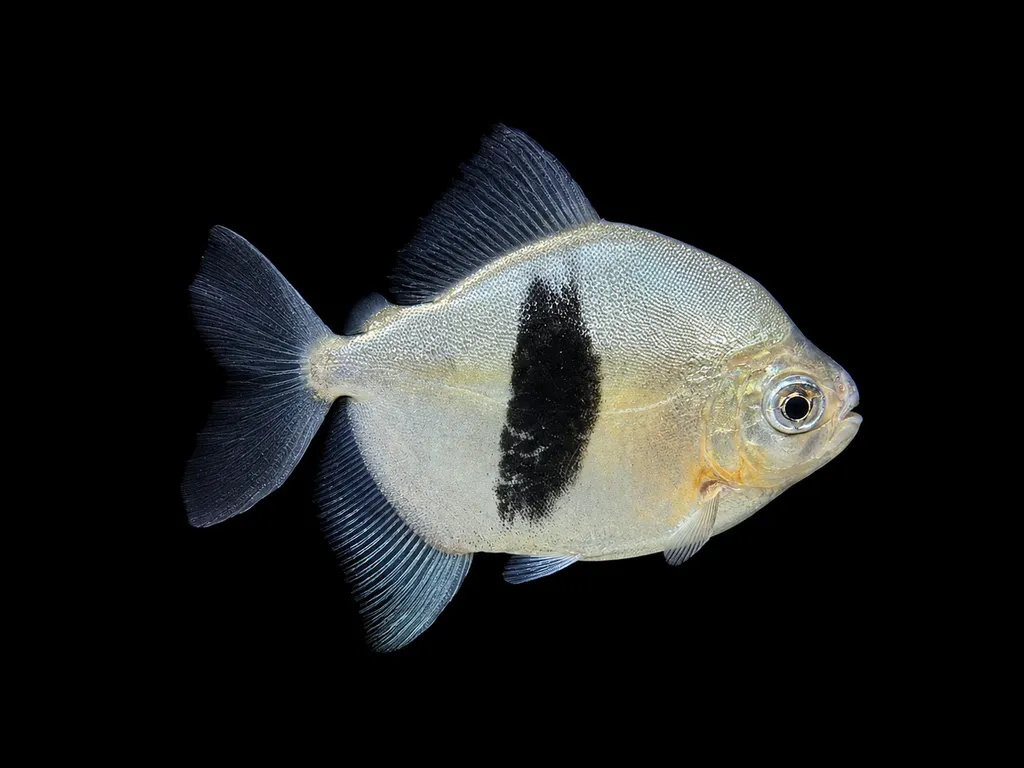
Myloplus schomburgkii
Also known as Black-barred Myleus, Myleus schomburgkii, Black barred silver dollar, Black banded silver dollar
FreshwaterFish
Care at a glance
- Temperature
- 73–81°F
- 23–27°C
- pH
- 5.5–7.0
- Adult size
- 15.7 in
- 40 cm
- Minimum tank
- 170 gal
- 645 L
- Temperament
- Peaceful
- Social behavior
- Schooling
- Swim level
- Middle
- Difficulty
- Medium
- Breeding
- No record
- Rarity
- Rare
- Family
- Serrasalmidae
- Origin
- Venezuela, Peru, Brazil
Overview
Keep disk tetras in a group, as they school for security, and plan on a huge tank of around 645 liters given their adult size. They are peaceful, active swimmers that hold the middle and upper water. Target the mid 20s C and a soft, acidic to neutral pH. Feed a plant-heavy diet with vegetables and prepared foods, plus some protein from insects or small crustaceans.
In the wild
Disk tetras live in rivers and seasonal floodplains of the Amazon and Orinoco basins across Venezuela, Peru, and Brazil. They use clear and blackwater stretches with moderate to strong current, around submerged wood and plants. The water is soft and slightly acidic. At home this means a very large tank with steady flow, open swimming space, and robust plants or decor that can take some grazing.
Good to know
This is a member of the Serrasalmidae family, the same broad group as pacus and piranhas, though it is a plant-leaning omnivore. It is a big fish, reaching around 40 cm, with a tall disc-shaped body, silver sides, and a bold black bar. It has teeth suited to cutting plant material, and there is no real home breeding record for it.
Did you know
It eats a lot of fruit and seeds in the wild and passes many of those seeds intact, so it helps spread riverbank plants as the floodwaters move it around. That makes a big plant-eating fish part of how the forest along the river regrows.
Weekly picks
Tank mates
Disk tetra is a peaceful, schooling species that keeps to the middle. These picks share a community profile with it, are safe together in both directions, and overlap on water type, temperature and pH.
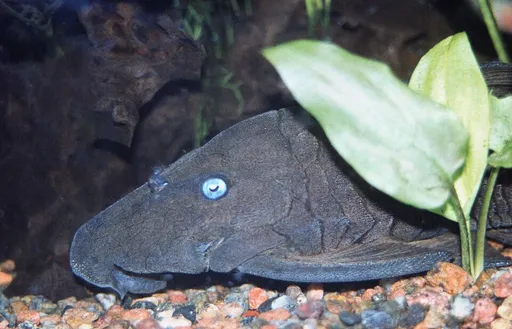
Blue-eyed pleco
Panaque cochliodon
Freshwater11.8 in (30 cm) · 119 gal (450 L)73–82°F (23–28°C)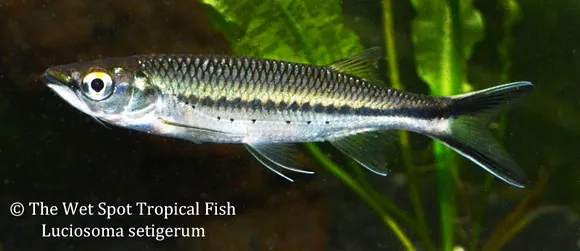
Apollo shark minnow
Luciosoma setigerum
Freshwater11.8 in (30 cm) · 106 gal (400 L)72–81°F (22–27°C)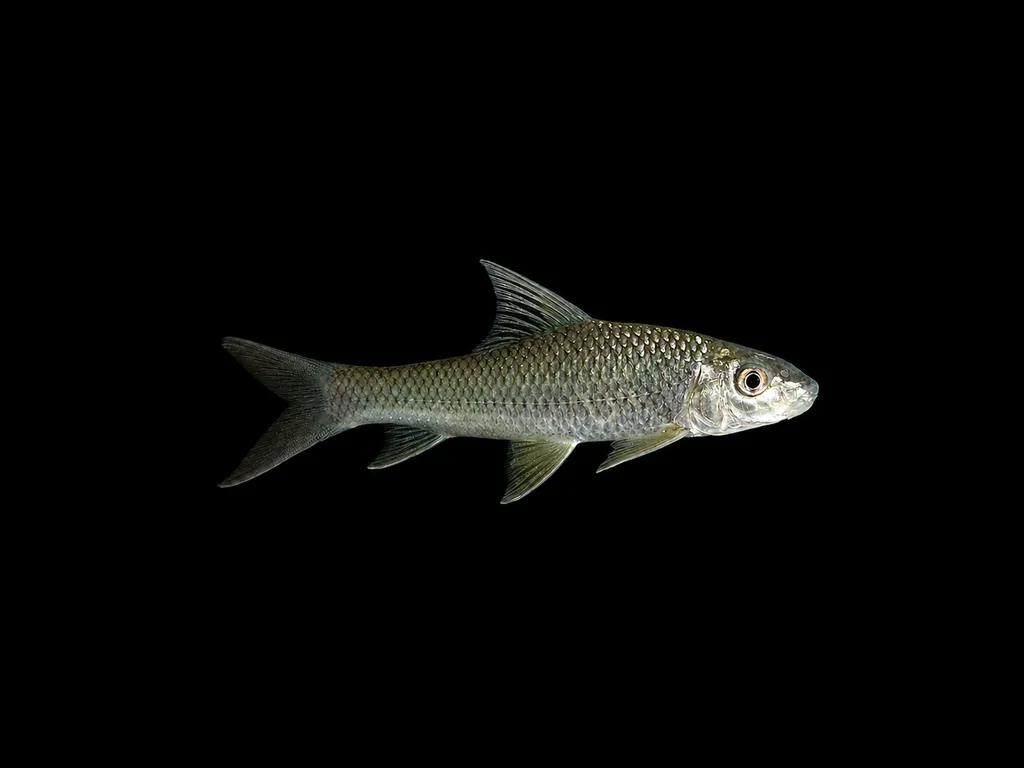
Sucker barb
Barbichthys laevis
Freshwater12.2 in (31 cm) · 159 gal (600 L)72–82°F (22–28°C)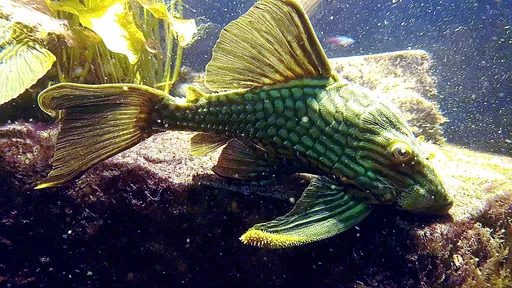
Thunder royal pleco (L027)
Panaque armbrusteri
Freshwater17.7 in (45 cm) · 151 gal (570 L)77–84°F (25–29°C)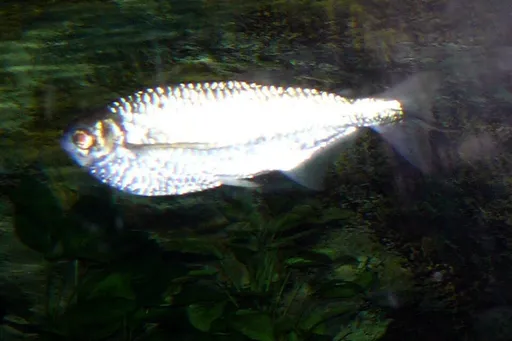
Narrow hatchetfish
Triportheus angulatus
Freshwater9.8 in (25 cm) · 79 gal (300 L)73–82°F (23–28°C)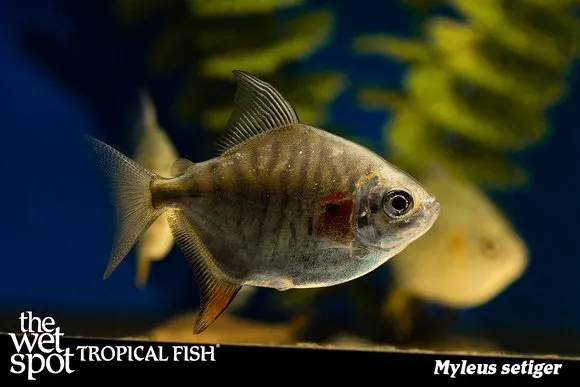
Sailfin red hook
Myleus setiger
Freshwater11 in (28 cm) · 159 gal (600 L)73–82°F (23–28°C)
Common questions
What size tank does a Disk tetra need?
A Disk tetra needs at least 170 gal (645 L). It spends most of its time in the middle.
What temperature and pH does a Disk tetra need?
A Disk tetra is comfortable at 73–81°F (23–27°C) with a pH of 5.5–7.0.
How big does a Disk tetra get?
An adult Disk tetra reaches about 15.7 in (40 cm).
Does a Disk tetra need a group?
Yes. A Disk tetra is a schooling species and should be kept in a group, not singly.
Related species
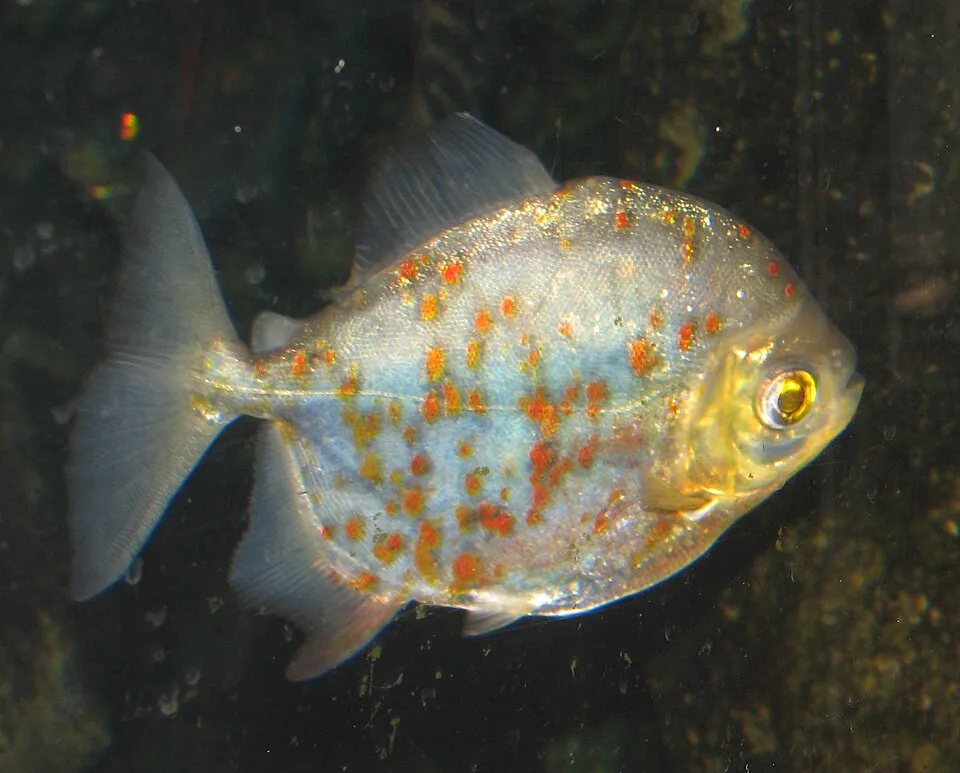 9.8 in (25 cm)70 gal (265 L)73–81°F (23–27°C)
Redhook
Myloplus rubripinnis
9.8 in (25 cm) · 70 gal (265 L)
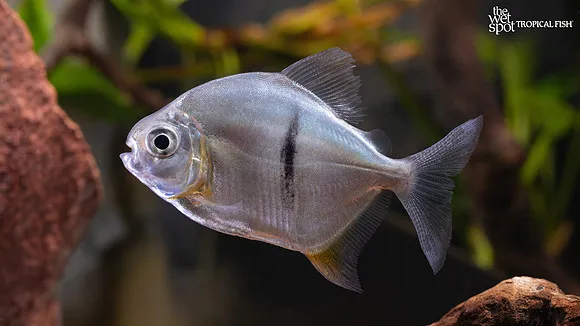
 13.8 in (35 cm)170 gal (645 L)75–82°F (24–28°C)
Blue hook silver dollar
Myloplus aylan
13.8 in (35 cm) · 170 gal (645 L)
 11.8 in (30 cm)159 gal (600 L)79–86°F (26–30°C)
Sauron silver dollar
Myloplus sauron
11.8 in (30 cm) · 159 gal (600 L)
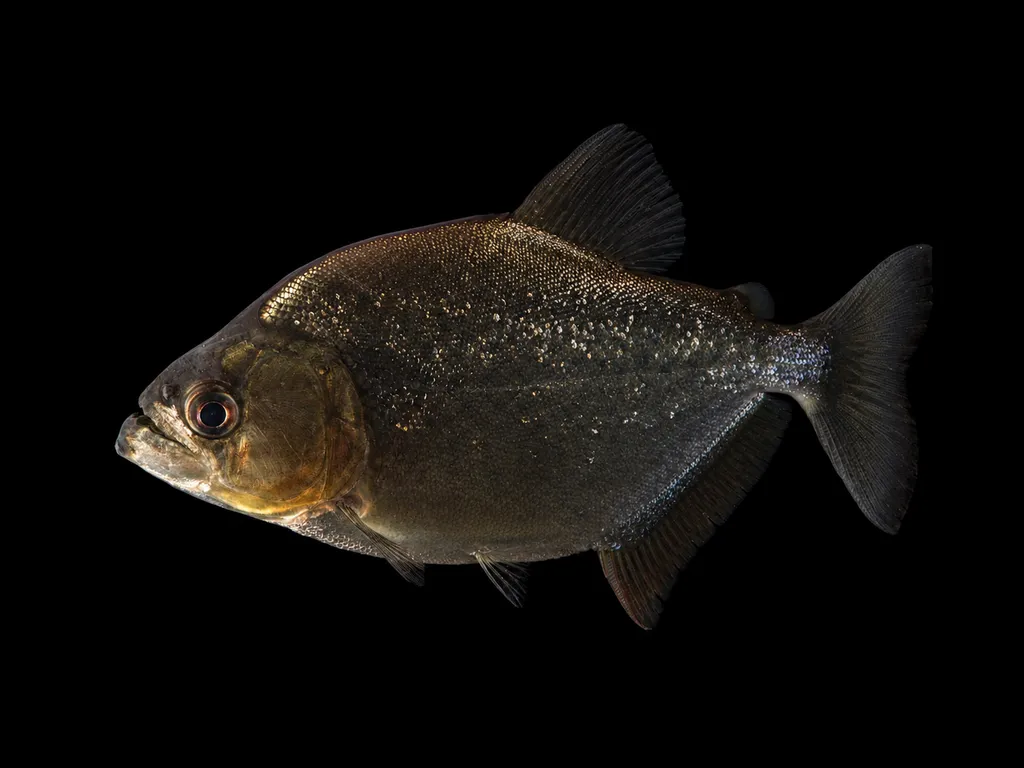 15.7 in (40 cm)106 gal (400 L)75–82°F (24–28°C)
Black piranha
Serrasalmus rhombeus
15.7 in (40 cm) · 106 gal (400 L)
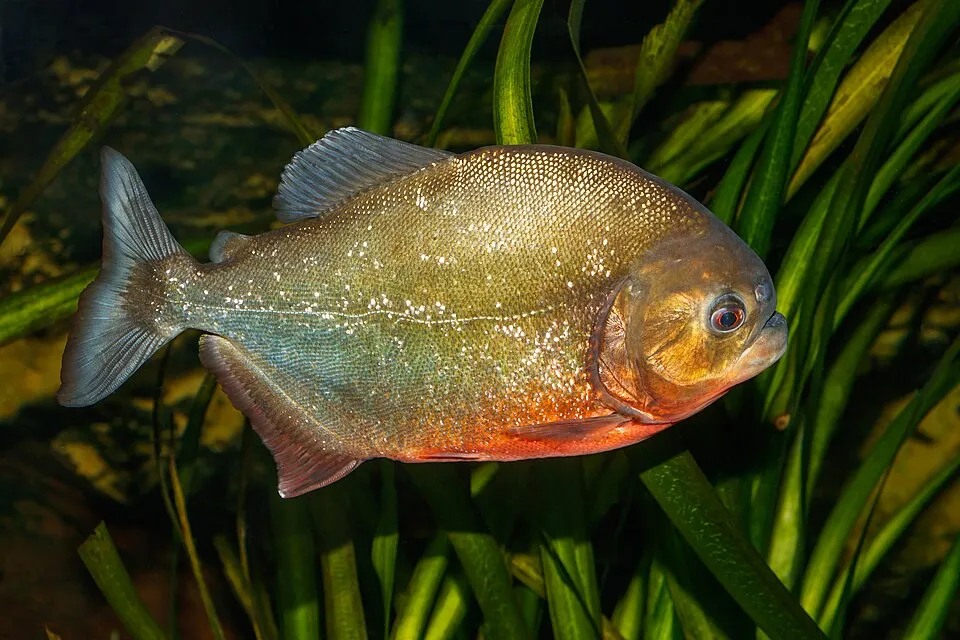 12.6 in (32 cm)160 gal (605 L)75–82°F (24–28°C)
Red-bellied piranha
Pygocentrus nattereri
12.6 in (32 cm) · 160 gal (605 L)
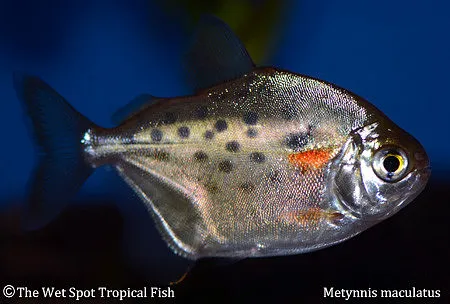 7.1 in (18 cm)92 gal (350 L)73–82°F (23–28°C)
Spotted metynnis
Metynnis maculatus
7.1 in (18 cm) · 92 gal (350 L)