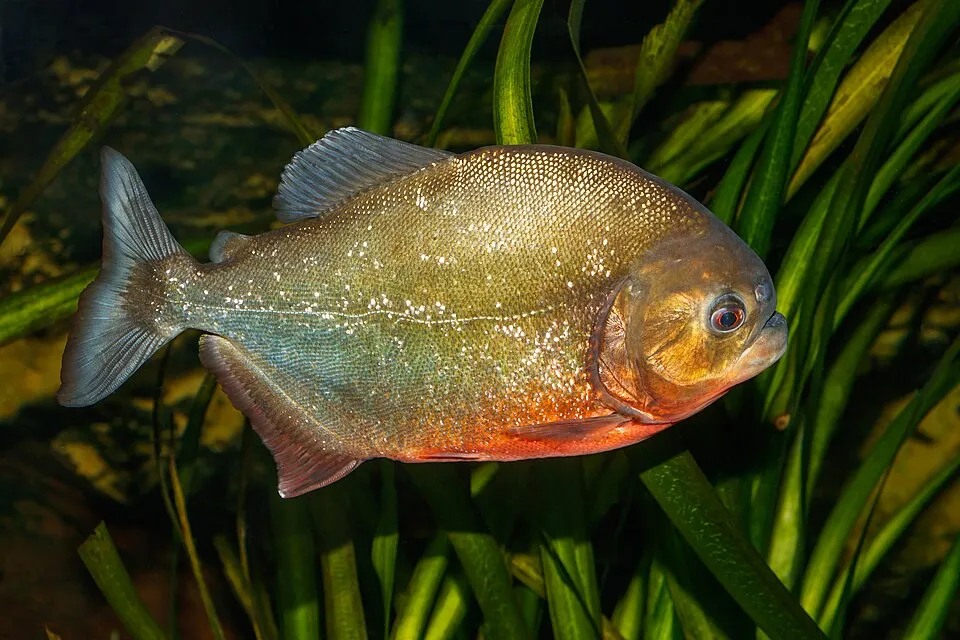
Red-bellied piranha
Pygocentrus nattereri
FreshwaterFish
Care at a glance
- Temperature
- 75–82°F
- 24–28°C
- pH
- 6.0–7.5
- Adult size
- 12.6 in
- 32 cm
- Minimum tank
- 160 gal
- 605 L
- Temperament
- Aggressive
- Social behavior
- Shoaling
- Tankmates
- Species tank only
- Swim level
- Middle
- Difficulty
- Difficult
- Breeding
- Medium
- Rarity
- Very rare
- Family
- Serrasalmidae
- Origin
- South America
Overview
This is a difficult fish that needs a big group and a big tank, 600 liters or more, with strong filtration to handle the mess. They are a shoaling species and get more nervous, not less, when kept alone or in pairs, so keep a group. They hold the middle of the tank and are jumpy rather than the relentless killers films suggest. Feed fish fillets, shrimp, and other meaty foods. Skip live feeders, which carry disease.
In the wild
Red-bellied piranhas live in South American rivers and lakes across the Amazon, Orinoco, and Parana systems, favoring slow or still water with plants, submerged roots, and plenty of cover. That cover doubles as hiding space and a hunting spot. In the tank they want a large footprint, dim lighting, and some wood or planting to feel secure. Keep the pH from 6 to 7.5 and temps in the mid to high 20s C.
Good to know
This is a serrasalmid in the family Serrasalmidae, known for interlocking triangular teeth and a strong bite. Adults reach about 32 cm. They are actually omnivores, eating fish, crustaceans, insects, fruit, and seeds in the wild, and they spawn by laying eggs that the male guards. The IUCN lists them as Least Concern.
Did you know
Much of the piranha's fearsome reputation is overblown. In the wild they often act as scavengers and are easily spooked, and the famous feeding frenzy is mostly a dry-season response to crowding and scarce food rather than normal behavior. Kept fish frequently hide from people and may nip each other's fins more than anything else.
Common questions
What size tank does a Red-bellied piranha need?
A Red-bellied piranha needs at least 160 gal (605 L). It spends most of its time in the middle.
What temperature and pH does a Red-bellied piranha need?
A Red-bellied piranha is comfortable at 75–82°F (24–28°C) with a pH of 6.0–7.5.
How big does a Red-bellied piranha get?
An adult Red-bellied piranha reaches about 12.6 in (32 cm).
Does a Red-bellied piranha need a group?
Yes. A Red-bellied piranha is a shoaling species; keep at least 5 together.
Related species
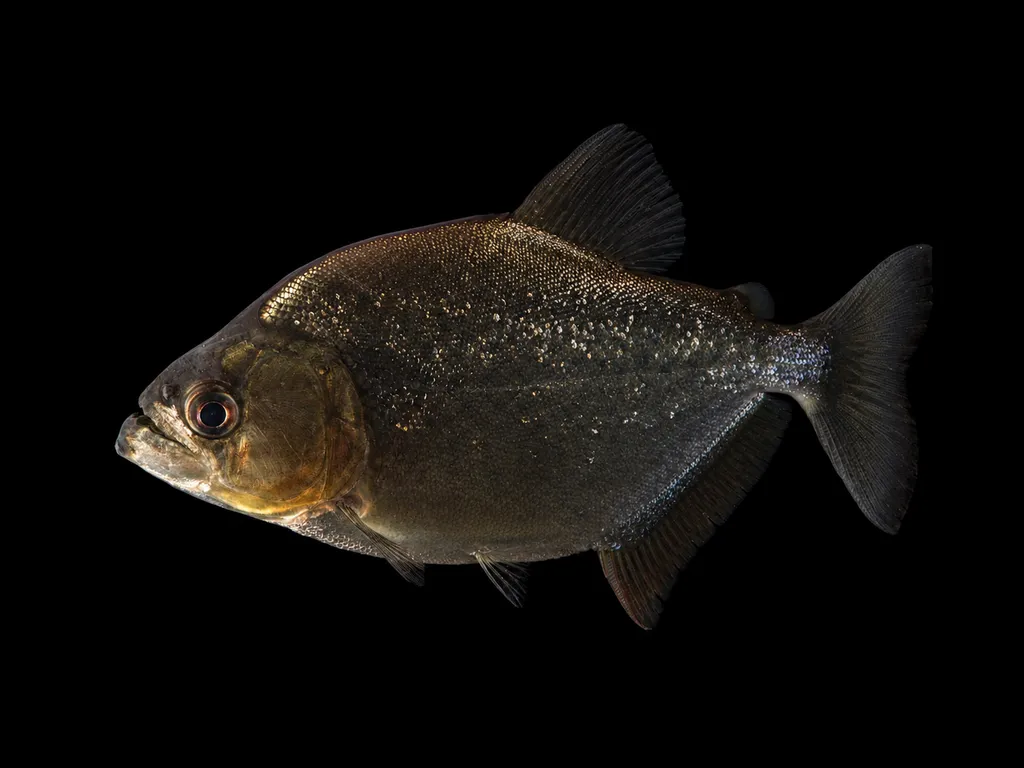 15.7 in (40 cm)106 gal (400 L)75–82°F (24–28°C)
Black piranha
Serrasalmus rhombeus
15.7 in (40 cm) · 106 gal (400 L)
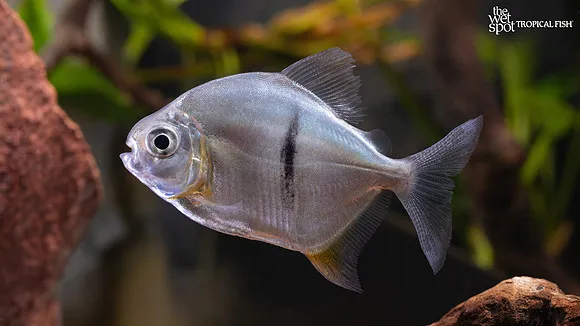 11.8 in (30 cm)159 gal (600 L)79–86°F (26–30°C)
Sauron silver dollar
Myloplus sauron
11.8 in (30 cm) · 159 gal (600 L)
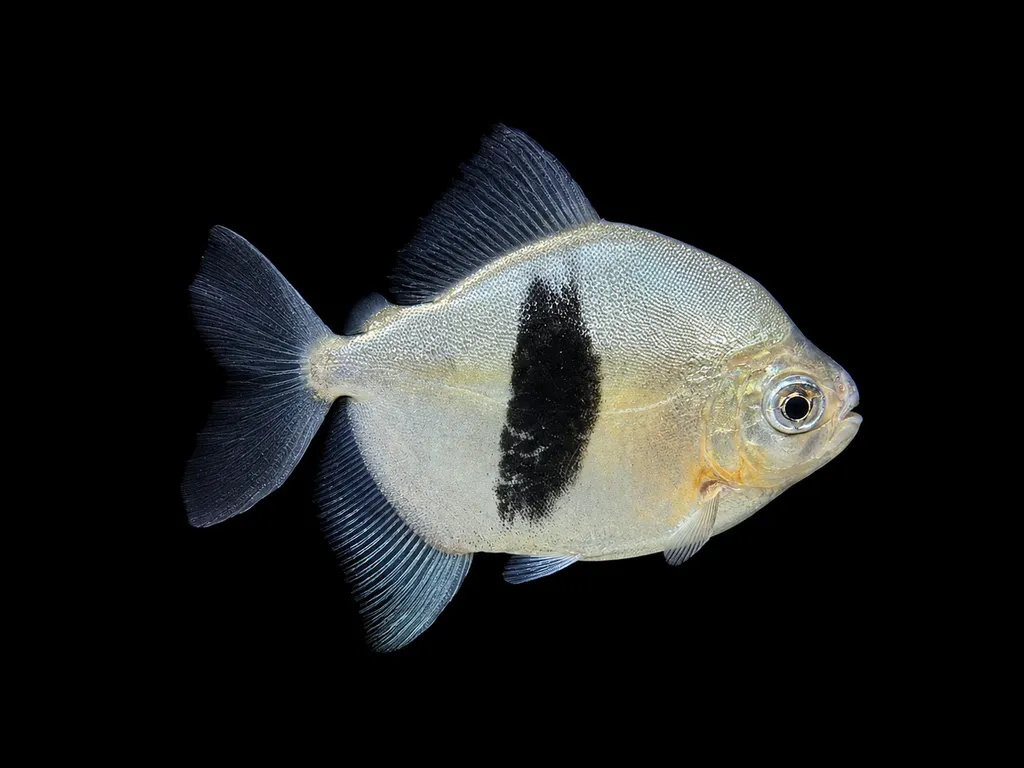 13.8 in (35 cm)170 gal (645 L)75–82°F (24–28°C)
Blue hook silver dollar
Myloplus aylan
13.8 in (35 cm) · 170 gal (645 L)
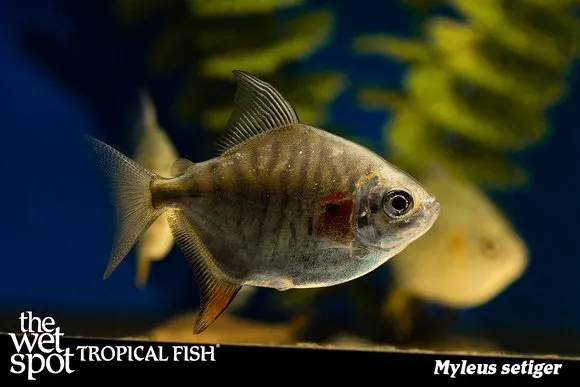 11 in (28 cm)159 gal (600 L)73–82°F (23–28°C)
Sailfin red hook
Myleus setiger
11 in (28 cm) · 159 gal (600 L)
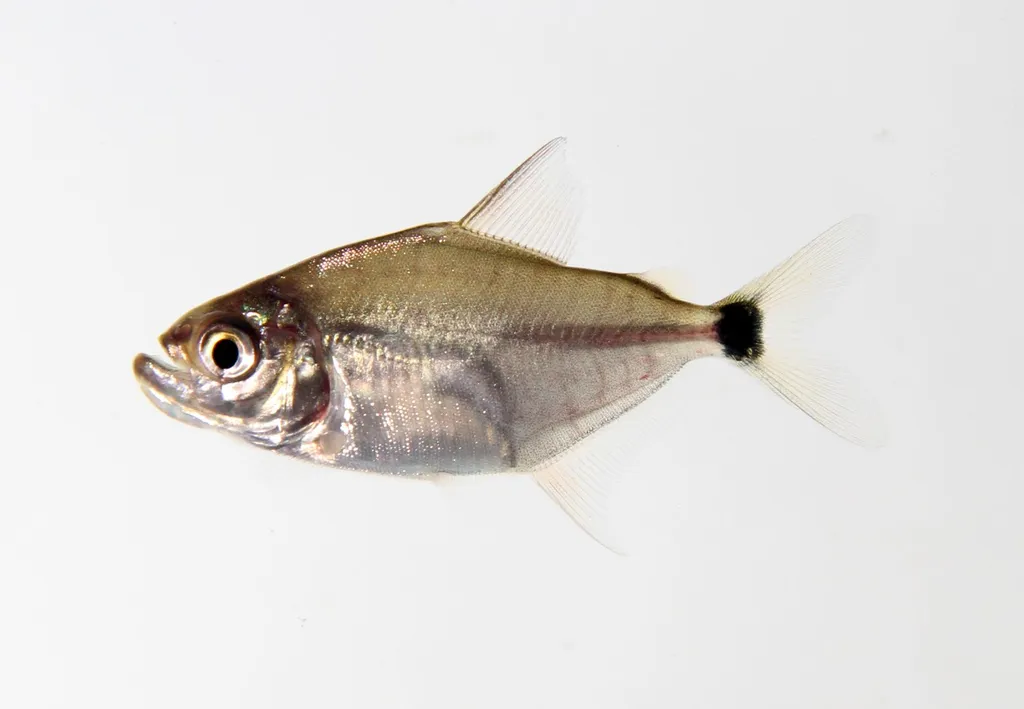 5.9 in (15 cm)53 gal (200 L)75–82°F (24–28°C)
Wimple piranha
Catoprion mento
5.9 in (15 cm) · 53 gal (200 L)
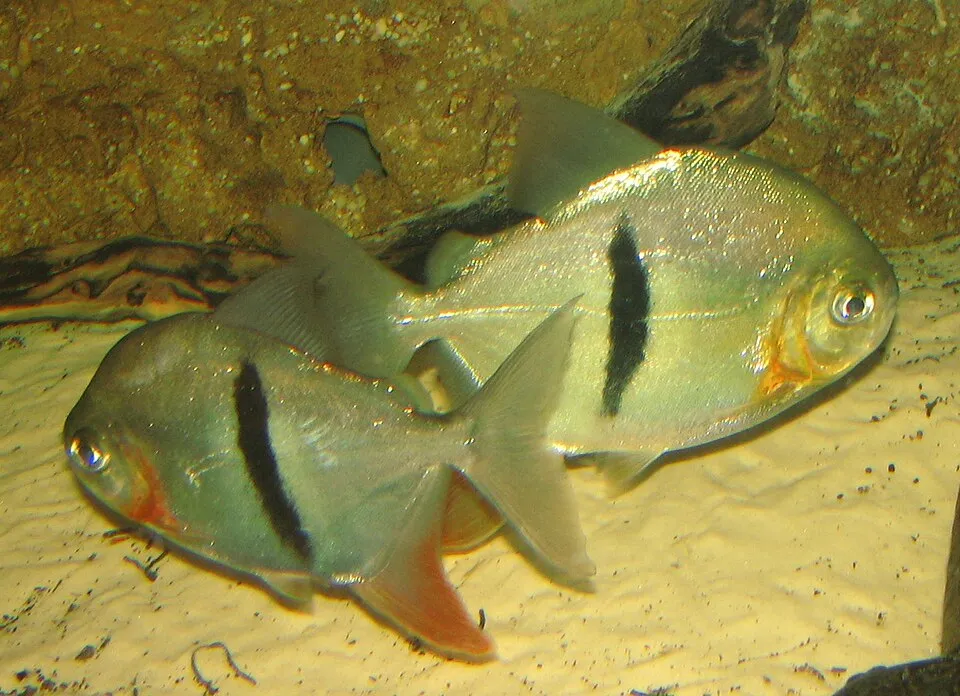 15.7 in (40 cm)170 gal (645 L)73–81°F (23–27°C)
Disk tetra
Myloplus schomburgkii
15.7 in (40 cm) · 170 gal (645 L)