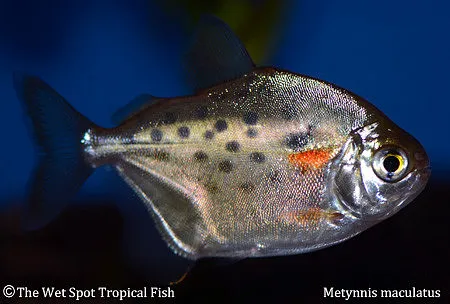
Spotted metynnis
Metynnis maculatus
Also known as Spotted silver dollar, Spotted dollar, Maculatus silver dollar
FreshwaterFish
Care at a glance
- Temperature
- 73–82°F
- 23–28°C
- pH
- 5.5–7.5
- Adult size
- 7.1 in
- 18 cm
- Minimum tank
- 92 gal
- 350 L
- Temperament
- Peaceful
- Social behavior
- Schooling
- Swim level
- Middle
- Diet
- Herbivore
- Difficulty
- Easy
- Breeding
- Hard
- Rarity
- Common
- Family
- Serrasalmidae
- Origin
- Native to the Amazon and Paraguay river basins in South America.
Overview
The spotted metynnis is a silver dollar that schools in the middle of a large community tank. It is easy to keep if you can give it the room.
Did you know
The spotted metynnis is one of the bigger silver dollars. A settled group of these round, coin-bright fish moving together makes a striking display in a large tank.
Caring for the spotted metynnis
Keep spotted metynnis in a shoal of at least five. They need a big, tall tank of at least 92 gal (350 L), with open swimming space and a secure lid.
Keep the water clean and warm, at 73 to 82°F (23 to 28°C) with a pH of 5.5 to 7.5. The spotted metynnis is a dedicated plant eater and will eat live plants down to the stumps, so use hardy or artificial plants.
It is peaceful with medium and large tank mates. Breeding it in the aquarium is hard.
Good to know
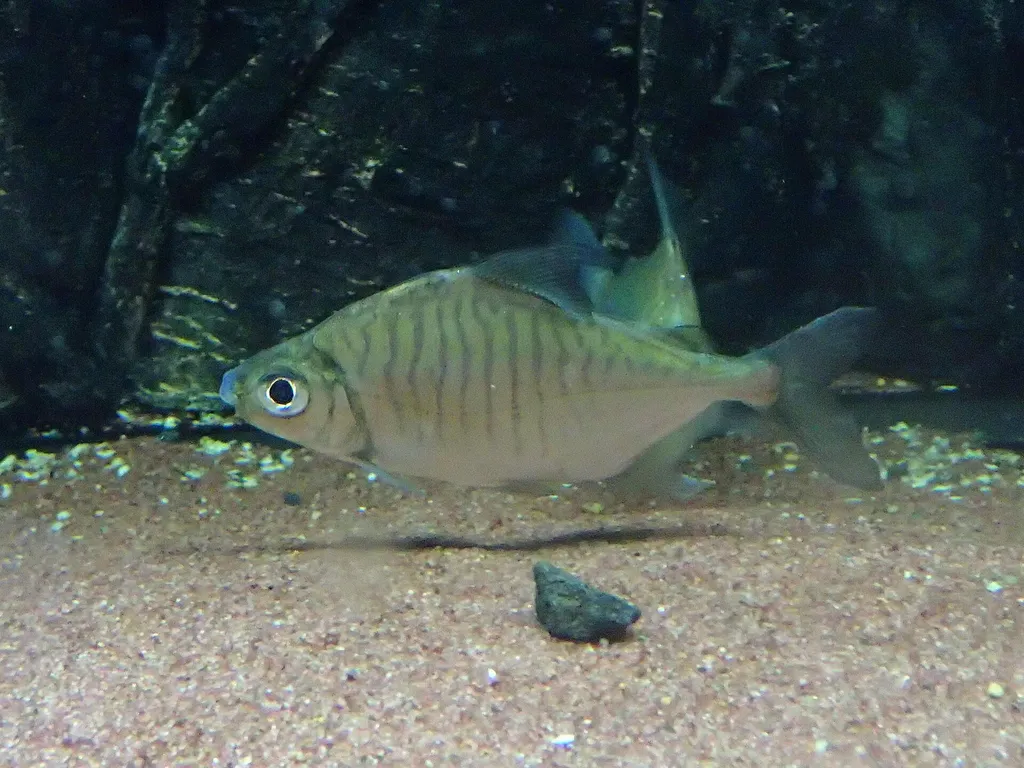
The spotted metynnis, Metynnis maculatus, is a disc-shaped, silver relative of the piranhas in the family Serrasalmidae. Its body is scattered with irregular dark spots and blotches. It is also sold as the spotted silver dollar and maculatus silver dollar.
In the wild
The spotted metynnis is native to the Amazon and Paraguay river basins in South America. It lives in slow rivers, backwaters and flooded areas, often among submerged branches and plants. It forages through the vegetation for leaves, fruit and soft plant matter, moving in shoals through the middle water.
Weekly picks
Tank mates
The spotted metynnis is a peaceful, schooling species that keeps to the middle. These picks share a community profile with it, are safe together in both directions, and overlap on water type, temperature and pH.
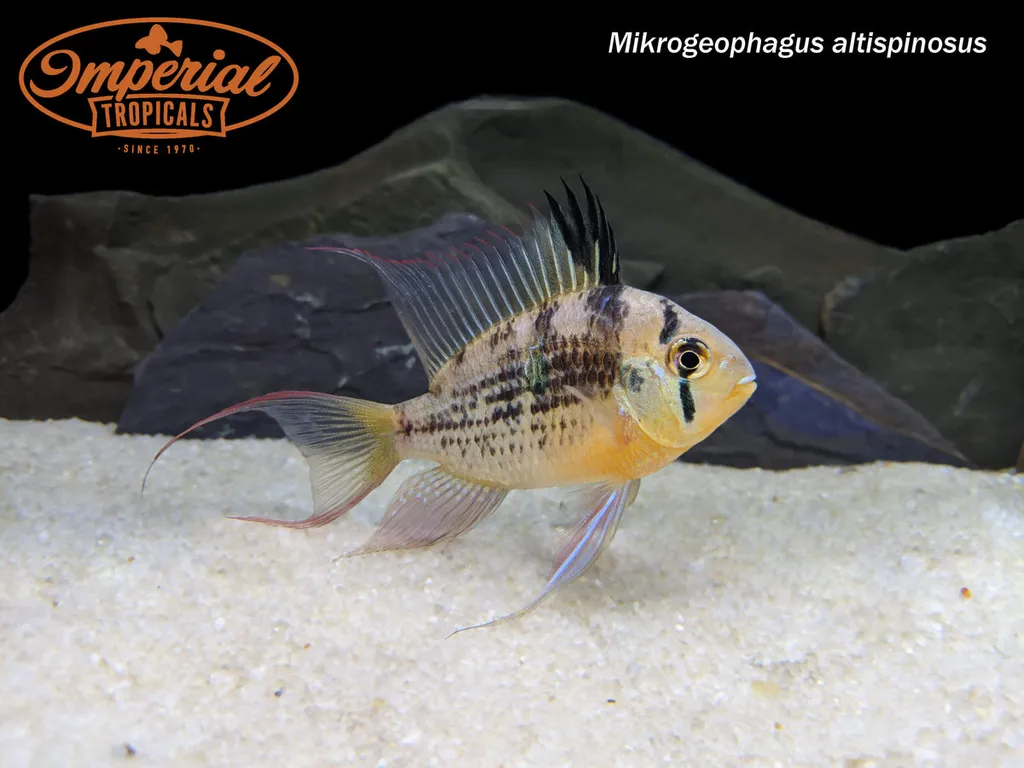
Bolivian ram
Mikrogeophagus altispinosus
Freshwater3.1 in (8 cm) · 45 gal (170 L)75–82°F (24–28°C)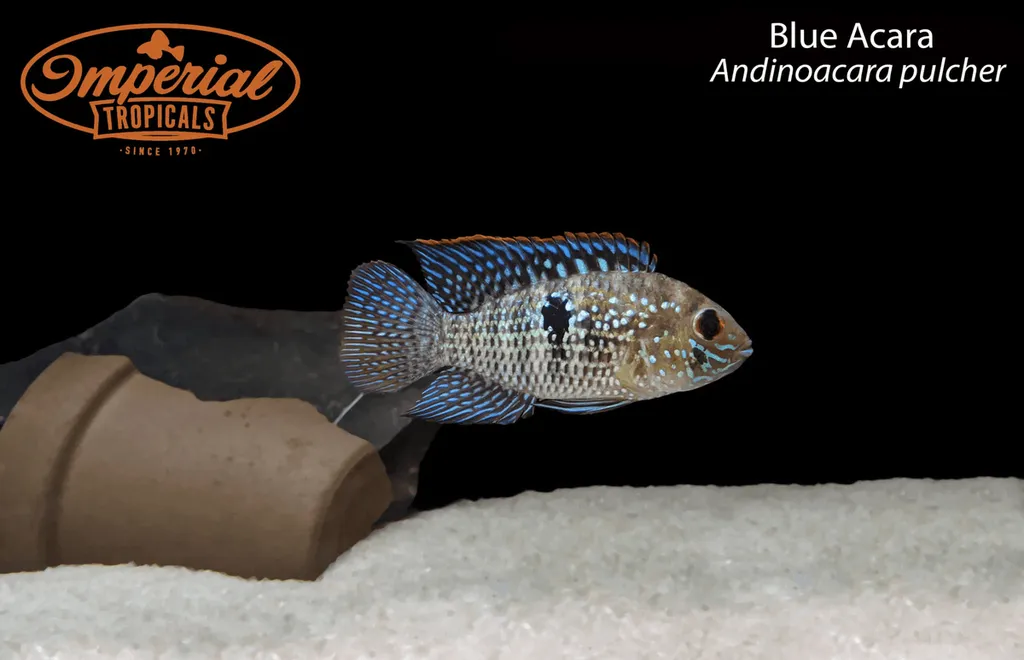
Blue acara
Andinoacara pulcher
Freshwater5.9 in (15 cm) · 42 gal (160 L)72–82°F (22–28°C)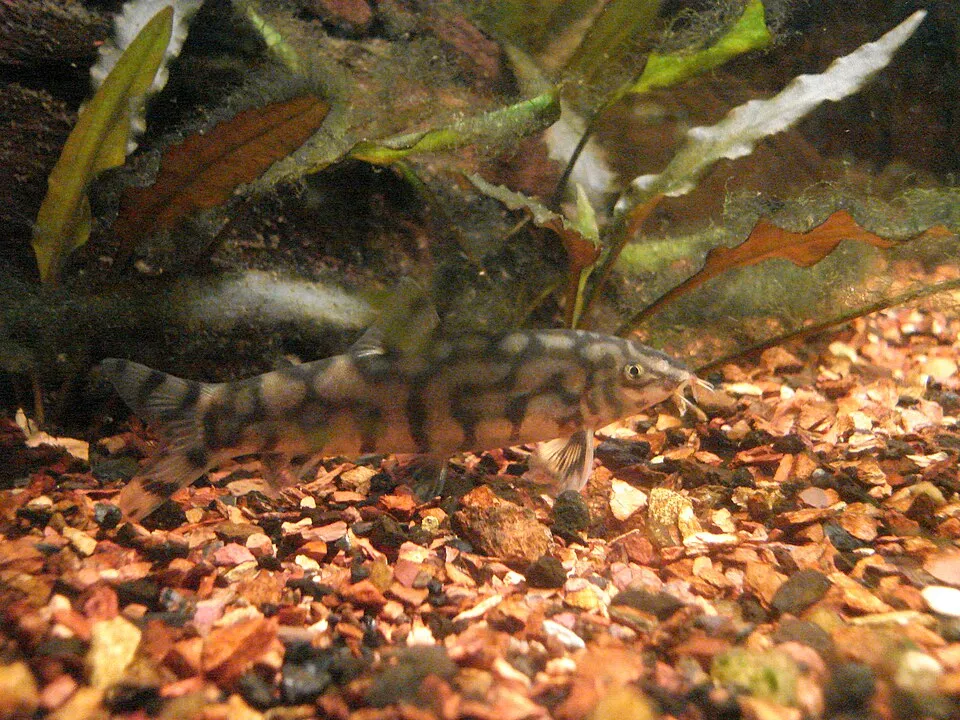
Yoyo loach
Botia almorhae
Freshwater6.3 in (16 cm) · 42 gal (160 L)66–81°F (19–27°C)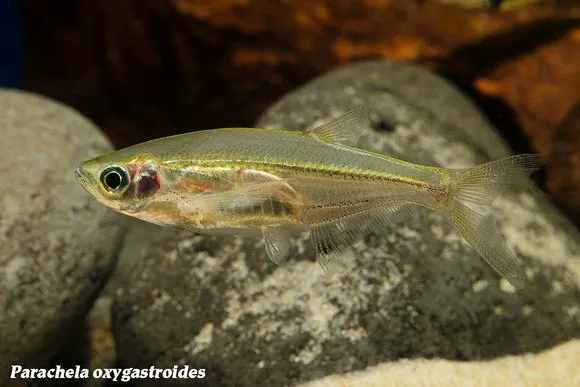
Asian glass hatchetfish
Parachela oxygastroides
Freshwater7.9 in (20 cm) · 79 gal (300 L)73–82°F (23–28°C)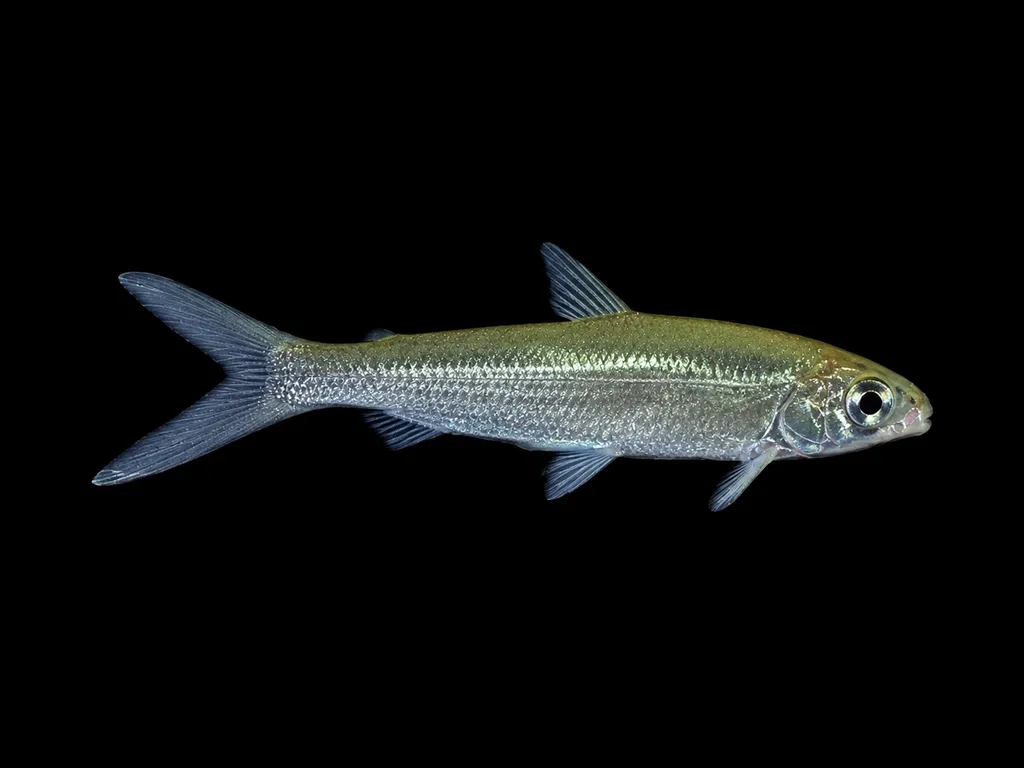
Fowler's hemiodus
Bivibranchia fowleri
Freshwater7.5 in (19 cm) · 106 gal (400 L)75–84°F (24–29°C)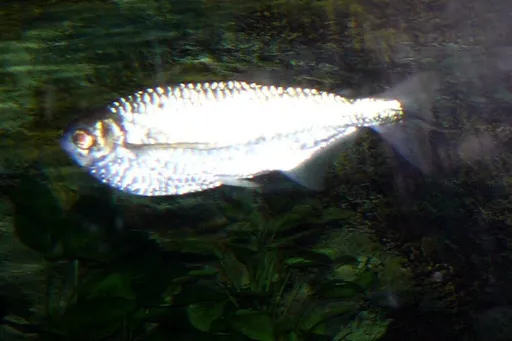
Narrow hatchetfish
Triportheus angulatus
Freshwater9.8 in (25 cm) · 79 gal (300 L)73–82°F (23–28°C)
Common questions
What size tank does a spotted metynnis need?
A spotted metynnis needs at least 92 gal (350 L). It spends most of its time in the middle.
What temperature and pH does a spotted metynnis need?
A spotted metynnis is comfortable at 73–82°F (23–28°C) with a pH of 5.5–7.5.
What does a spotted metynnis eat?
A spotted metynnis is a dedicated plant eater. It will eat live plants in the tank down to the stumps.
How big does a spotted metynnis get?
An adult spotted metynnis reaches about 7.1 in (18 cm).
Does a spotted metynnis need a group?
Yes. A spotted metynnis is a schooling species and should be kept in a group, not singly.
Related species
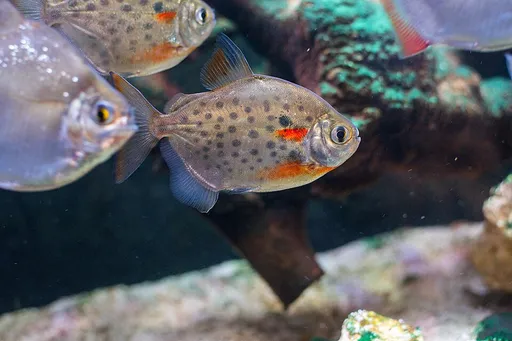 5.5 in (14 cm)53 gal (200 L)73–81°F (23–27°C)
Spotted silver dollar
Metynnis lippincottianus
5.5 in (14 cm) · 53 gal (200 L)
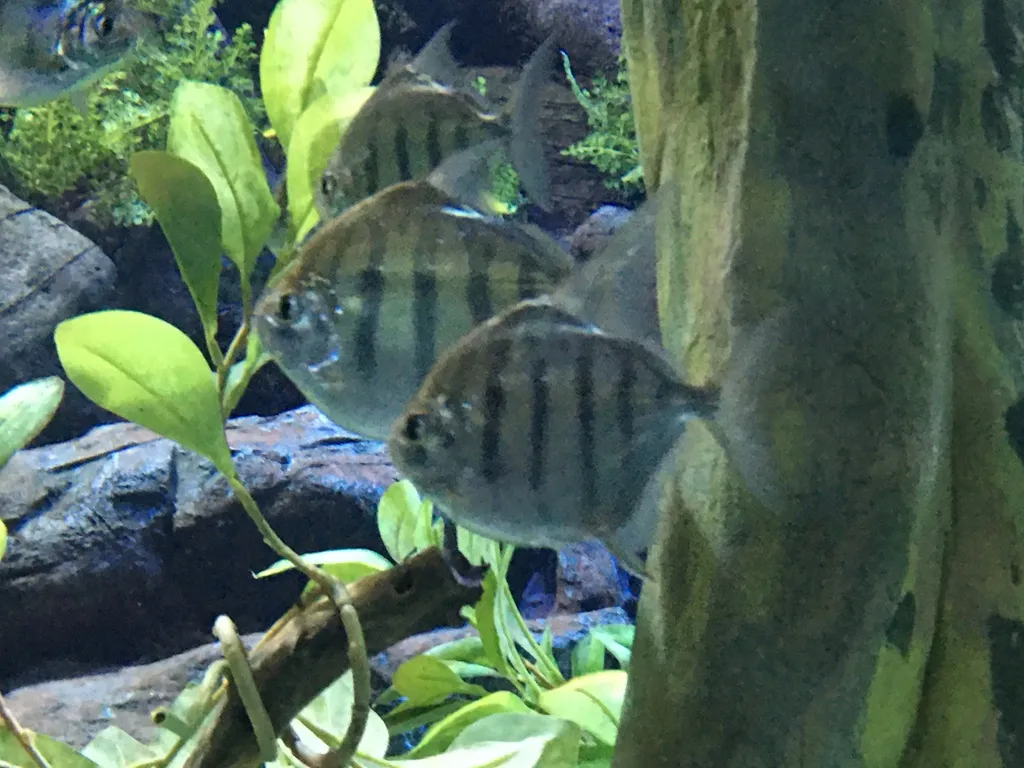 3.9 in (10 cm)70 gal (265 L)75–82°F (24–28°C)
Banded silver dollar
Metynnis fasciatus
3.9 in (10 cm) · 70 gal (265 L)
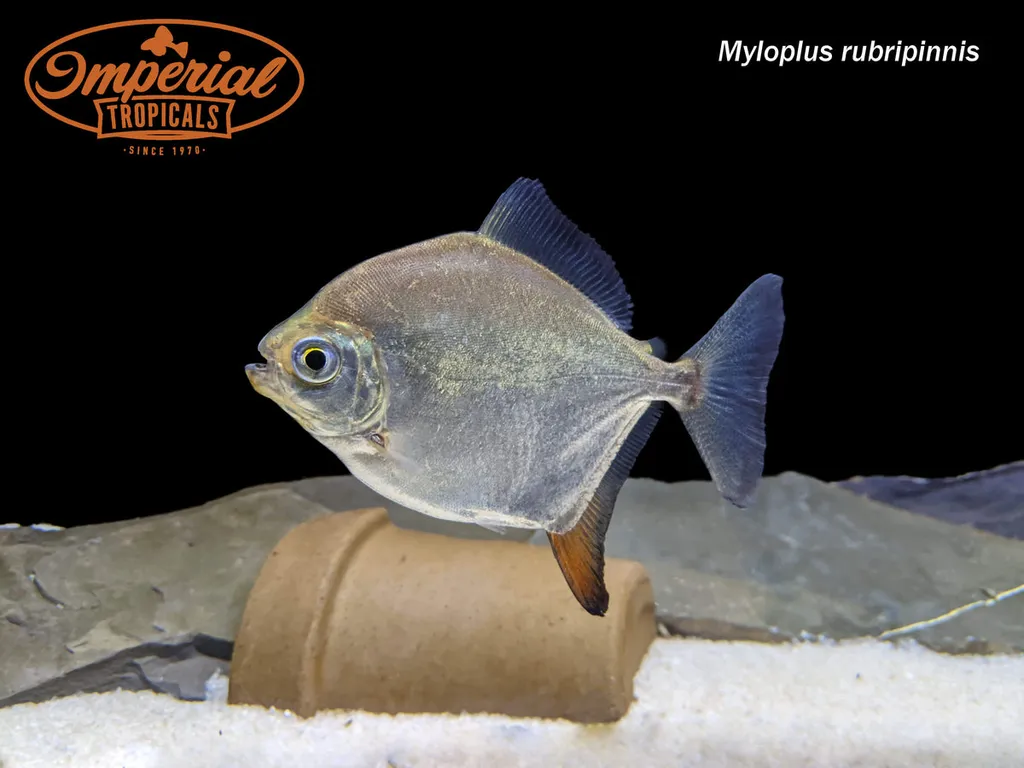 9.8 in (25 cm)70 gal (265 L)73–81°F (23–27°C)
Redhook
Myloplus rubripinnis
9.8 in (25 cm) · 70 gal (265 L)
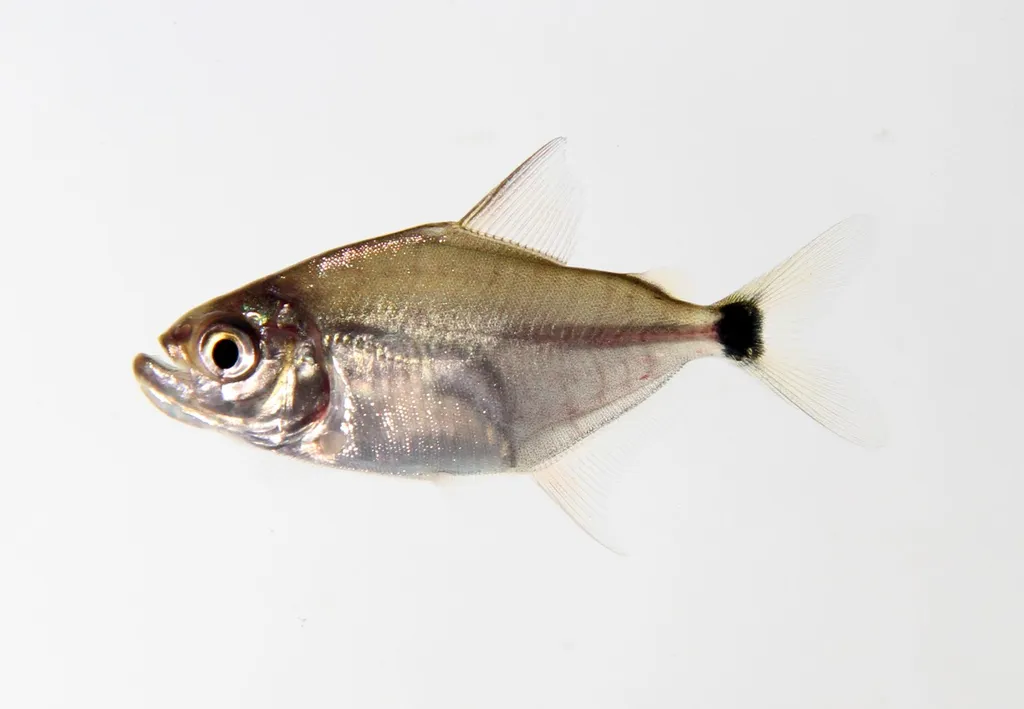 5.9 in (15 cm)53 gal (200 L)75–82°F (24–28°C)
Wimple piranha
Catoprion mento
5.9 in (15 cm) · 53 gal (200 L)
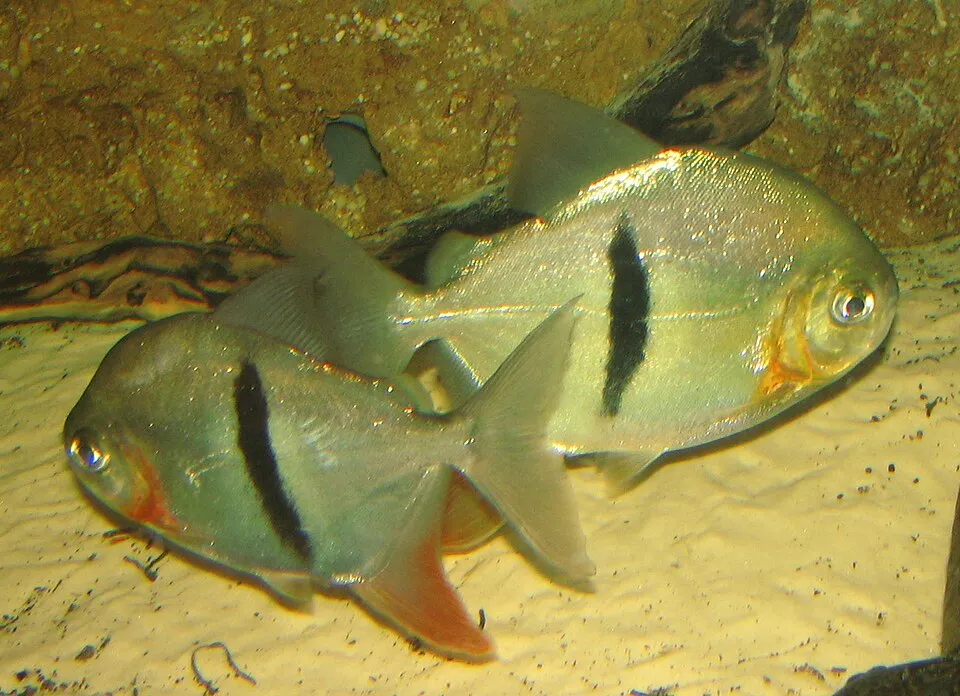 15.7 in (40 cm)170 gal (645 L)73–81°F (23–27°C)
Disk tetra
Myloplus schomburgkii
15.7 in (40 cm) · 170 gal (645 L)
 5.1 in (13 cm)46 gal (175 L)72–82°F (22–28°C)
Tiger pacu
Acnodon normani
5.1 in (13 cm) · 46 gal (175 L)