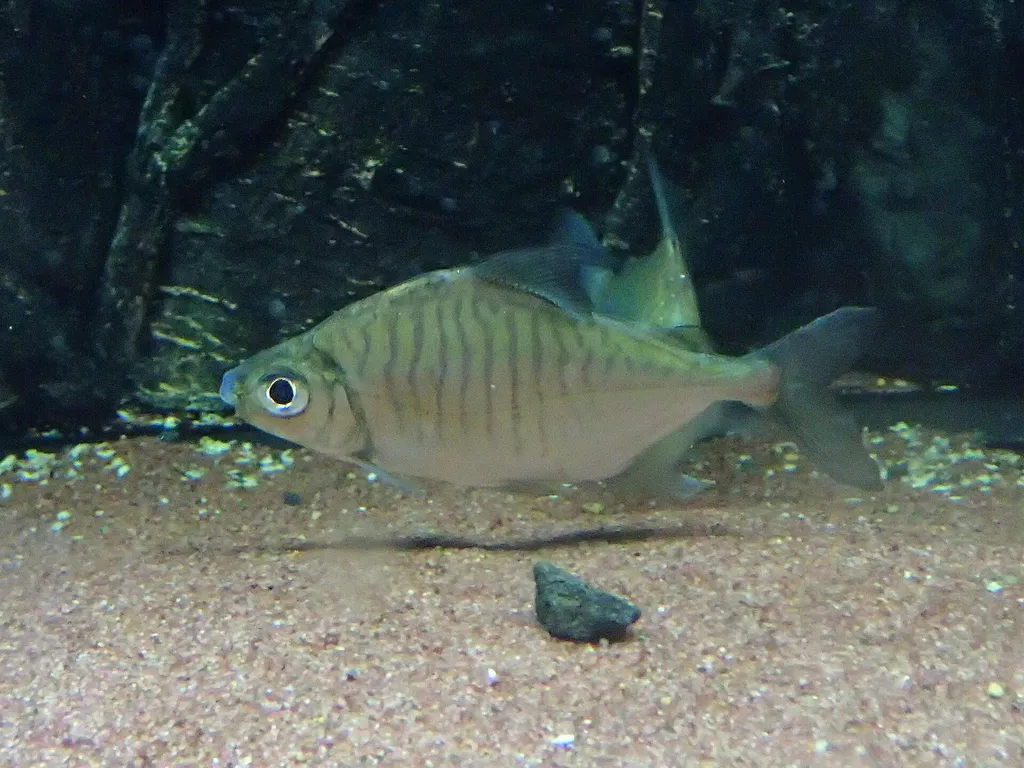
Tiger pacu
Acnodon normani
Also known as sheep pacu
FreshwaterFish
Care at a glance
- Temperature
- 72–82°F
- 22–28°C
- pH
- 6.0–7.5
- Adult size
- 5.1 in
- 13 cm
- Minimum tank
- 46 gal
- 175 L
- Temperament
- Mostly peaceful
- Social behavior
- Social
- Tankmates
- With caution
- Swim level
- Middle
- Difficulty
- Medium
- Breeding
- No record
- Rarity
- Rare
- Family
- Serrasalmidae
- Origin
- Brazil
Overview
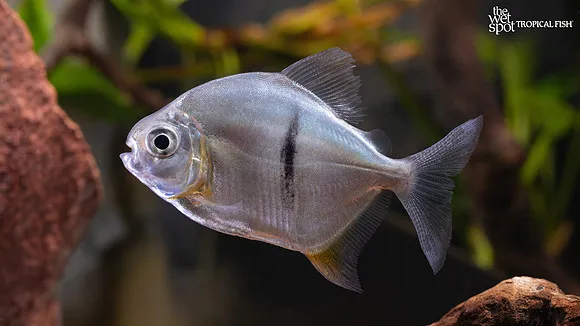
The tiger pacu, also sold as the sheep pacu, is a stocky, deep-bodied characin that can be kept in a small group where there is space, or singly. It is generally calm, but it has a habit of nipping scales from larger, slow fish, so it is not a safe choice for a mixed community with big tankmates. Pair it instead with robust fish of a similar size and temperament and give it plenty of open swimming room. It leans herbivorous, so feed vegetables, algae wafers, and sinking plant-based pellets, with occasional frozen foods. A tank of at least 175 liters suits one, with more room for a group.
In the wild
Acnodon normani is native to Brazil, where it lives in the clear, fast waters of the Xingu and Tocantins-Araguaia river systems as they run through savannah country. These are warm, oxygen-rich rivers over rock and sand. Keep it at 22 to 28 C with a pH from 6.0 to 7.5 and give it strong flow and clean, well-filtered water. A layout of smooth rocks, driftwood, and a sandy bed with a good current suits it far better than a still, heavily planted tank, since it may sample soft plants.
Good to know
The tiger pacu belongs to Serrasalmidae, the family of pacus and piranhas, but it is a small, mainly plant-eating member that reaches around 13 cm. It has a rounded, sheep-like head and blunt teeth suited to grazing rather than the shearing bite of a piranha. Despite its herbivorous leaning, aquarium keepers report it will pick scales from larger fish, a trait shared by a few of its relatives. It is not known to have been bred in home aquaria, so there is no reliable spawning record for the species.
Did you know
The sheep pacu gets its name from its short, blunt-toothed face, which looks oddly sheep-like for a cousin of the piranha. Its teeth are made for grazing plants, yet in the aquarium it will sometimes turn to an odder meal and nibble the scales off larger, slower tankmates.
Common questions
What size tank does a Tiger pacu need?
A Tiger pacu needs at least 46 gal (175 L). It spends most of its time in the middle.
What temperature and pH does a Tiger pacu need?
A Tiger pacu is comfortable at 72–82°F (22–28°C) with a pH of 6.0–7.5.
How big does a Tiger pacu get?
An adult Tiger pacu reaches about 5.1 in (13 cm).
Related species
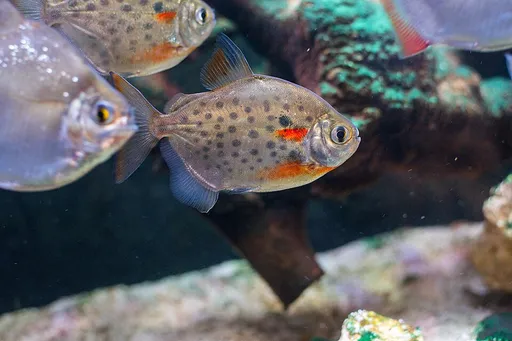 5.5 in (14 cm)53 gal (200 L)73–81°F (23–27°C)
Spotted silver dollar
Metynnis lippincottianus
5.5 in (14 cm) · 53 gal (200 L)
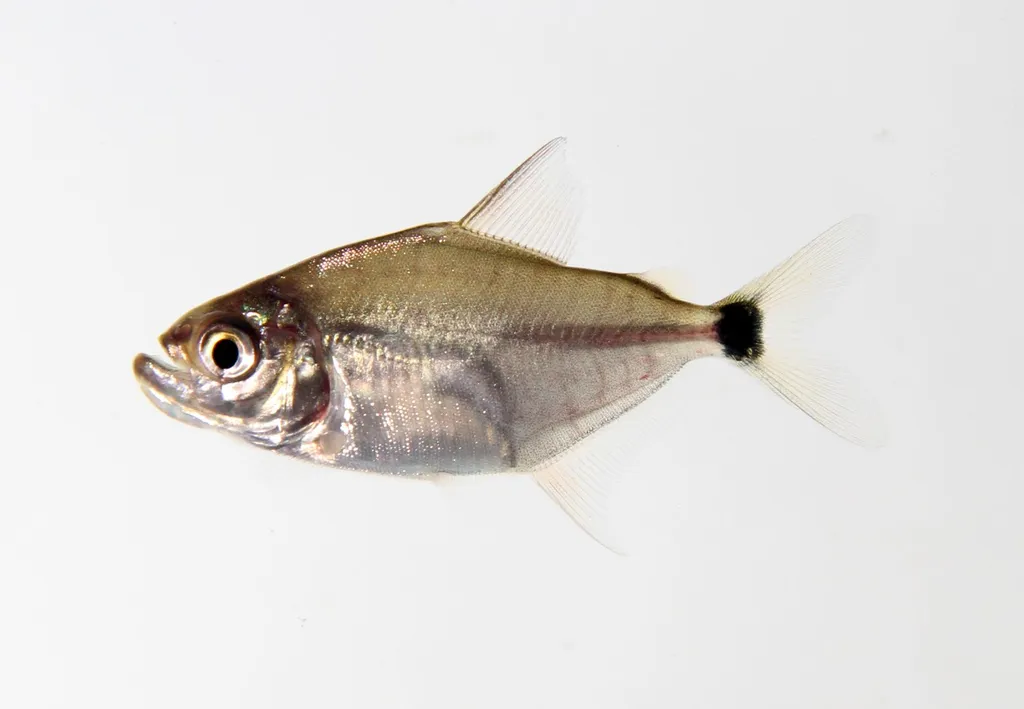 5.9 in (15 cm)53 gal (200 L)75–82°F (24–28°C)
Wimple piranha
Catoprion mento
5.9 in (15 cm) · 53 gal (200 L)
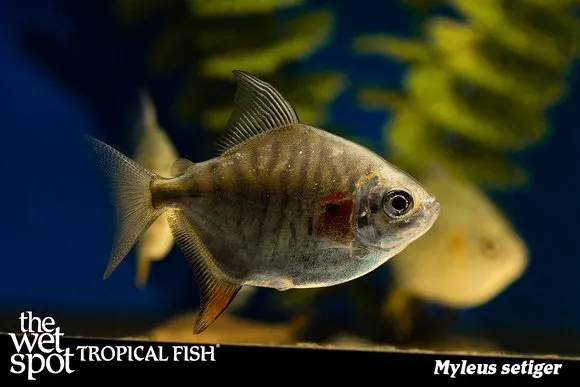 11 in (28 cm)159 gal (600 L)73–82°F (23–28°C)
Sailfin red hook
Myleus setiger
11 in (28 cm) · 159 gal (600 L)
 11.8 in (30 cm)159 gal (600 L)79–86°F (26–30°C)
Sauron silver dollar
Myloplus sauron
11.8 in (30 cm) · 159 gal (600 L)
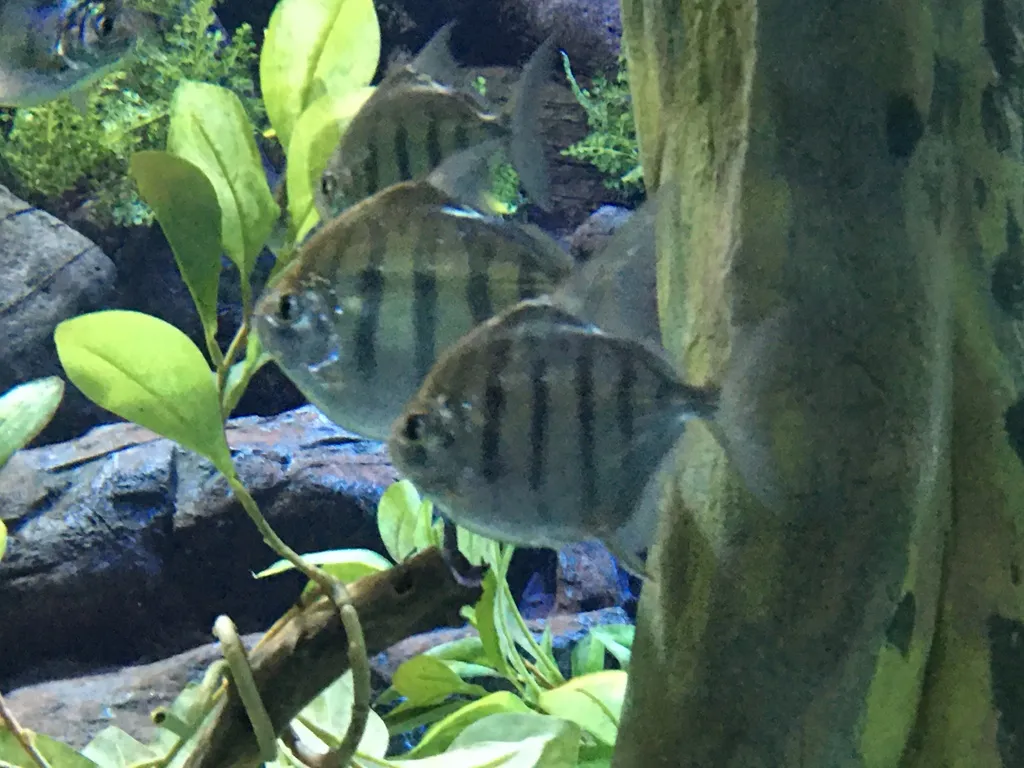 3.9 in (10 cm)70 gal (265 L)75–82°F (24–28°C)
Banded silver dollar
Metynnis fasciatus
3.9 in (10 cm) · 70 gal (265 L)
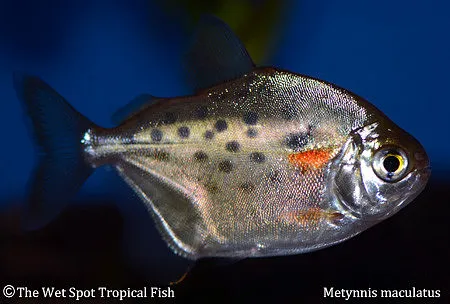 7.1 in (18 cm)92 gal (350 L)73–82°F (23–28°C)
Spotted metynnis
Metynnis maculatus
7.1 in (18 cm) · 92 gal (350 L)