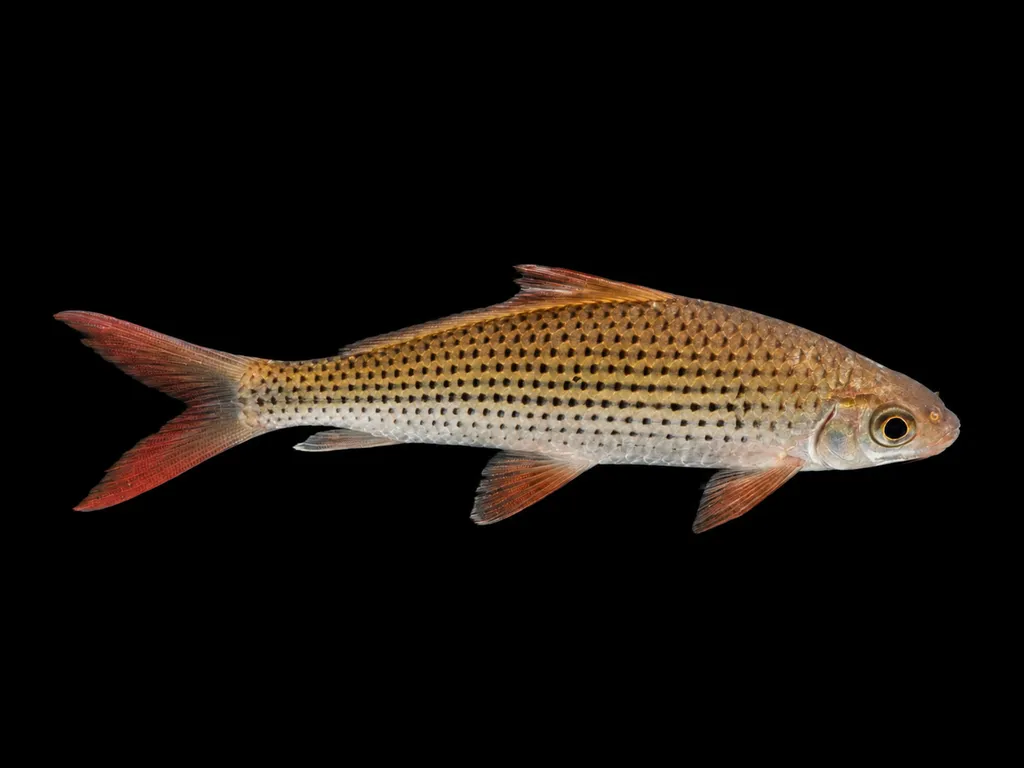
Asian glass hatchetfish
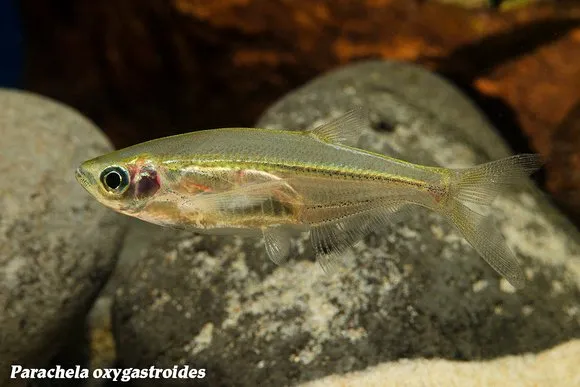
Parachela oxygastroides
Also known as Asian glass flying hatchetfish, Glass barb, Asian glass flying hatchet fish
FreshwaterFish
Care at a glance
- Temperature
- 73–82°F
- 23–28°C
- pH
- 6.0–7.5
- Adult size
- 7.9 in
- 20 cm
- Minimum tank
- 79 gal
- 300 L
- Temperament
- Peaceful
- Social behavior
- Schooling
- Swim level
- Top
- Difficulty
- Medium
- Breeding
- No record
- Rarity
- Rare
- Family
- Cyprinidae
- Origin
- Lowland rivers and swamps of Southeast Asia
Overview
The Asian glass hatchetfish looks delicate, but it is a large, fast schooler that lives at the surface. It is not a beginner fish, though it is not hard to keep either.
Did you know
The Asian glass hatchetfish is not a true hatchetfish at all. South America's hatchetfishes are characins, while this look-alike is a minnow relative. Two unrelated lineages evolved the same deep, keeled chest for life at the water's surface.
Caring for the Asian glass hatchetfish
Plan for a group of Asian glass hatchetfish in a big, long tank of at least 79 gal (300 L). Give a full group more room than that. Leave plenty of open water near the top, with some floating plants for cover. A tight-fitting lid is essential, because they are nervous, strong jumpers.
Keep the water warm, clean and well filtered, at 73 to 82°F (23 to 28°C) and a pH of 6.0 to 7.5. Keep the flow gentle to moderate. Feed floating and slow-sinking foods, such as small pellets and flake. Add insects and frozen foods they can take at or near the surface.
Keep them with similarly sized, peaceful open-water fish. They will not bully tank mates, but they may snap up anything small enough to swallow. The species is seldom bred in captivity, and its spawning is undocumented.
Good to know
Parachela oxygastroides is a keel-bellied, nearly transparent cyprinid. Its deep, blade-like lower body and upturned mouth mark it as a surface specialist. In parts of Southeast Asia it is a food fish, netted and used in fermented fish products.
In the wild
The Asian glass hatchetfish rides just under the surface film in slow-moving lowland rivers, swamps and floodplains. It ranges across Indochina and the Sunda region.
Weekly picks
Tank mates
The Asian glass hatchetfish is a peaceful, schooling species that keeps to the top. These picks share a community profile with it, are safe together in both directions, and overlap on water type, temperature and pH.
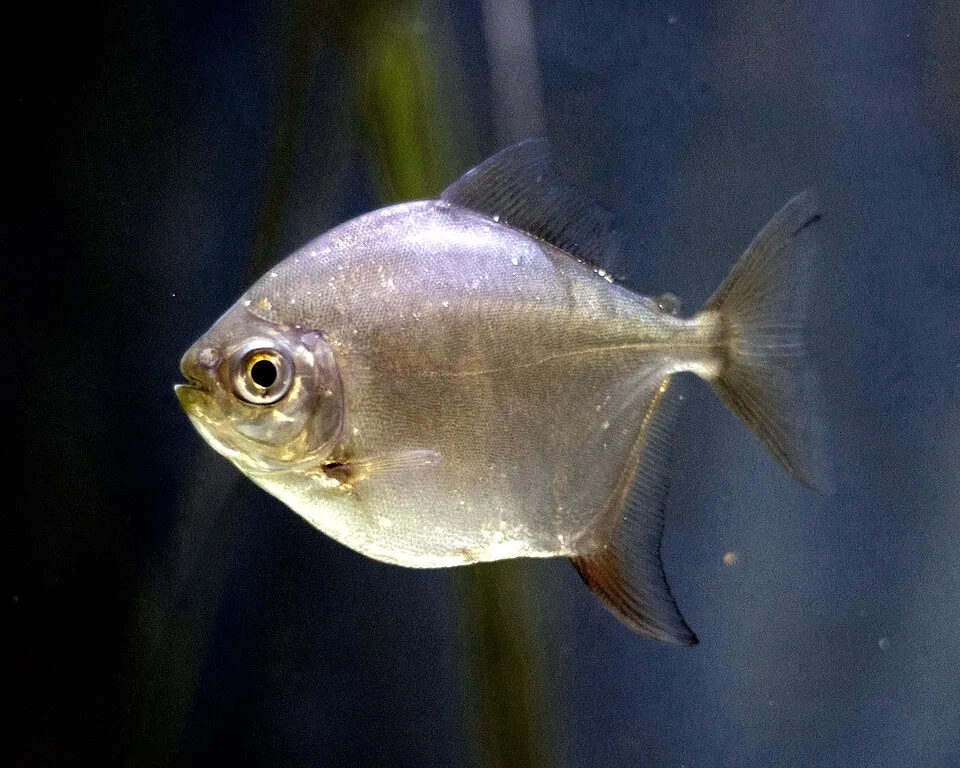
Silver dollar
Metynnis argenteus
Freshwater5.9 in (15 cm) · 70 gal (265 L)75–82°F (24–28°C)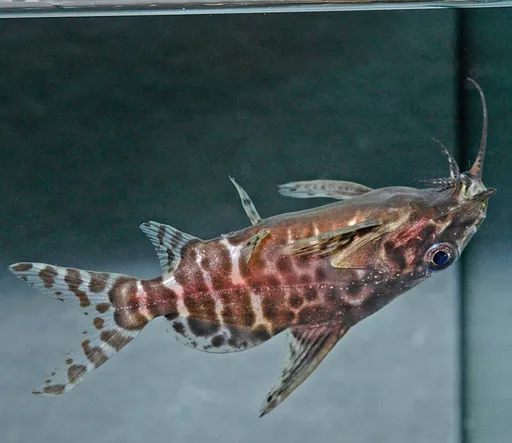
Giant upside-down catfish
Synodontis batensoda
Freshwater11.8 in (30 cm) · 79 gal (300 L)72–81°F (22–27°C)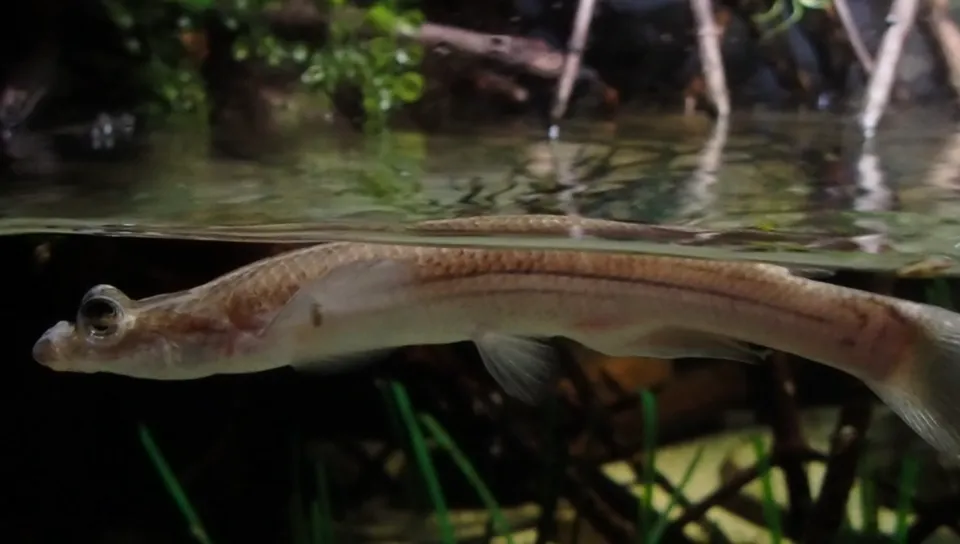
Largescale four-eyed fish
Anableps anableps
FreshwaterBrackish11.8 in (30 cm) · 70 gal (265 L)77–88°F (25–31°C)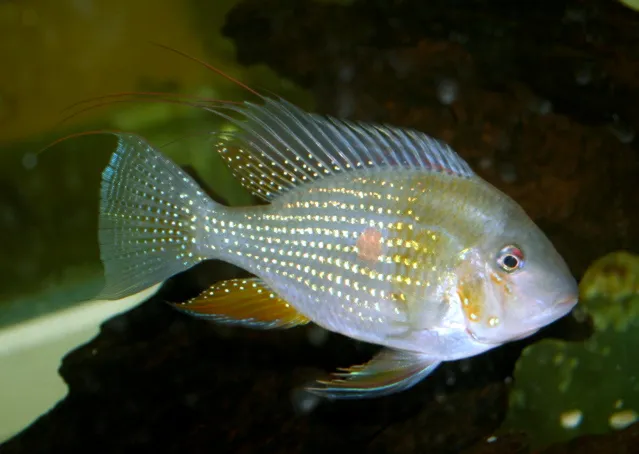
Threadfin acara
Acarichthys heckelii
Freshwater7.9 in (20 cm) · 79 gal (300 L)75–86°F (24–30°C)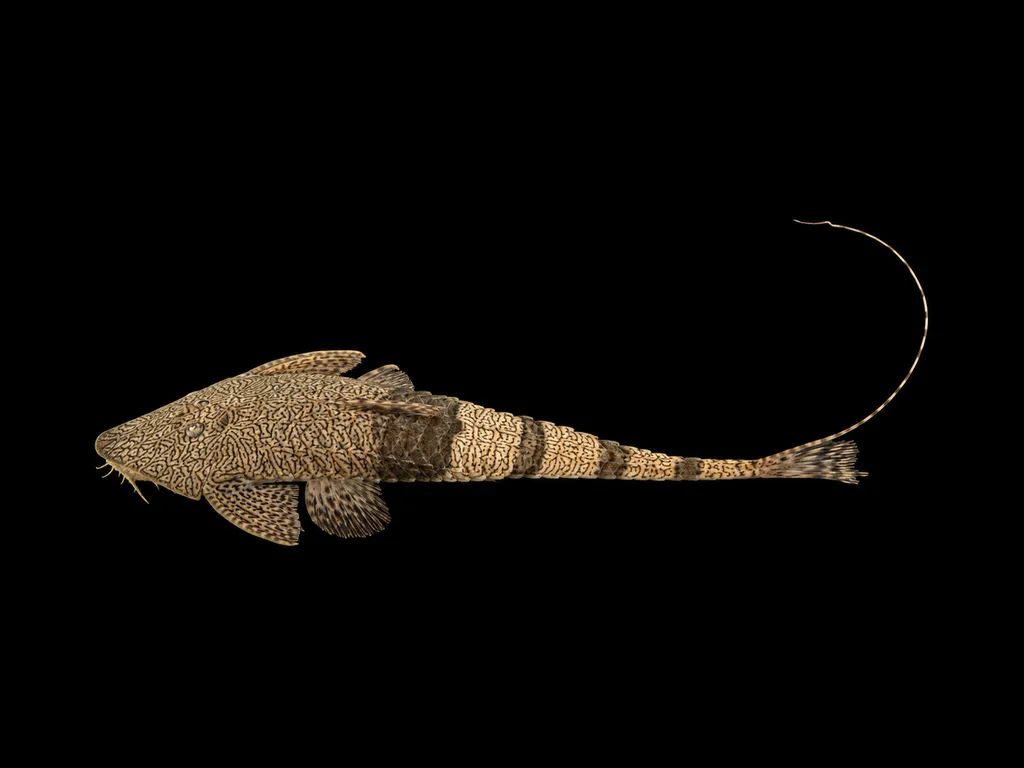
Chameleon whiptail
Pseudohemiodon apithanos
Freshwater6.7 in (17 cm) · 79 gal (300 L)75–82°F (24–28°C)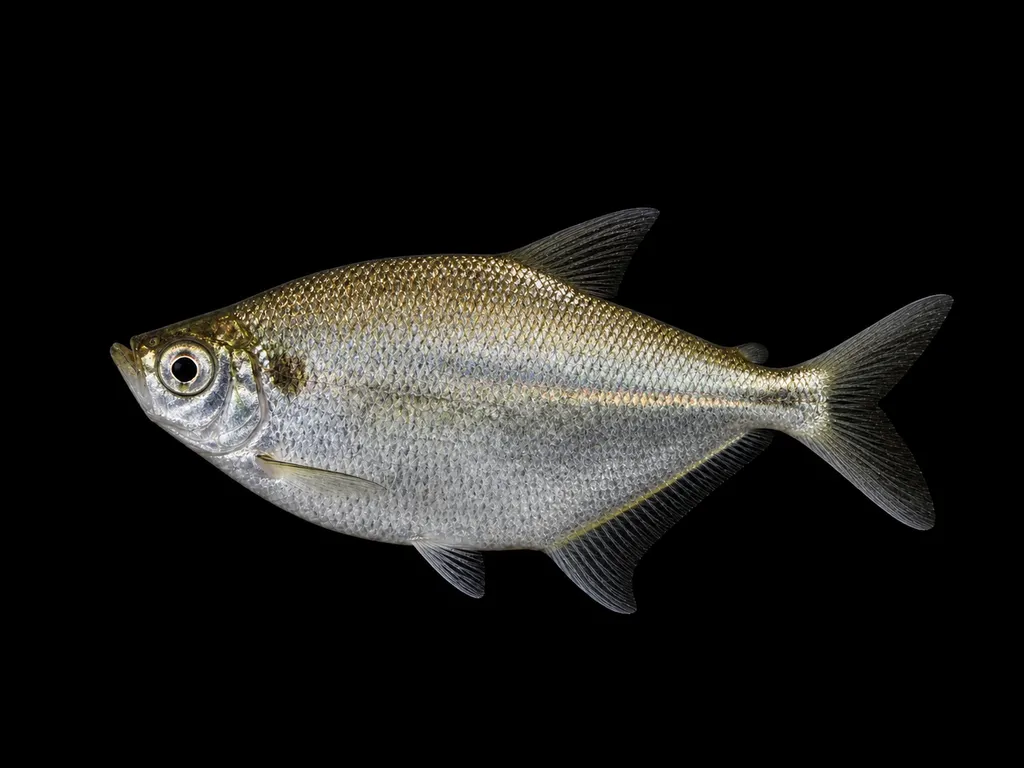
Giant river hatchetfish
Triportheus rotundatus
Freshwater9.8 in (25 cm) · 79 gal (300 L)73–82°F (23–28°C)
Common questions
What size tank does an Asian glass hatchetfish need?
An Asian glass hatchetfish needs at least 79 gal (300 L). It spends most of its time in the top.
What temperature and pH does an Asian glass hatchetfish need?
An Asian glass hatchetfish is comfortable at 73–82°F (23–28°C) with a pH of 6.0–7.5.
What does an Asian glass hatchetfish eat?
An Asian glass hatchetfish eats floating and slow-sinking foods, such as small pellets and flake. It also takes insects and frozen foods at or near the surface.
How big does an Asian glass hatchetfish get?
An adult Asian glass hatchetfish reaches about 7.9 in (20 cm).
Does an Asian glass hatchetfish need a group?
Yes. An Asian glass hatchetfish is a schooling species and should be kept in a group, not singly.
Related species
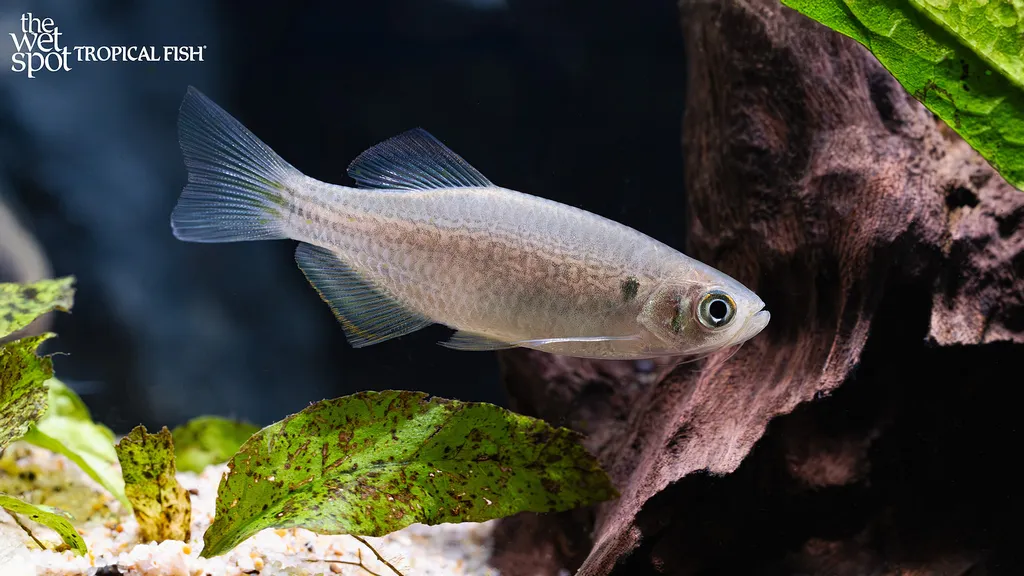
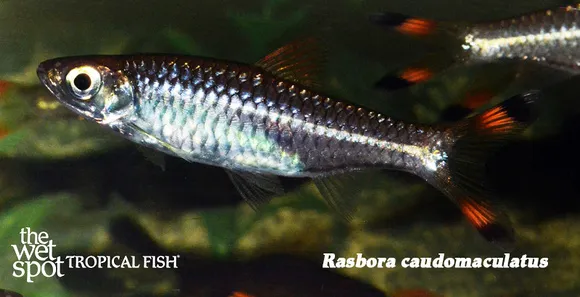 5.1 in (13 cm)53 gal (200 L)68–79°F (20–26°C)
Greater scissortail
Rasbora caudimaculata
5.1 in (13 cm) · 53 gal (200 L)
 5.1 in (13 cm)63 gal (240 L)68–79°F (20–26°C)
Moustached danio
Danio dangila
5.1 in (13 cm) · 63 gal (240 L)
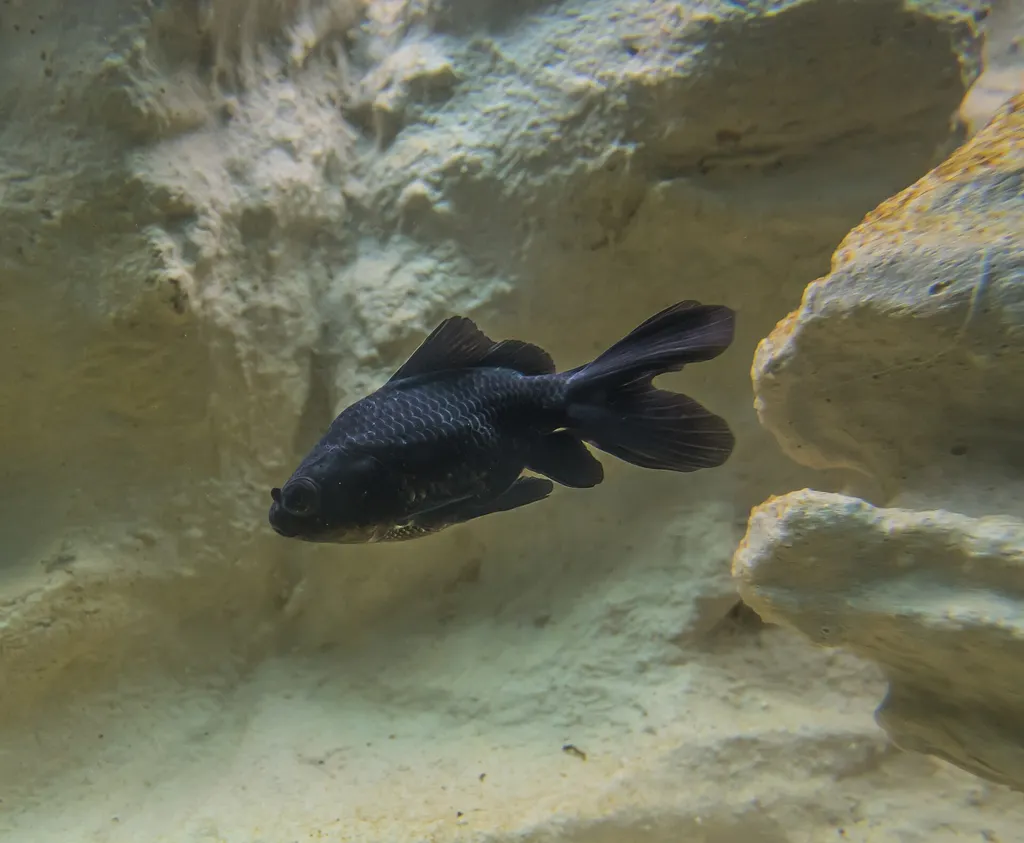
 7.9 in (20 cm)66 gal (250 L)72–82°F (22–28°C)
Beardless barb
Cyclocheilichthys apogon
7.9 in (20 cm) · 66 gal (250 L)
 7.9 in (20 cm)25 gal (95 L)61–75°F (16–24°C)
Black moor
Carassius auratus
7.9 in (20 cm) · 25 gal (95 L)
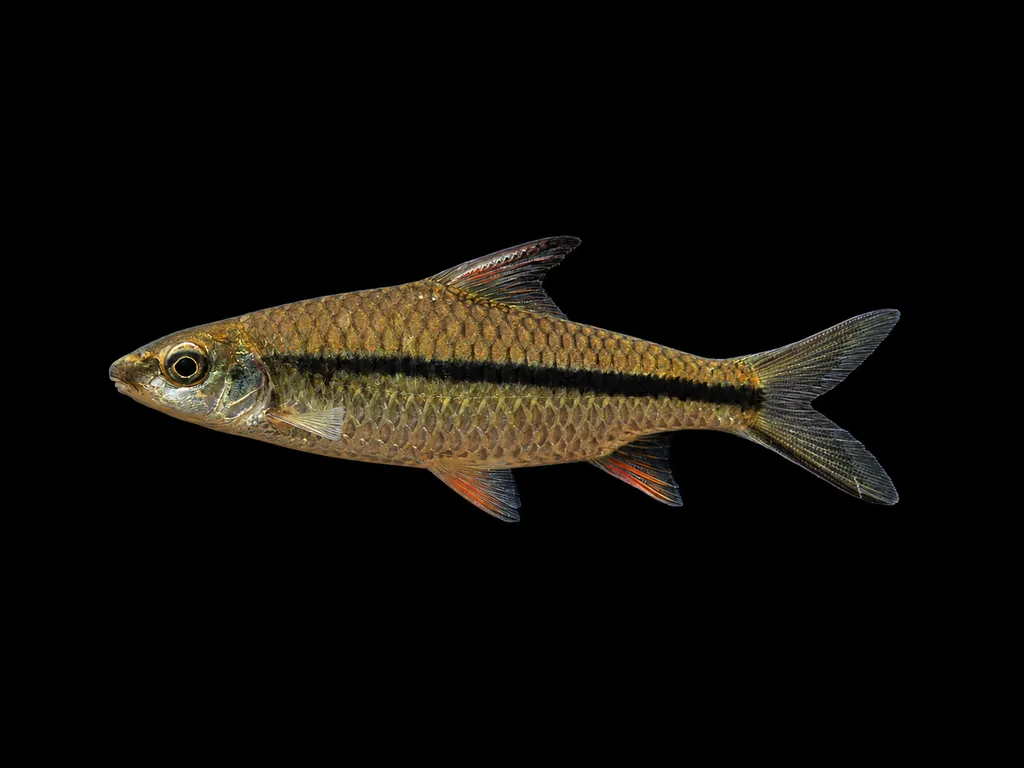 7.9 in (20 cm)66 gal (250 L)64–77°F (18–25°C)
Blackline poropuntius barb
Poropuntius melanogrammus
7.9 in (20 cm) · 66 gal (250 L)
 7.9 in (20 cm)66 gal (250 L)73–82°F (23–28°C)
Festive sharkminnow barb
Labiobarbus festivus
7.9 in (20 cm) · 66 gal (250 L)